Shabbat Shalom,
Blessed Sabbath!

🕯Lighting time of Sabbath candles in Kyiv:
October 16/ 5 hash
17:47
Shabbat end time:
October 17/ 6 hash
18-51

5 Cheshvan
5787
16 October
2026
Prayer schedule
Weekly section Noach

SUNDAY

11 October / 30 Tishrei

09:00  - Shaharit 
16:55 - Minha 

17:07 Maariv 


Monday

October 12/ 1 hash
08:00 - Shaharit

a lesson with a rabbi after Shaharit

16:55 - Minha 

17:07 Maariv 


Tuesday – Wednesday

October 13-14/ 2-3 hashwana

8:00 - Shaharit
16:55 - Minha 

17:07 Maariv 


Thursday

October 15/ 4 hashwana
8:00 - Shaharit
*After Prayer Lesson with Rabin
16:55 - Minha 

17:07 Maariv 


Friday

October 16/ 5 hash

  8:00 - Shaharit
17:47- Ignition of sabbath  candles
10:16:37:00- Minha
*After Prayer Lesson with Rabin
18:38 - Maariv and the Saturday Meeting


Shabbat.

October 17/ 6 hash
9:15Lesson with Rabin
10:00 – Shaharit

Minha after Shaharit

*After meal lesson for women from Rabanit
18:51 Mari and Sabbath Outlet

Latest news
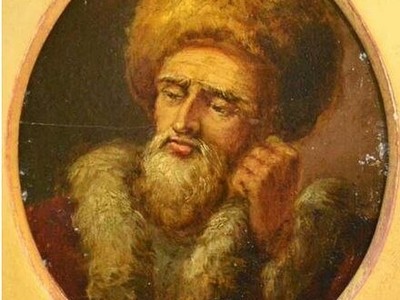
👑 Secrets of the Sadigorsky Court: the amazing story of the Ruzhinsky Rebbe
Community
In the history of Hasidism, few figures aroused such trembling admiration as Rabbi Yisrael of Ruzhin. His life resembled a fascinating historical novel, full of royal grandeur, hardships, severe austerities and the deepest spiritual heights.Let's dive into this amazing story and find out who this great righteous man was and what connected him with the Chabad dynasty.🌟 Who is Ruzhynskyi Rebbe?Rabbi Israel was born in the town of Proskuriv at the end of Rosh Hashanah. At the age of six he lost his father, and at thirteen he married. When he was sixteen, his older brother died, and the young Israel became the head of the Hasidim, continuing the glorious dynasty of his ancestors.Unlike many tzaddiks of that time, who lived very modestly, Ruzhiner behaved like a real monarch. He moved in luxurious carriages with thoroughbred horses and wore expensive clothes. This path was called "Derech Malchut" — "The Way of Royal Greatness". Its purpose was to show the world the dignity of an oppressed people.But behind the exterior luxury, there was an incredible modesty. The Rebbe ate almost nothing, slept only a few hours a night and wore exquisite gold shoes… but without soles. In the winter, as he walked through the snow, he was left with bloody footprints from the touch of his feet to the icy ground.⛓️ Royal Arrest, Prison and Brave EscapeIn 1838, because of a false denunciation by educators, the authorities arrested the Rebbe on a serious charge. For almost two years, he languished in the dungeons of a Russian prison.After his release under house arrest, the Rebbe made a dangerous escape, crossing the border of the Russian Empire. He found refuge in the Austro-Hungarian town of Sadigora, where he rebuilt his famous courtyard.📜 Ruzhiner and ChabadAlthough Ruzhyn Hasidism and Chabad developed in different ways, there was an incredible spiritual connection between the Rebbe of these currents.️1 Ruzhinsky Rebbe said that Alter Rebbe and Rambam came into this world from the same high spiritual source. That is why, according to Ruzhiner, Alter Rebbe in his "Shulchan Aruch" attached such great importance to the thoughts of Rambam.️2. One of the teachers of Ruzhiner's children was a Hasidic Mitteler Rebbe. In his room, in a closed closet, rare Hasidic manuscripts were kept. One day, the teacher forgot to lock the closet, and when he returned, he saw Ruzhiner carefully studying these manuscripts. The impressed teacher heard Ruzhiner's enthusiastic confession: “This is a real, pure ruach ha-kodesh!”🕯 Tzemach Tzedek and the Mystical Message of SeparationA particularly close relationship connected Ruzhiner with Tsemakh Tzedek. Tzemach Tzedek called him “Saint Ruzhiner” and often sent envoys to him for advice at critical moments for the entire Jewish people.Tzemach Tzedek told his sons amazing things:“When the Saint from Ruzhyn reads Tegilim, the whole world is open to him. On Shabbat, he sees the deepest roots of all world events and has the power to overturn the most severe celestial sentences.”There is an amazing story. On the day when Ruzhinsky Rebbe left this world, in Lubavitches — hundreds of kilometers away — Tsemakh Tzedek suddenly asked the servant to bring a knife in the middle of the day, tore his outer clothing as a sign of mourning — "kriya" — and said that the Saint from Ruzhin had just passed away.💡 The legacy that has reached our daysTheconnection between the two great courtyards continued in later generations. In 1991, during the distribution of dollars, our Rebbe spoke with a young Hasidic. Learning that he was born on 3 hashvans — on the day of Ruzhiner'smemory, the Rebbe smiled warmly, gave him an additional dollar and said:“May you have a successful year! It's Ruzhiner's birthday. May the Almighty help you to follow his paths... But just look, remain a Hasidic Chabad, not Ruzhin!" 😉The life story of Ruzhinsky Rebbe teaches us an important principle: true greatness lies not in pride or striving for the material, but in the ability to subjugate the whole world to the service of the Creator.No matter what external circumstances a man is surrounded by, his heart can always remain pure, devoted and filled with ardent love for every Jew.source: 📖 Lubavitcher Calendar
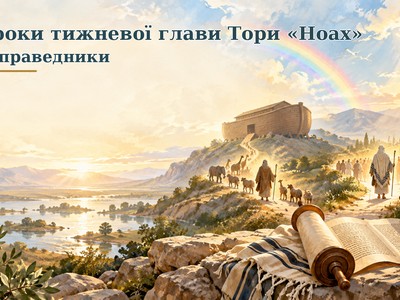
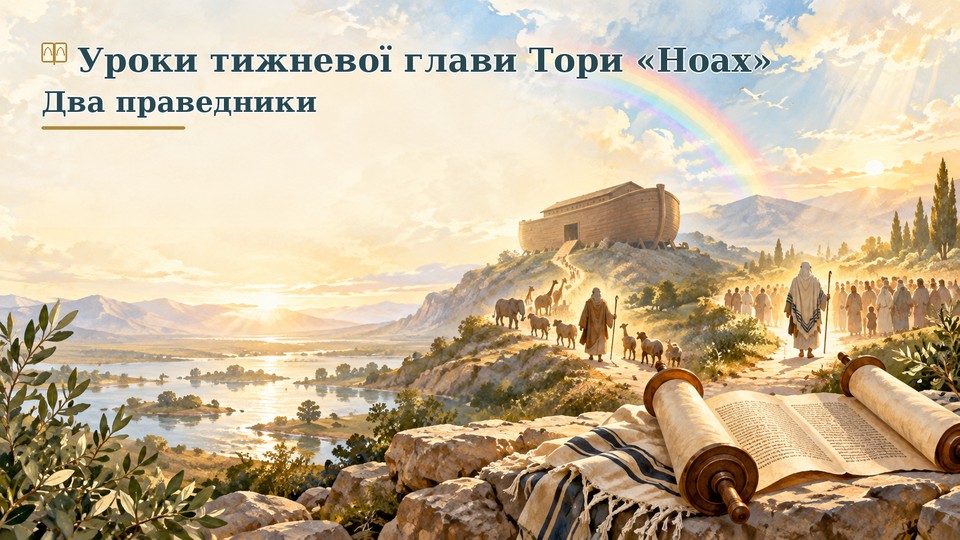
📖 Lessons from Noah's Weekly Torah Chapter: The Two Righteous Ones
Community
🌊 At the very beginning of the chapter of the Torah "Noah", which tells about the Flood, the words are heard:“Noah was a righteous man, whole in his generations; Noah walked with G-d.”Surprisingly, the Torah begins the story of the almost complete destruction of mankind with words about the holiness of Noah. Even more strange is the formula: “I was holistic in my generations.”🤔 It seems that everything is not so simple with this righteous man. There are sages who believe that Noah “was righteous only in his generations, and if he had lived in the time of Abraham, he would not have been considered righteous.”Others interpret the opposite: he was righteous “even in his sinful generations, and even more so would he be righteous if he lived among more worthy people.”⚖️ From the point of view of the second group of interpreters, the picture has a clear contrast: Noah is a complete righteous man, his generation are complete sinners.But from the point of view of the first group, which cautiously questions the level of Noah's righteousness, the story is much more complicated.📜 Rabbi Berachiah said:“Moshe is more beloved of the Torah than Noah. Noah, who was originally called a“righteous man, ”subsequently descended to the level of a commoner — a“man of the earth. ”And Moses, who was originally called an“Egyptian, ”at the end of his life rose to the level of the“man of G-d. ”🕊 But why are we comparing Noah to Moshe? Why not choose a softer benchmark?Or Sameach explains that there are only two types of righteous:some retire, devoting themselves exclusively to the Torah;others leave their own interests and aspirations for the needs of the community.👥 People often tend to think of the former as more righteous than the latter. But Noah's story teaches the opposite.Solitary with G-d and detached from the problems of his generation, Noah remained righteous “in his generations,” that is, he did not reach the level of true, complete righteousness.Moreover, from the two quotes given in the midrash, we see a certain spiritual decline of Noah — to the level of the “man of the earth”.🔥 Instead, Moshe, whose personal spiritual improvement seemed to have faded into the background, and his whole life was devoted to the needs of the people — and not always only high spiritual, and sometimes simple everyday needs — rises "from strength to strength."🌧 The Age of Noah is the Age of Catastrophe:“And the earth was corrupted before G-d, and the earth was filled with wickedness.”No, Noah is not silent, as one would expect from a hermit. Sages say that he rebuked his generation and told them:“Repent, and if you do not repent, the Almighty will bring a flood upon you.”❓ So how do commentators reproach Noah? And why hasn't his sermon been heard by a generation?The 🪵 Midrash of Tankhuma tells an amazing story:“When the Almighty commanded Noah, 'Make yourself an ark out of cedar wood,' Noah went and planted the cedars, cut them down, sawed them, and made an ark out of them. Contemporaries asked him: “Why these cedars? Why this ark?”Noah answered them, “The Almighty is going to bring a flood to the earth, and He has commanded me to make an ark so that I and my family can be saved.” And his contemporaries laughed at his words. "🏡 Noah does not go to people — he only answers their surprised questions. He does not go out to the people, but works modestly near his house, cutting cedar logs.Noah was not completely righteous not because he did not obey the order of the Almighty. On the contrary, we know for certain that he carefully fulfilled all the commandments of the Creator.💔 But it seems that his heart did not really hurt for his neighbor, for humanity, for the whole world. Sinners caused him not so much pity as righteous anger.Therefore, he warned them, but did not save them.I blamed him, but I didn't persuade him.Moshe behaves 🕯 differently when the Almighty said to him:“Now leave Me, and My wrath will burn against the people, and I will destroy them…”Moshe replied:“If you do not forgive their sin, then erase me from Your Book.”⚖️ And just as the two types of righteous are different, so is the result of their activities:noah's generation is doomed to death,generation Moshe — receives forgiveness.🌱 This applies not only to the righteous of the "higher league", but also to ordinary people like you and me.Notes:Pentateuch, book of Breishit, 6:9.Ibid., 9:20.Pentateuch, Book of Shemot, 2:19.Pentateuch, Book of Devarim, 33:1.Talmud, Tractate Sanhedrin, 108.Pentateuch, Book of Shemot, 32:32.source: chabad.org
Yom Yom: 4 Heshvan.
Community
📖 In a Hasidic book"Yom-yom"said:"Daily Torah study is a matter of vital importance. And not only for the soul of the one who studies it, but also for the souls of all his loved ones, because then the atmosphere in the house becomes an atmosphere of Torah and God-fearing."✨What is this passage about?🔹 Torah as a spiritual necessityTorah study is compared to air or water - it is not an additional decoration of life, but a deep need of the soul.🔹 Influence on the familyThe spiritual state of a person does not remain only his personal matter. It affects the entire home: the spouse, children, loved ones, the tone of conversations, decisions and the very atmosphere in the family.🔹 The atmosphere of the houseWhen the study of Torah becomes regular, the house is gradually filled with light, internal order and awe before the Most High. Even an ordinary space can become a place where holiness is felt.📌Main idea:daily study of the Torah changes not only a person, but also the entire space around him. It creates an atmosphere of warmth, faith and spiritual support in the house.
Lessons from the Noah Torah Weekly Chapter: Noah's📜 Testament as Interpreted by the Cabal
Community
🌈 Mystical explanation of the rainbow phenomenon📖After the Flood, the Almighty made a covenant with Noah and his sons:“I put my rainbow in the cloud, and it will be a sign of the covenant between me and the earth. And when I bring the cloud above the ground, a rainbow will appear in the cloud. And I will remember My covenant which is between Me and you and between every living thing in all flesh, and the water shall no more become a flood to destroy all flesh.”🌈 The rainbow was chosen as a symbol of the Covenant between G-d and people, a sign of G-d's Mercy that would remind a person of his duty to the Creator.❓ But why the rainbow?🔬 A well-known scientific explanation of the rainbow as an optical phenomenon of spectral refraction of sunlight in raindrops. This explanation was used by propagandists of atheism to deny the "primitive" and "anti-scientific" ideas of "biblical authors". Criticizing the Book, which is the spiritual guide of many generations, they, as a rule, did not even consider it necessary to get acquainted with the traditional sources of Judaism.📚 Some Torah commentators, including Rabbi Nisim Girondi and Abrabanel, believe that the rainbow was never seen before the Flood due to the excessive density of clouds. It was the excessive density of evaporation and precipitation on the ground that made the flood physically possible.🌍 Rabbi Ovadia Sphorno believes that as a result of the Flood, the earth's axis shifted, which caused a change in the seasons. As a result of these radical changes, the duration of human life has sharply decreased, giant animals and plants have disappeared.☀️ Modern science has established that ultraviolet rays have a harmful effect on the human and animal body. They accelerate skin aging and can cause skin cancer. Before the Flood, particularly thick clouds prevented exposure to sunlight. Perhaps this explains the fact that human life expectancy has reached many centuries.🦕 The skeletons of giant lizards, dinosaurs, indicate that the animal world before the Flood was significantly different from the modern one. After the Flood, as the clouds became thinner, they had a rainbow. According to commentators, the rainbow has become a symbol that clouds no longer bring chaos and destruction to the world.✅ So the rainbow was chosen as the symbol of the Covenant between G-d and man.🔐 It should be noted that this explanation was known only to the initiated for many centuries, since the teachings of the Cabal were not widespread. In addition, it was this explanation that required considerable preparation — both in the knowledge of nature and in mystical knowledge.👧 However, Sacred Scripture is written not only for thinkers, but also for the simplest people. By law, it begins to be studied with children from the age of five, so a necessary and sufficiently simple explanation is understandable even to a child.✨ The mystical meaning of the rainbow is reflected in the Book of the Prophet Ehezkel (1:28):“Like a rainbow in a cloud on a rainy day, this was a vision of the shining around — a vision of the likeness of Glory B-ZhOYA.”🌈 The Prophet compares the vision of Divine Glory to the image of a rainbow. What is the point of this comparison?📖 Returning to the story of the Torah Flood, it is said:“I put my rainbow in the cloud…”❓ Why "My"?📚 In the Midrash, the word "Kashti" — "My rainbow" — is interpreted from the root "ekesh", which means "likeness". Hence “Kashti” — “My rainbow” — means something like Me.🤔 But what is this similarity?📜 In the Psalms it is written (81:1):“The Sun and the Shield are the Lord G-d.”The ☀️ word "Lord" in biblical translations, as a rule, is given the Name of G-d "Avaye", and the word "G-d" — the Name "Elokim", which indicates the G-d attribute of the Judgment, the Law, the laws of nature.🛡️ The Talmud says, “The sun has a shield that protects nature from destruction by the sun's rays.”🔆 "Away", figuratively speaking, is like the sun: it is the source of light, the Source of Genesis. But if the Infinite Light of the Source of Being were perceptible to creatures, then the independence of creation would not be felt: all that exists would be only a continuation of the One Being.🧭 Imagine a world in which there is no individual existence of things. In such a world, there can be neither personal freedom nor a choice between good and evil.⚖️ The unlimited light emanating from Awaya seems to “destroy” everything. Instead, the name "Elokim", which represents the natural order and laws of nature, hides the light that comes from "Avaie" under the shell of naturalness.📌 Thename “Elokim”, which is correctly translated as “Almighty” or “Almighty” and means G-d as the Lord of all the forces of nature, is also grammatically a plural form on behalf of “Eloka”. This indicates that due to the refraction of the Light of the One Reality, "Avaye" in the Elokim prism makes it possible to form a plurality and relative independence of being.🌈 In the light of what has been said, one can understand why the vision of the Glory of God in the prophecy of Yechezkel is likened to the appearance of a rainbow.☁️ The white light of the sun has the ability to decompose into many colors of the rainbow spectrum, refracting in the cloud. The cloud is the "Shield" through which sunlight passes.🌈 The seven colors of the rainbow represent the seven Sefirot — the seven Divine Attributes, or the seven basic forces operating in the world.☁️ "Cloud" or "cloud" represents the action of the Name "Elokim", which is sometimes translated as "judge" and reflects the Divine Judgment on sinners.⚖️ The ultimate goal of the Divine Court is not to punish sinners, but to correct them.🕊️ That is why there is also a pardon, which gives a person the opportunity to correct his path. The pardon comes from Awaie.📖 “And it shall come to pass, when I have thickened the clouds above the earth, that a rainbow shall appear in the cloud.”📚 According to Rashi's interpretation, this phrase should be understood figuratively:☁️ "When I thicken the clouds above the earth" — when My Attribute of Judgment will prompt Me to bring darkness and destruction to the earth, then...🌈 "a rainbow will appear in the cloud" — the Light "Avaie", the Light of Mercy, penetrates the cloud, that is, the Attribute of the Court.📜 “And I will remember the Covenant… the everlasting Covenant between the Omnipotent and every living thing.”🤔 What is strange is that G-d speaks of Himself in the first person — "I", then in the third — "Elokim". However, this, as it was said, becomes clear: a reminder of the Covenant between G-d and the earth is needed only when the Judgment — Elokim — acts, because mercy does not punish.✅ This explains the fact that in the entire 9th chapter, which refers to the Covenant and the sign of the rainbow, only the Name "Elokim" is mentioned, and the Name "Avaye" is never used, because Mercy does not need a reminder of the Covenant.📝 Note: Pentateuch, book of Breishit, 9:13–15.✍️ Rabin Dov-Ber Khaskelevichsource: chabad.org
Our dates: 3 hashwans
Community
🔖3 Hashvanah 5627 (October 12, 1866) — Yorzayt (anniversary of the departure from this world) Rabbi Yehuda-Lejb from Kopys.Rabbi Yehuda-Lejb (also known by the acronym Maharil) was the son of the third Lubavitcher Rabbi, Rabbi Zemach-Tzedek. He was born in 1807, the second son of Rabbi Tsemakh-Tzedek, and during the ceremony of circumcision with a sandak (a person holding a baby in his arms) was his great-grandfather — Alter Rebbe. Rabbi Yehuda spent his childhood years next to his beloved grandfather, the second Lubavitcher Rabbi Miteler Rebbe, who taught him Tori and Hasidut.After the departure from this world of his father, the third Lubavitcher Rabbi, Rabbi Yehuda left Lubavitches and settled in the town of Kopys, where he led a group of Hasidim. Rabbi Maharil had thousands of followers (the so-called Kopi Chabadniks), although he himself headed them for only two months — Elul and Tishrei. On the feast of Simhat Torah, he fell ill, and on 3 hashvans, half a year after his father's departure, Rabbi Yehuda-Leib also departed from this world.The 🔖3rd hash of 5611 (October 9, 1850) — yorzait (anniversary of the departure from this world) Rabbi Israel Friedman, a rabbi from Ruzhin.Rabbi Israel Friedman, the great-grandson of Rabbi Dov-Ber from Mezhyrich (known as Mezhyrich Magid), was born in 1797 in the town of Pogrebyshche near Kyiv. Already in his early youth, Rabbi Israel chose the town of Ruzhyn (in Hebrew it was called Ryzhyn) as his residence. The court of the Ruzhinsky Rebbe (that is, his honor and property) was not inferior to most of the princely courts of Europe at that time in terms of splendor and splendor - Rabbi Israel kept numerous servants and traveled in a luxurious carriage pulled by four horses. However, despite such a demonstrative lifestyle, the Ruzhinsky Rebbe was a universal favorite (in particular, he was friends with the third Lubavitsky Rebbe, Rabbi Tsemach-Tzedek), and he was forgiven for everything. It was said that "The Ryzhiner Rebbe, of course, walks in golden boots, but these boots have no soles, so he steps on the snow with his bare feet."In 1838, Rabbi Israel was accused by the authorities of ordering the execution of two informers. The trial lasted a year and a half, hundreds of Jews were arrested and tortured, and 80 people appeared before the court. Six community leaders were sentenced to life imprisonment, others to exile in Siberia. The Ruzhinsky Rebbe was under arrest for almost two years; the lawyers did everything to prove his innocence in the case, and after the conclusion of the investigation, he was released, but left under police supervision, because the authorities suspected him of intending to become a Jewish ruler. The Rebbe moved to Chisinau, where the local governor was more sympathetic to the Jews, then moved to Iasi, and from there to the Bukovina town of Shatsk. So he moved from city to city until, after numerous efforts of his supporters, on December 20, 1845, Emperor Ferdinand I allowed him to live in Sadagora (Sadigur) in Bukovina (now Sadagora is one of the districts of Chernivtsi). The Hasids purchased the Golden Stream estate near the city for him. He built himself a luxurious mansion and once again began to lead a luxurious lifestyle. The Ruzhinsky Rebbe did a lot for the residents of Eretz Israel, in particular, he provided funds for the construction of the Tiferet Israel synagogue in the Jewish quarter of the Old City of Jerusalem.Rabbi Yisrael Friedman is buried in Sadygur. The sons of Ruzhynskyi Rebbe founded Hasidic dynasties in other towns, becoming the ancestors of Sadigur and Boyan Hasidismsource: chabad.odessa
Memorial to the victims of the Holodomor in Israel
News
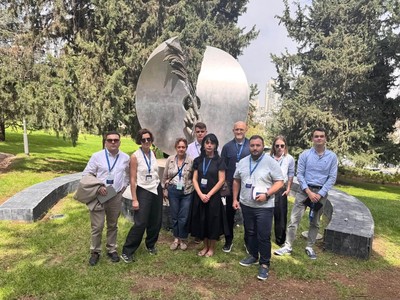
A delegation of Ukrainian journalists visited the memorial to the victims of the Holodomor in IsraelAs part of the visit to Israel, a delegation of Ukrainian journalists visited a memorial dedicated to the victims of the Holodomor of 1932–1933 in Ukraine.source: IsraelinUkraine
Shabbat Shalom,
Blessed Sabbath!

🕯Lighting time of Sabbath candles in Kyiv:
October 16/ 5 hash
17:47
Shabbat end time:
October 17/ 6 hash
18-51

5 Cheshvan
5787
16 October
2026
Prayer schedule
Weekly section Noach

SUNDAY

11 October / 30 Tishrei

09:00  - Shaharit 
16:55 - Minha 

17:07 Maariv 


Monday

October 12/ 1 hash
08:00 - Shaharit

a lesson with a rabbi after Shaharit

16:55 - Minha 

17:07 Maariv 


Tuesday – Wednesday

October 13-14/ 2-3 hashwana

8:00 - Shaharit
16:55 - Minha 

17:07 Maariv 


Thursday

October 15/ 4 hashwana
8:00 - Shaharit
*After Prayer Lesson with Rabin
16:55 - Minha 

17:07 Maariv 


Friday

October 16/ 5 hash

  8:00 - Shaharit
17:47- Ignition of sabbath  candles
10:16:37:00- Minha
*After Prayer Lesson with Rabin
18:38 - Maariv and the Saturday Meeting


Shabbat.

October 17/ 6 hash
9:15Lesson with Rabin
10:00 – Shaharit

Minha after Shaharit

*After meal lesson for women from Rabanit
18:51 Mari and Sabbath Outlet

Converting dates from the Gregorian calendar to the Hebrew calendar
Day
Month
Year
Converting dates from the Jewish calendar to the Gregorian calendar
Day
Month
Year
Main events
Holidays
Sukhoth Preparation: Seven Guests (Ushpizin) for Sukhoth
Holidays
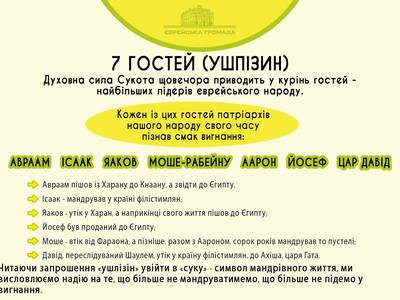
The seven guests (ushpizin) on Sukkot are the souls of the seven great righteous who, according to the Kabbalah, attend Jewish tents (sukkahs) on Sukkot: Abraham, Yitzchak, Yaakov, Yosef, Moshe, Aaron, and David. They are called “ushpizin” (from Aramaic for “guests”) and take turns leading the days of the feast, personifying spiritual presence and blessing in the sukkah.Who is UshpizinThese are the souls of the seven spiritual leaders of the Jewish people:Abraham — personifies chesed (kindness)Yitzhak — personifies guur (self-discipline)Yaakov — personifies tiferet (harmony and truth)Yosef — represents yesod (base and connection)Moshe — personifies the henchmen (victory and strength)Aaron — personifies the move (greatness and humility)David — personifies Malchut (kingdom)How is Ushpizin invited?Before entering the sukkah, it is customary to recite a special blessing, inviting these righteous guests to a tent. Ushpizin is also honored before each meal in the succa.Spiritual content of ushpizinThe invitation to ushpizin symbolizes the desire for spiritual growth and connection with heavenly sources. It is also a reminder of the wandering life of our forefathers, which allowed them to fulfill the will of the Almighty. By inviting them, Jews express the hope that they will no longer go into exile.
🌿 Sukkot, Shmini Atzeret and Simhat Torah 2026: calendar of holidays and days of festive rest
Holidays
🌿 Sukkot, Shmini Atzeret and Simhat Torah 2026: calendar of holidays and days of festive restIn autumn, a time of festive joy, prayers and meetings in the bitch awaits us. To plan things in advance, we recall the dates of holidays in 5787 for Ukraine and other diaspora countries — outside Israel.📌Days of festive rest with a ban on work under the laws of the holiday: September 26–27 and October 3–4. Holidays start the night before and end after nightfall.🌿SUKKOT — 26–27 SEPTEMBER/15–16 Tishrei🔹 Beginning — Friday evening, September 25.🔹 Saturday, September 26 is the first day of Sukkot, which this year coincides with Shabbat.🔹 Sunday, September 27 is the second day of Sukkot in the diaspora.🔹 The first two holidays end after the night of September 27.This is the time of festive prayers and meals in the bitch. On September 26, all the restrictions of the Sabbath also apply.  🍋 HOL GA-MOED — INTERMEDIATE DAYS of the HOLIDAY September 28 — October 2/ 17–21 TishreiIntermediate days begin after the onset of the night on Sunday, September 27, and last until the beginning of the next holiday on the evening of Friday, October 2.📌These are not ordinary weekdays: Work restrictions are relaxed but not lifted. In particular, under certain conditions, matters for the needs of the holiday and urgent work are allowed, the postponement of which will cause significant losses. Questions about specific work should be clarified with the rabbi. Read more in the explanationof the Jewish community of Dnipro.🌿Friday, October 2/ 21 Tishrei — Hoshan Rabah, the seventh day of Sukkot.He belongs to Hol HaMoed.🕍SHMINI ATSERET — 3 OCTOBER Saturday / 22 TishreiThe holiday begins on the evening of Friday, October 2. This year it coincides with the Sabbath, so all Sabbath restrictions apply.On this day, the Izkor memorial prayer is read. 📖 Simhat TORAH — OCTOBER 4 Sunday / 23 TishreiIn the diaspora, the Simhat Torah comes after the end of Shabbat on October 3 and lasts until the night of October 4.This is a celebration of the joy of the Torah: we complete the annual cycle of reading it and start a new one. On this day, there are holiday restrictions on work.  📌 IT IS IMPORTANT TO DISTINGUISHYom Tov and Shabbat have different rules: Yom Tov, which does not coincide with Shabbat, allows separate actions for preparing festive food under certain conditions. Therefore, the prohibition of work does not mean that all the rules of these days are the same.Check the 🕯️ exact time of lighting candles and the end of the holidays with the calendar of your community and city. May these days bring joy, warmth and unity to our homes! 🌿
📖 On the eve of Yom Kippur: what they want and what traditions they follow
Holidays
Yom Kippur is a time of teshuvah, sincere prayer, inner purification and reconciliation. On the eve of this holy day, it is customary to ask forgiveness from those whom we could offend by word or deed, give tsedak and prepare for fasting.✨What do you wish for Yom Kippur?✍️"Gmar hatima tovo!"— Wishing you a good final signature in the Book of Life.🌿“Tsom kal!”— light fasting: Yom Kippur fasts for more than 25 hours and involves abstaining from food and drink.It is also appropriate to wish meaningful Yom Kippur, peace in the soul and sincere repentance. But the Happy Yom Kippur greeting is usually not used.🤝Ask for forgivenessBefore Yom Kippur, it is important to sincerely apologize to anyone we may have offended. If damage has been done, it is not enough just to say “I'm sorry” — you should, as far as possible, correct what you have done.The Jewish tradition teaches that Yom Kippur redeems a person's guilt before God, but guilt before another person only after sincere reconciliation with him.🤲Tzedak DatesOn the eve of Yom Kippur, it is customary to increase donations to charity. Tsadaka is an important part of spiritual preparation for the holy day.🍽️Prepare for fastingDuring the day, festive meals are arranged. The last one before the fast is calledseuda ha-mafseket— final meal.May our words be sincere, our apologies be accepted, and our hearts be open to the good.✍️Gmar hatima tova! Let the fast be light and meaningful!
Jewish holidays
Holidays
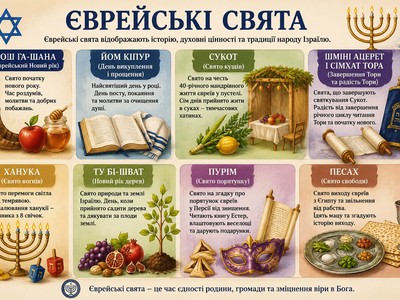
Jewish holidays reflect the history, spiritual values and centuries-old traditions of the people of Israel.🍎🍯 Rosh Hashanah — Jewish New YearA celebration of the beginning of the new year, spiritual awakening and reflection. These days they summarize the past year, pray and wish each other a good and sweet year.🤍 Yom Kippur — Day of AtonementThe holiest day of the Jewish year. It is a time of fasting, prayer, sincere repentance, and spiritual purification.🌿 Sukot — Kuren FestivalThe holiday recalls the forty-year wanderings of the Jewish people in the desert. For seven days, it is customary to spend time in a bitch — a temporary hearth, which symbolizes God's protection and trust in the Almighty.📜 Shmini Atzeret and Simhat ThorShmini Atzeret completes the festive period of Sukot. Simhat Torah is a celebration of the joy of the Torah, when the annual cycle of its reading ends and a new one begins immediately.🕎 Hanukkah — Festival of LightsA celebration of the victory of light over darkness, spiritual resilience and devotion to faith. For eight days, Hanukkah is lit by adding another light every evening.🌳 Tu BiShvat — New Year of TreesThe Feast of Nature and the Land of Israel. On this day, it is customary to plant trees, eat the fruits for which the Land of Israel is famous, and thank the Almighty for the generosity of nature.🎭 Purim — Holiday of SalvationA holiday in memory of the amazing salvation of the Jews of Persia from extermination. On Purim, they read Megilat Esther, arrange a festive meal, help the needy and give treats to friends.🍷 Passover — Celebration of FreedomFeast of the Exodus of the Jewish People from Egypt and Liberation from Slavery. During the festive Seder, they read the Haggadah, tell the story of the Exodus, and eat matzah.Jewish holidays are a time of family and social unity, preserving traditions and strengthening faith in the Almighty.
Rosh Hashanah Getting Ready: Shofar Tubing
Holidays
From the second day of the new moon elul (that is, from the 1st elul) until the day before Rosh Hashanah, the shofar is blown in the synagogues after the completion of the morning Shaharit prayer. These daily trumpets consist of four sounds: “Tchia”, “Chevarim”, “Troyes” and again “Tchia”.This trumpeting is not prescribed by the Torah, but established by an ancient Jewish custom. When Moshe ascended Mount Sinai on Rosh Chodesh in the month of Elul to receive the new Tablets of the Covenant, the Jews in their condition blew the shofar, so that all the people would know that Moshe had only temporarily ascended to Heaven (and not left the earth forever) and so that in his absence they would not fall into idolatry. In commemoration of this, the Jews blow the shofar from the beginning of Elul — to remember how Moshe ascended to the Most High and to confirm once again that Israel repented of the sin of creating a "golden calf" and was forgiven, because the Most High in His mercy gave new tablets after forty days. This reminder should awaken in every Jew the desire for tshuva — repentance and return to the Most High.They trumpet the shofar after completing the morning prayer, because Moshe at one time went up the mountain in the morning.The trumpeting is carried out throughout the month to warn the people about the approach of the Day of Judgment and to awaken the desire for teshuvah. After all, the nature of the sound of the shofar is such that it causes anxiety in the hearts of people, as it is said in the Scripture: "Can the people not be alarmed when the shofar sounds in the city?” (Amos 3:6) The sound of the shofar declares, “Wake up, you who are asleep, wake up from your sleep, wake up from your slumber, look at your deeds, and repent of your sins.” That's what Rambam wrote.On the eve of Rosh Hashanah, the shofar is not trumpeted to draw a line between the trumpet in elul, which is an ancient Jewish custom established by our sages, and the trumpet in Rosh Hashanah, commanded by the Torah.Starting from the second day of the new month of Elul until Oshan Raba, the last day of Sukkot (inclusive), in Ashkenazi communities, the morning and evening prayers include the 27th Psalm. This custom is based on the Midrash, which explains the first words of the Psalm: "The Lord is my light and my salvation." The Midrash interprets that the words "my light" refer to Rosh Hashanah, "my salvation" to Yom Kippur, and the further words "for He will shelter me in His bush" are reminiscent of the holiday of Sukkot. According to the custom established by Ari, this Psalm is recited after the morning and afternoon prayers.In some Jewish communities, it is customary to read the Psalms — ten or more — according to local custom after completing a prayer with a large number of people.Whoever writes a letter this month should indicate at the beginning or at the end the wishes to the addressee that he will receive the mercy and blessing of Heaven, be justified on the Day of Judgment, be inscribed in the Book of Life and be awarded the final approving signature.The meaning of this custom is to remind oneself and others about the approach of the Day of Judgment, the need to prepare for it, make teshuvah and ask for mercy from the Almighty.People who carefully follow the commandments of the Torah usually check kashrut tefillin and mezuzah in their homes, as well as other items related tothe fulfillment of the commandments. Anything that needs to be corrected is corrected immediately.According to the ancient custom, on each of the days of Elul in the synagogues, it is proclaimed: “Return, you apostate children” (Yirmeyahu 3:14).
From the first day of Rosh Khodesh of the month of Elul and to Oshan Rab (in 2026 — from August 13 to October 2)
Holidays
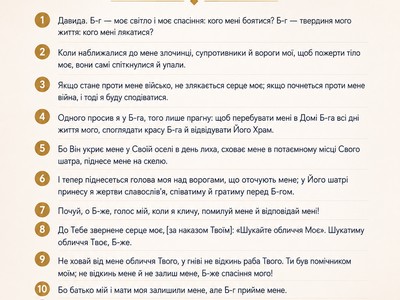
Psalm 27David: G-d is my light and my salvation: whom shall I fear? G-d is the stronghold of my life: whom should I be afraid of?As criminals, adversaries, and enemies approached me to devour my flesh, they stumbled and fell.If the army opposes me, my heart will not be afraid; if a war begins against me, then I will hope.There is one thing I have asked of G‑ d, and that is my desire: to be in G‑ d's House all the days of my life, to contemplate the beauty of G‑ d, and to visit His Temple.For He will shelter me in His dwelling place in the day of trouble; He will hide me in a secret place in His tent; He will lift me up on a rock.And now my head will be lifted up above the enemies that surround me; in His tent I will offer sacrifices of praise, singing and playing before God.Hear, O G-d, my voice when I call; have mercy on me and answer me!My heart is turned to you in obedience to your command, “Seek my face.” I will seek your face, O God.Do not hide Your face from me, do not cast Your servant away in anger. You have been my helper; do not cast me away or forsake me, for my salvation is God's.For my father and my mother have forsaken me, but G-d will accept me.God has come to your way, and lead me in the way of righteousness for the sake of those who follow me.Do not hand me over to my enemies, for false witnesses who breathe slander have risen against me.If I did not believe that I would see the goodness of God on the land of the living...Trust in G‑ d, be courageous, and let your heart be strong. Rely on G-d!
Preparing for Hanukkah: Candle 8. Leader's conclusion
Holidays
❗Great processes require great leaders.Hashmonai and Yehuda Maccabee are examples of people who took responsibility and led the people.A leader must be able to make non-standard decisions and lead people forward.❗ Hanukkah reminds us of this every year.📌 Wishes🕎May the light of Hanukkah inspire and sustain us all year long —that we may be worthy people and worthy Jews!
Preparing for Hanukkah: Candle 7. Anti-crisis part 8
Holidays
Mature systems must go through crises.Hanukkah is full of lessons about how to defend against dark forces and find new strength in moments of weakness.By studying these stories, we grow.
✨🕎 The brightest holiday of the year — Hanukkah — is approaching!
Holidays
What we know about itCandles 🕯️, Hanukkah🕎, donuts🍩, sevion🌀...But today, let's talk aboutWunderofWhat is a miracle?We used to think it was something that violated the laws of nature.In Hebrew, miracles are calledto NIS— "flags", orniflaot— "a sign." This is a manifestation of the power of G-d.After the victory of the Maccabees over the Greek-Assyrians, a miracle happened:oil, which would be enough for only one day, burned in the Temple lampeight days— until a new clean oil is prepared.And next to it is another miracle:victory of a small handful of dedicated people over a powerful armyofThe Maccabees lit the Menorah despite the resistance of those who adopted Greek customs and built pagan temples in Jerusalem.Why do we celebrate a miracle with oil in the first place, and not a military victory?Because the miracle with the oil was obvious — everyone saw it.And the victory, although great, looked natural.Therefore, through an obvious miracle, people learned to recognizehidden wonders— and they understood: everything, even the most unusual, comes from G-d.— And which one would be?hanukkah wondershappened to you?
Preparing for Hanukkah: Candle 6. Integration ("We take the best from them")
Holidays
In the 20th century, Rabbi Kook created an approach that allows Jews to use the valuable tools of other cultures while preserving the Jewish essence.But the process started earlier:📎Jewish sages partially adopted the methods of Greek textual analysis;the idea of ​​emanations of the Neoplatonists influenced the formation of the kabbalistic system of the Sefirot;Rambam borrowed logical models from Aristotle.❗This is how the Torah blessing is performed:"Japhet will dwell in the tents of Shem" - that is, the wisdom of the Greeks will serve the development of Jewish wisdom.
Preparing for Hanukkah: Candle 5. Identification ("We are not them")
Holidays
When spiritual conflict arises, we gain a clearer understanding of who we are and how we differ from others.📌Hanukkah gives a reason to think about the essence of the Jewish view of the world:❓ What we brought to humanity❓ What mission did the Most High lay in the Jewish people*Greek worldview and Jewish monotheismThe first Greece was pagan, with many gods.Jews contrast this with a single G-d and ethical monotheism.Later Greece is the cradle of science and logic.There is no room for miracles in their system.❗ And we believe that G-d rules the world without limiting Himself to the laws of nature.And the Hanukkah miracle with oil is a symbol of the fact that rationality and faith can coexist.
Preparing for the Hanukkah holiday: part 5. Candle 4. Temple candle
Holidays
The spiritual center of Hanukkah is the restoration of the Menorah in the Temple.The Greeks defiled the Temple, depriving it of its Jewish essence. The Jews lit the Menorah again — and, as it were, revived the Temple.The temple is our ownThe physical Temple is destroyed.But the spiritual Temple is in the Higher Reality and... inside a person.The menorah is with us.We have oil.The light is in us.
Preparing for Hanukkah: Candle 3. Ritual Part 4
Holidays
The main decoration of Hanukkah is the lighting of candles.Ritual in Judaism is not a "formality", but an instrument of communication between the earthly world and the Higher.Candles and oil carry deep meanings. Among them is the symbolism of Moshiach (the anointed).Eight as a symbol of infinityIn mathematics, the infinity sign is an inverted eight.In Kabbalah, the seven lower Sefirot are connected with our world, and starting with the eighth, it is the Higher World, access to which requires spiritual experience.
Preparing for Hanukkah: Candle 2. Military patriotic (teenage)
Holidays
Of all the Jewish holidays, only Hanukkah has a clear military victorious aspect. For centuries, Jews and their neighbors were not accustomed to perceiving Jews as warriors. Below is a very brief overview of Jewish heroism:Abraham goes to war against the world's rulers to save Lot-and wins.Shimon and Levi punish the city of Shechem for desecrating Dinah.During the exodus from Egypt, Joshua bin Nun becomes a great warlord.In ancient times, the prophetess of the Court, the hero Shimshon, King David — an outstanding commander and poet - are distinguished.Subsequently, Israel becomes a province of empires, loses its statehood, but Jews often fight as mercenaries and are known for their valor.Hanukkah awakens moraleThe Greeks did not usually impose their culture by force, but a fanatical emperor emerged who decided to break the Jewish way of life.Then the Hashmonahs rose up and led the people — and the Jews won, preserving their faith.In the 20th century, Jews fought in the First and Second World Wars, showing heroism. Many of them become the backbone of the Israeli army.And the image of a "weak Jew" changes to the image of a strong warrior-defender.To be continued…
Preparing for Hanukkah: Candle 1. Children's
Holidays
It is extremely important that we keep warm, joyful, beautiful stories from childhood. Growing up, we build on them — though not limited to childhood experiences.In Hanukkah, these are:Material joyHanukkah money —hanukkah Gelt(Yiddish) ordmey Hanukkah(Hebrew). Gifts that adults use to support the child's interest in the holiday.Even in Soviet times, many grandparents gave children Gelt - it was safe, because it did not have pronounced signs of Judaism."Taste" special effectsAdults struggle with diets, and Hanukkah brings exactly what is usually “impossible” — donuts, latkes, everything fried in oil. Children rememberthe pure joy of these tastes for life."Aesthetic" special effectsConcerts, performances, holidays — there are always a lot of them in Hanukkah, because there are no restrictions inherent in other Torah holidays. The doughnuts in the intermission are a classic.GameThe main symbol for children is the dreidel (savivon).Main imageCandles or oil lamps on the window when it is warm in the house, and outside it is cold, wind and snow. Contrast that is perfectly recorded in the child's memory.Children's Hanukkah is light, warmth, joy, tastes, the ringing of coins.Many “Soviet” Jews did not get it, but we can give it to our children now.
Preparing for Hanukkah:8 Hanukkah Candles as 8 Levels of Understanding Part 1
Holidays
Eight candles can be considered as eight stages of human development: from a small child to a world leader.1. Baby candle2. Military-patriotic (adolescent)3. Ritual4. Temple5. Identification ("We are not them")6. Integration ("We take the best from them")7. Anti-crisis ("Learning from mistakes")8. LeadershipThe eight candlestick themes are divided into two groups (four in each):Group 1:— the classical world of Jewry with themes accessible to most.Group 2:— "post-post-modern", where the Jewish view:becomes relevant to the peoples of the world;is enriched by the wisdom of the nations;protected from the dark forces;ready to take responsibility for the fate of the world.
📖 Lubavitcher calendar: 🌿 10 traditions of Chabad on the day of Oshan Rab
Holidays
🌿10 traditions of Chabad on the day of Oshan Rab️1ლ 📖Reading the book "Dvirim"At night, before midnight, they read the entire book "Dvorim" (Deuteronomy).Rebbe Rashab and Rebbe read it alone, and Tehilim read it with the community.️2ლ 🙏Joint reading of TegilimAfter midnight, the whole of Tegilim (Psalms) is read.That night, “Yehi-razon” is said after each book, and the Rebbe stood throughout the reading.️3ლ 🌙Cheerfulness until dawnAfter reading, Tehilim does not go to bed — they stay at school all night.This night is considered the time when the sentences of the year are finally sealed by mercy.4️ლ 🍎Distribution of apples with honeyAccording to an ancient Chabadian custom, the Gabbai distribute sweet apples to everyone.At home, they are eaten with honey in their bitch — as a sign of the sweet year and mercy.5️ლ 🌿Preparation ofArava (Willow)The branchesof the arava bindthe leaves of the lulava.The Lubavitcher Rebbe personally preparedarava for all family members.6️ლ 🪶HibbutArava (branching)Before the strike, the Rebbe separated the branches, counted themand lightly struck the ground — as a symbol of softening severity.7️ლ 👶Blessing of childrenRebbe Rajac lightly touched the children with the branchesof the Arava —adults three times, and children — once more than they are years old, saying:"Guurot memutakot"(relaxed severity).8️ლ 📚Removal of all Torah scrollsDuring the prayer of Oshanoth on the day of Oshan the Rabbi, all the Torah scrolls are taken out of the ark,to awaken the greatest joy and holiness.9️ლ 🍯Sweet mealAt the festive meal, a halu with honey andkreplakh— dumplings with meat as a symbol of joy and gentle judgment.🔟 💰Zoom in TzedakOn the day when the "court is mitigated by good", it is customary to give more tzedakah than usual.Source:https://t.me/LubavitcherRebe770 
🎉 Friends, we remind you!
Holidays
Today in Anativka we celebrate Simhat Beit ha-Shoeva — a holiday of joy, light and spiritual exaltation!Join us to share the light of the holiday, the fulfillment of the commandment of Arba Minim and a good mood!AnativkaThe holiday starts at 13:30We are waiting for everyone!
✨ We invite you to Anatovka on Simhat Beit ha-Shoeva ✨
Holidays
📅 12 October / 20 Tishrei1:30 p.m.📖 The holiday program includes:🌿 Fulfillment of the commandmentArba Minim🍽️ Meal atbitch🎉 Holiday programMusic🎠 Attractions for children and adults🚌Transferfrom the Central Synagogue of Kyiv — 12:30🚐 Departure from Anativka — 15:30–16:00Please register at:https://forms.gle/yqwFCNaNdZ9DfNmE6Dear friends!Please make an appointment for the celebration in advance!
📖 The Lubavitcher Calendar:10 Special Chabad Traditions on Yom Kippur
Holidays
Distribution of Lekah on the eve of Yom Kippur 🍯In the Hasidic communities of Chabad, it is customary to ask and receive "lekah" (copper) on the eve of Yom Kippur. The meaning of this custom: if a person is destined to ask for help from others during the year, he allegedly executes his "sentence" in advance, and the rest of the year passes for him in sweets and blessings.Ner HaKhaim (Candle of Life) 🕯️In Chabad, it is customary for married men to light a special candle in the synagogue, called Ner HaKhaim, as a means to longevity.Tradition of three plates of soup on the final meal 🍲There was a custom to eat three plates of soup at the final meal. If there is not enough time, it is advisable to add at least three spoons of soup, symbolizing this tradition.Blessing of Hasidim and Yeshiva disciplesAfter the Minha prayer on the eve of Yom Kippur, the Rebbe blessed all the Hasidim, and then gave a separate special blessing to the yeshiva students — just before the Kol Nidrei prayer (the first prayer on Yom Kippur).Reading Tegilim all day 📖In Chabad, it is customary to read the Psalms (Tegilim) throughout the holy day (except for the time of prayer) so that the stream of Psalms sounds continuously in the synagogue.Jacket (White Robe) and Gartel (Prayer Belt) RebbeThe Rebbe prayed on Yom Kippur in a tunic made of Rebbe Marash's shirt, which is worn over the head rather than as a regular shirt, and with the garret of Rebbe Zemah-Tzedekah.Ascent to the Torah in Minhu on the "Maftir Yona"In Chabad, it is customary for the Rebbe to rise to read the Maftir Yona. This is the only day of the year when he ascends to the Torah not on Shaharit, but on Minhu.Prayer of the Maars after the feastIt is customary to pray to the Maars after fasting, dressed in a jacket and talit, but with a hat on their heads.Avdala and Kiddush Levana (Moon Blessing)The Rebbe performed Avdala and changed fabric shoes to leather ones in his office, and only after that went out to speak Kiddush Levan.Yom Kippur 5734 — The Yom Kippur WarOn this day, the Yom Kippur War began. A few months before her, the Rebbe warned of the need to be strengthened in Torah, prayer and parenting, explaining that this is where the power to “defeat the enemy” comes from. After the outbreak of the war, his words were perceived as a prophecy.Source:(https://t.me/+8KbDy9dQVqAxZWE8 )
🌿🍋 Registration for Sukkot festive meals 5786 ✨🏡
Holidays
🍽️First Meal— 6.10.24 19:30 (evening meal in a 🌿 bitch)🍽️Second Meal— 7.10.25 13:00 (day meal in a 🌿 bitch)🍽️Third Meal— 8.10.25 13:00 (day meal in a 🌿 bitch)🍽️Fourth Meal— 13.10.25 19:30 (evening meal in a 🌿 bitch)🍽️Fifth Meal— 14.10.25 at 19:00 (evening meal at 🕍 VMZ)To participate, register at:https://forms.gle/osjFgRgUorgpeegr7 to those meals that you wish to visit.⚠️ Pre-registration isrequired! ✅HAG SUKOT SAMEAH!
Commandments
Sukhoth Commandments
Commandments
The most important commandment of the Torah about the holiday of Sukkot is the order "...take for yourself on the first day of the holiday the fruit of a beautiful tree, palm branches and shoots of a thick-leaved tree and river willows..." (Pentateuch, the book of Vaikra, 23:40).These four types of plants (arbaa minim) are necessary to fulfill the commandment of Sukhoth – netilat-lulav.The netilat-lulav commandment is fulfilled standing up. Take the lulav (here and here we will call all three plants: lulav, araba and adac, tied together) in the right hand – so that the zdera is turned to the obeyer of the commandment, and the etrog – to the left – and pronounce the blessing "commanded us to carry out netilat-lulav...."
Traditions
📖 Caparote rite Explanations, texts, transliteration
Traditions
🌅 WHEN IS KAPAROT HELD?The rite of kaparot is held on the eve of Yom Kippur, at dawn, when, according to the Kabbalah and the Talmud, the mercy of the Almighty is especially revealed. However, it can be carried out earlier, in the days preceding Yom Kippur.The meaning of this rite involves the realization that we too, for our sins, could, God forbid, suffer the fate of a slaughtered bird.🐓 WHAT IS USED FOR THE CEREMONY?🔹 It is customary for a man to take a rooster.🔹 For a woman — a chicken.🔹 For a pregnant woman — three birds: two chickens and one rooster.If it is not possible to purchase a bird for each person, one can rely on the opinion of those lawmakers who believe that with one chicken it is possible to carry a caparote for several women, and with one cock — for several men.If circumstances do not allow the purchase of chickens and roosters for caparotts, it is also allowed to use fish or money, which are then given to the tsedak.Original textTaking a bird, fish or money in their hands, they read the following passage:Сини людські — в’язні, що сидять у мороці та смертній темряві, у кайданах і залізних путах. Вивів Він їх із мороку та смертної темряви й розбив їхні пута. Нерозумні через свої грішні шляхи, через свої провини страждають. Душа їхня не приймає жодної їжі, наблизилися вони до воріт смерті. Волали вони до Господа у своєму горі, і Він урятував їх із біди. Послав Він їм Своє слово, зцілив їх і врятував від загибелі. Дякуватимуть вони Господу за Його милість і за чудеса, які Він явив синам людським. Якщо є в людини один ангел-заступник із тисячі, щоб сповістити про її правоту, то змилується Всевишній над цією людиною і скаже ангелу-рятівнику: «Не дай їй зійти в безодню; Я знайшов для неї викуп».🗣️ Transliteration:Bnei Adam, Yoshwei Khosheh Vetsalmavet, Asirei Ani Uvarzel. Josiah mehoshekh vetsalmavet Yenatek. Evilim MIDEREKH witha smart avonotei yit 'an. Kol ohel thetaev nafsham, vayagiu ad shaarei mavet. Waiiz'aku el Ado-nai batsar lai, mimtsukotey yoshiy. Yishlakh dvaro weirpayem, vimalet mishhitotam. Yoda lado nai hasdo venifleotav livni Adam. Im ish alav mal 'ahmelits ehad mini alef, leagid leadam yashro, vaihunenu vayomer: pedaeu meredet shahat, matzati hofer.🔄 WORDS WHILE ROTATING OVERHEADSaying the following words, they spin a bird, a fish or money over their head three times:“This is my replacement, this is my replacement, this is my ransom.”🗣️ Transliteration:Zeh (woman says: zot) caliphate, Zeh (zot) tmurati, Zeh (zot) kaparati.🐓 THE MAN SAYS:“Let the fate of this rooster be death, and my fate be good, long life and peace!”🗣️ Transliteration:Ze atarnegol yeleh lemita, vaani elekh lekhayim tovim arukhim uleshalom.🐔 THE WOMAN SAYS:“Let the fate of this chicken be death, and my fate be good, long life and peace!”🗣️ Transliteration:Zot atarnegolet telekh lemita, vaani elekh lekhayim tovim arukhim uleshalom.🐟 IF KAPAROT IS CARRIED OUT WITH FISH:“Let the fate of this fish be death, and my fate be good, long life and peace!”🗣️ Transliteration:Ze adag yeleh lemita, vaani elekh lekhayim tovim arukhim uleshalom.🪙 IF KAPAROT IS CARRIED OUT WITH MONEY:"Let this money go to the tsedak, and my destiny will be good, long life and peace!"🗣️ Transliteration:Ze amamon yeleh litsdaka, vaani elekh lekhayim tovim arukhim uleshalom.🔁 HOW MANY TIMES DO THEY REPEAT THE RITE?Then the whole procedure is repeated twice more. So, in general, the text of the caparot is read three times, and the bird is rotated overhead nine times.🤲 AFTER THE CEREMONYThe bird with which the caparote was carried out is given to the discoverer. It is recommended to observe how he cuts it, so that the feelings that a person experiences in these moments prompt him to deeper remorse.The slaughtered bird is given to the needy or "ransomed", donating its value in the tzedakah.It is important to remember!In no case should one think that the caparoths themselves atone for their sins. The fate of this bird prompts a person to reflect on his behavior and repent of his sins before the Almighty and before people.
Jewish Teens Kyiv (JYK Teens)
Converting dates from the Gregorian calendar to the Hebrew calendar
Day
Month
Year
Converting dates from the Jewish calendar to the Gregorian calendar
Day
Month
Year