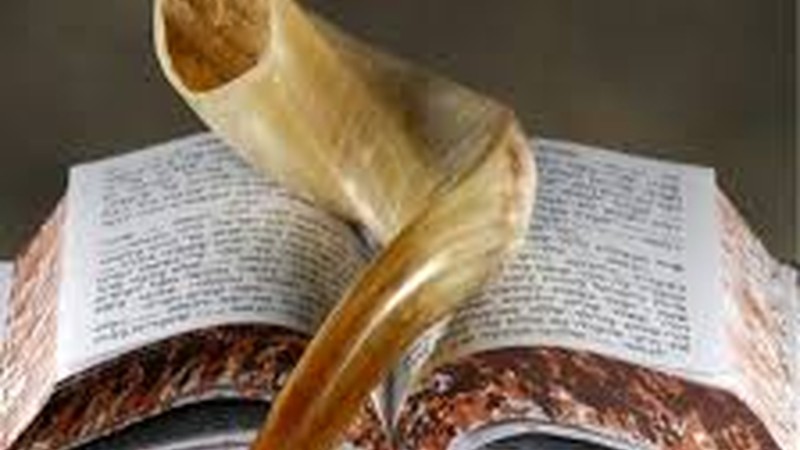
Prayer on the Jom Cympur "Yaalen Thangunine"
Latest news
👑 Secrets of the Sadigorsky Court: the amazing story of the Ruzhinsky Rebbe
In the history of Hasidism, few figures aroused such trembling admiration as Rabbi Yisrael of Ruzhin. His life resembled a fascinating historical novel, full of royal grandeur, hardships, severe austerities and the deepest spiritual heights.Let's dive into this amazing story and find out who this great righteous man was and what connected him with the Chabad dynasty.🌟 Who is Ruzhynskyi Rebbe?Rabbi Israel was born in the town of Proskuriv at the end of Rosh Hashanah. At the age of six he lost his father, and at thirteen he married. When he was sixteen, his older brother died, and the young Israel became the head of the Hasidim, continuing the glorious dynasty of his ancestors.Unlike many tzaddiks of that time, who lived very modestly, Ruzhiner behaved like a real monarch. He moved in luxurious carriages with thoroughbred horses and wore expensive clothes. This path was called "Derech Malchut" — "The Way of Royal Greatness". Its purpose was to show the world the dignity of an oppressed people.But behind the exterior luxury, there was an incredible modesty. The Rebbe ate almost nothing, slept only a few hours a night and wore exquisite gold shoes… but without soles. In the winter, as he walked through the snow, he was left with bloody footprints from the touch of his feet to the icy ground.⛓️ Royal Arrest, Prison and Brave EscapeIn 1838, because of a false denunciation by educators, the authorities arrested the Rebbe on a serious charge. For almost two years, he languished in the dungeons of a Russian prison.After his release under house arrest, the Rebbe made a dangerous escape, crossing the border of the Russian Empire. He found refuge in the Austro-Hungarian town of Sadigora, where he rebuilt his famous courtyard.📜 Ruzhiner and ChabadAlthough Ruzhyn Hasidism and Chabad developed in different ways, there was an incredible spiritual connection between the Rebbe of these currents.️1 Ruzhinsky Rebbe said that Alter Rebbe and Rambam came into this world from the same high spiritual source. That is why, according to Ruzhiner, Alter Rebbe in his "Shulchan Aruch" attached such great importance to the thoughts of Rambam.️2. One of the teachers of Ruzhiner's children was a Hasidic Mitteler Rebbe. In his room, in a closed closet, rare Hasidic manuscripts were kept. One day, the teacher forgot to lock the closet, and when he returned, he saw Ruzhiner carefully studying these manuscripts. The impressed teacher heard Ruzhiner's enthusiastic confession: “This is a real, pure ruach ha-kodesh!”🕯 Tzemach Tzedek and the Mystical Message of SeparationA particularly close relationship connected Ruzhiner with Tsemakh Tzedek. Tzemach Tzedek called him “Saint Ruzhiner” and often sent envoys to him for advice at critical moments for the entire Jewish people.Tzemach Tzedek told his sons amazing things:“When the Saint from Ruzhyn reads Tegilim, the whole world is open to him. On Shabbat, he sees the deepest roots of all world events and has the power to overturn the most severe celestial sentences.”There is an amazing story. On the day when Ruzhinsky Rebbe left this world, in Lubavitches — hundreds of kilometers away — Tsemakh Tzedek suddenly asked the servant to bring a knife in the middle of the day, tore his outer clothing as a sign of mourning — "kriya" — and said that the Saint from Ruzhin had just passed away.💡 The legacy that has reached our daysTheconnection between the two great courtyards continued in later generations. In 1991, during the distribution of dollars, our Rebbe spoke with a young Hasidic. Learning that he was born on 3 hashvans — on the day of Ruzhiner'smemory, the Rebbe smiled warmly, gave him an additional dollar and said:“May you have a successful year! It's Ruzhiner's birthday. May the Almighty help you to follow his paths... But just look, remain a Hasidic Chabad, not Ruzhin!" 😉The life story of Ruzhinsky Rebbe teaches us an important principle: true greatness lies not in pride or striving for the material, but in the ability to subjugate the whole world to the service of the Creator.No matter what external circumstances a man is surrounded by, his heart can always remain pure, devoted and filled with ardent love for every Jew.source: 📖 Lubavitcher Calendar
15/10/26
📖 Lessons from Noah's Weekly Torah Chapter: The Two Righteous Ones
🌊 At the very beginning of the chapter of the Torah "Noah", which tells about the Flood, the words are heard:“Noah was a righteous man, whole in his generations; Noah walked with G-d.”Surprisingly, the Torah begins the story of the almost complete destruction of mankind with words about the holiness of Noah. Even more strange is the formula: “I was holistic in my generations.”🤔 It seems that everything is not so simple with this righteous man. There are sages who believe that Noah “was righteous only in his generations, and if he had lived in the time of Abraham, he would not have been considered righteous.”Others interpret the opposite: he was righteous “even in his sinful generations, and even more so would he be righteous if he lived among more worthy people.”⚖️ From the point of view of the second group of interpreters, the picture has a clear contrast: Noah is a complete righteous man, his generation are complete sinners.But from the point of view of the first group, which cautiously questions the level of Noah's righteousness, the story is much more complicated.📜 Rabbi Berachiah said:“Moshe is more beloved of the Torah than Noah. Noah, who was originally called a“righteous man, ”subsequently descended to the level of a commoner — a“man of the earth. ”And Moses, who was originally called an“Egyptian, ”at the end of his life rose to the level of the“man of G-d. ”🕊 But why are we comparing Noah to Moshe? Why not choose a softer benchmark?Or Sameach explains that there are only two types of righteous:some retire, devoting themselves exclusively to the Torah;others leave their own interests and aspirations for the needs of the community.👥 People often tend to think of the former as more righteous than the latter. But Noah's story teaches the opposite.Solitary with G-d and detached from the problems of his generation, Noah remained righteous “in his generations,” that is, he did not reach the level of true, complete righteousness.Moreover, from the two quotes given in the midrash, we see a certain spiritual decline of Noah — to the level of the “man of the earth”.🔥 Instead, Moshe, whose personal spiritual improvement seemed to have faded into the background, and his whole life was devoted to the needs of the people — and not always only high spiritual, and sometimes simple everyday needs — rises "from strength to strength."🌧 The Age of Noah is the Age of Catastrophe:“And the earth was corrupted before G-d, and the earth was filled with wickedness.”No, Noah is not silent, as one would expect from a hermit. Sages say that he rebuked his generation and told them:“Repent, and if you do not repent, the Almighty will bring a flood upon you.”❓ So how do commentators reproach Noah? And why hasn't his sermon been heard by a generation?The 🪵 Midrash of Tankhuma tells an amazing story:“When the Almighty commanded Noah, 'Make yourself an ark out of cedar wood,' Noah went and planted the cedars, cut them down, sawed them, and made an ark out of them. Contemporaries asked him: “Why these cedars? Why this ark?”Noah answered them, “The Almighty is going to bring a flood to the earth, and He has commanded me to make an ark so that I and my family can be saved.” And his contemporaries laughed at his words. "🏡 Noah does not go to people — he only answers their surprised questions. He does not go out to the people, but works modestly near his house, cutting cedar logs.Noah was not completely righteous not because he did not obey the order of the Almighty. On the contrary, we know for certain that he carefully fulfilled all the commandments of the Creator.💔 But it seems that his heart did not really hurt for his neighbor, for humanity, for the whole world. Sinners caused him not so much pity as righteous anger.Therefore, he warned them, but did not save them.I blamed him, but I didn't persuade him.Moshe behaves 🕯 differently when the Almighty said to him:“Now leave Me, and My wrath will burn against the people, and I will destroy them…”Moshe replied:“If you do not forgive their sin, then erase me from Your Book.”⚖️ And just as the two types of righteous are different, so is the result of their activities:noah's generation is doomed to death,generation Moshe — receives forgiveness.🌱 This applies not only to the righteous of the "higher league", but also to ordinary people like you and me.Notes:Pentateuch, book of Breishit, 6:9.Ibid., 9:20.Pentateuch, Book of Shemot, 2:19.Pentateuch, Book of Devarim, 33:1.Talmud, Tractate Sanhedrin, 108.Pentateuch, Book of Shemot, 32:32.source: chabad.org
15/10/26
Yom Yom: 4 Heshvan.
📖 In a Hasidic book"Yom-yom"said:"Daily Torah study is a matter of vital importance. And not only for the soul of the one who studies it, but also for the souls of all his loved ones, because then the atmosphere in the house becomes an atmosphere of Torah and God-fearing."✨What is this passage about?🔹 Torah as a spiritual necessityTorah study is compared to air or water - it is not an additional decoration of life, but a deep need of the soul.🔹 Influence on the familyThe spiritual state of a person does not remain only his personal matter. It affects the entire home: the spouse, children, loved ones, the tone of conversations, decisions and the very atmosphere in the family.🔹 The atmosphere of the houseWhen the study of Torah becomes regular, the house is gradually filled with light, internal order and awe before the Most High. Even an ordinary space can become a place where holiness is felt.📌Main idea:daily study of the Torah changes not only a person, but also the entire space around him. It creates an atmosphere of warmth, faith and spiritual support in the house.
15/10/26
Lessons from the Noah Torah Weekly Chapter: Noah's📜 Testament as Interpreted by the Cabal
🌈 Mystical explanation of the rainbow phenomenon📖After the Flood, the Almighty made a covenant with Noah and his sons:“I put my rainbow in the cloud, and it will be a sign of the covenant between me and the earth. And when I bring the cloud above the ground, a rainbow will appear in the cloud. And I will remember My covenant which is between Me and you and between every living thing in all flesh, and the water shall no more become a flood to destroy all flesh.”🌈 The rainbow was chosen as a symbol of the Covenant between G-d and people, a sign of G-d's Mercy that would remind a person of his duty to the Creator.❓ But why the rainbow?🔬 A well-known scientific explanation of the rainbow as an optical phenomenon of spectral refraction of sunlight in raindrops. This explanation was used by propagandists of atheism to deny the "primitive" and "anti-scientific" ideas of "biblical authors". Criticizing the Book, which is the spiritual guide of many generations, they, as a rule, did not even consider it necessary to get acquainted with the traditional sources of Judaism.📚 Some Torah commentators, including Rabbi Nisim Girondi and Abrabanel, believe that the rainbow was never seen before the Flood due to the excessive density of clouds. It was the excessive density of evaporation and precipitation on the ground that made the flood physically possible.🌍 Rabbi Ovadia Sphorno believes that as a result of the Flood, the earth's axis shifted, which caused a change in the seasons. As a result of these radical changes, the duration of human life has sharply decreased, giant animals and plants have disappeared.☀️ Modern science has established that ultraviolet rays have a harmful effect on the human and animal body. They accelerate skin aging and can cause skin cancer. Before the Flood, particularly thick clouds prevented exposure to sunlight. Perhaps this explains the fact that human life expectancy has reached many centuries.🦕 The skeletons of giant lizards, dinosaurs, indicate that the animal world before the Flood was significantly different from the modern one. After the Flood, as the clouds became thinner, they had a rainbow. According to commentators, the rainbow has become a symbol that clouds no longer bring chaos and destruction to the world.✅ So the rainbow was chosen as the symbol of the Covenant between G-d and man.🔐 It should be noted that this explanation was known only to the initiated for many centuries, since the teachings of the Cabal were not widespread. In addition, it was this explanation that required considerable preparation — both in the knowledge of nature and in mystical knowledge.👧 However, Sacred Scripture is written not only for thinkers, but also for the simplest people. By law, it begins to be studied with children from the age of five, so a necessary and sufficiently simple explanation is understandable even to a child.✨ The mystical meaning of the rainbow is reflected in the Book of the Prophet Ehezkel (1:28):“Like a rainbow in a cloud on a rainy day, this was a vision of the shining around — a vision of the likeness of Glory B-ZhOYA.”🌈 The Prophet compares the vision of Divine Glory to the image of a rainbow. What is the point of this comparison?📖 Returning to the story of the Torah Flood, it is said:“I put my rainbow in the cloud…”❓ Why "My"?📚 In the Midrash, the word "Kashti" — "My rainbow" — is interpreted from the root "ekesh", which means "likeness". Hence “Kashti” — “My rainbow” — means something like Me.🤔 But what is this similarity?📜 In the Psalms it is written (81:1):“The Sun and the Shield are the Lord G-d.”The ☀️ word "Lord" in biblical translations, as a rule, is given the Name of G-d "Avaye", and the word "G-d" — the Name "Elokim", which indicates the G-d attribute of the Judgment, the Law, the laws of nature.🛡️ The Talmud says, “The sun has a shield that protects nature from destruction by the sun's rays.”🔆 "Away", figuratively speaking, is like the sun: it is the source of light, the Source of Genesis. But if the Infinite Light of the Source of Being were perceptible to creatures, then the independence of creation would not be felt: all that exists would be only a continuation of the One Being.🧭 Imagine a world in which there is no individual existence of things. In such a world, there can be neither personal freedom nor a choice between good and evil.⚖️ The unlimited light emanating from Awaya seems to “destroy” everything. Instead, the name "Elokim", which represents the natural order and laws of nature, hides the light that comes from "Avaie" under the shell of naturalness.📌 Thename “Elokim”, which is correctly translated as “Almighty” or “Almighty” and means G-d as the Lord of all the forces of nature, is also grammatically a plural form on behalf of “Eloka”. This indicates that due to the refraction of the Light of the One Reality, "Avaye" in the Elokim prism makes it possible to form a plurality and relative independence of being.🌈 In the light of what has been said, one can understand why the vision of the Glory of God in the prophecy of Yechezkel is likened to the appearance of a rainbow.☁️ The white light of the sun has the ability to decompose into many colors of the rainbow spectrum, refracting in the cloud. The cloud is the "Shield" through which sunlight passes.🌈 The seven colors of the rainbow represent the seven Sefirot — the seven Divine Attributes, or the seven basic forces operating in the world.☁️ "Cloud" or "cloud" represents the action of the Name "Elokim", which is sometimes translated as "judge" and reflects the Divine Judgment on sinners.⚖️ The ultimate goal of the Divine Court is not to punish sinners, but to correct them.🕊️ That is why there is also a pardon, which gives a person the opportunity to correct his path. The pardon comes from Awaie.📖 “And it shall come to pass, when I have thickened the clouds above the earth, that a rainbow shall appear in the cloud.”📚 According to Rashi's interpretation, this phrase should be understood figuratively:☁️ "When I thicken the clouds above the earth" — when My Attribute of Judgment will prompt Me to bring darkness and destruction to the earth, then...🌈 "a rainbow will appear in the cloud" — the Light "Avaie", the Light of Mercy, penetrates the cloud, that is, the Attribute of the Court.📜 “And I will remember the Covenant… the everlasting Covenant between the Omnipotent and every living thing.”🤔 What is strange is that G-d speaks of Himself in the first person — "I", then in the third — "Elokim". However, this, as it was said, becomes clear: a reminder of the Covenant between G-d and the earth is needed only when the Judgment — Elokim — acts, because mercy does not punish.✅ This explains the fact that in the entire 9th chapter, which refers to the Covenant and the sign of the rainbow, only the Name "Elokim" is mentioned, and the Name "Avaye" is never used, because Mercy does not need a reminder of the Covenant.📝 Note: Pentateuch, book of Breishit, 9:13–15.✍️ Rabin Dov-Ber Khaskelevichsource: chabad.org
14/10/26
Our dates: 3 hashwans
🔖3 Hashvanah 5627 (October 12, 1866) — Yorzayt (anniversary of the departure from this world) Rabbi Yehuda-Lejb from Kopys.Rabbi Yehuda-Lejb (also known by the acronym Maharil) was the son of the third Lubavitcher Rabbi, Rabbi Zemach-Tzedek. He was born in 1807, the second son of Rabbi Tsemakh-Tzedek, and during the ceremony of circumcision with a sandak (a person holding a baby in his arms) was his great-grandfather — Alter Rebbe. Rabbi Yehuda spent his childhood years next to his beloved grandfather, the second Lubavitcher Rabbi Miteler Rebbe, who taught him Tori and Hasidut.After the departure from this world of his father, the third Lubavitcher Rabbi, Rabbi Yehuda left Lubavitches and settled in the town of Kopys, where he led a group of Hasidim. Rabbi Maharil had thousands of followers (the so-called Kopi Chabadniks), although he himself headed them for only two months — Elul and Tishrei. On the feast of Simhat Torah, he fell ill, and on 3 hashvans, half a year after his father's departure, Rabbi Yehuda-Leib also departed from this world.The 🔖3rd hash of 5611 (October 9, 1850) — yorzait (anniversary of the departure from this world) Rabbi Israel Friedman, a rabbi from Ruzhin.Rabbi Israel Friedman, the great-grandson of Rabbi Dov-Ber from Mezhyrich (known as Mezhyrich Magid), was born in 1797 in the town of Pogrebyshche near Kyiv. Already in his early youth, Rabbi Israel chose the town of Ruzhyn (in Hebrew it was called Ryzhyn) as his residence. The court of the Ruzhinsky Rebbe (that is, his honor and property) was not inferior to most of the princely courts of Europe at that time in terms of splendor and splendor - Rabbi Israel kept numerous servants and traveled in a luxurious carriage pulled by four horses. However, despite such a demonstrative lifestyle, the Ruzhinsky Rebbe was a universal favorite (in particular, he was friends with the third Lubavitsky Rebbe, Rabbi Tsemach-Tzedek), and he was forgiven for everything. It was said that "The Ryzhiner Rebbe, of course, walks in golden boots, but these boots have no soles, so he steps on the snow with his bare feet."In 1838, Rabbi Israel was accused by the authorities of ordering the execution of two informers. The trial lasted a year and a half, hundreds of Jews were arrested and tortured, and 80 people appeared before the court. Six community leaders were sentenced to life imprisonment, others to exile in Siberia. The Ruzhinsky Rebbe was under arrest for almost two years; the lawyers did everything to prove his innocence in the case, and after the conclusion of the investigation, he was released, but left under police supervision, because the authorities suspected him of intending to become a Jewish ruler. The Rebbe moved to Chisinau, where the local governor was more sympathetic to the Jews, then moved to Iasi, and from there to the Bukovina town of Shatsk. So he moved from city to city until, after numerous efforts of his supporters, on December 20, 1845, Emperor Ferdinand I allowed him to live in Sadagora (Sadigur) in Bukovina (now Sadagora is one of the districts of Chernivtsi). The Hasids purchased the Golden Stream estate near the city for him. He built himself a luxurious mansion and once again began to lead a luxurious lifestyle. The Ruzhinsky Rebbe did a lot for the residents of Eretz Israel, in particular, he provided funds for the construction of the Tiferet Israel synagogue in the Jewish quarter of the Old City of Jerusalem.Rabbi Yisrael Friedman is buried in Sadygur. The sons of Ruzhynskyi Rebbe founded Hasidic dynasties in other towns, becoming the ancestors of Sadigur and Boyan Hasidismsource: chabad.odessa
14/10/26
Memorial to the victims of the Holodomor in Israel
A delegation of Ukrainian journalists visited the memorial to the victims of the Holodomor in IsraelAs part of the visit to Israel, a delegation of Ukrainian journalists visited a memorial dedicated to the victims of the Holodomor of 1932–1933 in Ukraine.source: IsraelinUkraine
13/10/26
Underground 📜 legend and “agent” Rebbe
Some people live a life that would be enough for a few adventure novels. The story of Rabbi Simkh Gorodetsky (5663-5744) is a chronicle of incredible self-sacrifice, secret operations, death sentences, miraculous salvation and uncompromising loyalty to his people.🕵️♂️Secret Messenger of the Sixth Rebbe and the Underground NetworkSimkha was born in 5663, 27 Menachem-Ava, in Bobruisk, in the family of the rivers Mordechai-Lejba and Reizl Gorodetsky. In 5683, when the Soviet regime launched a brutal campaign to eradicate Jewish tradition, Rabbi Rayatz gave Rabbi Simcha an extremely important commission — to become an envoy.His task was to travel around Jewish communities throughout the Soviet Union, raise funds for the Tomhei Timim underground network, uncover hidden mikvahs, and organize Torah lessons. He moved under false names, constantly changed routes and risked his freedom every day.📜 Amazing meeting in EkaterinoslavDuring one of his trips, Simkha visited the house of Chief Rabbi Katerynoslav — Rabbi Levi-Itzhak Schneerson, the father of the seventh Rebbe. Rabbi Levi-Yitzchak led him to the door of the room of his eldest son, the future Lubavitcher Rebbe, and showed him how he was immersed in a deep study of the Torah.“Remember this image!” said Rabbi Levi-Yitzchak.Decades later, coming to the Rebbe in New York for a personal audience, Rabbi Simcha remembered this meeting and told the Rebbe how he had seen him in his youth at school.Mission in Samarkand: Saving Jewry in UzbekistanLater, Rabbi Rayats sent Rabbi Simkh to Samarkand. Rebbe Rashab's envoys Rabbi Shlomo-Yehuda-Leib Eliezerov and Rabbi Chaim Nahe acted there a few years before him.In Samarkand, Rabbi Simkha launched a large-scale underground activity:*Created headers for the children of Bukhara Jews.*Constructed mikvahs in private homes so that they could not be detected by organ agents.*Organized material and spiritual assistance for thousands of refugees arriving in Central Asia.⚖️ Sentence to death, 25 years of Gulag and salvationRabbi Simkh's vigorous activity could not go unnoticed by the Soviet special services for long. The NKVD arrested him several times. He was subjected to brutal interrogations, trying to find out the names of other members of the Chabad underground, but he did not extradite a single person.At the last trial, he was sentenced to the most severe sentence — shooting.However, a real miracle happened: at the last moment, the highest authority replaced the shooting for 25 years of strict regime camps in the Siberian Gulag. He served his sentence in extremely difficult conditions until 5713, when, after Stalin's death, he received amnesty and was released.He later described all his experiences, trials and miracles in his famous autobiographical book **"The Jewry of Silence"** (*Yahadut ha-Dmama *), which became a valuable historical document on spiritual resistance in the USSR.🏢 New Life: Kfar Chabad and Yeshiva for Bukhara JewsIn 5724, Rabbi Simkh Gorodetsky managed to get permission and leave the USSR. Immediately upon arrival, he first flew to New York — to the Lubavitcher Rebbe.Having settled in Kfar Chabad, he did not retire, but with renewed vigor joined the community service:1. Becoming secretary of Vaad, Radi Kfar-Habad.2. Managed the mutual aid fund, gemakh, and engaged in spiritual mentoring for new repatriates.3. Helped thousands of Bukhara Jews settle in a new place.4. In the 5730s, he became one of the main founders of the yeshiva for Bukharian Jews in Kfar Chabad.🕊️ The last "Lechaim" from the RebbeIn 5740, before the feast of Passover, Rabbi Simkha married a widow from Tashkent for the second time.On the eve of Yom Kippur in 5744, Rabbi Simcha was in Brooklyn and received the Leki from the Rebbe himself.Only a day after returning from New York, 30 Tishrei 5744, Rabbi Simcha Gorodetsky left this world at the age of 80. He was buried on the Mount of Olives in Jerusalem.Rabbi Simcha Gorodetsky remained in the memoryof the people as a symbol of unbreakable faith, courage and complete dedication for the sake of every Jew.sourceLubavitcher calendar]
13/10/26
Lessons from Torah Noah's Weekly Chapter: The Comforting Flood
From the works of Lubavitsky Rebbe; short adapted summaryAs you know, the title of each chapter of the Torah reflects its content. However, the head of Noah, at first glance, seems to violate this rule. After all, it is about the Flood, about the generation of the builders of the Tower of Babel and the punishment that befell them, that is, about events that do not cause a sense of peace of mind, which the nameof Noah hints at.A similar question arises when we mention that the Flood in Scripture is called “the waters of consolation.” How is this possible? After all, all life on earth was "washed away" by these waters.The fact is that the name Noah indicates the inner meaning of the events that took place. The Flood itself and the punishment of the Tower of Babel generation certainly cannot be called a state of rest. But their result was balance and peace, which the world had not yet known.The Flood washed the earth and created a world incomparably better than the previous one. Midrash says that Noah came out of the ark and saw a new world. It was a world on such a high spiritual level that the Almighty made a “union for all generations” with it. So, the waters of the Flood, the “waters of consolation,” really brought comfort.This is the inner meaning of the difficulties and trials that a person encounters in his life. By themselves, these phenomena can be difficult, undesirable and painful, but in their depths there is a hidden good.Overcoming difficulties and obstacles, a person discovers the spark of holiness hidden in them. Moreover, these obstacles themselves can turn into goodness and holiness and help a person in serving the Creator.All of this has a special connectionto the week the Noah chapter is read. These days we are moving from the holidays of the month of Tishrei to everyday life. When a Jew moves away from the exalted atmosphere of Tishrei and plunges into everyday life, he can be overwhelmed by confusion, household worries and worries about “daily bread”.The head of Noah gives us support and teaches: do not get lost in the face of difficulties rolling with the wave. It is in our power to turn this stream of worries into "waters of consolation", into peace of mind.How exactly? You need to enter into the words of the Torah and prayers, just as Noah entered the ark. After all, the word taiva means both "ark" and "word". This will not only protect against the “flood” of difficulties, but also help to turn this “flood” into waters of consolation and inner peace.Everyday difficulties and worries can be sanctified and lead a person to high levels of service to the Almighty, if he manages to treat them correctly. You should not be afraid of "gray everyday life". One has only to meet them with faith in the Creator, with a sense of His constant closeness. And then the good hidden in them will be revealed.Source: A Free Translation of the Rebbe Conversation Published in Likutai Sikhot, Vol. 20, p. 285.
13/10/26