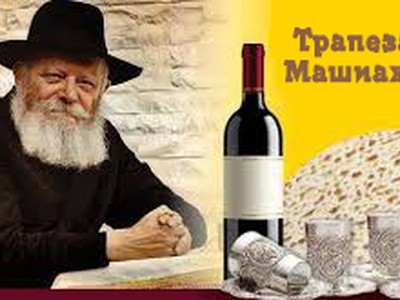
Meal of Moshiach
Traditions
The Meal of Moshiach: Ending Passover with the Light of Future RedemptionThe founder of Hasidism, Rabbi Israel Baal Shem Tov, introduced the tradition of a special, third meal that concludes the last day of Passover. It was called The Meal of Moshiach. The Baal Shem Tov taught that this day was illuminated by the light of future redemption, and therefore its doors were left wide open - anyone who passed by could join the festive meal.Seven generations later, at the beginning of the 20th century, another custom was added to this tradition, likening The Meal of Moshiach to the Passover Seder. The meal begins after the daily Mincha prayer, and during it, four glasses of wine are drunk - as a reminder of the four glasses with which, according to the prophets, the Almighty will comfort the people of Israel after the final and complete liberation (Geula).The meaning of this meal is to make the idea of the coming of Moshiach and the future liberation part of oneself, so that this feeling becomes as natural as food becoming human flesh and blood.If the first days of Pesach are associated with the exodus from Egypt, which was the beginning of a new stage in the history of mankind, then the last day of the holiday symbolizes the future liberation that will occur with the coming of Moshiach. That is why the custom of drinking four glasses of wine, symbolizing the future Geula, is performed in the final hours of Pesach.The Lubavitcher Rebbe, Rabbi Menachem-Mendel Schneerson, called on all Jews to follow this tradition and participate in the Meal of Moshiach.
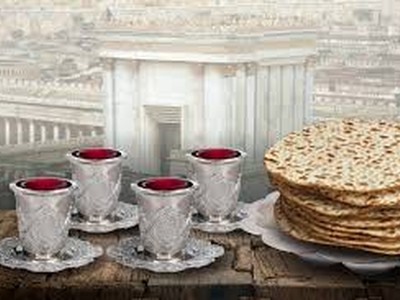
The Day of the Revelation of the Light of Mashiach
Traditions
Why is the "Meal of the Messiah" held on the last day of Passover?The Jewish tradition has preserved many customs associated with the holiday of Passover. One of them is the "Meal of the Messiah," a festive feast that is traditionally held on the last day of the Passover week.The Torah indicates the first and seventh days of Passover as holidays, non-working days. However, in the Diaspora, all holidays are celebrated not for one day, as in Israel, but for two. Therefore, in the Holy Land, the Meal of the Messiah is held on the seventh day of Passover, and outside of it - on the eighth.Otherwise, this meal is held the same in the Land of Israel and in the Diaspora. Shortly before the end of the last day of Passover week, a table is set in the synagogue, to which everyone present is invited: rabbis, synagogue parishioners, and just people who happen to drop by. It is not yet permissible to consume chametz - leavened products - so there is matzo and Passover wine on the table. Each participant in the feast drinks four glasses of this wine, just as they do on the first nights of the holiday - at the Passover Seder.This custom was introduced by the founder of Hasidism, Rabbi Israel Baal Shem Tov. As stated in the book "Ayom Yom", on the final day of Pesach, the Besht held three meals. He called the last meal "the meal of Mashiach", since on this day the light of Mashiach shines openly. Since 5666 (1906), thanks to the efforts of Rebbe Rashab - the fifth Lubavitcher Rebbe, this custom has become generally accepted among Lubavitcher communities.Since the main goal of Hasidism is to bring the coming of the Messiah closer, it is understandable why the leaders of Chabad pay so much attention to the day of the "open radiance of the light of the Messiah." Especially since this radiance manifests itself in simple material actions. Think for yourself: if this were a "lesson" or a "concert of the Messiah," it would be logical to assume that special intellectual or spiritual "means" would be required for its perception. But the Besht established the meal, which means that the "radiance of light" penetrates not only the sphere of thoughts and feelings, but also into physical reality.It is no coincidence that the custom of arranging the meal of the Messiah was introduced by the founder of Hasidism. In one of his letters, the Baal Shem Tov describes his meeting with the soul of the Messiah himself, where, to the Besht's question: "Teacher, when will you come?" He replied: "When the sources of your teaching are poured out." That is, when the teachings of Hasidism will reach even those who consider themselves "outside" - outside holiness. To those who, it would seem, have no relation to the Divine.For almost three hundred years, the teachings of Hasidism have been spreading throughout the world, finding the keys to the hearts of our brothers and sisters who lived "outside" yesterday. More and more sons and daughters of Israel are beginning to identify themselves with the Jewish religious community of their city, are beginning to live according to the laws of the Torah.Similarly, the meal of Mashiach is becoming an increasingly widespread Jewish custom in our days. The most diverse people gather at one table on the final day of Pesach. But when those who already see the "light of Mashiach" and those who are not yet able to feel it are sitting at the table, we all become involved in this process. And as a result, it becomes much easier for us to feel our connection with Mashiach and understand our role in the approaching of his coming.A hint of the "light of Mashiach" is also contained in the atar - a passage from the book of the Prophets - which is read on the last day of Pesach after the public reading of the Torah scroll. Recall that the chapters were selected so that their content in some way explains the weekly chapter or holiday passage. This atar tells of the victory of the Jewish king Hezekiah over the army of Sennacherib. And although the fall of Sennacherib occurred on the first night of Pesach, we read about it on the last day of the holiday, because it is about the victory of Hezekiah, who prayed to the Creator to make him Mashiach.Hezekiah, a pious and God-fearing descendant of King David, could have become the Messiah and brought back the ten tribes of Israel from exile, uniting the entire Jewish people. But this was not destined to happen, because the Almighty deprived him of this high honor.It happened like this: a Babylonian delegation arrived in Jerusalem to congratulate Hezekiah on his victory over the Assyrians and to express to him their admiration for the miracle that the Creator had performed for him when He delayed the movement of the sun for ten hours. The king received the ambassadors very cordially and showed them all the treasures collected both in his palace and in the Temple. As soon as the delegation left the city, the Almighty sternly pointed out to Hezekiah his unforgivable mistake. After all, instead of taking the opportunity to glorify the Name of the Most High and explain to the Babylonian ambassadors that only G-d has power over life and death and all the forces of nature, the king descended to a primitive flaunting of his wealth. Although he could, without leaving Jerusalem, free millions of Babylonian inhabitants from idolatry.Despite this, the period of Hezekiah's reign went down in history as a time of happy political and economic prosperity for the country. But his most important achievement is rightfully considered the revival of the true Jewish spirit and the eradication of idolatry in the Holy Land.

JEWISH INSTRUCTIONS:
Traditions
3rd Nisan – “on the third day…” (“Naso” 7:24-29), etc.Each day, after reading the appropriate passage, the following text is added:“May it please You, Lord, my G-d and the G-d of my fathers, to enlighten today, according to Your great mercy, the holy souls who are renewed like birds, and who coo, praise and pray for the holy people of Israel. Master of the world, bring in and present these holy birds to the holy place, as it is said: “The eye has not seen G-d except You”... May it please You, Lord, my G-d and the G-d of my fathers, that when I, Your servant, from the tribe (they call it the generation whose head brought the offering on this day. On the first day they say “from the tribe of Yehuda”) read in Your Torah, the chapter of today’s leader (tribe), then may all the holy sparks and all the holy light contained in this tribe shine upon me, to understand and comprehend Your Torah, and in fear of You to do Your will all the days of my life, I, and my descendants, and the descendants of my descendants forever and ever, Amen.”This passage is read by everyone, including the Levites and the priests (although the head of the tribe of Levi did not participate in the consecration of the altar), because, according to Kabbalah, this text applies to all Jewish souls.On the 13th of Nisan, the final part of the chapter “Naso” is read, starting with the words “Behold, the consecration of the altar,” which summarizes all the perfect sacrifices, and then the first four verses of the next chapter “Behaaalotha” are read, which speaks of the temple Menorah – in honor of the generation of Levi, which did not participate in the sacrifices during the consecration of the Mishkan. However, the passage “May it be as you wish...” is not read on this day.BIRKAT HA-ILANOTMy friends and I... sorry, our people have a custom of thanking the Almighty for everything. "Everything" includes flowering trees, so there is a special blessing that is said only once a year and only when they first see a tree in bloom. Rambam writes: “Everyone who sees flowering trees with buds swelling in the month of Nisan should recite the following blessing: “Boruch Ato A-doy-noy E-lo-gey-nu, Melech go-oylom, she-loy hisar beylomey klum u-voro vey briyeys teyveys veyloneys teyveys, leyoneys bohem bney odom” (“Blessed are you, God, our G-d, King of the Universe, who created a perfect world (literally: “a world that is not deprived of anything” – note) and created in it beautiful creatures and beautiful trees for the enjoyment of the sons of men”).This blessing can also be recited later, not in Nisan, but in the light version, without mentioning the name and title of the Most High.This year, due to the early arrival Nisan and the late arrival of spring, the trees in Odessa have not yet bloomed and it is unknown when they will bloom, but we will, as always, hope in Him and keep our eyes wide open.What is important to remember is that this blessing is not said on Saturdays and holidays, and on weekdays it is said only over fruit trees (and there must be at least two flowering trees in the speaker's field of vision) and does not apply to trees that do not bear edible fruit. At the same time, these trees must not be eagle trees, that is, older than three years.chabad.odessa

Our dates:
Traditions
Nisan 3, 5655 (March 28, 1995) – Yorceiit (anniversary of passing from this world) of Rabbi Levi-Yitzhak Slonim, son of Rebbetzin Menuchi-Rachel, daughter of the Mitler Rebbe.Rabbi Levi-Yitzhak, grandson of the second Lubavitcher Rebbe, was born in Lubavitcher in 1883 and at the age of 12 moved with his family to Eretz Israel.For many years, Rabbi Levi-Yitzhak was the head of the Jewish community of Hebron, and also headed the Chabad Hasidim in the Holy Land. He traveled to Russia several times to meet with the fourth and fifth Rebbes – Rabbi Shmuel (Rebbe Magharash) and Rabbi Sholom Dov-Ber (Rebbe Rashab).Rabbi Levi-Yitzhak is buried in Hebron, next to the grave of his mother, Rebbetzin Menuchi-Rachel.

Our dates:
Traditions
*Nisan 5, 5585 (March 24, 1825) – Yorceiit (anniversary of the passing of Rabbi Avraham-Yehoshua-Yeshel ben Shmuel of Apta.Rabbi Avraham-Yehoshua, also known as the Apter Rebbe and Ogev Israel (“Loving Israel”), was born in the Polish town of Neustadt. He came from famous rabbinical families on both his father’s and mother’s sides and showed great promise from an early age. Having acquired considerable knowledge, he began studying with one of the most prominent Hasidic tzaddiks – Rabbi Elimelech of Liżensk and Rabbi Yechiel-Michel of Złoczew. Becoming one of the most prominent representatives of the growing Hasidic movement, he headed the community in the town of Kolbasów, and then, in 1800, in Opatów (Apt). He was a rabbi in other places (for example, in Iasi), but in the Hasidic Mays he forever remained the Apter Rebbe.Around 1810, the Apter Rebbe settled in Medzhibozh, the city of the founder of Hasidism, Rabbi Israel Baal Shem-Tov. Here he lived out the rest of his years.The Apter Rebbe was one of the most prominent Jewish sages of his time, and the number of his followers and supporters was greater than that of the other tzaddik who lived at that time.*Nisan 5, 5662 (April 12, 1902) – Yorzeit (anniversary of departure from this world) of Rabbi Shneur-Zalman Fradkin of Lublin.Rabbi Shneur-Zalman was born in Lyady (Belarus) and was a student of the Gaon and Hasid Rabbi Eliyahu-Yosef Rivlin. Thanks to his remarkable abilities, Shneur-Zalman became a great expert in Torah and Hasidism and was one of the most devoted Hasidim of the third and fourth Rebbe – Rabbi Menachem-Mendel (Rebbe Tzemach Tzedek) and Rabbi Shmuel (Rebbe Magharash).At first, Rabbi Shneur-Zalman was a teacher in the Belarusian town of Polotsk, but then, at the invitation of the local community, he moved to Lublin, Poland, where for a long time he was the city rabbi and head of the court (av beis-din).A great sage, awarded the title of Gaon (genius) and a great Hasid, Rabbi Shneur-Zalman is also known by the name Torat Chesed (this was the name of the book he wrote). Rabbi Shneur-Zalman is buried in Jerusalem, on the Mount of Olives.

Our dates:
Traditions
*Nisan 7, 2488 (1273 BC) – The Spies Visit Jericho.A month after Moshe Rabbeinu passed away, his successor, Rabbi Yehoshua bin Nun (Joshua Navin), sent two spies, Caleb and Pinchas, to the city of Jericho, which was on the other side of the Jordan River.The spies were to gather information necessary for the Jews to conquer the first city in Eretz Israel. In Jericho, the spies were assisted by a woman named Rahab, who lived in an apartment located inside the fortress wall (Rahab later became Yehoshua bin Nun's wife).*Nisan 7, 5504 (March 20, 1744) – Yorceiit (anniversary of departure from this world) of Rabbi Yitzhak of DrohobychRabbi Yitzhak was a famous Kabbalist and it was he who introduced his son Yechiel-Michel to Rabbi Israel Baal Shem-Tov. Later, the Baal Shem-Tov’s student became known throughout the Jewish world as Rabbi Yechiel-Michel of Zlochiv or “The Maggid (Preacher) of Zlochiv.”
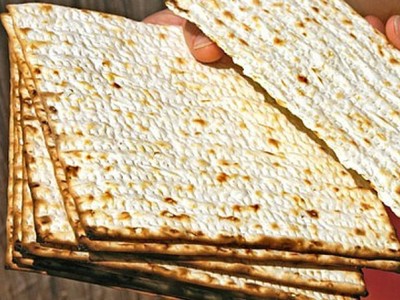
Question of the day: Can I eat matzah before Passover?
Traditions
There is a prohibition against eating matzah before Passover, however, according to the letter of the law, it takes effect only the day before Passover (Ram 471:2). The purpose of this prohibition is to distinguish between the matzah that will be eaten at Passover, fulfilling the commandment, and the matzah that is consumed before Passover simply for pleasure (Mishnah Brura 471:11).In addition, when people abstain from matzo before the holiday, they eat it with greater pleasure in Passover itself. And the one who eats matzah the day before Passover demonstrates his inability to restrain and control himself.However, there is a custom not to eat matzah already from Rosh Hodesh Nisan, that is, two weeks before Passover.Does this custom apply to hametsu (kvass) matzah consumed throughout the year? On the one hand, it has the same taste as the matzah eaten at Passover. On the other hand, it is not suitable for fulfilling the matzah commandment in Passover.The opinions of halachic authorities on this issue differ. Therefore, it is usually customary to refrain from such a matte before the holiday. In addition, since in practice the technology of its manufacture is the same as that of the matzah, kosher for Passover, it is quite possible that in fact it is not a chametz.The only difference is that during its manufacture, no one specifically ensures that the dough is not acidic. In addition, it is baked without the intention of making matzah kosher for Passover. However, if the need arises, such matzah can be eaten before Passover.The custom of not eating matzah before Passover does not apply to canned dumplings (dumplings made from matzah flour that are added to soup).
Question of the day: Why is a glass of the prophet Elijah poured at Passover?
Traditions
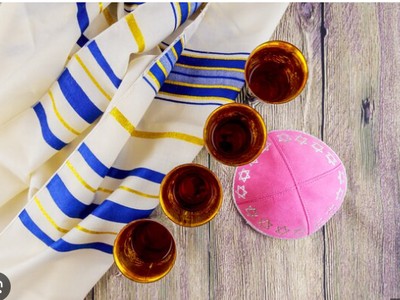
It is on Passover, the Feast of Deliverance, that we are obliged to drink four glasses of wine — in accordance with the four promises that the Almighty made to the sons of Israel in Egypt regarding the Exodus: “I will bring forth, I will save, I will deliver, and I will take away” (Shemot 6:6-7).Do we have to drink thefifth glass? The sages are divided. We don't drink it that night, but we pour it “in honor of Elijah.” I have heard the explanation that it is because of doubts about the status of this glass that it is called the “glass of Eliyahu”. After all, it is this prophet who must solve all the doubts in the Law that remained unresolvedby the sages. Among those who study the Talmud, it is customary to decipher the word Teiku, which means that the issue remains unsolved, asTishbi Yetarets Kushiyot Uweayot— "The Tishbyan (Eliyahu) will solve difficulties and problems."However, the explanation from the comment is commonMishna Brura: By pouring the fifth glass, we are expressing the hope that just as God brought His people out of Egypt, so in the near future He will send us a final deliverance, of which the prophet Elijah will be the herald.And here we come to your second question. The uniqueness of Eliyahu, even among the few who left this world alive, is that he always worried about the Jewish people. And in our time, apparently, only he is known to be not only in the spiritual worlds, but also continues to visit our material world. That's why it's called"the angel OF Brita"(the union of circumcision), because he is present on every Brit-mile. And it is logical that it is he who will bring us good news from the spiritual worlds.
TODAY IS REBE'S BIRTHDAY
Traditions
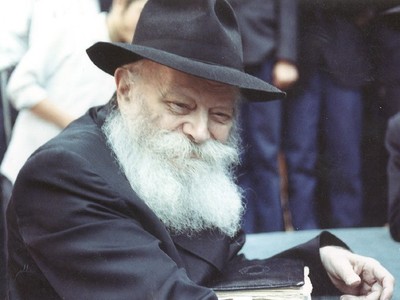
Today is the 11th of Nisan. On this day in 5662 (April 18, 1902), the seventh Lubavitcher Rebbe, Rabbi Menachem-Mendel Schneerson, was born in the city of Mykolaiv.Rabbi Schneerson (1902–1994) is considered one of the foremost Jewish spiritual leaders and thinkers of the modern era.Hundreds of volumes of published works, thousands of messengers around the world who bring the light of his teachings to the brothers, hundreds of thousands of followers, millions of supporters and admirers, for whom he was and remains a Rebbe — a Teacher, a Mentor, a Leader and an example to follow. The man who awakened the conscience of an entire generation and began the spiritual awakening of the Jewish people...If we try to briefly describe the main message of the Rebbe to the world, then, perhaps, this is the responsibility of the Jewish people for each Jew.Whoever he is and whatever spiritual state he is in. There is no one about whom it could be said that he is "zero", "lost", "hopeless". We have no right to leave any person unattended. It was for this purpose that the Rebbe created a huge spiritual community of Chabad, sending his emissaries even to places where only a few Jews lived.
The Messiah's meal
Traditions
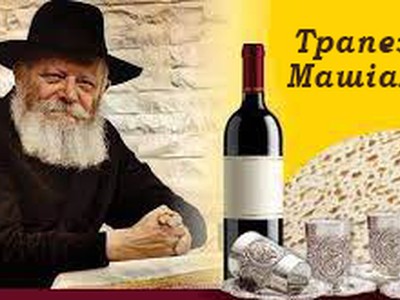
The founder of Hasidism, Rabbi Yisrael Baal-Shem-Tov, began the custom of arranging a special, third meal ending the last day of Passover, which was called the Messiah's Meal.He taught that this last day of the feast was imbued with the radiance of the light of the Messiah. During this final sandwich meal, the door of his house was wide open, and it was attended not only by family members, but also by all passers-by.Seven generations later, at the beginning of the twentieth century, a rule was added to the customs of this meal, likening the Messiah's Meal to a pesachal seder. It is customary to begin this meal after the afternoon prayer of Minchah, and in its course they drink four glasses of wine — as a reminder of the four glasses with which, according to our prophets, the Almighty will comfort the people of Israel after the final and complete Liberation (Geula).The meaning of this meal is that the idea of the Messiah, the idea of the future Liberation and the feeling of his reality become part of the person himself, so that, like food, they enter his flesh and blood.The first days of Passover are associated with the Exodus from Egypt, the main purpose of which was to start a new era — an era when mankind, after the Gift of the Torah on Mount Sinai, was shown the path to self-improvement, and the Torah became the key to the continued existence of the world. That is why the commandment about four glasses of wine on a seder concerning the Exodus from Egypt is fulfilled at the very beginning of the holiday — on its first evening.The last day of Passover, in turn, is associated with the future Deliverance that will come with the coming of the Messiah. Therefore, it is customary to carry out the custom of four glasses of wine at the Table of Mashiach, relating specifically to the future Liberation, at the end of the holiday.The Lubavitcher Rebbe, Rabbi Menachem-Mendel Schneerson, calls on all Jews to observe this custom and participate in the Messianic Table.according to the materials of the site: chabad.org

✨ Registration for the Messiah's meal is open! ✨
Traditions
We invite you to join the special final event of the Passover holiday — the Messiah's meal, which will take placeApril 20/Nisan 22in the Central Synagogue of KyivBeginning at 19:00, after the Minha prayer.This is not just a meal — it is a spiritual event filled with the light of faith, songs, words of the Torah and hope for true liberation.Participation is free, but pre-registration is required.https://forms.gle/Bz6LGkLP8xGDSAne6Together we will meet the end of Passover in an atmosphere of unity and warmth!