📌7 facts about Lag ba Omer that every Jew should know.
Holidays
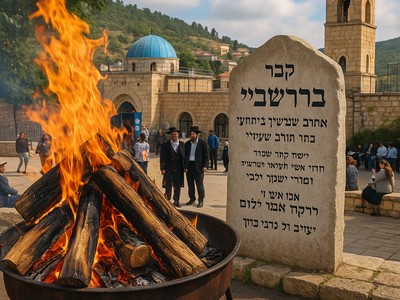
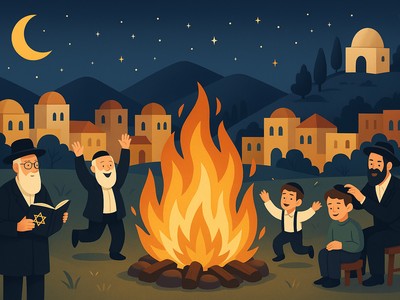
📅 "Lag ba Omer" in Hebrew means: the thirty-third day of counting Omer. The holiday received this name, because it is on this day that the 33rd day of Omer is counted.*There were two joyful events in Lag ba Omer:* The epidemic that claimed the lives of thousands of Rabbi Akiva's disciples has ended.Rabbi Shimon bar Yochai, the author of The Book of Zohar, revealed the deep secrets of the Cabal to his disciples before his death.The fact that Rabbi Shimon died on the day of Lag ba Omer, Arizal writes in the book Pri Ez Chaim.However, one of the most prominent cabalists of our generation, the slave Yaakov Ilel, believes that there is a copyist's error in the text, and instead of “the day Rabbi Shimon bar Yochai died,” it should be written: “the day of the joy of Rabbi Shimon bar Yochai.”📜 Since Lag ba Omer is a day of joy, this day is not read by Tahanun and fasting is forbidden.🔥 On the night of Lag ba Omer, it is customary to kindle fires — in memory of the light of the Torah, which was opened by Rabbi Shimon.✂️ Based on the teachings of the Cabal, many people hold the first haircut on this day for a boy who has reached the age of three. This rite is called halka (which means “haircut” in Arabic).📖 Rav Chaim Vital recounts that his teacher, the great Ari, brought his young son to Mount Meron along with other members of the family and tonsured him there in accordance with common custom.Many 🕍 have a tradition to visit the grave of Rabbi Shimon in the village of Meron on this day. About 300,000 people come there every year. source: imrey.org
PRE-REGISTRATION IS 📣 OPEN!
Holidays
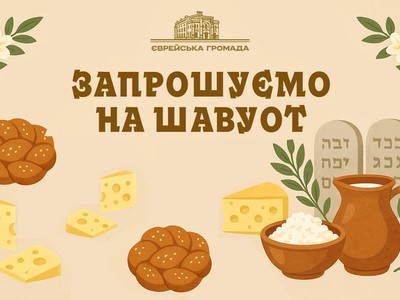
We invite you tofestive meal Shavuot🕍Kyiv Central Synagogue📅June 2/ Sivan 6Started at:12:30 a.m.Shavuot is the day of giving the Torah, a time of joint celebration and traditional dairy dishes.🍽 To better organize the event, pleaseregister in advanceАПОСТИЛЬRegistration linkhttps://forms.gle/ZnCxgenenP67zwSTAWe will be glad to see you at the holiday!
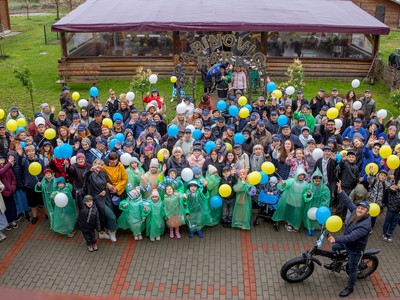
🔥 Lag Ba Omer in Anatevka: when the heat is not only from the fire
Holidays
Even the cold rain could not eclipse the heat that prevailed that day in Anatevka.HolidayLag Ba Omer— a holiday of Torah fire, unity and inspiration — gathered in Anatevka children, youth, adults and guests from different parts. It was a real celebration of a community that knows how to be together in any weather.The festive parade was opened by children drummers. Neither rain nor cold prevented them from walking with a smile — the rhythm of their drums seemed to disperse the clouds.Adults followed them — with yellow-blue balls and small flags of Israel in their hands. It was not just a parade, but a moment of unity, joy and support for each other.✨The Lubavitcher Rebbe said that Rabbi Shimon bar Yochai personally attended each such parade and performed miracles for us.Under the roof of the pavilion, words of gratitude, wishes and festive songs were heard.All holiday participants received brandedcaps, and after that I started workingAnatevka Drive— festive treats, lively communication, children's laughter and the same atmosphere of unity that you cannot create artificially.🎉There was a whole entertainment program waiting for guests:For children:large trampoline,animators,cotton candyandpopcornFOR THE YOUNG:Quest, dedicated to the saint,archery and crossbow shootingAlllive music,Table games, warm atmosphere and lots of smiles🎁And of course, the long-awaited lottery:<g id="1">Gift certificates</g>anatevka hoodie, proprietarypolo shirtsas well as the main prizes —Apple Watch SE 2 andApple iPhone 16— became a real culmination of joy!🔥 The holiday ended with a large traditional bonfire. In the rain, with hoods raised, but with sparks in our eyes — we stood together as one community that is not afraid of the weather.A fire that warms not only the body but also the soul. A fire passed down from generation to generation.💙 We thank everyone who was there, who helped, who led, who supported.This is the real Lag ba Omer.
Shavuot Holiday Guide
Holidays
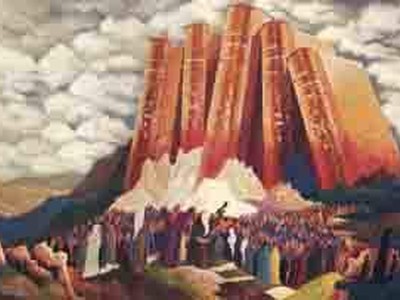
HolidayShavuotwe celebrate6–7 sowingin 20252–3 June) in honor of the greatest event in the history of mankind —Sinai RevelationАПОСТИЛЬOn this day, at2448 from the creation of the world(1312 BC), the sons of Israel received from the AlmightyThe Torah and the Ten Commandments— the moral and ethical basis of our entire civilization.Shavuot conveys a profound idea:physical liberation from slaveryand evenPolitical freedomhave no true meaning until it is reachedspiritual freedom, which is based on the recognition of a single power —the power of the Almighty and His CommandmentsАПОСТИЛЬIn the sidur (prayer book), Shavuot is called"The time of the Gift of our Torah"АПОСТИЛЬWhen asked why it is not called"The time of acceptance of the Torah", the wise men answer:Giving the Torahis a historical event that we recall as a one-time moment in the past,and acceptance of the TorahThisContinuum, is not limited by time or space.NameShavuotmentioned in the Torah literally meansWeeks— because the holiday is celebratedafter the countdown of seven weeks, beginning on the second day of Passover.The Talmud also uses the nameAceret("the final holiday") expressing the idea of an inseparable bondbetween the gift of the Torah and the escape from slaveryАПОСТИЛЬShavuot, like our other holidays,closely relatedto the Land of IsraelАПОСТИЛЬThis is emphasized by two more of its names:Hag ha-Katzir— "Harvest Festival",Yom HaBikurim— "First Fruit Day",because it coincides with the beginningwheat harvestandfruit gatheringbrought to the Temple of Jerusalem asthankful victimАПОСТИЛЬ
15 ava — Tu be Av. "Israel did not have such holidays as 15 Av and Yom Kippur"
Holidays
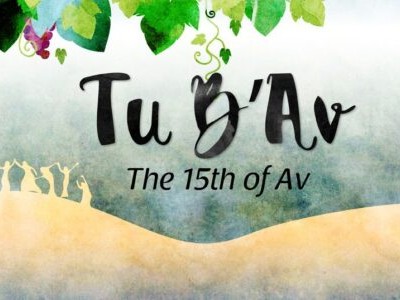
15 ava — a holiday of love?The Mishnah, a treatise of Taanit, says:“Israel had no feasts like the Fifteenthof Av and Yom Kippur.”What kind of day is the Fifteenthof Av? And why is it compared to Yom Kippur?Our Wise Men explain:Yom Kippursymbolizes the forgiveness of singolden calf. The Almighty gave this forgiveness on this very day whenMoshe descended from Sinai with the second tablets.АFifteenthof Avsymbolizesredemption of scoutswho were sent into the Land of Israel and disgraced it.It15 avastopped the pestilence that was destroying the generation that came out of Egypt — the punishment for two grave sins: the creation of the golden calf and the refusal to enter Eretz Israel.Events that occurred on 15 ABA:1. Ending the death of the generation that came out of EgyptThere were 600,000 men over the age of 20. Each year, 15,000 of them died on the 9th of Av.For the fortieth year of wandering in the desert, 9 Av, the last 15,000 were waiting to die. But this time the Almighty had mercy — and they stayed alive.They thought they might have got the date wrong and were expecting more. Only on the 15th of Av, having seen the full moon, they made sure that9 ava passed — and no one died.Therefore, this day becameday of joy, full dayredemption of scouts.2–3. Cancellation of two bans on marriagesThe prohibition on female heirs from one knee to marry a man from the other knee has been lifted.The ban on men from the Benjamin knee marrying women from other knees has also been lifted.After the tragedy inGivia (Shoftim 19–21), the tribes of Israel vowed not to give their daughters to the Binyaminites.disappearance of the whole kneeBut the people repented, and later these oaths were recognized as such thatdo not apply to future generations.It15 avathe sons of Benjamin were allowed to "steal" their wives from the girls who went out to take out grapes and lead dances in the city of Shiloh.It becamethe first tribal unification in Israel's historyand the book of Judges calls it"a holiday in the nameof the Lord".4. Abolition of border posts between Israel and JudahAfter the division of the kingdom into Israel and Judah, King Yorobam forbade pilgrimages to Jerusalem and set up idols in Den and Beit El. This is how idolatry spread in the Northern Kingdom.Butthe last king of Israel, Goshea ben Eila,lifted the banand allowed to go freely to Jerusalem — making an attempt to reunitethe people.5. Completion of firewood collection for the altarTo15 avacompleted the collection of firewood for the altar in the Temple, which is described as follows:“The fire should burn on the altar all the time, without extinguishing.”After 15 ava, the nights became wetter, and worms could appear in the wood. And it was allowed to bring to the altaronly clean, unspoiled wood.This day has becomea special temple feast, the day of thanksgiving to the Almighty.6. Burial of the Beit Ara martyrsAfter the suppression of the Bar Kokhba uprising, the Romans forbade the burying of the dead. But it was15 ava, a year later, the ban was lifted. And it turned out thatthe bodies did not decompose and remained intact, despite the open space, predators and time.In honor of this, the sages added toBirkat Amazon (Blessing After Eating)the fourth blessing:"Good and does good":–Good— because the bodies haven't decomposed,–"Doing Good"— because they managed to be buried.Feast without complaintAnd to this day15 avamarked asday of joy:–do not read Tahanun,–do not conduct mourning rites.The circle closesSpiritual preparation for the month of Elul begins with the 15th of Av andJudgment Days.The day gets shorter, the night gets longer. It's time to think about the results of the year.Nature helps — the heat subsides, there is peace for reflection.C 15 ava startedwish each other a good year.The gematria of the wish "May G‑d write you in the Book of Life for a happy year and seal this record" is equal to928— word gematria"Fifteenthof Av".A hint in the TorahIn chapter 29 of the book, Dvorim says:“You stand today all together before the Lord your God: the heads ofthe knees, the elders, the overseers, all the men of Israel, your children and women, and the proselytes… — from the woodcutter to the water-carrier — to enter into an alliance with the Lord.”– Mention ofwoodcutter— a hint of 15 Av, when they stop collecting firewood.– Mention ofaquifer— a hint ofOsh-on-Rabawhen water was poured on the altar.Іall this time — from 15 Av to Osh-na-Raba — we are standing in front of G‑ d.Atmosphere is approachingdays of laughter, prayers for mercy, days of judgment.We are once again on the threshold of a new year —with his feasts and fasts,with its spiritual uplifts and painful recollections,with summing up and new blessings.The circle of the year is closed — and a new one opens.
Getting ready for Rosh Hashanah
Holidays
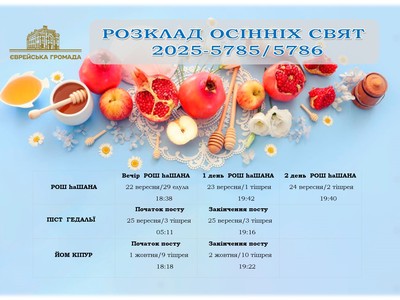
Preparing for Rosh Hashanah: The Laws and Customs of Rosh HashanahAlthough both days of Rosh Hashanah are the days of the Court, they are devoid of sadness and discouragement. On the contrary: we treat them as holidays when we need to rejoice and have fun. The confidence that the Almighty will show us His kindness and not leave us with His mercy in the next year removes the plaque of melancholy that belongs to the next "Terrible Days". On Rosh Hashanah, we do what Tegilim says: “Serve the Lord in fear and rejoice in fear.”The main difference between Roche Ashan's prayers and prayers on other holidays of the year is that in the days of Rosh Auchan, the first of the "thunderstorms", they do not read "allele". The Talmuda provides the question of angels addressed to the Almighty: "Why do the sons of Israel not sing you in Rosha Ashan and Yom Kipur?" Higher answers them the question: "Is it possible that at the moment when the king does the court and the books of life and death revealed, the sons of Israel sing the anthem?" In everything else, Roche Ashan is equal to other holidays of the year: when preparing for it, we dress in festive clothes, arrange festive meals, we strive to clean ourselves.In the Book of Nememia, in a ch. The 8th, tells of the celebration of Rosh Auchan just returned to Jerusalem by the exiles. Hearing the reading of the Torah and realizing how much they departed from the Testament of the Most High, all present exploded with a loud crying. And then Ezra and Negamya, the leaders of Israel, addressed the people with the following words: "Go, delicious and drink delicious, send dishes to those who have nothing prepared, because this day is this day in our Lord! And do not miss, because God's joy is your stronghold! ” So we should study in Ezra and their nemis of their optimism and in the midst of "formidable days" to behave accordingly.Rabbi Rav Isroel-Meir Lau, “The Practice of Judaism”
The Eve of Rosh Hashanah
Holidays
On the eve of Rosh Hashanah, they get up before the morning to read Sluhoth and repentant prayers, trying to complete teshuvah, because this is the last day before the Day of Judgment, which is at our disposal, when all creatures pass before the Creator like cattle before the master. On this day, more than ever, we are wary of offending or otherwise sinning against another person, and we try to make sure that nothing distracts us from the process of teshuvah.Let's think about it: after all, a person who must appear before the court of an earthly, mortal king, certainly feels confusion and fear, and it does not occur to him to engage in extraneous matters — he is completely absorbed in preparing for the court and thinks about how to gain royal mercy and beg the king for forgiveness. How much more serious his conduct must be when he stands before the king of kings. The Almighty, who knows all the secrets of the heart.A sinner who is late with repentance will make his due day to day of punishment much harder, because he knows that he has angered the King, as well as that there is a way of salvation — the way of teshuvah. Despite this, he insists on his disobedience, and although at any moment he can get on the right path, he continues to sin, because he is not afraid of His wrath and punishment.Our sages taught: “They tell the parable of a gang of robbers that the king imprisoned. They dug an underground passage and got free, but one of them preferred to stay in prison. When the prison came and saw an underground passage, almost an empty camera and the only prisoner left in it, he beat him with a stick, while saying: “A miserable person! At your disposal there was an underground passage - why did you not hurry to take advantage of it and not return your freedom? The same can be said about Tshuwa - the "underground passage", which is at the disposal of the sinner. If he does not want to take advantage of it, it causes even more anger. "It is customary to fast on the eve of Rosh Hashanah until noon. The Midrash says, “For this office, a third of one's sins are forgiven.” We wrote about this in Volume 1 of our book.In the morning prayer on the eve of Rosh Hashanah, Tahanun is not read, but we read it together with Slichot on this day — even if Slichot is read after the morning (that is, at the hour when it is already possible to read the morning prayer).Source:https://toldot.com/
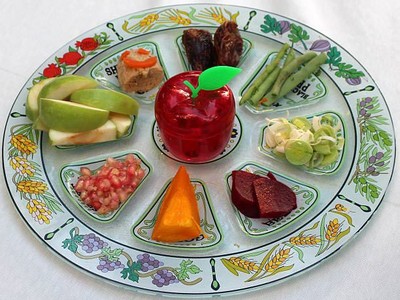
Rosh Hashanah Getting Ready: Simanim at the Evening Meal
Holidays
Simanim at the Rosh Hashanah Evening MealOur sages said that a sign (siman) is a serious thing. Therefore, at the very beginning of the Rosh Hashanah meal, the customs are followed, the purpose of which is to start the new year with good signs.During the evening meal of Rosh Hashanah, as the new year begins, it is customary to eat some things — "simanim", "symbols", while saying short requests about the coming year, addressed to the Creator, the main word of which is consonant with the name of a "symbol".First of all, these are grenades, in which there are many grains, and it is customary to say: "Your will be done... so that we have so many merits as grains in a pomegranate."An apple with honey: It is customary to ask that “the year be as sweet as an apple in honey.”Dates - in Hebrew, a date is called "tamar", which is consonant with the root "there"(to finish) - we ask that "our enemies end".The head of the fish eats the head, and they ask – "...so that we are the head, not the tail"Beets, you can take beet leaves, tops. It is easier to take beets and make a salad out of them. Beetroot in Hebrew "selechok" - from the root "remove" - we ask that "our enemies get away".There is also punishment – this is a kind of pumpkin. In Aramaic, kara means pumpkin. When they eat a pumpkin, they say two requests: to the kara ["ancient" pumpkin] - "shikari gzar dinei-nu" - "so that the harsh sentence is broken", and to the ordinary, orange pumpkin [which comes from America] they say "so that our merits are read" (in Hebrew "likroa" – to break, and "likro" – to read)."Tsimes" in Yiddish is cinnamon. Separately, take flour, egg, a little oil, salt, pepper, stir and add small pieces to the stewed carrots. And it all cooks together. In Hebrew, carrots — "gezer", consonant with the word "gzar" — "verdict", were asked "that we be given a good verdict, and that the bad verdict be broken".Source:toldot.com
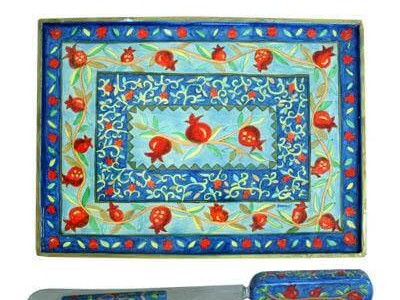
Getting ready for Rosh Hashanah: New Knife on Rosh Hashanah
Holidays
New Knife on Rosh Hashanah - a riot on Parnassus.There is a good crowd on Parnassus (abundance) - buy a new Knife on Rosh Hashanah and sharpen it. The source of this original congregation is from מהמהרי”א מיזדטשוב יצחק אייזיק אייכנשטיין– (Rabbi Isaac Eichenstein) and is written about it. ד׳ It is also mentioned in the book “ Taameya-min 'agim”, the last brochureרמו.What is the meaning of the congeal: sharpening the knife removes its flaws, thereby hinting at the removal of flaws in the human heart. The final letters in Tehilim 145:16: "פותח את ידך"ח ת ךThey make up the word חתך - "incision" - and this verse is associated with wealth. In addition, in Rosh Hashanah, G-d is the One Who חותך חיים לכל חי – (“Khoteh chaim le kol hai” – Cuts off the Life of every living being). There is another explanation: if a person neglects the crumbs of bread, it is to poverty. When there is a sharp knife, there are fewer crumbs and this is a rush on the parnassus.Hatah (חתך) means “cut off” in Hebrew and it is the Name of the Angel responsible for the means of livelihood: “נגד השם הפרנסה המרומז בס״ת של פותחדThe final letters of the words with Tehilim (145:16): “ Potiyah et Yadeh ”פותח את ידך– “ Thou openest Thy hand ” – form the word “Hatah”. The word that follows in this verse: “ Umasbiah ” – (to satisfy) – means the desire of every living being – has a gematria = 428, just like the word “Hatah” = 428. (“Nitya Gabriel” 11:1)A slug is to buy a new knife, immerse it in a mikvah, and then sharpen it. You can not buy a knife with nicks – a dull knife or a knife with nicks – is a symbol of Guura, and a smooth sharp knife is a corrected weapon that does not cause pain, which associates it with the quality of Hesed. You don't need to give such a knife. According to Besht, a person should buy such a knife himself.(Shulchan Aruch, Orach Chaim,סימן קפ,ד,translation by Rabanit Leia Khizgiyaeva, Oleksandr Tsvi Sypkov)Source:https://silatehilim.com/