
When the ban takes effect
Commandments
Part OneWhen the prohibition takes effect – according to the Torah according to the statement of the wise.The ban on the consumption of leavened food was introduced at noon on 14 Nisan. In the Torah (Dvorim, 16:2-3) it is said: "And do not eat leaven to the Lord [...]." It means that every man is forbidden to eat at a time suitable for making a great sacrifice. Now it begins at noon on 14 Nisan, so from noon on 14 Nisan it is forbidden to eat leaven. The ban on the consumption of kvass food also includes the ban on the consumption of any other benefits .To remove the people of sin, it was wise to say that the prohibition to receive any benefit from kvass takes effect an hour earlier, and to prohibit the consumption of kvass food two hours earlier, because when it is a man's day, a gloomy day could be mistaken for setting the time of noon by at most two hours.To be continued…
When the ban takes effect
Commandments
End:QUERY LENGTH LIMIT EXCEEDED. MAX ALLOWED QUERY : 500 CHARSAfter the end of Passover, it is again allowed to eat a hamlet, but the sages forbade eating a hamlet that belonged to a Jew during Passover. After all, since this Jew, without eliminating leaven in Passover, violated the prohibitions "should not be" and "will not be seen", this leaven is forbidden to eat, as well as to extract any other benefit from it. But it is allowed to eat a hamlet that was in the possession of a non-Jew at Passover, and a Jew can buy such a hamlet and eat it (see Shulchan Aruch, 448, 1-3).A KOSHER AND JOYFUL PESACH!
Why is leaven only banned on Passover
Commandments
Why is leaven only banned on PassoverPart OneThe Jewish year is not just a sequence of different holidays, but a cycle in which each of the holidays represents a completely certain stage. And the annual cycle of life of nature and man, as is known, corresponds to the daily cycle: spring is the time of awakening from winter "hibernation", summer is the labor "day", autumn is the end of the labor season, harvesting, summing up, "evening" slowdown in life activity.The annual cycle also corresponds to the life cycle: spring is birth and youth, and autumn is a slowdown in activity for the rest of life. Thus, it turns out that Passover is a holiday of spring and youth.To be continued…
Why is leaven only forbidden on Passover?! part 2
Commandments
Part TwoHametz is dough: flour, which, mixed with water, was left for a while. Nothing was done with the test and it leavened. That is, the chametz is the result of the lack of quick and vigorous action, its unjustified postponement. Therefore, the hamlet symbolizes a bad beginning: it is the result of such procrastination.But when is the procrastination of especially “death like” — and at the same time extremely seductive? At the beginning of the work cycle. In the morning, when you need to get out of bed and leave the house for work. Therefore, it is necessary to overcome your laziness, make a jerk and become on time, quickly and decisively.That's why it's like a chametz: a soft and pleasant bed. Home comfort. Places where you can relax and enjoy the tranquility, how to relax and gain strength.To be continued…
Why is leaven only banned on Passover?! part 3
Commandments
End:Is coziness and rest harmful at all? No, in the other stages of life cycle, vin may be useful. A person cannot constantly work, he needs rest and rest. Aleurans cosy beds takrisla not easy harmful, but really like death!Therefore, it is strictly forbidden to start the annual chametz cycle, which symbolizes this delay. It is imperative to reject home comfort at this stage, get ready for work. How the Jewish people threw Egypt with its comfort and quick exit road desert, uncomfortable, but foreshadows receiving the Torah at the top of Sinai gaining spiritual perfection.
Nasi - Second Nisan
Commandments
From the first to the twelfth of the month of Nisan, it is customary to read an excerpt,
which lists the gifts brought by each of the heads of the knees (carried) on the corresponding day of the month at the consecration of the altar, then pronounced
the prayer “Thy will be done…”. On the thirteenth, they read an excerpt“Axis
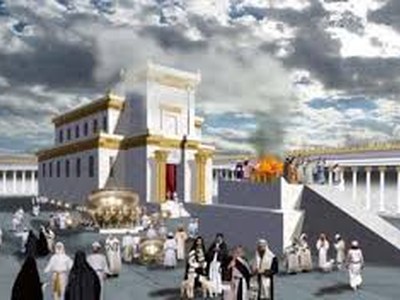
gifts…”, but prayer“Thy will be done…”do not pronounce.On the second day Netanel the son of Zuar, chief of Issachar, offered his sacrifice. He offered his sacrifice:one silver trayweighing one hundred and thirty shekels,one silver bowlweighing seventy shekels,(by sacred shekel), both filled with selected flour mixed with oil as a bread gift;one spoonin ten gold shekels, filled with a mixture of fragrances;one young bull, one ram, one year old lamb– as a victim of incendiarism;one goat– as a sacrifice for sin.And as a peaceful victim:two bulls, five rams, five goats, five year-old lambs.This is the sacrifice of Netanel, son of Tzuar.May Your will be done, Lord, my God and the God of my fathers,that You, in Your great mercy, may lighten holy souls today,being reborn like birds in the spring, and chirping, praising You,praying for the holy nation of Israel.Lord of the world!Raise and bring these holy birds to the place,marked by Your holiness, of which it is said:“No eye has seen him but You, O God.”May Your will be done, Lord, my God and the God of my fathers,if I belong to the tribe of Issachar, whose sacrifice I read about in the Torah today,then let all the holy sparks and all the rays of the sacred radiance shine upon me,marked by the holiness of this tribe.[Thanks to them] may I be able to comprehend and understand the Torahwith trepidation before You, doing Your will all the days of my life-i, my children and my descendants, from now on and forever.Amen!

Nasi is the third Nissan
Commandments
From the first to the twelfth day of the month, Nissan is customary to read an excerpt that lists the gifts brought by each of the heads of the knees (we carry) on the corresponding day of the month when the altar is consecrated, then the prayer "let your will be ...". Thirteenth reads a passage“Here are gifts…”, but prayer"Let your will be ..."do not pronounce.On the third day, the prince of the sons of Zamulon, Eliav, the son of Hellon.His sacrifice: one silver tray, weighing a hundred thirty shekels, one silver bowl of seventy shekels, according to the sacred shekel, both filled with the best flour mixed with oil, on a bread sacrifice; one tablespoon of ten gold shekels, filled with a mixture of incense; one young bull, one ram, one one -year -old lamb victims of all -brew; One goat is a sacrifice of purification from sin. And in a peaceful sacrifice: two bulls, five rams, five goats, five annual lambs. This is the sacrifice of Eliam, the son of Hellon.May thy will, God, my God and my parents, in the great mercy of thy light today, light of the holy souls, which are renewed like birds [in the spring], chirping, glorifying you and praying for the Holy people of Israel.Bishop of the world, lift and bring these holy birds to a place marked by your holiness, which is said:"No eye saw him except you, God!"May thy will be, God, my God and my parents, if I belong to the knee of the lance, about the sacrifice of the prince of which I read today, then let me all the holy sparks and all the rays of the sacred glow, marked by the holy knee.Thanks to them, I will be able to grasp and understand the Torah in the reverence before you, fulfilling your will all my life days - I, my children and my descendants from now and forever. Amen!"Jeshayaga, 64: 3"
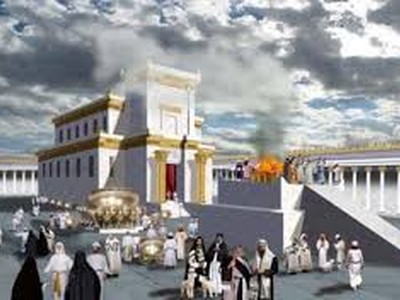
Nasi is the fourth Nisana
Commandments
From the first to the twelfth day of the month, Nissan is customary to read an excerpt that lists the gifts brought by each of the heads of the knees (we carry) on the corresponding day of the month when the altar is consecrated, then the prayer "let your will be ...". The thirteenth day reads the excerpt "Here are gifts ...", but the prayer "let your will be ..." do not say.On the fourth day [sacrificed his] prince of the sons of Reuven, Elicour, son of Sheduur.His sacrifice: one silver tray, weighing a hundred thirty shekels, one silver bowl of seventy shekels, according to the sacred shekel, both filled with the best flour mixed with oil, on a bread sacrifice; one tablespoon of ten gold shekels, filled with a mixture of incense; one young bull, one ram, one one -year -old lamb victims of all -brew; One goat is a sacrifice of purification from sin. And in a peaceful sacrifice: two bulls, five rams, five goats, five annual lambs. This is the sacrifice of Eliceur, son of Geneura.May thy will, God, my God and my parents, in the great mercy of thy light today, light of the holy souls, which are renewed like birds in the spring, chirping, glorifying you and praying for the Holy People of Israel.Bishop of the world, lift and bring these holy birds to a place marked by your holiness, which is said:"No eye saw him except you, God!"May thy will be, God, my God and my parents, if I belong to the knee of Rewen, about the sacrifice of the prince of which I read today in the Tora, then let me all the holy sparks and all the rays of the sacred shine, marked by the holy knee.Thanks to them, I will be able to grasp and understand the Torah in the reverence before you, fulfilling your will all my life days - I, my children and my descendants from now and forever. Amen!"Jeshayaga, 64: 3"
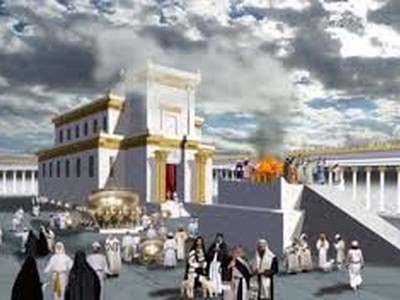
Nasi is the fifth Nissan
Commandments
From the first to the twelfth day of the month, Nissan is customary to read an excerpt that lists the gifts brought by each of the heads of the knees (we carry) on the corresponding day of the month when the altar is consecrated, then the prayer "let your will be ...". The thirteenth day reads the excerpt "Here are gifts ...", but the prayer "let your will be ..." do not say.On the fifth day [brought his sacrifice] the prince of Simon's sons, Shlumiel, son of Tsurishada.His sacrifice: one silver tray, weighing a hundred thirty shekels, one silver bowl of seventy shekels, according to the sacred shekel, both filled with the best flour mixed with oil, on a bread sacrifice; one tablespoon of ten gold shekels, filled with a mixture of incense; one young bull, one ram, one one -year -old lamb victims of all -brew; One goat is a sacrifice of purification from sin. And in a peaceful sacrifice: two bulls, five rams, five goats, five annual lambs. This is the sacrifice of Shlumyel, son of Tsurishaday.May thy will, God, my God and my parents, in the great mercy of thy light today, light of the holy souls, which are renewed like birds [in the spring], chirping, glorifying you and praying for the Holy people of Israel.Bishop of the world, lift and bring these holy birds to a place marked by your holiness, which is said:"No eye saw him except you, God!"May thy will be, God, my God and my parents, if I belong to the knee of Shimon, about the sacrifice of the prince of which I read today in the Tora, then let me all the holy sparks and all the rays of the sacred shine, marked by the holy knee.Thanks to them, I will be able to grasp and understand the Torah in the reverence before you, fulfilling your will all my life days - I, my children and my descendants from now and forever. Amen!"Jeshayaga, 64: 3"