
Our dates: 24 Elul
Community
*24 elul5693 (September 15, 1933) — Yorzeit (anniversary of the departure from this world) Rabbi Yisrael Meir HaKohena Pupko (Hafetz Chaim).Rabb Israel-Meir of the Polish town of Radin was one of the leaders of the pre-war Jewry of Europe. His modesty and honesty were told by legends, which, however, were pure truth. His pen belongs to many works (such as "Mahane Israel" ("State of Israel")-a guide to compliance with the Galakh's prescriptions for Jewish soldiers in the royal army), but the most famous of them-"Missing Brum"-the Code of Jewish Laws, which is often published with " Damage to evil. Illustrating the harm of gossip and evil, Rabb Israel-Meir gives an example-a person who eats pork breaks one commandment, and one who dissolves gossip-31. The difference is obvious, however, from eating pork is also worth abstaining (so as not to disturb the 32 commandments). And the name of the book, as often happened in Jewish circles, has become the name of its author.Source:chabad.odessa

Our dates: 27 Elul
Community
📌27 Elul before the creation of the world (3761 BC) — The Third Day of Creation.On this day, the lower waters were collected into the sea-oceans and separated from the land. On the same day, grass and fruit trees appeared on the surface of the earth. On this day, the Almighty, looking at his actions, twice said "This is good", which he did not say either on the first or on the second day (then there was still what is called "in the process", and now quite visible and tangible fruits have become visible, and the fruits in the literal sense of the word).The third day of the Creation was Tuesday, and since on this day B d twice said “This is good,” Tuesday is considered a good day for the Jews. But for the British, Wednesday is considered a good day for some reason. Apparently, it was too late for them...📌27 Elul 5615 (September 10, 1855) — Yorzeit (anniversary of the departure from this world) Rabbi Shalom Rokeah (Belzer Rebbe).Raba Shalom Rokekh was a descendant of the Great Gaon (Genius, Sage of the highest level) of Raby Elizer from Amsterdam, author of Maase Rokekh. Early orphaned, he studied at the house of his uncle, Skulian Rabbi Rabbus Issahar-Ber. His teachers of Hasidism were the rabies Abraham-Jeshua ѓEshel from the pharmacy (Apter Rebe), Rabb Israel from Eachny (Given Magid), Rabi Urya from Strellisko, but the chief teacher of the young man was the famous blind sage of Yakov-Itshak. It is said that at birth, the "seer" received a gift to see the whole earth from the edge to the edge, however, looking at this world, asked the Most High to limit his gift with 400 miles. On the recommendation of the COZE, Raba Shalom was appointed a rabbi in Belz (a city in the Lviv region. Do not confuse Belz (Beltsi), located in Moldova). Here, Rabi Rokekh lived his entire life, establishing his branch of Hasidism - Belg Hasidism and laying down the Belz Rebbe dynasty.

Our dates: 26 Elul
Community
26 elulbefore the creation of the world (3761 BC) — The Second Day of Creation.On the second day of Creation, the Almighty separated the waters of heaven from the waters of the earth, creating an airspace between them, where we are with you. And on this day, a vault was created, which the Almighty called "heaven".Source:chabad.odessa

Our dates: 25 Elul
Community
25 elul5505 (September 22, 1745) — Entry into the union of Abraham-Avin Schneur-Zalman Schneerson.The future founder of the Chabad movement joined the union of Abraham-Avin (that is, was circumcised) on the eighth day, as it should be according to the laws of the Torah. That's when he got his name — Schneur-Zalman.

Getting Ready for the Holiday: A Short Guide to Rosh Hashanah
Community
Rosh Hashanah 📖 Quick Guide🕊 History and meaning of the holidayPer dayRosh Hashanah– Jewish New Year (1–2 Tishrei, in 2025 falls on September 22–24) – proclaimed the kingdom of G-d over the whole world.On this day, the forefather of humanity was created –AdamAnd on the same day he broke the ban and was expelled from Eden. This was the first trial of a person. Since then, every year the Almighty judges the world and determines the fate of people and nations for the coming year.🕯 Candles & BlessingsOn the eve of the holidays, they light festive candles before sunset and say a blessing:...ledlik neur shel yoim azikoroyn...sheikheyan, vekiyman, veigiyanu lizman azeGreeting After the Evening PrayerMaarivgreet each other with the words:"Leshana vava tiktatev ve tekhatem"(the woman is told:"Lesana tovaro tiktatvi ve tehatmi") –🌸 “May you be recorded for a good year, and may this record be sealed!”🍎 Festive MealSymbolic customs are followed during the dinner:🍯 Hala is soaked in honey.🍏 An apple with honey and the words:“Thy will be done, that the year may be good and sweet!”🐑 Lamb or fish head –to be the head, not the tail.Garnetso that there are many merits, like grains in a pomegranate.🥕 Carrots, beets and other vegetables with good associations.Fish to multiply like fish in the sea.❌ Avoid sour, bitter, spicy and nuts (gematria of the word "nut" = "sin").📜 Judgment and the seriousness of theIn Rosh Hashanah, the Almighty determines the fate of everyone. Therefore, this is a day of 🕊 hope and prayer, not entertainment.Do not sleep during the day.Taking time to pray, Tori and Tehilim.It is customary to refrain from marital intimacy.No smoking.📯 Shofar CommandmentThe most important commandment islisten to the sound of the shofar.Before the trumpet is blown, a blessing is said:"...told us to listen to the sound of the shofar" andSheheyan.Everyone answers:AMEN!ToMusafitrumpet 💯 once.If the first day falls on Shabbat, the shofar is heard only on the second day.🌊 Rite of TashlikhOn the first day after noon (if it is Shabbat – on the second) the ceremony takes placeTashlikh:📖 They recite prayers addressed to the "Thirteen Measures of Mercy".Symbolically, sins are "shaken out" near the pond.Water symbolizes mercy, and fish 🐟 symbolizes fertility and vitality.🕯 Second day of Rosh HashanahThe second day has the same status as the first.In the evening, candles are lit again ✨ after the stars appear.It is customary to have a new thing (clothing or fruit) to saySheheyan.🕎 Symbolism of the nameRosh Hashanahliterally means "head of the year".Just as all the functions of the body depend on the head, the whole next year depends on the behavior of a person in Rosh Hashanah.Source:chabad.org

✨ FIVE STEPS INTO THE NEW YEAR
Community
❓ What should be done before the upcoming holiday?️1? Symbolic products🍎 Buy pomegranates, apples and honey.️2 ᐈ New Fetus🍐 Purchase a new fruit (which you have not tasted yet this season) to say a blessing on it"Sheeheian"on the second night of Rosh Hashanah.️3? Reconciliation🤝 Apologize to anyone who has been offended during the year.(It is important to do this sincerely.❤️)4?️ Light of the feastPrepare a flame 🕯 in advance to light candles on the second night of the holiday.(Best of all – a "daily" candle).5️ᐈ Spiritual training📜 On the eve of Rosh Hashanah, say"Gatarat Nedarim"to enter the year without the burden of unfulfilled promises.There is ✍️ also a custom of writingDr("Piedmont nephesh" - "Atonement of the soul") – a note asking for a blessing for the new year.She can be handed over to a rabbi in the synagogue to be left at the Wailing Wall or at the grave of a righteous man.
Lessons Torah: Between Earth and Sky — War
Community
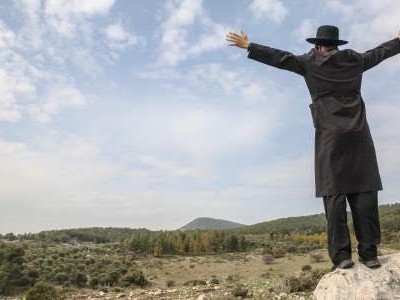
⚔️ Between Earth and Sky — WarIntroThe Torah (Dvirim 21:10) says:“When you go to war against your enemies…”Why is it written in the singular ("speak"), and not in the plural ("speak"), if we are talking about the whole people?📜 Eternal TeachingThe Torah is"teaching OF life", her ideas are relevant always and everywhere.Lubavitcher Rebbe SHLITA, King Moshiach, explains: here we are talking aboutvoluntary war.🛡 Types of RAMBAM warsRambam in the Laws of Kings (5:1) distinguishes:🕎The bequeathed war: against the seven nations, against Amalek, in defense of Israel.✨Voluntary Warfare: for the sake of expanding borders or strengthening the greatness of the people.🙏 Prayer as WarAlter Rebbe in The Likutey Thor explains:War= the time of prayer when a person ascends from earth to heaven.Therefore, it is said “when you speak” — in order for prayer to be perfect, you need to go beyond logic and understanding.Prayer is a ladder: the beginning is on earth🌍, the end is in heaven🌌.🤝 Unity in prayerThe Rebbe emphasizes that prayer should take place in an atmosphere of love and unity.Alter Rebbe advised before praying to say:“I take upon myself the commandment to love my neighbor as myself.”📚 The Talmud (Brachot 30a) states:"Do not stray from the customs of the community".The Almighty does not despise the prayers of many gathered together.That is why it is said:"When you go to war"— in singular.🔥 Why Prayer = War?Prayer is"work OF the soul"(Taanite 2a).Alter Rebe explains (Tora Or, chap. Mishpatim 76a):Wordof the drive(“labor”) comes fromibud Orot(“skin treatment”),the process is complex and exhausting, requires a lot of effort.That is why the prayer is calledwar.📌 Source: treatise, 14 elul 5731 p.urokitorijew
From the letters of Lubavitsky Rebbe: And the lost will not be rejected
Community
Kanun Rosh Hashanah5716 (1956) To the sons and daughters of Israel, wherever they may be.Peace and blessings!Standing on the threshold of the next year and looking back at the year that is passing, each mature person summarizes the time spent, assesses his spiritual balance and on this basis makes decisions for the future. For these decisions to be correct, one should beware of overestimating one's own merits and actions. At the same time, it is impossible to delve too deeply into the analysis of personal shortcomings and failures. Because depression, and even more so despair (God forbid!), become an obstacle on the way to change for the better.However, it can also happen that even with an objective self-assessment, it turns out: the left cup of scales, the cup of shortcomings, is too heavy and far exceeds the right — the cup of good deeds. But even in this case, despair is unacceptable. An impartial analysis of their actions should awaken deep remorse about the past and a firm decision to change.In addition, you should always remember: the Torah, explaining the concepts of good and holiness, defines them as eternal and indestructible, because their source is the soul, the spark of the Almighty in the Jew. As for the transgressions and sins suggested to man by his animal soul and the evil principle, they are inherently limited, and therefore can be forgotten and erased. All offenses are transient and are subject — through sincere repentance — to correction and oblivion.All this should encourage everyone to draw proper conclusions from the analysis of the outgoing year and cause a sense of upliftment and unwavering hope for the future. Everyone should realize that the good deeds of the past year remain, that they brought light into his life, as well as into the lives of his family and the entire Jewish people. After all, "all Jews are responsible for each other", are interconnected and form a single whole.Therefore, it is clear that even if the events testify in some places to fall (because not all of such sages and not all of God -fearing), truth and inner meaning are still that every year, every day and every moment the good in the world is increasing, because every moment is added good things. And even when external evil increases its weight, it is only temporary. In the end, the good will outweigh, and there will be no trace of evil. Because so did the one who created and controls the world: everyone will return to him. And he, the one who forgives even sins of repeated or numerous, will accept the one who will return. After all, "he will not be lost lost."And everyone can make the next year the year of their best deeds, improving and changing themselves. And the Almighty, blessed be He, who desires the repentance of man, will help him in this. A firm decision to do this will provide everyone with a good and sweet year.I wish you a good year!From the letters of the Lubavitsky Rebbe
Cantor and Baal Shem Tov
Community
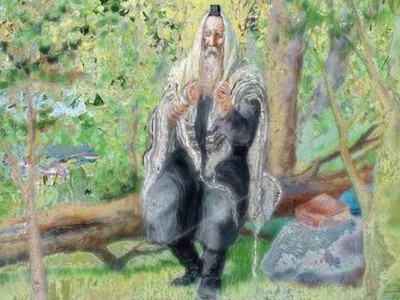
This story reminds us that even in moments of confession, a person can feel light joy. For when we stand before the Almighty, cleansing our hearts of sins and drawing near to Him, this is the greatest honor. This is not sadness, but an anthem — a song of gratitude for the opportunity to serve the King of the Universe.***📖One day, Baal Shem Tov arrived in the city on the eve of Rosh Hashanah. Residents turned to him with the words:— Our cantor has a strange custom: he says the prayer "Al-hat" — confession of sins — on a joyful motive.Baal Shem Tov ordered to bring the cantor to himself. And when he stood in front of him, he said,“Why are you singing a confession prayer for a merry chant?”Cantor answered with a parable:— Imagine a janitor who is tasked with cleaning the royal yard from garbage and dirt. Can he do his job with sadness? No, he is glad that he was honored to be among those who see the face of the king, and who are entrusted to take care of the cleanliness of his home. And I, who have the honor of standing before the King of the Universe as a messenger of the community, cleansing hearts of sins and guilt, can there be sadness on my lips?! This is a hymn of gratitude and joy!Baal Shem Tov told him:—If your prayers go with this intention, may my fate be with you!He also added:“A person should never despair.” Sadness and depression are always prohibited. Even when a person confesses his sins and reflects on his own worthlessness, he should be full of joy. After all, thinking about one's own imperfection is also a good deed, the will of the Creator.And the one who strives for the big does not stop at the small — that is, he does not lock himself into his own personality.Source:breslev.com
🕯️Day ofRemembrance of Rabbi Dov-Ber Schneerson, Rebbe of Lubavitz
Community
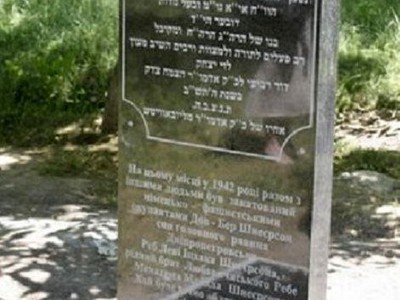
Slave Dov-Ber Schneerson was born on 3 Kislev 5665 (1904) in Mykolaiv. His Brit Mila took place on the 10th of Kislev — the day of the liberation of the Mittel Rebbe, the second Lubavitcher Rebbe, so the boy was named in his honor.In childhood, the family moved to Katerynoslav (now Dnipro). Despite his poor health, Dov-Ber was noted for his exceptional abilities and rare purity of soul.In 1941, during the Nazi occupation, he found himself in a hospital in Igren near the Dnieper. The invaders came there: all the patients were shot, and the Jewish patients had previously been subjected to terrible abuse.Rabbi Dov-Ber died a martyr's death at just 38 years old.Only many decades later, it was possible to find the place of the mass grave and erect a monument there.Today, prayers are heard in this place, and its bright image lives in the memoryof generations.Source:t.me/LubavitcherRebe770
TASHLIYAKH
Community
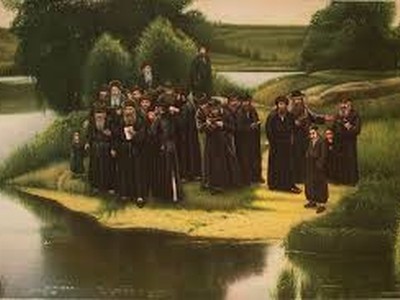
This custom has its roots in the era of early Ashkenazi legislators, but over the years it has spread to Sephardic communities, especially after it was approved by St. Arizal. Nevertheless, the custom of tashliyah is not a duty, and some of the greatest lawmakers (Vilna Gaon, Rabbi Chaim of Volozhin) did not follow it. And in some Hasidic communities, it is performed one of the weekdays after Rosh Hashanah.As for the meaning of the custom of Tashlii, some authorities explain that this custom is intended to remind of the dedication of our ancestors Abraham and Yitzhak: when they went to Mount Moria to sacrifice Yitzhak, the river that appeared there suddenly spilled out there. In addition, water hints at life and spiritual purity. When a person makes repentance, he is spiritually rising and cleansed, and his sins seems to wash away water. And yet, fulfilling this custom, we ask all the highest, that he will "drown in the marine abysses" of accusations that are put forward against us in heaven, that is, that he no longer mention them. There is a custom when reading prayers with Tashlii to shake the edges of clothing. It is a hint that sins do not reflect our inner essence, but are external to us. We made them only by detrimental influence from the outside, and therefore we can "shake" them.It was not customary for women to perform the custom of tashlia; some authorities even believe that it is better for women to refrain from it, so that they do not mix with men on the shore of the reservoir during its performance. But if a woman wants to do this custom, she has the right to do it.If there is no source or reservoir nearby, then it is customary to read the tashliyah near a well or near a mikveh. There is also a custom according to which you can read tashliyah if you can see the sea or the river from afar.Source:https://ph.yhb.org.il/