

JEWISH INSTRUCTIONS: YOM KIPPUR
Community
*DAY BEFORE YOM KIPURA: MALKOYSBefore a day prayer on the eve of the holiday, it is customary to take 39 beats (Malcoys) that encourage remorse. The one who takes strokes is girded with a belt (Hartle) and leans (or knees), face -to -face. The one who beats takes a strap of Tfilin and lightly (fans of Marquis de gate not to worry) beats on his back: on his right shoulder, left shoulder and lower back, repeating it 13 times. During every blow, both the who beats and the one who takes, "And he will forgive the crime and will not destroy the one who has sinned, as he has repeatedly turned his anger from the sinner, and will not collapse on him all his fierce" ( This phrase, in which 13 Hebrew words, are repeated three times.*EVE OF YOM KIPURA: LEUKACHOn the eve of Yom Kippur, it is customary to ask friends or family members for watering cans (honey pie), and then eat it, wishing each other "Lesha goods u-metuka!" ("Good and sweet year!").The meaning of this tradition is in a symbolic wish: if we have to reach out for alms next year, then let not strangers help us, but loved ones (so that we do not have to be ashamed), and if we have to ask, then let it be watering cans, that is, not a piece of bread necessary for survival, but a honey pie is clearly not an essential thing.In Hasidic communities, there is a tradition to ask the rabbi of the community for watering cans. In Odessa, it will be possible to ask for (and receive!) a piece of watering cans on October 1 after the end of the morning prayer at Rabbi Avraham Wolf.*DAY BEFORE YOM KIPURA: LEBEDIKE LIHTEach married man must bring a candle to the synagogue that burns for 24 hours (such a candle can be purchased at the synagogue Jewish goods store). This candle is called “swan lantern” (“candle of life”). It is not customary to light it yourself — you need to give it to the synagogue staff so that they light it. In addition, anyone who reads Izkoir should light a memorial candle at home.*DAY BEFORE YOM KIPURA: SEUDA MAFSEKETThe purpose of fasting on Yom Kippur is not the desire to starve a person, but the intention not to distract him from thoughts of repentance, so it is recommended to eat well before Yom Kippur. To this end, after the afternoon prayer, the "Minha" arrange a festive and very abundant meal (it is said that the one who had eaten well on the eve of Yom Kippur, as if he had spent Yom Kippur twice, because a full stomach does not distract the owner from thinking about the main thing).And closer to the evening, they arrange a separate meal (Seuda Mafsecket), that is, a meal that separates the usual day from the post. This meal should only consist of light, well -digested dishes. It does not include fish, garlic, spicy and salty dishes, alcohol and meat (it is a piece of meat, because there is a tradition in this meal to eat "cramps" - something like dumplings with ground chicken meat; "Dean", a fair trial.And just before fasting, it is recommended to drink 1-2 liters (5-6 cups) of hot and very sweet tea — in order to increase blood sugar levels. Fasting will then be easily tolerated, as is the case in many Jewish families in which fasting is a long-standing tradition.After this meal, parents bless their children with the following words: "May God honor you to become like Ephraim and Menashe" (boys) or "... like Sarah, Rivka, Rachel and Leah" (girls).*DAY BEFORE YOM KIPURA: BIRKAT A-BANIMIn some communities, "birkat Ha-banim" — the blessing of children is carried out before each Sabbath. But in the communities of Chabad, it is customary to do this only on the eve of Yom Kippur, immediately after the separate meal "seuda mafseket". The father puts both hands on the child's head and saysson: Yesimho E-loy-him ke-Efraim vehi-Menashe! (“ May God honor you to be like Ephraim and Menashe.”)daughter: Yesimeh E-loi-Gim ke-Soro, Rivka, Rohel ve-Leya! (“May God honor you to become like Sarah, Rivka, Rachel, and Leia.”)Then the text of the blessing of Cosen is pronounced: “Waidaber A-Doy-Noi El Moshe Limair. Dabier El Aѓaroin Weel Banimoir, Coy Sevorakh Es Bnay Isrole, Omoier Loѓem: “Jevoreheho A-Doy-No Nay Weishmerho. Yooir A-doy-nor Lawn Eileho Vihuneko. Iso a-doy-nor Lawn Eileho Weyosim Leho Helmet. In Western EC SHMI Al Bnei Isroya Vanai Avorakh "(" And the G-Medica said Moshe as the following: "Say Aѓaron and his children:" Bless the sons of Israel, say to them, "Blesses you G-Medar and protects you. The name of my sons of Israel, and I will bless them! ”).After that, you can add good wishes from yourself to the child.*BLESSING WHEN LIGHTING CANDLES ON YOM KIPPUR1. Borukh Ato A-doynoy, E-loy-Yey-nu, Melekh Go-Oilom, usher of kideshon, bemitsvoys vetsivonu Lehadlik neur shel Yoim-Ya-Kippurim! (Blessed are you, Lord our God, King of the Universe, who has sanctified us with His commandments and commanded us to light a candle in honor of the Sabbath and Yom Kippur!)2. Borukh Ato A-doynoy, E-loy-Hey-nu, Melekh Ho-Oilom, Shekekheyon, Vekimon Vegygion Lizman Ghaze! (Blessed are you, Lord our God, King of the Universe, who has given us life and sustained it in us, and made it possible for us to live to this time!)Yom KippurUsually, the word "Yom Kipur" is translated as "Judgment Day" (for example, the "war of the Judicial Day"), but as we have already found out, there is a completely different day, more precisely days. The Almighty judges this world 1 and 2 Tyshrea in the days of Rosh ѓA-Shan, and then, because, if you judge justice, then for each of us the sentence will be incompatible with life, we are given time to correct. During these days of repentance (the same "formidable days" or "daytime days"), we try to awaken the mercy of the Most High and be pleased to give us life. And, judging by demographic reports (congestion and public transport during the peak "hours), we still succeed. So Yom Kipur is not a "judgment", but rather a "day of consideration by the High Court of Cassation." Or, if you want, you can translate this name as "atonement".By the way, since on this day the verdict is approved, the good wishes for the next year look a little different: "Gmar hatima tova!" (literally it translates as "Good final seal!", Which means it is about the following: "Let the final version of the verdict (good sentence) that will be pronounced to you be sealed (as a sign of confirmation that the decision is unchanged)". As you can see, Hebrew is not much shorter. Therefore, Hebrew can be learned at least for this...)Another name for the holiday is “Shabbat Shabbaton”, “Saturday Sabbath”, because this day abolishes even the Sabbath rules (for example, they do not fast on Saturday, with the exception of Yom Kippur).In addition to the usual Saturday prohibitions, such as prohibitions on work, switching on and off fire and light, using money, etc., there are five additional prohibitions for the time of Yom Kippur:• Food and drink• for washing (even with cold water. Only after using the toilet, wash your fingertips);• the use of perfumes;• intimacy;• to wear leather shoes. They wear shoes made of rubber, plastic or fabric. A leather substitute is also suitable, but it is desirable that the non-leather origin is noticeable, so rag shoes are better.Another fiveassociated with this holiday are the five prayers of this day: Maariv (evening; beginning of the holiday), Shaharit (morning), Musaf (additional morning), Minha (afternoon) and Neila (evening; closing of this day).On Yom Kippur, it is customary to wear white robes similar to those worn by angels who serve the Almighty. Most often, a white robe-kit is worn over the clothes.Another thing to remember: on this day, sins are forgiven only in relation to G-d. Only they can forgive the sins committed against people.And the last note: the Almighty releases a ten-day period for correction only for Jews (He has special accounts with us). Other nations are given three weeks to reform, until the day of Hoshan the slave (21 Tishrei).*THE FIRST REMOVAL OF THE SWEATER OF TORAH AND "MAFTIR JONAH"For the first time, the Torah scroll is taken out during the evening prayer "Maariv" (this year — October 1). During the morning prayer "Shaharit" seven people are summoned to read the Torah, and during the day — three, the last of whom reads the entire book of Jonah (Maftir Jonah).Traditionally, it is believed (and confirmed in practice) that the first removal of the scroll and the call to read Yona's maftir have a beneficial effect on the health of the whole family and financial well-being, so a tender is held for the right to take out the scroll or participate in the reading of the maftir. This honor is awarded to people who have paid (that is, donated to the charitable needs of the community) the maximum amount.* IZKOR PRAYERIzkor is a memorial prayer that is recited four times a year: on the last day of Passover, in Shvues (outside Eretz Yisrael, that is, in our country — on the second day of the holiday), on Yom Kippur and in Shmini Atzeret.Izkor is a special prayer in which he asks the Almighty to give the soul of the deceased peace, Divine light and a place among the souls of the righteous, and also proclaims his intention to make a sacrifice in memoryof the soul of the deceased.Izkoir's words containing the promise of charity should be taken absolutely seriously: the promise must be fulfilled after the holiday (because on the holiday, according to Jewish Law, you cannot pay money). If the person is not going to donate, it is better to refrain from the promise; in this case, you should not say the phrase where the donation is concerned.According to the custom of most communities, those who have both parents alive leave the synagogue hall while reading Izkoir. Izkoir mentions the Jewish nameof the deceased and the Jewish name of his mother, if, of course, it is known. If it is unknown or if the deceased did not have a Jewish name, he is remembered by the name that was usually called during his lifetime. The text of Izkoir is given in the prayer book (mahzor) on Yom Kippur, which can be taken in the synagogue.*MEAL AFTER YOM KIPURAThere is a tradition after the end of Yom Kippur to arrange a festive meal, during which they eat crepe and dip bread in honey. Tradition says that participation in such a meal has a beneficial effect on the financial affairs of the participantSource:chabad.odessa
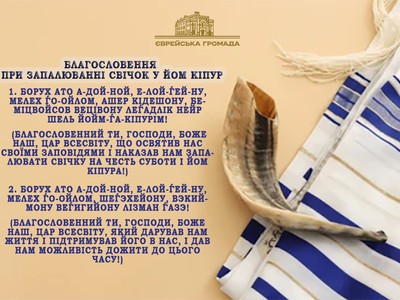
BLESSING WHEN LIGHTING CANDLES ON YOM KIPPUR
Community
1. Borukh Ato A-doynoy, E-loy-Yey-nu, Melekh Go-Oilom, usher of kideshon, bemitsvoys vetsivonu Lehadlik neur shel Yoim-Ya-Kippurim!(Blessed are you, Lord our God, King of the Universe, who has sanctified us with His commandments and commanded us to light a candle in honor of the Sabbath and Yom Kippur!)2. Borukh Ato A-doynoy, E-loy-Hey-nu, Melekh Ho-Oilom, Shekekheyon, Vekimon Vegygion Lizman Ghaze!(Blessed are you, Lord our God, King of the Universe, who has given us life and sustained it in us, and made it possible for us to live to this time!)
Preparing for Sukkot: What is Sukkah?
Community
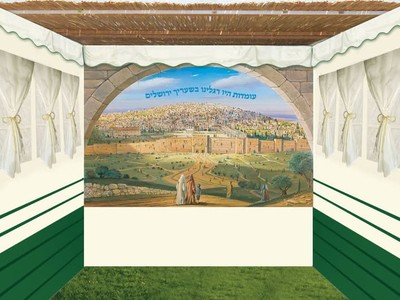
Part 1. What is a succa?Sukkah - a festive kurin or tent סֻכָּה(in Hebrew - kurin), in which it is bequeathed to live during the Jewish holiday of Sukkot.The name of the holiday - "Sukkot" - is derived from the word "sukkah" and literally means "kureni" - tents. Sukkot is usually celebrated in the fall: Sukkot begins on the 15th day of the Jewish month of Tishrei and lasts seven days. All this time, it is customary to live in a hut, in memory of the clouds of glory that protected the people from the hot sun of the Sinai desert at the time of the Exodus. They eat and drink in the bitch, invite guests to the sukkah and arrange cheerful festive meals, some even sleep in the bitch.Sukkah should have a minimum of three walls and a roof covered with torn branches or stems of plants. However, the sukkah is a temporary dwelling, and therefore Jewish law orders that the roof of the festive sukkah should initially be not solid, but with small openings: as tradition explains, through the roof of the sukkah there should be a little view of the sky and the stars.Source:https://toldot.com/
Preparing for Sukhoth: What does Sukhoth mean?
Community
Part 2. What does the holiday of Sukhoth mean?The holiday is established in memoryof the forty-year wandering of the Jews after the exodus from Egypt. The book of Leviticus contains this instruction related to Sukkot: “dwell in tents for seven days… that your generations may know that I settled the children of Israel in booths when I brought them out of the land of Egypt.”The Jewish holiday also has a metaphorical meaning, it symbolizes human fragility and encourages Jews to appreciate their home and body.As Sukhoth is notedFor the holiday, Jews build a hut or tent called a bitch. For seven days, you can only eat in the hut, some even sleep there all the time. During the holiday, Jews are ordered to have 4 plants: etrog (citrus fruit), lulav (palm branch), hadassim (myrtle) and aravot (willow leaves). Often, plants create a bouquet and wave it to: south, north, east, up, down and west.How a bitch is builtA bitch is usually built in the yard of a house. It is customary to cover the structure with branches and straw. The bitch should have three walls and can be any size. It should be well covered, so that there is more shade than light inside. However, the coating should be dense enough that heavy rain cannot penetrate. Inside, the structure is decorated, often with dried fruit.There should be nothing between the sukkah and the sky, for example, branches of trees. On the first evening of the feast, the master ofthe sukkah must eat at least a piece of bread the size of olive in it.
Preparing for Sukkot: Sukkot is in Tishrei, not in Nisan
Community
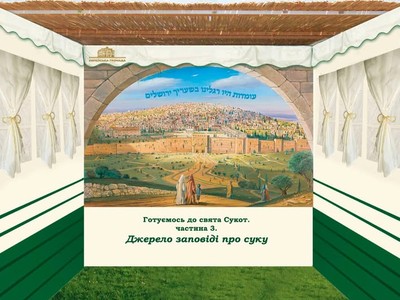
Part 3Sukkot is in Tishrei, not NisanThe Torah obliges Jews to leave their homes and move into a bitch on the fifteenth day of the month of Tishrei in memory of the tents that the Almighty built for them during the Exodus from Egypt. But the Exodus took place in the month of Nisan. Wouldn't it be more appropriate to commemorate this event when it took place in Nisan?Why should we order a bitch to be built in the month of Tishrei?Because it should be noticeable that we leave permanent homes to fulfill the commandment, and not for our own satisfaction.In the spring month of Nisan, it is so natural to leave the house and spend the night in a bitch! The rains have already stopped, and it is getting warmer every day.In Tishrei, on the contrary, people return under the roof, leaving their summer homes due to the approach of rains and evening cold. But the sons of Israel are just at this time moving from houses to sukkah - it is clear that they are doing this by obeying the order of the Supreme.The Torah says: "That your generations may know" - they know that this is a commandment that the sukkah is built by the order of the Almighty.Our sages give other reasons that explain why the Torah commanded to move to Sukkah in the month of Tishrei.Not in memory of the first clouds of Glory that enveloped Israel at the Exodus from Egypt, the commandment to build a bitch was established, because those clouds dissipated when the Jews made the “golden calf”, but in memory of those clouds of Glory that returned and did not leave Israel any more during all forty years of wandering in the desert.When Israel made the “golden calf,” the clouds of Glory withdrew and did not return until Moshe received the command to build the Mishkan (Tabernacle of the Covenant) as a sign that the Most High had forgiven the Jewish people and would be in their camp again.Moshe descended from Mount Sinai to Yom Kippur. The next day, “Moshe called the whole congregation of Israel… and Moses said… gather the offering of the Lord among you…”Within two days - 12 and 13 Tishrei - Jews made donations, on the 14th Tishrei donations were handed over to the masters, and on the 15th Tishrei the masters began the erection of the Mishkan. Then the clouds of Glory returned and covered the camp of Israel like a bitch. Therefore, the day of the 15th Tishrei was chosen to perform this mitzvah. Just as the Almighty left heaven, returning to the camp of the children of Israel, so they are moving into tents to retire with Him in a bough, into His hay.Source:https://toldot.com/
Today Oshana Rabah
Community
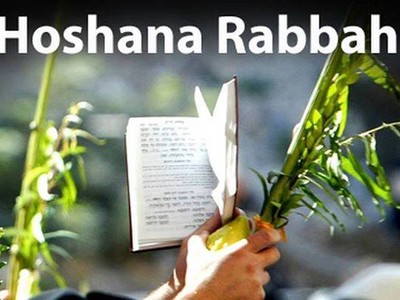
What is Oshana Rabba?The slave slave is the final, the seventh day of the holy Sukkot. The special name of this day - the slave slave - is due to the fact that this day in the synagogue the additional prayers for salvation with the words "Oshan! ..." (that is, "Save us ...") are uttered in the synagogue. Also, a slave is presented in the slave branches of Arava - a river willow, one of the traditional for a succulent of four species of plants. According to the Jewish tradition, it is in the Oshan Raba, on the last day of Sukkot, the Almighty "fasten the seal" of the decision on those benefits that will receive the world next year (for example, the amount of rains). Therefore, the slave slave partially reminiscent of Yom Kipur - this day is also especially important repentance and prayer.
Shemini Atzeret and Simhat Torah
Community
The holiday that comes immediately after Sukkot is called Shemini Atzeret and Simhat Torah (22 Tishrei in Israel, 22–23 Tishrei in the Diaspora; in 2025 it falls on October 13–15).In the diaspora, where there are always two festive days, the first day is devoted to Saint Shemini-Atzeret and prayer for rain, and the second day is devoted entirely to Saint Simhat Torah, marking the completion of the cycle of reading the weekly chapters of the Torah throughout the year. On this day, we read the final part of the Torah and start again with its first chapter. In Israel, where all holidays last for one day, the Simhat Torah coincides with the holiday of Shemini Atzeret.
Question of the day: What is Shmini Atzeret?
Community
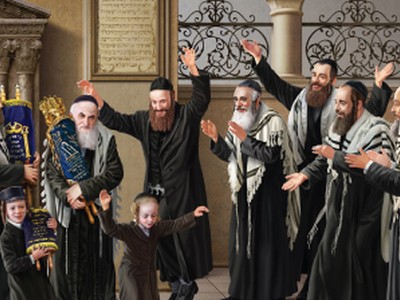
Shmini Atzeret is a holiday that comes just after the end of the seventh day of Sukkot, the 22nd of the Jewish month of Tishrei.Despite the fact that Shmini Atzeret closely follows Sukkot, it is a separate holiday.The name of the holiday is taken from the words of the Torah (Bemidbar, 29:35): "On the eighth day (Shemini) – let the festive gathering (aceret) be with you!"In Sukot, it is up to the Almighty to decide whether the rains will be heavy this year. However, we do not mention rain in our prayers until Shemini Atzeret. The Zohar says that the verdicts are finally sealed at the dawn of Shemini-Azeret.The Simhat Torah holiday marks the end of the reading cycle of the weekly Torah chapters throughout the year. On this day, we read the final part of the Torah and start again with its first chapter.Simhat Torah and Shemini Atzeret are one and the same holiday. Only in the diaspora, where there are always two festive days, the first day is devoted to St. Shemini-Atzeret and prayer for rain, and the second day is completely devoted to Simhat-Tori.In Eretz Yisrael, where all holidays last one day, the Simhat Torah is part of the holiday of Shemini Atzeret. On this day, all the Torah scrolls available in the synagogue are taken out of the ark and a procession is held with dancing and singing, seven times going around the promotion with scrolls in hand. The people rejoice and have fun throughout the day, both in the evening and in the morning."The blessings and forgiveness that they seek in the days of a trek and asking for an almighty solemn prayer and deep repentance," said the previous Lubavian Rebbe Rebbe Joseph Itshak Schneerson, "they can be reached in a seven-potor.At first glance, it is surprising: the seven-car Jews all over the world have fun and dance with the scales of the Torah, which is assigned to study! But if Simchany-Torno were marked by studying or even reading the Torah, it would emphasize the difference between Jews-between scientists and unheated. When we dance with the rolls of the tory, and its contents are invisible, then all of us - from the greatest to the simplest - we rejoice together and on an equal footing.
We complete the annual reading cycle of the Torah Switch
Community
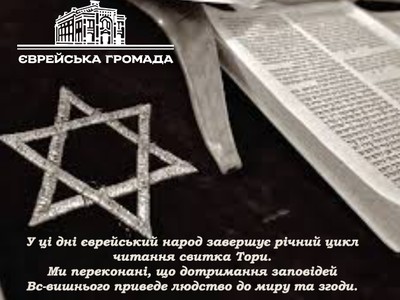
These days, the Jewish people complete the annual reading cycle of the Torah scroll. Each time, reading the sections of this most important message of the Most High, Jews discover new dimensions of the laws of being, righteousness and piety.Understanding the commandments that the Jewish people again enriched the Torah this year, led us to work on strengthening dialogue with representatives of other civilizations and cultures.We are convinced that the observance of the commandments of all the highest will lead humanity to peace and consent.May the new cycle of reading St. Torah, whose anticipation of Jews is celebrated in the days of the seven-car, will bring good, peace and love into your life!
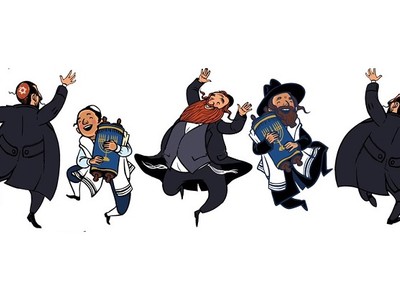
✨📜 Shamini acehet and seven torah is the time of our joy! 🎉🕍
Community
🍂📅 The shamiers of the Acehet and the Seven Torra complete a number of autumn Jewish holidays.🌿🌿️ The shyment aceret is not associated with the slice, but comes immediately after it.👑 "Ask your needs for the king" - for all 7 days the Sukkot Holidays, the people of Israel ask for life and joy for 🌍 70 peoples of the world, and for itself does not ask for anything.So Israel belongs to another day - 🕊️Smini acehet.📖 So is written in the Tor: "On the eighth day you will have a holiday."👑🍷 Example: The king invited children to a seven -day feast. When it is time to say goodbye, he said, "It is hard for me to part with you, stay for another day."💧 In the shaming Acerett, we first mention the rain and read a special prayer ☁️🙏, asking the Most High to send fertile rains 🌱🌾.Nothing is reminiscent of the resurrection from the dead as a grain that sprouts in the rain after a long stay in the ground.📜📜️ In the shyment acehet is included andSeven Tara.🌍 In the diaspora:1️⃣ day - acerette and the prayer for rain;2️⃣ Day - Seven tora 🎶💃.🇮🇱 In Israel: Seven Tara is part of the shammer.🕍📖 On this day, the annual reading cycle of the Torah begins and again begins.The synagogues get all the scrolls 📜, make seven bypasses (Akaphot) 🌀 with dancing 💃🕺 and singing 🎶.🕊️ Rebbe Yosef-Itshak Schneerson said:"The blessings and forgivenesses that they seek in the days of trembling can be achieved in a seven-potor because of joy, fun and dancing." 🎉🤔 At first glance, it is strange: the Torah needs to be studied, but we dance with it rolled up with it.Why? Because so there is no difference between scientists and simple - everyone rejoices together and on an equal footing.🌟Haga is the same! 🎊We wish you a fun holidays Aceret and Simny Tor!✨🕍🎶