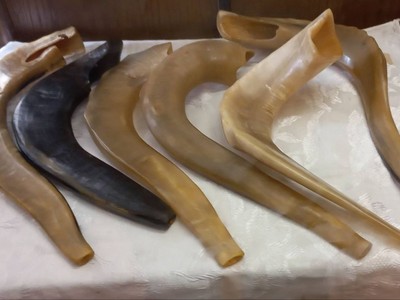
📖 Lubavitcher Calendar: Six Shofars
Community
For many years, the seventh Lubavitcher Rebbe used six shofars, each of which has its own special history and connection with him.1. Shofar Rebbe Tsemakh-Tzedeka (Third Rebbe)The Rebbe used it for many years, starting from the first years of his activity. The shofar is black and white, and even after it was partially damaged and needed repairs, the Rebbe continued to take it with him on the tekioth (shofar trumpet). But because of the large cracks that have appeared in recent years, this shofar has become unusable.2. Shofar Rebbe (the fourth Rebbe)Small in size, black and shiny. The shofar was once considered unusable, but it was repaired and served the Rebbe again. This shofar had a special value, because it belonged to the Rebbe family.3. Shofar Rebbe Rajaca (Sixth Rebbe)White, with simple and smooth curves. The Rebbe brought it to the synagogue every year, although he did not usually use it for tekiots.4.Shofar Rebbe Maharasha (Fourth Rebbe)Durable, with a pronounced bend and a golden hue. This shofar has come a long way. Although the Rebbe rarely used it in practice, he kept it with great trepidation.5–6. New Shofars from the Land of IsraelIn the late 1940s, at the request of the righteous Rebbetzin Chai Mushka, two new shofars were brought in, especially for the convenience of the Rebbe. They were used for several years to relieve the Tekioth after the Rebbe's declining health, but he later reverted to older shofars with deep spiritual significance.All six shofars were kept in the Rebbe's table, wrapped in a handkerchief, and each year they were brought with special reverence. Each shofar carried the memory ofthe great tzaddiks and served as a spiritual bridge of generations.Rebbe shofars are not only an instrument for the sounds of Rosh Hashanah, but also a living asset, a symbol of loyalty to tradition and deep respect for spiritual ancestors.Source:t.me/LubavitcherRebe770
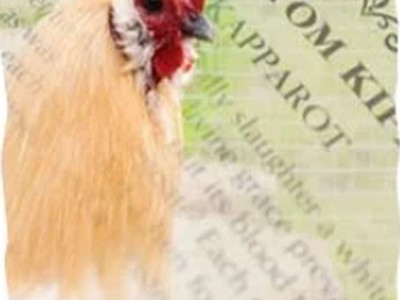
✡ Open registration for the rite of Kaparot
Community
Dear friends,We openonline registration for the rite of Kaparotis a special custom that helps us meet Yom Kippur with a pure heart and a clear soul.📋 To join, fill out a short questionnaire:👉https://forms.gle/sLLLUahvMwvVtJJr8May this time be a source of purification, spiritual upliftment and blessing for you and your families.Gmar Hatima Tova!
The Lubavitcher calendar is your daily guide in the Hasidic world! 🕊️
Community
🔟 Facts about Rosh Hashanah at the Lubavitcher Rebbe️1 At the Lubavitsky Rebbe, before the evening prayer in Rosh Hashanah, it was customary to go to his wife's room to wish her a good and sweet year and ask for forgiveness. They advised all Hasidim to do the same.️2.📖 In Rosh Hashanah, they tried to complete the whole of Tegilim at least once. In the Rebbe, the reading began about 20 minutes before the evening prayer.️3🐑 On the Rebbe's table in Rosh Hashanah there was always a head of a lamb. Only if it was not there — they put the head of the fish.️4 The Rebbe🍽️'s meals were held in a special concentration: they did not sing and almost did not speak (except for the second day meal). Also, the Rebbe first immersed the halah in salt three times, as during the year, and only then immersed in honey three times.The ️prayer in "770" at the 7th Rebbe began at 10:00, like the whole year. In Lyubavichy, they used to pray much earlier.6 ️📩 Before Rosh Hashanah, the Rebbe received letters from Hasidim and Jews from all over the world. They were put in the same bags and brought to the tubes in the shofar.7 📯 The️ Lubavitsky Rebbe himself trumpeted the shofar, except for the First Rebbe, who said: "The shofar has been trained since childhood, but I did not have a childhood."8️Tashlikh🌊 was carried out immediately after Minkhi. First, the Rebbe went with the Hasidim to the botanical garden, and from the 70s they began to do tashlich near the fountain next to "770".9️.🥂 After sunset on the second day, a short special colorbrand was arranged, which continued a little after the holiday in order to "extend the holiness of Rosh Hashanah for the whole year."️1? 0?️🤝 The Rebbe asked that each Chassid help as many Jews as possible to fulfill the commandment of listening to the shofar.כתיבה וחתימה טובה לשנה טובה ומתוקהHave a good entry in the Book of Life and Sweet Year.
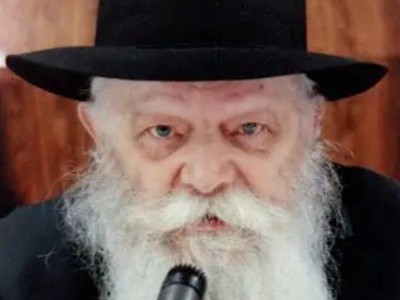
LETTER FROM LYUBAVYTSKY REBBE TO ALL JEWS ON THE EVE OF YOM KIPPUR
Community
LETTER FROM THE LUBAVITSKY REBBE TO ALL JEWS ON THE EVE OF YOM KIPPUR 5732 (1971)To all the sons and daughters of Israel, wherever they are, blessings and wishes of health and peace!At Rosh Hashanah, all of us Jews took upon ourselves the “yoke of the Kingdom of Heaven” so that this decision would be revealed later in each day of the new year. This is stated in the prayer: "Reveal the Glory of Your Kingdom to us!"On the one hand, it is said: "You stand together today..." — all Jews stand together before the Creator on the day of Rosh Hashanah, being in a state of complete unity of souls. On the other hand, the phrase further emphasizes the heterogeneity of this “together”: the difference in levels between “your heads” and “your aquifers”.Despite the apparent contradiction, the above reflects a special kind of unity of the Jews ("helmet coma"), similar to the integrity of the body, in which the head, arms, legs perform different functions and are unequal in meaning, but at the same time constitute a single whole and complement each other to completeness.On the days that connect Rosh Hashanah with Yom Kippur, I want to recall the words of the Alter Rebbe. Sometimes, he said, the fifth acts as a guide — and then the head is forced to follow her.At the material level we see: although the function of the head is to control the body, it is the legs to carry the body, including the head, from place to place. Everything in this world reflects the realities of the spiritual world. It is important to understand: how does the legs lead to the head and what does it mean in a spiritual sense? The main difference between the leaders of the people, the sages (at the spiritual level) is the mind, the ability to consciously serve. "Aquaries" do mechanical work, and in the spiritual terms of their service can be described as a duty without unnecessary wisdom. How can the "Aquarius" stand in the place of the "head of the people" - even so that the "heads of the people" will follow him?And one more question. The Almighty revealed His Will in the commandments. Can, in principle, a Jew accurately and in all details fulfill the Will of the Almighty?Sometimes the possibilities of a person are so limited that even such a great force as self-sacrifice does not help: from self-sacrifice you can jump from the roof to the ground, but even the one who is ready to give his life cannot jump back to the roof.The short answer to these questions is:In the performance of the commandments of the action is the main. On the other hand, the feelings and spiritual work, which is embodied in the practical performance of the commandments, are of great value. Paradoxically, it is the limitation of their capabilities, the inability to fulfill the will of the Most High, even at the cost of self -sacrifice, the Jew can reach such a deep unity with the Most High, Torah and Commandments, which cannot be achieved in any way. In this case, he not only does not receive punishment for the unfulfilled commandment, but also, moreover, receives a reward for his sincere desire to fulfill it.And more importantly, the soul of the Jew, thanks to the depth of the experience, approaches perfection, unattainable for those who comprehend the Almighty only with the mind.So the "water-bearer" becomes higher than the "head", leads the "head" behind him. The real pain of the heart for the unfulfilled commandment (one of the most important aspects of teshuvah) gives a special height to Jewish unity.
📖 Lubavitcher calendar: Rabbanit Dvora Lea
Community
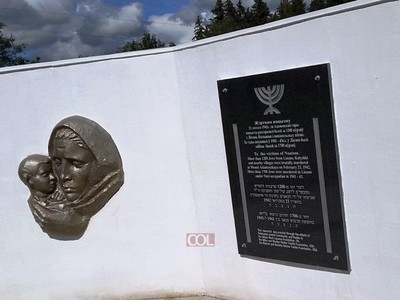
✨ Rabbanite Dvora Lea ע״ה – daughter of Alter Rebbe and mother of Tsemakh-Tzedek ✨👶 She was born in 1766 (תקכ"ו) in Vitebsk, in the family of Alter Rebbe and his wife Rebetzin Sterna.💍 In 1788, she married Rabbi Sholom Shahne Altshuler. A year and a half later, their only son was born – the future Rebbe "Tsemakh-Tzedek".🔥 In 1792, the “kitrug” (accusation) against the Alter Rebbe and Hasidism was awakened in heaven.On the eve of Rosh Hashanah, the Rebbetzin of Dvora Lea opened Aron Kodesh and said:✨ “I take it upon myself instead of my father to keep him alive.”🌹 On the second day of Rosh Hashanah, she fell ill, and 3 Tishrei (Tsom Gdalya, תקנ"ג) her soul departed to the higher worlds.Her 🕯️ last request to her father was to raise her son.Alter Rebbe took the boy in, and it was he who grew up with the great leader – Tsemakh-Tzedek.In the photo there is a monument to the victims of the Holocaust near the grave of Rebbetzins Dvori-Leya Altshuler.Photo taken from "COL" websiteSource:(https://t.me/+8KbDy9dQVqAxZWE8 )
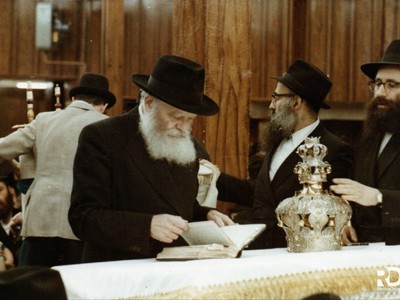
NAME AND MEANING OF YOM KIPPUR
Community
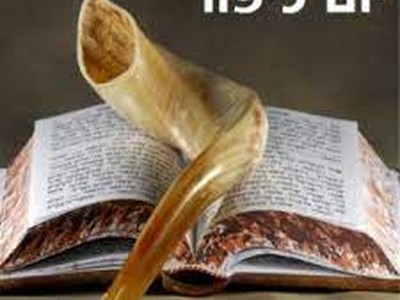
YOM KIPPUR – Day of Atonement – the most important holiday of the year. The period of ten days – Ten Days of Repentance – begins with Rosh Hashanah and reaches its peak on Yom Kippur. It is the day of atonement for the sins that man has committed against G-d. The judgment begins on Rosh Hashanah and the final judgment is pronounced on Yom Kippur. On Yom Kippur, we refrain from meeting basic human needs and desires:1. FOOD AND DRINK.2. bathing.3. USE OF COSMETIC OILS.4. WEARING LEATHER SHOES.5. CLOSE PROXIMITY.The Torah tells us (Vaikra (Leviticus) 16:31): "That you may humble your souls..."On this day, a person should step away from everyday routine and devote all the strength of his soul to purification in order to atone for the sins committed over the past year and repent. The experience of calming the conscience is the goal, the goal is to achieve a new, higher spiritual level. Sefer A-Chinukh (commandment 313) explains: "The only source of this commandment is that God's kindness to mankind lies in it. He sets aside one day in the year in which they must atone for their sins through repentance.So we were ordered to fast on this day, as food, drink, and other physical pleasures pull us toward material things and hinder souls in their search for truth. No one should face God's judgment with food and drink... therefore, for the benefit of man on this day, to strengthen his soul so that he becomes worthy to receive the Lord's forgiveness "..........
📖 Lubavitcher calendar:Siha on Shabbat (T)shuva ✨
Community
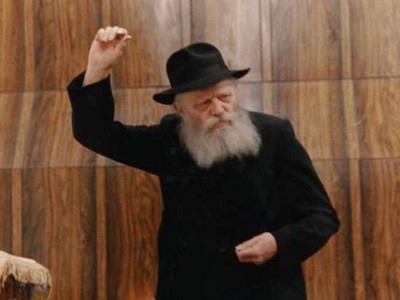
This Saturday after Rosh Hashanah and before Yom Kippur is called Shabbat (T) shuva (from the words from the haftara: "Shuva, Israel, Adonai's hell Elohei" — "Return, Israel, to the Lord your God").The Rebbe explains that this Sabbath has a special dignity: on the one hand, it is part of the Ten Days of Repentance, when every Jew can approach G-d; on the other hand, it is Shabbat, and Shabbat brings joy and enjoyment, and there is no room for sadness.From this follows the lesson: work on tshuvah on this Sabbath should be in an atmosphere of joy, and not just in a broken heart. The person ponders how to return to G-d, but does so with the joy of being given the opportunity to approach and return.And the Rebbe says that in Shabbat (T) Shuwa there is a special power — to be strengthened in good decisions, both in matters of Torah and prayer, and in the commandments relating to relations between people. This power comes from the combination of two virtues: Shabbat and Teshuva.Shabbat ShalomSource:(https://t.me/+8KbDy9dQVqAxZWE8
📖 Lubavitcher calendar: extra candle
Community
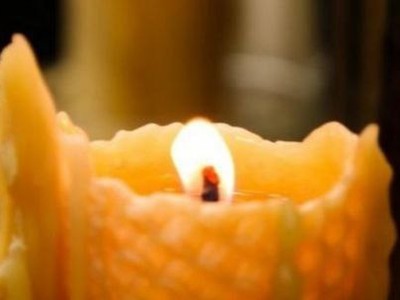
🕯️A special custom is to light the "teshuvah candle" on the eve of Saturday (T) shuva in addition to the Saturday candles.🕯️The Sefer ha-Mingagim notes that the family tradition of the Lubavitcher Rebbe is to light a special candle, the "teshuv candle", on the eve of the Sabbath of Teshuv.The 7th Lubavitcher Rebbe said that this tradition applies to every Jew.🕯️From the stories of Rebbe Rajac (6th Rebbe), it is known that it was customary to prepare several oppressors in one candle — one for each family member.And if this was not possible, then the candle was divided into parts and during the ignition the names of all family members were remembered aloud.🕯️Later, in Sikhot Kodesh, it is stated that according to Chabad custom, three candles should be lit on the eve of the Sabbath of Tshuv.These three candles symbolize the three directions of service to the Creator: “turn away from evil,” “do good,” and “seek peace.” So did the Rebbe himself.Source:https://t.me/+8KbDy9dQVqAxZWE8
Izkor (or Azkarat Neshamot), memorial prayer for the dead
Community
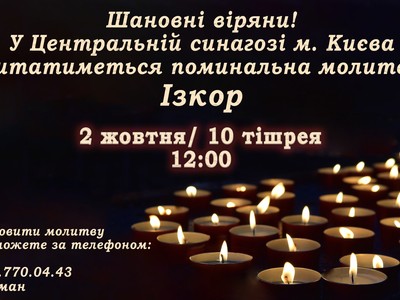
Izkor (or Azkarat Neshamot), the memorial prayer for the dead, is said in synagogues four times a year after the Torah is read on holidays: in Yom Kippur, Shmini Atzeret, on the last day of Passover, and on the second day of Shavuot. The main commemoration is what is happening on Yom Kippur, since this day is a day of redemption for both the living and the dead.The main part of the Izkor prayer is a promise made to oneself to make a donation in honor of the deceased after the holiday. By giving tsedoku, we are physically doing a good deed in this material world - something that the deceased himself is no longer able to do. Nevertheless, when this is done by someone in memory of him, his soul receives additional merit and spiritual exaltation.