
Our dates: 5 Awa
Community
*5 ava 5332(July 15, 1572) — Yorzeit (anniversary of the departure from this world) Rabbi Yitzhak Luria ben Shlomo Ashkenazi (known by the acronym "Ari" — Ha-Rabi Yitzhak)Rabbi Yitzhak Luria Ashkenazi, also known as Ari HaKoydesh (“The Holy Lion”) was born in 1534 in Jerusalem. His father came from an Ashkenazi family (that is, a family of European Jews), his mother from the Sephardic (Spanish and Maghreb Jews) Frances family. After the death of his father, the child was taken by his mother to Egypt, where she grew up in the house of her uncle (and later father-in-law), a wealthy salesman Mordechai Frances.He lived most of his short life in Egypt, in his uncle's house (for several years he lived a hermit on the Nile island of Rauda, which belonged to him), where he studied a lot and hard, grasping a variety of Torah sections and its hidden part (bondage). In 1570, Rabbi Yitzhak settled in the CPU, where he studied with the great Cabalist Rabbi Moshe Cordoro. He spent the last two years of his life in the CFAT, but during this short period he had to completely change the approach to the study of Kabali and to earn general recognition as one of the largest Jewish mystics. Ari proclaimed that "we should now and have to reveal the wisdom of the bonds", referring to the spread of the study of boars among as many Jews as possible (earlier it was the fate of a small number of people of every generation).Rabbi Itzak Luria did not write down his teaching, and it is known to us from the writings of his disciples (we know the names of 30 of them). It is known that Ari settled in Safed after the prophet Eliyahu recommended him to move to this city to meet there with Rabbi Chaim Vital and make him his disciple.Ari HaKoydesh died at the age of 38 and since then, in the Jewish world, it is customary, speaking of him, to call him Arizal (AriZal — Ari zhrono livrokho ("Ari, blessed is his memory"). Two Ashkenazi synagogues of the city are named after him.*5 Av 5716(July 13, 1956) — 12 Rebbe envoys arrived in Eretz Yisrael, the newly founded settlement of Kfar Chabad.After the murder that occurred there on Iyar 1, when five students and teachers of a vocational school died at the hands of terrorists, the Rebbe spoke in New York with words of support for the residents of Kfar Chabad. After that, several young Hasidim expressed a desire to move to the Holy Land, to the Chabad communities of Kfar Chabad and Lod, to strengthen the spirit and support of all Chabad Hasidim in general and the inhabitants of Kfar Chabad in particular.chabad.odessa

Our dates: 7 Awa
Community
*7 ava3328 (432 BC) — Capture of the First Temple.After nearly a month of fierce street fighting inside Jerusalem, the army of Babylonian ruler Nebuchadnezzar (Nebuchadnezzar) broke through inside the temple complex. Here the Babylonians began to rampage, crushing everything that came to hand. This continued until the morning of 9 Av, when the Temple was set on fire.

Our dates: 8 Awa
Community
*8 av 2449year (1311 BC) — Return of scouts sent by Moses to survey Canaan (land of Canaan).The intelligence officers, 40 days before, sent Moshe for the inspection of the promised land, returned from the task, carrying with them visible evidence of fertility and generosity of that earth, the fruits were impressed with their excellent taste and giant size, for example, at least two adults were required to carry a huge bunch of grapes. But at the same time with the demonstration of the wonderful properties of the earth promised by the Jewish people, the scouts began to frighten the people about the powerful giants living on the Knaan earth, and that they, scouts, looked in their giant eyes like ants. After that, the scouts stated that, despite the promise of the Most High, this land could not be conquered. What it led to, it became clear the next day, 9 AVA.*8 Ava 3827year (A.D. 67) — The beginning of the civil war in Jerusalem.After the Roman army besieged Jerusalem, strife broke out among the besieged. Some of the townspeople believed that it was necessary to fight the besiegers to the end, some believed that it was necessary to surrender and keep the city and the Temple intact. As a result of the conflict, one of the parties set fire to food warehouses. Thus, they cut off the path to retreat, but also doomed the Jerusalemites to starvation. After that, for three years, the Jewish capital confronted the Roman legions, but famine and fratricidal war took their toll.chabad.odessa

📚 What is customary to study from 1 to 9 ABA:
Community
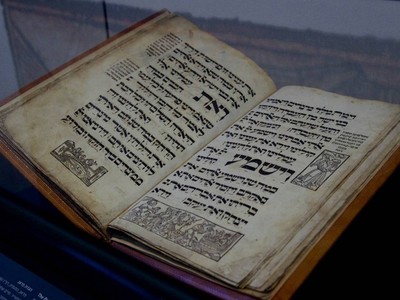
In the period from 1 to 9 ava(the last nine days before the fast of 9 Av — Tisha be Av) Jewish tradition includes not only restrictions and mourning customs, but also special topics for study, corresponding to the spirit of this time. Here are the main directions:📚What is customary to study from 1 to 9 ABA:📖Books with mourning and destructive contentThis is due to the prohibition to study "fun" or joyful topics from the Torah these days:Midrash of Eich Rab(מדרש איכה רבה) — Lamentations of Jeremiah HaggadahTalmudic agadot about the destruction of the Temple, for example:TreatiseGitin55b-58aSanguédrine104 — stories of the last kings and events of destructionBookJob— as a symbol of sufferingBookLamentations of Jeremiah(Megilat Eicha) — especially closer to 9 avProphecies of destruction in the books of the prophets:YeshayahuIsiahYermiyahuJeremiahEhezkelEzechiel📜Laws of Mourning and Destruction of the TempleGalahot Beyn HaMetzarim— the laws of Three Weeks and Nine DaysGalahot Tisha B'Av— fasting, prayers, behaviorLaws and Discussions from the TreatiseTaanite(מסכת תענית), especially sections related to posts and tragic events🕍Topics related to the Temple and its restorationAlthough on weekdays of these nine days it is customary to limit joyful learning, on Shabbat it is also allowed to study:Laws and structure of the Temple (for example, a treatiseMidot– מסכת מידות)Prophecies of comfort and restoration (Isaiah chapter 40 ff.)💡Why are they restricting the study of Torah?For the Torah brings joy, but in the days of tribulation behind the Temple it is inappropriate. However, everything related to destruction, suffering and loss is allowed and even desirable.
📌 Halachic Laws and Customs 1 to 9 Av
Community
🕯️Period of Mourning for the Destroyed Beit HaMikdashFrom the moment of sunset, 30 tammuz (on the eve of Rosh Chodesh Ava) begin"Nine days of grievance"ending at noon on 10 Av. Below are the main prohibitions and rules in force on these days:🔹🛑 Laundry & ClothingIt is prohibited to:Wash clothes (including dry cleaning, even if the clothes are not planned to be worn immediately)Iron clothesWear fresh laundry, use clean bed linen, tableclothsAllowed:Wear clothes that were worn to Rosh Walk, at least for a short timeWash clothes for small children (up to 5–6 years) — only if necessaryWear fresh clothes on ShabbatBuy a non-leather pair of shoes for 9 Av, if it was not in advanceBuy underwear in case of urgent need🔹🚿 Hygiene & Bathing❌ It is forbidden to wash for pleasure, even with cold waterAllowed:Wash hands, feet and faceTake a non-hot shower — if necessary for cleanliness (especially in the heat)Use soap and even hot water — if there is excessive sweating or an unpleasant odorWomen are allowed to prepare for the mitzvah mikva as usualSick, Maternity & Pregnant — Allowed to WashWash the body in parts if the whole body cannot be washed🚫 Swimming in the sea or pool — prohibited, even for cooling🔹🍗 Meat & 🍷 WineFrom 1 av to 10 av (including fasting day) do not eat meat and do not drink wineAllowed:Sick, pregnant, breastfeeding women — if necessaryChildren under 6 yearsAt the lunches on the occasion of the fulfillment of the commandments (brit, podium gaben, bar mitzvah on the birthday)Give wine to a child tobirkat amazonif he can pronounce the blessingWine vinegar, beer and other alcoholic beverages (except wine) — allowed🔹🛍️ Shopping & BusinessIt is prohibited to:Buying new things for funBuy furniture, household appliances, nice clothes/shoesBuy clothes and wear them right awayAllowed:Purchase essentialsShopping for young children (under 6)If the purchase is at a discount — pay to Rosh Chodesh, and wear after 9 avGive gifts (except for 9 Av), but not too expensive🔹📻 Music & Entertainment❌ Music is forbidden — even in the backgroundAllowed:Listening to music while playing sports — if it is necessary for healthIt is advisable to listena cappellaWatch/listen to materials for training and moussar (ethics) — allowed🔹✂️ Haircuts and self-care❌ It is forbidden to cut hair, shave, trim beardAllowed:Trim nailsCaring for the wig (combing, styling), but not washingHaircut/shave for medical reasons🔹🧵 Sewing and repairing clothesIt is prohibited to:Sew or repair clothes professionallyAllowed:Easy home repairs (for example, sew a button)Sewing wedding clothes for a chuppah to a guy who does not have children from his first marriage🔹Other📖Kidush Levanis postponed until after the 9th of Av, because it needs joy⚖️ It is better to avoid lawsuits these days — after all, ourmazal(luck) weakened🕯️May the sorrow of these days lead to true consolation and the construction of the Third Temple —במהרה בימינו!

Laws related tothe 9th of Av ( chatina 1)
Community
9 ava prohibited five things:food and drink,washing,lubrication with oils or creams,"wearing sandals"(any leather footwear) andconjugal intimacy.All of these prohibitions applythroughout the day— night and day. Therefore, they stop eating before the 9th of Av, and do not eat until the end of the twilight of this day.Theobligationto fast on the 9th of Av applies to everyone, even pregnant and breastfeeding women. However, patients are allowed to eat on this day, even if fasting does not pose an immediate threat to their lives. At the same time, they should refrain from hearty food or delicacies, only the simplest is allowed — in the amount necessary to maintain health.If the 9th of Av falls on a Sunday, the patient (who does not fast),must perform Gavdala before eating(while everyone else does it after the end of the fast).9 av it is forbidden to rinse the mouth— both in the morning and in the afternoon, until the end of the fast.9 ava you can not wash— neither hot nor cold water. It is forbidden to even immerse your finger in water. However, this prohibition applies only to washingfor pleasureAt the same time, it is allowed to wash your hands (or other parts of your body) to wash away the dirt that has got on them. It is also allowed to wash your hands in the morning, after waking up, as on other days. But on the 9th of April we washnot the whole armbut only fingers —to the joints, then a little wet (but not wet) hands are carried out on the eyelids — this is the morning wash. If the eyes were dirty, they are allowed to be washed as on ordinary days.Women whoprepare food on this day, it is allowed to wash and rinse products if necessary — even if they wet their hands, because they do not do it for the sake of washing.Prohibition on “wearing sandals”applies onlyleather shoes. It is allowed to wear wooden or rubber footwear, howevernotif it hasleather liningor sole. Anyone who needs to walk through an area where there are many thorns, or (outside of Eretz Israel) along the street among non-Jews (where it is not customary to wear substitutes), can wear leather shoes —but only just before entering this placeand then take it off.Small children are allowed to wash and lubricate, as on other days of the year.All bans related tothe 9th of Av,begin to act from sunset 8 avaand ongoinguntil the end of the 9th of Av the next day.🔹 The next post is a continuation.

A commemorative event dedicated to the 160th anniversary of Metropolitan Andriy Sheptytskyi was held in the Central Synagogue of Ukraine
Community
This name is well known to many Jews, and to those who value humanity and courage. Metropolitan Andrey Sheptytsky, a minister of the Greek Catholic Church, who during the Second World War, saved hundreds of Jewish children - risking everything, including his life. He fought against hatred and the cult of the extermination of the Jews, he even wrote letters to the Pope. I hated Nazism with all my heart, but I perfectly understood what this ideology could lead to for humanityAt this event, we not only honored him with words and memories, we also solemnly opened a commemorative plaque on the chestnut planted in his honor near the synagogueThe event was attended by representatives of various denominations, in particular the Ukrainian Greek Catholic Church, diplomats, scientists and well-known public figures. All those who are aware of the importance of the figure of Metropolitan Sheptytsky, especially in our dark times.
Memory that lives through the centuries
Community
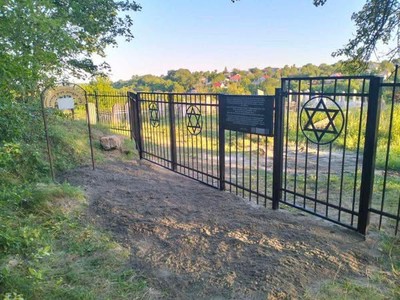
In the city of Gorodok in the Khmelnytsky region, a new protective fence was installed on an ancient Jewish cemetery, which is more than 400 years old!This necropolis is one of the oldest in Podillia. There are about two thousand tombstones preserved here, the oldest of which date back to the beginning of the 17th century!I want to thank those who implemented this Holy Cause! Namely, the ESJF charitable foundation – European Initiative for the Preservation of Jewish Cemeteries and the German Ministry of Foreign Affairs for financial supportIt is very important to take care of preserving the memory of the dead. This is not only a story, but also a great commandment! Source:https://www.facebook.com/chiefrabbiua

Question of the day: Do you rely on G-d or on yourself?
Community
Hillel said, “If I am not for myself, who is for me?" (Avot 1:14).And David writes in the Psalms, “My G-d is my fortress; in Him I trust” (Theilin 18:3).So how, after all, should we hope or act on our own?At first glance, Hillel seems to say: "Rely only on yourself." But the wise men explain: it's not about salary, food or housing at all. It's about spiritual achievement — what we can do for our souls and for our future lives. No one will replace us here: if someone else does a good deed, it will be credited to him, not to us.Ramhal explains: the purpose of creation is to give good to man. But if you get everything for free, it will be the "bread of shame". The real joy is when you have achieved something yourself. Therefore, we live in a world where we have to work, make choices and overcome difficulties.Yes, success depends on the help of G-d. But help comes to those who take their step. As in the proverb: “In God you hope, but you row.” Sitting with your hands folded, waiting for a miracle, is like waiting for a harvest without sowing a seed.And another level is likening to G-d. He Himself creates and shares. And we are given the right — and the duty — to be His “representatives” in the world: to help, to build, to correct. If someone else does it, he will get the reward.Therefore, Hillel asks: if I do not take care of my soul, who will do it instead of me?Trust in the Almighty and personal efforts go hand in hand. We do our best and leave the result to Him.
20 ava — yorzait Rabbi Levi-Itzhak Schneerson
Community
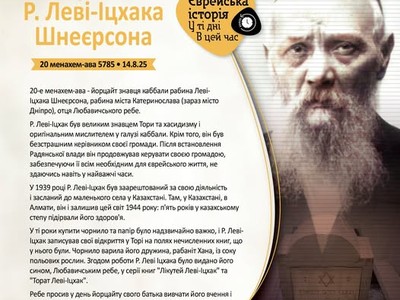
20 menachem-avah 5704 (August 9, 1944) — yorzait (anniversary of the departure from this world) of the great cabalist (known as the "Divine Cabalist") Rabbi Levi-Itzhak Schneerson, the father of the current Rebbe.Rabbi Levi-Itzhak was born on 18 Nisan 5638 (1878) in the town of Poddobryanka, Gomel County. He was the great-great-grandson of the third Lubavitcher Rebbe, "Tsemakh-Tzedek", and was named after his grandfather, who was the rabbi of Poddobranka.In 1909, the 30-year-old Rabbi Levi-Itshak became Rabbi Katerynoslav. At that time, this city was one of Russia's largest Jewish centers, a third of the residents were Jews. The leadership of the community met the young Rabin Hasid with alert, but his erudition, sincerity, devotion to Tori and love for people helped to overcome this alertness, and soon a slave Levy-Itshak became an undeniable authority among the Jews of the city. People of all ages and representatives of different segments of the Jewish population turned to him.At the beginning of 1939, a population census was conducted in the USSR. Among the many questions of the questionnaire was the following: Is the interviewee a believer? After 20 years of persecution, many religious Jews were afraid to answer truthfully. And then the slave Levi-Yitzhak, during a speech in the synagogue, urged the Jews not to hide their faith, because the rejection of it (even in words) is a refusal to communicate with the Almighty, and the Jew should not go for it.On March 29, 1939, at 3 o'clock in the morning, NKVD officers came to the apartment of Rabbi Levi-Itzhak Schneerson of Dnipropetrovsk. The search lasted until the morning. The whole huge library of the rabbi was reviewed and his manuscripts were confiscated — thousands of pages with deep comments on the Tanakh, the Talmud, the Cabal...At dawn, Rabbi Levi-Itzhak was arrested. The investigation lasted almost nine months. Investigators changed, prisons changed — in Dnipropetrovsk, Kyiv, Kharkiv… Rabbi Levi-Itzhak was accused of leading a counter-revolutionary organization, the activities of which were allegedly directed from abroad by the "fierce enemy of the Soviet government" Rabbi Yosef-Itzhak Schneerson (Rebbe Raiats).In early December, the rabbi was sentenced to 5 years of exile in Kazakhstan. On January 29, 1940, after a difficult journey in a prison car, Rabbi Levi-Itzhak arrived at the place of exile — in the village of Chiili. A month later, his wife, Rebbetzin Hana, was able to join the exiled husband.Rabbi Levi-Itzhak spent 4 years in Chiila — years of suffering. In mid-April 1944, after completing his term of exile, he moved to Almaty, where many evacuated Jews, including Chabadniks, lived at that time.Before the holiday of Shavuot, Rabbi Levi-Itzhak moved into a small two-room apartment rented for him, which immediately became the center of Jewish life in the city.It seemed that now he had found peace, but it was this peace that led to a new exacerbation of the incurable disease that Rabbi Levi-Itzhak had been suffering for many years. Surprisingly, during the exile, in inhuman conditions, suffering from lack and hunger, the disease receded. However, after arriving in a quiet place, surrounded by a kind attitude, Rabbi Levi-Itzhak again began to suffer from an ailment that returned with a vengeance. The doctors did not find a means to save him.On Wednesday, the 20th of the month of August, Rabbi Levi-Itzhak Schneerson passed away into eternity. He was buried in a Jewish cemetery in Alma-Ata. His grave became a place where people come to pray.Source:fjc.org.ua
🎒 Starting the School Year 2025/2026: Tips for Parents
Community
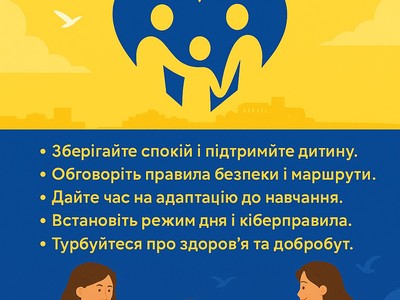
Two more Mondays and September 1. Can you imagine? No matter how much you want to delay the summer, it's time to get ready for school. The new school year is always a challenge. And under martial law, it has its own peculiarities. We've put together some helpful tips for parents to help make the start of the school year as safe, relaxed, and positive as possible.That's what holds the ultimate importance.1. Start with yourselfYour peace of mind is your child's basic safety.If you trust the school, trust the teachers - the child feels it. Even one of your phrases “I'm with you, everything will be fine” can change her day.2. Discuss all “what if…”No intimidation. Just, calmly say:“Where's the shelter?”– What to do in case of anxiety?– How to keep in touch?This does not frighten, but gives confidence.3. Do not expect the child to be an "excellent adaptation student"A new class, a new school, new conditions are a challenge. Give yourself time to get used to it. Praise even small steps. Ratings are important, but no more important than healthy self-esteem.4. Check: Is the child safe on the Internet?Cybersecurity is as much a reality as sheltering in a school. Speak frankly about the risks, do not intimidate. And set an example - less scrolling, more live communication.5. If the child is studying online — do not leave him/her alonePhysically, maybe, but not emotionally.Ask her who she's talking to, what she's seeing, how she's feeling. Even a short “How was the lesson?” can be a dialogue, not a formality.6. Prepare inner shelter: trust and supportIn childhood, it is important not only to know where to hide, but also to whom to turn.Be the person the child will come to with their fear or joy.7. Regime is not rigor, it is predictabilityChildren feel better when the day has structure. Try to make a school schedule together with time for study, recreation, games and communication.8. Do not heroize — do not send a child to school sickTreatment at home is about caring not only for your child, but also for those around you.9. Bring at least a little joy back homeSchool fees, a photo with a briefcase, joint purchases of stationery, a favorite breakfast — create light rituals. The child needs to see that life goes on.10. Remind: acquiring knowledge is already a contribution to the VictoryTell the child:“Your job is to learn, my job is to support you. Together, we are strong.”And together we are bringing the victorious future closer.With faith in the power of Ukrainian education and every family