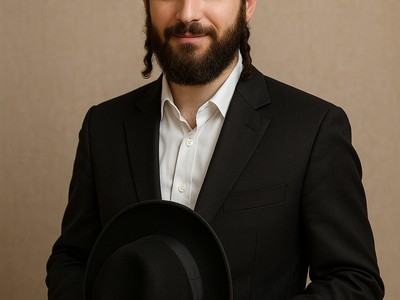
Question to the Rabbi: Why do they wear both a kippah and a hat at the same time?
Community
Questions:Dear Rabbi, I have read all about why people wear a kippah, and I understand the essence of this custom. But what about the hats? Why do I see Jewish men wearing a hat besides a kippah?Answer:Indeed, many Jews wear classic hats or other headgear, such as fur strummels, and wear them even while praying.If you are interested in the differences in the shape, material or width of these hats — this is not a question for me. I am a rabbi, not a sociologist, and the styles of hats reflect more the social norms of different communities than halachic prescriptions.But I can tell you about the very custom of wearing the second headdress — any headdress — over the pile, including during prayer.📿 The logic of wearing special clothes for prayerThe idea of putting on special clothes before prayers is very old. Nearly 3,000 years ago, the prophet Amos proclaimed:“Prepare to meet your God, Israel.”(Amos 4:12).The rabbis explain: these words call for careful preparation for prayer — both internally and externally, including wearing special clothes, as before meeting with a high-ranking official.Today, prayer replaces sacrifice in the Temple. And just as priests wore special robes during the service, we should also dress with respect until the moment of prayer.👒 Why a headdress?In the past, there was a custom: when men went out and met a great sage or an important person, they put on a headdress.By analogy, it is also customary to wear hats for prayer.There is an opinion: if in everyday life you do not wear a hat to important meetings, you do not have to do it at prayer (provided that you have other special clothes on).But if you sometimes wear a hat to emphasize the importance of the event — then it is worth wearing it for prayer.🙇♂️ Symbol of humilityAnother view holds that a hat is more than a tradition. It symbolizes the humility of a religious Jew and reminds us that the Almighty is above us.Even if you don't usually wear a hat,it should be worn to prayer.The Torah sages and their disciples used to pray in the “covering” (Hebrew ituf) — this caused even more awe.An ituf can be represented by a hat, a tallit, or even a jacket — all of which are signs of special reverence until the moment of prayer.👑 Two headdresses — like a high priestThe question arises: if you have already worn a hat for prayer, do you also need a kippah?After the destruction of the Temples, prayer became a substitute for temple service. And the Talmud says thatthe high priest wore two headgearsimultaneously.So put onThe hat over the pile- This is the imitation of the high priest and emphasizing the special spirituality of the moment.✨ Cabbalistic explanationThere are five levels of soul in the Jewish tradition:Nefesh(life),Rukh(spirit),Nesham(breath),Haya(vitality),Yvehida(Unity, the essence of the soul).Cabalists explain:two higher levelsthe souls (hay and Yvehida) do not act inside the body, butexist above it.Wearingtwo hatsSymbolizes these transcendental levels of the soul.This physical act - especially with the right intention (Cavana) - helps to reveal these higher aspects of the soul in our earthly world.So, thoughThere is no strict dutywear another headgear over the kip,It adds a feeling of humility, reverenceIt helps a person more deeply to his own soul and the Almighty during prayer.Source: https://imrey.org/
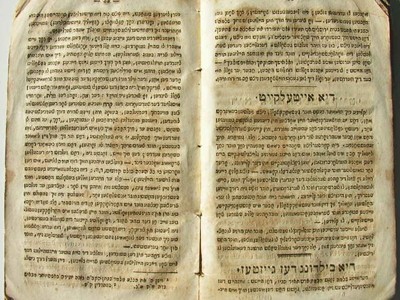
Question to Rabbi: What is Rashi font and how did it appear?
Community
Question:Dear slave! I saw Jewish texts printed in both standard printed and handwritten letters and Rashi font. Could you explain the origin of this special font? Did Rashi himself had his own writing style?Respond:The name of Rashi - one of the most famous commentators of Scripture and Talmud - is an abbreviation from Rabbi Shlomo Itzhaki (1040-1105 AD). His works without exaggeration are the main comments on Torah, which they use to this day.The vast majority of Torah editions in different languages come with the classic Rashi comments. In Jewish publications, these comments are usually printed in a special font, which is visually different from the standard and is called "Rashi Font".However, you may surprise thatRashi himself never used this font.📜 The origin of the rash fontBefore immersed in the history of this font, it is worth noting: except for several letters (for example, א, ב, צ, ש), Rashi font is very similar to ordinary printed Jewish letters.To the 15th centuryAll the Jewish books, including the Torah and Comments, were carefully copied by hand. But after the invention of the printing press Johann Gutenberg, the Jews - as the people of the book - immediately began to use a new way of spreading their texts.The first printed Jewish book is the Torah, which is considered to be Gutenberg, although the exact date of its print is unknown.The firstThe Jewish edition is dated- It's Rashi's comment to Humash, printedFebruary 5, 1475The Sefrd Jew Abraham Garton in the Italian city of Regjo-Dalabria.The peculiarity of this edition was the use ofnew font, based on an already existingSefard semi -handwriting.(Interestingly, this was not the first printed edition of Rashi: in 1469–1472 three brothers - Ovadia, Menhas and Binjamin - in Rome also issued his commentary on the Torah, but their books were not attached.)Initially, Rashi's comments came out as separate collections without the text of the Torah. But later when publications such asMicraot Gentlot(Thor with several comments), publishers decided:Torah text should be printed in classic square font, and comments -separatethat is, Rashi font to facilitate reading and orientation.That is why this font began to be associated with Rashi's comments, though the author had no direct relationship to him.✒️ Why did Rashi font use?In addition to the visual distinction between the Torah and the comments, there were other reasons for the popularity of Rashi font:Compactness.Rashi font takes up less space than standard. This allowed to place more text on the page - which was especially valuable in times when paper and printing were expensive.Lower holiness level.Since this font was created artificially in the Middle Ages, it was believed that it did not have the same holiness as the "sacred" font used for Torah. Therefore, it was often used to print Rabin works.Inadmissibility of abuse of sacred font.A classic square font, similar to that used in Torah's scrolls, was not allowed to be used for everyday texts. Rashi font - due to the visual difference - was allowed.However, over time, some wise men insisted on all texts including comments printedordinary square fontto make them more accessible to a wide range of readers.📚 to the conclusionWhen talking about Rashi, it is important to remember thatRebbe Joseph Yitzhak Schneersonadvised everyone to study the corresponding part of the weekly chapter of Torah every dayalong with Rashi's comment.Each head of Torah is divided into seven parts - one for each day of the week, and Rashi's explanations should becomean integral part of daily learning.Rashi's comments are special because they explain the simple content of the Torah text is so accessible that even a five -year -old child can understand it, and at the same time they serve as a basis for many deeper interpretations.Rashi's comments are the basis for and forGalachic, and forKabbalisticworks. Therefore not surprisingly whatThis fontwhich comments to the Torah are printed in history as“Rashi Font”.Notes:Read more about this in the article"Pope Roman who allowed to issue a Talmud".“Rashi: comment and simple content”, Library of Pennsylvania University, online exhibition of Judaica (as of June 28, 2017).Magen Abraham, Orah Haim, 334: 17; See alsoGymrod Kodesh, Vol.18, p. 177, andShulhan Menachem, Vol.5, p. 214, approx. 13.SeeThorat Menachem, 5749, Vol. 3, p. 101, quote. inShulhan Menachem, Vol.5, p. 215.Source: https://imrey.org/
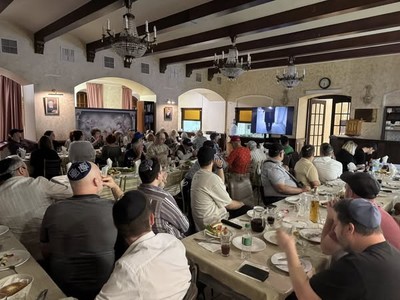
Farbrengen in honor of 12 Tammuz was held in the central synagogue of Ukraine
Community
In the central synagogue of Ukraine, Farbrengen was held in honor of the 12th Tammuz - the day of the liberation of the sixth Lubavitcher Rebbe Yosef Yitzhak! You may ask, what is the day of liberation? Who is Farbrengen? Let's talk!Jews around the world celebrate the 12th of Tammuz as a day of great wonder and mercy of the Almighty! Because on this day in 1927, when the Soviet authorities sentenced Yosef Yitzhak to death, simply because he was a religious Jew, and taught the Torah and the commandments of others.He was tortured for a long time by interrogations so that he would write a confession that he was an "enemy of the people", but they could not break the strong spirit of the sixth Lubavitcher Rebbe and decided to shoot him. But under the pressure of the World Community and the Miracle of the Almighty, Yosef Yitzhak was released! This was the first such precedent in history, so we are celebrating this dayFarbrengen is a Hasidic feast, which, in addition to delicious food and drinks (because when hungry, it is very difficult to talk about great spiritual topics), is filled with a cabalistic component, thanks to which he spent hisSo, if you have Jewish roots, and you are interested in joining the turbulent life of our community, write in the message!

Our dates: 19 tammuz
Community
*19 Tammuz 5625year (July 6, 1865) — Birthday of Rabbi Shneur-Zalman-Aaron (Rabbi Raza) — the eldest son of the fourth Lubavitcher Rabbi Shmuel (Rabbi Maharash).Rabbi Shneur-Zalman-Aaron was born on the 19th of Tammuz and was named after the founder of the Chabad movement — Alter Rebbe (Rabbi Shneur-Zalman) and grandfather on the mother's line Rabbi Aaron Alexandrov from Shklov.In the family of the third Lubavitcher Rabbi Tsemakh-Tzedek (Rabbi Menachem-Mendel), who was then the head of Chabad, there was a custom — giving the child a name, she was immediately given an abbreviated name (you have already met the following: Rayats, Rambam, Rashab, Rashi...). Young Shneur-Zalman-Aaron received the name Raza, and Rabbi Tsemakh-Tzedek quoted the main Kabbalistic book "Zohar": "Until the time of Tmira" (translated from Aramaic — "this is a great mystery").When Raz was three years old, Rabbi Zemach-Tzedek wanted to betroth him (shiduh) to his grandson, the daughter of Rabbi Israel-Noah (Rabbi Rayyan). Hearing about the rabbi's intention, the future father-in-law expressed fears that the child was too small and would grow up by someone unknown. And what if he can't study properly?Hearing this, Rabbi Zemach Tzedek said, “He will not be able to learn? Well, he will know more than you for sure!» By the way, Rabbi Rayyan was a famous connoisseur of bondage and Hasidism and the most educated son of Tsemakh-Tzedek.*19 tammuz 5640the year (June 28, 1880) — the day of the introduction into the union of Avraham-Avin (circumcision) Yosef-Itzhak Schneerson, the future sixth Lubavitcher Rabbi.

Our dates: 21 tammuz
Community
21 Tammuz 5396 rockin (July 24, 1636) — Yorzeit (anniversary of the departure from this world) Rabbi Eliyahu Baal Shem-Tov from Worms.The life of Rabbi Eliyahu, who led the alliance of the niggers (the hidden righteous), was shrouded in mystery. According to some reports, his name was Rabbi Eliyahu ben Moshe Loantz and he was the grandson of the famous figure of the Jewish community Rabbi Yoselman from Rosheim, according to others — his father was a Jew from Spain Rabbi Yosef Yozpa.The Krakow community invited the famous Spanish cabalist and sage Rabbi Yosef to settle in their city when he was already in his 50s. He was unmarried and led a solitary life, devoting all his time to prayer and study. Here he lived for another 30 years, when the prophet Elijah, who taught Rabbi Yosef the secrets of the Torah, gave him the order to marry the young widow of a recently murdered merchant in order to bring into the world a new soul who would help the Jewish people.Six months later, Rabbi Yosef appeared before the base-din (Jewish court) and announced his intention to marry this woman. When the widow heard about it, she cried, because, as it turned out, her late father had already appeared in a dream several times, blessing her for marriage to slave Yosef.A year later, in 1555, a boy was born to a young couple, who was named Eliyahu (in honor of the prophet). From the age of two until the bar mitzvah, Elijah studied under his father, but two weeks before the bar mitzvah, Rabbi Yosef left this world. A few weeks later, the boy informed his mother that he wanted to leave his home.The next 40 years of his life are shrouded in mystery — it is not known where he lived and what he studied, but when he appeared in Worms, he was already married, had children and was known as Rabbi Eliyahu Baal Shem-Tov. He organized a group of nystarim — hidden righteous cabalists who traveled from city to city, helping Jews. After Rabbi Eliyahu, this group was led by Rabbi Baal Shem from Zamość, after Rabbi Adam Baal Shem from Ropszyc, and after Rabbi Adam, Rabbi Yisrael Baal Shem-Tov, the founder of Hasidism, became the leader.Rabbi Eliyahu has lived in Worms for over 30 years. Here he organized a yeshiva from which many brilliant students emerged. After Rabbi Eliyahu moved to Prague in 1624, the yeshiva also moved there. One of his students was the famous Rabbi Yom Tov Lipman Heller.chabad.odessa

Our dates: 22 tammuz
Community
22 tammuza5552 (July 12, 1792) — Yorzeit (anniversary of the departure from this world) Rabbi Shlomo ben Meir HaLevi Segal of Carlin.Rabbi Shlomo was a friend and first classmate, and then the closest student of the founder of the Karlin Hasidic dynasty, Rabbi Aaron ben Yaakov Perlov (Aaron the Great). After the departure of Rabbi Aaron from this world, the Karlin Hasidim were left without a rabbi. Rabbi Shlomo stubbornly refused to take this position and they say that it took the intervention of the teacher, Rabbi Aaron, who appearedto Rabbi Shlomo in a dream and advised him to still accept the position.Rabbi Shlomo moved to the town of Ludomir (now Volodymyr-Volynskyi) and in 1792 was killed during a pogrom organized by Polish rebels fighting against the Russian Empire. His successor as Karlinsky rabbi was the son of Rabbi Aaron, Rabbi Asher, who moved to the town of Stolin. And the Hasidim have since begun to be called Karlin-Stolyn.source: chabad.odessa

Our dates: 23 Tammuz
Community
*23 tammuz 5330(July 26, 1570) — Yorzeit (the anniversary of the departure from this world) of one of the most prominent medieval cabalists, Rabbi Moshe ben Jacob Cordovero (Ramak).The place of his birth is unknown, and the family, judging by the surname, came from Spain. Moshe's teachers were Rabbi Yosef Karo, author of the book "Shulchan Aruch", a code of Jewish life standards, and Rabbi Shlomo Alqabetz, a famous cabalist, author of the Saturday hymn "Leha Dodi".Rabbi Moshe was one of the 4 sages honored in 1538 with a laughter (certificate of consecration as a rabbi) from the famous slave Jacob Beirav. The other three are the author of Shulchan Aruch Rabbi Yosef Karo, Rabbi Moshe of Trani and Rabbi Yosef Sagis.Rabbi Moshe was a dayan (community judge) and head of the yeshiva in Safed, and among his disciples was the great cabalist Rabbi Yitzhak Luria Ashkenazi (Arizal). During his short life, Rabbi Moshe created several monumental works, and his first and most famous work, “Pardes Rimonim” (“Pomegranate Garden”), was written by him at the age of 27.Other famous works of Rabbi Moshe are "Elima Rabbati" ("Great Elim"), "Or Yakar" ("Precious Light") — an unpublished large commentary on the "Zohar" (the main book of the cabal), as well as the introduction to the cabal "Or Neorav" ("Evening Light") and the commentary on the Pentateuch "Sepher Gerushin" ("Book of Exile").source: chabad.odessa
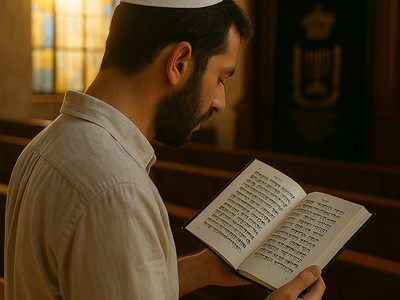
Day's Quote
Community
Every true prayer is a step with G-d in creating a new day. Sometimes it seems that prayer is something personal, quiet, inner. But in fact, at this moment, a person becomes a part of something extremely big.Every word spoken from the heart connects the earth to the sky.You don't just pray — you help the world hold on, move, live.You become a participant in creation, an accomplice of G-d, who continues to build this world through us every day.Even if it seems to you that you are just whispering words — they change reality: both inside you and outside.Have a wonderful day and good prayers to all of us! ✨
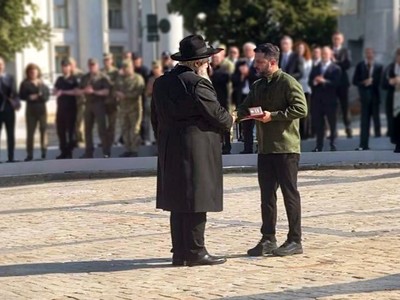
Rabbi Moshe Reuven, our pride and inspiration!
Community
It is with deep joy and sincere pride that we congratulate you on the high state award – the Order of Merit of the second degree!For our entire community, this is not just an event — it is a moment of great respect and recognition of the way you have been leading us for many years. Your heart filled with love for people, your self-sacrifice, strength of spirit and faith in goodness inspire us every day.This award is not just about you. It's about all of us. About the light that you generously give, about the unity that you build, about Ukraine that you sincerely love.We are proud to have such a rabbi. Thank you for everything you do. May the Almighty send you good health, joy, peace and many years of service — with love, strength and blessings.Proudly, your entire community.
History of the Jewish People
Community
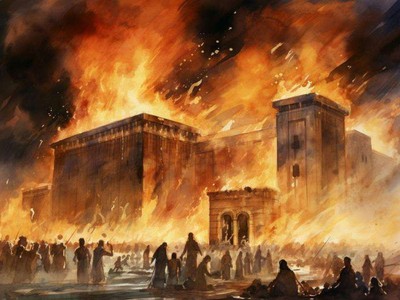
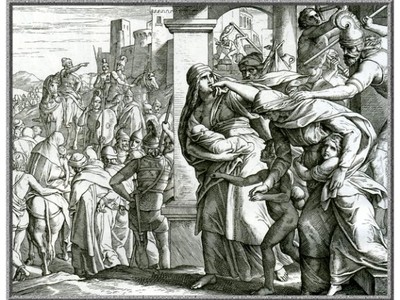
1. After the destruction of the Temple. Fulfillment of propheciesLong before the people of Israel settled in their land, the Most High sent His prophets to warn the children of Israel against future calamities. The prophecies recorded in the Torah and the books of the Prophets have come true. On Mount Sinai, the Most High warned that if the commandments were not kept, the people would be severely punished:… and you will eat the flesh of your sons, and the flesh of your daughters you will eat……And I will make your cities a wilderness, and I will make your holy places desolate……But I will scatter you among the nations, and I will draw the sword behind you, and your land shall be desolate and your cities desolate.(Vayikra 26–27)The prophecy of the prophet Micah, spoken 140 years before the destruction of the Temple, has fully come true:…Jerusalem will become a ruin, and the mountain of the Lord's House will become a forest.Micah 3:12The prophecy of the prophet Hermiah was fulfilled:I see the land — and here it is: wasteland and chaos...I see: the fertile land has become a desert, and all its cities are destroyed...(Hermiah 4:26)Judah, left defenseless, could not resist the invasion of neighboring nations. The Ammonites and Moabites attacked from the east, the Philistines from the west, and the Samaritans from the north. In the end, the troops of the Babylonian warlord Nevuzaradan destroyed the Temple and took the people captive.Almost the entire population of Judah was brought to Babylonia. Only a small hromada remained in the homeland. Nevuzaradan appointed Gedaliah ben Ahikam as the ruler of Judea, one of the righteous of his generation, whose father at one time saved the prophet Hermiah from persecution. Gedaliah made great efforts to restore Jerusalem and unitethe people, and the refugees began to gradually return to Judah.What many of the survivors could not understand —why the Almighty did this to the Holy Land, and what caused its destructionNebuzaradan understood, he acknowledged the prophecies of Hermiah, the messenger of the Most High, who foretold the horrors that fell on this land. Therefore, he removed the shackles from the prophet and gave him complete freedom. But the Most High said to the prophet, “Return to Gedaliah ben Ahikam,” and Hermiah settled in the stronghold where Gedaliah lived.However, the peace that fell on the fate of a small part of those who remained at home was short -lived. King Ammonitans sought to finally destroy the Judea and sent Ishmael Ben Nathania to kill Gedalia. One of Judea's former ministers, Johann Ben Koreakh, warned Gedalia of danger, but he did not believe or listen. Ishmael with ten associates came to Gedalia as if with a peaceful mission. They sat down for a joint meal and then killed him and forced him to go with them to the Ammonites. This murder has deprived the Jews of the last hope of staying in the native land and was seen as the end of the tragedy of the destruction of the temple and statehood.In memory of this murder, a day of mourning was established for all subsequent generations —fast of Gedaliahwhich falls on the3 Tishrei.to Egypt.On the day of Gedaliah's assassination, Yochanan ben Coreah and his warriors were not in the stronghold. Upon learning of the tragedy, they entered into battle with the killers and freed the captured followers of Gedaliah. Ishmael and his supporters fled.The companions of Gedaliah, fearing retribution from the king of Babylon, decided to flee to Egypt. The Prophet Hermiah warned them against this step, saying that the Most High would have mercy on them, would protect them from the wrath of Nebuchadnezzar, and they would be able to live peacefully in Judah. Hermiah also warned that if they did not do the Creator's Will, misfortune would befall them in Egypt.However, Yochanan ben Koreah and his soldiers did not listen to the prophecy and went to Egypt with the Jewish refugees, forcibly taking Hermiah and his disciple Baruch with them. They hoped for the protection of Pharaoh and did not believe the prophecy that Pharaoh would be defeated.Settling in Egypt, the refugees began to worship alien gods. Even in exile, they did not listen to the prophet and did not heed his warnings.A few years later, riots broke out in Egypt. Pharaoh was killed, and Nebuchadnezzar took advantage of this — he attacked Egypt and defeated it, as the Almighty had predicted through the prophets Hermiah and Ehezkel.Most of the Jewish refugees died in these battles. Only a few managed to escape — among them were the prophet Hermiah and his faithful disciple Baruch ben Neriah. Nebuchadnezzar took them captive and carried them off to Babylon, where they ended their lives.(to be continued)source: https://toldot.com
History of the Jewish People - Part 2
Community
Babylonian Captivity: In a Strange LandMost of the enslaved Jews ended up in Babylonian captivity. Despite the fact that they were in serious danger — they lived among peoples with alien beliefs and could adopt their customs — it was this exile that marked the beginning of the spiritual revival of our people.The Babylonian Empire was huge: it stretched from the Persian Gulf to the Mediterranean Sea, and all the peoples that were part of it enriched it in many ways. The Babylonian wise men supposedly had power over supernatural forces, and the Babylonian army won many wars. And here in the center of this great country was a small people brought here from the shores of the Mediterranean Sea.The exiles, torn from their native land, asked themselves painful questions:“Why were we expelled? Who will bring us home?”“Were the wise men of Babylon right in glorifying their gods? Maybe it was they who helped them conquer other peoples?"These thoughts were very dangerous. After all, the Jews could dissolve among other peoples and disappear — without fulfilling the great mission entrusted to them at Sinai.But the prophets saved the people from this threat. It was the prophets whom the exiles did not want to listen to until recently — those who warned them when they were still living in their land. Now that all their predictions had come true, the exiles began to listen with special hope to the words of the future deliverance spoken by the prophet Ishayahu (Isaiah) and others. If the prophecies about the destruction of the Temple, spoken 130 years before, have come true, then the words about deliverance will come true.Maintaining the spirit of the exilesThe hope and faith of the Jews of Babylonia were strengthened by the words of the prophet Hermiah, who, long before the destruction of the Temple, warned them not to worship foreign gods:For the customs of the nations are useless:because they cut down a tree in the forest,handled by the master;decorates with silver and gold,nailing with nails, a hammer, so as not to stagger.They are like a stuffed animal in a pumpkin field,can't talk,wear them because they can't walk.Don't be afraid of them, they can't hurt you,or good to do.(Hermiah 10:4–6)And then the prophet proclaims:There is no one like You, Lord!You are great, and your great name is in power.Who will not fear You, King of the Nations?For among all the wise men of the nations and in all the kingdoms there is none like You…Not like them, the One who is a portion of Jacob, for He created all things, and Israel is His inheritance.His name is the Lord Zwaoth.(Hermiah 10:6–7)False prophets appeared in the Babylonian captivity, who gave false hopes, assuring that the exile would be short and that soon everyone would return to their homeland. They advised against building houses or planting vineyards. But the prophet Hermiah said the opposite:“Build houses and dwell in them, plant orchards and eat their fruit.”(Hermiah 29:6)And he added:“For they prophesy lies to you in my name — I did not send them,” says the Lord.But when Babylon is seventy years old, I will remember you and fulfill my good word, and I will bring you back to this place.”(Hermiah 29:10–11)Prophecies of deliverance strengthened the spirit of the people and gave hope.In memory of the terrible days that the people endured, the prophets established four posts:10 Teveta— the day of the beginning of the siege of Jerusalem by Nebuchadnezzar17 tammuza— the day when the walls of the holy city were broken9 ava— the day of the destruction of the Temple3 Tishrei— the day of Gedaliah's murderProphecy of Ezekiel (Ehezkel)To the Jews who were in exile in Babylon, the Most High sent His prophet, Ezekiel ben Buzi, from the clan of priests (kohens). Ezekiel denounced the sins of the people, but at the same time supported and comforted:“Do not despair,” he said, “for the Holy Land does not belong to those who drove you out, but to you, the descendants of Jacob. You will return home and repent of what you have done.”Thus says the Lord G-d:Though I have driven them out among the nations and scattered them among the countries,and became for them a small shrine in the lands where they arrived.And I will gather you from the nations,and come back from the countries where you were scattered,and I will give you the land of Israel.And you will come there,and you will remove from it all its abominations and all its abominations...That they may walk in My commandments,they kept My statutes and fulfilled them.And they will be My people, and I will be their G-d.(Ezekiel 11:16–17, 20)Ezekiel prophesied the capture of Jerusalem by Nebuchadnezzar, but he also prophesied that the day would come when the exiles would return. They will not only rebuild the city — they will build a new Temple.Even during his exile, the prophet did not abandon his mission. He continued to inspire hope in the hearts of the people. In his famous prophecy about the “dried bones” that are covered with flesh and come to life, he conveyed the vision of the resurrection of Zion from the ashes:I prophesied as He commanded me,and the spirit of life entered into them,and they came to life,and stood on their feet — an extraordinarily large army.And He said to me, Son of man!These bones are the whole house of Israel, and they say,“Our bones have dried up, our hope is gone…”Thus said the Lord G-d:Here I open your graves,and I will bring you, My people, out of your graves.And I will put My Spirit in you, and you shall be made alive.And I will give you peace in your land.And you will know that I am the Lord, I have said it and I will do it.(Ezekiel 37:11–14)Like his predecessors, Ezekiel prophesied not only deliverance from the Babylonian captivity, but also a great, complete Redemption. Among the exiles was another great spiritual mentor —Baruch Ben Neriah, a disciple of the prophet Hermiah, who taught his many followers to love the Torah.Tsarsky DvorIn Babylonia, the exiles began a new life. Their social position was quite satisfactory. They mostly lived in cities, enjoyed civil rights, although they remained special because of their faith. Local authorities did not put pressure on religious affiliation, because the vast empire included dozens of peoples with different beliefs, and each was allowed a certain autonomy in internal affairs, requiring only the payment of taxes.Nebuchadnezzar ordered the selection of the sons of noble families of different nations — including the Jews — to teach them at the royal court for three years, preparing them for service in the state administration. So four young men —Danyil,Hanania,MichaelandAzaria— began their studies at the court.By order of the king, they were brought dishes and wine from the king's table. But the young men did not want to be defiled by non-kosher food and wine and asked permission to consume only vegetables and water. The king's servant was afraid to violate the order, but agreed to try — only for ten days. When this period passed, he saw that the young men remained healthy and strong, and allowed them to continue to eat kosher.After three years of study, Daniel and his companions were introduced to Nebuchadnezzar. The king liked them very much. But Daniel received special mercy after he interpreted the king's dream.Nebuchadnezzar dreamed of a huge idol standing on legs made partly of iron and partly of clay. Then the stone broke away from the mountain, hit the idol's legs — and broke it. Waking up, the king forgot the dream itself, but demanded from the wise men not only an interpretation, but also to remind him of the very meaning of the dream. No one could do that. But the Almighty revealed to Daniel both the dream itself and its meaning.The content of the prophecy was as follows: one kingdom will rebel against the other, and after numerous wars, a new kingdom will arise that will stand forever.Convinced of Daniel's extraordinary abilities, Nebuchadnezzar elevated him above all his ministers. And three of his comrades — Hananya, Michael and Azaria — also received high positions.Dura ValleyIntoxicated by his own victories, Nebuchadnezzar imagined himself a deity worthy of the highest honors. In a fit of pride, he ordered a huge golden idol to be erected in the Dura Valley and ordered all the inhabitants of the empire to worship him. Those who refused were expected to die in a red-hot furnace.All the peoples who lived in the territory of Babylonia obeyed the king's order. OnlyHanania, Mishael & Azaria— the descendants of the noble Jewish families who served at the court, — refused. They stood with dignity and courage, unwilling to worship an idol, ready to die in the nameof the One God.Nebuchadnezzar ordered them to be thrown into a burning furnace. But a miracle happened: the fire did not harm them, and they came out unharmed. This made a huge impression on the king and his nobles. They recognized the greatness of the True God and, on pain of death, forbade anyone to disrespect His Name.This incident became a symbol of the unbreakable loyalty of the Jews to the Almighty and His Torah. That is why during the village hall we pray:“He who answered Hananya, Michael, and Azariah, when they cried out to Him from the burning furnace, let him answer us also!”After this miracle, Nebuchadnezzar exalted the three youths even more and treated the Jewish people with respect.To be continued… source:https://toldot.com/
Why don't Jews rebuild the Temple (Beit Hamikdash)?
Community
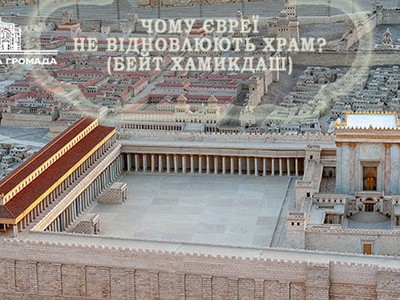
If the Temple Mount is our holy place, and the Temple once stood on it, then why not destroy what stands there today and build your Temple anew? However, Jewish tradition looks at this issue much deeper.Even if the mosques on the Temple Mount are removed and the area is vacated, we can't just start building. The temple is not just a structure that can be erected according to the drawing. This is an extremely holy place where it is forbidden to enter into a state of ritual impurity. And today we are all ritually unclean, because we encountered the dead, were in cemeteries or were under the same roof with the body of the deceased. Only the ashes of a red cow cleanse this impurity — and we do not have it now.There are laws under which, under certain conditions, it is possible to make sacrifices even in a state of impurity. But this requires strict observance of many conditions: the presence of a kohen (priest) with a reliable pedigree, his vestment in special clothing that exactly corresponds to the description in the Torah, the presence of a high priest (kohen gadol) with eight items of clothing. We are not sure about the exact form of these objects, nor what kind of stones should be in the bib (hoshen).In addition, we do not know with absolute accuracy even the location of the altar. The Talmud tells us that during the construction of the Second Temple, the Almighty sent three prophets who testified about controversial issues. Without such evidence, we have no right to act.If you violate these conditions and begin the service in the Temple, this will not be the fulfillment of the commandment, but will become a grave sin, for which a carriage (spiritual cut-off) is provided.Therefore, according to the Torah sages, we do not build the Temple by force and do not destroy other people's buildings. We are waiting for the moment when the Almighty Himself will open the way — as it happened in the past. And we believe it's bound to happen.source: https://toldot.com