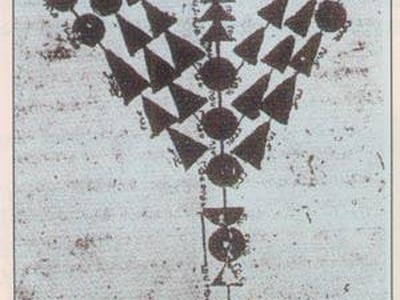
Question to the Rabbi: What shape were the branches of the Menorah?
Community
One interesting question about temple utensils: what shape were the six branches of the Menorah?Popular notions are semi-circular, but sources show that they were straightforward. This is depicted in the manuscript of Rambam's commentary on the Mishnah. Rashi writes that “six branches emerge diagonally from its trunk.”The Menorah on the Arch of Titus, with its semicircular branches and pagan symbols, is probably another lamp, not the real Menorah.Therefore, the Lubavitcher Rebbe considers it imperative to discard the image of the Menorah created in honor of Titus and return its true appearance.Notes:Rabenu Moshe ben Maimon (Rambam) (1135-1204) was a great Torah codifier, philosopher, and physician.Rabbeinu Shlomo Yitzhaki (Rashi) (1040-1105) is the most famous commentator of the Torah and Talmud.
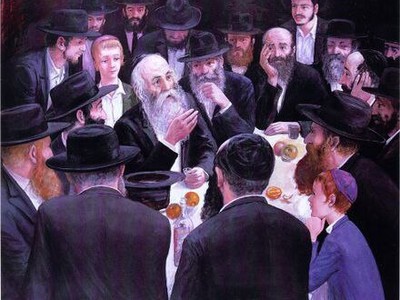
Question of the day: What is FARBRANGEN
Community
📖 Farbrengen(Hebrew התוועדות — "gathering") is a traditional format of a Hasidic meeting, especially common in the Chabad movement.During the farbrengen, the Hasidim gather to talk about spiritual topics, listen to instructions, sing Hasidic melodies (niguns), recall the stories of the righteous, and share personal thoughts about serving the Supreme.💫 Meaning and purposeThe main goal of dyebrangen is to awaken the soul and strengthen the connection of a person with G-d and with other Jews.In a warm atmosphere of trust and sincerity, participants talk about the importance of prayer, the study of Hasidic works, modesty, dedication and love for one's neighbor.It is at such moments that internal changes are born — not through pressure, but through awareness and inspiration.🌿 Hasidic traditionIn the Hasidic environment they say:“Farbrengen can do what the angel Michael cannot.”This statement emphasizes that the power of unity and brotherly love among Jews can bring about a special blessing in Heaven.🕊️ Role of the MashpyTypically, the paint brangen is led by a mashpy, a spiritual mentor who guides the conversation and inspires the participants.But the essence of the meeting is not in formalities, but in sincere communication: sometimes the most important words are heard not from the rostrum, but between two people at a common table.🍷 "Lechaim"— a symbol of joy and an open heartA toast "Lechaim" — a glass of wine or vodka, as a symbol of joy and openness of heart - is traditionally raised during the paint brangen.The Lubavitcher Rebbe emphasized that everything should be in moderation — not for the sake of a drink, but for the sake of spiritual elevation and warm unity.📅 When painbrangens are carried outFarbrangens take place on special days — Shabbat, Chabad holidays, birthdays and the Rebbe's liberation, as well as when the Hasidim feel the need to gather and support each other.❤️ Living traditionFor many, the paint brand is a kind of "school of life":here they learn to speak frankly, listen, look inside themselves.It unites people, fills them with faith and leaves a quiet, real warmth inside.📖 Lubavitcher calendart.me/LubavitcherRebe770

Today, our path of light stretches to Sadness.
Community
Our community has sent humanitarian aid for social space"Bereginya", where IDPs who have lost their homes but have not lost their faith now live and are being held.There are grandmothers quietly remembering their garden and the smell of apples in the yard. There are mothers who put children to sleep with words of hope, instead of fairy tales. There are those who came out of the darkness of war, but continue to seek the light.This initiative took place under the patronage ofChief Rabbi of Ukraine Moshe Reuven Asman, who constantly emphasizes that helping those who are going through difficulties is not an obligation, but an honor.And today — a little warmth, care and humanity went to them.Supporting those who find it difficult is not just about helping. This is the wisdom of the heart.Because where there is good, life blooms.For when one nation stretches out its hand to another, a power is born that knows no defeat.We're here. We're together.Let this help be a small beam into a great shared light.And may everyone who is in a foreign land today soon return home.In the meantime, we hold them. The way someone once held us.✨ Together we create a future where good wins.
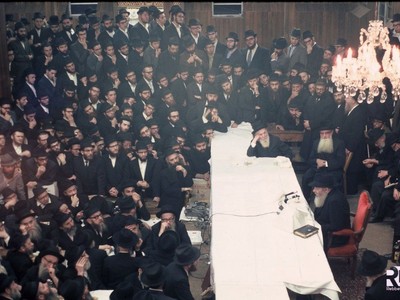
📖Lubavitcher calendar: Farbrangens with Lubavitcher Rebbe
Community
🕎 The Lubavitcher Rebbe's Farbrangens is one of the central events in the life of the Hasidim of the Chabad movement, which took place during all the years of the Rebbe's leadership in the great hall "770" in Brooklyn (New York).These gatherings took place on Sabbaths, holidays, and special Hasidic days and became an important part of the spiritual and social life of the Hasidic world.📖 During the Paintbrands, the Rebbe would give a siege — speeches dedicated to the week-long chapter of the Torah, the feast, or the events of the time. The main task of the descent is to reveal the inner meaning of what is happening and give practical guidance for the service of the Almighty.Niguns — Hasidic melodies that created an atmosphere of unity and inspiration - sang 🎶 between the grasshoppers. The Rebbe encouraged the participants with singing and light gestures, enhancing the sense of spiritual upliftment.📜 In some cases, the Rebbe uttered the maamar hasidut, a profound Hasidic teaching proclaimed in a special, solemn tone. During these moments, silence reigned in the hall, and everyone listened to every word with awe.✨ Farbrangens featuring the Rebbe have become a symbol of Hasidic communal life and a source of spiritual inspiration for Chabad followers around the world. Records and transcripts of these meetings were published in the collections "Likutey Sikhot" and "Sikhot Koidesh".Source:https://t.me/+8KbDy9dQVqAxZWE8
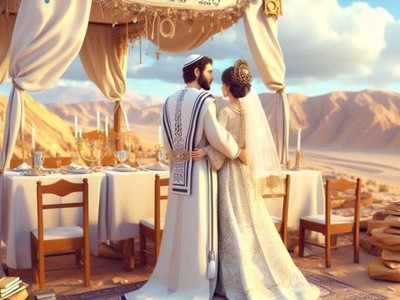
Question to the Rabbi: Who is the head of the family?
Community
The question of who is the head of the family worries many modern people. In a world where words about equality and independence are increasingly heard, the idea of the "head of the family" can be perceived as a relic of the past. However, in Judaism, this concept has a completely different meaning — not power or submission, but the spiritual order of the family, based on harmony and mutual respect.The Torah defines the male and female roles not as a struggle for primacy, but as a mutual complement. A man is truly considered the head of the family — not because he is superior, but because he has a special responsibility for the spiritual direction of the home, material support and the overall stability of the family. This is not a power, but aduty. The role of a man is to lead, protect, provide, be a support.A woman is the keeper of the inner world of the family. The wise say, “A wise woman builds her house.” It has an atmosphere of comfort, respect and faith, as well as soft power, thanks to which a man can reveal his potential. In the treatiseYevamotit is said, “A man without a wife is an incomplete man,” for it is the woman who makes the house the place of the presence of the Shekhinah, the Divine presence.Rambam wrote that a wife should honor her husband “above all measures” as a king. But in the same laws, he adds: the husband is obliged to respect his wife more than himself, and to love her as himself. He must take care of her well-being, be soft in words, not cause fear and not show anger. Only with such mutual respect is true harmony born.The modern Jewish family may look different than it did in Talmudic times, but the principles remain the same. A man is not a dictator, but a responsible leader; a woman is not a subordinate, but an equal partner who inspires and supports. Together, they create a whole where everyone has their own role, their own gift, and their own holiness.Judaism does not call for the struggle of the sexes, but for the creation of a union in which everyone serves the Almighty, realizing exactly the role for which he was created. Afamily built on such principles becomes what the sages call a home full of respect, love, and light.Source:toldot
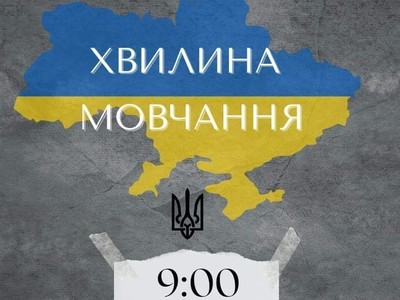
A moment of silence.
Community
Every day at 9:00Cease movement.Shut your mouth.Remember.Honor thememoryof the dead:soldiers, children, peaceful people.Those who are no longer around.But who is with us forever is in the heart.It's not just a minute of silence.It is our dutyIt's humanity.Alive — thanks to those who were lost...........
A moment of silence.
Community
Every day at 9:00Cease movement.Shut your mouth.Remember.Honor thememoryof the dead:soldiers, children, peaceful people.Those who are no longer around.But who is with us forever is in the heart.It's not just a minute of silence.It is our dutyIt's humanity.Alive — thanks to those who were lost...........
A moment of silence.
Community
Every day at 9:00Cease movement.Shut your mouth.Remember.Honor thememoryof the dead:soldiers, children, peaceful people.Those who are no longer around.But who is with us forever is in the heart.It's not just a minute of silence.It is our dutyIt's humanity.Alive — thanks to those who were lost...........
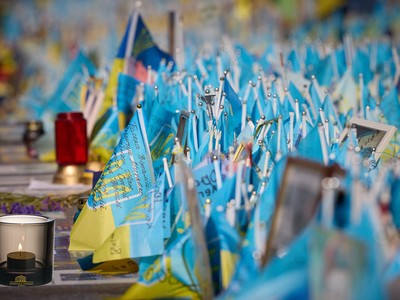
A moment of silence.
Community
Every day at 9:00Cease movement.Shut your mouth.Remember.Honor thememoryof the dead:soldiers, children, peaceful people.Those who are no longer around.But who is with us forever is in the heart.It's not just a minute of silence.It is our dutyIt's humanity.Alive — thanks to those who were lost...........
Siha Rebe to the head of Weyer
Community
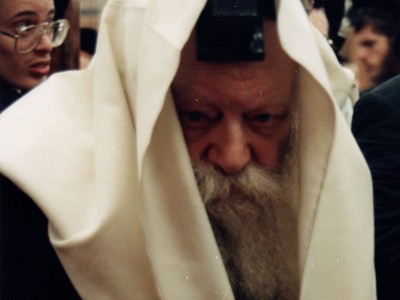
✨Asks Abraham passed ten trials and stood all of them. Why is Akidat Yitzhak (sacrifice of Yitzhak) considered the most difficult test?After all, he had risked his life before — for example, when he was thrown into a fiery furnace in Ur-Kasdim!Rebbe 💡 Explanation:The Rebbe teaches that the novelty of Akida is not in the self-sacrifice of Abraham — he has already shown it before — but in the self-denial of the will, in the complete submission of himself to the will of the Almighty.When he was thrown into the fire, Abraham gave his life for God.And during Akida, he had to give up his inner desire, his love for the only son born in old age — and renounce all the future people of Israel.And yet — he did not ask a single question, did not look for explanations, but immediately:“And Abraham got up early in the morning…” — with readiness and joy.🔥 Lesson for us:The Rebbe teaches that the essence of Akidat Yitzhak is that sometimes a Jew is required not only to give up amenities or desires,but the complete annulment of oneself before the will of the Creator.This is the realmesirut nefesh— self-sacrifice, when a person not only sacrifices something, but completely merges with the Divine will, even if the mind does not comprehend it.📖 Lubavitcher calendar:https://t.me/+8KbDy9dQVqAxZWE8
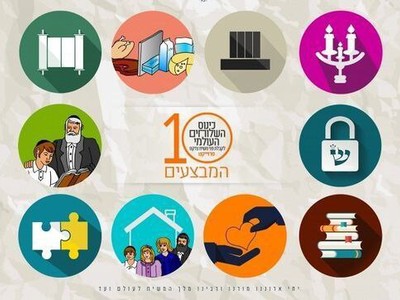
📖 Lubavitcher Calendar: Mivtsoim — Rebbe Campaigns
Community
✨ From the very beginning of his leadership, the Lubavitcher Rebbe began to spread Judaism and Hasidism under the slogan "Ufaratsa" — "Spread in all directions!".Subsequently, the Rebbe launched a special campaign — the Mivtim - to awaken the Jews to the fulfillment of simple but most important commandments. After all, one mitzvah entails another!The Rebbe himself chose 🕊️ these campaigns as the main and universal ones that unite all Jews and bring blessings to every home.A Bit of History📅 1967 — The Rebbe announced the first maverick: "Tefillin" — as a spiritual defense before the Six-Day War.📘 1971 — Mivtsa "Tora".📜 1974 — Mivtsoim: Mezuzah, Tsadaka, House Filled with Books, Shabbat Candles.🍽️ 1975 — Kashrut and Tagarat gaMishpakha (purity of the family).👶 1976 — Upbringing and Love of Neighbor / Unity of Israel.Later, the Rebbe added other campaigns, such as:📖 The letter in Sefer Thor is to unite all Jews.🕊️ Miz Shlemut haAretz (Integrity of the Land of Israel).🕎 Hanukkah, Purim, Matzah, Shofar, etc.🛡️ Mivtseym as protection and salvationThe Rebbe explained that each of these campaigns carries spiritual protection:📘 Torah — "The Torah protects and saves."🕍 Tefillin — causes fear among enemies: "And all nations will see that the Nameof G-d is on you."🏠 Mezuzah — "The Lord guards your entrance and exit."💰 Tzadakah — “He who gives life to another receives life from G-d.”📚 A house filled with books makes the dwelling the stronghold of the Torah.👑 Mivtsa MashiachIn 1992, at the World Congress, the Schluchim Rebbe said that the main goal of all the work was to prepare for a meeting with the Messiah.Therefore, every action, every creature must be imbued with the spirit of Geula (Liberation).🕯️ May every mitzvah bring us closer to that day,when the whole world recognizes: it is time for Liberation!With God's help, articles about each of them will be published in the coming weeks.Source:https://t.me/+8KbDy9dQVqAxZWE8
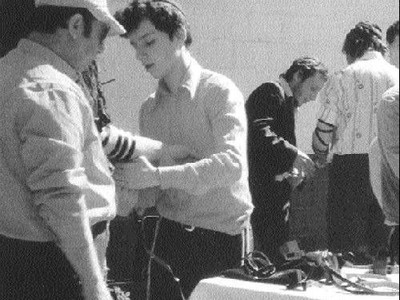
📖 Lubavitcher calendar: Mivtsa Tfilin (מבצע תפילין)
Community
The first of the ten mives proclaimed by the Rebbe in 5727 / 1967In 5727 (1967), the Rebbe addressed the Hasidim with a fervent call to leavele-Rehovot shel Ir(on the streets of the city) and make sure that every Jew fulfills the commandment of imposing tefillin on weekdays.Thus began the first of the "ten moths", which became a symbol of the awakening of the Jewish soul and the strength of the Jewish people.📜How it all startedThis happened on the Sabbath of the chapterBemidbarwhich was alsoShabbat Mewarhidthe month of Sivan in 5727 — just a few days before the Six-Day War.At that alarming time, the Rebbe delivered an inspiring speech and called on the Hasidim to take to the streets, to invite Jews to impose tefillin — especially soldiers defending the country.The Rebbe explained that there is a special spiritual power in the tefillin:“And all the nations of the earth shall see that the nameof God is upon thee, and they shall be afraid of thee” (Dvarim 28:10).This commandment, the Rebbe said, brings blessing, longevity, and fear to Israel's enemies.🕊The Rebbe added:"When the Almighty is at war, the enemy disappears completely. And it shall be fulfilled,“Not one of the children of Israel shall perish. ”After the Sabbath, his words spread throughout Israel and the world, and the very next day thousands of Chabad Hasidim took to the streets with tefillin — from bar mitzvah to gray-haired Jews.🕊After the war. After the great victory and miracles of the Six-Day War, the Rebbe emphasized thatmummy tefillinmust continue.To the question: "Why, because the war has already ended?» — The Rebbe replied:“Enemies still stand near Israel's borders. Only the fear that the Jewish people instills in them holds them back. And this fear comes precisely from the commandment of tefillin."Since: mummy tefillinspread around the world and became a permanent part of Chabad's activities.💬Rebbe's ThoughtsThe Rebbe explained that the tefillin was a commandment equivalent to the entire Torah.He linkedmummy tefillinwith the teachings of Baal Shem Tov:Hand Tefillin— a symbol of ordinary Jews, whose power is in action.Head tefillin— a symbol of scholars immersed in the Torah.That is why we start with the hand — because the greatest joy of Heaven comes from the simple faith and good deeds of an ordinary Jew.🔥 The Rebbe said of himself:“I live and grievemummy tefillin!»🕎TodayIn all corners of the world — on the streets, at airports, near offices and shops — you can see the Hasidim of Chabad from tefillin.EveryFriday and on the eve of the holidays, they go out to give every Jew the opportunity to fulfill this holy commandment.A permanent desk has been operating near the Western Wall in Jerusalem since 1967mummy tefillin, where hundreds of Jews apply tefillin for the first time every day.✨ Let every Jew, wherever he may be, fulfill the words of the Torah:“And it will be a sign on your hand and a reminder between your eyes.”and bring light, protection, and blessings to all the people of Israel through it.Source:https://t.me/+8KbDy9dQVqAxZWE8