
Our dates: 20 hashwana
Community
20 hash of 5624(November 2, 1863) — Three-year-old Sholom-Dov-Ber "anointed" by Rabbi Tsemakh-Tzedek.When Sholem-Dov-Ber was three years old and it was time for him to get his first haircut, his grandfather, the third Lubavitcher Rabbi Tsemakh-Tzedek, ordered his son, Slave Shmuel, to do it modestly, without attracting attention.In the evening, the day before Sholom Dov Ber turned three years old, Rebbe Tzemach Tzedek ordered the child to be brought to sleep in his room. In the morning, waking up, he ordered to wash the child's hands and recited the morning blessings with her. After the prayer, Rebbe Tsemach-Tzedek called the child's parents and said to them: "By the power of that spiritual jug of oil that our teacher Rabbi Baal Shem-Tov gave to his student and our teacher Mezheritsky Magid (so that he would anoint the Alter Rebbe to rule in his generations) my father-in-law Miteler Rebbe was anointed. And I anointed you with this power, and I anoint him with this power..."On that day, three-year-old Sholom-Dov-Ber was brought into the cheder and, in accordance with an ancient tradition, his grandfather (Rabbi Tsemakh-Tzedek) threw candy on him, saying that they had been thrown by the angel Michael. The kid took it seriously and didn't want to eat the candy because it was “sent from heaven.” However, on the eve of the Passover holiday, when it is customary to check the pockets of children's clothes, Rabbi Tsemakh-Tzedek called his grandson, asked what he had done with these sweets, and forced them to eat.Source:chabad.odessa

Our dates: 22 hashwana
Community
22 hash of 5666(November 14, 1805) — Birthday of Rabbi Borukh-Shalom (Rabash), the great-grandfather of the current Rebbe.Rabbi Baruch-Sholom, the eldest son of the third Lubavitcher Rabbi Tsemakh-Tzedek, did not create his own special branch in Chabad, and his descendants were rabbis in the cities of the Russian Empire, but his great-grandson in the male line was our Rabbi Menachem-Mendel Schneerson.Source:chabad.odessa

Find: 23 hashwans
Community
23 hash of 3624(137 BC) — The Feast of the Purification of the Temple.At the time of writing the Talmud, day 23 of the hashvan was celebrated as the day when the Hashmonai (in biblical translations — the Hasmoneans, they are the Macabee brothers) began to cleanse the Temple. On this day, the stones of the altar were removed from the Temple, on which the Greeks sacrificed in honor of the pagan gods.Source:chabad.odessa

Our dates: 24 hashwans
Community
24 hash of 5404(November 8, 1643) — Yorzeit (anniversary of the departure from this world) Rabbi Abraham Azoulay.Rabbi Avraham was born in the city of Fez (Morocco) in the year when the great cabalist Rabbi Moshe Cordovero left this world, and he himself became a great cabalist.On the way from Marocco to Eretz Israel, the ship on which Rabbi Avrhaam sailed docked in Greece and was sunk here by a violent storm. Fortunately, Rabbi Abraham himself was not on board, but many of his unique manuscripts died. Rabbi Abraham was very grateful to the Almighty for his salvation and from that moment changed his signature, so that it now began to resemble the contour of a ship.One of the remarkable pages of the life of Rabbi Avraham Azulai is associated with the manuscripts of the student of Arizal — Rabbi Chaim Vital. At the request of Rabbi Chaim, almost all of his manuscripts were buried with him in Damascus (Syria), but a year later, Kabbalists Rabbi Avraham Azulai and Yaakov Tsemakh, during Kabbalistic meditations, received permission from him to open his grave and take the manuscripts.Rabbi Abraham's great-grandson was the famous sage Rabbi Yosef-Haim-David Azulai, also known as Hida.

Our dates: 25 hashwana
Community
25 hashwana5703 (November 7, 1942) — Yorzeit (anniversary of the departure from this world) Rabbi Menachem-Mendel Jorenstein.Rabbi Menachem Mendel was the son of Rabbi Hai-Mushka, daughter of the fourth Lubavitcher Rabbi Shmuel, and Rabbi Moshe Ha-Kohen Horenshein. His wife was Rebbetzin Shane, the youngest daughter of the sixth Lubavitcher Rabbi Yosef-Yitzchak (Rabbi Rajac).After Rabbi Rajac and his family managed to escape to Riga from Nazi-occupied Warsaw, he tried to save his daughter and son-in-law, but they, Polish citizens, were not released from the country. In addition, Rabbi Menachem-Mendle did not want to leave his father, Rabbi Moshe, who was bedridden, and after his departure from this world in March 1941, it was already impossible to leave Poland.Rabbi Menachem Mendel was captured by the Nazis and sent to the Treblinka concentration camp, and on 25 hashwana, along with other Jewish prisoners, got into the crematorium oven.derelo:chabad.odessa


Ayom-yom: 19 Cheshvan
Community
Answer by Alter Rebe in one of the audiences:“Hasidism is “Shema Yisrael”¹.“Shema” is an abbreviation of the words“Seu Marom Eineham”(“Lift up your eyes”)².It is said “upward,” not “to heaven,” which means to rise higher and higher, to reach a level beyond reason, and at the same time to comprehend it with your mind, as the verse concludes: “…and you will see Him who created it.”Notes:“Hear, O Israel!..” (Dvirim, 6:4).Yeshayahu, 40:26.Source: chabad.org
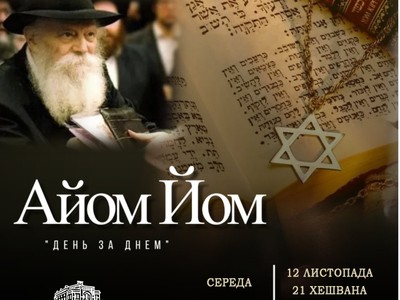
Ayom-yom: 21 Cheshvan
Community
"Service in prayer leads to the fact that the understanding of the mind passes into the sensations of the heart, and then both the mind and the heart lead to practical actions — God-fearing fulfillment of the commandments and the acquisition of perfect character traits."Source:chabad.org
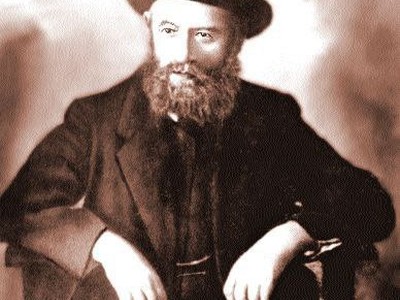
📖 Lubavitcher Calendar: 🕯️ Rebbe Sholom-Dov-Ber Schneerson — Fifth Lubavitcher Rebbe (Rashab)
Community
Rebbe Sholom-Dov-Ber Schneerson (known as Rebbe Rashab) is the fifth Rebbe in the Lubavitcher Rebbe dynasty.He was born on 20 Hashvan 5621 (November 5, 1860) in the town of Lyubavichy. His parents are Rebbe Shmuel (Maarash) and Rebbetzin Rivka Schneerson.He was a man of extraordinary spiritual depth, the founder of the famous yeshiva"Tomhei Tmimim"which is called"the motherOF all the yeshivas OF the Chabad". It is often referred to as"Rambam to Hasidism"— for the systematic nature, clarity and depth of his works.👶 The Amazing Birth of Rebbe RashabA year before his birth, on 10 Kislev 5620, his mother, Rebbetzin Rivka, had an amazing dream.In a dream, her mother, Khaya-Sara, and her grandfather, Rebbe Dov-Ber, Mitler Rebbe, came to see her.Mother happily said:“Rivka, you and your husband should write a Torah scroll.”And Mitler Rebbe added:“And you will have a good son. Don't forget to give him my name.”Nine days later, on the night of 19 sour, she had a second dream.This time there was an elder with them, glowing with a spiritual light.Her mother repeated:“Rivko, write a Torah scroll.”Mitler Rebe said:“You will have a good son.”And the elder said:“AMEN, may the will of the Almighty be done!”Mother asked:“Grandpa, bless her!” and he blessed her.Rebbetzin Rivka told her husband, Rebbe Maarash, about the dream.He replied that the Torah should be written on the most kosher, selective parchments.Rebbe Tsemakh-Tzedek, the grandfather of the future Rebbe, ordered to start writing the scroll secretly — in his own room, only in the presence of the Maarash brothers.📜 Less than a year after the beginning of the scroll, a son was born —Sholom-Dov-Ber, is named after his two great-grandfathers: Rebbe Shalom Shahne Altshuler and Mitler Rebbe (Dov Bera).Brit ✂️ MilahCircumcision took place on 26 sour 5621, after it was postponed for several weeks at the direction of Tsemakh-Tzedek.During the ceremony itself, Tsemakh-Tzedek explained the nameof the child according to Hasidic teachings:“Rashab isbassar shaver, which means “to break the flesh”, because the essence of service is to overcome materiality. ”He also added that the date of birth — 20 hashwana — indicates a spiritual connection with the highest levelsKeter— "crowns of Divinity".🎓 Childhood and spiritual growthFrom the age of three, little Sholom-Dov-Ber was particularly serious.During itshalaqi(first haircut) Tsemakh-Tzedek blessed him with the words:“The oil that Baal Shem-Tov gave to Magid to anoint the Rebbe for all generations is the same oil that I anoint this child with.”From that time on, everyone saw the Rebbe's soul in him.📚 Already at the age of nine he knew the Tanakh, the Mishnah and the basics of Shulchan Aruch, and at 14 he knew the whole chapter "Nashim" by heart.His father used to say about him,“My son Rashab was never just a boy — he always lived like a Chassid, with deep order and fear of Heaven.”Marriage!In 1875, 11 Elul 5635, he married his cousin, Rebbetzin Sterna-Sara.The wedding took place in the city of Ovruch.His father, Rebbe Maarash, was unable to attend due to illness, but sent blessings and said deep words:"Now the light of the Mother is revealed (mohin de Ima), so his mother goes with him. But in the future, when the Father's light will be revealed (mohin de Aba), I'll be there myself. ”Leadership 👑 Acceptance (Nesiyyut)After the death of his father, Rebbe Maarash, 13 Tishrei 5643 (1882), Sholom-Dov-Ber experienced a deep inner turmoil.It was not until eleven years later, in 1893, that he finally took over the leadership of the Chabad movement.Firstmaamar, pronounced by him — "Keter itnu lecha" - became a sign of his acceptance of the role of the Rebbe.The Hasidim greeted this with great joy.The Tomhei Tmimim 🏫 Yeshiva and Spiritual HeritageIn 1897, Rebbe Rashab founded the Yeshiva"Tomhei Tmimim"in Lyubavichy.He said that her students should become"by the soldiers of Moshiach"which combine Torah and Hasidism with inner purity and self-sacrifice.His teachings were marked by clarity, logic and depth.He created a systematic exposition of Hasidic philosophy, which is why he is called"Rambam to Hasidism"of🕊️Recent years and departure from this worldDuring the First World War, when the front approached Smolensk, Rebbe Rashab was forced to leave Lyubavichy and move to Rostov-on-Don, where he continued to control the movement.On 2 Nisan 5680 (21 March 1920), he retired to Eternity.Before leaving, he uttered words that became his spiritual covenant:“I am going to Heaven, but the books (teachings) remain here. Continue what I started.”After his departure, his son took over the leadership of the Chabad movement —Rebbe Yosef-Yitzchak Schneerson (Rebbe Rajac), Sixth Lubavitcher Rebbe,who continued his father's work and moved the center of the movement first to Poland, and later to America.📸 In the photo: a picture taken a year before the departure of Rebbe Rashab from this world — for a visa to Eretz Yisrael (the land of Israel).However, the trip never took place.Source:t.me/LubavitcherRebe770
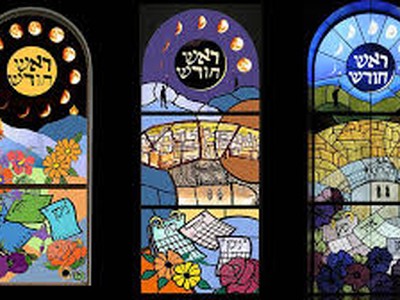
11 facts about the month of Kislev
Community
This is the ninth and third monthThere are (at least) two “beginnings” in the Jewish year — in the spring month of Nisan and in the autumn month of Tishrei. If we count from Nisan, then Kislev is the ninth month, and if from Tishrei, when we celebrate the main holidays of the year, then the third.Kislev can last 29 or 30 daysUsually, Jewish months alternate in duration: one has 29 days, the next has 30, and so on. The only exceptions are Kislev and his predecessor Cheshvan, which can (a) both last for 29 days; (b) both last for 30 days; or (c) 29 and 30 days, respectively, which allows not to violate the order of duty. Starting next month — Teveta — duty is resumed.It never starts on ShabbatThe Jewish calendar is cyclical and subject to a certain rhythm, so most dates can fall only on four of the seven days of the week (due to the peculiarities of the autumn holidays). Since Cheshvan can last 29 or 30 days, two days of the week are possible for each Kislev date. Therefore, the first day of this month can fall on any day except Shabbat.The great flood ended on the 27th of KislevThe first raindrops from which the Great Flood began during the time of Noah fell on the 17th of Cheshvan, and the rain did not stop for 40 days. So, most of this most famous rain in the history of mankind fell in Kislev, and it stopped on the 27th.The month ends in the middle of HanukkahHanukkah, the festival of light, begins the evening before the 25th of Kislev and lasts eight days. Since the moon cannot have more than 30 days, it turns out that Kislev is ending, and the Hanukkah lights continue to flare up every night, shedding more and more light on the winter twilight.One explanation for the name of the holiday: it was on the 25th of Kislev that the Maccabees defeated the enemy army and recaptured the Temple. In Hebrew, the wordחנוכה(“Hanukkah”) can be read asחנו כה— "rested on the 25th" (because the letters "כה" have a numeric value of 25).Influence of the letter SamechIn an ancient mystical workSefer Yetzirait is said: “God created the letter Samech, which reigns during sleep, crowned it, combined it and created a bow in the world (as a weapon), and in the year — Kislev…”.The previous month, Cheshvan, is associated with the sting of the scorpion and the letter nun, symbolizingnofel— falling. So in Kislev, we rise after falling together with the letter namely, the name of which means "support" or "support".Zodiac Sign — SagittariusAs stated in Art. Sefer Yetzira, this month's sign is the shooter (cache) Many sages explain that even if a person's sins are similar to the poisonous bite of a scorpion (a symbol of Cheshvan), thanks to prayer they can be “loaded into a bow” and “shot” as far away from themselves as possible.Some identify this bow with a rainbow — a sign of the union that the Almighty established with Noah after the Flood.The name Kislev has several meaningsSome sages associate it with the wordkesel— "side", "flank". Others — with the wordmash— "fool", emphasizing that God cares even about those who act foolishly.There is a third explanation: from the wordkeslo— "faith", "hope". This option is associated with the fact that it was thanks to their faith that the Maccabees received the Hanukkah miracle. Also at this time, prayers for rain are intensified — and people rely on the Almighty that he will send precipitation on time and in moderation.This month, the Prophet Ezra convened a popular assemblyAt the beginning of the Second Temple era, the scribe Ezra, then the leader of the sons of Israel, gathered the people who had recently returned from the Babylonian exile to a large gathering in the temple court. In the rain, people swore an oath to return to the ways of the Almighty and renounce mixed marriages in exile.The construction of the Mishkan was completedThe sages tell that the construction of the Mishkan (Tabernacle) was completed in the month of Kislev. But Moshe postponed the grand opening until the spring month of Nisan. Almost a thousand years later, Kislev received his "compensation for moral damage": it was the 25th of Kislev, during the Hanukkah events, that the Second Temple was re-consecrated after its liberation from the Greeks.Construction of the Second Temple has begunThe book of the prophet Hagai says:“Turn, I pray you, your heart from this day forward, from the twenty-fourth day of the ninth month, from the day when the temple of the Lord was founded; turn your heart.”According to Rashi, this prophecy means that on the 24th of Kislev, the Jews began to restore the already existing foundation of the Temple, which was laid under King Cyrus.Source:imrey.org
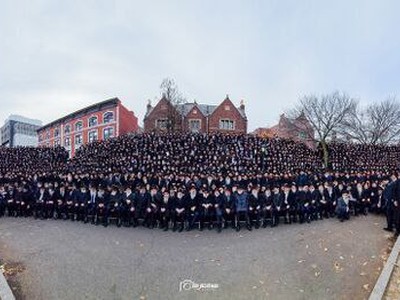
📖 Lubavitcher calendar: SHLIKHUT (envoy) — REBE CASE
Community
Schlichutteis when a Jew appoints another Jew to do the commandments and good deeds.In Hasidic philosophy, each person receives a special task from the Creator in this world, and the soul gives strength to fulfill it.Through schlichut, a person participates in the spread of Jewish values and Hasidism around the world.🌍HISTORY OF SHLIKHUTUThe Shlikhim went back in the days of Baal Shem Tov to strengthen Jewry, teach, and support communities.They traveled through cities and villages, inspiring people and spreading the faith.During the time of Rebbe Rashab, the schlichut became a matter of complete selflessness: the schlichim built mikvahs and study rooms in the USSR, risking their freedom.This work continued and intensified for Rebbe Rajaca, and in the Rebbe era covered the whole world — from America to Australia and Africa.Today there are more than6000 shlikhim, of which about1000 — in Israeloperating all over the world.✨INSTRUCTIONS AND GUIDELINES FOR REBEEvery Jew can (and should) become a sliach and join in spreading the Torah and Hasidism.Schlichim remain at their place of work, except in special cases.Principle"shliach makes shliach"means that each messenger contributes to the emergence of new schlichim, expanding the Rebbe's work.Special attention is paid to:to the wives of Shlikhim, because it is their support that determines the success of all activities.📸WORLD CONGRESSOF SHLIKHIMThecongress is held every year in 770 on the Sabbath "Mevarchim Kislev".The program includes master classes, meetings, a banquet and a traditional joint photo of all schlichim.The congress discusses the challenges faced by envoys and new ideas for spreading Jewish values.The 2025 Congress was dedicated to the memory of Rabbi Zvi Cohen, a sliach who died in Abu Dhabi, as well as the themeprotecting Jews in Israel and around the worldof🌟SHLIKHUT VALUESchlichut is not only work, but alsolifestyle.ofEach schliach lives to spread the Torah, strengthen the faith, and prepare the world for the coming of the Messiah.According to the Rebbe, it is the task of every Jew of our generation to bring light and knowledge to every place where Jews live.Source:https://t.me/+8KbDy9dQVqAxZWE8
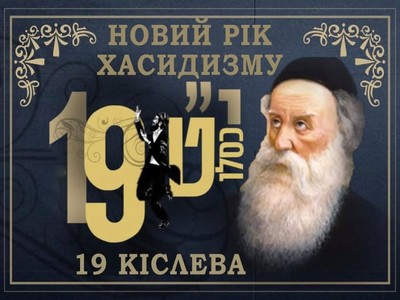
19 KISLEVA - NEW YEAR OF HASIDISM
Community
Do not look for this date in the lists of "hagim Yisrael", Jewish holidays (where Yom Kippur, Hanukkah, Tu bi Shvat, etc. are). There is no such date officially. Unofficially, wherever there is Coca-Cola, and even where it is not, that is, wherever there is Chabad, on the 19th of the month of Kislov, the Alter Rebbe's Release from Prison Day is celebrated, which is also called the Hasidic New Year. The fact is that the Alter Rebbe, arrested on a false denunciation (he was accused of collecting money for Turkey - Russia's main enemy at the time) became the object of close study by royal officials and the emperor himself. However, after studying the affairs of the "Sect of Zalman Borukhovich", the Russian authorities came to the conclusion that Hasidism does not contain anything unholy (and this is worth a lot in the mouth of a Russian official - no accusations against a Jew can be found). The Alter Rebbe was released, and his Jewish opponents were forbidden to interfere with the Alter Rebbe's students and followers (as well as all other Hasidic schools).Now Alter Rebbe could safely continue his work on spreading Hasidic teachings, so the 19th of Kislev became the date from which a new countdown in the history of the Hasidic movement began.How to celebrate this New Year? Of course, not under the Christmas tree, that's no question. In Ukraine, there is a tradition to visit the grave of the Alter Rebbe in the town of Hadiach (Poltava region) on this day in order to leave at the grave of the righteous "pan" – a note with a request addressed to the Almighty, to read near this place psalms-tagilim (Jewish tradition says that the grave of the righteous is the place where the connection with the Almighty is the best and clearest), as well as to take part in Hasidic gatherings – farbrengen.And now some interesting facts about the arrest and the case of the "sect of Zalman Borukhovich"• Alter Rebbe was arrested on the last day of Sukkot. He was transported to St. Petersburg, as a particularly dangerous criminal, in a "black funnel" (black carriage).• The road from Belarus to the northern capital was not close and Saturday caught the convoy on the way. On Friday afternoon, the Alter Rebbe asked to stop the carriage. The head of the guard refused (did you consider other options?) and ordered to drive on. Suddenly (or suddenly?) the wheel of the carriage broke. They called a craftsman from the nearest village, he fixed the wheel and the convoy set off again. However, we didn't go far, because suddenly (again it's "suddenly"!) one of the horses fell. The coachman hurried to the same village and bought a new horse. They harnessed up and wanted to set off again, but the horses could not move the carriage from its place. At this point, Mr. Chief already understood who he was dealing with, so he agreed to spend Saturday here, only asking the prisoner to allow the horses to pull over to the side of the road so as not to cause an accident on the highway. At the end of Saturday, the convoy set off.• According to the old bureaucratic principle "it is better to overdo than to underdo", the prisoner was treated with all the strictness of Russian law and was kept in solitary confinement, even without windows, and light was supplied by a candle. One of the guards decided to play a joke on the prisoner and asked him in the middle of the day: "Why are you not sleeping at such a late hour?", to which the Alter Rebbe replied that now, they say, it is not time to sleep - five minutes past three in the afternoon. The guard was very surprised at the Alter Rebbe's wisdom and, one must hope, did not allow himself any more idiotic jokes.• Hearing about an unusual prisoner, Emperor Alexander I incognito (as he himself thought) visited the loner of the Peter and Paul Fortress. But when he, disguised a la Harun al-Rashid, in a soldier's uniform, entered the cell, Alter Rebbe stood up and gave him the appropriate signs of respect. The emperor was as impressed by the extraordinary prisoner as his subordinates.• The prison and the building of the Privy Council, where the interrogations were held, were on different banks of the Neva. There were no bridges in St. Petersburg at that time, and the Alter Rebbe was taken to interrogations by boat. Interrogations took place late at night, and they were transported, accordingly, at the same time. On one of these trips, the Alter Rebbe, seeing the moon, wanted to bless it and asked him to stop the boat for a few minutes (kiddush levone, the blessing of the moon, is pronounced motionless). The chief of security, of course, refused (it was another chief of security, not the one who brought him from Lyad. He would have agreed immediately). Then you will guess yourself - the boat, despite all the efforts of the oarsmen, stopped by itself!Standing for decency for a while (so that everyone understood what was going on), the boat moved, and Alter Rebbe again asked to stop the boat. This time the warden agreed, demanding instead that the unusual prisoner bless him for a long life. Alter Rebbe wrote a few lines on the sheet, gave it to his boss, and the rowers stopped the boat. The Alter Rebbe uttered the necessary blessings and they sailed on.When the Hasidim learned about this story, they asked Alter Rebbe – why did he again ask to stop the boat if he stopped himself? The Alter Rebbe replied: "I did not want to force the Almighty to perform a miracle once again."By the way, that boss lived for many years...• The Rebbe was released as well as arrested – unexpectedly. 19 Kislev, at the moment when he read in the book "Tehilim" (the book of Psalms) the words "I freed my soul in peace...", they went into the cell and told him that he was free.according to the materials of the page chabad.odessa