
Call to Prayer
Community
Today our prayer is pouring to Heaven.We encourage everyone to pray for the full and speedy recovery of those affected.May G-d give them healing of body and soul, and give strength to those who have lost loved ones to withstand indescribable pain.We pray that the Almighty will protect Ukraine and stop this cruelty!
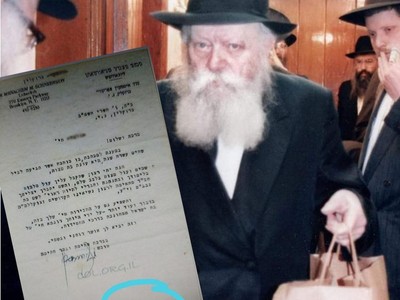
📖 Lubavitcher Calendar: Letter to the Rebbe
Community
💌The twelve-year-old girl who wrote the Rebbe an encrypted letter…This is the touching story of Shulamith Saxon, who celebrated her bat mitzvah in 1982.“Before the bat mitzvah, I was told to inform the Rebbe and ask for his blessing,” she recalls. — And I thought: if I ask the Rebbe for a blessing, it would be right to bless him myself. Not only to receive, but also to give. ”But the girl was a little ashamed. She didn't know if it was customary to do so, so she decided to write her blessing in cipher.Her younger brother showed her how to encrypt — when each letter is replaced with the previous one in alphabetical order.Shulamit knew that the Rebbe and Rebetzin had no children, so she decided to write him a blessing on the child.At the end of the letter, she encrypted the phrase:“My blessing 📖 to the Rebbe is that he will have sons, even if it was not intended for him.”The beginning of the code looked like this:«אקישט כקאט רטהכגה כה אמטל…»The letter has been sent3rd Tishrei— only a day after Rosh Hashanah.A reply from the Rebbe came soon after: he blessed Shulamith to grow up a kosher daughter of Israel, a daughter of the Chabad.And at the bottom of the letter there were several incomprehensible letters...When she showed it to her brother, he said:“This is not a signature — this is Rebbe's answer with the same cipher!”The code read:«שהגד סך דאקיד»,which meant:“Thank you for the blessing.”Years passed, the letter was kept in the family.And as Shulamit read it at her daughter's bat mitzvah, she realized:“What a privilege it is to have such a righteous mother who took the time to decipher the message of a twelve-year-old girl and respond with the same code — simply and lovingly:“Thank you for the blessing.”» Source:(https://t.me/+8KbDy9dQVqAxZWE8 )
Our Dates: 6 Mar-Heshwan
Community
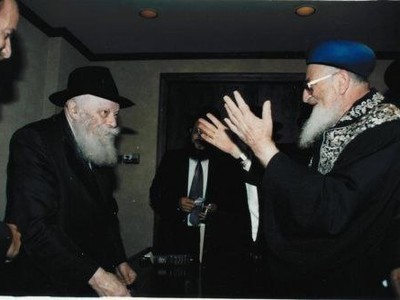
Today6 Mar-Kheshvan 5786.📌On this day in 1992,the last meeting of Rabbi Mordechai Eliyahu with the Lubavitcher Rebbe took place. 🌿Rabbi Mordechai Eliyahu is the first Sephardic chief rabbi of Israel and a great friend of the Lubavitcher Rebbe.📜Born in 1929in the Old City of Jerusalem. He grew up in poverty, but from a young age he devoted himself to Torah. He studied with the great sages — Rabbis Ezra Atia, Tzadok Hutsin and Baab Sali. Already in his youth, he became the youngest dayan (judge) in Israel.🕯 Subsequently, he was a member of the Supreme Rabbinical Court and the Chief Rabbi of Israel (1983–1993). Known as a deep connoisseur and"nigle"(open Torah), andSOD,(hidden, mystical part).💫Liaison with the Lubavitsky RebbeThe first contact occurred when Rabbi Eliyahu read the Rebbe's conversation about helping the poor before the holidays —"kimha depisha"He noticed that Arizal already had this idea, and through the Hasidim, the Rebbe transmitted that it was from Arizal that he took it — they just missed the link in the print. From that moment on, a warm spiritual bond was formed between them.🤝 Rabbi Mordechai Eliyahu visited the Rebbe several times — for personalyehidutand during official visits as the Chief Rabbi of Israel. They talked about the importance of studying the inner part of the Torah, about the purity of the family, kosher, upbringing. After these meetings, Rabbi Eliyahu said:“Every word of the Rebbe is like a Shekhinah speaking from his mouth. It can be seen that this is not just a person, but a soul embracing the whole of Israel.”🕊 He called the Rebbe"higher than an angel"and said that he saw in him a clarity of mind and a power that could not be explained in a human way.After the Rebbe's illness in 1992, Rabbi Eliyahu urged everyone to pray for his healing and said:“If Israel had listened to the Rebbe, he wouldn't have had many of his problems.”📚 He supported all Rebbe initiatives: Rambam study, project"Letters in Sefer Torah for children", campaigns forShlemut Haaretz— the integrity of the Land of Israel.On studying Rambam, he said:“Such a plan could only come down from heaven. This is the idea of the soul of a great man — to unite all the people around the Torah."💖 After the departure of the Rebbe, Rabbi Eliyahu continued to inspire everyone to follow his path:“One must act as the Rebbe taught-not stopping for a moment.”✨ His words on one of the paint brands:“The Rebbe is not just a rabbi, but the soul of all the people of Israel.”Source:https://t.me/+8KbDy9dQVqAxZWE8

Weekly Torah split: Lech Lecha
Community
Agar — Sarah's maid When Sarah sent her maid to her husband — was this foreseen by the Creator or did she “take fate into her own hands”? Whose plan was it, God's or man's? And what happened to Hagar — was it her life path, her purpose? It seems that if Sarah had more faith and trust in the Almighty, Ishmael might not have been there."Agar, the servant of Sarah" is a fascinating story that stirred artists and poets of all times and peoples.All Torah commentators agree that Sarah was not mistaken. Despite the fact that the consequences of this story complicated the fate of the Jewish people — and the world as a whole — if it were not for Sarah's actions, everything could have ended even more difficultly.The Almighty promised Abraham that he would have a son, but he did not say that it was from Sarah. After ten years of living in the Land of Israel without children, Sarah decided that the reason was in her. However, in reality, the delay was due to the fact that Abraham had to finally cleanse himself of the uncleanness that the Serpent brought to the human race. This impurity was to “come out” through Hagar's offspring.Rabbi Nathan from Breslau and Malbim explain: Ishmael's birth was a necessary stage before the birth of Yitzhak, just as husks precede the fetus.Rashi writes that Sarah brought her rival to her home, hoping that the Almighty would have mercy on her and give her children as a merit of her sufferings. Other commentators add that Sarah gave her maid to Abraham, thinking that if her children were worthy, she would adopt them.If Agar had kept humility, the history of mankind could have developed quite differently.But Hagar, becoming pregnant, rose above the mistress and rebelled against her. Then Sarah, having the gift of prophecy, demanded that Abraham expel her. She lost the child, and it was only after the angel told her that Hagar had humbled herself before Sarah that she was returned to the house of Abraham, where Ishmael was born.And here the question arises: why was all this necessary if the result was the birth of Ishmael?Rabbi Eliezer Berland explains: Hagar's exile actually saved the world. If the child she conceived at first were born, the consequences would be devastating. Of Ishmael, Thor says, “His hand is on everyone, and everyone's hand is on him.” But about that first child they would say only: "His hand is on everyone."So it was Sarah's prophetic gift and wisdom that saved mankind.By the way, as the great Or ha-Haim ha-Kadosh notes, Ishmael had the status of a slave. But that's another story…Source:breslev.com

Weekly split of the Torah "Lech Lech": The deepest question
Community
What does a person do when they have a deep question? It must bind itself to the souls of the righteous who questioned the Creator before the creation of the world. And then she turns to the Almighty:“I want to hear an answer directly from You.”“How will I know that I will inherit it (the Land of Israel)?”(Bereshit 15:8)Before the creation of the world, the Creator consulted the souls of the righteous. And they asked Him:“You create the world, but when will you bring the Messiah? When will you save the world?”Before that, the Creator showed them the world that was to be created. And when they looked at him, they said,“What will happen to this world?”The same question haunted Abraham's forefather. That is why the Creator made a covenant with him — so that his descendants would bring the world to correction.Now let's open our hearts.Imagine there's a woman I love deeply. I meet a friend on the street and ask him:“Please, I'm very busy right now. If you see this woman, tell her I love her and want to get married.”But it is clear that a woman will not want to hear such words from an outsider. If I love, I have to say it myself.Likewise, there are things we don't want to hear through an intermediary. There are questions that we want to hear only from the Creator — not even through the prophet.The Torah we have today was given through a messenger — through Moshe. This means that you will not always find answers to the deepest questions in it.One of the deepest questions in the world is the Land of Israel.The Creator gave it to us and at the same time left the question:“Why have I given you the land of Israel?”There are many explanations, comments and interpretations in the Torah, but it is the question of the Earth that awakens the deepest reflections. We got it, then went into exile, came back again, and again — exile. Now we come back again, but we have encountered many difficulties. The Land of Israel is humanity's most difficult issue.When Abraham asks:“How do I know I'll inherit it?”he's actually asking:“O Lord of the world, why have You given my descendants the Land of Israel?”What does a person do when they have a deep question? She connects herself to the souls of the righteous who asked the Creator before the creation of the world and says:“I want to hear an answer directly from You.”On the Ninth of Av, we do not study the Torah. Why? Because on this day we do not want to hear the words spoken through the messenger.TheNinthof Av's question is about the Land of Israel. It is so deep that we want to hear the answer only from the Creator Himself.Mashiach is the answer of the Almighty.Usually people get married and have children. But it was different with Avraham. Since the creation of the world, it has never happened that a spouse could not have children. The first to encounter this were Abraham and Sarah.For them, it became not just difficulties — it was a new stage in their relationship with the Creator. Since then, the Almighty has wanted the birth of children to be a miracle, a sign of His presence in the world.Both a man and a woman can turn to the Creator with a request:“Lord of the world, why don't you give us children?”May we all be blessed:“Lord of the world, you have already given us children, but how many of them today are far from their Jewry, from the Land of Israel… What is wrong with them now?”When a person is able to ask such questions, when he connects himself with the depth of the Torah of the forefather Abraham — then only the Creator Himself can give the answer.The Creator accepted Abraham's request and said to him:“At the end I will be with you” (treatisePsahim117b).After all, Abraham was the one who said to the Creator:“I want you to answer me. I want to hear the answer only from You."Source:breslev.com/3813488/

Our dates: 9 hashwana
Community
* 9 hashwana5088 (October 25, 1327) — Yorzeit (the anniversary of the departure from this world) of the sage and legislator Rabbi Asher ben Yechiel.The outstanding Talmudist Rabbi Asher ben Yechiel (also known as Asheri or Rosh) was born in the middle of the 13th century in Germany in a well-known Jewish family (his ancestor was the great lawgiver Rabbi Gershon Meor Gya-Hola ("Light of Exile")). His teacher was the leader of European (Ashkenazi) Jewry, Rabbi Meir ben Boruch of Rottenburg, but after Rabbi Meir was imprisoned, Rosh became the recognized leader of European Jewry. Fearing that the same fate would befall him, Rosh left Germany in 1303, going to Spain at the invitation of the great sage Rabbi Shlomo ibn Aderet (Rashba) from Barcelona. In 1305, he became the head of the Jewish community of Toledo.Here, Rabbi Rosh lived the rest of his life, doing a lot to bring together Ashkenazic (German) and Sephardic (Spanish) Jewish traditions. In particular, he introduced the Talmud teaching system in Spain according to the methods adopted in Germany, so that students from all over Europe came to his yeshiva. Rosh's commentaries are an obligatory part of the Talmud, and his works on Galakha (Jewish law) served as the basis for legal codes, such as the Shulchan Aruch (see 2 elula). Also, in addition to his outstanding knowledge, Rabbi Asher was known for his piety and exemplary behavior.Source:chabad.odessa

Our dates: 10 hashwana
Community
The 📌10th hash of 2197 (1564 BC) is the birthday of Gad ben Yaakov.📌10 hashvan 2322 (1439 BC) — Yorzeit (anniversary of the departure from this world) of Gad ben Jacob.Gad was the seventh son of our forefather Jacob and the firstborn of one of his wives, Zilpa (Leah's maid). He was born in Aram-Naraim (the territory of present-day Iraq), where his father was in the service of his father-in-law (grandfather Gad) — Laban and left this world after 125 years, being in EgyptWhen the Jews occupied Transjordan on their way to Eretz Yisrael, the tribes of Gad and Reuven, as well as half of the tribe of Menashe, appealed to Moshe to give them allotments of the pastures of Gilad, where they could roam with their numerous flocks of sheep. Moshe agreed to the condition that all able-bodied men, leaving their wives and children in the newly acquired allotments, would cross the Jordan and, together with the other tribes, participate in the conquest of Eretz Knaan (Canaan, the future Eretz Israel). The portion received by Gad included southern Gilead, the western part of northern Gilead, and almost the entire Jordan Valley up to Lake Kinneret.Judge Iftah came from the tribe of Gad. After the collapse of the unified Jewish kingdom, the tribe of Gad was part of the Kingdom of Israel (Northern).
Question of the day: Three steps before prayer
Community
📌Question: Why is it customary to take three steps back and then forward before praying to Amid?❗Answer: In the Babylonian Talmud¹ and in the Book of Zohar ² it is said that after the end of the prayer, a person passes from the sphere of holiness to the everyday world. This transition is associated with the number three, as it has been with the Jews for a long time. For example, when the Jews flinched while receiving the Torah, they stepped back three steps. When Moshe entered the Almighty, he passed three barriers — “darkness, cloud, and gloom.”³ When the koenas completed the permanent sacrifice, they also retreated three steps back.Our sages explained the reason why it is still customary to take these three steps before the beginning of the Amid prayer. When a person seeks to approach G-d, he takes a step back, showing that on the one hand he does not deserve such intimacy, and on the other hand, only thanks to the Creator's great mercy he gets the right to turn to Him with prayer.Therefore, in front of Amida (which is the most important part of prayer), it is customary to take three steps back, and then turn and take three steps forward (then bring your legs together). The same is done after the end of the prayer, only in reverse order. And whoever does not take these three steps at the end, it is as if he did not pray.At the end of the prayer, it is customary to bow slightly and in this position take three steps back⁸, similar to how one departs from the king⁹. The first step back is started with the left foot, which shows how difficult it is for us to move away from the Almighty. Then, taking three steps back and bowing the head, they say goodbye to the spiritual presence. This is done as follows: at the words "Establishes peace in His heights" they bow their heads to the left (this is the right side of the Shchina opposite the prayer table). At the words "May he send peace to us" - tilt the head to the right (left side of Shchina). After completing the phrase, they once again bow their heads forward, like a slave before his master, and say "Let there be will... that the Temple be rebuilt"¹⁰.According to the custom of Chabad ¹¹: “He makes peace in His heights” — leaning to the left, “He” — leaning forward, “Let him send peace to us” — leaning to the right, “and to all Israel. And let's say: Amen!" — leaning forward.The one who completed Amid and took three steps back should stand motionless, feet together. If you immediately return to the place, it looks as if the person has not really retreated, has not said goodbye to his King. It is allowed to return after the time required for the passage of four elbows (approximately two meters). If the synagogue is very close, it is allowed to return immediately. It is advisable to wait for the chazan to start "Kdusha", and then turn forward¹².Notes:Treatise "Yoma" 53b.Tikuney Zohar 26:1."Dvarim" 4:11.Our prayer is related to the tamid sacrifice.Rebbe's custom in Shacharit: the chazan takes three steps backward, starting with the left foot, and then three forward with the right foot (“Maase Melech” 3:60–61) when he says “Praise God…”.In Minchah and Maarah, the first step is backward from the left foot, the latter is also left, but without the articulation of the legs; the return is from the right ("Maase Melech" 7:9).Like the angels: “Their feet are a straight leg” (Ehezkel 1:7)."Yoma" 53b; "Shulchan Aruch" Alter Rebbe 123:1.If a person prays from behind closer than two meters — you can not retreat to its completion ("Shulchan Aruch" Alter Rebe 102:5, etc.).The step should be such that the thumb of one foot is opposite the fiveof the other. The smaller step does not count ("Shulhan Arukh" Alter Rebbe 123:6; "Ktsot ha-shulhan" 20:24)."Shulchan Aruch" Alter Rebbe 123:1.Sefer HaMingagim, p. 12; Maase Melech 3:73.Rambam, The Laws of Prayer 9:4; Shulchan Aruch Alter Rebbe 123:3.Rabbi Baruch Hubnicki
Lubavitcher calendar: 🌍 LEH-LEHA — GO to YOURSELF
Community
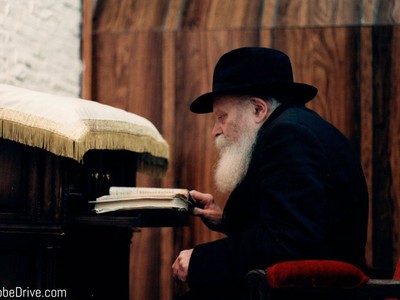
🕊️ At the beginning of the week's chapter, the Almighty says to Abraham:"Leh-Leha me-archeha, u-mimoladteha, u-mibeit aviha — el ha-aretz asher areka"— “Get out of your land, from your homeland, from your father's house, to the land that I will show you” (Genesis 12:1)📖 The Rebbe explains:The words “Leh-Leha” mean not only “go”, but “go to yourself” — to your true essence, to the Divine soul in you.🚶♂️ Every Jew in his life hears this call:"Out of your own land" — go beyond natural desires and habits."From the homeland" — rise above the influence of the environment.“From my father's house” — even over what seems natural and innate.✨ All this — to come to the "land that I will show you", that is, to a state where the will of the Almighty is revealed in you.🔥 And even if you have already passed the way, the same call sounds again: "Leh-Leha!"Keep moving. Climb higher. Get closer to your true God essence .Source:t.me/LubavitcherRebe770

Our dates: 14 hashwana
Community
*14 hashwana5585 (November 5, 1824) — The wedding of Rabbi Yehuda-Lejba from Kopis.The second son of Rabbi Tsemakh-Tzedek (the third Lubavitcher Rabbi), Rabbi Yehuda-Lejb (Kopys Rabbi, Rabbi Maharil), married the daughter of Rabbi Shlomo Freudis from Shklov, one of the most famous Hasidim of the Alter Rebbe (he had a "scribe" who recorded the statements of the Rabbi) and Miteler Rebbe (during the arrest of Miteler Rebbe, Rabbi Shlomo was also arrested on the same charge).

Our dates: 15 hashwana
Community
Our dates:📌15 hashvanah 3622 (139 BC) — Yorzeit (the anniversary of the departure from this world) of Matitiag ben Yochanan Hashmonai, the father of the Maccabi brothers.In the second century BC, Eretz Israel was ruled by the Syrian rulers of the Seleucids — the descendants of one of the commanders of Alexander the Great. It was then that the authorities (with the assistance of Jewish supporters, the so-called "Hellenists") began to plant pagan Greek cults among the Jews and installed a statue of Zeus in the Temple.The uprising against Hellenization was raised by the son of the high priest Johanan Matityahu, who was himself an elderly man at that time. It all began in the town of Modi 'in, located among the Judean Mountains, and a lot of people responded to Matityag's call "Who is for G-d to me" (the first letters of this phrase in Hebrew form the acronym "Macabee"). Clashes broke out and the Greek soldiers were forced to retreat.Matitiaga led the uprising for only one year, after which he left this world, but his five sons — Yehuda "Makabi", Yochanan, Shimon, Elazar and Jonathan continued their father's work and achieved freedom for their native land. In memory of the liberation of Jerusalem, the cleansing of the Temple and the miracle of oil that occurred during this, we celebrate the holiday of Hanukkah.In biblical translations, the Maccabi brothers are called Maccabees, and in one of the neighboring religions there is even a Maccabee feast when eating poppy dishes. However, the five sons of Matitiag ben Johanan had nothing in common with the poppy.📌15 hashvan 5597 (October 26, 1836) — Yorzeit (anniversary of the departure from this world) Rabbi Leiba "Baal Isurim".Rabbi Leib, also known as “Baal Isurim” (sufferer, martyr) was a very learned and God-fearing Chassid, one of the first Chabadites to settle in Hebron (Eretz Israel). At the end of his life, Rabbi Leib moved to another holy city — Safed, where he spent the rest of his days and where he was buried.Shortly before his departure from this world, Rabbi Leib said that anyone who, God forbid, has problems should come to his grave and lie down (prostrate), and then he, Rabbi Leib, will make every effort to help this person. This custom has survived to this day.Source:chabad.odessa

Our dates: 17 hashwana
Community
📌17 Hashvanah 1656 (2105 BC) — The beginning of the Flood.The rain, which began on 17 hashwana, covered the entire surface of the earth, including the highest peaks. As a result of the Flood (with a capital letter), everything that lived on the earth died, except Noah's family and one pair of each species of animals who were saved thanks to the ark built by Noah at the direction of the Almighty.