

Our dates: 28 Tishrei
Community
28 Tishrei 5587 (October 29, 1826) — Arrest of Miteler Rebbe.Since the appearance of the founder of Hasidism, Rabbi Baal Shem-Tov, almost a hundred years have passed, the third generation of Hasidim has changed, and the opponents of Hasidism have not calmed down. On the slave of Dov-Ber (Miteler Rebbe), the son of Alter Rebbe, as well as on his father, a denunciation was made that he was helping the Turkish sultan with money. The authorities did not believe too much, but for the sake of order, they still decided to call the head of Chabad from Lubavitches, where he lived, to Vitebsk, where the governor-general's residence was located.The first days of the investigation, Miteler Rebbe was under arrest, but he was allowed to communicate with the Hasidim and he even wrote a maimorah (a lecture-sermon on Hasidism) at this time. A few weeks later, the rabbis were released until the end of the case, and 10 Kislev was released, and this day has since been celebrated by the Hasidim as a fun holiday.Source:chabad.odessa

Our Dates: 29 Tishrei
Community
*29 tishrei3450 (312 BC) — Yorzeit (the anniversary of the departure from this world) of the high priest Rabbi Shimon HaTsadik (Shimon the Righteous).In the Talmudic treatise "Pirkei Avot", Rabbi Shimon is called one of the last "from the galaxy of the men of the Great Assembly" (Anshei Knesset ha-Gdola). The Great Assembly is a Council of Elders and Prophets headed by Ezra the Scribe. Among its members were Daniel, Mordechai, Nehemiah, Hananiah, Michael, Azariah, and others. This Council functioned for about thirty years and had 120 members. Later, the functions of this Council were taken over by the Sanhedrin, which consisted of seventy-one wise men.The men of the Great Assembly established the holiday of Purim, introduced the custom of public reading of the Torah, as well as the order and system of its reading, dividing the text by the number of weeks in the year so that the entire Torah was read during the year. The men of the Great Assembly wrote down the prophecies of the 12 “minor” prophets, as well as the books of Ezekiel, Daniel, and Esther.Rabbi Shimon has a famous saying: "The world rests on three pillars: the Torah, prayer and good deeds." For 40 years, he was the high priest of the Temple (that is, 40 times he entered the room of the Holy of Holies and pronounced there "Shem gya-meforash" - the ineffable name of G-dah, while remaining alive. In later times, there were periods when the high priests changed each other every year, because they were unable to endure being in the Holy of Holies and proclaiming G-d name)). In addition, all the years of his life, in the Temple, as before, there were still many miracles that showed that the Shechinah (G-d's presence) still dwells in the Temple. With his death, the miracles finally stopped.During the siege of the Phoenician city of Tzur (modern Tyre), Alexander the Great demanded that all the local peoples provide his troops with provisions and reinforcements, to which the Jerusalem authorities refused, since they had already sworn allegiance to the Persian king. Having captured Tzur, Alexander, incited by the denunciations of neighboring peoples (the same Samaritans), marched on Jerusalem, wanting to punish the Jews for disobedience. Hearing about the approaching trouble, Rabbi Shimon, at the head of a delegation of honorable residents of Jerusalem, went out to meet the famous conqueror to calm him down.The meeting took place in the Sharon Valley. And then the unexpected happened: Alexander, jumping off the chariot, bowed his knee before the high priest. "The image of this man appeared to me more than once in battles and heralded victory," the king explained to the shocked Macedonians. The legend says that Alexander was taken to Jerusalem, where he showered the Jews with royal favors and, after visiting the Temple, recognized its architecture and decoration as worthy of attention, "only" advising to place his royal bust somewhere in a prominent place. The priests proposed instead something else, more, in their opinion, essential for perpetuating the memory of the great Alexander: all boys born this year will be named after him. The commander agreed, and so the name Alexander became one of the Jewish names.The tomb of Rabbi Shimon in Jerusalem is a place of pilgrimage for Jews on the holiday of Lag ba-Omer.*29 tishrei5269 (September 23, 1508) — Yorzeit (anniversary of the departure from this world) Rabbi Yitzhak ben Yehuda Abravanel.TheAbravanel family, which traces its roots to the royal dynasty of David, has lived on the territory of the Iberian Peninsula since the destruction of the Second Temple, and its most famous representative was Rabbi Don Yitzhak ben Yehuda.Rabbi Yitzhak was born in 1437 in Lisbon (Portugal) and inherited from his father the positions of state financier and treasurer of the Portuguese king. However, in 1483, when he was accused of supporting a rebellion against the king, Don Yitzhak was forced to flee to Spain, where he entered the service of kings Ferdinand of Aragon and Isabella of Castile as a redeemer. Rabbi Yitzhak was one of the organizers of the Columbus expedition and in 1492, together with Abraham Senior, who also enjoyed great influence at court, unsuccessfully tried to get the edict on the expulsion of the Jews to be canceled. The decree could not be revoked, but Don Yitzhak, the only Jew, was allowed to remain in the kingdom without changing his faith. He refused this "honor" and went to Naples, where the local king appointed him to a position similar to the Spanish one. Unfortunately, during the exile from Spain, Abravanel's family suffered a tragedy - his little grandson was kidnapped and sent to be raised in a monastery, from where he became a well-known Catholic preacher and inquisitor.In 1503, Abravanel settled in Venice, where he lived until his departure from this world. In addition to the fame of a financial genius, Rabbi Yitzhak ben Yehuda was known as an outstanding scholar and commentator on the Torah (the comments he wrote in Venice were published there, but only after his death, in 1579).Source:chabad.odessa

Our Dates: 30 Tishrei
Community
30 tishrei5676 (October 8, 1915) — Yorzeit (anniversary of the departure from this world) Rabbi Jacob-Mordechai Bezpalov, Rabbi of Poltava.Rabbi Yakov-Mordechai held the post of rabbi of Poltava for thirty years and was a Hasid of the fourth and fifth Lyubovytsky Rebbe, Rabbi Shmuel (Rebbe Magyarash) and Rabbi Sholom Dov-Ber (Rebbe Rashab). He was one of the three students who received the "laughter" (ordination as a rabbi) from the hands of Rebbe Magyarash, and before Rebbe Rashab headed the Chabad movement, Rabbi Yakov-Mordechai studied with him as a pair (we have already said that there is such a practice in yeshivas: two students of equal knowledge and intellect form a havruta (companion) and study together, seeking together solving complex problems and unclear places in the studied material).Source:chabad.odessa

Our dates: 1 hash
Community
*1 hash5642 (September 24, 1881) — Birthday of Rebbetzin Nechama-Dina, wife of Rabbi Yosef-Itzhak, the sixth Lubavitcher Rabbi.Rebbetzin Nehama-Dina was born in Chisinau. Her mother was Rebbetzin Yocheved, and her father was the grandson of the third Lubavitcher Rabbi Tsemakh-Tzedek, the son of Rabbi Israel-Noah (Rabbi Maarayan) from Nizhyn, Rabbi Avraham Schneerson.*1 hash5002 (October 1, 1241) — Yorzeit (anniversary of the departure from this world) Rabbi Elazar ben Yehuda ben Kalonimus of Worms (Roqueach).Rabbi Elazar, also known as Rokeach (after the title of one of his main works. The name was not chosen by chance — the gematria of the word "Rokeach" (manufacturer of incense) is equal to the gematria of the author's name. By the way, Rabbi Elazar of Broad is also known as Rokeach.) Both on the paternal and maternal lines of Rabbi Elazar came from the ancient family of Kalonimus, known for its sages-cabalists.Rabbi Elazar was born in Mainz and studied first with his father and then with many prominent rabbis of Europe. The years of his life fell on the time of the Third Crusade and, still living in Mainz, Rabbi Elazar had to hide from them. In 1189, an army of 100,000 men led by Emperor Frederick Barbarossa gathered near Regensburg, but Rabbi Elazar still went there to teach Kabbalah to the great sage Rabbi Yehuda Hasid. After completing his studies, he settled in Worms, where he was elected rabbi of the city and founded his own yeshiva.A few years later, the crusaders still reached the sage. They slaughtered his wife and two daughters with a sword, and Rabbi Elazar, his son, and his disciples were seriously wounded.Among the disciples of Rabbi Elazar was Ramban, and Rabbi Elazar specially moved to Heron to teach him the secrets of practical Kabbalah.Although Rabbi Elazar received permission from his teachers to discover what for centuries was considered a mystery of the initiates and was passed down by word of mouth (in particular, in the book "Sides of the Razia" ("Secrets of the Hidden"), he gives detailed instructions for making an artificial man (golem)), most of the 60 books he wrote still remain in manuscripts. The time for the publication of the cabalistic secrets contained in them has not yet come.chabad.odessa

Our dates: 2 hashwans
Community
2 hashwans5672 (October 24, 1911) — Rabbi Sholom-Dov-Ber (the fourth Lubavitcher Rabbi, Rabbi Rashab) founded the Torat Emes yeshiva in Hebron.To create a yeshiva, Rabbi Sholom-Dov-Ber sent to Eretz-Israel students of the Lubavitcher yeshiva "Tomhey tmimim" Alter Simkhovits, Gilel Priyutkin, Zvi Hirsh Katsev, Yehezekiel Feigin, Nachman-Menachem Karasik, Abraham-Eli Osherov and Israel-Zalman Asnas, as well as their mentor Rabbi Shlomo-Zalman Gevlin.The Yeshiva began its work, but a few years later, with the outbreak of World War I, when Russia and Turkey, which owned Eretz Yisrael, found themselves on opposite sides of the front, all holders of Russian passports had to leave the country.Source:chabad.odessa

Our dates: 3 hashwans
Community
📌3 Heshvan 5627 (October 12, 1866) — Yorzeit (anniversary of the departure from this world) to Rabbi Yehuda-Lejba from Kopis.Rabbi Yehuda-Lejb (also known by the acronym Maharil) was the son of the third Lubavitcher Rabbi, Rabbi Tsemakh-Tzedek. He was born in 1807, was the second son of Rabbi Tsemakh-Tzedek, and at the ceremony of circumcision by sandak (a person holding a baby in his arms) was his great-grandfather Alter Rebbe. Rabbi Yehuda spent his childhood years next to his beloved grandfather, the second Lubavitcher Rebbe Miteler, who taught him Torah and Hasidism.After the departure from this world of his father, the third Lubavitcher Rabbi, Rabbi Yehuda left Lubavitches and settled in the town of Kopys, where he led a group of Hasidim. Maaril's slave had thousands of followers (the so-called Kopi Chabadniks), although he himself headed them for only two months — Elul and Tishrei. On the feast of Simhat Torah, he fell ill, and 3 hashvans, six months after the departure of his father, Rabbi Yehuda-Leib also left this world.📌3 Hashvanah 5611 (October 9, 1850) — Yorzeit (anniversary of the departure from this world) Rabbi Yisrael Friedman, Rabbi from Ruzhin.Rabbi Yisrael Friedman, the great-grandson of Rabbi Dov-Ber of Mezherych (known as the Mezherytsky Magid) was born in 1797 in the town of Pogrebyshche near Kyiv. Already in his early youth, Rabbi Israel chose the town of Ruzhyn (in Hebrew it was called Rizhyn) as his residence. The court of the Ruzhinsky Rebbe (that is, his entourage and his property) was not inferior to the majority of princely courts in Europe at the time in terms of brilliance and splendor - Rabbi Israel kept many servants and traveled in a luxurious carriage pulled by four horses. However, despite such an audacious lifestyle, the Ruzhinsky Rebbe was a universal favorite (in particular, he was friends with the third Lubavitch Rebbe Rabbi Tsemach-Tzedek) and he was forgiven for everything. It was said that "The Rijiner Rebbe, of course, wears golden boots, but these boots have no soles, so he walks barefoot in the snow."In 1838, Rabbi Israel was accused by the authorities of ordering the execution of two informers. The process lasted a year and a half, hundreds of Jews were arrested and tortured, and 80 people appeared before the court. Six heads of the community were sentenced to life imprisonment, others to exile in Siberia. The Ruzhinsky Rebbe was under arrest for almost two years; the lawyers did everything to prove his innocence in the case, and at the end of the investigation he was released, but left under police supervision, because the authorities suspected him of intending to become a Jewish ruler. The Rebbe moved to Chisinau, where the local governor was more sympathetic to the Jews, then moved to Iasi, and from there to the Bukovina town of Shatsk. So he moved from city to city until, after many efforts of his supporters, on December 20, 1845, Emperor Ferdinand I allowed him to live in Sadagora (Sadigur) in Bukovina (now Sadagora is one of the districts of Chernivtsi). The Hasids bought for him the Golden Stream estate near the city, he built himself a rich mansion and once again began to lead a luxurious lifestyle. The Ruzhinsky Rebbe did a lot for the residents of Eretz Israel, in particular, he provided funds for the construction of the Tiferet Israel synagogue in the Jewish quarter of the Old City of Jerusalem.Rabbi Yisrael Friedman is buried in Sadigor. Ruzhinsky's sons founded Hasidic dynasties in other towns, becoming the ancestors of Sadigorsk and Boyan Hasidism.Source:chabad.odessa
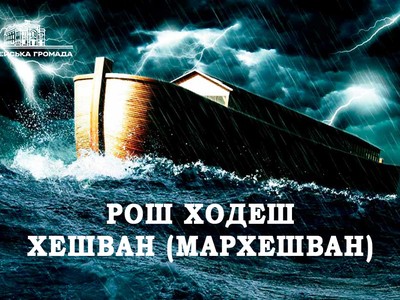
Rosh Chodesh Heshvan (Marheshvan)
Community
The month of Heshvan (Marheshvan). The month of Heshvan is called Bul (withering)Rosh Chodesh Heshvan is always celebrated for two days, as Heshvan follows the full moon of Tishrei. The first day falls on the thirtieth of Tishrei, the second on the first of Heshvan.There is an opinion that the Musaf prayer on Rosh Chodesh Heshvan, unlike all others, is forbidden to recite by heart - it is recited only from the prayer book.It is a halachic rule: "Passages from the Torah and Tanakh are not recited by heart." Of course, all Musaf prayers without exception include such passages. But since the prayers, which are usually said on Saturdays and new moons, sound often and are well memorized, they are allowed to be recited by heart.However, Musaf on Rosh Chodesh Heshvan is recited after a two-month break — because on Rosh Hashanah, which begins the month of Tishrei, the Musaf prayer does not mention the new moon. Therefore, many read this prayer only from a book, fearing that the words of the Torah contained in it may have been partially forgotten.For the same reason, Musaf is not recited by heart on holidays, because they are recited only once a year.Heshvan — MarheshvanHeshvan is the second month from the beginning of the year and the eighth month from the month of Nisan, as required by the Torah.In the Tanakh, he is named Bul, as it is said (Mlahim I, 6): "In the eleventh year, in the month of Bul - that is the eighth month - he completed [the construction of] the Temple..."The month of Heshvan is called Bul ("withering"), because with his arrival, the grasses on the meadows wither and the cattle begin to lay the harvested hay (Rashi). Some derive the name from the word yavul ("harvest"), because plowing and sowing of winter crops (Radak) begin in Heshvan. Others connect the word Bul with mabul ("flood"), because in this month there are usually heavy showers.The Midrash says that since the Flood began this very month, it is certain that it will continue to be rainy.The name "Heshvan" (like all modern month names) was brought by the Jews who returned from the Babylonian captivity. It was called "Markeshvan" because it is "bitter" (mar): it does not contain a single joyful day and at the same time it is full of misfortunes that befell Israel.On the fifteenth of Markeshvan, King Jeroboam ben Nevat introduced in Israel the criminal custom of worshiping golden idols in Beit El and Dan.The Almighty has made this month the month of His wrath. In Markeshvan, the Babylonians killed the sons of the king of Judah, Tzidkiyaga, in front of their father; the king himself was blinded and taken prisoner.In Markhesvan, the Most High punished the generation of the Floodfor their sins - the water flooded the whole earth, washing away the fruits of the labor of ten generations. Everything they had created in fifteen hundred and fifty-six years was destroyed. Only Noah and those who were with him in the ark survived. That is why this month is called "Marheshvan" - "bitter Heshvan".The second meaning of the word "mar" is a raindrop. At this time, the thirsty world is eagerly waiting for the rain, without which the future harvest will perish. This is another, main reason for the name "Markhesvan".Will be reimbursed!Once, the month of Heshvan, which does not have a single holiday, almost "hidden" one of the happiest days in the history of the Jewish people. This happened during the reign of King Shlomo.Shlomo spent seven years building the Jerusalem Temple. Construction was completed at Heshvan, and all Israel looked forward to the day when sacrifices would begin in the Temple.Shlomo waited a long time for the Most High to order the consecration of the Temple. The wait lasted twelve months, during which the Temple gate was kept closed. Finally, in the month of Tishrei, the Most High commanded to hold a celebration of the consecration of the Temple.So Heshvan was "bypassed". The holiday came to the already rich on the joyful days of Tishrei.In the future, the Most High will compensate Heshvan for the fact that he was left without any holiday.This is what our sages said:"Just as the month of Kislev [in which the Hasmoneans restored the service in the Temple and established the Hanukkah holiday], the Most High will pay due in the future to the month of Markeshvan." (Yalkut Shimoni)The Heshvan moon corresponds to the Scorpio constellation. In this month, the world yearns for rain like a scorpion languishes from lack of water.Consecration of the monthThe Sages said (Sanhedrin 42): "He who blesses the coming of the new moon in time is like one who accepts the Sheena."What is the connection between the consecration of the new moon and the presence of the Shekhinah?Thus answer the sages of the Talmud (Shabbat 86):“When Israel came to the Sinai desert to meet the Shina, it was at the beginning of the month. Because it is said: "On this day they came to the Sinai desert." And about the new moon it is also said: "...this month is for you..." Therefore, the consecration of the new moon reminds us of the appearance of the Shechinah, the divine presence, which the children of Israel were honored for the first time on Rosh Chodesh.The great jurist Magarsha wrote:"Being in exile, we are deprived of the opportunity to receive the Shina in Jerusalem, but we do not stop dreaming about it.Observing the new moon at the hour of its renewal, every time we remember the promise of the Most High that we too will be "renewed" and once again be honored to see the Shina, as it is said: "The one who intended to fulfill the commandment, but for independent reasons could not, the Most High counts [as if] fulfilled". And when we go out to bless the new moon, the dream of our own renewal awakens in our hearts, of returning to the source of holiness — the Temple, the abode of the Shchina. Then, according to the Torah, we are, as it were, honored to receive it today."And in the book "Sefer Galvush" it is written: "Looking at the moon, which is constantly changing, we clearly see the actions of the Most High and His power... This is similar to the fact that once a month we are honored to see the face of the Shechinah herself. The renewal of the month is related to the Shechina.”The Sages added, revealing a little the secret of the Shechinah, that the Shechinah is the revelation of the Glory of the Most High in human actions and natural phenomena, as it is said in the Torah: "And My Shechinah is with them," that is, in their deeds. And although at first glance a person lives naturally, Shchina rests on all his deeds. How exactly? Because she knows that everything she has is from the Almighty.And if a person, G-d forbid, believes that he has achieved everything himself thanks to talent and hard work, or it is a consequence of the influence of heavenly bodies, then it is as if he is throwing off the Shina from his shoulders. Therefore, when the children of Israel come out to bless the Most High for the fact that according to His will the moon is renewed, they testify on behalf of all created things that the phenomena of nature and the works of human hands are only the embodiment of His will, and there is nothing in the whole world but Him. Witnessing this, they are honored with the appearance of the Shchina.The blessing used to consecrate the new moon is called "Kiddush Levana" - consecration of the moon. Although it says "...He who renews the months" and not "...He who sanctifies the months", Kiddush Levan is still called "consecration" - in memory of the consecration of the new moon with a pobeid din. Among Sephardic Jews, it is simply called the "blessing of the moon.""Shina" meetingSince the blessing of the month is related to the unveiling of the face of the Shekhinah, it should be recited while standing.The moon is blessed in festive clothes, at the gathering of the people - as the people usually greet their king."The new moon is blessed after Saturday sunrise, when it is clearly visible. They put on elegant clothes, look at the moon, stand to their full height - and bless." (Tract "Sofrim", 20)Although it is customary to bless the moon after the end of the Sabbath, many do it earlier, following the principle: "the fast ones hurry to the commandments."According to Halacha, the moon is blessed no earlier than the third and no later than the tenth day of the new month, preferably after the end of the Sabbath. In winter, they often don't wait for Saturday to come out, fearing that the moon will not be visible because of the clouds.In the month of Sivan, the moon is blessed after the end of the Shavuot holiday, in order to combine the fulfillment of this commandment with festive joy.Whoever consecrates the moon on a weekday should still wear festive clothes and purify his spirit and heart, because he is fulfilling the commandment related to the manifestation of the face of the Shchina.In the month of Av, the moon is blessed only after the 9th of Av has passed due to the sorrow of the beginning of the month.In the month of Tishrei, the moon is blessed only after Yom Kippur, after fasting, immediately after leaving the synagogue, without having eaten.In Sephardic communities, it is customary to bless the moon even before the arrival of Yom Kippur, in order to add merit to the Day of Judgment by fulfilling this commandment. In the month of Av, they bless the moon after rising on the 9th of Av, having previously eaten something, and not immediately after fasting, like the Ashkenazi Jews.Some teachers of the law believe that the blessing of the month should not be postponed until Yom Kippur and the 9th of Av, because the principle of "hurrying to the commandments" is more important. This, for example, was the opinion of Gra (Vilna Gaon Rabbi Eliyagu); his opinion is followed in many Jerusalem synagogues.They try to fulfill the commandment of blessing the month in a minyan, that is, with the participation of at least ten adult male Jews, as it is said: "The greatness of the king is in the multitude of the people." It is not performed at home under the roof, looking at the moon through the window or through an open door. It is necessary to go outside, like servants hurrying to meet the king. If it is difficult to go out, you can stay at home. The main thing is to open a window or door through which you can see the moon. But this is not necessary either: if the glass is clean and it is difficult to open the window due to the cold or other reasons, you can bless by looking through the glass.The moon is not blessed until three full days after the new moon. According to some sources, at least a week should pass. The deadline is the astronomical middle of the month, that is, half of the period from new moon to new moon. Those who did not make it to the middle will no longer be able to bless.Usually, the moon is not blessed on the evening of Saturday or a holiday, but it is done if tomorrow is already late.Women do not bless the moon.Consecrating the moon, it is enough to look at it once, saying a blessing. We bless not the moon itself, but its Creator.Blessings are said while straightening up, standing as if standing before a teacher or other respected person.In some communities, they sing and dance after the blessing.Blessing of the monthThe order is as follows.They read the 148th Psalm - "Praise the Lord from heaven..." - from the beginning to the sixth verse - "He established them forever and ever, gave them unbreakable laws." In these verses, the sun and the moon, the Heavens and the Heavens of Heavens are mentioned - everything that the Almighty created in the sky. Their list glorifies the Creator. The rest of the verses of this psalm refer to creation on earth and do not belong to the blessing of the month.Then the blessing itself is said - exactly as formulated by the sages. Its meaning is praise to the Most High, who created the Heavens and wisely placed the heavenly army on them in such a way that the role of each luminary is unchanged. Nothing changes forever except the moon, which He has commanded to be eternally renewed. This is a special sign for the children of Israel.That is, although Israel experiences ups and downs, its hope is always alive. The new moon is the crown of Israel, its crown, because the renewal of the moon shows: having fallen, Israel will rise again, the day of its renewal will come. And just as today the children of Israel gather to bless the Most High, the Creator of the Heavens, so the nations of the world will gather to bless Him for the renewal of Israel. Then His power will appear and become clear to everyone. Blessed be the Most High, who renews the months!After the blessing, they pronounce three times: "Blessed is the One who conceived you; blessed is He who made you; blessed is He who found you; blessed is He who made you!" The first letters of these four words (in Hebrew) make up the name "Yaakov". In the Torah, Yaakov is called a "younger brother", and his descendants count months by month - "a lesser light".Then the passage "As I dance before You..." is recited."Just as we dance before the Most High, but cannot touch Him, so the nations of the world will not be able to touch us. On the contrary, they will rejoice with us, because only Israel is endowed with true holiness, and only among Israel is the Most High."Then they say: "Let terror and fear of You envelop them, and let them be dumb as a stone."These words are repeated six times - three times in the usual order and three times in the reverse order. Accordingly, they are interpreted in two ways: sometimes the Almighty shows His power to the world, and the power of criminals is broken; sometimes criminals die - and this again proves that only He rules the world.Then they say three times: "David, the king of Israel, lives and exists!" After all, the renewal of the moon indicates the future renewal of David's kingdom. Although for fifteen generations—from Rehoboam to Zedekiah—the house of David declined and was eventually destroyed, it was not forever.Like the moon that wanes and disappears from sight for fifteen days and then rises again, David, king of Israel, lives and exists—his throne will never be destroyed forever.Another hint of the connection between the new moon and the kingdom of the house of David: the gematria of the words "Rosh Chodesh" is the same as the gematria of the words "David, king of Israel, lives and exists."Then the Jews turn to each other with the words "Shalom aleichem" ("Peace be with you!"), repeating three times, and answer: "Aleichem shalom" ("And peace with you!"). Because the salvation that the Most High announces to Israel is impossible without peace, as it is said (Yeshayagu, 52): "The messenger of peace... announces salvation."The throne of David is called the throne of peace in the Tanakh, as it is said (Yeshayagu, 9): "...For the increase of power and eternal peace on the throne of David..." Therefore, we bless each other with the wishes of peace, praying for the restoration of the house of David.Then the verses from "Song of Songs" are spoken - "The voice of my Beloved! Here He is coming..." to strengthen faith in the coming of Mashiach, who is already standing at our doorstep.They conclude with the reading of the psalms and the saying of Rabbi Ishmael's school: "If only the sons of Israel were honored with one thing - the opportunity to greet their Heavenly Father once a month - and that would be enough..." After that, they read the 67th psalm "Lamnaceah bi-nginnot" - a prayer for the salvation of Israel and the whole world.Pious people during the sanctification of the month shake the corners of their tallits of tzitzit to "shake off the shell of evil." The custom comes from Ari (Rabbi Yitzchak Luria, 16th century) and has a deep meaning.Then they go home in high spirits, as if they had the honor of meeting Shchina. It is written in our holy books: whoever sanctifies the month may not be afraid of sudden death in this month.All the symbols and allusions accompanying the blessing of the month are similar to those of Rosh Hashanah, for the new moon is a "little New Year." Therefore, when blessing the new moon, some Rosh Hashanah customs are observed.Days of fasting - "BaGaB"The first and second Mondays, as well as the first Thursday of the month of Heshvan, are days of penitential prayers and fasting. Since Monday is the second day of the week (the letter bet is the second in the alphabet), Thursday is the fifth (the letter gay is the fifth), this fast is called the "fast of BaGaB".Why do they fast and pray on these days?Some teachers of the law see the reason for fasting in the recently concluded autumn holidays, when they feast, eat and drink a lot, and it is easier to fall into the frivolity that leads to sin.Therefore, it is customary to fast on these days in order to atone for the possible sins of the holidays. At the same time, they refer to the words of the Tanakh: "Serve the Lord with joy and tremble in joy" - where there is joy, there is trembling.It is said in the Book of Job: "When the days of feasts ended, Job sent and called them [sons], got up early and offered a burnt offering for each one, because he said: "Perhaps my sons have sinned..." (Job 1).Therefore, after Sukkot and Pesach, which last for many days, full of joy and free from work, fasting days are established - because during these holidays, joy could turn into frivolity. After Shavuot, which lasts one day, such a thing is not feared, so there is no fasting.Other authorities say that they fast so that the Most High would bless the fields and send rain. In Heshvan, "yore" falls, an early rain that nourishes the sprouts. And in Iyar (after Pesach), they fast so that plant diseases and pests do not destroy the harvest.On these days, they pray longer and more zealously, they say penitential prayers.Why are fasts appointed for Monday and Thursday? Because these days, the Torah is read in the synagogues, and the Most High is more sympathetic to our prayers. In ancient times, the sages decided to fast on these days in memory of the destruction of the Temple, the burning of the Torah and the mockery of the Most High, connected with the destruction of Jerusalem and the expulsion of Israel from Eretz Yisrael.On the Saturday before Monday—the first of the three fasts—after the Torah reading in the synagogue, all those gathered are asked to bless the volunteers who have undertaken the duty of fasting in order to awaken the favor of the Most High to the entire nation.Anyone who says "Amen" in response to this blessing is thereby accepting the obligation to fast.All those who intend to fast should make a final decision no later than during the Minhah prayer on the day preceding the first fast.Nowadays, the custom of fasting on BaGaB days is not preserved in Sephardic communities.A request for rainStarting from the seventh day of Heshvan in Eretz Yisrael they begin to pray for rain.The request for rain - "...Give us dew and rain with blessing" - is inserted into the blessing "Shanim" ("Summer") in the prayer "Shmone Esre" ("Eighteen Blessings").As already mentioned, between Shmini Atzeret and the seventh of Heshvan, we do not pray for rain, but only mention its life-giving power in the blessing "...He who revives the dead", glorifying the Creator, "...Who sends the wind and gives the rain". But on the seventh of Heshvan, when "the last pilgrims [who arrived on Sukkot in Jerusalem from Babylon] have already crossed the Euphrates [home]," they begin to ask for rain.Outside the Land of Israel, where rains are abundant and the need for them is not so urgent, prayers for rain begin only 60 days after the autumnal equinox.There is no fixed date in our lunar calendar to start praying for rain in the diaspora. Instead, the solar date is known: in a regular year, when February has 28 days, it is December 5, and in a leap year it is December 6.Prayers for rain are read both in Israel and in the diaspora until the eve of Pesach.Although in some countries, in particular in Eretz Yisrael, rain is needed already at the beginning of winter, and in others - even after Pesach, there are no other dates for the beginning and end of the period of these prayers. In any case, on the eve of Pesach, these prayers stop. Each city or country that needs rain at a different time may institute special penitential prayers and fasts. The limits set by the sages for asking for rain in the Eighteen Blessings are unchanged.Whoever forgot to say "...Give us dew and rain" and remembered before the blessing "Tka be-shofar" ("Blow the shofar"), inserts the omission there.If he has already started "Blow the shofar", he inserts the request in "Shomea tfilah" ("He who hears prayer"). Before the beginning, he says: "Give us dew and rain with a blessing...", and then goes on to the blessing itself: "...because You hear everyone's prayer..."If he has already started "Shomea tfilah" but has not reached "Rtse" ("Be kind"), he inserts the words "...Give us dew and rain" into it.If he has already begun the "Rtse" but has not yet completed the "Eighteen Blessings", he returns to the "Shanim" ("Summer"), says "...Give us dew and rain" where it is written in the siddur, and again reads the prayer to the end.If he has already finished the prayer, he returns to the beginning and reads all "Eighteen Blessings" again.If the rainy season begins on time, the blessing should be said: "Blessed are You, Lord our God, King of the universe, merciful and the One who does good deeds." However, nowadays many people do not bless the beginning of the rains, because they do not feel what good is the rain, and they cannot say this blessing completely sincerely. But the one who is able to rejoice for others, after the first rains, is filled with gratitude to the Almighty and praises Him for His great mercy.In ancient times, the sages and righteous people of Israel held a holiday every year after the rains, solemnly pronounced this blessing and read prayers glorifying the Creator: "Let the Name of Him be glorified, magnified and blessed, by whose word the world was created, who sends thousands of thousands, millions of millions of angels who take care of every raindrop" (Dvarim Raba, 7); "Thousands of thousands of blessings and thanks must be given to Your Name for every drop of rain that You send us, because You reward even those who are guilty before You with good." (Bereshit Raba, 13)A great giftEven a person who gave a single date to a hungry person and satisfied his hunger only for a moment deserves thanks. What can we say about the One who constantly provides the world with everything we need, does not allow us to fall into hunger and need, who comes to help even before we ask, and generously bestows many benefits?Can there be a greater mercy than that which the Almighty shows us by sending rain in time?We sleep in our beds, and the Most High opens His treasury, gives dew, sends rain, quenches the thirst of the fields and waters the earth, blesses the harvest and gives many other benefits. How should we thank Him for this?Treasury is openThis is how our sages spoke about the rains.Rabbi Yochanan said: "The Most High keeps three keys in Himself and does not give them to anyone: the key to the rains, the key to the life and death of the woman in labor, and the key to the resurrection of the dead. It is said about the key to rains: "The Lord will open His treasury for you, Heaven, to give rain to your land in due time." (Taanit 2)The falling of the rains is a greater miracle than the resurrection of the dead, for the resurrection is intended only for men, moreover, only for Israel, and the rains for all men and animals. (Bereshit Raba, 13)A non-Jew said to Rabbi Yehoshua ben Karhe: “You and I have different holidays. When you are happy, we are sad and vice versa. Together we rejoice only when it rains. After all, it is said in the Psalms: "The pastures are clothed with flocks, and the fields with bread", and further: "Shout joyfully to God, all the earth!" — the whole earth, not just the Jewish people."At the beginning of time, water watered the earth, rising from below, from the abyss, as it is said (Bereshith 2): "Steam rose from below and watered the entire surface of the earth." Then the Almighty decreed that the earth would be watered from above - with rain falling from the clouds.Rabbi Yochanan of Tzipori said on behalf of Rabbi Shmuel ben Nachman: “Four reasons led the Most High to change the decree and make the earth overflow from above. The first is that the strong do not leave the weak without water, driving them away from rivers and wells. The second is to protect plants from dangerous dew. The third is that the fields in the highlands receive the same amount of water as the fields in the lowlands. The fourth is that the eyes of all people are turned to heaven."The Almighty created clouds from billions of drops, and not one is like another. Because if they were the same, they would erode the land, and it would not be able to produce a crop. (Bava Batra 16)Rabbi Eliezer said on behalf of Rabbi Yoshi ben Zimra: “Everything in the world is blessed by the rains. If it rains during trade negotiations, blessings accompany them and the merchants have a good profit.''Rabbi Hiya bar Aba said: "The sick are relieved in the rain." Rabbi Aba added: "Even precious stones feel the rain - their faces shine brighter."The sages noticed that during the rains the fish gain weight.In the days of Simon the Righteous, rains fell at night, and grains of wheat became several times larger than today, and grains of oats - the size of an olive stone. He commanded that some be kept for posterity, so that they might know what harm their sins had caused them. (Vaikra Raba)When a father sends inexpensive gifts to his children, he trusts their servant. He brings the expensive himself.Most of the blessings that the Almighty gives us are conveyed by angels who carry out His will - exactly, without adding or subtracting anything. But He does not entrust rain to angels. When He sends them to us, they fall right out of His treasury. And when the treasury is opened, the time of mercy comes for Israel: the sons can ask the Most High for anything, and the wisest do so - and He satisfies their requests. Therefore, we should ask the Most High for the renewal of the world, the forgiveness of sins, freedom from need, the end of wars and the return of exiles, as well as for Him to make our hearts wise and open them to the Torah.That is how great the gift of rain is. Therefore, we should raise our thoughts to Heaven, saying: "Give us dew and rain."Trust begets trustIn the Tanakh it is said (Job 41): "Who has preceded Me, that I should repay him? Under the whole sky, it's mine." Can a person fulfill the commandment if the Almighty does not give strength and opportunity?The more this applies to the rains: no one has yet done so many good deeds that the world could merit such mercy.Water filled the world even before the creation of man: first it is said "...Steam rose from below and watered the entire surface of the earth", and only then "And the Lord G-d created man". Therefore, the rains are the mercy of the Creator, not the merit of man. Still, the sages teach: there is a human trait for which blessed rain becomes a reward. This is honesty and mutual trust of people.The Talmud (Taanit 8) says:Rains fall due to the merits of the honest, as it is said (Tegilim 85): when "...truth grows out of the earth" - that is, financial and commercial affairs are conducted honestly on it - "...mercy comes from Heaven", that is, rains fall.Why is it for honesty and trust that the world is rewarded with rain?The Midrash narrates:"The Most High said: "If people treat each other decently - one gives another a valuable thing for safekeeping without a receipt and witnesses, and he returns it at the first demand; finds an expensive thing on a deserted street and immediately returns it to the owner; if people trade without receipts and fulfill obligations, do not measure and calculate, do not mislead, do not disappoint expectations - I am obliged to send them rains. After all, they have already plowed the fields, sown, hid the grain in the ground in anticipation of Me - how can I betray their trust and let the grain entrusted to Me perish? They don't do that to each other!"Therefore, a person's dignified behavior towards others improves his relationship with the earth. And to those who deceive, encroach on someone else's property or even slander - Heaven closes, the earth becomes harder than copper and does not bear fruit.Therefore, the sages said: "When the people do not separate the portions of the harvest that belong to the Levites and the poor, the Heavens are closed and do not give rain, prices rise, earnings fall, and people work harder, but cannot provide for themselves." (Shabbat 32)Rabbi Ami said (Taanit 7): "The rains stop because of theft."Rabbi Katina said, "The rains cease because of the neglect of the Torah."The Torah is part of the inheritance that Moses left us, and the people made a covenant with it. Whoever despises the contract signed by him is dishonest, and Heaven does not send him rain.Fasting in case of drought in Eretz Israel (according to the tractate "Taanit")On the seventh of Markeshvan, the people of Israel began to pray for rain.If there was no rain by the seventeenth of Marcheshvan, the sages announced a three-day fast (two Mondays and a Thursday), in which only the leaders of the people participated. These were "small posts" - only during the day.If it did not rain before Rosh Chodesh Kislev, the beit din declared three days of general fasting. All the people fasted from dawn to sunset.If this did not help, three more days of fasting were announced. They were similar to 9 ava — they lasted more than a day (began before sunset and ended the next day after the stars appeared); washing, anointing, leather shoes and marital intimacy were also prohibited. Public baths were closed.If there was no rain after that, seven more days of general fasting were announced (the same days of the week — Monday and Thursday). Restrictions were added, in particular, shops were closed.If even after that the rain did not start, new restrictions were introduced - they stopped trading, did not build, did not plant trees, did not hold weddings, etc. - behaved as if they were punished. The sages fasted twice a week until the end of Nisan.If it rained only after that, in the month of Iyar, it was not considered a blessing, but a curse. After all, it is said in the Tanakh: "Is not the wheat harvest now? I will call to the Lord - and the thunder will thunder, and the rain will fall - and you will see that the evil that you have done is great.How was fasting announced? They carried the Ark with the Torah scrolls to the streets of the city and sprinkled it with ashes. The elders and wise men also sprinkled ashes on their heads and said: "[In the Book of Jonah] it is said about Nineveh: 'God saw their deeds, because they turned from their evil way', not 'God saw that they were fasting.'"According to tradition, the elder added: "Tear your hearts, not your clothes."Prayers on fasting days are led by one whose family's well-being depends entirely on whether they will be accepted by the Almighty. He says not the usual 18, but 24 blessings.Six additional blessings: "Reminder", "Shofars", "I cried to the Lord in distress - and He heard me", "I will lift up my eyes", "From the depths I call to You, Lord" and "Prayer of the weak".Rabbi Yehuda believed that the "Reminders" and "Shofars" should be replaced with passages from the prophet Jeremiah.The teachers of the law decreed that in our time such fasts are not arranged (even in Eretz Yisrael).Rachel's deathOur foremother Rachel died on the 11th of Marchesvan and, according to the Torah, is buried on the road to Beit Lechem. Jewish tradition has preserved her grave for us; it is not far from present-day Beit Lahem, south of Jerusalem.A stone building was erected around the grave, where the sons of Israel came to pray at all times. Here - in their own grief or in the hour of general distress - they poured out their souls before the Most High, awakening His mercy by mentioning Rachel's merits. Especially many people gather on March 11, the anniversary of her death.Rachel was not buried in the cave of Machpelah with the other foremothers and forefathers. Jacob buried her where she died - not far from Beit Lahem. He did so because he knew that their descendants, the sons of Israel, would follow this path when the Babylonians took them into exile.Rachel is buried here, so that in a terrible hour for Israel, she could rise from the grave and pray to the Most High for mercy to her sons, as it is said in the Tanakh (Yermiag): "Thus says the Lord: "A voice on high is heard - it is Rachel crying for her children, she does not want to be comforted for her children, because they are not there."And the Most High answered: "Thus says the Lord: "Keep your voice from crying and your eyes from tears, because there is a reward for your work, - the words of the Lord - and they will return to their borders."The Midrash says,that of all the forefathers and foremothers, only Rachel was able to soften the wrath of the Most High against Israel.Long ago Rachel's grave became a place of prayer. Whenever a people is in trouble, its mercy is awakened, and it awakens the mercy of the Most High. Rachel has been praying to Heaven for the salvation of her sons since they first went into exile past her grave, and she will not stop praying until Jeremiah's prophecy about the complete return of the children of Israel, scattered around the world, to their country is fulfilled."Little Yom Kippur"The day preceding the new moon is called "Malim Yom Kippur". Pious people on this day fast (the whole day or part of it) and include in the Minho the penitential prayers Slichot, Vidui and one more - the "great confession" composed by Rabeina Nissim.They ask the Almighty to forgive their sins and beg to restore the Temple. If there are at least ten people in the synagogue who have decided to fast throughout the day, they read the Torah and pray as on days of general fasting: they read the passage "Vaichal Moshe" (Shemot 32) and the Haftara "Seek the Lord" (Yeshayagu 55).In Sephardic communities, the Prophets are not read on fasting days (except for the 9th of Av).The custom of fasting on "Small Yom Kippur" is related to the fact that the new moons (and their sacrifices) are meant to atone for the sins of the previous month. But it is impossible to imagine that a person's sins were forgiven, and he stubbornly continued them!Therefore, it is customary to fast on the eve of Rosh Chodesh (because on the day itself, which has an almost festive status, fasting is prohibited), to examine one's actions and to repent. Then in Rosh Chodesh, a person is awarded complete forgiveness.Although only the chosen fast on this day, forgiveness is granted to all of Israel, because they pray for the whole nation, and the nation joins in their prayers. Perhaps that is why on the "Sabbath of blessing" (when the coming month is blessed in the synagogue), many add the words "Kol Yisrael haverim" - "All Israel - together..." to the prayer.They mean cases when the fulfillment of the commandment is entrusted only to a part, and not to the whole people: then their merit belongs to all.If the eve of Rosh Chodesh falls on a Friday or Saturday, "Small Yom Kippur" is prohibited. In general, they do not fast on Saturday and on the very eve of Saturday (the exception is the 10th of Tevet, if it falls on a Friday: it is brought to the end, because it is one of the four fasts mentioned in the Tanakh). In such cases, "Little Yom Kippur" is moved to Thursday.Since the months of Tishrei and Nisan are joyous and fasting is forbidden, before Rosh Chodesh Heshvan and Iyar, "Small Yom Kippur" is not allowed.source:https://toldot.com/
9 facts about the month of Heshvan that every Jew should know
Community
He is called both Heshvan and MarheshvanLike the names of other months of the Jewish calendar used by modern Jews, the word "Heshvan" came from Babylon.[1] However, there are two forms of this name: the "correct" one, attested in the Talmud and used in legal documents, is "Marheshvan" and colloquially, simply "Heshvan". Where did the prefix "mar-" go? There are several explanations of its meaning, but the most common is: "mar" in Hebrew means "bitter", and who would want to feel bitterness on their tongue one more time?This is the second and eighth monthThe Jewish year has two "beginnings" - in the spring, in the month of Nisan, and in the fall, in the month of Tishrei. Heshvan is the eighth of Nisan and the second after Tishrei, when we celebrate the major holidays of the year, including Sukkot, a holiday of special joy. Following on the heels of Tishrei, Heshvan is a period of returning to routine, giving us the inspiration gained in the previous month for the long and cold winter ahead.The sign of the zodiac is ScorpioThe mazal (zodiac sign) of Heshvan is the akrav (scorpion). Our Sages say that this sign is very fitting for the month that follows the trial of mankind that took place in Tishrei and corresponds to the sign of Libra. Those who failed in court are now feeling the stinging consequences of their actions.According to another explanation, this is the time of the protection of the Jewish people, about which Yehezkel prophesied: "And you, son of man, do not be afraid of them and do not be afraid of their words; although they will resist and become like a thorn to you - because you live among scorpions - do not be afraid of their words and do not be afraid of their faces, because they are a rebellious house.King Shlomo completed the construction of the TempleOne of the most famous leaders of Israel, King David, dreamed of building a palace that would become the abode of the Most High in our world. But despite all his righteousness, God said that he would not accomplish what he intended, because he had fought many wars and shed blood. The son of King David, who inherited the throne, Shlomo, was honored to realize the idea of building the Temple. "And it came to pass, in the four hundred and eightieth year after the Exodus of the children of Israel from the land of Egypt, in the fourth year of Shlomo's reign over Israel, in the month of Ziv {Iyar}, in the second month, he began to build the house of the Lord."After seven years of work, King Shlomo's builders completed the construction of the First Holy Temple in Jerusalem. This happened "in the month of Bul - the eighth month".[7] The word "bul" is apparently related to "withering": in Heshvan the branches and remnants of ears of corn in the field do begin to wither.The Great Flood began and ended at HeshvanAt first the sages considered several possible periods for the Flood. The Talmud notes that the Jewish sages (as opposed to the sages of other nations) adopted Rabbi Eliezer's position here. According to him, the rain began on the 17th of Heshvan, in the 600th year of Noah's life.[9] The Talmud explains that although this is the natural rainy season, the super-powerful flow of water and the fact that hot springs erupted from the ground proved the supernatural nature of the event. After more than a year in the ark, Noah, his family and the rescued animals came out on the 27th of Heshvan.In Israel, the prayer for rain begins on the 7th of HeshvanBeginning with the Mincha of Shmini Atzeret, three times a day in "Shmone Esre" we call the Most High "He Who Gives Rain." However, the very request for rain sounds later. In the Land of Israel — for the first time on the 7th of Heshvan. In the time of the Temple, it was the day when the last pilgrims after Sukkot returned home from Jerusalem, so you could be sure that the rain would not catch anyone on the way. Outside of Israel, we start praying for rain later — from the evening of December 5, when the rains began in Babylon, the center of the ancient Diaspora communities.PostsThere is an ancient Ashkenazic custom of fasting on the first and second Mondays and the first Thursday of the months of Heshvan and Iyar—that is, shortly after the holidays of Sukkot and Pesach. These fasts serve as an atonement for any unintentional sin that may have occurred due to excessive frivolity and merriment during the holidays, when people did not work for a long time. Due to the special status of the months of Tishrei and Nisan, these fasts are carried over to the following months.It can last 29 or 30 daysUsually, the duration of the Jewish months alternates: one has 29 days, the next has 30, and so on. The exceptions are Heshvan and the subsequent Kislev, which may: (a) both have 29 days; (b) both - 30 each; (c) or 29 and 30, respectively, which preserves the order of rotation.Yortzite of Rachel's foremotherThe 11th of Heshvan is usually celebrated as the Yortzeit (death anniversary) of our foremother Rachel, known to Jews around the world as Mama Rachel. According to the story, she died on the way to Beit Lahem, where her whole family was going. The ancestor Yaakov buried his beloved wife precisely there, so that in the future she could beg for mercy from the Most High for her descendants, when they will be led into exile on the same road, and that for her merit He would have mercy on His people. Rachel's grave, located in modern Bethlehem, is a real magnet for prayers, so many worshipers constantly flock there. It is believed that prayers said on the 11th of Heshvan and in the days closest to this date have special power.source:https://imrey.org/
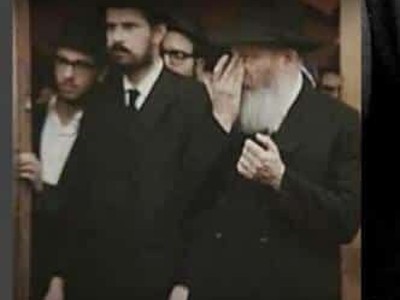
📖 Lubavitch calendar: "Tsethem le-shalom" - Farewell in peace
Community
✨ This is a special moment when the Rebbe saw off the guests who had come to him for the month of Tishrei on their way home.The Rebbe blessed each one as he stood at the entrance to 770 and watched as the buses of Hasidic departed until they were out of sight.📜A bit of history🕯️ In the early years, the trip to the Rebbe was expensive and difficult, and only a few could afford it.Therefore, each Hasidic community sent one representative — sometimes by drawing lots.Such a guest received special attention and often had the honor of a personal audience.🚶♂️ When it was time to return, the Rebbe went out to see off the guests.This event got its name"Tsethem Le Shalom"— "Farewell."The Rebbe blessed those who set off, walked a few steps with them and stood until the buses disappeared into the distance.🌿How the tradition has changed over time📖 Later, when there were many more guests, the custom of personal send-offs changed to a "general audience" (yehidut klalit).Before leaving, the Rebbe gave a special talk, after which everyone approached him and handed over a note with a request (Mr.) and received a dollar for tzadaka.✈️ In addition, the Rebbe often escorted andI hear- messengers who were going to a new place of their mission.💧Special moments📅1958 (תשי"ח):When Rav Gershon Mendel Herlick left for Italy, the Rebbe watched him leave from his own office—this occasion became special.📅1961 (תשכ"א):Before the first charter flight, organized by Rabbi Iche Mendel Lis, the Rebbe personally escorted the group and gave final instructions before departure.📅1970s:During one of these send-offs, the Rebbe suddenly burst into tears—tears welled up in his eyes. This very moment was recorded in a famous photograph.🕊️ These moments of "Tsethem le-shalom" remained forever in the memory of the Hasids - as a touching manifestation of love and spiritual connection between the Rebbe and his people.source:https://t.me/+8KbDy9dQVqAxZWE8
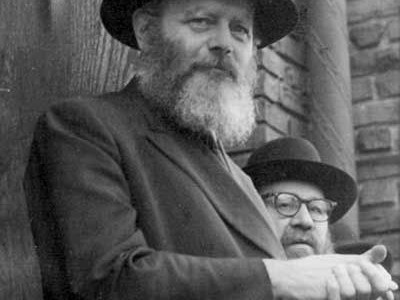
📖 Lubavitch calendar: "VaYakov halakh le-darko"
Community
"And Jacob went his way" - the beginning of a new stage in service.After the bright holidays of the month of Tishrei, the moment comes when every Jew goes "on his own way" - returns to everyday life, to his usual life.But he carries with him not just memories, but the light, inspiration and strength received in the holy month - to fill with them the whole next year, every moment of his work, study and prayer.📖The parable of Rebbe Rayatz about the words "And Jacob went his way"Rebbe Rayats gave an excellent example:💼 A merchant who comes to a big fair and buys a lot of goods.Returning home, he unpacks everything he brought and begins to use these treasures in his business.And every Jew after Tishrei:in the "seventh month, saturated with all good things," we are given spiritual goods for the whole year.Now it is necessary to unpack the rolls - to apply everything received in the service of the Most High, in life, among people, in every action.🕊 A Hasid once wrote to the Rebbe that he felt no change after spending a month with him in 770.The Rebbe answered him with this parable:“In the month of Tishrei, at the fair, we buy and pack.And when we return home - we need to unpack the packages - "fananderpaken di peklach".✨ May each of us unpack our "Tishrei packages" and fill the whole year with light, joy and service from the heart.📷 In the photo: The Lubavitcher Rebbe at the "Tsethem le-shalom" ceremony - sending off guests who return home after the month of Tishrei to the Rebbe.Behind stands the secretary - Rabbi Moshe-Leib Rodstein.source:https://t.me/+8KbDy9dQVqAxZWE8

Israel Open 2025 is a day of open hearts and new opportunities!
Community
Our community presented itself with dignity at this large-scale forum, where those who create modern Israel — a country of education, work, startups and traditions — met.🌿 Guests of our location got to know the activities of the community, educational and social programs, receivedgifts are special notebook booklets, created specifically for the event, with a description of our projects and areas of work.🍔 We offered visitorsdelicious kosher burgers— with meat, fish and vegetables, andhomemade desserts, which were very popular.✨ The day was held in an atmosphere of inspiration and unity: new acquaintances, professional advice, immersion in the culture of Israel and a concert of Jewish performers — a real celebration of life and common values!