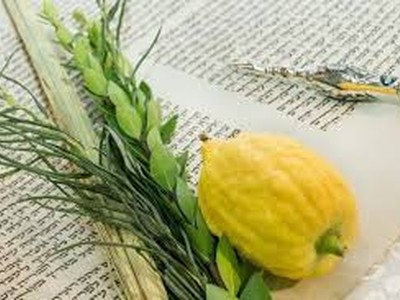
Saturday at Hol HaMoed
Community
On this Saturday, it is customary to rejoice more than usual and serve additional dishes on the table.Morning Prayer —Shaharit— differs from the usual Saturday only in that an excerpt is added to it"Let him rise and come"andGalelofPrayMusaf— a holiday, and it mentions Saturday.The Torah is read as it is done on a holiday.On Saturday, which falls on Hol HaMoed Sukhoth, it is customary in Ashkenazi communities to readThe Book of Cogelet (Ecclesiastes)ofAccording to one opinion, every Jew should read it independently from an ordinary book, without a blessing.According to another, it should be read in the synagogue with a parchment scroll, saying two blessings before reading:"He who commanded us to read Megila (scroll)" and“He who has kept us alive till now.”P.S. Arbaa Minim (four plant species) is not shaken on Shabbat.Source:Eliyahu Ki-Tov, “The Book of Our Heritage”http://shabat-shalom.info/books/Eliahu_Ki-Tov_Kniga/3.htm
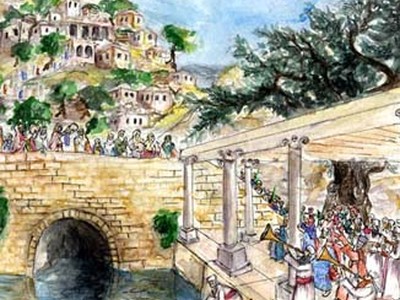
Today we celebrate Simhat Beit HaShoeva
Community
DefinitionSimhat Beit ha-Shoeva is a celebration that took place in the Temple in honor of the service of scooping water for pouring on the altar.EtymologyHebrew Phraseשמחת בית השואבהliterally means “joy of the House of Scoops”.According to a simple understanding, the holiday received this name because it was dedicated to scooping water and pouring it on the altar, as it is said in the prophet Yeshaya (12:3):“And you will draw water with joy.”The Jerusalem Talmud explains that this joy was the source from which they “drew”ruah ha-kodesh(holy, prophetic spirit), because it is joy that leads to prophetic inspiration. Thus it is said of the prophet Elisha (Melachim II, 3:15):“When the musician flirted, Elisha felt the hand of the Lord.”In the same Talmud, it is said that the prophet Jonah received his first prophecy after participating in the celebration of Simhat Beit ha-Shoev, which took place in the Temple.EssenceDuring the existence of the Temple, throughout the holiday of Sukkot, a special service was held every morning —Nisuh HaMayim(pouring water) The water for this was taken from the Shiloah spring in the City of David and carried to the Temple Mount. The procession was accompanied by great joy, singing, dancing and playing musical instruments.TimeThe holiday of Simhat Beit ha-Shoeva was held at night during the daysHol ha-Moed Sukhoth(intermediate days of the holiday). Inyom tovand Saturday was not celebrated, because it included playing musical instruments, which is prohibited these days — to avoid the risk of repairing them and violating Sabbath laws.SeatThe celebration took place in the courtyard of the Temple, which was calledEzrat ha-Nashim(“women's yard”), where women who made sacrifices were allowed to be. Before the holiday, wooden balconies were built, from which women could observe the event in order to avoid mixing with men.How the celebration took placeIn the yardEzrat ha-Nashimthere were tall golden lamps that lit up at the beginning of the evening. According to the Mishnah, the light from them illuminated all of Jerusalem. Pious and famous people danced with flaming torches, singing songs and praising the Almighty.The Levites stood fifteen steps betweenEzrat Yisrael andEzrat ha-Nashimand played harps, lyres, trumpets and other instruments.Rambam (Gilhot Lulav, 8:14) writes:“Ignorant people and those who simply wanted did not participate in this joy. Only the great sages of Israel, the heads of yeshivas and sanhedrions, the elders and pious people danced, clapped their hands, sang and cheered the people in the days of Sukkot. And all the people, men and women, came to see and to hear.”The celebrations continued until dawn. At dawn, two koenas at the main gate of the Temple (Shaar Niknor) trumpets into the pipes — it was a sign to go to the source of Shiloah to scoop up water for pouring on the altar. The procession solemnly carried water to the Temple Mount, where it was poured.Mishnah and Talmud about this joy"He who has not seen Simhat Beit HaShoeva has not seen true joy."When Hillel rejoiced at this feast, he said on behalf of the Almighty:“If you come to my house, I will come to yours; but if you do not come to my house, I will not come to yours.”Rabban Shimon ben Gamliel threw eight flaming torches into the air during the celebration and caught each one without touching the others.Rabbi Yehoshua ben Hananyah said:"When we rejoiced at Simhat Beit HaShoeva, our eyes did not know sleep. In the morning — sacrificetamid, then prayer, thenmusafthenbeit ha-midrash, then a meal, thenminhafollowed by the evening sacrificetamid, and from then until dawn — Simhat Beit ha-Shoeva. "Source:https://imrey.org/


Our dates: 24 Tishrei
Community
*24 tishrei5559 (October 4, 1798) — Alter Rebbe was arrested and sent to his first imprisonment in St. Petersburg.The Hasidim of the Alter Rebbe, on his instructions, were engaged in supporting Jewish families living in Eretz Yisrael, for which the Kolel Chabad organization was founded in 1787. However, opponents of Hasidism denounced the Alter Rebbe, the main idea of which was that Zalman Borukhovich (Alter Rebbe) was rebelling against the tsar, sending large sums of money to Turkey (then Russia's enemy).A police detachment arrived in Liozno to arrest Alter Rebbe and deliver him to St. Petersburg.Alter Rebbe did not arrest immediately, not wanting to interfere with the holiday, but late in the evening 24 Tishrei for Alter Rebbe still came. They put him in a black carriage (the "black funnel" of those times) and, accompanied by armed guards, sent him through Vitebsk to St. Petersburg.*24 tishrei5561 (October 13, 1800) — The second imprisonmentof Alter Rebbe in St. Petersburg.After the release of Alter Rebbe from his first imprisonment, the opponents of Hasidism continued the war. This time, the denunciation was sent not personally to the Alter Rebbe, as for the first time, but to the teachings of Hasidism as a whole. It was argued that the teachings of Hasidism as such contradict the idea of the material kingdom.The denunciation was accepted by the authorities, but unlike the first time when the "rebel" was brought to St. Petersburg accompanied by soldiers, before the second imprisonment, Alter Rebbe went in a free carriage. The imprisonment itself was also easier — the first time he was held in the Peter and Paul Fortress, and now — in the building of the Privy Council.Within two months, from 28 Tishrei to 27 Kislev, more than 20 meetings were held, in which experts involved in the study of religion, the ideas of the Cabal and the chronicles of Israel took part. Alter Rebbe answered all the questions easily, sometimes in Russian, sometimes in Hebrew (in this case, his son, Rabbi Moshe, translated what he said).After two months of investigations and interrogations, officials were convinced that the Torah of Hasidism did not contradict the material kingdom and 27 Kislev Alter Rebbe was released from prison.*24 tishrei5688 (October 20, 1927) — The sixth Lubavitcher Rabbi, Rabbi Yosef-Itzhok (Rabbi Rajac), leaves the USSR and settles in Riga (Latvia).After 12 Tamusa Rebe Rayats was released from imprisonment and returned home, it became obvious that Esection would not calm down. The danger of new imprisonment remained quite real and there was only one way out - to leave. Thanks to the efforts of the group headed by the deputy of the Latvian Seimas Mordehai Dubin, the Soviet authorities allowed the Rebbe Rayats to go to Riga. However, no permission to depart from his family was obtained - they wanted to leave them as hostages in order not to give the realization of the opportunity to conduct anti -Soviet activities.And although the permission for Rabbi Rajac to leave was a great victory, he did not want to leave the country without hisfamily. Dubin continued his efforts, and permission was granted to all members of the rabbi'sfamily to leave, but the authorities did not allow the rabbi's library to be taken out. Rebbe Rajac stated that he would not leave the country without a library and, in the end, Dubin's efforts allowed the rabbi to leave the USSR with his family and the library.When Rajac's rabbi was asked in Riga about his state of health after all that he had gone through, the rabbi replied: “If someone offers me to sell one moment of future torment for a billion, I will not buy it, and if someone wants to buy the past torment from me for a billion seconds, I will not sell it.”*24 tishrei5542 (October 13, 1781) — Yorzeit (anniversary of the departure from this world) of Yaakov-Yosef ben Zvi Ha-Kohen Katz from the Captive.Rabbi Yaakov-Yosef was a descendant of famous rabbis and cabalists — Rabbi Shimshon ben Pesach from Ostropol, Rabbi Yom-Tov Lipman Heller and Rabbi Yosef Ha-Kohen and received a good education (including considerable knowledge of the Cabal).Initially, he headed the community of Shargorod and was a hardwritten opponent of the born movement of Hasidism. However, meeting with Rabb Israel Baal Shem-Tow, he literally turned into his devoted supporter and closest student for several hours. This led to a conflict with the community and he had to leave the city. He headed the communities of Rashkov and Nemirov, and even tried to go to Erets-Israel, but to no avail and eventually became a preacher (Magid) first and then a community rabbi in the Volyn town of Polonne.Rabbi Yaakov-Yosef was the oldest and most educated (from the Talmudic point of view) student of Baal Shem-Tov, but after the teacher's death, the Hasidic movement was headed by the Mezheritsky Magid Rabbi Dov-Ber from Mezherich. Rabbi Yaakov did not become the head of any Hasidic community, but his work “Toldoys Yaakov-Yosef” (“The Story of Yaakov Yosef”) was the first book of Hasidism and had a great influence on the formation of the Hasidic movement.Opponents of Hasidism — mishnaghdim — bought the book and destroyed it. It even came to the public burning of the book (this happened in Brody in front of the house of Rabbi Yechiel-Michael from Zlochev). Misnagdim called the book "a vessel of dishonesty, a source of darkness, a container of all kinds of poisons," and the Hasidim, in turn, stated that "there was no book in the world equal to this one."Rabbi Yosef was the oldest student of Baal Shem Tov (he was even older than the teacher) and although the year of his birth is unknown, according to legend he lived 110 years.*24 tishrei5756 (October 18, 1995) — Yorzeit (anniversary of the departure from this world) Rabbi Chaim-Zanvel Abramovich (Rybnitsky Rebbe).The founder of the Ribnitsa Hasidic Dynasty Rabi Chaim-Zanwell was born in 1902 in the Moldovan town of Botshana. His father died when the boy was three years old, and he grew up at the court of Stefansta Rebbe - the Rabbi Matjag (Rebbe Matzl), whose follower he considered himself all his life. Reb Matsel replaced him his father and personally taught the child to read and write. Immediately, Chaim-Zanwell became friends with his peer and the future Skulian Rebe, and so far-Stefanacht Hasida-Leaseer-Star Portugal. When the boy grew up, Rebe Matsel sent him to the famous Chisinau Eshiva Tsyrelson, where he received a laughter (an analogue of Rabinsky diploma) from the hands of Ros-Ishiva Rabbi Eguda Libib Tsylson.Haim-Zanwell married Rebetzn Surke and served as a rabbin in different towns of Bessarabia, where he was found in the Great Patriotic War. In July 1941, he was deported by the Romanian occupation authorities in the Rybnitsk ghetto (Transnistria), survived the occupation and remained in Rybnitsa after the war, where he gained popularity as a miracle worker among the Jewish and non -Jewish population. His lifestyle was strikingly different from the generally accepted in the postwar Soviet era, especially with his asceticism. Rabi Chaim-Zanwell spent 6-8 hours praying daily, sprinkling his head with ashes from about three o'clock in the morning, paying much attention to frequent washing and other cleansing rituals, including starvation and sleep deprivation (simply letting it. Also, he, regardless of the weather, plunged into the Dniester. In the local Jewish community, Rabi Chaim-Zanwell played the roles of Mo "el, Raznik and Cantor in one person. He received thousands of visitors annually, mainly Moldovan and Ukrainian Jews. It was a real Hasidic tsadik, who miraculously preserved in the Soviet Union. Many families tried to visit him at least once a year, and this practice continued after his moving to the United States.In 1972, Rybnitsky Rebe received permission to go to Israel and settled in Jerusalem, and a year later moved to Brooklyn, where his childhood friend of Skulian Rebe and some other followers of the Ruzhin dynasty had already lived. After the death of his wife, Rabi Chaim-Zanwell, he led a semi-nomadic lifestyle, moving from the community to the community, from Florida to California until his health had deteriorated and he settled in the Jewish settlement of Monci in New York, where he was in the community's care. Here he quickly appeared followers and he even founded two fishing synagogues: in Monz and in the Brooklyn district Boro-Park (there, where the headquarters of Habad-Seven Seveni-"Seven Seven") is located).Source:chabad.odessa

Our dates: 25 Tishrei
Community
*25 tishrei5571 (October 23, 1810) — Yorzeit (anniversary of the departure from this world) Rabbi Levi-Itzhak ben Meir Derbaremdiker from Berdychiv.Rabbi Levi-Itzhak ben Meir was born in the town of Gusakov and came from an ancient rabbi family. Being a fairly young man, at the suggestion of his mentor, Rabbi Schmuel (Schmelke) from Nicholsburg, he went to Mezherich and became one of the students of Rabbi Dov-Ber from Mezherich (Mezheritsky Magid). He later worked in Lithuania and Ukraine and was the founder of Hasidism in central Poland.Rabbi Levi-Itzhak was one of the most beloved people of the tzaddiks, earning the nickname “defender of Israel” because in any unattractive deed of a Jew he tried to see something good. During prayer, he often addressed the Creator, calling him in Yiddish “der Baremdiker” (“merciful”), and this appeal became the name of his descendants (some of them until recently lived in Odessa).Rabbi Levi-Itzhak was a rabbi in several cities, but for the last 25 years of his life he held the post of rabbi of the city of Berdychiv. He did not become the founder of the dynasty, but he had many students, the most famous of whom is Yaakov-Yitzhak Ha-Levi Horowitz "The Seer from Lublin". According to Hasidic legend, after the death of Rabbi Levi-Itzhak, there was no longer a city rabbi in Berdychiv — all who held this position were called the sea of Horaa ("teacher").Rabbi Levi-Itzhak is buried in Berdychiv, and his grave is still a Hasidic pilgrimage site.*25 tishrei5600 (October 3, 1839) — Yorzeit (anniversary of the departure from this world) Rabbi Moshe Sofer (Khatam Sofer) from Pressburg.Rabbi Moshe was a renowned halakhic authority and leader of Orthodox Jewry, known in the Jewish world as Hatam Sofer, after the title of one of his books.Hatam Sofer held the posts of rabbi in the Moravian city of Dreznice and in the Prussian Mathersdorf, and from 1806 he became rabbi of Pressburg (Bratislava, now Slovakia, then Hungary), where at that time there was the most significant Jewish community in Hungary. Rabbi Moshe held this position for the rest of his life, founding the famous yeshiva in Pressburg, the largest since the Babylonian academies.Although Rabbi Moshe was opposed to the new teaching methods proposed by reformist leaders, he did not object to the study of secular sciences, as long as it did not interfere with the traditional way of life and served to gain a livelihood. In his struggle with reformist leaders, Rabbi Moshe used rather unusual methods for those times — caustic witty epigrams and bright slogans, such as “It takes more courage to strengthen rigor, not facilitate.”Also, Khatam Sofer put an end to the heated debate on whether the Shulchan Aruch can be considered the ultimate authoritative body of law, and now complete submission to the establishment of the Shulchan Aruch has become one of the fundamental doctrines of orthodox Judaism.Source:chabad.odessa

Our dates: 26 Tishrei
Community
26 Tishrei5589 (October 4, 1828) — Yorzeit (anniversary of the departure from this world) Rabbi Asher ben Aaron Perlov of Stolin.Rabban Asher was the son of the famous Rabbi aѓaron "Great" (Aѓaron ѓa-Goodol) from Carlin, the founder of the Hasidic Carlin Dynasty. After leaving this world, the movement was headed by a student of Rabbi Aѓaron, a rabby Ben Meir, who was a spiritual mentor of many Hasidic tsadaks, including Rabbus Asher. Rabbi Asher settled in the town of Stolin (near Carlin), and since then the Carlins of Hasidims have become known as Stolinsky (Carlin-Stolinsky). He was arrested as the head of the sect in 1798 and after his release again settled in Carlin.
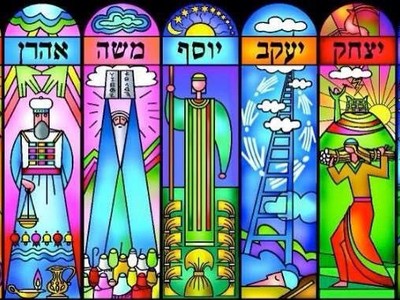
Today — 20 Tishrei
Community
Today20 tishrei, fifth dayHol HaMoedofUshpizin: A Kabbalistic concept meaning “guests” or “souls of the great righteous” who attend Sukkah during the festival of Sukkah.Uspizin:Yosef— one of the seven ushpizin (guests) who, according to the Kabbalah, attend sukkah (kuren) during the holiday of Sukkah. He is one of the righteous who symbolizes the spiritual qualities associated with this tradition. Yosef— represents yesod (base and connection)Rebbe Shmuel Schneerson — Rebbe Maarash(4th Lubavitcher Rebbe).https://jewishukraine.info/post/699/

Oshana Rabba — the seventh day of Sukhoth
Community
Oshana Rabba — the seventh day of Sukhoth📅 In 2025, Oshana Rabah comes on the evening of October 12.🌿 The essence of the holidayOshana Rabba is the final, seventh day of Sukhoth. The name means “Great Salvation” and is associated with prayers“Oshana!”— "Save us!" On this day, seven rounds are made around the Torah scroll in the synagogue, holdinglulavandetrog, as well as separately — branchesarabsVerbyAccording to Jewish tradition, it is in Oshana Slave that the Almighty "puts the seal" on the verdict of the year — determines what the rains, harvest and prosperity will be. Therefore, this day resembles Yom Kippur — a time of reflection, prayer and repentance.🕍 Historical RootsIn Temple times, the priests walked around the altar once a day, and seven times on the seventh day, saying,“Oh, Lord, save me! Oh, Lord, give me luck!”This day was called"day of shaking ofarava branches"—hibut aravot. Hence the current custom of beating the ground with arava branches at the end of the prayer.📖 Oshanoth PrayersDuring Sukhoth, ten special prayers are recited — Oshanoth, each dedicated to a specific topic: mercy, salvation, the greatness of the Creator, the people of Israel. In Oshan the Rabbi recites several such prayers in a row and goes around the Torah seven times.🌙 The Night Before Oshan RabahIt is customary to stay up all night, read a bookDvirim andTegilim(Psalms) Many plunge into the mikvah at dawn. In the morning, wear festive or white clothes — as a sign of cleanliness.Arava 💧 symbolismArava is the most water-loving of the four festive plants. On the day when the fate of the waters in the world is decided, its branches symbolize the request for rain and blessing. The leaves of the Arava resemble the mouth of a person — therefore, it embodies the prayer of those who have no other merit than sincere words to G-d.⚖️ Spiritual contentOur sages say:“If Rosh Hashanah is the day of recording sentences and Yom Kippur is the day of signing, then Oshana Rabah is the day of their final approval.”Even if the fate has already been determined, on this day sincere prayer can change the verdict.TraditionsThey make seven rounds around Torah.They beat the five branches of theArava on the ground.They pray for rain and a good year.In the evening, for the last time this year, they sit in a bitch, saying:“Thy will be done, that next year we may once again have the privilege of sitting in a bough made of the skin of Livyatan… Next year in Jerusalem!”✨ Meaning of the dayThe Oshana Slave is the moment when there is nothing left but prayer. Man stands before the Almighty without merit, only with an open heart, and says:“I am all prayer.”It is a day of joy, purification and hope when, according to the wise,The sky is leaning towards the Earth again.
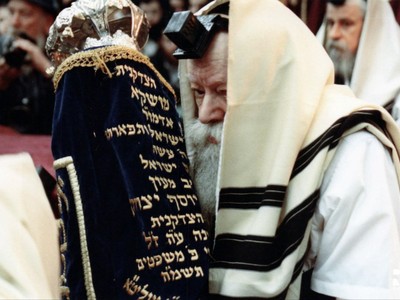
📖 Lubavitcher calendar: 10 customs of Chabad on Simchat Torah
Community
️1ლSitting in a bitch in Shmini Atzeret (in the diaspora)According to the custom of Chabad, on this day they also sit in a bitch — because of doubts, but blessings"Leishev Basukka"they don't talk. They try to drink water only in the bitch.️2ლKiddush before the hackathonAfter the evening prayer, they do kiddush, but do not eat bread — onlymesonot(baking).️3ლInviting the Rebbe to a hackathonWhen they readpsukimbefore the hackathon, the first and last verses invite the Rebbe. This is what is being done today in all Chabad communities of the world.4️ლHackfoot with the Rebbe in 770The Rebbe danced himself in the first and last hakaf.Until 1954 — with his father-in-law's Torah scroll, and then — withSefer-Toroy brothers from SlavutaofBefore the death of Rabbi Shmarjahu Guraria (1988), the Rebbe danced with him.5️ლTalukha (parade) — joy for othersAfter the minchi in Shmini Atzeret, they go out into the streets to bring joy to other Jews. The Rebbe said:“There should not be a single Jew who does not rejoice in the holiday!”6️ლKidush Rebbe in the eveningThe Rebbe conducted a short paintbrand before the hakafot at the Great Synagogue — the only time in the year he was seen doing a kiddush in the evening (he usually did it in his office).7️ლLate hackathonsAt 770, the hackathon on the night of Simchat Torah began at about 1:30 am — and were even more joyful than on the first night!8️ლ"Hatan Bereshit"The Rebbe went up to read the Torah in aliyah"Hatan Bereshit". This is the only time in the year that he was called by his full name:"Jaamod Adoneinu Moreinu we-Rabbeinu, Rabbi Menachem Mendel ben ha-raw Levi Yitzhak."9️ლEvening Paint Brangen & DinnerIn the evening, before sunset, the Rebbe went down to the farbrengen to the Great Synagogue, washed his hands for a meal, and after the avdala handed outKos Shel Bracha— a glass of blessing.🔟"Vayaakov aalakh ledarko" — and Yaakov went his own way (וַיֵּלֶךְ יַעֲקֹב לְדַרְכּוֹ)At the end of the paintbrand, the Rebbe pronounced these words as a sign that the month of Tishrei was coming to an end, and now it was time to bring the light and joy of the festivities throughout the year. Source:https://t.me/LubavitcherRebe770

First Sabbath after Simhat Torah
Community
The first Sabbath after the Simhat Torah has a special name —Shabbat Bereshit. We start the annual Torah reading cycle again and openThe Book of GenesisBefore us is the account of the creation of the world and man, the sin of Adam and Eve, the tragedy of Cain and Abel. Every word is familiar from childhood — but do we understand why all this was created?The Talmud describes a stunning scene of the future court: the Almighty comes out to the peoples with an unfolded Torah scroll and says:“Whoever has studied it, let him receive a reward.”The Romans answer:“We built markets, roads, baths — so that Jews could study the Torah!”The Persians say the same thing, and then the rest of the nations.But the Almighty does not say to them:“Liar!”He says‘Fools!Why “fools” and not “liars”?explains:Brysk Rav: In fact, they are right. Everything in the world is truly created for the sake of Torah study. It's just that when they built roads and palaces, they didn't think about it. Their actions objectively served the Divine purpose, but their intentions were different — so the reward does not belong to them.It turns out that the whole story revolves around one question:Does this lead to the study of Torah — or not?Rambamwrites: even the inactive rich does not exist in vain. He is planting a vineyard, and his grapes will one day be used as medicine to save the righteous. He orders to build a palace — and in it someone hides from death. Everything in the world is woven into the Divine plan — we simply do not see His calculations.Brysk Ravsaid: the Petersburg-Berlin railway was laid only so that one yeshivotnik could reach Volozhin. And the Trans-Siberian Railway — so that the yeshiva"Mir"escaped during the war and got to Japan.How to read the first words of the Torah:"Bereshit bar Elokim..."Rashi remarks that if it were “in the beginning,” the Torah would sayBE-RISHONA. But "be" can be interpreted asfor the sake ofofTherefore:“For the sake of the Torah and for the sake of Israel, G-d created the world.”Shabbat Bereshitteaches: the world does not exist "just like that", not by itself. He has a goal. And each of us can be a part of this goal if he turns his life into a means for studying the Torah and approaching the Creator.
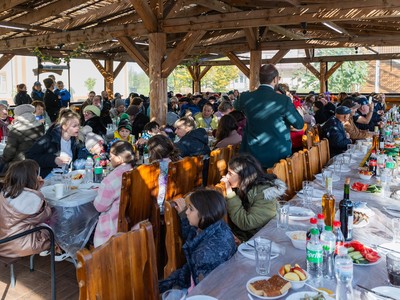
Simhat Beit ha-Shoeva ✨ holiday in Anativka! ✨
Community
What a joy it was! In the days of Sukkot, our community gathered in Anativka to fulfill the commandment and share the light of true Jewish joy —Simhat Beit ha-Shoevaof🌿 To the singing of live music, among the aromas of delicious food and the ringing laughter of children, hearts were filled with warmth and gratitude. Attractions and animators worked for the kids, and adults were happy to meet and communicate with friends.It was a holiday where they combinedthe joy of the commandment, the unity of the community and the spiritual exaltation. We felt the pulsation of holiness in simple human happiness, and the breath of the ancient joy of the Temple in music.🎵Simhat Beit ha-Shoevareminds us: when there is light, community and gratitude, Shekhinah is among us.
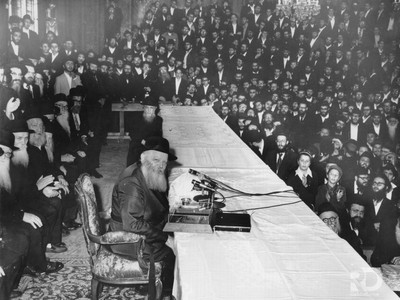
📖 Lubavitcher calendar: The first Saturday after the autumn holidays
Community
The Hasidim said: how a person will spend the Saturday of the Bereyshit section — the first Saturday after the autumn holidays — so it will pass the whole year. Therefore, everyone tried to spend this Saturday with special inspiration — studying the Torah and participating in the Hasidic brangen (a collection with songs, instructions and spiritual communication).Source:https://t.me/+8KbDy9dQVqAxZWE8