
Our dates: 16 seamstresses
Community
📌16 shevat 5629 (January 29, 1869) – Yorzeit (anniversary of the departure from this world) to Rabbi Borukh-Sholoma.Rabbi Boruch-Sholom (Rabash) was the first-born of the third Lubavitcher Rabbi Tsemakh Tzedek. After leaving this world, Rabbi Tsemakh Tzedek could not find a worthy leader and split into several branches, headed by the sons of Rabbi Tsemakh Tzedek, who settled in Kopys, Lyady, Nizhyn, Ovruch.The eldest son of Rabbi Tsemakh Tzedek, Rabbi Baruch Sholom is the only one of all the sons left in Lubavitches and he is the only one who did not create his own special branch in Chabad. Rabbi Rabash was distinguished by unusual modesty, tried neither in behavior nor in position not to stand out and stubbornly did not want to lead the Hasidic movement. His descendants were rabbis in various settlements of the Russian Empire, and his great-grandson in the male line was our Rabbi Menachem-Mendel Schneerson.source: chabad.odessa

Our dates: 19 sevats
Community
Shevat 📌19, 5700 (January 29, 1940) — Rabbi Levi-Itzhak's father arrives at the place of exile in Chile.Being a “particularly dangerous prisoner”, Rabbi Levi-Itzhak was sent to the most remote place — Chile, which was one large prison that did not need protection, since it was impossible to escape from there (140 kilometers of deserts and swamps).The winters in Chile were cold, and Rabbi Levi Yitzchak arrived there late at night. It was dangerous to stay outside, and Rabbi Levi Yitzchak and another Jewish prisoner went to the tailor, a Jew who had been exiled here many years ago and married to a non-Jewish woman. Rabbi Levi-Yitzchak and his companion went to his house in the hope that he would let them in at least until morning, but when he saw who was standing in front of him, he closed the door. With no other choice, the new arrivals continued walking until they noticed a faint light in a window. The non-Jewish owner looked at them and allowed them to enter.Rabbi Levi-Itzhak's position was very difficult, although when his wife, Rebbetzin Khan, managed to break through to him, it became easier for him. Rabbi Levi-Itzhak spent 4 years in Chile, until his departure from this world.Rabbi Levi-Itzhak is buried in Alma-Ata.source: chabad.odessa

Our dates: 20 seamstresses
Community
*20 seamstresses2199 (1562 BC) — Birthday of Asher ben Jacob.Asher ("happy" or "fortunate") was the second son of our forefather Jacob and his wife Zilpah and the eighth son in the general order of birth of Jacob's children. During the distribution of the territory of Eretz Israel, his descendants received the territory in the north of the country - in the Galilee and on the coast of the Mediterranean Sea. The land of Asher's knee provided everything needed for the service in the Temple, including oil and blue dye for the high priest's clothing. Food for the royal table was also delivered from his lands. Asher's knee is also known for not producing a single judge, king or general for the country.According to some sages, this day is also the day of his yorzait (departure from this world).
Topic of the day:🌳 Fifteenth Shevat - New Year of Trees
Community
Onthe fifteenth day of the month of Shevat, Rosh Hashanah La Ilanot — the New Year of the Trees - is celebrated. This day is associated not only with the laws of the fruits of the Land of Israel, but also with a deep spiritual meaning in the service of man to the Almighty🌿 Habits of the dayThe Rebbe emphasized that Tu BiShvat is a time of spiritual strengthening. In 5747 (1987), he called for gatherings and colorbrings, intensification in Torah study, prayer, and especially — to follow the paths of Rebbe Rajac, whose yorzait falls on the close days of the month of Shevat.It is customary to eat fruits, especially the fruits of the Land of Israel, and, if possible, say the blessing of "Sheehean" for at least one new fruit. The Rebbe also mentioned the habit of eating haruv (carob), which is associated with tales of the Talmud about miracles that happened to the righteous.On this day, tahanun (penitential prayers) are not said, and the day before, on Minhu 14 Shevat, tahanun is also omitted.At the same time, the Rebbe did not support the transformation of this day into a "holiday of tree planting", emphasizing that this is a secular tradition and should not be mixed with halachic customs.📖 Why "Fifteenth Shevat"In his conversations, the Rebbe more often used the full name — "Hamisha asar be-Shvat" ("Fifteenth Shevat"), rather than the abbreviated "Tu BiShvat", emphasizing the respectful and traditional style of expression.🌱 Spiritual meaning — a person as a treeThe Rebbe often explained this day through the verse, “Man is the tree of the field.”Like a tree, a person has three levels:The roots are hidden faith, the source of vitality.The trunk and branches are the fulfillment of the Torah and the commandments in practice.Fruits are influencing others, spreading goodness, and bringing Jews closer to the Torah.The "young sprout" is especially important: education at an early age forms the entire future of a person. Therefore, the main responsibility lies with the "gardeners" — parents and educators.In order for the tree to grow correctly, it is necessary to remove weeds (harmful effects) and water with "living water" — Torah, because "there is no water except Torah".🍎 Serving with JoyIf bread and vegetables symbolize the necessary service, then fruits are a pleasure. They hint at a higher level — serving the Almighty with joy and taste, when the very connection with G-d brings pleasure.Let the FifteenthShevat be for each time of renewal, growth and good fruit — in the Torah, in the mitzvot and in the impact on the environment.📖 Lubavitcher calendar
Ayom-yom: 17 Shevat
Community
Today — 17 Shevat 5786On the Sabbath of the weekly chapterBeshalach5621 (1861)Tzemach Tzedekuttered a maamar that begins with the words“Reu ki Ashem…”, which was subsequently printed inLikutey ToraAfter that, he told his son,Rebbe Maarashu:on Shabbat Beshalah 5565 (1805), this same Maamar was uttered by his grandfather —Alter RebeN o t a r yAlter Rebbe then called him to himself and said:in 5529 (1769), when he was in Mezherich,Magidcalled him and said:on Shabbat Beshalah 5516 (1756)Baal Shem Tovpronounced maamar on a poem«וישב הים לפנות בקר לאיתנו»—"And the sea at dawn returned to its condition (to its strength / original state)»,explaining the wordle-eytanoHow"to your condition"— according to the interpretation of the sages.A year after the departure of Baal Shem Tov (5521), "Magid continued," he appearedto him and repeated this maamar, adding an explanation of the words:“do His will — not just His word”,that is, the ministry should not be formal, but internal — in accordance with the Divine will itself.And the same day, Magid said, my Master came to me again to repeat this maamar.Then Magid told Maamar Alter Rebbe and added an explanation about the riverGinai, which, according to the Talmud, gave way to the rabbiPinchas Ben Yair, —that in its essence this phenomenon is similar to the section of the Red Sea.Completion of Tsemakh-TzedekTzemach-Tzedek summed it up by saying:“Today I had Baal Shem Tov, Magid and my grandfather (Alter Rebbe), and everyone gave me this maamar in their own style.”And after a few hours, he called Maarash again and added his own explanation of the maamar.📖Lubavitcher calendar
Page of History: 🕍 Stender (amud tfila) and its meaning in the Hasidic tradition
Community
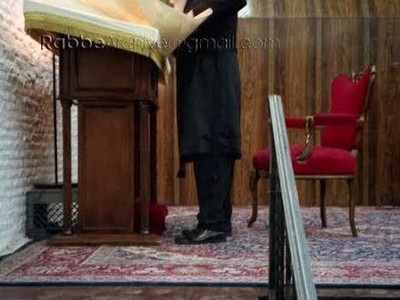
Stenderis a special prayer cabinet or pupil, behind which there isshaliakh-zibur (khazan)— the one who leads the public prayer. In most synagogues, it is located to the right of theAron-Kodesh“The Ark with the Torah scrolls.”The stander is more than just a handy cider stand. This is an established place that symbolizes the special role of the hazan as a representative of the entire community before the Almighty. As he prays on behalf of all, as a sign of respect for the community, he stands throughout the prayer.📜Historical originAfter the sages established the obligationof public prayer three times a day and permanent minyans appeared in the Jewish communities, a special place was determined for the one who leads the prayer.In the days of the sages, the place of the chazan was located just below the floor of the synagogue. This was done intentionally — so that the prayer would be said with humility and a broken heart.This is where the Talmudic saying about the chazan comes from:"iored leafnei a-tave"—"the one who goes down in front of the ark"In a literal sense, he was actually going down a few steps as he approached the place of prayer.Even in the synagogues of the eastern communities, where the hazan often prays from the central bimah, in most cases there is still a separate amud located to the right of the Aron Kodesh.🔥Spiritual meaningIn the Hasidic and Kabbalistic explanation, the stander is compared toaltar of incense (mizbeah a-ketoret)which was inside the Temple.Just as sacrifices were offered on the altar, expressing man's connection with the Creator, so today prayers — which replaced sacrifice — are “offered” from the stander upwards, connecting the Jew with G-d.Therefore, the place where the chazan stands is considered as a spiritual center of service.👑Standers RebbeOver the years, the Lubavitsky Rebbe had several standers, each with its own story.In the first years after taking the leadership, the Rebbe refused to use a special stander at all and prayed at an ordinary table in the "small hall".On weekdays he sat while praying, andSchmohne-Esréalso spoke there.Saturday for PrayerAmidastill put a separate stander in the southeast corner.It was not until 5712 (1952) that the Rebbe adopted the first permanent stander.Subsequently, new ones were produced:▪️ second — larger (5715 / 1955)▪️ third — wider and more beautiful, with a small door and a retractable shelf for cider (5719 / 1959)🪵Fourth standerIn 5722 (1962), students of the craft school decided to make a new, special stander for the Rebbe. The drawings were sent to the secretariat and the project was approved.The stander was made by a student of the school — Rabbi Shimon Meshali.In the month of Elul, the Hasidim brought him to the Rebbe, and on the eve of Rosh Hashanah in 5723, he was handed over to him.Receiving the gift, the Rebbe explained its inner meaning: the stander is an inanimate object, a symbolbitumen(self-removal and humility), which especially corresponds to the spirit of the month of Elul — a time of preparation and modesty before the Almighty.📖Additional useIn addition to prayer stands, over time, others were made for speaking conversations. (sihot), the distribution of dollars, brochures and other blessings that the Rebbe personally gave to thousands of people.So the simple-looking subject became part of the history of Hasidic ministry and a symbol of the connection between the congregation, the Rebbe, and prayer.📸In the photo: old Rebbe standers and a new one📖Lubavitcher calendar

Ayom Yom: 18 Shvata
Community
The Tzemach Tzedek told his son (my grandfather, the Rebbe Maharash) that the maamar “Umareyhem uMaaseyhem,” presented in the book “Torah Or,” in the section “Yitro,” was the first maamar delivered by the Maggid after he assumed leadership of the Chassidic movement. This took place on the festival of Shavuot in the year 5521 (1761).The Alter Rebbe heard this maamar from Rabbi Mendel of Horodok, the author of “Pri HaAretz,” who was present at the time. The Rebbe, however, presented the maamar in his own distinctive way.source: chabad.org
A page of history: 📸 Images of Lubavitcher Rebbe in the Chabad tradition
Community
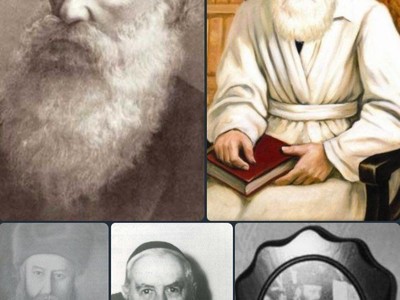
In Chabad Hasidism, images and photographs of our Rebbe have special spiritual value. It is not about memory or history, but about a living connection. The face of the tzaddik is seen as an expression of his inner essence, so even looking at the portrait can awaken awe, strengthen faith and give strength in the service of the Almighty.That is why such images have always been treated with reverence and great caution.🕯️ "Rebbe's Face Representation"The Hasidic sources mention the concept of "ציור פני הרב" — to imagine the face of his Rebbe. When the Hasid is not near the mentor, he evokes his image in his memory or looks at the photo. Such contemplation helps to feel aconnection, to gather inwardly, to get rid of fear and to gain strength to follow the path of Torah and power.Photography becomes not a souvenir, but part of a person's spiritual work.⚖️ Respect for imagesThe Rebbe emphasized that such images should be treated with the utmost respect. There is a well-known case when the Rebbe Rajaca's photograph was accompanied by images of other people — the Rebbe strongly opposed, considering it a humiliation of holiness.For the same reason, he rejected the offer to issue a postage stamp with a portrait of Alter Rebbe: the stamp is crumpled, stamps are put on it, and it would look like disrespect.From this it can be seen that the photo of the Rebbe almost equates to a sacred object.👑 What images have been savedAuthentic portraits or photographs of Alter Rebbe, Tsemakh Tzedek, Rebbe Rashab, Rebbe Rajac, and Lubavitcher Rebbe have survived.There are no reliable images about the other Rebbe — Baal Shem Tov, Magid from Mezhirich and Mitler Rebbe. Even the approximate appearance is unknown to us.Baal Shem TovThe well-known "portrait" of Baal Shem Tov does not really belong to him. The Rebbe explained that, according to oral tradition, no of his images had survived. In addition, historical studies have shown that the painting depicts another rabbi from Germany.So, we do not have an authentic portrait of Besht.🖼️ Alter Rebbe and Tsemach TzedekThe image of Alter Rebbe is known for a drawing made during his imprisonment in St. Petersburg. When the copy reached Tzemach Tzedek, he looked at it with special trepidation for a long time and attested to its authenticity.Tsemakh Tzedek was also once secretly painted by an artist. Subsequently, the figure was corrected, and it was this version that spread among the Hasidim.❓ Rebbe Maarash and RashabThe exact portrait of Rebbe Maarash has not survived. It is known, however, that he was very similar to his grandson, Rebbe Rajaca, so his appearance is represented by this similarity.Rebbe Rashab, on the contrary, deliberately avoided photographing. Only one photo was taken for documents, and later, according to the memories of the family, a more accurate portrait was created.📷 Rebbe RajacMany photos have been preserved from Rebbe Rajac. Even in the difficult conditions of imprisonment, he refused to be photographed on Shabbat and agreed only after its completion, insisting that the kippah and tzitzit be visible.Sometimes he himself sent his photos to the Hasidim, realizing that one look at the image of the Rebbe can support and strengthen a person.🌟 Lubavitsky RebbeIn the early years, the Rebbe discouraged photography and reminded that Hasidism was an internal work, not an external effect. He sharply opposed turning “photos” into an end in themselves.But when the filming served to spread the Torah and Hasidism, he gave permission. Thanks to this, a rich photo and video heritage has been preserved today.DescriptionIn the Chabad tradition, the image of the Rebbe is not a decoration or a historical exhibit. It is a means of communication, a reminder of the mentor, and a source of spiritual strength.The main thing is not the photograph itself, but the inner awakening that it evokes in the Hasidic soul.📸 In the photo: authentic photos of Lubavitsky Rebbe. Photo 7 — Lubavitcher Rebbe; this is the only photo of the Rebbe that hung in the Rebbe's house. source6📖 Lubavitcher calendar
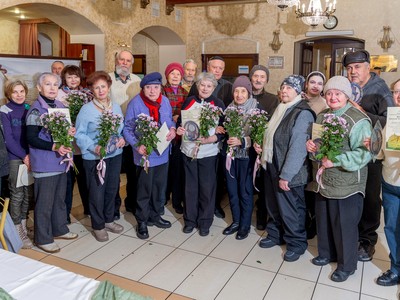
January gave us another warm day — Birthday Party Day
Community
January gave us another warm day —Birthday Partyfor the faithful of our communityof the Golden AgeN o t a r yWe continue this tradition every month not "for show", but from the heart.Because life is behind every name.Behind every glance is experience.Behind every wrinkle is a story you want to cherish.Weproud ofYou;Wewe are worriedYourself.We are yourespect— truly, with gratitude and warmth.May there always be light in your home.Let health hold fast like faith.Let there be people around who care.And let each new day find you in peace, joy and love.Happy Birthday. Mazal Tov!You are our rock, our memory, and our heart.
Ayom-yom: 19 Shvata
Community
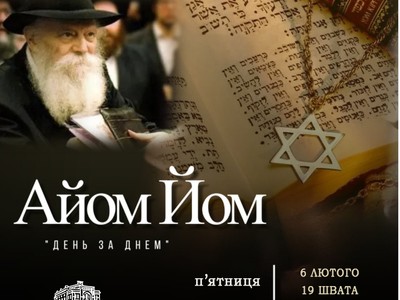
Today19 Shvat 5786N o t a r ySaturday Eve, Weekly ChapterYtroN o t a r y📌In the year 5700rabbi Levi-Itzhak Schneerson, the Rebbe's father, arrived at his place of exile in Chiila, Kazakhstan.The first commandment of commandment (mitzvah asa), as Rambam writes:“To know that there is a First Being (First Cause) who brings into existence all that exists… and to know this is a commandment, as it is said: 'I am the Lord your G-d.'”This is a commandment that belongs to the mind and intellect.That is, despite the fact that every Jew believes in the Almighty by simple faith, and his heart is whole with the Lord, it is the duty of reason and thinking to bring this faith to knowledge and cognition.This is the meaning of the words: "to know that there is a First Being" —so that a person exactlyknewthis, comprehended with reason and understanding.As it is said, “Know G-d, the G-d of your father, and serve Him with a whole heart.”and it is also written: "And you will know today...".Source:📖 Lubavitcher calendar
Page of history: 📍 Oel Rebbe Rajaca - the resting place of the Sixth Rebbe
Community
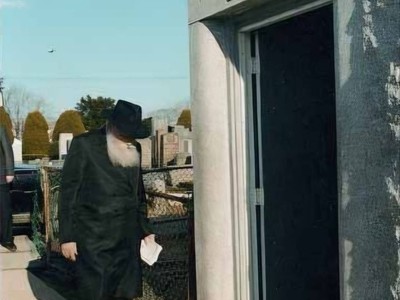
Oel (literally "tent") is the resting place of the Sixth Lubavitcher Rebbe, Rabbi Yosef-Yitzchak Schneerson (Rajac). It is located in the Montefiore Cemetery in Queens, New York. For the Hasidim of Chabad, this is not just the tomb of the righteous, but the spiritual center — a place of prayer, petitions and inner connection with the Rebbe.It was here that the Seventh Rebbe, Menachem-Mendel Schneerson, regularly came to read letters from people around the world and pray for them.🏗 Creation of OelAfter the departure of Rebbe Rajaca 10 shevat in 5710 (1950), a special committee for the construction of Oel was established. His task was to erect a worthy structure over the burial site and collect donations among the Hasidim and Rebbe admirers.Everyone who participated in the construction received a personal letter of gratitude. Famous rabbis and public figures of Chabad participated in the work of the committee.Rebbe's 🕯 custom of visiting OelThe Rebbe came to Oel all the time. In the first years — on the eve of the new moon, on the 15th of the month and on special dates of the Hasidic calendar; later — even more often, including on Mondays and Thursdays.He brought letters with him asking for blessings, read them on the spot and left them at the grave.At the direction of Rebbe Oel, a roofless structure was built to allow koenas to enter. A partition was installed between the graves and the place of prayer in accordance with the requirements of halakha. Over time, mikvahs, training facilities, and a visitor training building appeared nearby.Today, tens of thousands of people come here every year, especially 10 shevat, 3 tammuz, before Rosh Hashanah and on other special days.✨ Spiritual significance of the placeThe Rebbe spoke many times about Oel's holiness. He emphasized that whoever wrote the letter and laid it on the grave with the sincere faith that the Rebbe was reading it would receive an answer and help.In one of the conversations, the Rebbe explained that the holiness of this place is similar to the holiness of the Land of Israel. He also noted the difference between the graves of the righteous: there are places that cause a feeling of burden, and there are those that give joy and elevation of spirit. Oel Rajaca belongs to the second type — a person feels inner strengthening even before the beginning of prayer.📜 "Azkir al ga-Zion" — "I remember at the grave"The most common response of the Rebbe to the request for blessing was the words: "Azkir al ga-Zion" — "I will remember at the grave".For the Hasidim, this was not a formality. The Rebbe explained that such a mention was already a full-fledged blessing, and sometimes even the greatest possible one.There are many stories when real salvation, healing, and miracles took place after such an answer. And sometimes the Rebbe said that he had already mentioned the person at the grave, even without leaving his office — as if the spiritual connection is not limited to physical distance.Oel's Visiting 🚶♂️ HabitsOver time, special traditions of behavior have developed:— knock on the door three times before entering;— recite special prayers ("Maane lashon");— do not wear leather shoes;— mentally imagine the image of the Rebbe;— letters with requests are torn and placed on the grave;— before visits, try not to eat (but you can drink).These customs were partly established by the Rebbe himself, partly adopted from his personal conduct.🌿 Not the center, but a place of silenceDespite Oel's immense importance, the Rebbe did not want to turn it into a permanent community center. He never stayed there on Shabbat or holidays and did not even agree to install a washbasin, preferring to return to wash his hands in 770.Oel was to remain a place of prayer, not gathering.TodayNowadays, Oel remains one of the most visited Jewish holy places in the United States. People come here for support, advice and inner strengthening.For thousands of Hasidim, this is a living point of connection with the Rebbe — a place where requests turn into prayer, and prayer into hope.Source:📖 Lubavitcher calendar
📖 The Weekly Chapter of Ytro — Sinai and the Gift of the Torah
Community
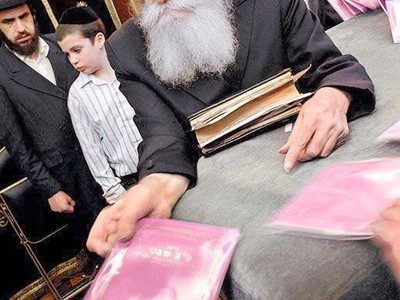
🔹 The weekly chapter "Ytro" tells about the main event of Jewish history — the gift of the Torah on Mount Sinai. The Exodus from Egypt gave freedom to the body, and Sinai gave direction to the soul. Here the people of Israel become not just a free, but a holy people of the Most High.🔹 The chapter is named after Ytro — a man from the outside. Hearing of the miracles, he came and confessed the truth. This teaches: Divinity can be seen by those who are willing to change themselves rather than remain bystanders.🔹 On the advice of Yitro, Moshe creates a system of courts. The Torah requires not only spirituality, but also order in society. Holiness should be manifested in justice, responsibility and care for everyone.🔹 Before Sinai, the people prepare for several days. Meeting G-d requires preparation and inner cleanliness. They do not come to holiness by chance — they go to it consciously.🔹 The Ten Commandments are given to all the people at the same time. This is not a personal revelation of the prophet, but the collective experience of millions of people. Therefore, the connection with the Torah is the basis of all Jewish faith and tradition.🔹 After Sinai, heaven and earth are united. Material things can become holy through mitzvot. It is in everyday life that the Divine Presence is revealed.✨ The main lesson: true freedom is to accept the will of the Almighty. By saying “naase ve-nimma,” the Jews made a choice to be the people of the mission — and that choice continues every day.Source:📖 Lubavitcher calendar