
Ayom Yom: 25 Nisan
Community
Today is 25 Nisan 5786The work of each person corresponds to its essence and dignity. Anyone who is able to drill pearls or cut precious stones, but is engaged in baking bread — and it is clear that this is only an example of service to the Almighty — then, although this occupation in itself is extremely necessary, for such a person it is considered a sin.Source:Lubavitcher calendar
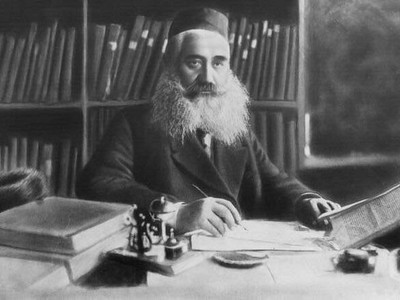
Rabbi Shmarjau-YehudaMedalla: Rabbi of Moscow who died for the faith
Community
Among the thousands of Jewish martyrs of the Soviet era, there are names that history has almost absorbed. One of them is Rabbi Shmarjau-YehudaMedalya, the chief rabbi of Moscow, who was shot in 1938 for "spreading Judaism."✡️ The Path to the Top of RabbinismBorn in 1872 in the Hasidic family of Cabbage, the youngSchmarjau studied in the famous yeshiva Slobodka, where he gained the reputation of "Kartinga" — a prodigy who shows great promise.Subsequently, he became close to the Lubavitcher movement, became a trusted envoy of Rebbe Rashab, and participated in numerous secret missions in defense of the Jews of Russia. The Rebbe especially distinguished him, calling him in the language of the Hasidim: "tiferet she-be-tiferet" — "greatness out of greatness".🕍 Years of serviceRav Medalya held rabbinical posts in Tula, Karlovychi, Korlychy, and later in Vitebsk, where he launched a wide public activity. He participated in rabbinical congresses in Vilna, St. Petersburg and Warsaw, represented the Vitebsk province at all-Russian conferences, and in 1912 attended the founding congress "Agudat Yisrael".In 1933, he was appointed Chief Rabbi of Moscow — and he accepted this position, knowing perfectly well what risk he was taking.🔒 Arrest and deathOn 2 Shevat 5698 (January 1938), the Rav was arrested by the NKVD. Three months later, a trial took place — and the verdict: shooting. The next day, 25 Nisan 5698 (April 1938), the verdict was carried out.For many years, the family did not know about his fate. Only in 1964 did the Soviet government officially announce his death. In 2008, a burial place was established — the village of Kommunarka near Moscow, one of the main firing ranges of the Stalin era.🕯️ His legacyRav Medal had six sons and six daughters. His son, Rabbi Moshe, died at the hands of the NKVD in 1936. Rabbi Hillel's son became Rabbi of Antwerp and leader of the Mizrachi movement in England.Rav Medallia did not run away or hide. He continued to raise the parishioners of the synagogue on Arkhipova Street, urging them to adhere to the Torah and commandments — despite all threats.He knew the price, and he paid it."Remember such people — they kept the Jewish fire in the darkest times"Source:📖 Lubavitcher calendar

Psychologist page: 🌿 Calm your mind with these thoughts
Community
Didn't work out?So, now is not the time or it is not for you. And if not yours - there is something better ahead. And very often this is exactly what happens.Did something go wrong?Maybe it saved you from more difficulties. Sometimes refusal is also a form of protection.Disappointment is also a result.It helps to understand where you should not return.Loss is not always a negative.Sometimes it makes room for something new, important and necessary.Didn't accept, didn't support, didn't choose?It's not about you - it's about others. What is yours will not escape you.Sometimes inner peace comes not when everything works out, but when we start looking at it differently.source:HealthPsychologyU

Psychologist's page: The balance between thought and action moves us forward to the goal.
Community
The boatman was transporting the man to the other shore. He noticed the inscriptions on the oars: "Think" on one, "Act" on the other.- Why is this? the man asked.The boatman silently began to row with only the "Think" oar. The boat was spinning in place.- Before, I thought a lot, made plans, but did not move forward. Spinning like now.Then the boatman changed the oar and started rowing only "Action". The boat spun in the other direction, but remained in place.- Then I rushed into things without preparation. I spent my strength, but there was no result.After that, the boatman took hold of both oars and led the boat straight ahead.- Since then I know: thought without action is a movement in circles. And action without thought is the same. Only together they lead to the shore.As they swam to the shore, they saw a beautiful house, and the boatman added:- I built it when I learned to row with two oars.✨ The balance between thought and action moves us forward towards the goal.source: HealthPsychologyU

Psychologist's page: The technique of falling asleep quickly
Community
Often we are prevented from falling asleep by a continuous flow of thoughts and worries. We offer two techniques that will help distract the brain from the internal dialogue.1️⃣ "Blinking on the contrary"🔹 Close your eyes, relax your facial muscles, open your teeth. Breathe slowly and calmly.🔹 Open your eyes for a second and immediately close them again.🔹 After 10 seconds, repeat.📌 An unusual action helps distract the brain from obsessive thoughts.2️⃣ "Method of scouts"🔹 Lie on your back, straighten your shoulders. Take a few cycles of deep breathing and relax.🔹 With closed eyes, slightly roll the eyeballs upwards - without tension, so that the eyes remain relaxed.📌 This natural position of the eyes during sleep signals the brain that the body is already in a state of falling asleep.source: HealthPsychologyU

Psychologist's page: A space where you can be yourself
Community
Sometimes people just hear our words.And sometimes - they understand us, even when the words come out confused.Sometimes our thoughts look like a tangled ball in our head. We try to explain, but phrases break off, get lost, don't sound the way they feel.And then the same people appear nearby. The ones who say, "Go ahead, I'm listening," when you're having trouble formulating an idea. Those who listen without judgment. The ones who can just be there for you in your confusion, until the chaos in your head gradually begins to make sense and you feel like you can breathe again.Such people are a real gift.Ability to speak openlylive life out loudto feel that you are seen and understood -it is one of the most precious sensations we can experience.If you have such a person in your life -tell her about it. Sometimes one "thank you for being there" has a lot of powerAnd if now it seems to you that there is no one around who could listen like this -please remember: you are not alone.There are people who are ready to support. You deserve support. You deserve to be heard.Sometimes a conversation with a psychologist or psychotherapist can become the very safe space where thoughts gradually find form, and feelings - words.You don't have to carry it all alone.source: HealthPsychologyU

🌾 Sephirat HaOmer: The Spiritual Work of 49 Days
Community
✨Hasidic Content: Why Now?Passover is a time of revelation from above. Every Jew receives a high spiritual insight regardless of his personal level. That is why the Passover Haggadah says:“The King of kings himself, the Holy One, blessed be He, appeared to them and delivered them” — without taking into account their personal merits.But such a "light from above" does not change a person from the inside. The animal soul (nephesh a-behemite) remains unchanged. For this purpose, the data of the 49 days of the Sephira is the time of personal labor, which can not be replaced by any external light.After such a double preparation — a revelation from above on Passover and a personal work in the days of Sephira — the Jewish people become able to accept the Torah on Shavuot. The gift of the Torah combined the upper and lower, the outer and the inner.This is relevant every year: Passover gives us an impulse from above. Sephira is our task. Shavuot is the fruit.🐂Why is Omer's sacrifice made of barley?All the cereal offerings in the Temple are of wheat, the food of man. Omer — from barley, cattle feed.Hasidism explains: the work of the days of Sephira is aimed precisely at cleansing the animal soul. Barley is a symbol of what they work with these days (Sota״ה 14a; D Usfartem).⚖️Alaha: the commandment of the Torah or the ordinance of the wise?Nowadays — without the Temple and the sacrifice of Omer — there is a dispute over the status of the account.Alter Rebbe in "Shulchan Aruch" gives both points of view and decides: the main alaha — today the account is the decision of the sages, in memory of the Temple.Hence the prayer immediately after the count:"May the Merciful restore the service of the Temple in its place soon, in our days" — because now it is only "Zeher la Mikdash", and we pray for the opportunity to fulfill the commandment in its entirety.👑If the Messiah comes in the middle of the Sephira — or continue to count?The Rebbe said, “Yes, and with a blessing.”Argument: The Torah does not say “from the day you bring the Omer”, but “from the day you bring it” — that is, from the day intended for bringing, if there is an opportunity to carry it out. As soon as this becomes possible, the account acquires the force of the Torah commandment, even if the sacrifice has not yet been made.In addition, the Rebbe relies on the decree of the Munkach Rav (based on the Radbaz): the essence of the commandment is to "countfifty days", that is, to reach Shavuot. Therefore, the account before and after the coming of the Messiah is one (Conversation Aharon Shel Pesach 5751; Sefer HaSihot, Part 1, p. 447).🔢49 days = 49 facets of the soulAccording to the Kabbalah, 7 weeks of Sephira correspond to 7 qualities (medot):Hesed · Gwura · Tiferet · Netzah · Year · Yesod · MalchutEvery week — purification of one quality. Every day within the week — "gratitude" (chesed she-bechesed, guura she-bechesed, etc.).Bottom line: 49 specific spiritual works — a complete correction of the entire system of middlings, with all the details, both in the animal soul and in the Divine.In the maamarim of Hasidism, it is explained in detail how each quality manifests itself before the fugitive (in nefesh a-behemite) and what it should become after him.🌙Why do they count at night?The wordספירה "" — Sephira — is related to the words "radiance" and "clarity" (ספירות ובהירות). The essence of the Sephira is to illuminate and purify the midot with the light of holiness.Therefore, at first, the night is the image of the honey before labor, in their raw state. Through the work of Sephira, the light comes — the morning comes.Night → labor in the → morning. This is the order (Likutey Torah, Bemidbar 16; a-Yom Yom, 10 Iyar).✅ It is customary to study the treatise "Sota" — on a sheet per day (exactly 49 sheets). Why "Sota" and not another treatise with 49 sheets? — see “Torat Menachem”, the second day of Shavuot 5719, §21 — the answer is unexpected.🕊️In the future.”The Rebbe said at Lag ba-Omer 5740:with the coming of the Messiah, the mourning of these days will be canceled — and they will become days of joy.Source:📖 Lubavitcher calendar

Ayom Yom: 26 Nisan
Community
Today is Nisan 26, 5786, the 11th day of the Omer📌 5751 (1991), the Rebbe gave a special talk about a Jew going out dancing in the street, expressing his joy and gratitude for miracles. (In the context of events related to Saddam Hussein, erase his name.)From the conversation of Rebbe Rashab:Hasidism makes the demand: "And he washes his flesh with water, and puts them on."This means that the intellectual comprehension of Hasidism must necessarily "wash" the flesh itself and wash away everything that is adjacent to it — all the habits that the material body dictates. Only after that you can dress in "sacred robes".📖 Lubavitcher calendar
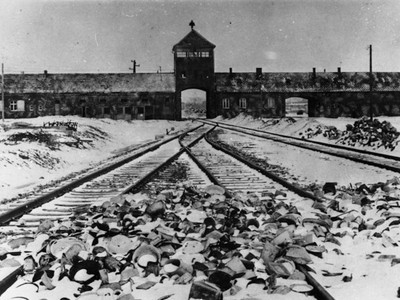
Holocaust 🕯 Memory: Why shouldn't grief obscure Nisan's joy?
Community
Thememoryof the six million martyrs who perished in the fire of the Holocaust is sacred to each of us. However, in the Jewish tradition, even sorrow has its own laws and its own time.The Lubavitcher Rebbe in one of his conversations (11 Nisan 5737) raised an important question: why it is inappropriate to mix mourning dates with the joy of the month of Nisan and the Passover holiday.Key takeaways from the Rebbe conversation:Integrity of tradition.Some communities have attempted to incorporate references to the Holocaust directly into the text of the Passover Haggadah. The Rebbe explained that the Haggadah was composed by the most eminent sages and sanctified by millions of Jews over the centuries. Changing its structure violates the continuity that we are obliged to preserve.A month of liberation.According to Torah law, Nisan is a month of joy. It is not customary to perform mourning rites or to indulge in public mourning. The Rebbe stressed that the establishment of memorable dates in this month is contrary to the Jewish law (Halakhah), which tells us at this time to focus on the theme of Exodus and freedom.Rabbinate position.The Rebbe recalled that at first the Chief Rabbinate of Israel also held the opinion that the day of remembrance should not be established in Nisan, proposing to move it to the month of Iyar, so as not to violate the special status of the festive time.What is real reverence?The Rebbe taught that the greatest tribute to the fallen was to strengthen the living Jewish tradition. We honor their souls when we celebrate Passover exactly as our ancestors did, keeping a clear line between a time of sorrow and a time of joy.Observance of the laws of the Torah and the joy of the holiday are our national response to the darkness of the past and a guarantee of our eternal future.May the memoryof the dead be blessed. 🕯🕯🕯🕯🕯📖 Lubavitcher calendar

The 27th of Nisan in the Jewish calendar
Community
The 27th of Nisan in the Jewish calendar is a day of remembranceof the Holocaust and heroism.📅 Yom HaShoah (יום השואה) — Day ofRemembrance for the Victims of the Holocaust and HeroismIt is an official day established in Israel to commemoratethe six million Jews murdered in the Holocaust.Why 27 Nisan:The date is related to the events of the Warsaw Ghetto UprisingAt the same time, it does not fall on Passover and does not violate its atmosphere of joySometimes the date is shifted so as not to coincide with ShabbatAs noted:A siren sounds in Israel, and the country freezes for 2 minutesMemorial ceremonies are held, candles are litThe names of the dead are read outThe stories of survivors and heroes of resistance are studied

History of Chabad: Chabad Strashele
Community
The history of Chabad is full of not only deep philosophy, but also dramatic twists. Today we will plunge into the history of Rabbi Aaron Alevi Horowitz from Straszel (1766-1828) — a man whom Alter Rebbe called "the right hand" and "his eye".🌟Raising in the Rebbe's homeRabbi Aaron got into the Alter Rebbe as a teenager. His dedication was phenomenal: he had been around the Alter Rebbe for over 30 years, effectively living in his home as a son.Intelligence:Already by the age of 13, he perfectly mastered the teachings of Arizal.RecognitionAlter Rebbe said of him, “He is as dear to me as a son,” and Tsemakh Tzedek later referred to his mind as “Divine Intelligence.” It was Rabbi Aaron who was entrusted with teaching older, experienced Hasidim, while Mitteler Rebbe (son of Alter Rebbe) was engaged in youth.⚡️The Great Controversy: Reason vs. FeelingAfter the departure of the Alter Rebbe in 1812, there was a split in the Hasidic world. Some of the Hasidim followed Mitteler Rebbe to the Lubavitchers, and some followed Rabbi Aaron to Strashel.What was the essence of the conflict?It was a dispute not about power, but about the way G-d served:Lyubavichy (Mitteler Rebet):He preached inner concentration. Prayer should be quiet, intellectual, "inside the mind." External manifestations of feelings were considered superfluous.Strashell (Rabbi Aaron):He insisted that the realization of the greatness of the Almighty should lead to ecstasy (hitpaalut). His prayers were accompanied by loud shouts and movements. He would say, “How do you get to infinity and stay calm?”📖Literary heritage: the key to “Tania”Rabbi Aaron left behind monumental works, which today are studied with reverence:"Shaarei ha-Yehud ve-ha-Emuna"— a detailed explanation of the basics of G-d's unity.Avodat HaLevi— in-depth conversations on Torah and holidays.His style is strikingly clear: he was able to explain the most complex concepts of bondage simply and clearly, without losing depth.🏮Tale of a torn handkerchiefTwo loyal Hasidim, the Mitteler Rebbe, feared falling under the influence of Rabbi Aaron because of his incredible charisma. Arriving at the wedding, where he performed, they agreed: if one feels that he is "drawn" into ecstasy by Rabbi Aaron from Strashel, the other should strongly pull for a common handkerchief.During the sermon, Rabbi Aaron began to talk about love for the Creator so passionately that both Hasidim simultaneously pulled the handkerchief in different directions, trying to "save" each other. The handkerchief burst, and at that moment they realized that both were already subdued to his teachings. Later, when Mitteler Rebbe learned about this, he remarked with sadness and humor: "Well, I will become one less rich" (hinting at the social status of those who moved).🏛Heritage and Contemporary PerspectiveAfter the death of Rabbi Aaron and his son, most of Strashele's Hasidim returned to the Lubavitchers. However, the Lubavitcher Rebbe always treated Rabbi Aaron's books with great respect.The Seventh Rebbe has repeatedly mentioned that there are unique explanations in the Strashell books that are not found anywhere else. He personally urged the Hasidim to take responsibility for the reprint of these works, calling them "holy of holies."Today, the grave of Rabbi Aaron in the village of Strashele (Belarus) has again become a place of pilgrimage, and his books are experiencing a new wave of popularity among those who are looking for not only the law in Judaism, but also the living fire of the soul.“The Hasid is the one whose gut is burning with the fire of the desire for Divinity, but on the outside he remains restrained and prudent.” — Rabbi Aaron of Strashell📖 Lubavitcher calendar

Ukraine 📢 has introduced criminal liability for anti-Semitism
Community
🔍 President Volodymyr Zelenskyy has signed a law that introduces direct criminal liability for manifestations of anti-Semitism. The document enters into force symbolically — on the day when Israel celebrates the Holocaust Remembrance Day. The Verkhovna Rada of Ukraine adopted this norm back in 2022, but the final signature was put by the head of state only now.Amendments to the Criminal Code finally transfer anti-Semitism from the category of general offenses to the category of criminal offenses. Punishment clearly depends on the circumstances of the case. For basic manifestations, the court may impose a fine, restriction of liberty for up to five years, or imprisonment for up to three years.Violence, deceit, threats or use of official position automatically aggravate the article — the perpetrators face from two to five years in prison. The maximum sentence of eight years' imprisonment applies to organized groups and if the actions caused serious consequences. Source:https://www.ukrinform.ua/rubric-society/4112300-v-ukraini-zaprovadili-kriminalne-pokaranna-za-proavi-antisemitizmu.html