
Iom-yom
Community
Today is Nisan 23, 5786.The 8th day of Omer, the eve of Shabbat, the weekly chapter is Shmini.⚠️ SHABBAT MEVARCHIMRead here:https://t.me/LubavitcherRebe770/207There is an idea that Aharon Shel Passover (“the last day of Passover”) is a revelation of the Messiah that concerns all the people of Israel.Passover is essentially "jumping over" ("medalogue") and "night of vigil" ("leil shimirim"), and in general it has a pronounced theme of liberation. And then a person returns to the whirlpool of everyday affairs — and that is why this revelation of the Messiah is given: as strength and support so that one can walk in the world.📖 Lubavitcher calendar
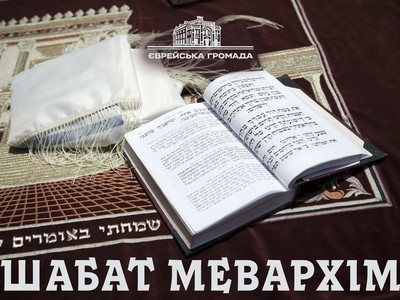
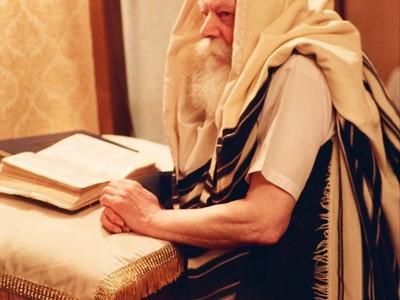
📖 Siha Rebe to the Weekly Chapter of Shmini
Community
🕊 The meaning of sanctification is not only from above, but also from belowThe chapter "Shmini" tells about the great moment — the beginning of the ministry in Mishkan. After seven days of preparation, the eighth day comes when God's presence is revealed. This teaches us: the real goal is not only preparation, but the revelation of holiness in reality.But the question arises: why the "eighth" day? After all, the number seven symbolizes the order of nature, the completeness of the world. Eight is beyond nature. Thus, the consecration of the Mishkan is associated with the attraction of the Divine Light, which exceeds the limitations of the world.🔥 Fire from heaven and human fireThe Torah says that fire came down from heaven and burned the victims. However, the sages emphasize: despite the heavenly fire, a person was obliged to light a fire on the altar herself.This is an important lesson: even when there is disclosure from above, a person is not freed from his work. On the contrary, it is through the efforts of a person that this disclosure becomes permanent.Nadav and Avig ⚖️ errorAaron's sons brought a “strange fire” — a spiritual aspiration that did not correspond to the will of the Almighty. Their intentions were sublime, but their action was wrong.The Rebbe explains that spiritual upliftment in itself is not enough. The main thing is to combine inspiration with the fulfillment of the specific will of G-d, as expressed in the commandments.🌍 Consecration of the material worldThe main goal is not to escape from the world, but to make the world itself a place for God's presence. This is achieved through the fulfillment of the commandments precisely in material things.Therefore, serving in Mishkan is not an escape from reality, but its transformation.✨ Practical lessonEach person has his own "Mishkan" — his own life and environment.You Must:• Take specific actions (commandments)• Don't rely on inspiration alone• Bring holiness to everyday lifeAnd then the "eighth day" — disclosure from above — will come into our lives.Shabbat Shalom📖 Lubavitcher calendar
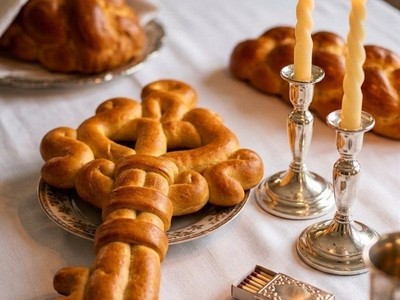
🗝️ Hala in the form of a key — on Shabbat after Passover
Community
Passover is over. The festive dishes are cleaned, the haggadah is closed — and the first Shabbat after Passover comes. It is on this Sabbath that there is a good custom — to bake a halah in the form of a key.Where does it come from? What is behind it? And how is he treated in Chabad?🌾 Manna is over — what's next?The day after Passover, when the children of Israel entered the Land of Israel, the manna from heaven, the same manna that had fed them for forty years in the wilderness, ceased. Suddenly, the people faced the reality: from now on, food must be obtained independently, with their own hands, in a natural way.It was in memory of this turning point that the custom of baking a halo in the form of a key arose. The key is a symbol of prayer and hope: we ask the Almighty to open the gates of abundance for us. After all, as our sages teach, the key to inquiry is in the hands of the Creator Himself.✨ Deeper — at the level of sod (secret meaning)There is a deeper, spiritual explanation for this custom.On Easter night, midnight, the higher spiritual lights — mohin eliyonim — leave the worlds. And it is in the days of Omer's account, day after day, that we do the spiritual work to bring them back.The key symbolizes this work — the efforts of man to meet the Almighty. This echoes the famous words from the midrash: “Open to Me a hole the size of a needle's eye — and I will open to you gates as wide as the gates of a palace.” We open the gates by keeping the Sabbath and its commandments, and the Almighty reveals His treasury to us in response — “He commanded the clouds from above, and opened the doors of heaven.”📚 Sources of customThe custom is mentioned in a number of authoritative books from various Jewish communities: "Imrei Pinchas", "Ogev Yisrael", "Ateret Yehoshua", "Simhat Yisrael", "Sefer Matamim", "Taamey a-Minhagim", "Kol Naftali" — and this is not a complete list.There are several forms of custom execution:— bake a key-shaped halo— put the real key in the hut before baking— decorate the surface of the hala with a pattern in the form of a keyIn some communities, this Shabbat is called "Shabbat gelye matzot" and matzah ashir is prepared in various forms — including in the form of a key.As they say: "Nagara Nagar Ufastei" — each river has its own way.🔑 What about Chabad?The Chief Rabbi and Dayan of Crown Heights explained the position clearly and deliberately:There is no official Chabadian custom to make such a halo. At the same time, this is quite permissible — the custom itself is mentioned in many authoritative sources and has deep roots in the Jewish tradition.Those who want to follow this custom — according to the tradition inherited from their mothers and grandmothers — have no reason to forbid it. In families where it is customary, let them continue. In families where it is not accepted, they are not obliged to start.Regarding the disputes that flare up every year on the Internet and WhatsApp groups — whether it is a mitzvah, a ban, or simply allowed — Rabbi Bruyn remarks with a slight smile: these disputes themselves do not make much sense. And yet — what did the Rebbe say?One day, a Jew turned to the Lubavitcher Rebbe with a question that worries many:— Rebbe, what is the custom of Chabad — to bake halah in the form of a key or not?The Rebbe listened and answered simply:“Chabad's custom is to make his wife feel good.”This answer, as is often the case with the Rebbe's answers, says more than the whole discussion. Shalom bait — peace and harmony in the house is not just a good wish. It is also part of the service of the Almighty.So if you want to bake a halo in the form of a key — you have not only permission, but also the blessing of the Rebbe. 😊שבת שלום — Shabbat shalom! 🗝️📖 Lubavitcher calendar

Our dates: 28 Nisan
Community
28 Nisan 2488 (1273 BC) — Conquest of Jericho.The first city of Eretz Yisrael that fell to the Jews was Jericho, a powerful fortress. For seven days, the Jews walked around the city walls with the Ark of the Covenant, and then the cogens sounded the shofar, the people screamed, and the walls of the city fell from this cry and the sounds of the shofar.28 Nisan 5751 (11 April 1991) — Appeal of the Rebbe.That evening, the Rebbe gave a speech to the Hasidim, in which he spoke about the Deliverance and the coming of the Messiah. In particular, he said:“… in connection with the attention paid to Liberation these days, the question inevitably arises: “Why, despite all these signs, has the Messiah not yet come?» It is impossible to explain.It is also unclear why every time ten (and many times more than ten) Jews come together on the days when Liberation could come, they do not complain and express their indignation with such force that would force the Messiah to come immediately? Can they accept that the Messiah, God forbid, may not come today, tomorrow, or the day after?Unfortunately, the Jews exclaim, “Hades matai?” (as long as we stay in exile?) just because they were told to. If with these words they expressed both their true desire and demand, then the Messiah would probably have already come.What else can I do to encourage the entire Jewish people to cry out for deliverance and thus really bring the coming of the Messiah closer? Everything that has been done so far has not led to real results, because we are still in exile. Moreover, we are also in inner exile regarding our ministry to G-d!There is only one thing left for me — to transfer this task into your hands. From now on, you must do everything possible for the Messiah to come today, now! <…> I did everything I could! From now on, you have to do your best. ”source: chabad.odessa

Our Dates: 29 Nisan
Community
📌29 Nisan 5380 (May 2, 1620) — Yorzeit (anniversary of the departure from this world) Rabbi Chaim ben Yosef Vital.One of the greatest cabalists of all time was born in the city of Safed. He studied cabal under the great cabalist Rabbi Moshe Cordovero, and then became the closest disciple of the great cabalist Rabbi Yitzhak Luria Ashkenazi (Arizal), who claimed that his disciple possessed parts of the soul of Rabbi Akiva and King Hizkiah, as well as the great Talmudic sage Rabbi Meir Baal HaNes (Rabbi Meir the Wonderworker).The Arizal taught his teachings orally, and it was Rabbi Chaim who wrote them down in the form of the collection "Etz ha-chaim" ("The Tree of Life") - according to the teacher, it was his perception that was the most adequate. And only to him did the Arizal impart his extensive knowledge of practical Kabbalah. After the departure of Arizal from this world, Rabbi Chaim led the Tzfat Kabbalists, and his connection with the teacher was not interrupted. For 20 years, the Arizal came to the student in his dreams almost every night, teaching him the innermost secrets of the Torah. Then he appeared to him once a month, and later - once every three months.At the request of Rabbi Chaim, almost all of his manuscripts were buried with him in the city of Damascus (Syria), but a year later, Kabbalists Rabbi Abraham Azulai and Yaakov Tsemakh, during Kabbalistic meditations, received permission from him to open his grave and take the manuscripts.source: chabad.odessa

Our dates: 27 Nisan
Community
Nisan 27, 5626 (April 12, 1866) — Yorzeit (anniversary of the departure from this world) Rabbi Schneur-Zalman-Mordechai, son of Rabbi Yosef-Itzhak from Ovruch and grandson of Rabbi Menachem-Mendel (Rebbe Zemach-Tzedek).Rabbi Schneur-Zalman-Mordechai was the brother of Rebbetzin Sterna-Sara, the wife of the fifth Lubavitcher Rebbe — Rabbi Sholom-Dov-Ber (Rebbe Rashab). Rabbi Schneur-Zalman-Mordechai had extraordinary abilities and at the age of 17 became the Rabbi of Zhytomyr. Unfortunately, he died quite young, even during his father's life. This happened two weeks after the death of his grandfather — Rabbi Tsemakh-Tzedek (13 Nisan 1826).27 Nisan 5703 (2 May 1943) — Uprising in the Warsaw Ghetto.In the summer of 1942, more than 300,000 Jews were sent from Warsaw to the Treblinka death camp. When news of what was happening in the concentration camp reached the ghetto, Resistance units began to form among the remaining Jews. On Nisan 14 (April 19), when German troops began an operation to finally liquidate the ghetto (at that time, 35,000 residents remained in it out of 450,000), the uprising began, which became the largest armed demonstration against German troops in occupied Europe (except Yugoslavia).The Germans were rejected and suffered heavy losses, after which they began to systematically burn ghetto houses, carefully avoiding street fighting. Jewish fighting groups were active until May 8, 1943, when the Germans managed to capture the headquarters of the Jewish Fighting Organization, but several rebel groups continued armed resistance until June 1943, and for the next few months the Germans caught the last Jews hiding in the ruins.On April 19, 1948, on the fifth anniversary of the uprising, a monument to the ghetto fighters was unveiled in Warsaw on the Heroes of the Ghetto Square. Day 27 of Nisan is celebrated in Israel as the Day of the Catastrophe and Heroism of European Jewry.Nisan 27, 5744 (April 29, 1984) — On the initiative of the Rebbe, daily lessons on the book "Mishnah Torah" by Rambam (Rabbi Moshe ben Maimon) begin.Here is what the Rebbe said about this: “Many times it was said about the attempt to unite all the sons of Israel, which brings the Liberation closer (since the cause of the Exile is the opposite of the idea of love between the Jews). One of the ways to this is when all the sons of Israel are united by the study of one idea in the Torah, thanks to which all those who study are united by“ a unity amazing, like which there is no unity…”.To do this, you should establish a daily lesson on the book "Mishnah Torah" by Rambam, since this book "collects the entire Oral Torah in itself." Regarding the volume of the daily lesson, it should be established that three chapters of the book should be studied daily. And those who for some reason are not able to study three chapters every day, let them study at least one chapter a day, in such a way as to complete the study of the entire book in three years.In order to unite the whole of Israel “from boy to old, little children and women” with this study, it is necessary that women and children also join this, due to the fact that they will study the 613 commandments of the Torah throughout the year, in the form in which they are referred to] in Rambam's book “Sefer Mitzvot”.source: chabad.odessa


Our dates: 2 Iyar
Community
*2 Iyar5548 (May 9, 1788) — Yorzeit (anniversary of the departure from this world) Rabbi Menachem-Mendel from Vitebsk.Rabbi Menachem-Mendl was a favorite student of the Magid of Mezherytskyi (Rabbi Dov-Ber) - a student of the founder of Hasidism, Rabbi Baal Shem-Tov, and the only student of the Magid who had the opportunity to meet the Baal-Shem. Menachem-Mendl was eleven years old at that time, he had already gained fame as a brilliant Talmudist, and Rabbi Dov-Ber himself introduced him to the Besht. Baal-Shem, surrounded by his followers, looked intently at the boy and began to tell him a story. Some of those present immediately forgot it, and its secret meaning escaped from the rest, and only little Menachem-Mendl remembered the parable in all details and understood its meaning, because it was the story of his life from the first to the last day. Honors, labors, illnesses, disappointments, joys, sorrows, the pilgrimage to the Holy Land - everything was there. Later, whenever his friends were concerned about his health, he reassured them, "Don't worry, I still have half or a quarter of the way to go."He became the leader of the Hasids in this way: Magid, receiving a delegation of his supporters from Vitebsk, handed them a belt and a staff. Both that and the other should have been handed over to a certain slave of Menachem-Mendl, who lived in their city. Returning home, the travelers began to look for this lucky man, but in vain - there was no Rabbi Menachem-Mendl in Vitebsk. They tried so hard that they even asked passers-by, and finally a ragged woman told them: "I know only one Menachem-Mendel—my own son-in-law." They rushed headlong to her house and, without saying a word, handed him Magid's belt. Menachem-Mendl accepted them, and at the same moment the visitors saw that he had become a different person (Note: after all, Rabbi Menachem-Mendl was the son-in-law of one of the Minsk rich men, and he was even going to build a synagogue and a yeshiva for him, which he could lead, but the Minsk misnagdim, outraged by his Hasidic customs, succeeded in expelling him. So he could very well have been exiled, but it is unlikely that his mother-in-law also went into exile).This sensitive, restrained person was loved by both representatives of high society and residents of urban neighborhoods. In his will, Magid appointed Slave Menachem-Mendel as his heir to lead the movement after his son. All letters written by the disciples of Magid, Rabbi Menachem-Mendel signed first...In 1777, Rabbi Menachem-Mendle, together with the Alter Rebbe, traveled to Vilna to negotiate with the main opponent of Hasidism — the Vilna Gaon, but, unfortunately, this mission ended in failure. In the same year, Rabbi Menachem-Mendel decides to move with a group of Hasidim to the Land of Israel and in the spring, led by a group of 300 Hasidim, arrives in Eretz Israel. At first they settled in Safed, but the Turks and Arabs pursued them until they left the city and moved to Tiberias.The difficulties of life in the Holy Land at that time made themselves felt and, 10 years later, Rabbi Menachem-Mendel from Vitebsk left this world. Just before his death, the disciples asked him who he wanted to be buried next to, because many people wanted to be buried near the righteous. The rabbi answered them with surprise: "What a strange question? It will be good for me to lie next to every Jew. G-d grant that no Jew should be ashamed of me, just as I am not ashamed of any Jew.”

New Moon to Iyar
Community
📌 Iyar is the Babylonian name for the month, which in the Torah is simply called “the second”, because it comes just after Nisan — the first month of the year. In the Tanakh, it is referred to as the “moon of Zib” (Mlachim I, 6:1), that is, the “moon of radiance”: the sun is already shining at full power, but it is not yet scorching as in summer. In the Aramaic translation of the Tanakh, consecrated by tradition, it is also called the "month of buds" — the time of origin and prosperity.It was in this month that the Jews who left Egypt reached their true heights — cleansed of their shortcomings and became worthy to accept the TorahIyar corresponds to the constellation Taurus (Hebrew — Shor, bull) — an animal that feeds on grass. In Eretz Yisrael, this is the last month when there is still enough greenery and the bull can graze freely on its meadows.Jewish tradition says that in Iyar, diseases are easier to treat than at any other time. After all, it was then that mana began to fall — "bread of the strong", which did not cause any ailments. Since then, Iyar has retained this healing power. The very name of the month also hints at this: its letters form the initial letters of the phrase "I am the Lord, your Healer."📌 Iyar's new moon always lasts two days, as the previous month, Nisan, has 30 days: its last day becomes the first day of the new moon. Iyar itself always has 29 days and is considered an incomplete month.In the year of the Exodus from Egypt, the New Moon of Iyar fell on Shabbat. Then Israel was in the area of Mara, where the Almighty performed a miracle — turned bitter water into drinking water. According to His word, Moses threw a bitter tree into the water — and it became sweet. Then the people realized: neither bitter nor sweet are the same in themselves — everything is determined by the will of the Almighty.The Torah says, “There He established for him the law and the judgment, and there He tested him” (Shemot 15:25). It was on this day that the Almighty revealed to Israel part of the Torah: the laws of the Sabbath, the laws of the Red Cow, and the basics of civil law. These commandments, like the miracle of water, transcend conventional logic — and that is why they reveal the depth of divine wisdom.✨ We wish you a good, peaceful and healthy month of Iyar! May it have healing light, enveloping peace, and strength to go forward with faith.

Rosh Chodesh Iyar part 2 (conclusion)
Community
It should be said that the Torah chose a different name in addition to the usual name, because it wants to convey a certain message to us, the Word of progress comes from the hodash — “new”, which symbolizes renewal. That is, when Rosh-Khodesh comes, something new appears that is not what it was before. The previous month is gone, and now a new one is being born.The Rebbe adds that this also manifests itself in the daily life of the Jew.“Israel is like the moon and counts by the moon” (Talmud, Tractate Sukkah, 29a), which means that we should be like the moon, and since the moon is renewed monthly, the same should happen to the people of Israel. We need to update and move forward, and it's not enough to do what we did last month.Therefore, we must use the strength that we receive from the fulfillment of the Rosh Chodesh commandment and correct what we wanted to correct last month, but could not.”May each of us, with God's help, gain strength for this in the new month!Have a nice, healthy, cheerful and peaceful month of Iyar!!

Rosh Chodesh Iyar Part 1 begins tonight.
Community
The Lubavitch Rebbe explains in one of his talks that the New Moon is a special holiday for Jews. The peoples of the world have a day of rest similar to the Sabbath - Friday for Muslims and Sunday for Christians. Holidays are also celebrated not only by the people of Israel, for example, we have Rosh HaShono, and others - New Year... However, there is no country in the world that celebrates the first day of every month just because it is the beginning of the month. Only the Jews especially mark and celebrate Rosh Chodesh. It is interesting to note that in Tanas we find repeated evidence that at one time Rosh Chodesh was a holiday just like the Sabbath and other holidays, although the Torah does not require that this day be a day off, nor does it prohibit certain types of work. But we learn from the prophets that in reality on Rosh Chodesh, as well as on the Sabbath, they did not trade in the market or work in the fields.For example, in Bafteri Mahar — hodish ("Tomorrow is the month"), which is read in the synagogues of this Shabos, the day before the new moon is called the "day of deeds", that is, simply — the "working day". Jonathan said to David, “Tomorrow is the beginning of a new month, and they will ask about you, because your place will be taken. And on the third day... come to the same place where you hid on a weekday..." (Shmuel I, 20:18, 19). It is about the eve of the new moon, and from this it is clear that the day of Rosh Hodesh itself was non-working.In addition, many Jews adhere to the custom of having a meal of the new moon and, as advised by the Lubavitcher Rebbe, to spend this day with dyes.The Rebbe says that there are two words in Hebrew with the meaning “moon.” Jareah stands for the Moon, a satellite of our planet. Another word is the stroke used in this quote: “This month is the head of months for you, the first one you have from the months of the year” (Schmoys, 12: 2).To be continued…