
Page of the story: Yosyp Marshak
Community
Yosyp Marshak — Kyiv jeweler who overshadowed FabergeIn the second half of the 19th century, Kyiv became one of the centers of jewelry art of the empire. And it was here that the story of a man who was called the "Kyiv Cartier" — Joseph Marshak — was born.He was born into a poor Jewish family in the Kyiv region, but thanks to his talent and perseverance, he managed to open his own workshop in Podil. At first it was a small room, fenced off by a curtain, where he worked with his wife. But in a few years, his shop on Khreshchatyk became a place where the entire Kyiv elite came.From the workshop to the jewelry empireMarshak was an extremely progressive entrepreneur: he brought equipment from Europe, introduced new technologies, and involved women in delicate work — an unprecedented phenomenon at that time. His factory grew into a complex of several houses in the center of Kyiv, and branches opened in Moscow, St. Petersburg, Warsaw and Tbilisi.His products received international awards — from Chicago to Paris, and his clients were the richest people in Europe. Marshak's jewels sometimes cost as much as a mansion in the center of Kyiv.Fabergé competitorWhen Karl Faberge opened his branch in Kyiv, he quickly realized that he could not stand next to Marshak. The legend says that, closing his Kyiv store, Faberge said: "Two bears in the same den are cramped."Jewelry for the royal courtAlthough he never officially became a supplier to the imperial family, it was Marshak's workshop that produced most of the gifts for the anniversary of the Romanov dynasty in 1913. One of the most famous products was a silver miniature copy of the Kyiv Pedagogical Museum — an incredibly accurate work created specifically for the tsar.Social impact and heritageMarshak was not only a craftsman and a businessman, but also a philanthropist: he opened training workshops, took care of workers, created a fund to help old workers and donated huge sums to charity.After the revolution, his factory was nationalized, and most of the masterpieces were destroyed or melted down. But Marshak's sons were able to save part of the inheritance and revive the brand in Paris. There, House of Marchak became known in the world along with Cartier and Van Cleef & Arpels.Today, the nameof Yosyp Marshak reminds that Kyiv was and remains a city of talent and brave entrepreneurs. His story is an example of how a small workshop can be used to build a global business.Source:kenguru.plus

Elul - a month of repentance and introspection
Community
Part 1. According to tradition, elul, the last month of the Jewish calendar, is a time of introspection and debriefing, a time to reflect on one's actions and to appreciate the spiritual growth achieved during the outgoing year. This is the time to prepare for the approaching Days of Awe - Rosh Hashanah and Yom Kippur.Being the “month of God's mercy”, Elul is the most favorable time for teshuvah (repentance, or literally “return”) , prayer and charity, as well as for a special manifestation of agavat-Isroel (love for the Jews). After all, it is in this month of the year that such things are much easier to achieve significant results in working on oneself and in approaching the Creator.The first letters of the words Shir HaShirim - "I belong to my beloved and my beloved belongs to me" (לי ודודי לדודי אני) - in Hebrew form the word "elul" (אלול). After all, it is in this month that the Jewish people are strengthened in repentance for their sins and approach their beloved - the Almighty. And He stretches out His hand to him and brings him closer to Himself.All four (in the original) words of this phrase end with a letter י (yud). The fourth gematria of the letter yud equals forty, which corresponds to the fortieths intended for repentance - the days between Rosh Hodesh Elul and Yom Kippur.It should be noted that the Aramaic word "elul" is the same root as the word that means searching for or carefully studying something. For example, the words of the Torah: "That they may conquer the land of Canaan" (Bemidbar, 13,1) are translated into Aramaic by the phrase, where the word "mastered" corresponds to the word "vialelun". After all, this is the purpose of the month of Elul, that in its days we look with all our being at the deeds committed during the year, remember all our sins - to eradicate them from our hearts and return to the Almighty.Source:http://www.tureizahav.lviv.ua/

Reading the Psalms in Elul
Community
Reading the Psalms in ElulOn Wednesday, we begin to read 3 psalms of Tehilim after the Shaharit prayer every day to Yom Kippur.(1 Elul with Psalm 1-3, 2 Elul with Psalm 4-6, etc.)This custom is based on the Midrash, which explains the first words of this psalm: “The Most High is my light and my salvation.” The Midrash states that the words “my light” refer to Rosh Hashanah and the words “my salvation” refer to Yom Kippur. And the words "for he will hide me in his booths," as they go on, are reminiscent of the feast of Sukkot. According to the custom established by Ari, this Psalm should be read after the morning and afternoon prayers.In some Jewish communities, it is customary to read psalms in synagogues after praying in a crowded hall - ten or more - in each congregation according to its custom.The meaning of this custom is to remind oneself and others about the approach of the Day of Judgment, about the need to prepare for it, make teshuvas and ask for mercy from the Almighty.According to the ancient custom, on each of the days of Elul, it is proclaimed in the synagogues: “Return, you apostate children” (Yirmeyahu, 3.14).

The main traditions and customs of the month of Elul
Community
• Every day of the month of Elul (except Shabbat and the last day of the month) is trumpeted in a shofar (lamb's horn), calling for repentance• When writing a letter or meeting someone, it is customary to end by blessing each other with the wish "Ktiva Vahatima Tova!", which means: "May a good verdict be made and approved for you for the new year!" That is, he must indicate at the beginning or at the end of the letter that he wishes the addressee to find the mercy and blessing of Heaven, that he be justified on the Day of Judgment, safely inscribed in the Book of Life and awarded the final good signature.• Baal Shem Tov established the custom of reading three additional psalms each day, starting from the 1st elul all the way to Yom Kippur. On the first day they read Psalms 1-3, on the second day they read Psalms 4-6, etc., and on Yom Kippur they read the remaining 36 Psalms, thus completing the entire book.• As a month of self-examination, elul is a good time to give tefillin and mezuzahs for examination to an experienced soifer (scribe of sacred scrolls) and make sure they are kosher. Anything that requires correction is immediately corrected.• During the last week of Elul, on the days preceding Rosh Hashanah, the Slichot (“prayers of repentance”) are recited the first time at midnight at the exit of Shabbat, and the other days early in the morning. Source:http://www.tureizahav.lviv.ua/


Dear friends of our community,
Community
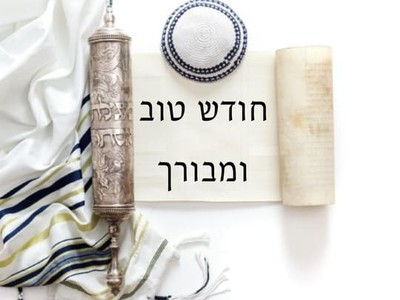
On behalf of our Community, we sincerely congratulate you on the Independence Day of Ukraine!On this special day, we, together with all the Ukrainian people, feel pride and gratitude for the right to live in a free land. The Jews of Ukraine are anintegral part of a large community that shares the joys and trials, dreams and hopes of our country.May the Almighty bless Ukraine with peace, unity and a bright future for all its children.


Our dates: 30 menahem-avah
Community
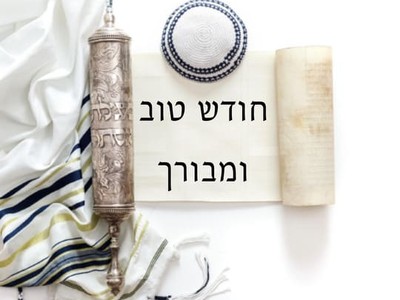
OUR DATES30 menachem-avah 2448 (1313 BC) — Moshe cut down the second tablets.On the last day of the month, Av fMoshe, at the direction of the Almighty, cut out two tablets, which were stone cubes measuring 6 x 6 x 6 tfahim (that is, almost half a meter in length, width and height). They were to act as a replacement for the two previous ones, made by the Most High Himself, on which He wrote the 10 commandments and which Moses had broken 42 days before when he saw the Jews worshiping the golden calf.chabad.odessa

Our dates: 1 Elul
Community
1 elul 2448 (1313 BC) — Moshe's third ascent of Mount Sinai.Early in the morning, Moses climbed Mount Sinai, carrying with him stone slabs so that the Almighty could re-write the Ten Commandments on them.At the top of the mountain, the Almighty allowed Moshe to see His back, but not His face (which the great sage and commentator Rabbi Moshe ben Maimon (Rambam) interpreted as an indication of the possibility of perceiving the materiality of the Almighty, but not His essence) and, thereby, an obstacle to human possibilities of knowing God. And there, on the top of the Sinai, the Most High revealed to Moshe thirteen attributes of Divine mercy.This was Moshe's third 40-day sojourn on Mount Sinai during the period of the gift of the Torah. Moshe remained on the mountain for 40 days, until 10 Tishrei (Yom Kippur), all the while trying to obtain the Almighty's complete forgiveness for the Jewish people, who, by worshipping the golden calf, violated the terms of the covenant made at Mount Sinai.Forgiveness was received, and from that time on, the month of Elul received the name of the month of “Divine Mercy and Forgiveness.”chabad.odessa

Our dates: 2 elul
Community
2 elul 5315 (August 19, 1555) — The writing of the book "Shulchan Aruch" was completed.The "Shulchan Aruch" (the name translates as "Table Set") was written by the great sage Rabbi Yosef Karo (1488-1575) in 1555 in Safed (Eretz Israel). The book was first printed in Venice in 1565.