
Our dates: 3 elul
Community
3 elul 5695 (September 1, 1935) — Yorzeit (anniversary of the departure from this world) Rabbi Abraham-Itzhak ha-Kohen Cook.Rav Abraam-Itshak Cook was born in Latvia, in the city of Daugavpils (then the mane) and studied in the famous Volozhinsk Eshiva, after which he was a rabbi of cities of Zhayamalis (Lithuania) and Buska (Latvia). Arriving in Eretz-Israel, he headed the Jaffa community, and during the First World War, which found him in England, Rav Cook became a rabbi of one of the London communities. Upon his return to Erets-Israel during the British mandate management of the country, he became the head of the religious Zionists of the Holy Land and in 1920 became the first major Ashkenaza rabbi Erez-Israel.The Peruvian eminent philosopher and mystic Rabbi Cook owns many books and articles, and he is considered the founding father of the movement of religious Zionism.

Our dates: 5 Elul
Community
5 elul 5537 (September 7, 1777) — The First Hasidic Aliyah. Arrival of Hasidim in Eretz YisraelIn the month of Adar this year, a group of Hasidim led by the disciples of the Mezheritsky Magid — Rabbi Menachem-Mendel from Vitebsk, Rabbi Abraham from Kalisk and Rabbi Israel from Polotsk moved from Russia to Eretz Israel. At the beginning of the journey, Alter Rebbe joined them. His disciples begged him not to abandon them, but he answered them with the words of the sages: “Your life comes first.”Alter Rebe, along with his family and brothers, went on the road and reached Mogilev, standing on the Dniester bank, next to the Turkish border. Here, a slave Menachem-Mendl of Vitebsk, for three weeks, persuaded Alter Rebe not to leave Jews of Belarus and Lithuania and finally achieved his consent. The rest sat on several ships and went on the road. One of the ships sank during the trip. Of the 80 Hasidims, only 30 managed to escape. But finally after a long trip 5 Elul travelers went down to the Holy LandInitially, they settled in Safed, but the difficulties of life in this city forced them to move to the city of Tiberias on the shores of Lake Kinneret.


Our dates: 9 Elul
Community
*9 elul2321 (1439 BC) — Yorzeit (the anniversary of the departure from this world) Dan, the son of our forefather Jacob.Dan was the fifth son of our forefather Jacob and the first son of his wife Bilgi (another Jacob's wife's servant Rachel).The allotment of Dana stretched south of the Yarkon River and bordered with the allotments of Ephraim, Benjamin and Jerobi, but tight by the Philistines (Philistines), the genus Dana was forced to look for new territories, and five "men's men" were sent from the cities of the Tsar and the Ashtaoles. Representatives of the tribe, Dana captured and burned the non -Jewish city of Laish in the far north of the country, near the origins of Jordan, and in its place founded a new city - Dan. The part of the tribe moved to a new territory, and the other remained in its former allotment in the south and fought with a constant struggle with the Philistines. From the tribe, Dana came one of the judges of Israel Shimson (Samson).Now on the site of Dan's possessions is the business center of Israel — Tel Aviv, and the surrounding area is called: Gush Dan (Land of Dan).Dan left this world at the age of 127 and was buried in the city of Eshtaol, on the territory of his allotment.*9 elul5027 (September 1, 1267) — Thanks to the efforts of the Ramban, the Jewish community in Jerusalem was re-established.The great sage and commentator of the Torah, Rabbi Moshe ben Nachman (Ramban or Nachmanid, as it is commonly called in Western literature), was forced to flee his native Spain after the famous Barcelona “Nachmanid dispute” (see 12 menahem-avah). He arrived in Jerusalem and found only two Jews here: a father and a son who were engaged in dyeing fabrics.Thanks to the efforts of Rabbi Moshe, Jewish life in the city was restored and after a short time a minyan appeared in Jerusalem (the number of people required for prayer was 10 Jewish adults) and a synagogue was opened, which functions to this day. In 1948, the “Ramban Synagogue” among other synagogues in the Jewish Quarter of the Old City was destroyed by Arabs and rebuilt after the liberation of Jerusalem in 1967.

Our dates: 10 Elul
Community
*10 elul 1656 (2105 BC) — Noah sends a raven to scout.* On 10 Elul 1656, as the Flood was coming to an end, Noah opened the Ark's porthole for the first time. He did this in order to send a crow for reconnaissance, which was supposed to look around and find out whether the water level had begun to drop. The first flight was unsuccessful — the bird did not find a piece of land on which it could land.*10 elul 5550 (August 20, 1790) — Yorzeit (anniversary of the departure from this world) of Rabbi Pinchas ben Avrhama-Aba Shapiro (Rabbi Pinchas of Korets).Rabbi Pinchas was born in Belarus. His father, Rabbi Avraham-Aba Shapiro (a descendant of Rabbi Nathan Net Shapiro and Rabbi Jacob Eibenschütz), was a staunch opponent of Hasidism, but due to accusations of bloodshed, he had to leave his native Shklov. Together with his family, he visited Mirpol, where he met Rabbi Baal Shem-Tov and became his Hasidim. Rabbi Avraham's son, Pinchas, also became a Hasidic, joining the circle of Rabbi Baal Shem-Tov's closest disciples and Rabbi Dov-Bera (Mezheritsky Magid).By order of Baal Shem-Tov, Rabbi Pinchas and his students settled in Korets (Korets), where he spent more than 20 years. However, they say differently, wandering from city to city, Rabbi Pinchas and his students everywhere met with misunderstanding and indifference. But in Korets, the opponents of Hasidism met them with a hail of stones and Rabbi Pinchas told the students: “Let's stay here, at least the people here are not indifferent.”From Korets, Rabbi Pinchas moved to Ostroh, and from there in 1790 he was going to move to Eretz Yisrael, to the city of Safed, but in Shepetivka he fell ill and left this world.Rabbi Pinchas did not write books (except for a small work "Midrash Pinchas"), but his descendants became famous Jewish publishers Shapiro from Slavuta.The printing house was founded by Rabbi Pinchas, and the book "Tania" written by Alter Rebbe was first published in Slavuta — in recognition of the merits of Rabbi Pinchas.*10 elul 5652 (September 2, 1892) — the wedding of Rebbetzin Hai-Mushka, the daughter of Rabbi Shmuel, the fourth Lubavitcher Rabbi and Rabbi Moshe Örenstein.Khaya-Mushka was the youngest daughter of Rabbi Shmuel (Rabbi Maharash) and after his departure from this world, her brothers Sholom Dov-Ber (the fifth Lubavitcher Rabbi, Rabbi Rashab) and Zalman-Aaron (also known as Raza) took care of her sister, who arranged the shidukh (matchmaking) of her sister.source: chabad.odessa

Our dates: 11 Elul
Community
*11 elul5635 (September 11, 1875) — The wedding of Rabbi Sholem Dov-Bera (Rabbi Rashab) with Rebbetzin Sterna-Sara, daughter of Rabbi Yosef-Itzhak from Ovruch and granddaughter of Rabbi Zemakh-Tzedek.The then Lubavitcher Rabbi Shmuel (Rabbi Maharash) wanted the wedding to take place in Lubavitches, but the bride's father insisted on Ovruch. Only the mother, Rebbetzin Rivka, accompanied the groom there, since Rebbe Maharash was unable to leave the Lubavitches for a number of reasons. However, the rabbi accompanied his son with his retinue to the village of Akhromeyevo.At the station there was only one small bench for one person, and Rebbe Maharash sat on it, but since the groom also had to sit, one of the young Hasidim stood on the karachkas, and the groom sat on it.When the young Rebbetzin arrived in Lyubavichy after the wedding, she was slightly upset, because all the members of the Rebbe Maarash's family were tall people, and she was very small. However, the father-in-law told her: "Do not lose heart. It is known that small trees give better fruits...".source: chabad.odessa

Our dates: 12 Elul
Community
*12 elul5537 (September 13, 1194) — Birthday of Rabbi Moshe bin Nachman (Ramban, Nachmanid).Moshe Mesh Ben Nakhman, also known as Rabban Moshe Ben Nakhman), Moshe Rabbi Gerondi and Boonastrug da Porta - the outstanding commentator of Torah, Kabalist, Philosopher, Scientist, and Jewish leader - was born in the Spanish city of Heron (Zheron) and lived here for much of his life. He came from the noble Jewish kind of Yitzhak Ben Reuvene Albardzheloni (from Barcelona), was a cousin of Catalonia's main rabbi Jona Ben Abraham Gerondi, and after his death until he was leaving to Erez-Israel (1267) was the main rabin. For the life of the slave Moshe earned, like many big rabbis, treatment.In 1263, Aragon King Hayme I imposed a public debate in Barcelona with a Rabbi Moshe with a cross of Pablo Christiani (see 12 Menachem-av). Ramban agreed to participate in the debate provided that he would be allowed to speak completely freely without fear of punishment for it. The king accepted his condition, and after the debate, which lasted four days, praised responded to the argumentation of Nakhmanid: "I have never heard such a wonderful protection of such an unjust cause", he gave him 300 dinars. However, after a while, the servant Moshe was forced to escape from Spain to Eretz-Israel (see 9 Elul).Arriving in Jerusalem, he found only two (!) Jews there — a dyer of skins and his son, but the efforts of Rabbi Moshe soon had a minyan (ten adult men needed for public prayer) and a full-fledged community in the city.It is assumed that it was Ramban who sent to Spain a copy of the fundamental work on the bondage — the book "Zohar". The book was published by Rabbi Moshe de Leon and made a huge impression on scholars and sages, becoming one of the most studied and discussed works on Judaism.*12 elul5587 (August 5, 1827) — Yorzeit (anniversary of the departure from this world) Rabbi Simcha-Bunema of Pshisha.In his youth, Rabbi Sikhama studied in Eshiva Mattersdorf and Nicolsburgh in Mordehai Baneta. He then returned to Poland and under the influence of his father -in -law became a follower of the everyday Magid Rabi Israel. At the same time he served in a logging firm, went to Leipzig and Danzig, knew Polish and German, wore European clothing and attended the theater. Having studied pharmacology in Danzig, he opened a pharmacy and rich in Pusha. Then Simcha's rabby became a close student of Rabi Yakakov-Itshak ѓa-Lion Gorovitsa (ѓa-hoze Mi-Lublin, a blind seer from Lublin). Here he became a friend and student of Rabi Yakova-Itshak Ben Asher from Pshisha ("Holy Jew of Pusha"), and after his departure from this world became his successor.In his old age, Simha Bunem lost his sight, but did not stop studying and teaching the Torah. Among his students were Menachem-Mendel ben Leibush Morgenstern of Kotzk (Kotzker Rebbe), Rabbi Mordechai-Yosef Leiner of Izbica, Rabbi Hanoch-Genoch ha-Kogen of Alexandrov, Rabbi Yitzhak-Kalish of Vorka (Worker Rebbe), and Yitzhak-Meir Rotenberg Alter (known as Rabbi Hidusha ha-Rim).*12 elul5689 (September 16, 1929) — Rabbi Yosef-Yitzhak (Rabbi Rayatz) arrived in the United StatesIn 1927, the sixth Lubavian Rebbe Rabbi Joseph-Itshak Schneerson (Rebe Rayats) was arrested by the Chek-DPU and sentenced to death, which, under the pressure of the world public, was replaced by exile and then expulsion from the USSR. Two years later, in the fall of 1929, he arrived in the United States. Here Rebbe Rayatz spent 10 months, visiting the Jewish communities of New York, Philadelphia, Baltimora, Chicago, Detroit, Miluoki, St. Louis, Boston and many other cities, as well as visiting the White House at the President of the United States.The Rebbe, visiting the United States, pursued two goals: first, to draw the attention of American Jewry to the situation of Soviet Jews and organize financial assistance for them, and, secondly, to strengthen Yiddishkeit (Jewish life) in the United States itself and support the American Chabad community.The Rebbe also wanted to find out whether there was an opportunity to settle in the United States and create the headquarters of Chabad here. Although the famous Seven Seventy house (770 East Parkway in Brooklyn, the center of the Chabad movement) did not appear until 1940, the foundation for its appearance was laid by the results of a trip around the country in 1929. source:chabad.odessa

Our dates: 13 Elul
Community
*13 elul5657 (September 10, 1897) — The wedding of Rabbi Yosef-Itzhak with Rebbetzin Nechama-Dina, the daughter of Rabbi Avraham Schneerson from Chisinau.When the future sixth Lubavian Rebbe, Rabbi Yosef-Itshak reached the age of marriage, he began to offer a variety of options, including proposals with a large dowry. The parents leaned to the wedding with the daughter of Rava Abraham Schneerson, but the grandmother liked other options. And then they decided to ask the groom himself. He was told about the current situation and added that according to the said in Tori of the wedding of Yitzhak and Stitch: "We ask her ...", they turn to him with the question of his opinion. The groom replied: "But it is said:" And you will take my wife to my son from my family and from my father's home ... "(The bride and groom had a common great -grandfather - the third Lubavian rebe of Tamakh Udek). The choice has been made13 Elul 5669 (August 30, 1909) — Yorzeit (anniversary of the departure from this world) Rabbi Yosef-Haim ben Eliyahu-Haim from Baghdad ("Ben Ish Hai")Rabbi Eliyahu Chaim of Baghdad, who was distinguished by wisdom and piety, was childless for many years
Our dates: 8 Elul
Community
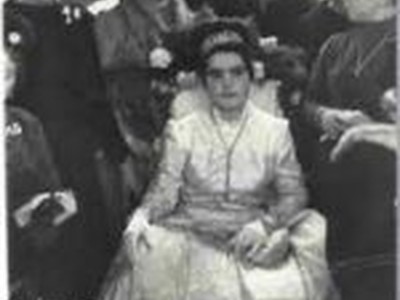
Rabanit Malka from Belz– wife of Rabbi Sholom Rokeah (1779–1853).Yorzeit – 8 elul.The burial place is Belz, Ukraine.She was born in 1780 to Rabbi Issachar Dov Ramraz of Sokal, Galicia, and Rebbetzin Hana Rachel (née Tisminitzer), great-granddaughter of Rabbi Zachariah Mendel ben Arie Leib of Krakow, author of Baer Hetev on Yore Dea and Hoshen Mishpat.Malka married her cousin, Rabbi Sholom Rokeah, son of Rabbi Elazar Rokeah, and Rebbetzin Rivka Hennah Ramraz, her father's sister. They had five sons and two daughters.Rabbi Sholem considered Malka his partner in the study of the Torah and all spiritual endeavors. He said that when he took a vow not to sleep for a thousand nights to study the Torah, Malka stood by to make sure that his candle was always on and he didn't have to interrupt his studies.Malka died in September 1853 (8 elul 5613) and was buried in Belz. Every year, on the day of her yortsaytu, 8 elul, the Belz Hasidim continue to light candles in her memory. Women's schools of the Belz Hasidim are named in her honor.Rabbi Sholem often dealt with “dead souls” who appeared to him, seeking redemption, which they were denied because of some deficiency or sin in their earthly condition. He spoke to each soul individually, advising them on how to achieve eternal salvation. Some of these souls may have caused harm (as mentioned in The Zohar, Vayikra, p. 70). Therefore, sometimes Rabbi Sholom sat down next to his wife Malka so that her merits would protect him.Falling applesOne day, the owner of an apple orchard came to Rabbi Sholom and complained that his apples were falling prematurely. Rabbi Sholem then met Rabanit for the first time. She approached him along with that man and asked for a blessing so that the apples would stop falling. That's what happened.When it was time for the harvest, the man shook the trees, but the apples did not fall, because Rabbi Sholom decided so. He had to go to Belz again and ask Rabbi Sholom to let the apples fall. Then Rabanit Malka intervened again and asked for a blessing to make the apples fall. And so it happened.Shibolet Hitim – Perek ShiraShibolet hita (wheat spike – in the days of Adam ha-Rishon was the tallest palm tree). When Adam HaRishon's sin is corrected in the future, everything will return to the original plan of the six days of Creation.Khazal, answering the question: "Do we have to take the ladder every time to collect wheat?", They explain: "Kadosh Baruch-gu will send the wind, and it will scatter the grain on the ground, and people will collect them, and this will be their earnings. The two grains will be the size of two buds of two cows.”One day Rabanit Malka, the wife of Rabbi Sar Sholoma from Belz, was walking through the city and saw a Hasid who took a piece of cake, said to Brahu and put it in his mouth. She came up and said:“You know what'sPerek Shira"Shibolet Hita" says its song:Mimaamakim Keratikha Ado-nai(“Out of the depths I cry to Thee, O Lord.”) The grain prayed to the Almighty: "Ribon olam, let me rot in the ground and grow with wheat." Ashem heard his request. Then the grain prayed, “Ribon olam, let it rain so I can grow.” And this time the Almighty heard the request, it rained, and wheat grain grew.A peasant came with a sickle and squeezed a spike. The wheat saw many grains on the ground and began to cry, begging: "Ribon olam, let me not be left lying among the grains in the field, but carried to the mill." The Lord heard. He asked again: "Ribon olam, let me get all into the dough, and not stay on the edge of the mill." The Almighty heard again.And once again she begged: "Let them bake bread from me and a Jew will buy me, who will say bucket at me before eating." That's what happened.Rabanit Malka explained to the Hasidic why the grain prayed so much – that it was the Jew who pronounced the bracha.There is a tradition that the "hit" was the fruit ofEtz HaDat(Trees of Knowledge), as tall as the tree itself, and Adam ha-Rishon was tall-almost as high as heaven. As he tasted it, the wheat diminished, and so did Adam. Therefore, her song:Mimaamakim Keratikha Ado-nai“Out of the depths I cry to You, Lord.”Let the Zsut Zaddikat Rabanit Malki from Belz protect Am Israel!(Lesson from Rabbi Shlomo Livenstein)Source:silatehilim.com
Rosh Hashanah Getting Ready: Shofar Tubing
Community
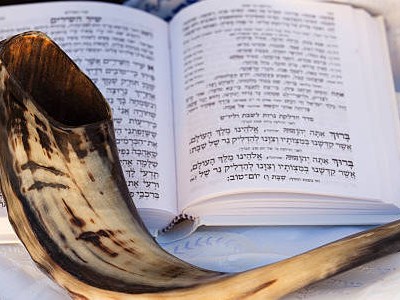
From the second day of the new moon elul (that is, from the 1st elul) until the day before Rosh Hashanah, the shofar is blown in the synagogues after the completion of the morning Shaharit prayer. These daily trumpets consist of four sounds: “Tchia”, “Chevarim”, “Troyes” and again “Tchia”.This trumpet is not attributed to the Torah, but established by the ancient Jewish custom. When Moshe was walking in the moon, Elul rose to the Sinai Mountain to get new plotters of the covenant, Jews in their condition were trumpeted in Shofar, so that the whole people know that Moshe only temporarily climbed to heaven (and did not leave the earth forever) and so that in his absence, not fall into idolatry. In memory of this, Jews have been trumped in Schofar since the beginning of Elul - to remember how Moshe rose to the Most High, and again confirm that Israel repented of the sin of creating a "golden Taurus" and received forgiveness, because the Almighty in his mercy gave new tables after forty days. This reminder should awaken in every Jew the desire for Tshuwa - repentance and return to the Most High.They trumpet the shofar after completing the morning prayer, because Moshe at one time went up the mountain in the morning.The trumpeting is carried out throughout the month to warn the people about the approach of the Day of Judgment and to awaken the desire for teshuvah. After all, the nature of the sound of the shofar is such that it causes anxiety in the hearts of people, as it is said in the Scripture: "Can the people not be alarmed when the shofar sounds in the city?” (Amos 3:6) The sound of the shofar declares, “Wake up, you who are asleep, wake up from your sleep, wake up from your slumber, look at your deeds, and repent of your sins.” That's what Rambam wrote.On the eve of Rosh Hashanah, the shofar is not trumpeted to draw a line between the trumpet in elul, which is an ancient Jewish custom established by our sages, and the trumpet in Rosh Hashanah, commanded by the Torah.Starting from the second day of Novosta, Elul and to the Oshan Rab, the last day of the Holy Sukot (inclusive), in the Ashkenazian communities in the morning and evening prayers include the 27th psalm. This custom is based on a midrash that explains the first words of Psalm: "The Lord is my light and my salvation." Midrash interprets that the words "my light" concern Rosh Ha-Shan, "my salvation"-by Yom Kipro, and the subsequent words "because he hides me in his bush" remind of the holiday of Sukot. According to the custom established Ari, this psalm is read after the morning and post -sickle prayer.In some Jewish communities, it is customary to read the Psalms — ten or more — according to local custom after completing a prayer with a large number of people.Whoever writes a letter this month should indicate at the beginning or at the end the wishes to the addressee that he will receive the mercy and blessing of Heaven, be justified on the Day of Judgment, be inscribed in the Book of Life and be awarded the final approving signature.The meaning of this custom is to remind oneself and others about the approach of the Day of Judgment, the need to prepare for it, make teshuvah and ask for mercy from the Almighty.People who carefully follow the commandments of the Torah usually check kashrut tefillin and mezuzah in their homes, as well as other items related tothe fulfillment of the commandments. Anything that needs to be corrected is corrected immediately.According to the ancient custom, on each of the days of Elul in the synagogues, it is proclaimed: “Return, you apostate children” (Yirmeyahu 3:14).source: https://toldot.com

Question to the Rabbi: Is it possible to read Slihot at home?
Community
Questions:We live far from the synagogue, and I do not always have the opportunity to come to the synagogue for prayerS'lichot. Is it possible to read them yourself at home and at what time is it better to do it?Answer:Thank you very much for your question. As you know, a monthof Elulhas a special status, because it is at this time that it is easiest for a person to approach the Almighty. Therefore, several special customs have been established for Elul: they trumpet the shofar after the morning prayer, say an additional chapter of TehilimLe David Ori Ve-Yishi(“The Lord is my light and my salvation…” 27:1) after morning and evening prayers and, of course,S'lichot.ReadS'lichotnot only the one who prays in the community, but also the one who does not have such an opportunity and prays alone. However, in this case, you need to make some changes: skip those places where the thirteen qualities of mercy are mentioned, as well as requests in Aramaic.Regarding the reading timeS'lichot, there are several customs:The last three hours of the night.The night is divided into 12 equal parts, and it is the last three that are suitable for readingS'lichot. Today, those who follow this custom usually read them at dawn (about 72 minutes before sunrise).Before the morning prayer of Shaharit,even if it is after sunrise. According to this customS'lichotcan be read throughout the day, including before Minha's Afternoon Prayer.Just after midnight(i.e. after six o'clock in the morning). Many people try to do this on the first dayS'lichot.In case of great need,when it is not possible to collect the minyan at another time, some halachic authorities allow readingS'lichoteven before midnight. But this is the least desirable option from the Halakhah's point of view, so those who pray without a congregation are better off following one of the three previous customs.Source:https://toldot.com
Question to the Rabbi: What is a shofar, when and why is it trumpeted?
Community
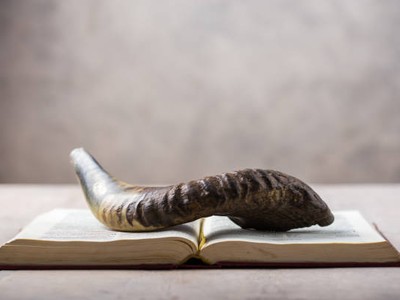
❓Question to the Rabbi: What is a shofar, when and why is it trumpeted?📌Answer: A shofar is a horn, usually a mutton or mountain goat, that is blown (trua) on Rosh Hashanah and during the month of Elul, the last month before Rosh Hashanah.The shofar trumpet is a striking outward sign of Rosh Hashanah (Day of Judgment) among other holidays. This day in the Torah is called Yom Troya [Day of the Trumpet].In the biblical era, the shofar was used for many purposes: it was trumpeted when going to war, for convening a community, when announcing prohibitions, for notifying about the approach of the Sabbath, etc.Now the shofar is trumpeted in synagogues throughout the month of Elul — after the completion of the morning daily prayer — to awaken the Jews to repentance on the eve of the Day of Judgment. However, on the last day of the month, on the eve of Rosh Hashanah, the shofar is not trumpeted to separate the trumpet, which is our right, from the trumpet, which is our duty.There are many interpretations regarding the causes of the New Year's trumpet. Rambam in the Laws of Teshuvi writes:“Shooting tubes are the execution of the commandment of the all-higher, and therefore this commandment does not require a rational explanation. At the same time, it has a hint of meaning: Shofar seems to be proclaiming: wake up, sleep! Wake up, sleep! Look at your actions, return to the paths of truth, remember your creator. You who have forgotten about the meaning of life at the time! You who have performed all year long and empty actions that do not add happiness, do not take away suffering and do not save! Look at your souls, change your works! Let everyone leave their path that leads to suffering and frustration, let him give up a way of thinking in which neither good nor good! ”The voice of the shofar reminds us of the day when our ancestors stood near Mount Sinai, where the “very strong sound of the shofar” was heard. He also recalls the destruction of the Temple, taken by the Romans to the sounds of military antimony. In it we hear the call for the coming day of the Great Judgment.source: toldot.com