
Our dates: 15- 17 Nisan
Community
📌15 Nisan 2018 (1743 BC) — Conclusion of the "Union between two cut parts".On this day, the Almighty entered into an alliance with our forefather Abraham (then just Abram), pledging to forever give the Jews Eretz Yisrael, although before that they had to pass the test of exile and persecution. In confirmation of this, the Almighty commanded Abraham to cut the carcass of the sacrificial animal into two parts and passed between them in the form of fire.📌15 Nisan 2048 (1713 BC) — Angels visiting Abraham.On the third day after Abraham's circumcision, three travelers visited, or rather three angels in the form of travelers. Each of the angels had its own well-defined mission. The angel Refoel had to help Abraham recover as soon as possible after the operation, the angel Michael had to inform Abraham and Sarah that in exactly a year they would have a son, and the angel Gabriel had to go to Sodom and destroy the wicked city.By the way, this episode is the only place in the Torah where dairy and meat dishes appear on the Jewish table at the same time (but this was before the gift of the Torah and the appearance of kosher laws. It is also the only place in the Torah and the books of the prophets where it is said that angels eat, or at least a person may think they do.📌15 Nisan 2049 (1712 BC) — Birthday of our forefather Yitzhak (Yitzhak ben Abraham).Yitzhak was born when his father Abraham was 100 and his mother Sarah was 90. It is with this that his name is connected (from the word "tskhak" - "laughter": when Sarah heard that she would have to give birth, she laughed).Yitzhak was the first Jew to be circumcised at the age of eight days.📌15 Nisan 2113 (1738 BC) — The Battle of Abraham with the Four Kings.After Abraham's nephew Lot was captured by the troops of the four kings, who fought against the armies of the five kings (the rulers of the city-states of Sdom, Amor, Adma, Zwoim and Zoar), an uncle with a small group of students (318 people) went to help his nephew.📌15 Nisan 2205 (1555 BC) — Jacob wrestles with an angel.Returning from Aram-Nagaraim, where he lived for more than 20 years, Yaakov spent the night near Pnuel and "someone fought with him until dawn", could not defeat Yaakov, but injured his hip. At dawn, the Unknown One blessed him and called him Israel — literally “one who fights with God” (Breishit 32:25–33). In memory of this event, we bear the name Israel and do not eat a dry vein "guide ha-nashe" from the hip joint.📌15 Nisan 2197 (1565 BC) — Birthday of Judah ben Jacob-avin.📌15 Nisan 2315 (1445 BC) — Yorzeit (the anniversary of the departure from this world) of Yehuda ben Jacob-avin.The fourth son of our forefather (in Hebrew — "Avinu") Jacob and our foremother Leah received the name Yehuda and became the founder of the tribe of Yehuda, which gave the name to all the people (Jews). Currently, almost all Jews (with the exception of the Kohens and Levites — descendants of the tribe of Levi) are descendants of the tribe of JudahThe descendant of Judah was King David and, accordingly, the Messiah would also come from the tribe of Judah.📌15 Nisan 2447 (1314 BC) — Moshe sees a bush that does not burn.Exactly one year before the Exodus, Moshe, who was tending the flocks of his father-in-law Jethro, discovers an amazing thing at the foot of Mount Sinai — a bush that burns and does not burn. Intrigued, Moshe comes closer, and then the Almighty turns to him from the burning bush, ordering him to go to Egypt to free his people from Egyptian slavery.📌15 Nisan 2448 (1313 BC) — Exodus of the Jews from Egypt.At exactly midnight on Nisan 15, 210 years after the settlement of Jacob in Egypt and 430 years after the conclusion of the "Union between the two severed parts", the Most High struck the Egyptians with the last, tenth punishment - the death of the firstborn. Only those first-borns managed to avoid death, in whose families the first ever "Seder" took place that evening, when the sacrificial lamb was slaughtered and eaten. And his blood, applied to the front door, marked the Jewish houses whose inhabitants obeyed the Almighty (according to some data, there were no more than a third of all Jews).This punishment broke the pharaoh (the only non-Jewish firstborn left alive to teach others), and he begged the Jews to leave his country as soon as possible.📌15 Nisan 3389 (371 BC) — Prophet Daniel in a pit with lions.The book of Daniel tells how Daniel was shaved and thrown to the lions on the orders of King Darius, who, however, did not touch him. Seeing this, Darius ordered the slanderers and their families to be thrown to the lions and proclaimed God Daniel “the living God.”📌16 Nisan 2048 (1713 BC) — Destruction of the cities of Sdoma and Amorra.Located in the Sodom Valley, the cities of Sodom (Sodom), Gomorrah (Gomorrah), Zvoim, Adma and Zoar were famous for the mistreatment of residents. At one point, the cup of the Almighty's patience overflowed and... the fate of the cities was decided. Abraham managed to persuade the Most High to spare the city if at least 10 righteous people were found there, but they were not found and only Abraham's nephew Lot, his wife and two daughters were saved. Lot's wife disobeyed God's command "Do not look back" and turned into a pillar of salt. The cities of Amorrah, Admah, and Zvoim were completely destroyed by fire from heaven, but the city of Zoar survived, although its wicked inhabitants were also destroyed.Now the Dead Sea is located on the site of the once blooming valley.Nisan 📌16, 2196 (1566 BC) — Yorzeit (anniversary of the departure from this world) Levi ben Jacob-avinLevi, the third son of our forefather Jacob and forefather Leah, was the ancestor of the tribe of Levi. He is the youngest of the people mentioned in the Torah as "ish", "man" — at that time he was 13 years old, and that is what determined the age of Jewish adulthood (bar mitzvah).Moshe, Miriam, and Aharon are descended from the Levi tribe. Now the tribeof Levi is one of the two (along with the tribe of Judah) tribes of Israel that survived. The indication of origin from the Levites has been preserved in such Jewish surnames as Levi, Halevi, Levin, Levinson, Levinsky, Levitan, Levitas, Levin, Levitsky, etc. The Levitical origin is mostly the bearers of the surnames Gurvich, Gurevich, Horwitz, Landau, Segal and Epstein.The complete absence of Levites is noted among the Mountain Jews, Bnei Yisrael (India) and Falasha (Ethiopia), as well as in the Jewish community of the island of Djerba (Tunisia); very few of them among the Georgian Jews and the Kurdish Jews of Iraq.Nisan 📌16, 2488 (1273 BC) — Mana (celestial manna) fallout endedSix days after the entry of the Jews under the leadership of Joshua bin Nun into Eretz Yisrael, the supply of “heavenly food” — mana that accompanied the Jewish people all the years of their stay in the desert - ended.📌16 Nisan 3404 (357 BC) — Esther reveals her origin to Ahasuerus.On the third day of the fast, announced by Mordechai after Haman's decree, Queen Esther appeared before Ahasuerus. This blatant violation of palace etiquette could have brought her to the fore, but the king was not angry with his wife, but on the contrary accepted her invitation to “a small family dinner with candles and friends — Uncle Mordechai and PrimeMinister Haman.” During the dinner, Esther told her husband about where she came from and what threatens her people with the decree of the villain Haman.📌17 Nisan 3404 (357 BC) — The Hanging of Haman.During the intimate dinner that Queen Esther arranged for King Ahasuerus and Prime Minister Haman, she revealed her origins to the king and explained what atrocity Haman had planned. When the royal eunuch of Harvon mentioned the 25-meter gallows that Haman had prepared for Mordecai, the king ordered that Haman himself be hanged on it, thereby opening the way for the Jews to salvation.
📜 On the eve of Passover
Community
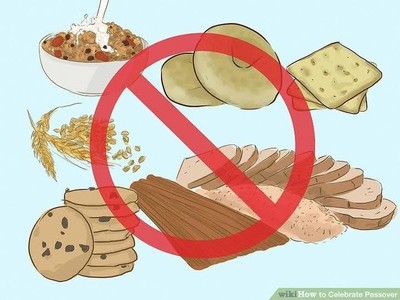
On the eve of Passover, the Shaharit prayer is recited earlier than usual in order to have time to complete the morning meal before the hamlet becomes forbidden.On the eve of Passover and in the hol a-moed in Shakharit, they do not read "Mizmore le-toda". The reason is that the thankful sacrifice of "toda" (which corresponds to this psalm from Tegilim) included ten loaves of fermented dough, and these days it is forbidden.On the eve of Passover, the chamois is allowed to eat only until the end of the fourth solar hour (that is, until the end of the third day), and to use it until the end of the fifth hour. Therefore, the chametz should be burned by this time and pronounce the formula bitul chametz.Starting at noon on the eve of Pesach, it is forbidden to work - even for free and even for the needs of the holiday. Only what is permitted in hol a moed is allowed. In some communities, they do not work even in the first half of the day. At the same time, it is allowed to repair things and clothes necessary for the holiday.Cutting hair and nails is allowed only until noon. If you don't have time, you can cut your nails in the afternoon, but only a non-Jew can cut his hair.There is a custom not to eat matzo 30 days before Pesach. On Passover, eating matzah is forbidden by Torah law, even for children. Also, on this day, products from which maror and charoset are prepared (horseradish, lettuce, apples, nuts, pears, etc.) are not eaten.In memory of the miracle of the salvation of Jewish first-born children during the tenth plague in Egypt, first-born children (of both father and mother, including Cohens and Levites) according to the letter of the law must fast on Nisan 14. If the firstborn is a minor, his father fasts. However, it is customary not to fast, but to participate in a meal on the occasion of fulfilling a commandment (circumcision, bar mitzvah) or on a siyum - the completion of the study of a tractate of the Talmud.If water is poured on the ground after washing dishes, it should be poured on a sloped and loose place so that it does not stagnate and food residues do not sour.From the time chametz becomes forbidden until the end of Pesach, a Jew is prohibited from deriving any benefit, even from chametz belonging to a non-Jew. Therefore, one cannot perform work related to the non-Jew's chametz (carrying, guarding, buying). At the same time, it is permissible to give money to a non-Jewish employee, even if it is known that he will buy chametz with it.It is forbidden to lend or lend animals to a non-Jew if it is known that he will feed them chametz during Pesach.If the Passover Kanun falls on Shabbat:a) Bdikat chametz is performed on the night of Nisan 13, and chametz is burned on Friday before noon (without the second bitul formula).b) Hametz for Shabbat meals is kept separately; meals are held earlier and finished before the ban.c) Do not prepare dishes with chametz; if there were, the dishes are cleaned before five o'clock.d) The third meal is spent without chametz (meat, fish, vegetables, fruits).e) Preparations for the Seder begin only after Shabbat ends.On the eve of Shabbat, they check whether the challah is separated from the matzah. If not, a difficult halachic question arises on Shabbat.After the Mincha, the "Seder korban Pesach" is read - this is counted as a spiritual performance of the sacrifice. It is worth awakening sorrow for the absence of the Temple and praying for its reconstruction.If the first day of Pesach is Shabbat, "Kabbalat Shabbat" begins with the 29th Psalm ("Mizmor le David").After the Amid in Ma'ariv on the first night of Pesach (and on the second night outside of Israel), Galel is recited while standing, after which the chazan recites Kaddish Shalem. On the second night, "Sefirat a-Omer" is also performed.source: 📖 Kitzur Shulkhan Aruch
When darkness becomes the beginning of light
Community
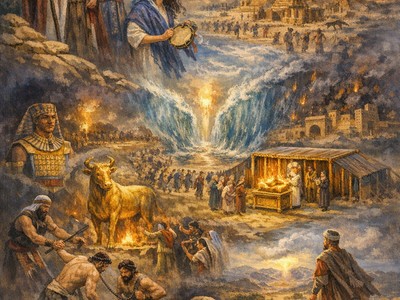
Egyptian slavery did not begin in one day—it thickened like darkness before dawn. Jacob's descendants lived among a foreign people until they found themselves in the position of lawless slaves. But it is at this point of despair that the story of liberation begins. Through Moshe and Aaron, the Almighty reveals His will: the people must leave Egypt. Ten plagues hit the country, destroying the usual order and exposing the fragility of human power. The exodus becomes not only a geographical movement, but also a spiritual turning point — the birth of a people.Moshe, Aaron and their sister Miriam play a special role in these events. Moshe is a leader and prophet, Aaron is a peacemaker and high priest, Miriam is a source of inner strength and faith. Together they lead the people across the sea, through fear and uncertainty. However, freedom does not come instantly: a long journey of formation begins outside Egypt.The climax is the giving of the Torah on Mount Sinai. Here former slaves receive not only the law, but also the meaning of existence. They become the people of the Covenant. But a crisis comes almost immediately: the sin of the golden calf shows how deep fear and the need for visible supports still live in the mind. Even after experiencing a revelation, a person can return to primitive forms of belief.The answer to this crisis is the creation of a Mishkan, a portable sanctuary. If Sinai was a moment of revelation from above, then the Mishkan is man's attempt to create a space for the constant presence of G-d in his life. Here Aaron and his sons serve, here the people learn discipline, order and responsibility.Forty years of wandering in the desert is not a punishment in the narrow sense, but a process of growing up. The generation that came out of Egypt had to leave to give way to a new one, free not only externally, but also internally. On this path, there are rebellions, doubts, falls - from Korah to complaints at the borders of the Earth. But at the same time, a nation capable of carrying faith and law is being formed.The story of the Exodus is not just a story about the past. This is a model of human life: the exit from "Egypt", the encounter with the truth, the crisis, the construction of the inner sanctuary and the long road to maturity. That is why it remains alive - as a chronicle not only of generations, but also of every person.source: toldot.com
Burning kvass as a starting point
Community
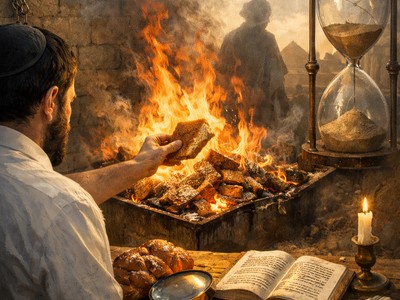
By burning kvass before Pesach, we perform an action that at first glance seems purely technical: cleaning, checking, formally canceling kvass. But tradition insists: it's not just about bread. It's about a person.Sourdough is a dough that has been allowed to rise. In this simple process, the sages saw the image of the yetzer a-ra - not that which pushes to obvious evil, but more silent and insidious: inertia, procrastination, complacency. The dough becomes leavened not because something was done with it, but because nothing was done in time. So is a person: he postpones, drags, thinks "I'll still have time" - and the opportunity disappears.Therefore, the struggle with leaven is not so much a struggle with pride in the abstract sense, but with an inner heaviness that prevents action. Commandments require vivacity, readiness to respond. The exodus from Egypt happened in a hurry - there was no time to wait for the dough to rise. Freedom begins with movement, with the determination to get out. Unleavened bread—the bread of speed and simplicity—is opposed to leaven as lightness is to viscosity.But does this mean that burning bread "burns the ego"? Literally no. Judaism was never built on magical thinking. At the same time, he deeply understands psychology: external action forms an internal state. When a person carefully searches for the leaven, renounces it, utters the formula of its annulment - it does not destroy the ego directly, but creates an inner attitude: "I don't want it to control me."The symbol does not replace work on itself, but starts it. Without inner intention, everything turns into a routine - and that's an honest observation. At the same time, the opposite is true: without action, the intention quickly dissolves. Commandments combine body and consciousness, habit and meaning.Therefore, the scheme itself is not wrong - it just needs updating. Every year a person can ask himself again: what has "leavened" in my life? Where am I procrastinating instead of getting out of my "Egypt"?And then burning kvass becomes not only a ritual, but a starting point. Not by annihilating the ego, but by freeing yourself from what prevents you from starting a movement.source:toldot.com
Bdikat chametz and biur chametz
Community
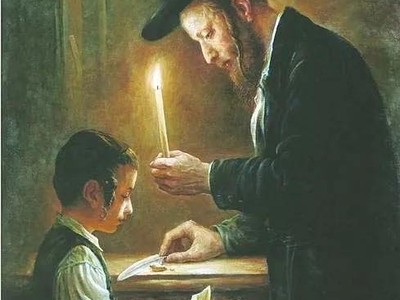
On the night before Pesach, a bdikat chametz is performed — an inspection of the entire house for the presence of chametz. The Sages decreed that every Jew should perform this test immediately after nightfall. It is also forbidden to eat or do anything—even Torah study—during the last 30 minutes before tset a-kohavim; if a person started earlier, it should be interrupted with the arrival of this time.One who usually prays Maariv in the minyan performs bdikat chametz immediately after returning from the synagogue. Even if he prays without a minyan that evening, it is permissible to read the Maariv first and then check. But one who usually prays without a minyan must first make a bdikat chametz, and only then pray.Any place where chametz could get into during the year is subject to inspection: not only the kitchen and dining room, but also the bedroom, attic, basement, pantry, car, etc. Special attention should be paid to children's rooms and things. To facilitate the inspection, on the afternoon of Nisan 13, the house is thoroughly cleaned, especially under the furniture.Cracks, holes and corners are carefully checked. Bottlenecks are checked as far as the hand can reach. If the chametz is visible, but it is impossible to get it, this place is covered (for example, with clay).Bdikat chametz is also held in synagogues at the same time.Before the inspection, the bread left for dinner and the morning of Nisan 14 is hidden in a safe place so that children or animals do not destroy it. Otherwise, you will have to check again.It is customary to lay out 10 pieces of stale bread (wrapped in paper) in the house, which the person checking finds. This helps not to lose attention and reminds us of the need for bitul chametz. According to Kabbalah, these 10 pieces symbolize the forces of impurity that will be destroyed.The inspection is carried out by the light of a candle (usually wax), using a feather to clean the cracks. The found chametz is collected with a wooden spoon and placed in a paper bag.Before the beginning, the owner of the house says a blessing: "...sanctified us with His commandments and ordered to destroy the chametz." A separate blessing is not recited for the inspection itself, because it is only part of the commandment to destroy chametz.After the blessing, even related things are not talked about until the inspection begins. Extraneous conversations are also avoided during the inspection.It is recommended to carry out the inspection ceremoniously, involving all household members: everyone gets their own plot. Everyone listens to the blessing, responds "AMEN!" and silently start checking.Once complete, the found chametz, feathers, and remnants of the candle are placed on a wooden spoon, wrapped, tied, and stored until morning to be burned.After the bdikat hametz, the bitul hametz, the annulment formula, is recited. The main thing is the inner decision to consider all undiscovered chametz as non-existent and not belonging to a person.The next day, on the eve of Pesach, at the fifth solar hour, the chametz is burned. For this, a separate fire is made. It is customary to check the pockets of clothes before burning them. After that, the formula Bitul Hametz and the prayer "Thy will be done" are said again.One who leaves home before Pesach and is unable to perform the inspection at the appointed time must do so on the eve of departure without a blessing, and then immediately recite the bitul chametz. source: From the collection "Shulkhan Aruch"
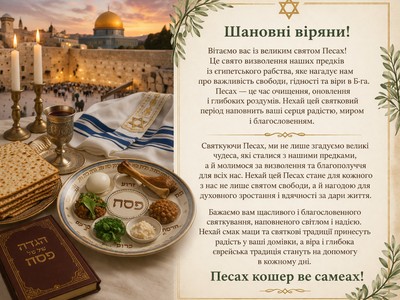
Dear believers!
Community
We congratulate you on the great holiday of Passover! It is a celebration of the liberation of our ancestors from Egyptian slavery, which reminds us of the importance of freedom, dignity and faith in G-d. Passover is a time of purification, renewal and deep reflection. May this holiday season fill your hearts with joy, peace and blessings.As we celebrate Passover, we not only remember the great miracles that happened to our ancestors, but we also pray for deliverance and prosperity for all of us. Let this Passover become for each of us not only a holiday of freedom, but also an opportunity for spiritual growth and gratitude for the gifts of life.We wish you a happy and blessed celebration filled with light and hope. Let the taste of matzah and festive traditions bring joy to your homes, and faith and deep Jewish tradition will help you every day.Pesach kosher ve sameach!
The customs of the seventh day of Passover
Community
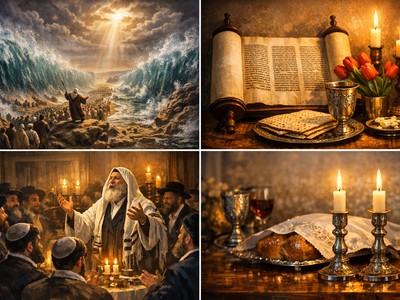
According to the Torah, not only the first, but also the seventh day of Passover — Shvii Shel Passover (and in the countries of the diaspora the eighth — Aharon Shel Passover) — is considered a holiday, and on this day all work bans apply, as on other holidays:“In the first month, on the fourteenth day of the month in the evening, it is the Passover of the Lord; and on the fifteenth day of the same month, it is the feast of the matzah of the Lord; seven days you shall eat matzah, and on the seventh day there shall be a holy convocation; you shall do no work” (Vaiqra 23:5–8).However, this day is perceived as the completion of the entire festive cycle of Passover and is not considered as a separate holiday. Therefore, when performing the consecration — kiddush, we do not say the Pesach blessing to "Shehehean" in Shvia. Like all Jewish holidays, the last day of Passover eventually acquired special customs that give it a unique character.According to the Torah, it was on the seventh day of Passover that the Jews walked along the bottom of the divided sea and witnessed how its waves swallowed up the Egyptian army. Therefore, in all synagogues on this day, excerpts from the book of Shemot are read, describing this miracle, as well as the Song of the Sea (Shirat ha-Yam) — a hymn of gratitude that the Jews sang after seeing the death of enemies. According to the tradition of Ashkenazi communities, this passage is listened to standing up.Today, Shirat ha-Yam is also included in the daily morning prayer — it is read at the end of Psukei de Zimra. This custom originated in the Land of Israel and gradually spread everywhere.In the first half of the twentieth century, in the house of the Jerusalem Rabbi Yaakov-Moshe Harlap, it became customary to read Shirat a-Yam on the night of Shvii Shel Pesach. At midnight, the rabbi, dressed in a white cauldron, began to read the Song of the Sea on a special motif, and those present repeated after him. After that, everyone sang and danced together.According to Hafetz Chaim, Shirat ha-Yam should speak with joy, presenting himself as a witness to the parting of the sea. According to the Kabbalistic tradition, those who read it with joy are forgiven many sins.In Chabad and some Sephardic communities, it is customary to stay awake on the night of Shviya Shel Pesach, spending time in prayer and Torah study. This is due to the fact that during the Exodus, the Jews also did not sleep that night, crossing the sea.In different communities, there were customs that reproduced the passage across the sea: for example, they poured water on the floor and symbolically "crossed the sea". Similar traditions existed in other towns, where it became a special event for the entire community.The Hasidim of Jerusalem from the Toldot Aaron movement also symbolically depicted this crossing, but without water: the rabbi passed through the crowd that personified the sea.All these customs are related to the past — to the events of the Exodus. But Baal Shem Tov introduced a custom that symbolizes the future: on the last day of Passover, to arrange the third meal — Seudat Mashiach ("Mashiach's meal"). Later, it was decided to drink four glasses of wine during it, like the Seder.Some believe that the roots of this custom are in the aftar of the holiday from the book of the prophet Yeshayahu, which describes the future world of harmony and peace.There is another explanation: Passover is a holiday of liberation from Egypt, and the final Liberation will also take place in the month of Nisan. Therefore, it is logical that the holiday begins with a meal that tells about the past, and ends with a meal dedicated to the future. Thus, Passover becomes a bridge between the memoryof the past and the hope for the future.source: chabad.org

Countdown to Omer
Community
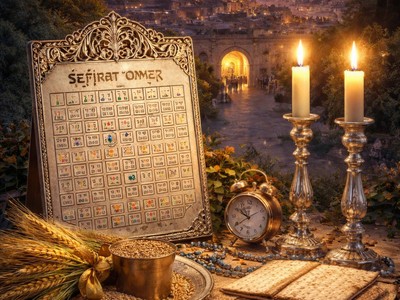
From the collection "Kitsur Shulkhan Arukh"On the second night of Passover, the countdown begins between the holidays of Passover and Shavuot — "Sephirat ha-Omer". This name is reminiscent of omer - a measure of barley flour, which on the second day of Passover was brought to the Temple as a gift to the Almighty. From that moment on, it was allowed to eat grain of a new crop. 49 days separate the first day of Passover from Shavuot. The Torah commands us to keep this account, so every day we say: "Today is such and such a day after the bringing of the omer."The author of the book "Sefer ha-Hinuh" explains that the commandment "Sephirat ha-Omer" emphasizes the superiority of spiritual freedom over physical freedom. After emerging from Egyptian slavery, the sons of Israel gained true freedom only when they received the Torah on Mount Sinai 49 days later. Knowing that the goal of liberation was to receive the Torah, they eagerly counted the days.According to the Kabbalah, 49 is the number of levels of spiritual impurity that the Jews plunged into in Egypt. Every day they were cleansed from one level, and by the 50th day — the day of the gift of the Torah — they were completely cleansed.Serving the Almighty these days is about inner perfection. The human soul has seven main qualities: kindness, rigor, harmony, and others. Combining with each other, they form 49 basic character traits (7×7). Every day we work on a certain combination of them.The Torah says, “And count yourselves… seven weeks; let them be full” (Vaikra 23:15). The sages explain: everyone should count independently. In order for the weeks to be "full", the account is kept at the beginning of the night — immediately after the Maar prayer.Before fulfilling the commandment, they say the blessing: “…who commanded us to count the days of the Omer.” If you did not have time at night, you can do it before dawn with a blessing. If they missed the night, they count the day without a blessing. If a whole day is missed, they are counted without a blessing in the future, but it is advisable to hear it from another person and answer "AMEN!".Starting from the second week, both days and weeks are called: for example, “today ten days is one week and three days of Omer”.Before blessing, you should know the right day. If someone is mistakenly repeated, the commandment is still considered fulfilled.Anyone who doubts whether they counted yesterday can continue counting with a blessing.If at dusk they ask what the day of the Omer is, you should answer: "Yesterday was such and such a day", so as not to count it as the fulfillment of the commandment.It is accepted not to work from sunset until the performance of "Sphyrate a-Omer". Half an hour before sunset, the meal does not begin. If you start — you can not interrupt, but if it's time to count — the meal should be interrupted.During the days of Sphirat HaOmer, the elements of mourning for the death of 24,000 students of Rabbi Akiva are observed.a) Do not hold weddings, but you can make engagements (without music and dancing).b) It is allowed to arrange meals, but without excessive fun.c) Shavuot is not cut before the day before (with certain exceptions for circumcision).
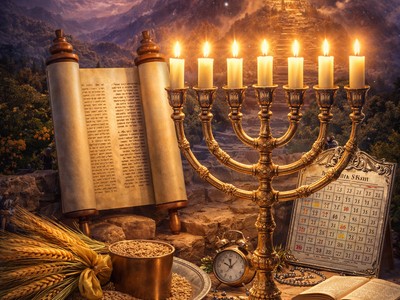
The Hidden Meaning of Sphyrat HaOmer — 7 × 7 from Creation
Community
The gift of the Torah took place 49 days after the feast of Passover. These 49 days are called Sfirat HaOmer days. The book of Vaikra (23:15) says, “And count yourselves… from the day you bring the omer offering.”Omer is a measure ofvolume. The Jews brought omer of barley, beginning with the afternoon offering on the second day of Passover. After that, they counted each of the seven weeks — 49 days, after which on the fiftieth day they celebrated Shavuot — the day of the gift of the Torah on Mount Sinai.Even after the destruction of the First and Second Temples, this tradition survived. Starting from the second night of Passover, we count all 49 days every day. At the end of the evening prayer, we say a blessing and name what day it is.These 49 days symbolize the Jews' expectation of receiving the Torah.The rule of “seven weeks” extends to a broader meaning — from the Creation to the gift of the Torah. This period is revealed by multiplying 7 by 7:The first stage is 7 days of the creation of the world.The second is 7 weeks of Omer (50 days).The third — 7×50 = 350 days (conditional year).The fourth is the seven-year cycle of schmieta.Thefifth is 7×7 years plus the anniversary year (50 years).Sixth — 7 anniversaries (350 years).Seventh — 49 jubilees (2,450 years).It was in the year 2450 from the Creation that Israel received the Torah.In the days of Sfirat HaOmer, the 67th Psalm and the Ana Behoah prayer are read. This psalm speaks of a gathering of exiles and future deliverance. Its structure is unique: it has 49 words and 49 letters in the central verse — according to the 49 days of the account.Therefore, it is often depicted in the form of a temple Menorah.The number 49 also corresponds to the 49 levels of uncleanness to which the Jews in Egypt descended. Every day of Omer is a cleansing of one step.Just as the Almighty has seven lower Sefirot, the human soul also has seven qualities (midot). Because of Omer's countdown, we purify these qualities.The menorah symbolizes a person:The Torah is light, the soul is oil, the body is gnath. Together they create a lamp that fills the world with the light of the Almighty.By reading the 67th Psalm and imagining the Menorah, we awaken the Creator's mercy.The Ana Behoah prayer consists of 42 words that form the Nameof the Almighty. Each day of Omer is associated with a certain word of this prayer.Why Women Don't Count Omer (Kabbalistic Explanation)The Zohar explains that the days of Omer are a cleansing process, similar to the state of a woman after a cleansing. These days belong to the "world of the masculine", so the commandment of the Omer account is assigned to men.Source:https://silatehilim.com/
A moment of silence.
Community
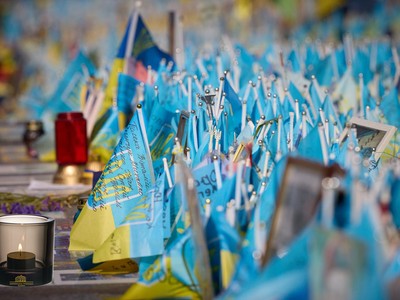
Every day at 9:00Cease movement.Shut your mouth.Remember.Honor thememoryof the dead:soldiers, children, peaceful people.Those who are no longer around.But who is with us forever is in the heart.It's not just a minute of silence.It is our dutyIt's humanity.Alive — thanks to those who were lost...........