
Preparing for Passover: Care Coming Home
Community
This Sunday, representatives of our community went on the road - not for a holiday, but with a holiday.We delivered Passover kits to those who are unable to come to the synagogue on their own - to people of a respectable age and to those who have difficulty moving.It was a short but very lively meeting: a few words, a smile, wishes for a kosher and joyful Pesach right on the doorstep.Passover is not just about the freedom we once had.This is about ensuring that no one is left behind today.Together with the sets, we brought attention —so that everyone can meet Pesach.
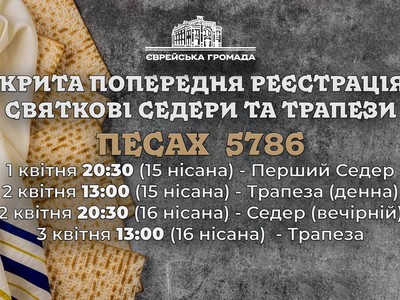
Registration for holiday Seders and meals
Community
Registration for holiday Seders and mealsin the Community at the Central Synagogue of KyivWe invite you to spend these special days of Pesach together - in a warm circle of community, with observance of traditions and in a real holiday atmosphere.April 1, 2026 / Nisan 15, 57861st Lilah Seder - 8:30 p.mApril 2, 2026 / Nisan 15, 5786Festive meal - 13:00April 2, 2026 / Nisan 16, 57862nd Seder - 8:30 p.mApril 3, 2026 / Nisan 16, 5786Festive meal - 13:00Place:Kyiv, str. Shota Rustaveli, 13Central Synagogue of KyivPre-registration is required(044) 235-90-82 / 235-90-83https://forms.gle/58rXE7S4F81cSJiK7The number of places is limited - please register in advance.Hag Pesach Kasher veSameach!

Sell your chametz online 📝
Community
According to Jewish law, it is forbidden for a Jew to own a rude dog during all the days of Passover. Therefore, the entire undestroyed hamlet must be sold to a non-Jew for the holiday period.All stocks of kvass (as well as dishes that have not been thoroughly cleaned of its remains) should be removed to separate, closed places for the time of Passover 🗝️Since the sale of hametsu is a complex process that requires strict compliance with the laws, its registration and subsequent redemption after the holiday are carried out through an authoritative rabbi.CautionComplete the online contract and submit it no later thanwednesday, April 1, until 10:00. After that, the appointment will be closed.🔗https://forms.gle/sh5tFfmEiLPw8GRm6
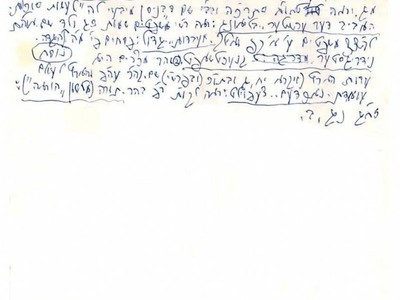
Topic of the day: 📜 "Mihtav Klali": public messages of the Rebbe to every Jew
Community
Mihtav Klali ("common letter") is a unique format of correspondence of the Lubavitcher Rebbe, addressed not to an individual, but to the entire Jewish people, regardless of their place of residence or the level of observance of traditions.ლ History and contentThe tradition began on 18 Elul 5710 (1950) when the Rebbe wrote the first two such letters to Rosh Hashanah. Since then, he has published them on almost every important date of the Jewish calendar.What are these letters about? In them, the Rebbe gives a deep spiritual interpretation of the holiday and practical guidance for each Jew.The main goal: preparation for true and complete Liberation (Geula).🌍 Language and disseminationInitially, the letters were written in Yiddish, and later translated into Hebrew (among the translators are Rabbis Uriel Zimmer, Abraham Hanoch Glitzenstein and Tuvia Blau).The letters were immediately published in the largest newspapers in the United States and Israel.In the yeshiva "Tomhei Timim" (770), spiritual mentors conducted special lessons on the analysis of each new letter.📚 Where to read?Today, these messages are collected in several editions:• "Igrot Kodesh" — are included in the general collection of letters in chronological order.• "Likutey Sikhot" — printed in the annexes to the volumes.• Igrot Melech is a special two-volume publication devoted exclusively to Mihtav Klali (edited by Rabbi Peretz Uriel Blau).💡 Interesting fact: "general-personal" writingThere was also a transitional format (started in 5709): the Rebbe wrote one in-depth correspondence on the topic of the week, which was printed in circulation, and then he entered the nameof a specific addressee.In the archives, such letters are marked with three stars ** *, followed by personal notes for specific people.TodayThe tradition of publishing these letters in the press continues thanks to the organization "Ithadut ha-Hasidim", reminding each of us of the connection with the Rebbe and our spiritual mission.Source:📖 Lubavitcher calendar
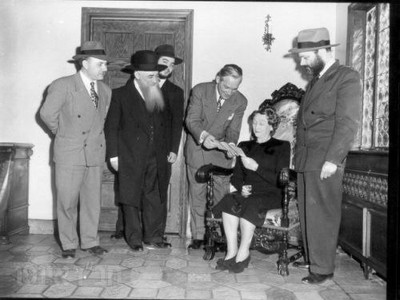
A page of history: 📜 The life of Nehama-Dina Schneerson
Community
Nehama-Dina Schneerson (1881-1971) — wife of the sixth Lubavitcher Rebbe and mother-in-law of the seventh Rebbe.🏙 Roots and great heritageNehama-Dina was born on 18 Cheshvan 5642 in Chisinau (Moldova). Her father was Rabbi Abraham Schneerson, grandson of the famous Tsemakh Tzedek. In 1897, when she was only 16 years old, she married Rabbi Yosef-Yitzchak (Rajaz). The choice fell on her by the special decision of the Fifth Rebbe (Rashab), who wanted his only son to join fate with a representative of their holy family. 🛡 A feat for salvationIn the summer of 1927, when her husband was arrested by the Soviet authorities for “counter-revolutionary” religious activities, Nehama-Dina showed extraordinary courage. Despite the GPU's surveillance and the real threat of execution, she actually led the effort to save him. It was she who coordinated all actions to release the man from the walls of theShpalernaya Prison, becoming his "voice" and protection in the face of the communist regime. 🔇 The World in Silence: The Test of DeafnessLittle did she know that much of her life had passed in almost complete silence. After the birth of her first daughter, she began to have serious hearing problems. When Nazi aircraft bombed Warsaw in 1939, it heard only a slight rustle. She learned to read lips skillfully, and there was always paper and a pen next to her so that loved ones could write their words to her. This illness did not break her spirit — she remained a support for the whole family. 🕊 Beregynya "Rebbe's House"After her husband's departure in 1950, Nehama-Dina led a secluded life, devoting days to prayer and reading Tehilim. However, on the holiday, her house came to life — she welcomed her daughters and guests with a joyful face. For the rest of her life, the Seventh Rebbe kept a special order: festive meals were held at her home, and there was always a fixture, a glass, and halas on the table for her late husband — as a sign of the continuity of generations. 🕯 Completing the pathNehama-Dina left this world on 10 Tevet 5731 (1971) and was buried in New York, next to her husband Oel. 👨👩👧👧 Daughters:Wife of Rabbi Shmariau GurariKhaya-Mushka Schneerson (wife of the Seventh Rebbe)Sheina Orenstein (wife of Rabbi Mendel Orenstein) 📖Lubavitcher calendar
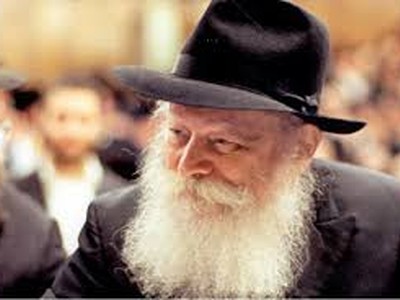
History of Hasidism : Today is the 11th of Nisan — the birthday of the Lubavitcher Rebbe
Community
RABBI MENAHEM-MENDEL SHNEERSON, THE LUBAVITCH REBBE, IS REGARDED AS THE MOST PHENOMENAL JEWISH SPIRITUAL LEADER AND THINKER OF RECENT TIMES. HUNDREDS OF VOLUMES OF PUBLISHED WORKS, THOUSANDS OF MESSENGERS AROUND THE WORLD WHO BRING THE LIGHT OF HIS TEACHINGS TO THE RECIPIENTS, HUNDREDS OF THOUSANDS OF FOLLOWERS, MILLIONS OF FANS AND ADMIRERS FOR WHOM HE IS A REBE.Teacher, Mentor, Leader and role model. A man whose efforts shook the conscience of a generation and began the spiritual awakening of the Jews.The Rebbe was born on Nisan 11, 5662 (April 18, 1902) in Mykolaiv. His father, Rabbi Levi-Yitzchok Schneerson, was one of the most famous rabbis in Russia at that time. A scientist with deep knowledge of the Talmud, Jewish law, Hasidic thought, became an implacable opponent of the new winds brought by the Bolsheviks. His wife Hana, the daughter of Mykolaiv rabbi Meyer-Shloimo Yanovsky, was a like-minded and faithful friend of her husband. The boy, the first child in the family, was named after his great-grandfather, Rabbi Menachem-Mendl, the third Lubavitch Rebbe, widely known in Jewish circles for his halachic work "Tsemach Tzedek". The father's famous relative, the Lubavitch Rebbe, Rabbi Rashab, provided the child's parents with a series of instructions. For example, the mother performed the ritual washing of her hands "netilat yadaim" before each feeding of the baby.When Menachem-Mendl was five years old, his parents were forced to take him out of the heather due to his extraordinary academic success and hire him tutors for individual lessons. The teacher from the heather was sure that "this child was born to be great." In numerous memories of the Rebbe's childhood, one detail draws attention to himself - the lack of information about children's games. The boy did not play, he studied. The boy was nine years old when he sent his intelligence in the Jewish jurisdiction to the children's newspaper "Ah", which was then published in Lubavitch. The prodigy's work was published. He was interested not only in the Torah, but also in secular sciences. His father allowed him to study the sciences in his free time from Torah study, which took him 18 hours a day. However, little Menachem-Mendl graduated from the local gymnasium externally within six months, receiving a gold medal and a state certificate. In 1923, the young man went to Rostov for probably the most important meeting in his life. He went to meet Rabbi Yosef Yitzchok Schneerson, the Rebbe of Lubavitch. In 1927, together with the Rebbe's family, he left Russia, and in 1929, in Warsaw, he married the daughter of Rebbe Haye-Muse. The newlyweds moved from Warsaw to Berlin.Studying at the University of Berlin – until 1933. When the Nazis came to power in Germany, student Schneerson was forced to leave the University of Heidelberg, where he studied mathematics and philosophy at the same time. In 1933, the couple moved from Germany to France, to Paris. He studied at the Sorbonne, at the Faculty of Shipbuilding, where he received a diploma.In 1941, the Schneerson spouses managed to escape from occupied France to the United States, at that time Rabbi Yosef-Itzhok had already settled there.In America, Rabbi Menachem-Mendl expected to pursue his professional activity, shipbuilding. For some time, he really worked at a military base, participated in the design of submarines. But the famous father-in-law insisted that his son-in-law head two of the biggest Lubavitch organizations - Merkaz Leinyanei Hinuch, the headquarters of Gabad educational institutions, and Kegot publishing house. After the death of the sixth Lubavitch Rebbe, Rabbi Yosef Yitzchok Schneerson, in 1950, the question of his successor naturally arose. The future Rebbe was categorically against the proposal to take the place of his father-in-law. Anyway, on the first anniversary of Rebbe Rabbi Yosef Yitzchok's passing from this world, his younger son-in-law effectively became the new Rebbe.During the 43 years of his leadership, Rabbi Menachem-Mendel Schneerson managed to bring more people closer to Judaism than all the religious leaders of the current generation combined. His methods were absolutely groundbreaking, previously unseen in Jewish organizations. The Rebbe used, it seems, all the possibilities, technology, press, public influence to achieve what he had achieved. The bloodless, seemingly dying Hasidic movement has turned into a powerful force, the impact of which is felt by millions of people.The Rebbe built an unprecedented network of Chabad branches around the world. Thousands of his followers dispersed to all corners of the earth. If we try to describe in a few words the main message that the Rebbe left to the world, it will probably be the responsibility of the Jewish people for every Jew. No matter who he is and in what spiritual state he is. There is no one about whom it can be said that he is "zero", "farfallen", "lost". We have no right to leave out any person. It was for this that the Rebbe built the Chabad empire, sending his emissaries even to places where there were only a few Jews.Source:https://770.com.ua
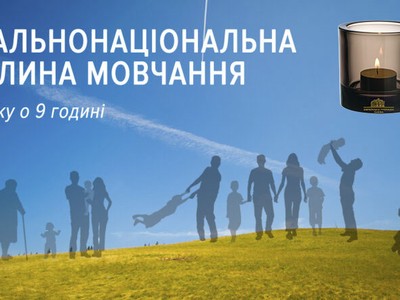
A moment of silence.
Community
Every day at 9:00Cease movement.Shut your mouth.Remember.Honor thememoryof the dead:soldiers, children, peaceful people.Those who are no longer around.But who is with us forever is in the heart.It's not just a minute of silence.It is our dutyIt's humanity.Alive — thanks to those who were lost...........
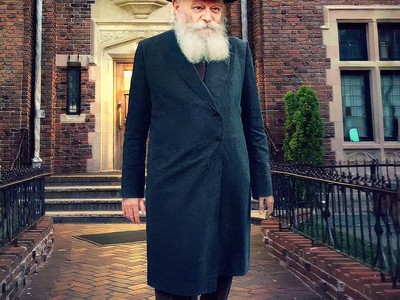
💧 Mayim Shelanu: "sleeping water"
Community
On the eve of Passover, when the world is immersed in the hustle and bustle of cleaning and cooking, there is one special moment — full of silence and deep meaning. This is the rite of the fence "Mayim Shelan" —"sleeping water"At first glance, this seems like a simple technical detail, but for the Hasidim it is a moment of truth where physical action is combined with the highest spiritual service and preparation for baking the most guarded matzah.⚖️Cold as a guarantee of holiness and purityThe main task when baking matzah is not to give the dough any chance to ferment. Halacha teaches that heat is the main catalyst of this process, so the water for kneading cannot be taken directly from an open body of water on the day of baking. It is collected at sunset, before the stars appear, and left to "rest" in a cool place for the whole night (that is why it is called "sleeping"). During this time, the water gives off the accumulated earth's heat, becoming perfectly cold. This is how an ordinary natural element is transformed into an instrument for fulfilling the commandment — prepared to meet the flour in complete purity.🕍In the presence of the Rebbe: the special traditions of the court 770This rite acquired special grandeur in the courtyard of the Lubavitcher Rebbe. Unlike his predecessors, who took an active part in the baking itself, the Rebbe focused his participation on water intake. The place of action invariably became the facade of the legendary building "770" in Brooklyn, where in 1968 a well was specially dug.Witnesses recall that the Rebbe's entrance to the well was always a moment of extreme concentration. He walked toward the vessels with a stern, collected expression, oblivious to the crowd. His movements were precise: the Rebbe personally rinsed the glass vessel three times, each time carefully shaking the water, and then filled large canisters, pouring water from his bowl into each of them three times. It was a spectacle imbued with holiness, where every movement had a deep meaning.🎹From awe to Easter joyIt is interesting to observe how the atmosphere of this rite changed through music. When the Rebbe walked to the well, a serious nigger called Alter Rebbe "Eli Ata" sounded in the yard. At these moments, the Rebbe did not encourage singing and was completely immersed in the action, maintaining absolute concentration.But everything changed when the work was completed. Returning with the collected water, the Rebbe began to move his hands vigorously, encouraging the community to a powerful and joyful singing. This abrupt transition — from the thrill of preparation to the joy of doing the Creator's will — set the tone for the whole holiday.✨Work that changes the very essence of a personThe deep meaning of Mayim Shelan is revealed in the story told by Rebbe Rayatz about his father, Rebbe Rashaba. In 1911, Rebbe Rashab observed a student carrying heavy jars of water. This young man was known for his intelligence, but at the same time he had a certain earthiness. But that evening, carrying water for the commandment, he looked different.Rebbe Rashab said then:“See what practical work (labor) does! After all, it has become completely different than it was before. Wearing "Mayim Shelan" with the feeling of the heart really changes the very essence of man. ”The famous Hasid Reb Hillel from Parić added:“I try to be attentive in fulfilling the commandments so that I understand and that the words of Hasidism fit correctly into me.”This is the main lesson of preparing for Passover: through physical effort and attention to detail, we cleanse not only the dishes, but also our own soul — preparing it for a real exit from inner Egypt.Easy and meaningful preparation for Passover!

Ayom-yom: 12 Nisan
Community
Today is 12 Nisan 5786From the moment of the exodus from Egypt, the sons of Israel began to be called "the armies of the Most High" (Zwaot Ashem). The difference between the status of “slaves” (who they used to be) and “warrior” is as follows:A slave does the work of his master. There are different levels in this: from a skilled craftsman (“one who drills pearls”) to one who is engaged in simple labor or hard physical work. This requires considerable effort and exhaustion, but is not associated with self-sacrifice (mesir ut nefesh).The military are those who serve with great dedication and selflessness, both in defensive and offensive combat. They stand at their post with maximum stability, regardless of the enemy. Their ministry is based not on their own understanding or logic, but on the strict fulfillment of the orders of their Commander.The souls of Israel in Egypt were in the lowest state, suffering grievously and bitterly. Despite this, they did not change their names, language, or clothing. They stood guard over their identity with absolute firmness, knowing that the Almighty had promised to deliver them. Anyone who behaves in such circumstances belongs to the "army of the Almighty", and the Almighty helps him in a supernatural way, which manifests itself within nature itself.📖 Lubavitcher calendar
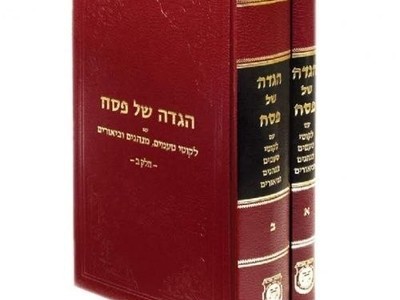
Rebbe📜 's Passover Haggadah
Community
📜 The Rebbe's Passover Haggadah: A Masterpiece of Jewish Thought and Scientific AccuracyWhen preparing for Passover, we often look for the same book that will help us feel the Seder more deeply. One of the most significant works in this area is the "Haggadah with a selection of explanations and customs" (Haggadah im licutey taamim u-minagim), concluded by the Seventh Lubavitsky Rebbe in 1946.What makes it unique? Here are some facts to know:🔹Scientific approach and concisenessThe famous Rabbi Shlomo-Yosef Zevin called this work “the pearl of agadic literature.” The Rebbe managed to contain a huge amount of information on 47 pages: from the textual analysis of words to deep cabalistic meanings, while maintaining clarity and brevity.🔹Detective with primary sourcesThe Rebbe did a great job of verifying the texts. Did you know that Alter Rebe (the founder of Chabad) checked the text of the Haggadah by studying about 60 different variants of manuscripts and editions? In his comments, the Rebbe explains each change and proves why this version is the most accurate.🔹“Inner” gateInteresting story of the cover of the first edition. Rebbe Rajac (Sixth Rebbe) ordered it to be printed with the same "gate" (title page) design used for the writings of his father, the Fifth Rebbe. This underscored the heredity and deep intrinsic connection of generations.🔹Not just for ChabadAlthough all the customs of Chabad are collected and systematized in Agadah (for example, why it is not customary in the house of Lubavitcher Rebbe to "steal" afikoman — because theft, even jokingly, is not a good example for upbringing), it has become a reference book for researchers and Jews of different directions due to its universal intellectual level.🔹The Evolution of the BookThe first edition was published in 1946. Over the decades, the Rebbe added new fragments and notes. It was only in 1973 that all these additions were finally integrated into the main text, creating the perfect structure that we see today.💡Summary:This is not just a collection of prayers, but a full-fledged guide to history, halakha and Hasidism. If you want your Seder to be filled with new content this year, Rebbe's Haggadah will be your best guide.📖 Lubavitcher calendar

Our dates: 13 Nisan
Community
📌13 Nisan 2048 (1713 BC) — Abraham's Brit Milah.All subsequent descendants of the marriage of Abraham and Sarah will be referred to as “entered into the union of Abraham-Abin”, but it was on that day that the same union was formed. 13 Nisan, a native of Ur-Kasdim, 99-year-old Abram, circumcised the foreskin to himself and all members of his family at the direction of the Almighty. Having thus entered into an alliance with the Most High (the word "brit" means "alliance"), he received a new name — Abraham ("father of many nations").Simultaneously with the father, his 13-year-old son from the maid Gagara (Hagar), Ishmael (Ishmael), also circumcised. Our sages say that the descendants of Ishmael (Arabs) received circumcision in temporary possession of holy places (Eretz Israel) as a reward for fulfilling the commandment. Well, the son Isaac, born a year later to Sarah and Avraham, entered into the union of his father's name on the 8th day, becoming the first to be circumcised at the age of eight days.Three days later, three guests came to Avraham.📌13 Nisan 3404 (357 BC) — Haman's decree on the extermination of the Jews.In the 12th year of the reign of Tsar Ahasuerus, his Prime Minister Haman managed to achieve approval of the plan for the "final solution of the Jewish question." The massacre was scheduled for 13 adar, that is, 11 months later, and a decree was sent out to all 127 provinces of the Persian Empire. Fortunately, through the efforts of one of the leaders of the Jewish community of Mordechai and the wife of Ahasuerus, Esther, Haman's plan was thwarted, and the holiday of Purim was founded in memory of the victory.Nisan 📌13, 5335 (March 24, 1575) — Yorzeit (the anniversary of the departure from this world) of the creator of the Shulchan Aruch, Rabbi Yosef ben Ephraim Karo.Rabbi Yosef was born in 1488 in Toledo, but he left Spain at the age of 4: after the expulsion of Jews from Spain, the family moved to Portugal, and in 1497, after a new exile, to Turkey, where Rabbi Yosef lived for almost 40 years.In 1536, Rabbi Karo went to Safed. Here he studied with the slave Jacob Beirav and received from him laughter (certification for the rank of rabbi). After the departure of Rabbi Beirava from Safed, Rabbi Karo became the head of local scholars and one of the most respected members of the local court (base din) — in all rulings his name was given first. Rabbi Yosef led a large yeshiva with 200 students.The most popular among the works of Rabbi Yosef was the "Shulchan Aruch", which became the generally accepted code of laws of Orthodox Jewry, but it is a simplified reworking of the most significant, from the point of view of Jewish scholarship, the work of Rabbi Yosef — "Beit Yosef" ("House of Yosef"). In his resolutions, Rabbi Yosef himself always referred to "Beit Yosef" and never to "Shulchan Aruch".The grave of Rabbi Yosef Karo has survived to this day in the old cemetery of Safed.📌13 Nisan 5626 (March 29, 1866) — Yorzeit (anniversary of the departure from this world) of the third Lubavitcher Rebbe Tsemakh Tzedek.In 1860, Rabbi Tzemach Tzedek fell seriously ill. For the past six months, he has found it difficult to speak, and he has refused to receive visitors for a personal conversation on material matters, saying that he does not see the body, but sees only the light of the soul and therefore cannot answer questions related to the material.source: chabad.odessa

Our dates:
Community
14 Nisan4895 (March 30, 1135) — Birthday of Rabbi Moshe ben Maimon (Rambam, Maimonides).Rabbi Moshe ben Maimon, also known by the acronym Rambam (in the West he is more often called "Maimonides" — "son of Maimon"), was born in Spanish Cordoba to a noble and famous family of descendants of King David and the compiler of the Talmud, Rabbi Yehuda ha-Nasi.His first teacher was his father, Rabbi Maimon, head of the rabbinical court of Córdoba and one of the most prominent legislators of his time. When Moshe was 13 years old, his family had to flee Córdoba - the city was taken over by the Almohad Islamic fanatics, and all non-Muslims were threatened with death. For seven years, the family traveled through Spain and finally settled in the city of Fez (Morocco). During this time, Rabbi Moshe managed to write several works - commentaries on the Talmud, a treatise on the Jewish calendar, etc., but in 1165 they left Fez, which also belonged to the Almohads, going to Eretz Israel. Akko became a holiday. Maimonides' family traveled to Eretz Israel, and then went to Egypt, where they settled in Fostat (Old Cairo).The younger brother - David ben Maimon - was engaged in the trade of precious stones and thanks to this slave Moshe could fulfill the duties of the head of the community and engage in literary activities. However, during one of the trips, his ship was wrecked and David drowned (Jews living in India assure that he did not drown, but escaped and led the community in Cochin), leaving behind his wife and two children. The family was broke, and Rambam had to look for income for two families at once. He became a physician and eventually was appointed one of the personal physicians of Sultan Saladin (Salah al-Din) himself. It was during these years, despite his busy schedule, that he wrote the books "Mishne Torah" ("Repetition of the Law") and "More Nevuhim" ("The Teacher of Those Who Hesitate"). He also wrote many other books, including Sefer HaMitzvot (The Book of Commandments), where he systematized all 613 commandments — 248 commandments and 365 prohibitions.Until the end of his life, Rabbi Moshe continued to work as a court physician and head of the Jewish community, conducting extensive correspondence with communities in different countries. Rambam died mourned in all parts of the Jewish world, and his remains were transported to Eretz Yisrael, to Tiberias, and to this day his tomb remains an object of pilgrimage.On the 750th anniversary of the Rambam, Kibbutz Yad Maimonides was founded in Israel. source: chabad.odessa