
Today: 29 Shevat
Community
Alter Rebbe once said:Rashi's commentary on the Pentateuch is "Torah wine." It opens the heart and awakens deep love and fear [of G-d].Rashi's commentary on the Talmud opens the mind and reveals essential intelligence.Notes:.The term “wine of the Torah” refers to the inner secrets of the Torah. As the sages said (Sanhedrin 38a), “When wine enters, mysteries come out.”On every Saturday dyebrand for 24 years-from the death of his mother in early 5725 (1964) to the death of his wife in 5748 (1988) -Rebbe King Moshiach parsed Rashi's specific commentary. This had two purposes:To show that Rashi's comment can be understood even by a five-year-old child who is studying the Pentateuch for the first time. And so, we can look at the Torah with the inquisitive eyes of a child and find answers to all our questions in it.To show that this layered commentary contains the “wine of the Torah” — its inner mysteries alluded to by the Alter Rebbe in the above statement.In fact, these two approaches complement each other. The main truth contains the deepest secrets of life — and at the same time it can be understood even by a small child.
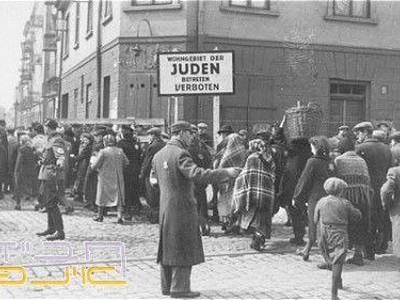
Page of history: 🏷 Poland — "along the lines": overnight stay, exile and the light of Hasidism
Community
🕯 Land OF great JewryFor centuries, Poland has been one of the main centers of Jewish life in the world. Millions of Jews lived here, communities, yeshivas, Hasidic courts flourished, and holy books were printed.Before the war, there were about 3.3 million Jews in the country — almost a third of the world's Jewry. The catastrophe destroyed about three million. Entire cities and generations have disappeared. The ghettos of Łódź and Warsaw became symbols of tragedy.👑 "Pauline" — hidden content of the nameThe Rebbe explained that the very word "Poland" in the language of our sages is read as "by lean" — "here we spend the night".Galut is like the night. At night, a person does not build a house — he only stops for the night. Likewise, the Jews' stay in exile: this is not a destination, but a temporary stop before returning home — to Eretz Yisrael, with the arrival of Geula.And at the same time, the Almighty makes it possible even in exile to live, study the Torah and preserve the people. Therefore, in the best years, Poland became a refuge and a place of spiritual prosperity.🔥 Cradle of HasidismThe Polish land literally breathed Hasidism.Dozens of courtyards arose and operated here: Gur, Vyzhnytsia, Tsanz, Belz, Amshinov, Lelov, Pshyskha and many others.Thousands of Hasidim, rabbis, niguns, farbrengens - Poland has become the living heart of Eastern European Hasidism.🕍 Rebbe Rajac and the Rise of the ChabadA special place is occupied by the period of the Rebbe Rajac's stay in Warsaw.His arrival caused a spiritual awakening:the Tomhei Timimim yeshiva became known throughout the country, Maamarim and Hasidic books were distributed, and even representatives of other circles were drawn to the teachings of the Chabad.This success was so noticeable that the Rebbe later described those years in the words of the Torah: “and his brothers envied him” — the influence was enormous.🌿 The subtlety of the soul of this earthMitler Rebe once said that Poland “took a sense of smell.”The Hasidim explain this as a special spiritual sensitivity — the ability to feel the Divinity not only with the mind, but with the soul itself.🏘 Revival TodayAfter the destruction of the Holocaust, life was almost extinguished.But gradually the light comes back.Today, Chabad houses operate in Poland — in Warsaw, Krakow, Katowice. Schlichim opens synagogues, Torah lessons, mikvahs, works with families and students, step by step reviving Jewish life.✨ Meaning of the storyPoland is a division of pain and greatness at the same time.A place of exile that became a temporary overnight stay.A place of destruction — and at the same time an incredible spiritual light."Po Lin" — we are only for the night...And the dawn will bring us home.source: 📖 Lubavitcher Calendar (https://t.me/+8KbDy9dQVqAxZWE8

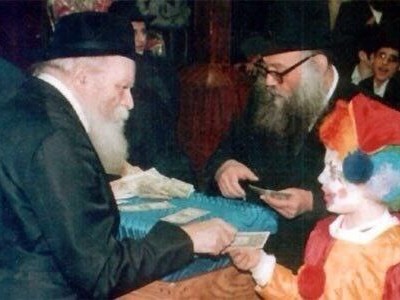
Topic of the day: 🎭 The month of Adar — a time of joy and upheaval of fate
Community
Adar is the sixth month of the year from Tishrei and the twelfth from Nisan. It is a special month of the Jewish calendar, filled with light, joy and a sense of inner victory.It is about him that it is said:"משנכנס אדר מרבים בשמחה" — "With the advent of Adar, joy multiplies."The sign of the month is Pisces (Dahim).📅Adar in a leap yearIn a leap year, there are two months: Adar I and Adar II.Purim is celebrated in Adar II, and in Adar I "Purim katan" is celebrated.The question of when exactly the duty to “multiply joy” begins was discussed by the teachers of law. Some believed — only from Adar II, because Purim falls on him.However, the Lubavitcher Rebbe emphasized that joy concerns the entire month of Adar, including Adar I. Moreover, he urged to start rejoicing from the first Adar, leaving no room for gloom and excessive severity.In 5752 (1992), the Rebbe explained the special depth of the leap year:60 days of joy (two months of Adar) correspond to the halakhic principle of "bitul beshishim" — annulment at sixty. In this way, joy can “nullify” all obstacles and speed up the disclosure of Geula.🎉"Multiply joy"In Gemara (Taanit 29a), the words of Rabbi Shmuel bar Shilat on behalf of Rav are quoted:“As with the onset of ABA, joy is diminished, so with the onset of Adar, joy is multiplied.”This ruling is enshrined in the Galah by Reef, Roche, and other authorities.But what does it mean to “multiply joy”?It's not just a good mood. It is a conscious work — to add in the Torah, in prayer, in good works, in unity among the Jews. The joy of Adar is the joy of faith, the joy of the victory of light over darkness.🌟"Bria Mazalei" — strong mazalIt also says:“If a Jew has a trial with a non-Jew, let him avoid the month of Av (unfavorable mazal) and try to deal in Adar — when the mazal is strong.”The question arises: after all, it is saidאין מזל לישראל"" — "Israel has no mazal"?The explanations of the sages are different.But the Rebbe explains more deeply: within a year, a Jew can change his mazal through prayer and merit. However, in the month of Adar, the mazal itself becomes favorable in nature. This is due to the birth of Moshe — the revelation of the essential soul of Israel, which is higher than any astrology.Midrash recounts that Haman chose Adar to destroy the Jews, knowing that Moshe had died that month. But he didn't know that Moses was born that same month — and it was the birth that outweighed him.✨"Wenagafoh gu" — coupThe essence of the month of Adar is "ונהפוך הוא" — a coup.Darkness turns into light, fear into triumph, and judgment into salvation.Therefore, Adar is not just a calendar month.It is a state of mind To multiply joy means to reveal the inner power capable of changing reality.Source:📖 Lubavitcher calendar

Question to the Rabbi: Who are the angels?
Community
Aren't these the same manifestations of God's will? Why is it possible to address the Names, but not the angels? To understand this, it is important to distinguish between two things: what we call the Almighty and to whom we turn.When a person prays and pronounces different Names — for example, the four-letter Name, Elokim, Zwaot, and others — he does not turn to different “forces”. She turns to the One Creator, but calls Him the manifestation that opens in this situation. This is how the sages explain: “The Almighty is called by His deeds.” Names are the language of man, an attempt to describe how the Creator reveals Himself in the world, while remaining absolutely One.Angels are arranged differently. An angel is not a “name” or an “aspect”, but a created being, a separate reality created by the Almighty to perform a certain task. An angel is not a source of strength. It does not choose, decide, or act on its own. He is a messenger, an instrument for fulfilling the will of the Creator. Even if the angel is completely subordinate to the Almighty, he still remains not the Creator, but the creation.And this is where the fundamental boundary passes. Prayer in Judaism is not just asking for help. It is the act of connecting and acknowledging: “You are the source of everything.” Therefore, one can pray only to the One Who is the Source. The appeal to the angel, even in the form of "pass, help, do", puts a person in the mode of mediation: as if there is a certain "service", which is more convenient to address directly. This is already dangerously reminiscent of a religious error that the Torah calls serving alien forces.This opinion is sharply formulated by the Jerusalem Talmud: if trouble comes, neither Michael nor Gabriel should be appealed to, but only to the Almighty. Not because angels are “bad”, but because even the right messenger has no right to take the place of the Addressee.A simple example can be given: the king allows his subjects to address him, calling him “wise”, “merciful”, “just”. This does not violate loyalty to the king. But if the subject begins to ask the minister — even the most loyal and appointed by the tsar himself — he will violate the main rule: you should contact the tsar, not the official.Thus, the Names of the Almighty are ways of addressing the One Creator through His manifestations. Angels, on the other hand, are creatures who carry out errands. Therefore, prayer to angels in Judaism is impossible: it destroys the very basis of faith — the direct connectionof man with the Creator, without intermediaries.Source:toldot.com

Ayom Yom: 30 Shevat
Community
Today is 30 Shevat 5786. The first day of Rosh Chodesh Adar.📌 The Rebbe participates in a Hasidic wedding (Rabbi Yehuda-Leib Posner) for the first time — after the end of a year of mourning for his father-in-law, Rebbe Rajac.Iom-yomMany Hasidim considered the day of their arrival in Lyubavichy their birthday.My teacher, Rabbi Shabtay (Rashbats), first arrived in Lubavitches on Friday night, on the eve of the chapter of Mishpatim, in 5608. And every year he did not sleep that night and intended to impose tefillin exactly at the hour when he first entered the Tsemakh of Tzedek. source: 📖 Lubavitcher Calendar

Topic of the day: Blessing before eating
Community
There are two kinds of blessings associated with food: those spoken before the meal and those spoken after the meal. Before a meal, we recite a blessing in which we thank the Creator for the pleasure we receive from the dish. After all, as already noted, a person is forbidden to take something in the world of the Almighty without His permission. This is so obvious that there is not even a separate commandment in the Torah about blessing before eating — this should be self-evident.When a person receives gifts from his neighbor, he thanks separately for each of them. If he expresses gratitude in general words, it shows that he does not realize the special value of each gift — and her gratitude loses its depth. The same should be done for Heaven. Therefore, the sages decreed that a separate blessing should be said over each type of food (see below, chapter 8, paragraph 4).🙌Above the bread they say:“Blessed art Thou, O Lord our God, King of the world, who giveth the earth the power to bring forth bread.”(ha-motzi lekhem min ha-aretz; see below, Chapter 3, Clause 1).🙌Over dishes of boiled or ground cereals of five types — wheat, barley, spelt, oats and rye:“Blessed are You, Lord, our God, King of the world, who creates a variety of nutritious dishes”(boron minay mesonot; see below, chapter 6, item 1).🙌Over wine or grape juice:“Blessed are You, Lord, our God, King of the world, who created the fruit of the vine.”(boron at ha-hefen; see below, chapter 7, item 3).🙌Above the fruit growing on the tree:“Blessed are You, Lord, our God, the King of the world, who made the fruit of the tree.”(boron at ha-etz).🙌Over vegetables growing from the ground:“Blessed are You, Lord, our God, the King of the world, who made the fruits of the earth.”(boron for ha-adam; see below, Chap. 8, paras. 1–2).🙌Over all other non-vegetable foods (e.g. meat or dairy dishes):“Blessed art Thou, O Lord our God, King of the world, according to Whose word is the origin of all things.”(she-ha-kol nihya bi-dvaro; see below, chapter 8, item 3).Each of these blessings reveals a special Divine root of the food to which it belongs. Therefore, it is necessary to carefully observe the laws of blessings and make sure not to say over one type of food the blessing intended for another.source: From "Pearls of Halakha"https://ph.yhb.org.il

Ayom Yom: 2 Adar
Community
Today: 2 Adar IAlter Rebbe established for his Hasidim the path of intellectual service to the Almighty — the work of finding the truth and checking each of his actions so that it was dictated only by the truth, and the fruits came only through his own work.It is absolutely wrong to think that this work requires breaking mountains and crumbling rocks, turning the world, as some deeply mistaken people believe.The simple truth is that an action with a sincere intention is enough. The blessing should be pronounced with kavanah (awareness of the meaning of the blessing and understanding before whom and why it is pronounced); the word of prayer - properly, after "preparation of the heart" (special reflection before prayer), with an understanding of "before whom you stand in prayer"; a verse of the Torah - with the awareness that it is the word of the Most High; the poem Tegilim - with a feeling of turning to Him; and a good trait is to approach the heart of a neighbor with love and sincerity.It really takes a lot of hard work and a lot of effort to get there. You need to learn a lot and in a meaningful way — to each according to his/her level. And then the Almighty will help so that everything will be as the truth requires.NotesThere is an old Hasidic proverb: Hasidism shows how small things are and how small things are. Achievements can reflect the inner greatness of a person, even if they do not impress on the outside; they are also valued at the Top.The simple truth and sincerity that inspire such achievements gave rise to an epithet that appears again and again in the oral and written heritage of Chabad — "pnimi". This term is not easy to define or translate, but its meaning can be understood from the words of Rebbe RAYATS: "Such a person strives for spiritual integrity, for life in harmony with what he considers correct."Achieving this level is undoubtedly a key task in the work of each Hasidic.2 Adara IIThe blessing from above needs a vessel to receive it. It is like rain falling on a plow and sown crop, on the seedlings of cereals or on a vineyard. The rain falling on the bare and unseeded land pours unsuccessfully.NotesIn the letter from which the above teaching is taken, the Rebbe of RAYAC speaks of the need to develop a spiritual connection with his Rebbe and how the Chassid should express this connection in his deeds and study of the Torah. “If these conditions are not met,” he writes, “I doubt that the blessings bestowed upon him will have any value.”He then gives the above analogy, bearing in mind that the blessings of the righteous will act only to the extent that the Chassid makes himself a vessel suitable for their acceptance and manifestation.Source:https://moshiach/yom-yom.php?day

Iyom-yom: 1 Adara
Community
Today is 1 Adar 5786. The second day of Rosh Chodesh.📌 (5691) — Rebbe Rajac begins his visit to the town of Rakšík, Lithuania."Torah Or", the section beginning with the words "May you not be barren", the paragraph beginning with the words "And then":במסירת נפש בפ"ע[בפני עצמו]" — "in self-sacrifice itself (independently)".Explanation of the abbreviation:בפנימית עצמותו"" — "in its inner essence".It is written: "A man goes out to his work and to his work until the evening."Consequently, each soul in its descent downward has general and particular types of labor. This is the meaning of the words "man goes out to his work" — that the exit of the soul from its stay in the heights of heaven, in the treasury of souls, and its ascent from step to step, until it comes to dress in a body, a natural soul and an animal soul — all this for the sake of "man — to his work", that is, to general types of service: to strengthen the form over matter, to illuminate the world with the light of the Torah and the candle of the commandment."And to your work" is a private work, because each soul has a special, individual service in the mind and in qualities (emotional properties) in accordance with its nature and essence.“Until the evening” — while there is time to act, as it is said: “Tonight — to fulfill them.”In the deepest sense, the explanation of the poem is that it refers to the totality of the ascension that is accomplished through the descent of the soul. “Man comes out” — that is, at the elevation of the soul after he was below, clothed in a body — “to his work”: in the Future world he is engaged in accordance with how he was engaged in this world; and if a person established a constant time for studying the Torah, then there he is introduced into the Torah tents."And to her work" — if she did her ministry properly, then her exaltation is "until the evening": she rises from level to level until she reaches the pleasantness and sweetness of the very Essence of the Infinite, blessed be He.Source:📖 Lubavitcher calendar

Ayom Yom: 5 Adar
Community
Today5 Adara IWithout any doubt and even without a shadow of a doubt, in every place where our foot treads, everything is designed to cleanse… the earth with the letters of the Torah and prayer. We, the whole of Israel, are the messengers of the Merciful, each in his own work, in that which the Most High Providence has placed upon him.There is no one who is free from the holy work placed on our shoulders.Notes:.Baal Shem Tov teaches that if a person goes astray and wanders, it is never by chance: the inner Divine design guides him even in this. Similarly, Rebbe RASHAB explains that a person's desire to go to a certain place reflects the Almighty's own desire to go there.In any case, G-d's intention is not for a person to just pass through this place, but for him to lift it up — studying the Torah there and fulfilling the commandments.5 Adara IIThe study of the open part of the Torah, the study of Hasidism and practical ministry are all, without exception, mandatory. It is impossible to say not only that one can supplant the other or be supplanted, but also more: these aspects of ministry help each otherAs the wise men said (Avot 2:5):"The unlearned cannot be a pious (Hasidic) person" — therefore, it is necessary to study the open part of the Torah.“Who is the Chassid? — He who does good to his Creator.” This indicates the need to study Hasidism.And the ultimate goal of training is real action.Notes:.See Zohar II 114b. The word “hasid” is related to the word “khesed” (“kindness”). In the teachings of Hasidism, the term "Hesed" also means the awakening and attraction of spiritual energy. In this context, we are talking about someone who “does good to his Creator”, attracting Him, so to speak, into his soul — and this is achieved through the study of Hasidism. Therefore, the study of Hasidism is necessary.This approach stems from a broader understanding of oneself. When a person is constantly focused on the questions “Who am I?” and “What do I want?”, the three mentioned activities may seem separate and even incompatible. Guided by her natural inclination to choose one thing, it can be difficult for her to take on another.This difficulty arises only when she ponders which activity is more suitable for her right now. But when attention is focused on the Almighty and His purpose in the creation of the world, these three types of service do not contradict each other. On the contrary, each of them complements the other, enriching it with the dimension that it lacks.Source:https://moshiach/yom-yom.php?day

Topic of the day: Three commandments related to the destruction of Amalek
Community
The Torah mentions three commandments concerning Amalek.📌The first is the commandment to remember what Amalek did to us; it says:“Remember what Amalek did to you on the way out of Egypt” (Dvirim 25:17).📌The second is the commandment — the prohibition not to forget what he did; it is said:"Do not forget" (ibid., v. 19).📌The third is the commandment to destroy the descendants of Amalek in the world; it is said:“And if the Lord thy God give thee rest from all thine enemies round about, in the land which the Lord thy God giveth thee for an inheritance to possess it, blot out the remembrance of Amalek from under heaven” (ibid., v. 19).Amalek represents the root of the world's evil. He marked the beginning of a worldwide hatred of the Jews. The Jewish people are given a difficult mission in this world. The message of the ideals and faith that the people of Israel received from the Almighty drives all the criminals of the world to fight against Israel.There is no people in the world who would have suffered such cruel persecution as the Jewish people: the destruction of the Temple, the Crusades, the Inquisition, the pogroms of Bohdan Khmelnytsky and, ultimately, the terrible Holocaust that befell our people. The beginning of all this was laid by Amalek.Immediately after the Exodus from Egypt, before our people strengthened and rallied, without any reason and without any benefit for themselves, Amalek attacked us — the slaves who had just been released after centuries of enslavement.The Amalekites by their very existence express hatred for Israel, and therefore for the Torah, and for the Divine idea of correcting the world with mercy and truth. This is what it says:“And he said, Behold, the hand of the Lord is upon the throne, a war with the Lord against Amalek from generation to generation” (Shem 17:16).Rashi, in his commentary on this verse, writes:“The Holy One has sworn, blessed be He, that His name shall not be whole, and His throne shall not be whole, until thename of Amalek be wholly blotted out.”A Jew by nature is kind and merciful; besides, many commandments of the Torah educate these features in him. We would be inclined to forgive Amalek, but the Torah commanded us to remember what he had done to us and wipe him off the face of the earth.So we will remember that there is evil in the world and that we need to fight it uncompromisingly. Only then can the world be fixed.Based on the materials of "Halakha Pearls"https://ph.yhb.org.il/ru/category/05/05-14/
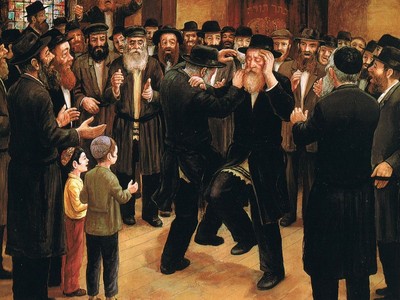
The theme of the day is 🎭 “When Adar enters, joy is multiplied.” But why?
Community
Jewish tradition states: with the advent of the month of Adar, joy becomes not just a natural feeling, but a spiritual task. This is not a recommendation "by mood", but an internal setting — to learn to live in a state of joy.But what does this mean in practice? And why joy?🌍 The generational paradox: less affluence, more joyIf we turn to the descriptions of Jewish life of past centuries, one thing is striking: despite poverty, persecution and lack, real, living joy reigned in the homes.A small apartment, many children, a modest table — and at the same time warmth, singing, a sense of meaning.Today, in an era of abundance, technological progress and comfort, the picture is often different: anxiety, internal tension, family conflicts. Why is this happening?Because joy is not born from the number of things. It is born from a sense of meaning.⚖️ The lightest — and most difficult commandmentThere is a famous saying: "The great commandment is to be always in joy."On the one hand, what could be simpler? Joy does not require physical effort, money, or special conditions.On the other hand, it is the most difficult. It's not about having fun with entertainment, food, or music. It is about the inner state — peace, stability, awareness of the value of one's own life.It is easier to perform a technical action than to change the state of the heart.🧠Sadness and "remorse": good or trap?The book "Tania", written by Schneur Zalman from Lyad, explains in detail the paradoxical idea: sudden depression and endless self-accusations often do not help spiritual growth, but on the contrary, interfere with it.If a person suddenly plunges into difficult thoughts in the middle of everyday affairs: “I am not good enough”, “I am worthless”, this is often not a sign of spiritual depth, but a way to exhaust oneself.Sadness paralyzes.Joy — gives energy to act.Self-examination is needed, but it must have its time and its limits. Constant severity destroys.💡 Reasons to rejoiceWhy does a person have reason to be happy at all?Awareness of choice and value.Understanding that life has purpose and meaning is itself a source of inner light.We live in an age of opportunity.Never before has access to knowledge, books, and spiritual sources been so extensive.For example, the great sage Moshe ben Maimon (Rambam) had about eighty books in his personal library. Today, hundreds of books are available to everyone.Feeling of historical movement forward.Tradition speaks of the hope of liberation and renewal of the world. And this very prospect is able to fill a person with the light of expectation.📖 The story of a Hasidic man who fell into sadnessA God-fearing merchant lived in the city of Nizhyn. He prayed, studied, fulfilled the commandments.At one point, he felt like he wasn't doing enough. Thoughts intensified, joy disappeared, a heavy yearning came.He went to his mentor — Rebbe Tsemakh-Tzedek — and told about his condition.The answer was unexpected:“These thoughts are not from holiness, but from inner weakness. Joy strengthens, sadness destroys. Work on yourself — but from a state of light, not darkness.”🌸 Joy as a spiritual strategyJoy is not naivety or denial of difficulties. This is a conscious choice of an internal position.It isstrengthens a person,strengthens the family,gives stability in tests,paves the way for growth.That is why, with the advent of the month of Adar, the tradition reminds us that joy must be multiplied. Not to wait for it to appear by itself, but to create it — through gratitude, comprehension and faith in the good.There are many reasons to be alarmed in the world.But there are also deep reasons for joy — and they do not depend on external conditions, but on the inner view of a person.Source:📖 Lubavitcher calendar