
Our dates: 9 sevats
Community
Shevat 📌9, 5730 (January 16, 1970) — Completion of the Torah scroll for the Moshiach meeting.In 5702 (1942), the sixth Lubavitcher Rabbi Yosef-Yitzhak announced the writing of the Torah scroll before the meeting of Moshiach. Writing the Torah scroll was started in 1942, but for various reasons it took 28 years.source: chabad.odessa

Our dates: 10 seamstresses
Community
📌10 shevat 5537 (January 18, 1777) — Yorzeit (anniversary of the departure from this world) Rabbi Shalom Sharabi.Rabbi Shalom was born in the Yemeni city of Sharab and his outstanding intellectual abilities became noticeable at a young age, but, unfortunately, his father died and the baby had to start working to help the family. He became a traveling merchant and it was only late at night that he could devote himself to his studies. Once Shalom found himself in a very dangerous situation (a rich Muslim woman tried to seduce him) and vowed to move to Eretz Israel if the Almighty saved him, and kept his word.Having traveled a long way through India, Iraq and Syria, Rabbi Shalom arrived in Jerusalem and joined the Beit El Yeshiva, recently created by the famous Kabbalist Rabbi Hedaliah Hayun. Although he was noticeably superior to other students in terms of knowledge, Shalom hid this and began to work as a shames (minister) in the classroom.No one paid attention to the young "Yemeni" who eagerly caught every word of the teachers, but one day the students had a question that even the head of the yeshiva himself could not find an answer to. And then Rabbi Shalom, not wanting to impersonate himself, resorted to cunning — at night he put a leaflet with an answer in the book of Rabbi Gedaliah.But he did not manage to go unnoticed: the daughter of Rabbi Hedaliah Khan saw the young servant scrolling through his father's book, so Rabbi Shalom was accepted into the yeshiva and took the most honorable place, to the right of the teacher (and he was only 27 years old — just a childhood for studying bondage). Hana became his wife and after his father-in-law left this world, Rabbi Shalom headed the Beth-El yeshiva for thirty years.The yeshiva "Beit El" still exists, and the Jerusalemites assure that even after leaving this world, the merits of Rabbi Shalom for another 30 years protected them from the intrigues of Muslim neighbors.📌10 shevat 5674 (February 6, 1914) — Yorzeit (anniversary of the departure from this world) Rebbetzin of Rivka.Rebetzin Rivka was born in 1833 in Lyubavichy. Her father was Rabbi Aharon ben Moshe-Alexander from Shklov, and her mother was Rebbetzin Haya-Sara, daughter of Rebbe Miteler. Unfortunately, the parents died when the girl was young, so she grew up in the house of her grandfather and grandmother — Shane's rebben. In 1849, she married Rabbi Shmuel, who later became the fourth Lubavitcher Rabbi (Rabbi Maarash).Rebbetzin Rivka outlived her husband by 33 years and enjoyed great love and respect. After the creation of the Tomhei Tmimim yeshiva, she began to care about yeshiva students (and, like any Aydish mother, she was primarily concerned about whether they were well fed). She was called “Baalat Shmua” — “the keeper of legends”, because she remembered many stories about past times and the Hasidim often came to visit her to listen to her stories.In memory of Rebbetzin Rivka, her grandson, the sixth Lubavitcher Rabbi Yosef-Yitzhak, created a network of educational institutions for girls "Beit Rivka".📌10 shevat 5710 (January 28, 1950) — Yorzeit (anniversary of the day of departure from this world) of the sixth Lubavitcher Rabbi Yosef-Yitzchak.He was born in 1880 in Lubavitches, and his father was the fifth Lubavitcher Rabbi Sholom-Dov-Ber (Rabbi Rashab). At the age of 15, he became an assistant to his father, and a considerable part of the worries of the head of Chabad and one of the leaders of Russian Jewry fell on his shoulder.At the age of 17, Rabbi Yosef-Yitzhak married Rebbetzin Nechame-Dina. The following week, his father announced the creation of a new educational institution, the Yeshiva "Tomhei Tmimim", the leadership of which was entrusted to the young man. But the activities of Rebbe Rashab's son were not limited to this. Together with the "textile kings" and the famous philanthropists, the Polyakov brothers, he tried to improve the situation of Jews by creating factories and workplaces in the towns, and during the Russo-Japanese War, he helped his father send matzah to Jewish soldiers on the eve of Pesach. All this activity did not go unnoticed, and he was arrested several times.In 1920, after his father's death, he headed the Chabad movement and became one of the leaders of the Jewish Resistance. Resistance to Bolshevik anti-Semitism and the desire to drive the Jews into a bright future "without Russia and Latvia". In 1927, Rebbe Rayats was arrested and sentenced to be shot, but under the pressure of the world public, the death penalty was replaced by exile to Kostroma, and then expulsion from the USSR. Rebbe Rayats and his family (including the husband of the youngest daughter - the future Rebbe) left for Latvia, from there to Poland, and after the beginning of the Second World War, with great difficulty, managed to escape from the Nazis and move to the USA.He settled in New York and again launched a vigorous activity to restore Jewish life, now in the United States. There were new yeshivas "Tomhei tmimim" (now "Tomhei tmimim" — a network of yeshivas scattered around the world, including in Odessa), women's schools "Beit Rivka" and "Beit Sara", the Education Center "Merkaz l 'inyanay le-khinuh", the Jewish publishing house "Keot"... In 1948, on his recommendation, a Chabad settlement was founded near Tel Aviv, which is called Kfar Chabad.The Rebbe preferred to call this day not the day of the departure (yom istalkut) of the righteous, but the day of his exaltation (yom hilul).📌10 Shevat 5711 (17 January 1951) — The Rebbe agrees to lead Chabad and delivers his first maimor (Hasidic sermon).After Rajac's departure from this world, no one dared to lead the movement. Some saw the successor of the elder son-in-law — Rabbi Gurarye, others — the younger son-in-law, Rabbi Schneerson. On the eve of the first yorzite, the late father-in-law came to Rabbi Menachem-Mendel Schneerson in a dream and ordered him to lead Chabad. Rabbi Gurariye stated that “Mendel never lies and since his father-in-law ordered it, he should be the Rebbe.”In the evening, the Rebbe arranged his first farbrangen and delivered the first maimor “Bossy le-gani” (“I will come to My garden”), explaining at the end of his task to the current generation.source: chabad.odessa

Our dates: 12 seamstresses
Community
📌12 Shvat 5391 (January 15, 1631) — Yorzeit (anniversary of the day of departure from this world) Rabbi Chaim Kapusi.Rabbi Chaim Baal-Nes (the Wonderworker) was one of the most famous Egyptian rabbis, initiated into the mysteries of the Torah and the Cabal.Rabbi Chaim was a Dayan (judge) of the Jewish community and one day one of the clients declared him a bribe taker.“If he took a bribe,” said the offended man, “then let him go blind.” Indeed, after a short time, Rabbi Chaim went blind! His foe triumphed, assuring everyone that this was direct evidence of the judge's dishonesty (the Torah says that “a bribe blinds the eyes of the wise”).Hearing these accusations, Rabbi Chaim gathered the congregation and appealed to the Almighty with a request: “If I am really guilty, then leave me blind for the rest of his days, but if I did not take bribes, then let my eyesight return to me.” And a miracle happened — everyone saw Diane again, so those present had to apologize to him for unfounded suspicions.source: chabad.odessa

Our dates: 13 seamstresses
Community
📌13 Shevat 5702 (January 31, 1942) — Yorzeit (anniversary of his departure from this world) Rebbetzin Sterna-Sara.She was the wife of the fifth Lubavitcher Rabbi, Rabbi Sholom-Dov-Ber, and themother of the sixth Lubavitcher Rabbi, Rabbi Yosef-Itzhak (Rabbi Rajac).She faced many trials: during the First World War, her family had to flee from Lyubavichy to Rostov, where her husband left this world. In 1927, she witnessed the arrest of her son by the Chekists. After his release, she left the USSR with him and survived the wanderings in Europe, the bombing of Warsaw, the persecution of the Nazis. In 1940, the rebzin arrived in the United States and left this world two years later.

Ayom Yom: 8 Shevat
Community
Today7 Shevat 5786N o t a r yAyom YomAt the age of nine, Alter Rebe studied the sciences of geometry and astronomy.At the age of ten, he made a calendar fifteen years ahead.When he turned twelve, it happened that he was publicly parsing the laws of the consecration of the new moon according to Rambam — and the geniuses present then were literally lost in the beit midrash, struck by the depth of his knowledge.📖 Lubavitcher calendar

Ayom Yom: 9 Shevat
Community
Today — 9 Shevat 5786.📌 9 Shevat 5730, the Torah Scroll was completed for the meeting of the Mashiach.Ayom YomWhen my father and teacher (Rebbe RASHAB) completed his third study of the entire Talmud, he pronounced the Hasidic maamar (da 'ah — “words of the living God”), the meaning of which was an explanation of the meaning of the word “הדרן” — return and renewal.In the year of mourning for his mother, my father and teacher completed the study of the entire Talmud of the Mishnah at the end of eleven months. And on the very day of yorzaitu, he completed the entire Talmud.“We'll get back to you (הדרן)” is the idea of continually returning to Torah on a deeper level. Real completion is the beginning of a new, higher cycle. Especially in the days of mourning, the study of the Torah becomes a form of elevation of the soul and a living link between generations.Source:📖 Lubavitcher calendar
Page 📜 of History: Scroll of the Torah for the Meeting of the Messiah
Community
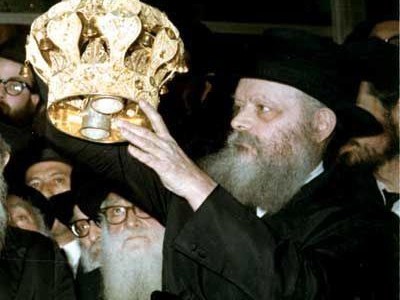
The Scroll of the Torah for the Meeting of the Mashiach, or in short — the Scroll of the Torah of the Mashiach, is a special scroll, the writing of which began in the years of the Catastrophe on the initiative of the Rebbe RAYAZ and was completed by the Rebbe in the days of special spiritual exaltation preceding the 10th Shevat of 5730.🕯 Beginning of Scroll WritingOn the night of Simhat Torah, 23 Tishrei 5702, the RAJAZ announced the writing of a special Torah scroll. He said that he was taking it upon himself to write the “Scroll of the Torah for the Meeting of the Righteous Mashiach” so that all the people of Israel could share in this great merit.Initially, it was planned to start writing in the hash, but in fact it began on 2 Iyar 5702 — on the birthday of Rebbe Maarasha.Rebbe 📜 RAYATS 'lettersIn a letter that day, Rebbe Rayatz wrote that the Almighty had honored him with a high mission —awakening the people to teshuvah, preparing for Geula, and writing a special Torah scroll solely for the meeting of the Mashiach.He stressed that at first he wanted to do it secretly, but realized that ordinary Jews should not be deprived of the opportunity to take part in such a holy merit.🐂 Parchment & SoifersThe parchment was to be made from the skins of kosher slaughtered animals, processed for the sake of holiness by the Torah scroll.At first, the Rebbe of RAYAC wanted it to be made in Eretz Yisrael, but due to military conditions, the parchment was able to be obtained in the United States, despite the acute shortage of materials during the war.The scribes were the River Shmaryahu Factor and the River Yisrael Chaim Samet. All expenses of the Rebbe RAYATS were paid from his own funds, and donations were transferred to the funds "Merkaz Le-Ynanei Hinuch" and "Mahane Israel".ᐈ A long way to completeAlthough the scroll began to be written as early as 5702, its completion was postponed for many years. The Rebbe of RAYAC appointed a special committee to deal with the sale of letters, and Eliyahu Yechiel Simpson played a key role in the preparation of the completion.Rebbe 👑 CompletionOn the eve of Shevat 10, 5730, the Hasidim proposed various initiatives, but the Rebbe rejected them. Only the proposal to complete this particular Torah scroll was accepted.On Shabbat Vaera, 3 Shvat 5730, the Rebbe announced that the completion of the Torah Mashiach Scroll would take place in the coming days.The actual completion occurred on Friday, the 9th of Shevat, in the afternoon, on the dye-breaker with the participation of the Rebbe. This was done in strict accordance with his instructions — to the twentieth anniversary of the departure from this world of Rebbe RAYATS.👑 The moment of laying the crownAfter reading the psalms, the niguns, and the elevation of the scroll, the Rebbe himself placed the crown on the Torah Scroll.Witnesses recall that at that moment many held their breath:it seemed that the Rebbe would now put on the crown himself and open up as King Mashiach.After that, the Rebbe introduced the Torah Scroll into the Aron Kodesh under the hoodie, blessed the "Sheehiyana", ate a new fruit and uttered the maamar "Lehavin inyan ktivat sefer Torah".🔥 Special awakeningThe completion of the scroll triggered a powerful spiritual awakening. The senior Hasidim wrote a special letter to the Rebbe asking him to open up immediately and bring Geulah.Also, the delegation of the "Committee of Twenty" from Eretz Yisrael personally appealed to the Rebbe with a request for early release. The Rebbe listened to them attentively and sent them to Oel.📅 When reading with the Torah Scroll of MashiachOver time, according to the instructions of the Rebbe, a list of dates was formed when this special scroll was used:Rosh Hashanah, Yom Kippur, Sukkot, Simhat Torah, 10–19 Kisl, Hanukkah, 5 Tevet, 15 Shevat, four special Shabbats (Shkalim, Zahor, Para, HaKodesh), Passover, Shavuot, 12–13 Tammuz, 9 Av, 18 Elul and many others — in the end the decision was left to the gabayas.✨ Scroll of ExpectationTorah Mashiach Scrollis not just a relic.It is a scroll of expectation, faith and inner readiness.And the moment when the Rebbe puts the crown on him, forever remained one of the most intense and fulfilling expectations of moments in the history of the Chabad hasidut.Source:📖 Lubavitcher calendar
Preparation for the 10th Shevat: "Make yourself a rabbi"
Community
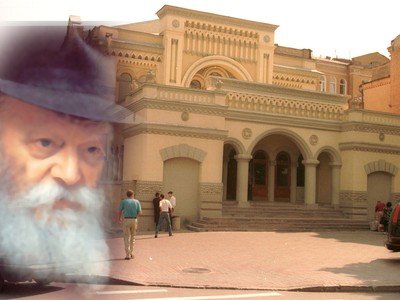
In preparation for the day of Yud Shvat, the Rebbe made a special, deeply personal request —"ase le-ha rav"(“Make yourself a rabbi.”)"Make yourself a rabbi" is a guideline for every Jew without exception: from small to large — to take on and have a personal rabbi.The Rebbe gave a clear practical explanation:husband — assign yourself a personalmashpy,a woman —mashpyN o t a r yThis person should guide and accompany in daily life, as well as in key decision-making moments.Mashpiya is an address for contacting and receiving advice —as in matters of "service of the heart" (prayer, spiritual work),and in earthly, life issues, where it is difficult for a person to decide for himself.Thanks to the deep knowledge of his ward, as well as objectivity and lack of personal interests, the maspy is able to see the situation holistically — in all its dimensions, and that is why he is in a position to give really good and accurate advice.📜Special statement by the RebbeThe Rebbe stressed the exceptional importance of this idea:"It should be emphasized the importance and necessity of all that has been said — not only at a certain time, but throughout the year and more — always, on all days."The Rebbe went on to say:“Therefore, my proposal and request—a request from the heart (and even more, although I do not yet have a more precise expression)—that these words be spread everywhere, on my behalf or not on my behalf, depending on what will bring more benefit to their implementation. Because it is extremely desirable and right that every Jew—men, women, and children—follows the instruction of the Mishnah to "make yourself a rabbi" and from time to time come to him for a kind of "test" regarding his level and condition in the service of the Most High. Thanks to this, without a doubt, every Jew increases in all matters of goodness and holiness - more and more light."The Rebbe emphasized that this guideline applies to the entire Jewish people without any exceptions.The very fact that there is a commandment in the Mishnah “make yourself a rabbi” proves:if a person really wants and makes an effort, he will surely find himself a rabbi, in accordance with the promise of our sages:“I worked — and I found it.”🔍Rabbi's ChoiceSpeaking about the choice of the rabbi, the Rebbe referred to the words of Rambam. Rambam writes that:“In the world to come there is no flesh and no matter, but only the souls of the righteous without flesh, like the angels of service.”From this, Rambam concludes:to be like the angels of ministry, a person must be in a state where the soul is not under the influence of the body — like the state of the soul in the future world: without envy, rivalry, hostility, and hatred.The Rebbe adds more practical and clear criteria:at least the “rabbi” must have three attributes of the sons of Israel:compassion,Humility,good deeds (hemilut hasadym)N o t a r yWhen these three qualities are clearly manifested in a person, he is worthy of being a “slave” like the angel of the Most High.Source:Lubavitcher calendar
Question to the Rabbi: Who is the "mashpiyya"?
Community
🌟 Mashpiya is a Hasid and a spiritual guide, a person with experience and Hasidic fire, who serves as an example and guides others in spiritual life.What does he do?🗣 Conducts paintbrings, explains Hasidic ideas, inspires, supports, helps to grow in spiritual work and strengthens the bond with the Rebbe.📚 Often, the mashpiyah also teaches Hasidut lessons.❓ Why do you need a personal mask?🧭 The Rebbe taught: everyone needs his own spiritual adviser — "ase lecha rav" ("make yourself a teacher").Mashpiya helps to:• understand spiritual issues,• make the right decisions in everyday life,• to see the situation more broadly and objectively.❓ What did the Rebbe say about the Mashpyim?🔥 In 5737 (1977), the Rebbe instructed that every Hasidic community should have a mashpiyah.The Rebbe explained their responsibilities:— to inspire goodness and holiness,— strengthen Torah classes,— engage in the spread of Judaism,— be an address for advice in matters of avoida and mivtsoym.❓ What is the main responsibility of the mashpiy?⚡️ Wake up the environment, do not allow to fall into coldness or passivity.📌 In 5747 (1987), the Rebbe added that the mashpiyah should see to it that Hasidic customs are carried out in practice.❓ And what happens on the paint brand with the mask?🎶 This is not a lecture. This is a lively Hasidic atmosphere:niggers, open conversation, inspiration and mutual influence.Mashpiya helps participants to take the "point" inside — in their own spiritual work.Source:📖 Lubavitcher calendar
10 Shevat - Two Rebbe's Day
Community
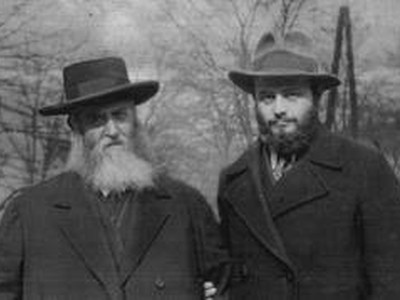
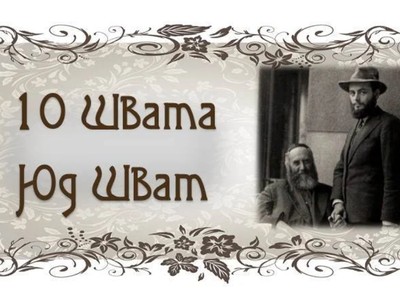
The tenth day of the month of Shevat (orYud-Shvathebrew) is one of the most significant dates in the Hasidic calendar. This is the yorzeit of the Sixth Lubavitcher Rebbe and at the same time the day when the Seventh Rebbe took over the leadership of the Lubavitcher movement.Sixth Lubavitcher RebbeYosef Yitzhok Schneerson(Rebbe Rayatz), the only son of the Lubavitcher RebbeSholom-Ber Schneerson(Rabbi RASHAB), born on 12 Tammuz 5640 (1880). He led the Lubavitcher movement at the age of 39 after the departure of his father 2 Nisan 5680 (March 21, 1920). Rebbe Yosef Itzhok Schneerson is calledFriediker Rebe(Previous Rebbe).The years of activity of the Rebbe RAYATS in Russia belong to the most difficult periods in the history of the Jewish people. The Communists saw religion as a threat to their control over the people, so they sought to destroy everyone who spread religious ideas or lived by faith. On 15 Sivan 5687, the Rebbe was arrested and sentenced to death, which was later replaced by exile to Kostroma. 12 Tammuz the same year, the Rebbe was released.Arriving in the United States on 9 Adar II 5700 (1940), the wheelchair-bound Rebbe launched a massive effort to spread the Torah among American Jewry. 10 Shevat 5710 at 8:45 am (on the Sabbath of the Bo chapter) Rebbe Yosef Yitzhak Schneerson returned his holy soul to the Creator.One year after the departure of Rebbe Yosef Itzhok Schneerson, 10 Shevat 5711 (1951), Seventh Lubavitcher RebbeMenachem Mendel Schneersonformally acceptednon-sowing— the position of the head, pronouncing the famous maamar (doctrine) about the mission of the Seventh Generation. The next day, 11 Shevat, he officially assumed leadership, leading the Lubavitcher Movement and the entire Jewish people.This is what the Rebbe said in his first speech as head of the Chabad:“The Lubavitcher Rebbe always demanded that the Hasidim work and achieve results themselves, without relying on the Rebbe. Do not relax, do not think that by shifting responsibility to me, you can do whatever you want. “Whatever you want”does not mean, God forbid, forbidden things. It's about striving for an easy life: choosing one person who will work while everyone else rests“under their vine and under their fig tree. ”Do not relax and think that everything has already been taken care of. No one has relieved you of the tasks and responsibilities assigned to you by the Rebbe. No one will free you from your work. I'll work with you, maybe help with something. But the task that the Rebbe has given each of us must be done by ourselves. We have no one to rely on. As the Talmud says, “Everything is in the hands of Heaven except the fear of Heaven.”We just have to work hard ourselves. It is not enough just to write works on Hasidism, talk, sing and say "lechaim". By itself, this will not change anything. You need to work in-house to changepiece(madness) of this world and turn it into holiness. ”Source:chabad.org
Yud-Shvat Day
Community
History, Lubavitsky RebbeTonight is a solemn day —10 Shevator Yud-Shvat. On this day of 10 Shvat, 5710(28.01.1950) RebbeRAYATS(Rabbi Yosef-Yitzchak Schneerson) —the Sixth Lubavitcher Rebbe— handed over his place to his son-in-law, the current head of HasidismChabad— RebbeMenachem-Mendel SchneersonN o t a r yOur Rebbe.This day —10 Shevat— marked asthe birthday of our generation, because it is considered that a generation changes when its Chapter changes.To this day, it is customary to study maamar"Barefoot le Ghani"since it was his Seventh Lubavitcher RebbeMenachem Mendel Schneersonhas spoken in theYud-Shvat 5711assuming the title of Rebbe.In the same year, inRosh Chodesh Shvat, ten days before the Rebbe took over the leadership of the Jewish people, he sent a letter to the Jewish communities explaininghow isalkut day should be celebratedThe previous Rebbe.
May the world learn to save human life!
Community
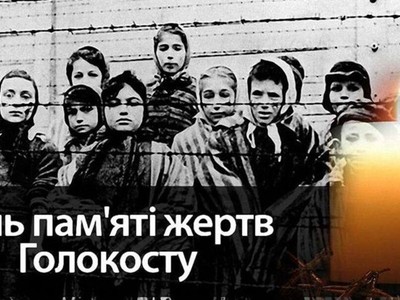
Today, atInternational Holocaust Remembrance Day, we bow our heads before the six million Jews who were exterminated — before children who did not have time to grow up, mothers and parents, families, communities, whole worlds, wiped off the face of the earth.The Holocaust is not just about the past.It's about pain that has no statute of limitations.About the silence that still screams today.The dutyto remember — not formally, but with the heart.We remember names even if they have not been preserved in the archives.We remember prayers cut off in half-word.We rememberthe lives that could have been — and did not.Memory is our moral shield.It does not allow evil to become the “norm” again,and indifference is an excuse.Today we mention.Today we are silent.Today, we commit to:always remember— and transfer this memory further, like a will, like a light that cannot be extinguished.🕯️ May the memory of all Holocaust victims be blessed.May the world learn to take care of human life.