
Rosh Chodesh Shvat
Community
🌙 Rosh Chodesh Shvat is not only the beginning of a new month in the Jewish calendar, but also a special time of awakening. Nature awakens🌱, and with it, inner spiritual energy, which brings deeper meaning and renewal to our lives.Shevat, the eleventh month of the Jewish calendar, is associated with the symbolism of the growth, renewal, and power of the Torah📖. This is a month with its own unique traditions, stories and lessons that can inspire each of us.🌳 Spiritual nature of the month of ShevatIn Jewish tradition, each month has its own spiritual character. Shvat is associated with trees, roots and fertility. It is in the middle of this month, 15 Shevat, that we celebrate Tu BiShvat — the "New Year of the Trees"🍎🍊.This is the day when we rejoice in the fruits of the Land of Israel, plant trees and think about our own spiritual growth: whether our roots are strong and what fruits we bear🌾.✨ Lubavitcher Rebbe Menachem-Mendel Schneerson has repeatedly emphasized: Tu BiShvat is a time of inner reckoning. It's time to ask yourself a question:how do I grow?what am I giving to the world?what are the fruits of my deeds, words, and service to the Almighty?📜 Historical dimension of ShevatOne of the most profound events of this month is the first day of Shevat, when Moshe Rabbeinu began to deliver his last instructions to the Jewish people. This happened in the fortieth year of wilderness wandering, on the eve of Israel's entry into the Land🏜️➡️🌍.These words, recorded in the book "Dvorim", became not just a farewell speech, but a concentrate of spiritual wisdom and life guidelines that are relevant at all times.Moshe urged to rememberthe commandments of the Torah, live in accordance with its values and keep intouch with the Almighty in all circumstances🤍. This is a reminder for us: loyalty to our values is the basis of true growth.🌱 Lessons of the Month of ShevatShvat teaches: life is a process of constant growth.As trees, we have:— to be rooted in tradition 🌳— to feed on "Torah water" 💧— to bear good fruit in the form of good deeds, training and service to the Almighty ✨The Lubavitcher Rebbe called for using Shvat as a month of deepening ties with the Torah: more studying, more thinking, more action. This is how life is filled with light and meaning🕯️.🕊️ How to celebrate Rosh Chodesh Shvat🙏 Prayer and gratitude — reading "Galel" and "Musaf" as thanks for the new month.📖 The study of the Torah is a reflection on the book "Dvorim" and the Rebbe's teachings on Shvat.🍇 Preparation for Tu BiShvat - the fruits of the Land of Israel, a festive table, conversations with children about the meaning and symbolism of this day.✨ The month of Shevat brings us the opportunity for renewal, a deeper connection with the Creator and the people around us, as well as an awareness of our own role in the world.Let it become for each of us a time of growth, light and blessing 🌟to improve ourselves.Lessons of the Month of ShevatShevat reminds us that life is about constant growth. Like trees, we must strengthen our roots in tradition, drink the “water of the Torah” and strive to bear good fruit in the form of good deeds, training and service to the Supreme.The Lubavitcher Rebbe urged each of us to use the month of Shevat in order to deepen the connection with the Torah, devote more time to studying its wisdom and fulfilling the commandments. It is through these actions that we can make our lives meaningful and filled with light.How to celebrate Rosh Chodesh ShvatPrayer and blessings. In Rosh Chodesh, it is customary to recite the additional prayer "Galel" and "Mussaf", expressing gratitude to the Almighty for the gift of the new month.Study of the Torah: Start the month by studying the texts related to the book of Dvorim and the Rebbe's thoughts on the meaning of the month of Shevat.Preparation for Tu BiShvat. Plan to participate in the celebration, buy the fruits of the Land of Israel, prepare festive meals, and discuss the symbolism of this day with your children.The month of Shevat brings with it an opportunity for renewal, a deeper connection with the Creator and others, and an awareness of one's role in the world. May this month be a time of spiritual growth and blessing for each of us!

Psychologist 'S page: FOUR TYPES OF GRIEF THAT NOBODY TOLD YOU ABOUT.
Community
And why it is important to call them grief.It so happened that the word "grief" is understood solely as a reaction to death. But such a narrow interpretation does not allow us to see the full range of human experience that creates and provokes a state of grief. Here are four types of grief we can experience that are unrelated to death.1. Loss of identity: Loss of role or sense of belonging.For example:A person going through a divorce feels the loss of the status of "spouse".A woman who has overcome breast cancer and after a double mastectomy experiences a loss of feeling like a woman.Father or mother of adult children who experience the "empty nest" syndrome and the loss of the role of parents in its direct meaning.A person who has lost or changed their job experiences the loss of their identity.A person who has left a religious group feels a loss of belonging to the community.When a person loses his primary identity, he longs for a part of himself. We miss who we were and eventually have to create a new story of our lives that includes that loss. Sometimes the identity seems stolen, as in the case of a person faced with the fact of divorce, or as in the case of breast cancer. Grief is then compounded by a sense of loss of control. In other cases, the person himself chooses to change his identity — for example, to change jobs or leave a religious group. Although this option may look simpler, it is also filled with conflicting feelings: after all, it is as if a person himself decided to walk away from what he will long for. This can lead to the feeling that one "doesn't have the right" to grieve the loss of identity, because the decision was one's own.2. Loss of safety: loss of a sense of physical, emotional and mental well-being.For example:People who have experienced physical, emotional or sexual abuse and are trying to regain security in their daily lives.Families who have financial or housing difficulties and feel on the brink of survival are vulnerable and unstable.Children of divorced parents who miss the "whole" family (even if they cannot realize it or name it).Community members who have experienced violence within the community and have lost their sense of stability and security.A person who has learned of a partner's infidelity may lose the emotional sense of security in the relationship.At a basic level, we expect to feel safe in our own home, in our community, and in our relationships. The loss of this feeling - in the physical sense (after a "break-in" of the house or body) or in the emotional sense (after betrayal) - can turn the whole world of a person into a dangerous place. Symptoms of this can be excessive anxiety even without a clear threat or, on the contrary, insensitivity to what is happening around. Often for those suffering from PTSD, these conditions alternate. People who have experienced trauma, violence or instability find it very difficult to regain a sense of inner security, even when things have stabilized on the outside. Grief from the loss of security is added to the task of healing and becomes another area that needs to be rebuilt.3. Loss of autonomy: loss of the ability to manage one's own life and necessary affairs.For example:A person with a degenerative disease who yearns for lost physical or mental abilities.An elderly person who can no longer take care of himself on his own and grieves because of his own extinction (often this is accompanied by the loss of identity as a significant member of society).A person experiencing a financial crisis loses their sense of independence and is forced to rely on others.This type of grief goes to the very core of the human need to control one's body and life. Loss of autonomy provokes a sense of loss of control and threatens the integrity of the "I". In cases of illness or limited capabilities, this is felt at every step: the loss of independence and the ability to function independently brings great pain. A person who has suffered a serious financial loss may also feel a deep sense of loss and live with a sense of failure or despair. The task becomes to mourn the losses and rethink oneself in new conditions.4. Loss of dreams and expectations: Meeting unfulfilled hopes.For example:A person or couple facing infertility.An excellent student who is trying to find his place in the "real world".A person whose career does not meet her expectations at all.A person whose community suddenly began to support political ideas with which they disagreed.This type of grief is accompanied by a deep sense of disorientation. Many of us live with the feeling that we know how the world works and have a rough idea of what lies ahead. When reality shatters our expectations, we can feel great grief and deep injustice. People struggling to conceive or students who can't find themselves often experience a sense of failure that only heightens the pain of loss. At times like these, it's easy to start comparing your life to the lives of others. And unexpected political changes can lead to a loss of familiar reality and a feeling of complete disorientation in how the world works.Return the word "grief" to its placeLoss of identity, safety, autonomy and hope — all these losses can lead to feelings of grief. The images of grief and grief can help us get through a period of chaos with the same delicacy we give to those who have lost loved ones. The grieving person is entitled to compassion, anger, sadness, numbness, disorientation, and a nonlinear healing process with “rollbacks.”The word “grief” simultaneously delicately describes the inner reality and legitimizes this process for others. And although many live through life's failures and tragedies in the form of grief, others feel that they “have no right” to this word.So I give you permission.You can grieve.You can mourn.Your loss is real.Text by Sarah Epstein.Translation – Yulia Lapina

Our dates: 1 seamstress
Community
1 seamstress2488 (1312 BCE) — Moshe begins to repeat the Torah.On this day, being near the borders of Eretz-Israel, Moshe gathers the people and begins to retell to the Jews the laws received from the Almighty. This lesson, which became the basis of the last book of the Torah — the book "Dvarim", lasted 37 days and ended with 7 adar, on the day of Moshe's departure from this world.Our sages compare the day of 1 shevat with the day of the Giving of the Torah. Although, as is known, the Torah and commandments were given to the Almighty Jewish people on 6 Sivan, 1 Shevat in the hearts of the sons of Israel as if new sources of the Torah were being opened.source: chabad.odessa

Our dates: 2 seamstresses
Community
📌2 Shevat 3684 (76 BC) — Death of Tsar Alexander Yanai.The Jewish king Alexander Janai was a descendant of the Hashmoneans and, unlike his ancestors, an ardent enemy of the Jewish sages. As befits a king, he was buried in Jerusalem with all due honors, but his brutality and ruthlessness (during the civil war of 82-76 BC, more than 50,000 Jews were killed) led to the day of his death being declared a holiday.After the king's death, his widow Salome-Alexander (Shlomzion) ascended the throne, whose reign was marked by good deeds and the rise of the state's economy.📌2 Shevat 5560 (January 28, 1800) — Yorzeit (anniversary of the departure from this world) Rabbi Zusi from Anipol.Rabbi Meshullam-Zusya was born in 1718 in one of the towns of Galicia and was the younger brother of the famous Noam-Elimelech (Rabbi Elimelech from Lizhensk). They traveled through Eastern Europe together and studied together with the Mezheritsky magician Rabbi Dov-Ber, where Rabbi Zusya, with his piety and integrity, very quickly won the respect of other students.Rabbi Zusia was also loved by ordinary Jews, for whom he was a teacher, protector and comforter. Outwardly, he was a classic version of a failed Jew (shlimazl), burdened with numerous ailments, worries and failures, but he was distinguished by a rare optimism and the ability to see the good in everything that happens (as he himself said: "Everything that comes from God is all good"). And people who heard about his love of life came to him to get a portion of hope for the best. Rabbi Zusya did not write books, but the statements and teachings written down by his students were collected in the book "Menorat zadayav".Rabbi Zusya is buried in Anipolis next to his teacher, the Mezheritsky Magid. He was succeeded by his son, Rabbi Zvi Menachem Mandel.📌2 Shevat 5744 (January 6, 1984) — Yorzeit (anniversary of the departure from this world) Rabbi Yisrael bin Massoud Abu Hazira.Rabbi Israel was born in 1890 in the Moroccan town of Tafilalt to a famous rabbinical family, descended from Rabbi Shmuel Elbaz of Damascus (16th century), a connoisseur of the Talmud and the Cabal. Once, Rabbi Shmuel needed to urgently go from Eretz Yisrael to Turkey, but the captain refused to take him on the ship, and Rabbi Shmuel went to sea on a mat. In memory of this miracle, he began to be called Abu-Hatzira ("the owner of the mat" (Arabic)).Rabbi Yisrael's grandfather was Rabbi Yaakov "Divine Kabbalist, Master Miracle Worker", and his grandson turned out to be quite worthy of him. Already at a young age, he was distinguished by unusual abilities and became known as "Baba-Sali" ("father of Israel"). Many people came to him to receive braha (blessing) for parnassus (earnings) and health. Rabbi Israel ben Masud was a great scholar of Jewish law and Kabbalah, succeeding his father, who passed away, as head of the yeshiva and head of the community. Although he was only 19, his authority was undeniable and even local Arabs came to him for advice and blessings.In 1964, Baba Sali, following the majority of Moroccan Jews, moved to Eretz Israel, where his fame as a miracle worker continued to attract thousands of people to him - not only Moroccans, but also Ashkenazi (European) Jews. He was on friendly terms with many of the great sages of his time, especially singling out the Rebbe, whom he called in Oriental grandeur, "The great eagle in the height of heaven," and supported the Rebbe in every way in his desire to attract as many Jews as possible to the fulfillment of the commandments.Rabbi Yisrael Abu-Hazirah was a very modest man and in every way ignored publicity and popularity, but almost 100,000 people came to his last journey, and his grave is one of the most visited burials of the righteous in Eretz Yisrael.source: chabad.odessa

Our dates: 4 seamstresses
Community
*4 seamstresses5570 (January 9, 1810) — Yorzeit (anniversary of the departure from this world) Rabbi Avraham Kalisker.Rabbi Avraham was one of the most controversial figures among the Hasidic leaders of the third generation (that is, students of the Mezheritsky Magi Rabbi Dov Ber, a student of the founder of Hasidism Rabbi Baal Shem-Tov).In his youth, he studied with Rabbi Eliyahu ben Shlomo-Zalman, the Vilnius Gaon. The Vilna Gaon led the opponents of Hasidism, and Rabbi Avragyam joined the Hasids and became one of the students of Mezherytsky Magid. After his departure from this world in 1772, many of the persecutors of Hasidism switched directly to Rabbi Abraham, who ridiculed the intellectual elite and public leaders more than others (by the way, he did not spare some Hasidic leaders either). In 1777, Rabbi Avraham, among 300 Hasids (led by Rabbi Menachem-Mendel from Vitebsk), moved to Eretz Israel.Rabbi Nachman of Bratslav, during a visit to Eretz Yisrael, met him and even became friends, calling Rabbi Abraham “the most perfect righteous man I have ever met,” and Rabbi Nachman rarely spoke of anyone like that.Rabbi Abraham is buried in Tiberias.source: chabad.odessa

Our dates: 5 seamstresses
Community
*5 seamstresses5665 (January 12, 1905) — Yorzeit (the anniversary of his departure from this world) to Rabbi Yehuda-Arieh-Leib Alter of Gur.Rabbi Yehuda, the second rebbe of the Gurkha Hasidim, was born in Warsaw. His father, Rabbi Avragam-Mordechai, left this world when the child was only 8 years old, so he was brought up in the house of his grandfather, Rabbi Yitzhak-Meir Rotenberg Alter, the brother-in-law and best student of Rabbi Menachem-Mendl from Kotsk. From the grandfather, who devoted 18 hours a day to study, the grandson took over the diligence, as well as the title: Rabbi Yitzhak Meir, who lived in the Polish town of Hura Kalvariya (also known as Nowy Yerushalayim), was the first Rebbe of Hura.In 1870, albeit reluctantly, he became the head of the Gur Hasidim. Rabbi Yehuda played an active role in the public life of Polish Jewry and, under its influence, Polish Hasidism dissociated itself from Zionism. The title of his main work, the book "Sfat Emet" ("Language of Truth"), became, as often happened, his second name, although the name itself appeared after his departure from this world (the son of a rabbi, preparing the book for publication, chose such a name for it).Under the leadership of his son, Rabbi Avraham-Mordechai Alter, the movement grew very much — there were more than 100,000 Hasidim in its ranks. Most of them were destroyed by the Nazis, and Rabbi Avraham himself managed to escape literally by a miracle. In memory of the dead, he restored and revived the movement, and it is now one of the most powerful Hasidic movements in the world, centered in Jerusalem.source: chabad.odessa

Our dates: 6 seamstresses
Community
*6 seamstress5571 (January 31, 1811) — The wedding of Rebbetzin Dvori-Leya, daughter of Miteler Rebbe and Rabbi Yaakov-Israel from Cherkasy.It is said that one day Alter Rebbe visited Rabbi Nachum from Chernobyl and reminded him of the words of their teacher Mezheritsky Magid: "Moshiach will come from an older and younger student." Rabbi Nachum was the senior apprentice of the magistrate, the younger one was Alter Rebbe, and therefore it was decided to be born of houses. After that, Alter Rebbe approached the cradles of Rabbi Nahum's grandchildren and began to touch their heads. Arriving at Jacob-Israel, he announced that this grandson of Rabbi Nahum would become the husband of his granddaughter, Court-Lea.After the wedding, Rabbi Yaakov-Israel moved to Lyad, where he studied with his brother-in-law Rabbi Menachem-Mendel (the future third Lubavitcher Rabbi Tsemakh-Tzedek).

Road to the Rebbe
Community
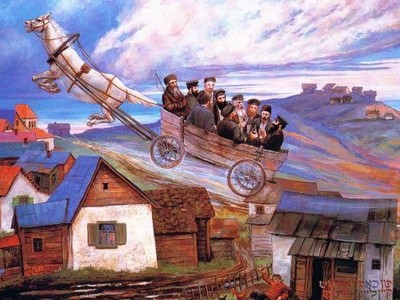
🌍Journey to the Rebbe — a path of spiritual connectionThe journey to the Rebbe has long occupied a special place in the life of the Hasidim. It's not just a visit or a pilgrimage — it's an act of deep connection,itkaroute(התקשרות), internal unity with the leader of the generation. For the Hasidim, coming to the Rebbe is an opportunity to renew, receive spiritual guidance and inspiration, a kind of "charge of strength" for the whole year.Ever since Baal Shem Tov, a trip to the tzaddik has been seen as a natural step on the Hasidic path. It strengthens faith, helps to outline the directions of spiritual work and to feel unity with the community. As the Rebbe himself said, a meeting with a mentor can change a person, creating a "new state" in him and strengthening the desire to serve the Almighty.🕯Time and traditionsThe main time for such trips is the month of Tishrei, when the Hasidim sought to celebrate the New Year and holidays in a place called “the home of our life.” Subsequently, other important dates were added: Kinus ashlukhim (congress of envoys), 10–11 Shevat — the anniversary of the beginning of the leadership of the Rebbe, 22 Shevat — the day of the departure from this world of Rebbetzin Chai Mushki, Shavuot and other dates relatedto the history of Hasidism. Each trip carried a deep spiritual meaning: strengthening the community and supporting spiritual work.🎒Preparing for your tripEqually important is internal preparation. Before the trip, the Hasidim strengthen the study of Hasidic teachings, participate in charitable activities, and help others. This approach allows you to "bring to the Rebbe" not only yourself, but also the fruits of your own efforts, increasing spiritual commitment and relationship with the mentor.🔥Spiritual impact of the tripStaying in the Rebbe has a lasting impact. It strengthens determination in spiritual work, helps to maintain a sense of unity and gives strength to continue the mission in its place. At the same time, it is emphasized that the trip itself is not an end in itself. It is important to "unpack" the impressions received and put them into practice — in learning, behavior, relationships with people and service to the Almighty.🎶Niguna Roads and ReturnsThe journey was also reflected in Hasidic music. Special niguns convey the expectation of a meeting, the joy of staying and the slight sadness of separation, while giving hope for an imminent meeting. These tunes accompany the Hasidim on the road and help keep the spiritual connection at a distance.🌿Journey as a way inside yourselfFor the Hasidic, the road to the Rebbe is not just a journey in space, but a journey inside his own soul. This is the moment of stopping and inner listening, when a person receives direction and returns to life with renewed strength, ready to serve the Almighty and fulfill the mission entrusted to him.📸Client Name:hasidim go to the Rebbe. Figure: Reb Zelman Kleiman.Source:📖Lubavitcher calendar

The Shaare Nashim women's community invites Jewish women!
Community
The Shaare Nashim ✨ women's community invites Jewish women! ✨January 📅 22 — 4 sevats — Thursday 📍 Place: Kyiv Central Synagogue, Beit Yehuda Cafeat 17:00The meeting program includes:🍞 Baking & Baking Hal📔 Lecture on the topic: "Man is like a field tree"☕ Food✨ A warm and cozy meeting is waiting for you in the circle of like-minded people: together we will fulfill the commandment of the Hala department, listen to a meaningful lecture on the topic "Man is like a field tree", and also enjoy delicious treats.The number of places is limited. Charitable contribution 100 UAH. Pre-registration isrequired