
Today 3 Adar 5786
Community
On the eve of Saturday, the chapter "Truma". Seeha Rebbe for the section "Truma".At the beginning of the chapter it is said, “And they shall take my offering.”The Rebbe explains: The Torah says “they will take”, not “they will give”, because by sacrificing for a holy cause, a person actually acquires a connection with G-d.The Mishkan was built of gold, silver and copper — a hint of different levels of service. But for the Almighty, everyone's participation is important.The main lesson: when a person dedicates his or her powers to the Torah and good deeds, he or she builds a personal "Temple" in his or her soul — and then the Divine presence opens "among them", within everyone.Source:📖 Lubavitcher calendar


Ayom Yom: 6 Adara
Community
Today is 6 Adar 5786.Menachem Mendel Schneerson, son of Rebbe Maarash, was born in 📌 5627 (1866–1867).Iom-yom️1 From a conversation with my father (Rashab):This is a great and amazing merit when the Almighty honors a person and endows him with a special feeling and taste for creating good for another Jew — so much so that his neighbor becomes more precious to him than himself.After all, a person can find many explanations for himself, why he was supposedly destined to be not in the best position, God forbid. But this is completely unacceptable for another.️2 This is how it is accepted by the senior Hasidim:The book "Tania" is a collection of guidelines from the answers that Rabbeinu a-Gadol (Alter Rebbe) gave to the Hasidim in personal audiences in 5540-5550 (1780–1790).In the summer of 5552 (1792), he began to bring the book "Tania" to the form in which we have it today.By 5553 (1793), there were already many copies, but over time they had distortions, as well as forgeries. Therefore, Rabeinu hastened to hand the book over for printing.There is another version of the story: for twenty years, Rabane wrote his book "Tania", carefully verifying every word. In 5555 (1795) the text had already been completely edited and purged, and then he allowed it to be rewritten. When the number of copies increased and they had errors, he handed the book over for printing.Tsemakh Tzedek recounted that in the first Rosh Hashanah of his life — in 5550 (1790) — Rabbeinu uttered a maamar, which begins with the words “Mashbeen Oto — תהי צדיק…” (“They conjure him: be righteous…”), and these are the first three chapters of the book “Tania”.Source:📖 Lubavitcher calendar

Our dates: 7 Adars
Community
📌7 Adar I 2368 (1393 BC) — Birthday of Moshe-Rabein (Moses).Moshe-Rabeinu (Moses, our teacher) was the third child of Rabbi Amram, the head of the Levi tribe and Rebbetzin Yocheved. His brother was Aaron, who later became the first high priest and progenitor of the Kohen, and his sister was Miriam, the most prominent of the female prophets. Moses himself, who freed the Jews from Egyptian slavery, was the greatest prophet in the world (that is, he had the prophetic gift of the highest degree) and at the same time, as it is written in our holy books, “the most modest man in the world.”📌7 Adar I 2488 (1273 BC) — Yorzeit (anniversary of the departure from this world) Moshe-Rabein.Moshe led the people to the border of the Land of Israel and offered 515 prayers so that the Creator would allow him to bring the Jews into this land. However, fate ordered otherwise. Moshe "joined his ancestors on Mount Nevo", and the Most High himself took care of his burial, so that "the place of his burial is unknown to this day". The day of Moshe's departure from this world became an unofficial holiday for the employees of the funeral brotherhood "Hevra Kadisha" (judge for yourself - the Jew died, was buried according to all the rules, and the employees of "Hevra Kadisha" rested!Source:chabad.odessa

Our dates: 9 Adars
Community
9 Adar-II 5700 (351 BC) — (February 18, 1940) — The Sixth Lubavitcher Rabbi, Rabbi Yosef-Yitzhak, arrived in the United States.In fact, the ship carrying Rabbi Yosef-Yitzchak (Rabbi Rajac), who had miraculously escaped the Nazis, docked in New York Harbor as early as February 17, at 6 p.m., but by law, passengers of the ship arriving in New York after 4 p.m. were not allowed to go ashore until the next morning.The next day, thousands of people, representatives of all American Jewish organizations, and even the mayor's envoys came to the port to meet Rabbi Rajac.Source:chabad.odessa

Our dates: 10 Adars
Community
10 Adar-II 5700 (February 19, 1940) — Beginning of classes in the American yeshiva "Tomhei Tmimim".On the day Rabbi Yosef-Yitzchak arrived in the United States, he announced the founding of the Tomhei-Tmimim yeshiva here, saying, “We who are here — or rather, are here — are here to work with self-sacrifice — to make America a place of Torah. … After a while, the TomheiTimimim yeshiva will be the largest yeshiva, and its disciples will light up Jewish homes and raise the spirits of local rabbis so that they will devote themselves to spreading the Torah.”Indeed, in a short time, the Tomhey-Tmimim yeshiva turned into the largest yeshiva in the United States.

Our dates: 11 Adars
Community
📌11 Adar 5566 (March 1, 1806) — Yorzeit (anniversary of the departure from this world) Rabbi Chaim-Yosef-David ben Yitzchak-Zrachya Azulai.Rabbi Yosef-David Azoulay (known to us under the acronym Hida, and the name "Chaim" ("life") was added to him later, in the days of a dangerous illness) was born in 1724 in Jerusalem and was one of the closest students of the famous Rabbi Chaim ben Atar (Or Ha-Chaim), and after his departure from this world he continued his studies in Rabbi Sar-Shalom Sharabi.In 1753, Rabbi Hida unexpectedly left Eretz Yisrael. It is said that the reason for this was the joint prayer of Rabbi Sar-Shalom and his students: Rabbi Hida and Rabbi Chaim Delaroz. Trying to influence the Heavenly Court, they fasted for three days, and then climbed to the roof of the yeshiva and immersed themselves in prayers. During prayer, it was revealed to them that although the time of Deliverance had not yet come, their joint prayer was still capable of bringing Moshiach, but with catastrophic consequences for the entire universe. In order for this not to happen, at the request of the Heavenly Court, they had to separate, and one of them had to leave Eretz Yisrael immediately. The lot fell on the slave Hida.Rabbi Hida was the chief rabbi of Cairo for some time, but he spent most of his life traveling around different countries as a messenger of the Jewish communities of Eretz Yisrael. In 1806, while in the Italian city of Livorno, Rabbi Hida left this world. In 1960, his remains were transported from Livorno to Jerusalem, and his resting place was a cemetery on Mount HaMenuhot in Jerusalem.📌11 adar circa 5460-80 (the beginning of the 18th century) — Yorzeit (the anniversary of the departure from this world) to Rabbi Eliezer-Lyp Weissblum.Rabbi Eliezer and his wife, Myrl, were known for their virtue and mercy. They had seven sons, two of whom gained immense popularity in the Jewish world — Rabbi Meshulam-Zusya from Anipol and Rabbi Elimelech from Lizhensk.📌11 Adar 5583 (February 19, 1823) — Yorzeit (anniversary of the departure from this world) one of the great sages of his generation, Rabbi Mordechai Posner, brother of the founder of the Chabad movement Rabbi Schneur-Zalman from Lyad (Alter Rebbe).
Topic of the day: Who is Hasid?
Community
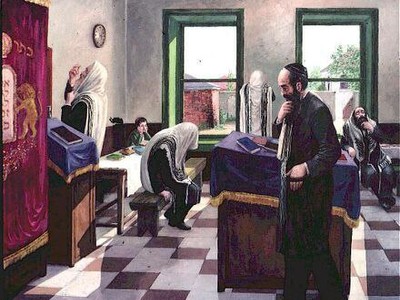
Hasid is not just belonging to a certain circle. This is the inner state of a person who devotes all his strength to serving the Almighty. This is what the Baal Shem Tov disciples and their followers are called — primarily for their deep work in prayer and spiritual improvement.📜How this name appearedIn the first years of the Baal Shem Tov movement, Rebbe Raiats referred to his disciples as “beloved” and “friends.” The name "Hasidim" was fixed only at the end of the life of Dov Ber from Mezhirich — and gradually became common throughout the Jewish world.✨What does the word "hasid" mean?This word is found already in the Talmud — this is the name of a person who lives beyond the usual measure, serves G-d with special devotion. The sages spoke of the “first Hasidim” who had been preparing for prayer for a long time and praying with deep concentration.The founder of Chabad Hasidism, Alter Rebbe, wrote that the people called them "Hasidim" by analogy with those first righteous who prayed with true intent.Interestingly, Alter Rebbe wanted to call his followers “baalei teshuvah” — people who return to G-d. But he abandoned this idea so as not to give the impression that others are the opposite of this.💡As explained by the Rebbe themselvesRebbe Rajac said:Hasid is a person who goes "beyond the ordinary" in all his affairs. He studies Hasidim, prays with fire, and does good with abundance.“a-yom-yom” emphasizes:A Hasid is someone who knows his true spiritual situation, sees what he is missing, and works on it by taking on the yoke of Heaven.🕯How a Hasid behaves● Hasidim studies Hasidim every day.● Hasid is busy doing good for another.● Hasid lives in joy and shines with other warm faces.● Hasid sees his shortcomings — and the virtues of his neighbor.● Hasid respects even the simplest Jew more than he respects himself.● Hasid learns from everyone.And the main thing is that it is "not fitting" for him to behave differently.🤝Hasidic BrotherhoodChabad emphasized that the Hasidim are like one family. All are associated with the Rebbe and the teachings, and therefore live a sense of mutual responsibility. They help each other both materially and spiritually.True love between Hasidim is not just friendship. It's a deep inner connection.🌱Brief definitionWhen one doctor asked: Who is a Hasid?The Rebbe replied:Hasid is the one who can say before going to bed that today he is a little better than he was in the morning.End of story.Source:📖 Lubavitcher calendar
History page: Habad in the USA
Community
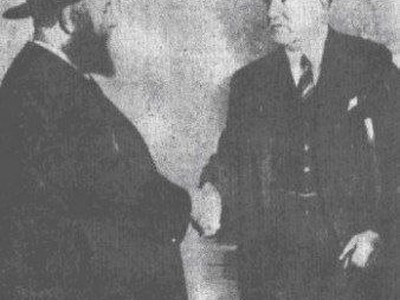
Habad CommunityThe HaBaD community in the United States began to develop during the pogroms in Russia, when many Hasidim emigrated. Subsequently, America became one of the main hubs of Habad in the world, and 770 became its heart.The Rebbe wrote in the pamphlet Beit Rabbeinu Shebe-Bavel that he chose a place in the "lower hemisphere" to spread Hasidism where there is no Torah yet. Another reason is that most of the Jews of our generation live in America.The previous Rebbe, Yosef Yitzchak Schneerson, said: “Lubavitch survived ten exiles,” and the American exile was the last before the construction of the Temple.Rebbe Rajac's grave is at Montefiore Cemetery in New York City.Rebbe's Arrival in AmericaYosef Yitzhak Schneerson's first visit to the United States took place in 1930. He stayed there for about six months and met with the president of the country.The second Rebbe arrived permanently in 1940 due to World War II. The future Rebbe — Menachem Mendel Schneerson — was able to come only in 1941.In those years, America was far from religious life. Then Rebbe Rajac said:"America from Nisht Undersh" — "America is no different", showing that it is possible to live a full-fledged Jewish life here.The word "ופרצת" — "And you will expand" — became the motto of the Chabad activities in America.Establishment of the Tomhei Tmimim yeshivaImmediately after the arrival of the Rebbe, RAYAC opened the "Tomhei Tmimim" yeshiva in the United States. He said that they came not just to live, but to work with dedication to make America the place of Torah.The yeshiva quickly became the largest in the country. Her disciples filled Jewish homes with light and inspired rabbis and communities across America.Support for PresidentsSome U.S. presidents have expressed respect and support for the Rebbe and the Habad, including:● Jimmy Carter signed the Education Day Act;● Ronald Reagan supported the Moment of Silence initiative.Through these efforts, Habad was able to spread its teachings and strengthen Jewish life throughout America.In the photo: The mayor of Baltimore, Mr. Branning, receives Rebbe Rajaca on his first visit to the United States.Source:Lubavitcher calendar

Ayom-yom: 8 adar
Community
Today 8 Adar 5786📌 5700 (1940).Rebbe Yosef Yitzhak Schneerson (Rajac) arrived on the shores of the United States after leaving Europe during World War II.Due to the closure of the port, he was not allowed to get off the ship until the next day — 9 Adar.️1 Alter Rebe once invited a young Hasidic from the students of Magid from Mezherich and, as was customary, sang:“I am commanded, 'Teach your sons with them,' and you are obligated to feed and provide for your family. So let's change: I will give you everything you need so that you can do your duty, and you teach my son" — it was about the future Dov-Ber Shneuri (Miteler Rebbe).And explained the training procedure:First, they learn the letters of the alphabet.What is "aleph"? The dot at the top, the dot at the bottom and the line in the middle — this is the "aleph".The Jewish child should know that the “aleph” of the Torah is the “yud” at the top (the Most High, whose name begins with the letter “yud”), and the “yud” at the bottom (the Jew), and the line that connects them is the faith that unites them.Other version:“Yud” at the top is the soul;“Yud” at the bottom — the body;and the line in the middle is the trembling of Heaven (God-fearingness) that unites them.️2 My father and teacher (Rebbe Rashab) wrote in one of his letters:“One good act is better than a thousand sighs. Our G-d is alive, but the Torah and commandments are eternal. Leave the sigh and make an effort in practical work — and G-d will bless you.”

Topic of the day: What does it mean to give half a shekel?
Community
Custom before PurimIt is an interesting custom to give 3 coins in denominations of half shekel, dollar, euro or 50 kopecks before the day of Minha's prayer service on the day of Lent of Esther (usually on the eve of the holiday of Purim).At the same time, they say: "In memory of half a shekel."What is the essence of this custom and why is it performed on this day?Ramo (Rabbi Moshe Iserlis) in the Shulchan Aruch Code of Laws (section Orach Chaim 694:1 – the laws of the Jewish calendar and holidays) writes:“Some believe that before Purim, one should give half of the coin that is in circulation in this place and at this time, in memory of the half shekel that was given in the month of Adar. And since the concept of “truma” (giving, donation) is mentioned in the Torah three times (in the passage about half a shekel), you need to give three such coins.”The source of the commandment in the TorahThe Ki-Tis Weekly Chapter (Shemot, 30:12-16) states:"And the Most High said to Moshe: When you count the children of Israel, let each one give a ransom for his soul to the Most High when they are counted, so that there is no pestilence among them when they are counted. This is what they will give: everyone who is to be counted will give half a shekel, the holy shekel (where a shekel = 20 ger), half a shekel as an offering to the Most High. Anyone who has reached the age of 20 will give this offering. The rich will not add, and the poor will not decrease - half a shekel as an offering to the Most High, for the atonement of your souls. And this will be for the children of Israel as a memorial before the Most High, to atone for your souls."The Rambam and the Sefer-a-Hinuch code include this commandment in the 613 commandments of the Torah. However, according to other commentators (for example, Gaon of Vilna), the law on the collection of shekels is part of the process of sacrifice and service in the Temple, which was transmitted from Moshe orally, without direct mention in the Written Torah.
Topic of the day: The Mystery of Megilat Est📜
Community
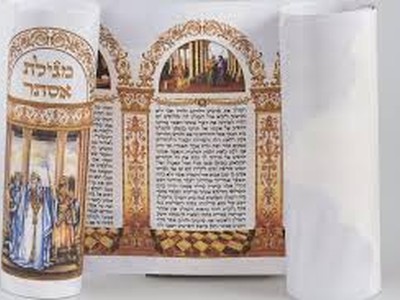
The Scroll of Esther, which we read on Purim, has a rather mysterious difference from other books of Scripture. Throughout the history of the miraculous salvation of the Jewish people from the terrible genocide, the Nameof the Almighty is never mentioned. Events unfold as if "on their own", without the explicit intervention of "supernatural" power.This "strange" absence of mention of G-d in the Book of Esther has a simple explanation given by Rabbi Abraham Ibn-Ezra. Although he was a mystic and Kabbalist, he always offered the most rational interpretation in his commentaries on the Torah and the Holy Scriptures. In the preface to the commentary on the Book of Esther, Ibn-Ezra notes that this scroll was written by the court Jew Mordecai, one of the great teachers of our people, and copies of it were sent throughout the empire of Ahasuerus. Mordecai understood that the Book of Esther would be translated into Persian and entered into the royal annals. The Persians were pagans, and Mordecai feared that they would undoubtedly replace the Name of the Most High in the translation with the names of their idols. "Therefore," says Ibn-Ezra in the words of the Book of Proverbs of Solomon (25:2), "The glory of the Most High is to hide the matter."This simple, rational explanation of Ibn Ezra agrees well with the very essence of the Book of Esther, which is hinted at by her name – “Esther”, which in ancient Hebrew means “mystery”. As the Talmudic midrash aptly points out, the events of the Book of Esther are alluded to in the Torah, in Deuteronomy (31:18): “I will hide my face in that day.” The greatest miracle of Purim salvation was hidden in the natural course of events, in the laws of nature.And “the laws of nature,” Rabbi Isroel Baal-Shem-Tov, the founder of Hasidism, taught, “are also a miracle that testifies to the Creator. This is the highest of miracles. But due to the fact that this miracle is constantly repeated, we get used to it and take it for granted.” The "Divine Face" seems to be hidden. Purim's story reminds us that everything that happens in the world is a consequence of Divine Providence, not just a coincidence.Rav Dov-Ber GaskelevichMaterial provided by the journal "Lechaim".