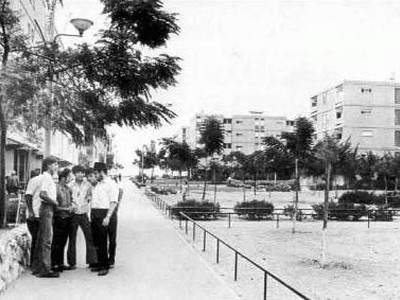
Page of History: Nahlat 🏘 Ar Chabad: The Story of the Rebbe's “Kingdom” in the Heart of the Holy Land
Community
In the very center of the city of Kiryat Malakhi, one of the most dynamic and important places for the world Chabad movement is located — the Nakhlat Ar Chabad district, or, as its residents affectionately call it, "Nakhla". This is not just a residential area, but the embodiment of a spiritual and social vision that began on the direct initiative of the Lubavitsky Rebbe in 1969📜.🕰How it all started...The history of the area is inextricably linked to the great wave of repatriation of Jews from the Soviet Union and Georgia. The Rebbe, for whom the welfare of the returnees has always been a priority, instructed his trustees to find an appropriate place to create a special settlement. At that time, there was an acute housing shortage, and the search was not easy. The turning point came when it turned out that hundreds of apartments were empty in Kiryat Malakha. Upon receiving the report, the Rebbe replied with a short and emphatic telegram:“The proposal regarding KiryatMalakha is correct.”Yes, with this blessing, the construction of the future hromada began🌱.📜Rebbe's Personal Gift: Torah ScrollsA special moment in the history of the district was the decision of the Rebbe to send two Torah scrolls to the new community as a personal gift from his synagogue "770" in New York. The ceremony was full of grandeur: the Rebbe personally escorted the scrolls to the car heading to the airport, and even lent his secretary his own sabbatical coat for this important mission.These Torah scrolls are still carefully preserved in local synagogues as a symbol of the unbreakable bond between the Rebbe and the residents of the area. One of them, more compact, is still used to read the Torah in the central synagogue on Shabbat✨.🎓Spiritual Leadership & DevelopmentFrom the very first day to the present, the spiritual pillar of the community has been Rabbi Yitzhak Yehuda Yaroslavsky. His appointment was also related tothe personal desire of the Rebbe, and since then he has steadily led the community forward.Recently, under his leadership, Beit Oraa was opened — a halakhic center where qualified rabbis answer questions from residents every day. The community itself is experiencing extraordinary growth: today, more than 1,500 Hasidic families live here and in the surrounding quarters, making Nahla one of the largest Chabad strongholds in the world🌍.🏗Borderless ExtensionThe original neighborhood has long outgrown its limits. New neighborhoods such as Ganei Chabad and Nakhlat Menahem were established under the direction of the Nahlat Ar Chabad Committee, and in recent years, Hasidic families have been actively populating modern areas, such as Karmey HaNadev.In addition to housing, Nahla has become a real "empire" of education and charity: from the famous schools of "Beit Khan" to the historical yeshiva "Tomhei Tmimim" and the mikvah "Mei Moshe", which is considered one of the most luxurious and technologically advanced in the world💎.🤝Liaison with Russian-speaking Jewry and the HAMA ORGANIZATIONFor the Russian-speaking Hasidim, Nakhla has always been their home. The HAMA organization has been working here for decades, supporting colleges for young parents of families and the elderly, opening kindergartens and synagogues targeted at people from the CIS countries.The area has become a model of integration, where indigenous Israelis and returnees from Russia, Bukhara and Georgia live side by side under the common wing of Chabad🕊.Nakhlat Ar Chabad is much more than just a district. It is a city of Torah, labor and great mission, which continues to grow and renew itself every year💫.Source:📖 Lubavitcher calendar

Ayom Yom: 16 Adara
Community
Today is 16 Adar 5786📌 5709 (1949) — A special delegation from the United States government arrived at the home of Rebbe Rajac in 770 to grant him American citizenship.1 Alter Rebbe said:The donations to the Tabernacle (Mishkan) included gold, silver, and copper. And there was no shining thing, except for the “mirrors of the women gathered” from which the Washbasin (Kiyor) and its foot were made.The basin and its foot are mentioned last among all the vessels of the Tabernacle, but their use is at the beginning of any ministry in the Tabernacle, because "the beginning is rooted in the end."2 "The work of a person who conducts business is as follows:To awaken in oneself faith and complete trust in Him who nourishes and supports all living things. After all, He, the Blessed One, will give him abundance in impregnation.And a person should be in the joy and sincere kindness of the heart — as if his earnings are already prepared and lying before him. "source:📖 Lubavitcher Calendar (https://t.me/+8KbDy9dQVqAxZWE8
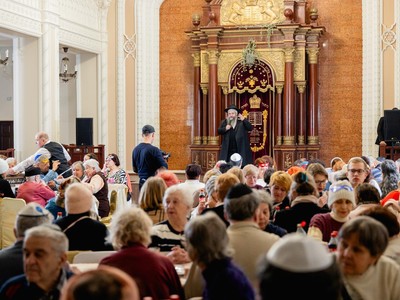
Purim holiday for the believers of the "Golden Age"
Community
In the Central Synagogue of Kyiv, a special celebration of Purim for the believers of the "Golden Age" took place. These are people who today are not easy, who have experienced many trials, and that is why we always try to create a special atmosphere of warmth, attention and joy for them.Every year they are always greeted by the Chief Rabbi of Ukraine and KyivMoshe Reuven Asman. And this time he turned to the guests with warm words of blessing and, according to good tradition, performed a song for them, giving the hall sincere emotions and a festive mood.This year, the children of the Lyceum also joined the congratulations"Mitzvah 613"who prepared the festive program especially for Purim. ReadingEsther the Scroll, children's performances were played, and each of the guests received a small holiday gift.The holiday ended with a warm Purim meal — with sincere communication, smiles and a sense of a large family. Such moments remind us that there are always people nearby who remember, support and give light.

Our dates: 18 Adars
Community
📌18 Adar II 5630 (21 March 1870) — Yorzeit Rabbi Hanoch-Henoch of Alexandrov.Rabbi Hanoch-Genoch ha-Kohen was a disciple of Rabbi Simcha-Bunem of Pshishkha, Rabbi Menachem-Mendel of Kotzk, and Rabbi Yitzhak-Meir Alter (Rabbi Hidusha ha-Rim).When the Oleksandrivsky rabbi of Rabbi Khidusha ha-Rim passed away, the residents of the city turned to his grandson, the Gur rabbi Rabbi Yehuda-Leib, with a request to lead the community. He considered himself unworthy of this honor and therefore sent his assistant there — Rabbi Hanoch-Genoch. And only four years after his death, having listened to the requests of the Hasidim, he led the Gur movement.📌18 Adar 5650 (March 10, 1890) — Yorzeit is one of the great sages of his generation, Rabbi Abraham Dovid Lavut, the great-grandfather of our current Rebbe.Born in the colony of Romanivka near Kherson and having lived in Mykolaiv for many years, Rabbi Lavut is known as the author of the book "Kav Naki" — a fundamental work devoted to one of the most difficult sections of Jewish law — the issue of proper registration of divorces.

Question of the day: How is life like a candle?
Community
The comparison of human life with a candle is one of the deepest and most penetrating images in the Jewish tradition. Although the book of Mishlei (Proverbs of King Shlomo) says that it is “the soul of man is the candle of G-d,” the great sages developed this metaphor by applying it to the very process of our earthly existence.The most famous interpretation of this comparison belongs to Rabbi Israel Salanter, the founder of the Musar movement. They say that one late night the ravine entered the shoemaker's workshop. He worked under the light of a candle stub, which was barely flickering. The rabbi asked the master, “Why are you still working? After all, it's too late, the candle is about to go out." Shvets answered with a phrase that has become a spiritual motto for many generations:“While the candle is burning, you can still work and fix it.”These words struck Rabbi Israel Salanter. If an ordinary craftsman understands the value of the last moments of light for repairing shoes, how much more important is it for “fixing” the human soul? A person's life is like a candle not only in its fragility, but also in its purpose. A candle exists to give light by wasting its resource. So does man: every day lived is a wax that burns and must turn into the energy of good deeds and spiritual correction.The main lesson of this comparison is optimism and responsibility. As long as a person is alive, no matter how “short” his candle may seem, he has a huge opportunity. Old age, disease, or the burden of past mistakes are no excuses for inaction. "As long as the candle burns, it can be corrected" is a real teshuvah manifesto, a return to G-d. Even at the last hour, you can perform an act that will outweigh the scales of your previous life.However, this metaphor also has a harsh side. The candle inevitably fades. King Shlomo in the book of Coeleth recalls that in the other world “there is no action, no design, no knowledge.” After death, the soul goes into a state that the sages compare to a "dead lion" — a majestic, but deprived of the opportunity to actively influence reality. Pirkei Avot says, “One hour of repentance in this world is better than all life in the Coming World.” There we enjoy the fruits, but only here, while our oppression burns, are we the creators of our own destiny.A candle life teaches us to appreciate the present moment. We do not know the length of our wax, but we are quite free in how bright our flame will be right now. The candle cannot bring back the already burnt oppression, but it can illuminate the room at the very second when it is most needed.

Ayom Yom: 17 Adara
Community
Today 17 Adar 5786️1ლMany years before the trip to St. Petersburg (where the imprisonment took place in 5559 [1798]), one day our Alter Rebbe appeared before people and said:“Gan Eden (Paradise) feels the preciousness of this world. And not only the angels of service, but even the First Emanations (Natalim Rishonim) would give up everything for the sake of one “Amen, ehei sheme slave”, said by a Jew with all his might — in accordance with its content, with all intention, that is, when a person is fully invested in these words.”Those were all his words. But they aroused such great enthusiasm and inspiration among the listeners that throughout the year they said “Amen, yehei sheme slave” with fervent heat.️2ლIn Tegilim (87:7) the words"KolMAYANAY"read with a letterCath?with vocalizationkamac, and duringbirkat ga-mazon(blessing after a meal) — with a letterCath?with vocalizationholamN o t a r y📖 Lubavitcher calendar.
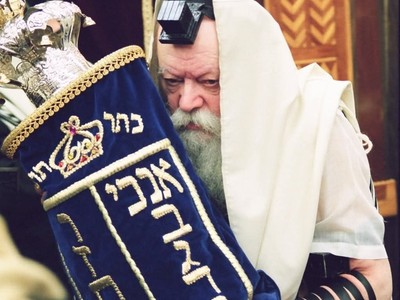
Siha Rebe for Ki Tis Weekly Chapter
Community
The power of half-shekel: unity above allAt the beginning of our head, the Most High commands Moshe to conduct a census of the Jewish people. But it was necessary to do this not "on the head", but through a donation — everyone had to give exactlyhalf shekel(Mahatsit ha-Shekel) is properly prepared and signed by appropriate authority.🧐What is the paradox?Whyhalf ? After all, when we serve the Almighty, we strive for integrity! It would seem more logical to give a whole shekel.The Rebbe explains this profound psychological and spiritual lesson:●You're only half of it.Even if you are a great sage or a righteous person, you need to remember that you are only half of it. Your true integrity is only achieved when you connect with another Jew.●Equality before the Almighty.Both rich and poor gave the same — half-shekel. There is no "elite" in matters of the essential connection with G-d and contribution to the unity of the people. We all need each other.📉From golden calf to correctionChapterKi Tisaalso talks about the tragedyGolden calf. it was a moment of deep fall. But this is where the incredible power opens upteshuviDrawbackThe Rebbe emphasizes: the commandment of the half-shekel was given, in particular, as redemption. It teaches us that the cure for any spiritual crisis isunity and humility.When we reject the ego and realize that all are parts of one whole, no fall is final.🏗Practical tip:This week, when you meet a person who is “not your type” or with whom you have disagreements, think abouthalf-shekelN o t a r yTake the first step.Recognize the value of the other.Remember: without it, your “picture of the world” and your soul remain incomplete.Shabbat Shalom! 🕯🕯📖 Lubavitcher calendar.

Question to the Rabbi: How does Judaism treat the holiday of March 8?
Community
The history of this holiday begins with a demonstration organized by a group of women workers in the United States in 1857. They demanded better working conditions and higher wages. The demonstration was dispersed by the police using force, but a few years later a movement for women's rights arose. Subsequently, the dayMarch 8has been recognized as an international women's day in most countries of the world.WhatEncyclopedia Britannica(Encyclopedia Britannica) — one of the most authoritative in the world — this day is defined as a day of recognition of women's achievements and protection of their rights. On this day, it is customary to give gifts to women, mainly flowers.It is clear that such a day is needed where on other days of the year there is not enough respect for the achievements of women and where their rights are violated. But Judaism does not need such a day, because the Jewish tradition has always recognized the greatness of a woman and her special place in the history of the Jewish people.Most Jewish holidays recall the miracles that the Almighty performed mainly due to the merits of women.Passover— in memory of the exit from Egypt, which the people received thanks to the righteous women of that generation (Talmud, treatise Sota 11b).Hanukkah— in memory of the miracle performed thanks to the merit of Judith.Purim— thanks to the merit of Queen Esther.And since these holidays were awarded to the people due to the merits of women, women are also obliged to fulfill the commandments of these holidays (Talmud, treatise Psahim 108b), although usually women are exempt from the commandments, the fulfillment of which is associated with a certain time. We can say that all these holidays in a sense arethe Day of the Jewish WomanN o t a r yThe Torah places an obligation on the husband to buy his wife outfits and jewelry for each holiday. In addition, the Talmud emphasizes the importance of giving gifts to the wife whenever possible (see Yevamot 63a). The only thing that fell out in the desert with the mana was jewelry.The sages also decided to be more careful about women's rights than about men's rights (see Bava Metzia 59a). They warned even more to avoid insulting a woman than a man, because the punishment for humiliating the dignity of a woman comes faster than for insulting a man (ibid.).And he writesRambam(Laws of Marriage, 15:19):“The sages decreed that a man should honor his wife more than himself, and love her as much as he loves himself. If he has abundance, let him provide her with all sorts of goods in accordance with his capabilities; let him not put fear on her, and let him speak to her softly, without impatience and without anger."source: https://toldot.com/

Page of history: Rabanit 📜 Rachel Yanovska: the keeper of the Jewish spirit of Mykolaiv
Community
The history of the Lubavitcher Rebbe family is full of great names, but the figure of his grandmother, Rabanit Rachel Janowska, occupies a special, warm and at the same time tragic place in it. It was the thread that connected generations of old-style rabbis with the future leader of our generation.🏡 Roots & LegacyRabanit Rachel was born on 19 Adar 1860 (5620) in the family of Rabbi Yitzhak Pushnits, who for half a century served as a rabbi in the village of Dobroe (Kherson province). She grew up in an atmosphere of uncompromising devotion to Torah.When it came time to build her family, she married Rabbi Meir Shlomo Janowski. In 1890, following the will of his grandfather, the famous author of the book "Magen Abraham" Rabbi Abraham David Lavut, Rabbi Meir Shlomo became the chief rabbi of Nikolaev.Rabanit Rachel's family:●Khan's daughter is the wife of Rabbi Levi Yitzhak Schneerson and the mother of the Seventh Lubavitcher Rebbe.●The daughter of Miryam Gitel is the wife of Rabbi Shmuel Schneerson.●Daughter Ethel Maryashin — died in evacuation in Ufa.●The son of Israel Leib is a talented young man who died at the age of 15 from typhus.🧒 “Grandma took care of me…” — Rebbe's MemoriesThe Rebbe's connection to her grandmother was surprisingly tender. As a child, when the Rebbe lived with his parents in Yekaterinoslav (now Dnipro), he regularly visited Rabanit Rachel in Mykolaiv for the summer.The Rebbe himself described these years in his notes:«My grandmother Rachel... I stayed with her for several weeks at the end of each summer for several years. I was in Mykolaiv, and she took care of me..."Imagine this picture: the future leader of world Jewry, still a little boy, spends warm summer days under the care of a wise and loving grandmother, absorbing the atmosphere of holiness of the Nikolaev rabbinical house.🖤 Tragedy and self-sacrificeWhen the Nazis invaded Ukraine in 1941, Nikolaev's peaceful life turned into hell. Rabanit Rachel's grandson — Rabbi Menachem Mendel (son of her daughter Miriam Gitel) — was preparing to be evacuated to Chardzhou (Turkmenistan). The family begged Grandma to go with them.Fatal Solution:The non-Jewish neighbors, who had known Rabanit for many years, offered to keep her. They persuaded the family: "The road is too hard for an elderly woman, leave it to us, we will keep it safe from the Germans." After much hesitation and consultation with Rabanit Rachel herself, it was decided that she would stay.The neighbors really showed courage and hid it in their house. Neither the Nazis nor the commandant's office knew about its existence. However, the trouble came from where they did not wait: other neighbors noticed that an "old Jewess" was hiding in the house and reported it to the authorities.A German truck rolled up to the house. The old Rabanit was brought out at gunpoint and added to the thousands of other Jews of Mykolaiv doomed to death.🕯 24 Tishrei 5702 (1941) Rabanit Rachel Janowska died a martyr's death (Kidush HaShem).🕯 Eternal Light of MemoryFor the Seventh Lubavitcher Rebbe, day 24 of Tishrei was forever a day of remembrance. Every year on this day, the Rebbe recited the Kaddish for his grandmother, whose life was cut short in the flames of the Holocaust.Rabanit Rachel was not just a wife and daughter of rabbis — she was the foundation of the family on which the great Rabanit Khana grew up. Her modesty, kindness and the quiet care that she gave to the little Rebbe were forever inscribed in the history of our people.May the memory of the righteous woman be blessed!in 📸the photo: a letter that the Rebbe wrote about his grandmother📖 Lubavitcher Calendar (https://t.me/+8KbDy9dQVqAxZWE8)

Our dates: 20 Adars
Community
*20 adarcirca 3700 (1st century BC) — Prayer of Rabbi Honi ha-Meagel (Honi drawing a circle) for rain.In the Talmud (Tract "Taanit") it is said: "One year the month of Adar was coming to an end, and there was still no rain. They turned to Rabbi Hony. He prayed, but the rain did not come. Then he drew a circle on the ground, stood inside it and said: "Lord of the World! Your children have turned to me, and I swear by Your name that I will not move until You have mercy on Your children.” A few drops fell. Rabbi Honi said: “Lord of the World! I'm asking for more rain." There was a very heavy downpour that threatened to turn into a flood, but Rabbi Honi said: "Lord of the World, I asked for rain, which will not be the destruction of the world, but a blessing." And then the usual rain started."*20 adar5400 (March 14, 1640) — Yorzeit (anniversary of the departure from this world) Rabbi Yoel Ben Shmuel Jaffe (Yoel Sirkes, Rabbi Bach).Rabbi Yoel was born in 1561 in Lublin and was a rabbi in the communities of Poland and Lithuania, and then — the head of the base-din (court) and yeshiva in Krakow. Many of its graduates became outstanding Polish rabbis, and one of its best students, Rabbi David ben Shmuel ha-Levi, became Rabbi Joel's son-in-law.Living in Medzhybizh, he founded a large yeshiva there, and kept needy students at the expense of his family. He was greatly assisted by his mother-in-law, Rebbetzin Sirka, from where his family nickname Sirkes comes, that is, "the son-in-law of Sirka".Rabbi Yoel is also known as Rabbi Bach — an acronym for the title of his book “Bait Hadash”, in which he establishes the Talmudic source of every law given in the collection “Shulchan Aruch”.Kabbalists involved in the mysteries of the Heavenly Court claim that in his entire life, Rabbi Bach committed only one (and even then unintentional) sin: one day, passing through the street by a harness pulled by a donkey and an ox at the same time, he sneezed loudly, so that the animals stood up and took a few steps. It turned out that Rabbi Bach unwittingly violated the prohibition of the Torah: "Do not scream on the donkey and free will together", which also provides for the prohibition of the joint use of these two animals to transport cargo or a cart.

Our dates: 21 Adars
Community
*21 adars5546 (March 21, 1786) — Yorzeit (anniversary of the departure from this world) Rabbi Elimelech Weissblum (Elimelech of Lizhensk).The slave of Eliezer-Lipa and his wife Myrl had seven sons, two of whom became disciples of the Mezheritsky magician Rabbi Dov-Ber and became famous in hundreds and thousands of Hasidic stories. Rabbi Elimelech is sometimes called Rabbi Noam Elimelech, after the book he wrote, but for most of us he is primarily Rabbi Elimelech of Lizhensk, brother of Rabbi Zusi of Annopol.During the life of Magid, Rabbi Elimelech and Rabbi Zusia traveled to Poland, spreading Hasidism, but after the departure of Rabbi Dov-Ber from this world, they left their travels. Rabbi Elimelech returned to his native Lizhensk, which became the center of Polish Hasidism, and Rabbi Zusya settled in the Volyn town of Annopil, where their teacher was buried.The disciples of Rabbi Elimelech were such Hasidic tzaddiks as Rabbi Avraham-Yehoshua Geshel from Apta (Opatuwa, Apter Rebbe), Rabbi Yaakov-Yitzchak ha-Levi Horowitz ("ha-Jose mi Lublin"), Rabbi Clonimus-Kalman ha-Levi Epstein from Krakow (Rabbi Maor Va-Shemesh), Rabbi Naftali-Zvi from Ropschitz, Rabbi Menachem-Mendl from Riemanow, Rabbi Moshe-Leib from Sasow.It is said that once, sitting at a meal with his students, Rabbi Elimelech knocked over the soup bowl placed in front of him with a clumsy movement. The soup pot was filled twice more, but each time its contents ended up on the table. After the third time, the young Menachem-Mendl (future Rabbi Menachem-Mendl from Rymanov), who was especially spiritually close to the mentor, shouted in fear: "Rebbe, if they find out, we can all be executed!". Some of the disciples laughed, but Rabbi Elimelech reassured him, saying, "They will not know."Later it turned out that in Vienna on this day and at this hour the emperor had to sign a decree directed against the Jews. The emperor reached for the pen three times and the inkwell flipped over three times, pouring over the papers. And then the emperor postponed the decree, saying to the courtiers, “I won't sign it. Obviously, in the higher spheres they do not want this to happen.”source: chabad.odessa

Our dates: 23 Adars
Community
Our dates:📌23 Adar 2448 (1312 BC) — The Portable Temple (Mishkan) is assembled for the first time. The beginning of the "Seven Preparatory Days".The Jews began the construction of the Mishkan (Portable Temple, which looked like a rectangular tent) 11 Tishrei 2448, 6 months after the Exodus from Egypt, 3 months after receiving the Torah on Mount Sinai and 80 days after the creation of the Golden Calf.The preparation of the temple utensils, panels and elements lasted 74 days and was completed 25 kistle, but only three months later, 23 adar, Moshe-Rabein received instructions from the Almighty to begin the assembly and dismantling of the Mishkan. A seven-day "training" period began, when from 23 to 29 adar the tent was erected in the morning and disassembled in the evening. All these days Moshe-Rabein served as high priest and only then anointed Aaron and his 4 sons to this position.After the completion of the "training" 1 Nisan, Mishkan was finally established (in fact, when the Jews moved from place to place at the direction of the Almighty, Mishkan was dismantled and also transferred to a new place, from where it received the name Portable).📌23 Adar 5626 (March 10, 1866) — Yorzeit (anniversary of the departure from this world) Rabbi Yitzhak-Meir ben Israel Rotenberg (Alter of Hur Calvary).The founder of the Gur Hasidic dynasty, Rabbi Yitzhak-Meir Rotenberg (known as Rabbi Hidush ha-Rim, after the title of his book. Ha-Rim — an abbreviation of the words "ha-rav Yitzhak-Meir" — "teacher Yitzhak-Meir") was a direct descendant of the famous spiritual leader of the Jews of medieval Germany, Rabbi Meir ben Baruch (Maharam) from Rothenburg.Rabbi Yitzhak-Meir was a student of Rabbi Yisrael Oftschein (Magid of Koznytskyi) and Rabbi Simha-Bunem of Pszysha and later became one of the spiritual leaders of the Jews of Poland. After Hidushei ha-Rim refused to comply with the "request" of the Russian authorities and called on the Jews of Warsaw to abandon Jewish clothing, he was arrested, but due to the mass discontent of the Warsaw people, he was released. In order not to attract the attention of the authorities, Rabbi Yitzhak-Meir Rotenberg changed his famous surname to Alter and moved from Warsaw first to the town of Nowy Dvir, and then to Gur-Kalvaria.Yitzhak-Meir's 13 sons died in infancy or youth, and he was succeeded by his grandson, RabbiYehuda-Aryeh-Leib Alter, also known as Rabbi Sfat Emet (also by the title of his book).source: chabad.odessa