
Our dates: 4 Kislev
Community
4 Kislev 3412 (349 BC) — Visit of a delegation of Babylonian Jews to the prophet Zechariah.By this time the building of the Temple had been erected, but the decoration work in the interior continued (and continued for another two years), so everyone was interested in whether to treat it as the beginning of a new era or as a short episode. On this day, the Jews of Babylon, who arrived in Jerusalem, turned to the prophet Zechariah with the question of observing the fast on the 9th of Av. These events are described in the Tanakh, in the book of the prophet Zechariah in chapters 7 and 8, and there the prophet predicted that in the future, after the coming of Moshiach, all fasts will be replaced by holidays.Source:chabad.odessa

Our dates: 5 Kislev
Community
📌5 Kislev 5392 (November 18, 1631) — Yorzeit (the anniversary of the departure from this world of Rabbi Shmuel-Eliezer Eidels.Rabbi Shmuel-Eliezer (Maharsho) was born in 1555 in Poznan, in a noble rabbinical family, and his father-in-law was Poznań Rabbi Moshe Ashkenazi Halperin — one of the greatest authorities of that time. For 20 years, Rabbi Maharsho led the mark yeshiva, and the cost of its maintenance was paid by his mother-in-law Edel, so that the head of the yeshiva became known to the Jewish world under the mother-in-law's "name".After her death, Maharsho assumed the post of head of the rabbinical court in the city of Chelm (known in Jewish folklore for its "Chelm sages"), then headed the rabbis of Lublin and Ostrog.Rabbi Shmuel Edels enjoyed enormous authority in the Jewish world and his collection of commentaries "Hidushei Galachot" became an integral part of any edition of the Talmud. In addition, he was known for his kindness and selfless desire to help his neighbor - numerous stories and legends glorifying the kindness of Edels and the miracles he performed circulated in Poland and Ukraine during his lifetime. On the door jamb of his house (burned down in 1889) was written a verse from the book of Job: "A traveler did not spend the night in the street, and I opened my door to a traveler" - a motto that guided the slave throughout his life.📌5 Kislev 5564 (November 19, 1803) — The wedding of Rabbi Tsemakh Tzedek and Rebbetzin Khai-Mushka.The third Lubavitcher Rabbi, Rabbi Menachem-Mendel (Rabbi Zemach Zedek) was the son of Rabbi Sholom Shakhno and daughter Alter Rabbi Rebbetzin Dvori-Leya. An early orphaned baby was brought up in the house of his grandfather, who saw him as a future successor. In 1803, at the age of 14 and a half, Menachem-Mendle married Chaya-Mushka, the daughter of the second Lubavitcher Rabbi Dov-Ber (Miteler Rebbe).The wedding took place in the town of Lyady, where the Alter Rebbe family lived at that time.Source:chabad.odessa

Our dates: 7 Kislev
Community
7 Kislev 3321 (603 BC) — King Jehoiakim burned a scroll with the text of the mourning cry "Eikha".The book "Eikha" (Lamentations of Yirmiyahu), in which the destruction of the Temple is mourned, was dictated by the prophet Yirmiyahu to his disciple Baruch ben Neriah and is traditionally read on the 9th of Av.7 Kislev 3765 (4 AD) — Death of Hordus (Herod).On this day, one of the most brutal and bloody kings in Jewish history died. The Talmud says that this day was declared a holiday.source: chabad.odessa

Our dates: 8 Kislev
Community
8 Kislev 5632 (November 21, 1871) — Yorzeit (anniversary of the departure from this world) to Rabbi Aaron from Chernobyl.Rabbi Aaron was born in Chernobyl and studied with his grandfather Rabbi Menachem-Nachum. He was the eldest child of Rabbi Mordechai Tversky, the head of the Chernobyl Hasidic movement, and in 1837, after his father's departure from this world, he headed the Chernobyl movement, and also became the head of the Hasidic group that raised funds for the Volyn community (kollel) in Eretz Israel.sourcechabad.odessa

Our dates: 9 Kislev
Community
Our dates:📌9 Kislev 5534 (November 24, 1773) — Birthday of Rabbi Dov-Ber (Miteler Rebbe), the second Lubavitcher Rebbe.During the 14 years that have passed since the wedding, only daughters were born to Alter Rebbe, so when he came to Mezherich to his teacher Rabbi Dov-Ber (Mezheritsky Magid), he asked him for a blessing on the birth of his son.Before his departure from the world, Magid summoned the Alter Rebbe to himself and said: "... The Son will be born to you, and you will call him by my name." And a year later, in the city of Liozno, a son was born in Alter Rebbe, who was named after the teacher.After the departure from this world of his father, Rabbi Schneur-Zalman (Alter Rebbe (Old Rebbe)), Rabbi Dov-Ber led Chabad and became known as Miteler Rebbe (Middle Rebbe). In 1813, he settled in the Belarusian town of Lyubavichi, which for the next 102 years turned into the Chabad capital.📌9 Kislev 5588 (November 28, 1827) — Yorzeit (anniversary of the departure from this world) Rabbi Dov-Ber (Miteler Rebbe), the second Lubavitcher Rebbe.Miteler Rebbe once said to the Hasidim: “My father was 54 years old when he was taken to St. Petersburg for the second time. From Heaven, he was offered a choice: suffering or leaving the world. He chose suffering and obviously left me a second choice…”Indeed, Miteler Rebbe passed away on the day he turned 54, and on the same day he was buried in the cemetery of the Ukrainian city of Nizhyn.That year, the day of 10 Kislev, the day of his first release, which was supposed to be a holiday, turned into a day of mourning for the Hasidim.📌9 Kislev 5598 (December 7, 1837) – Yorzeit (anniversary of the departure from this world) Rabbi Moshe Shapiro from Slavuta.Rabbi Moshe was the son of Rabbi Pinchas of Korets — a famous Hasidic tzadik, a disciple of Baal Shem-Tov and the Mezheritsky magistrate, and owned a printing house known in the Jewish world (founded by his father).The Slavut printing house was distinguished by the high quality of its work, and many famous Jewish publications were printed here. Thus, the Alter Rebbe's book "Tania" was printed for the first time in Slavut, in recognition of the merits of Rabbi Pinchas. In 1835, a dispute began between the Slavut and Vilnius (Vilnius) Jewish printers over the right to publish the Babylonian Talmud, and the owners appealed to the rabbinical court. The judges could not reach an agreement, more than 100 rabbis of Poland, Germany and Austria were involved in the discussion, and in the end, Vilna received the right to publish.The conflict, accompanied by denunciations, attracted the attention of the authorities. The detractors accused the owners of the Slavic printing house of murdering a printer dismissed for drunkenness and negligence (in fact, he hanged himself in the attic) and they were found guilty. Rabbi Moshe died in a Moscow prison, and his sons were sentenced to a whip and sent to long-term exile in Siberia.source: chabad.odessa
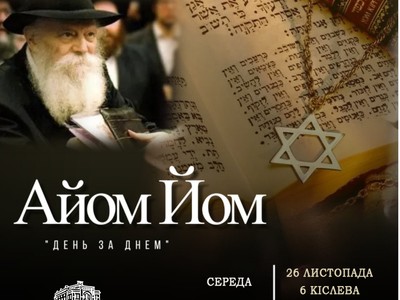
Iom-yom: 6 Kislieva
Community
"My father said that reading "Shema" before going to bed is a small likeness of the confession "Blow", which is spoken before death. However, in the second case, a person leaves the fair forever, and his deeds are completed, about which it is said: "...today, to fulfill them. "And during the nightly reading of “Shema” — the “ fair” is still in full swing, and something can still be achieved. ”source: chabad.org
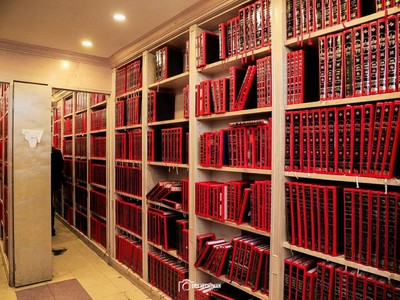
Topic of the day: BYTE SMALL SFARIM 📚 CAMPAIGN
Community
A HOUSE FULL OF BOOKS — "OBVIOUS WE-HAHAMEA" (Yavne and her sages)The Byte Male Formim campaign was proclaimed by the Rebbe in 5734.Its goal is to have as many holy books as possible in every Jewish home, filling the dwelling with the light of the Torah.🔹 Where does the phrase “a house full of books” come from?In the midrash, it is said that Korah asked Moshe, “If there are many scrolls (books) in the house, does he need a mezuzah?”The Rebbe used this image to emphasize the importance of filling the house with books that are actually used.🔹 How the Rebbe presented the campaignIn Parachat Naso 5734, the Rebbe encouraged everyone to expand their home library:Khumash, Sidur, Tegilim, Tania, Hasidut books, Shulhan Arukh, etc.And on Simhat Torah 5735, the Rebbe added the second part — "Explicit ve-hahamea" (Explicit — the city in which, after the destruction of the Second Temple, the center of the sages of the Torah — and his sages were located): not only to have books, but also to conduct Torah lessons at home.Thus, the house turns into Yavne, "full of books" — a place that elevates and strengthens spirituality.🔹 Practical instructionsThe Rebbe explained that the word “small” — “full” should be understood literally: books should stand on all the appropriate walls of the house (except for the toilet and the matrimonial bedroom).The main thing is that the books should be in use, and not just standing behind the glass.🔹 Three books at the direction of Rebbe RajacaEach Hasid must have:• Keter Shem Tov• Or TorahTanyaAnd don't weave them together.🔹 After the victory in the "case of books"The Rebbe reprinted the book "Derech Emunah", made it available and taught from it on painters.Later, the Rebbe called for increased Torah study and the addition of new holy books at home and in libraries.🔹 5752 yearThe Rebbe stressed that anyone can participate in the “liberation of books” — by buying new books and adding them to their “house full of books.”📖 Lubavitcher calendarsource:https://t.me/+8KbDy9dQVqAxZWE8
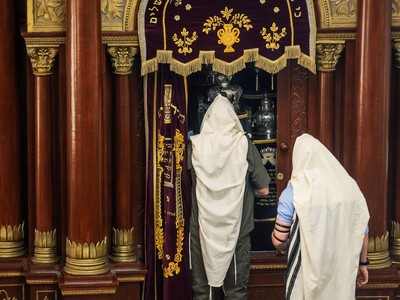
Theme of the day: A scroll that has room for everyone
Community
📜Joint Scroll of the Torah — for the unity of the people of IsraelThe Lubavitcher Rebbe launched a campaign to write a common Torah scroll so that every Jew could be connected to the very essence of the Torah — not only through study, but also through belonging to a particular letter in the scroll.It is important to emphasize that this action is carried outseparate from the Torah Scroll for children, which is an independent project.✨In-depth content and purpose of the campaignThe Torah compares the Jewish people to a scroll: each letter is like a separate Jewish soul.If even one letter is missing or damaged, the entire scroll is considered incomplete.So is the nation of Israel: the true goal is for every Jew to be included, bound, and to occupy his own unique place.Writing a joint Sefer Torah:strengthens the unity of the people,brings spiritual protection,is the source of blessings,strengthens the connectionof each Jew with the root of his soul.The Rebbe has repeatedly stressed that participation in this campaign brings special merit and affects the circumstances of both the community and each person.📝How does participation work?Everyone who wants receivesown letter in the scroll— for a symbolic amount so that participation is accessible to all.After registration, the letters are distributed by certified soffers.The Participant receives:📄 personal certificate,🔠 an indication of your letter and its location, a spiritual connection with the part of the Torah intended for him.The letter is not chosen randomly — it is distributed in the exact order so that the scroll is written correctly from beginning to end.📍Where is the scroll written and what happens next?The scroll is written by experienced softers on specially prepared parchment, in compliance with all the strict laws of writing sacred texts.Upon completion, it is planned to solemnly complete the work and deliver the scroll to Israel, where it will be placed as a symbol of the unity of all the people.🔗Registration to receive the letter in the scroll:https://share.google/8siYWwuAzR4twhh6qSource:https://t.me/+8KbDy9dQVqAxZWE8
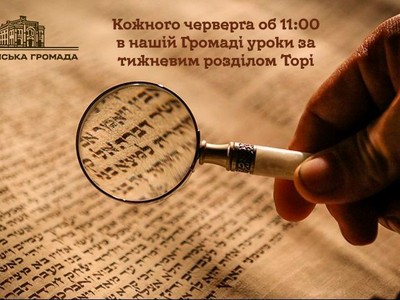
Lessons on the weekly Torah section for believers of the "golden age" in the Central Synagogue of Kyiv
Community
Every Thursday in the Central Synagogue of Kyiv there are special lessons for believers of the "golden age" on the weekly section of the Torah, which is conducted by the chaplain of the Armed Forces of Ukraine David Milman. These lessons are extremely important and necessary for our community.Torah classes help believers deepen their knowledge of the holy texts, understand their deep meaning, and apply them in everyday life. It is especially valuable that these lessons are conducted for people of the “golden age” who have great life experience and wisdom.Under the leadership of Chaplain David Milman, believers have the opportunity not only to study the Torah, but also to discuss important spiritual and life issues, share their thoughts and receive support from the community. This helps to strengthen spiritual ties, create an atmosphere of unity and mutual support.Such lessons are an important element of spiritual enrichment and development, helping to preserve traditions and pass them on to future generations. We invite all believers of the "golden age" to join these classes and together deepen their knowledge of the Torah.
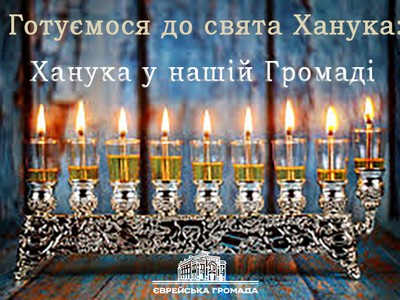
Preparing for Hanukkah
Community
🕎Hanukkah in our community ✨25 Kislievawe light the first candle together —and for8 dour Hanukkah will shine in the heart of the community.📜 We remember the miracle when after the victory of the Hashmonai🫙 found onlyone jug of pure oil,but the lamp was oneight days—and the Temple was filled with light again.🏛 As then, today we stand together:in times of challenge, war, anxiety and darknesswe gather within the walls of our synagogue,wherethe light of the Torah does not fadeN o t a r y🌟Hanukkah means “rest of the twenty-fifth”—and each of us feels it,when he comes into the community,where there is warmth, support and native faces.🙏 In our synagogue, these days are:🕯Hallel in Shaharit,🕯 additional prayers“For miracles…”,🕯 words of thanksgiving to the Almighty.👨👩👧👦 Children, adults and our wise men of the "golden age" —all add to the light,-bo)each candle enhances the overall radiance,аndevery Jew is part of the miracle of our communityN o t a r y🍩 Yes, there will be donuts and souvion,but the sweetest thing isto be togetherN o t a r y🕯The light of Hanukkah goes beyond the window —it touches the heart.
Question to the Rabbi: Who is the "mashpiyya"?
Community
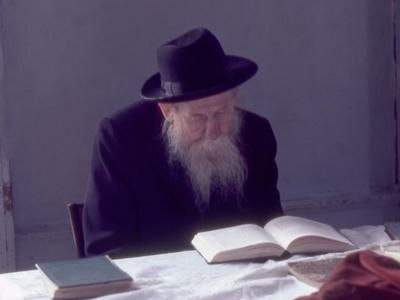
🌟Mashpiyais a Hasid and a spiritual guide, a person with experience and Hasidic fire, who serves as an example and guides others in spiritual life.What does he do? 🗣 Conducts paintbrings, explains Hasidic ideas, inspires, supports, helps to grow in spiritual work and strengthens the connection with the Rebbe.📚 Often, the mashpiya also teaches lessons from Hasidutu.❓ Why do you need a personal mask?🧭 The Rebbe taught that everyone needs their own spiritual advisor —"Ase Leha Rav"(make yourself a teacher).Mashpiya helps to:• understand spiritual issues,• make the right decisions in everyday life,• to see the picture more broadly and objectively.❓ What did the Rebbe say about Mashpyim?🔥 In 5737 (1977), the Rebbe decreed that every Hasidic community should have a mashpiyah.The Rebbe explained their responsibilities:— to inspire goodness and holiness,— strengthen Torah classes,— engage in the spread of Judaism,— be an address for advice in matters of Avoida and Mivtsoim.❓ What is the main responsibility of the mashpiy?⚡️ Wake up people around, do not let them fall into indifference or passivity.📌 In 5747 (1987), the Rebbe added that the mashpiyah should see to it that Hasidic customs are observed in practice.❓ And what happens on the paintbrangen from the mashpy?🎶 This is not a lecture. This is a lively Hasidic atmosphere:niguns, frank conversation, inspiration and mutual influence.Mashpiya helps participants to take the "point" inside — into their own spiritual work.📖Lubavitcher calendarsource:https://t.me/+8KbDy9dQVqAxZWE8
Theme of the day: Nerot Shabbat Kodesh 📘 Campaign (Saturday Candles) 🕯️✨
Community
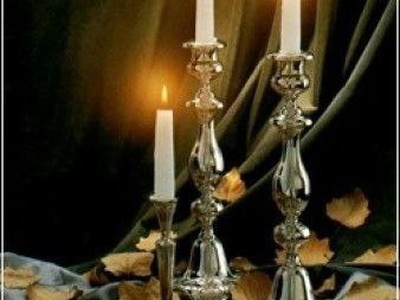
An official initiative of Chabad aimed at spreading the custom of lighting Sabbath and holiday candles among women and girls of the Jewish people.🕯️Campaign HistoryNerot Shabbat Kodesh was proclaimed by the Lubavitcher Rebbe in 1974 (5734) as one of the ten central projects (mivtsoim).The main task is to awaken and strengthen the participation of every Jewish woman and every girl in lighting candles in order to multiply the light in the world — spiritual and material✨.The Rebbe repeatedly stressed that in the modern world, filled with anxiety, tension and spiritual darkness, even one candle can bring peace and blessings to the house.📜Reasons for the proclamation of the calfThe Lubavitcher Rebbe considered the commandment to light candles as a special means:🕊️ strengthening peace in the family✨ increasing spiritual light🌿 educating future generations in an atmosphere of holinessThe Rebbe emphasized: the woman is the "light of the house", and it is she who is entrusted with this important mission.Therefore, a broad campaign is needed to allow every Jewish woman to feel her role in illuminating the world.📅Campaign StartThe initiative was officially announced in a Rebbe 24 Elul conversation in 5734.Since then, the Rebbe has instructed the Hasidim to develop:● distribution of candles● explaining the meaning of the mitzvah● organization of assistance to women who begin to adhere to the traditionThe Rebbe also noted that the campaign covers not only Saturday, but also holiday candles.🌸Girls and parentingThe campaign pays special attention to girls.The Rebbe taught that a girl should start lighting her candle from the age of awareness — usually three years old.This gives the child:🌸 a sense of significance🌸 understanding of the holiness of Shabbat🌸 personal participation in the multiplication of light 🌟The girl lights her candle in front of her mother so that she can observe and help.🚗🌍Development and scale of activitiesAfter the proclamation of the initiative, volunteer activities became intensive and global.EveryFriday, Chabad activists go to:🛍️ shopping malls🏥 hospitals🎒 schools and kindergartens🏘️ residential areasThey hand out sets of candles, explain the ignition time and the meaning of the mitzvah.In Israel, within the framework of the Neshi u-Bnot Chabad organization, there is a special department that deals with:● production of kits● logistics of distribution● training materials● programs for schools and seminariesAccording to the organization, in only one year (for example, 2019), more than1.2 million kitsin Israel, not taking into account private initiatives.🙏Spiritual aspectsRebbe explained that the lighting of candles is associated with:🕊️ bringing peace to the home✨ amplification of spiritual light🌼 the possibility of a woman's personal prayer🏠 creating an atmosphere of holiness in the homeBefore igniting, a woman traditionally gives a coin in the tsedak — this adds an element of mercy and kindness to the action.Source:📖Lubavitcher calendarhttps://t.me/+8KbDy9dQVqAxZWE8