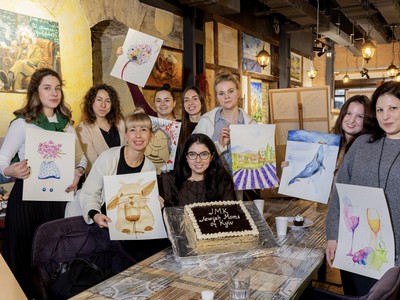
JMK: the first meeting to start
Community
JMK — Jewish Moms of Kyiv.We've created a space where moms can finally exhale, smile, and be… just themselves.The first meeting took place in the cozy art space "Fiddler on the Roof" — a place where light falls softly, colors sound louder, and conversations become more sincere.At the large table are watercolors, brushes, the aroma of coffee and the quiet happiness of community.Where women draw, laugh and share stories as if they are threading together a new family.And in the middle of the table is a cake with the inscription JMK — a sweet symbol of the fact that this club already has its own taste and soul.JMK is a warm home in the big city for Kyiv's Jewish mothers who seek inspiration, support and little pauses amidst the great daily love for their children.The first hours together gave us something that brightens the inside: new acquaintances, sincere conversations, laughter, creativity and the feeling of "I am not alone".Special thanks to Haye Azman for the organization and warmth with which this project was born.There is even more light, support and small miracles created by women's hands ahead.Welcome to
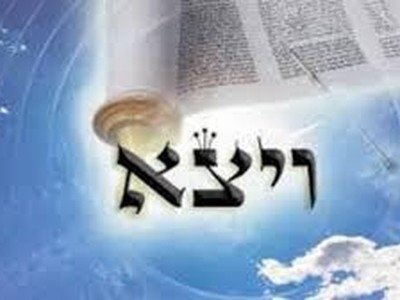
✨ Siha Rebbe to the Head of Vaece
Community
At the beginning of the chapter, the Torah says, “Jacob went out of Beersheba and went to Haran.”This movement is not just a geographical transition, but the key to understanding Jacob's mission and, more broadly, the mission of every Jew.Beersheba is a symbol of order, holiness, spiritual clarity.Haran is a place of anger, distortion and concealment.That's where Yaakov isMakesto go. Instead of staying in a safe reality, he goes where the darkness reigns. For it is from the darkness that one can lift up that light which is not revealed in the finished holiness.On the way, Jacob stops "in that place" and sees a dream about a ladder connecting the earth and the sky.This image conveys the very essence of his mission: a person stands "below", in the material world, but his task is to connect the bottom with the height, to present reality, and not to run away from it.The angels that ascend and descend reflect the constant movement: the work of a person rises up, and from above comes a new force that helps to advance further.In Haran, Yaakov spends many years in the house of Laban, a man who smiles outwardly but is full of cunning and impurity inside.It is there that Jacob's incredible power is revealed: to keep purity and principles amid pressure, doubt and treachery. Moreover, not only to preserve oneself, but also to transform the environment, to "gather wealth" — those sacred sparks that can be raised only in a difficult place.When Jacob leaves Haran, he leaves with others: creating a family, laying the foundation for the future of Israel and turning a foreign land into a source of blessing.The Rebbe emphasizes that Jacob's story is a model for every Jew.Sometimes life takes us out of our spiritual "Beersheba" — peace and stability — and directs us to our own "Haran". But this "exit into the world" always has a purpose: to reveal God's light exactly where it is not visible, and to turn darkness into a place of revelation.This is the way of Jacob — and the way of each of us: not to avoid the world, but to illuminate it.📖 Lubavitcher calendarhttps://t.me/+8KbDy9dQVqAxZWE8
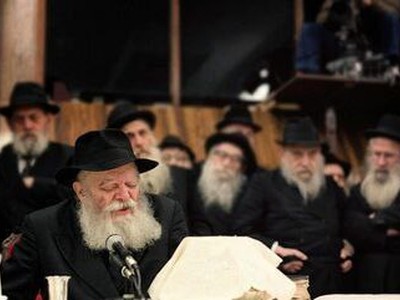
Question to the Rabbi: The ChatGPT program said: 📘 What is "Maamar Hasidut"?
Community
aamar Hasidut"?In Chabad Hasidism, there is a special form of spiritual teaching —Maamar HasidutN o t a r yThis is no ordinary lecture. The Hasidim believe that when the Rebbe proclaims maamar, he reveals the deepest Divine ideas.🎵How does maamar begin?Before the beginning, the Hasidim sing a special melody —nigun trainingN o t a r yDuring the maamar, everyone stands — this is a sign of respect and holiness of the moment.Sometimes the Rebbe would start maamar unexpectedly, with no melody.🧠What are the maamaras talking about?✨ There are two main areas:️1ლMaamarei Ascala— philosophical and spiritual topics.The high concepts are explained:душа— spiritual levels— internal human forces— the meaning of creation️2ლMaamarei avoida— work on yourself.On how to apply hasidut in real life:— how to awaken love for G-d— how to deal with laziness and fears— how to develop joy— how to strengthen characterIn fact, both directions are intertwined:in philosophy there is always a practical conclusion, and in "working on oneself" there is a deep idea.🌍Maamaras "for air purification"Each Rebbe had a maamar, which was repeated from time to time to “purify the air of the world,” as explained in the Hasidic tradition.These Maamar Hasidim listened once every few years.📣What is “Hazarat Yes”x?Old Chabad custom:after the Hasidim heard the maamar from the Rebbe, they retold it in different cities and communities.Today, maamaras repeat:— on Saturday afternoon after the mincha prayer,— at Hasidic gatherings (fabrengen),— on special days and holidays.🖨️Maamar publication todayMaamars are printed in books, collections, and archives.There are modern projects that explain them in simple language so that everyone can understand the Hasidim.🎯The main thing in one sentenceMaamar Hasidut is the heart of the Chabad spiritual tradition, helping to understand G-d, the world and oneself.📸In the photo: Lubavitcher Rebbe proclaims Maamar.📖Lubavitcher calendarhttps://t.me/+8KbDy9dQVqAxZWE8

Farewell to the hero. Baruch Dayan ha-Emet..
Community
Yesterday, a farewell ceremony was held at Khreshchatyk with Benjamin Usher, the call sign "Nemo" — a Jew and a citizen of Hungary, who voluntarily joined the ranks of the 3rd Airborne Brigade and gave his life for Ukraine.The Chief Rabbi of Ukraine Moshe Reuven Asman, Chaplain David Milman and representatives of the Community attended the ceremony together with his patron and brothers-in-arms.We honored a man who came to defend our land not for fame or gain, but out of a sense of justice and responsibility.Baruch Dayan ha-Emet. Blessed is Righteous Baruch Dayan ha-Emet. Blessed is the Righteous Judge……The bright and blessed memoryof Benjamin Usher!

Our dates: 12 Kislev
Community
12 Kislev 5334 (November 7, 1573) — Yorzeit (anniversary of the departure from this world) Rabbi Shlomo ben Yechiel Luria (Marchal or Roshal)Rabbi Shlomo was born at the beginning of the 16th century in Poznań. Orphaned at an early age, he was raised by his maternal grandfather, the erudite Talmudist Yitzhak Kloiber, and then studied with Rabbi Ostrog and the head of the local yeshiva, Rabbi Kalonymus Haberkastn, whose daughter he married. Already in his youth, Magyarshal became famous for his scholarship (the most famous of his works was the collection of commentaries on the Talmud "Yam Shel Shlomo" ("Solomon's Sea")), and many rabbis, including foreign ones, began to turn to him on matters of Jewish law. His decisions were recognized by most of the authorities with whom he corresponded, although Magyarshal made many enemies by his extreme firmness in defending his opinion and sharp judgments, both about contemporaries and predecessors.Rabbi Shlomo Ben Yechiel Luria left this world in 1573 in the Polish city of Lublin. His descendants are known to us under the surname Roshal.12 Kislev 5759 (December 1, 1998) — Yorzeit (anniversary of the departure from this world) Rabbi Yosef-Yitzhak Katzen, "the father of the Jewish Internet."Rabbi Katzen was born in 1954 in the family of Rabbi Zalman and Rabbi Shifri-Shula, who fled to America from the horrors of Stalin's camps and Nazi concentration camps. As a young man, he left his native Cleveland and went to New York, where he began working at the headquarters of Chabad.Rabbi Yosef-Yitzhak tried his best to put modern technology at the service of Yiddishkeit. In 1988, it attracted thousands of people to the Fidonet network — the forerunner of the modern Internet. He digitized thousands of Jewish books, creating the world's first virtual Jewish library. And over time, with the development of the Internet, Rabbi Kazen created a website , becoming the "father of the Jewish Internet."Rabbi Yosef-Yitzhak passed away at the age of 44 and was buried in Old Montefiore Cemetery in Queens, near the resting place of the Rebbe.Source:chabad.odessa

Our dates: 13 Kislev
Community
13 Kislev 4235 (475 BC) — Yorzeit (anniversary of the departure from this world) Rabbi Ravina bar rabbi Huna (Ravina II)The material for the Talmud has been accumulating for 200 years, since the compilation of the main body of laws, the Mishnah, by Rabbi Yehuda Gja-Nasi and a group of Tannaim sages. At the beginning of the 5th century, the sages Asha and Ravina I led a group of Amoraites (Talmudic sages) who were to complete the compilation of the Babylonian Talmud. Editing of the Talmud continued for several generations. Rabbi II - the head of the yeshiva in the Babylonian city of Sura - headed the last group of Amorite editors. After the era of Rabbi II, the Talmud was "closed" and the next generation of Savorian sages engaged only in minimal editing of the existing texts.

Our dates: 14 Kislev
Community
*14 Kislev2193 (1568 BC) — Birthday of Reuven ben Jacob.*14 Kislev2318 (1443 BC) — Yorzeit (anniversary of the departure from this world) of Reuven ben Jacob.Reuven was the firstborn of our forefather Jacob and his wife Leah, and also the first child of Jacob. By birthright, he was supposed to lead the Jewish people, receiving for his tribe a double share in Eretz Yisrael, the attributes of kingship, but after he, according to the words of the Torah, "disordered the father's bed." The great sage and commentator Rashi explains the words of the Torah in this way: "and Reuven went and slept with Bilga, his father's concubine" (chapter Vaishlach 353:22) - "For disturbing the (father's) bed, the Scripture credits him, if he had slept with her. And why did he upset and disturb his bed? Because when Rachel died, Jacob took his bed, which had always been in Rachel's tent and in no other tent, and moved it to Bilga's tent. Then Reuven came to intercede for his mother and upset his father's bed." According to other commentaries, he lay down at the threshold of Bilga's tent, intending to prevent Jacob from entering, and his father took his hint. However, after this event, the aforementioned privileges were taken from Reuven and given to Yehuda and Yosef.At the age of 45, together with his father and brothers, Reuven moved to Egypt, where he left this world on his 125th birthday. The descendants of the Reuven tribe received their share east of the Jordan, and their neighbors were also the Gada tribe and half of the Menashe tribe.*14 Kislev5689 (December 27, 1928) — The wedding of Rabbi Menachem-Mendel Schneerson and Rebbetzin Hai-Mushka, daughter of Rabbi Yosef-Itzhak (the sixth Lubavitcher Rebbe, Rabbi Rajac).The news of the wedding caused a stir in the Jewish world and thousands of Jews arrived in Warsaw, where the ceremony was to take place, among them the father of the bride Rabbi Rajac, who came from Riga, and his father-in-law Rabbi Avraham Schneerson from Chisinau. Unfortunately, it was impossible to leave the Land of the Soviets, so the groom's parents, Rabbi Levi-Itzhak and Rebbetzin Khan, could not come. On this day, they arranged a meal at their home, in which many Yekaterinoslav Jews took part.The ceremony of cabolas ponim (meetings of the bride and groom) was held in the building of the Warsaw yeshiva "Tomhei tmimim". They entered the hall by invitation and there were "only" a thousand people, but the ceremony of the chuppah itself in the synagogue courtyard could be watched by everyone, and there were more than five thousand of them!The wedding feast, songs and dances lasted until seven in the morning. Poland has never seen such a wedding.Source:chabad.odessa
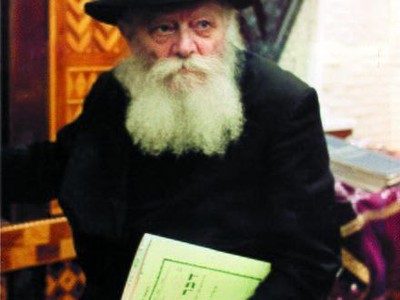
Question to the Rabbi: What is "Siha" in Chabad?
Community
In Chabad, the word"Siha"(שיחה — conversation) means the oral presentation of the Rebbe — an explanation, inspiration, clarification from Hasidut, the weekly chapter, Jewish life, both general and personal topics.The siha was usually more “accessible” in style than the deep maamar. The Rebbe spoke vividly, addressing people directly, touching on both spiritual concepts and current events.🟦Sikhot Rashi — שיחות רש״יThis is a special series of speeches by the Rebbe in which he explains Rashi's comments on the weekly chapter.The main idea: to show that Rashi always interprets the simple meaning of the text (pshat), and each of his words has an exact, verified meaning."Sikhot Rashi" became extremely popular, because the Rebbe reveals the depth even in the simplest line of Humash. In many ways, this has created a unique method of Torah study.🟦"Likutey Sikhot" — ליקוטי שיחותLikutei Sihot is a multivolume collection of Rebbe seeds edited and prepared for printing.Most volumes are in the form of:weekly Chapter 🔵 Explanation🔵 ideas from Hasidutu🔵 details of Jewish law🔵 explanations for holidays🔵 in-depth articles about serving the AlmightyEach sikh is presented as a clear and logical text that combines Hasidism and Pshat at the highest level — the corporate style of the Rebbe.🟦"Dvar Malchut" — דבר מלכותThe name “Dwar Malchut” usually refers to the sikhot that the Rebbe uttered and edited in 1991–1992 (5751–5752).These seeds are considered particularly significant because they:🔵 talk about the relevance of Geula (liberation)🔵 reveal the profound ideas of Mashiach's kingship🔵 provide practical guidance on the propagation of light, Torah and HasidutIn many Chabad communities, it is customary to study Dvar Malchut every week.📸In the photo: Lubavitcher Rebbe holding the book "Dvar Malchut"📖Lubavitcher calendarSource:https://t.me/+8KbDy9dQVqAxZWE8

A small holiday created with great love.
Community
In our community, the celebration of the Birthday Party for the believers of the "Golden Age", who were born in November, took place.At a time when older people especially lack attention and lively communication, such meetings become a small space of joy and support.We prepared for this day in advance: we decorated the festive table, thought out every detail to give our birthday people the atmosphere of home light.Small gifts, beautiful cards with wishes were prepared for everyone, and for women — flowers that added tenderness and elegance to the events.Guests were treated to a birthday cake, and familiar Jewish tunes created a warm mood, awakening memories and smiles. It is these simple but important moments that bring people closer together.The holiday was held in an atmosphere of tender care: every detail was prepared with love to make our birthday people feel special.
A moment of silence
Community
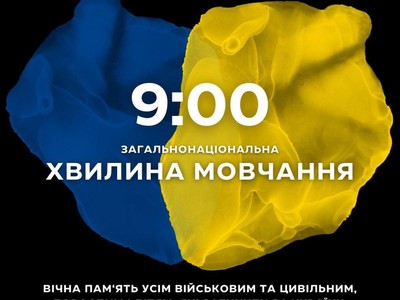
Every day at 9:00stopkeep quietRememberHonor the memory of the dead:soldiers, children, civilians.Those who are no longer around.But who is forever with us - in the heart.This is not just a moment of silence.This is our duty.This is humanity.Alive - thanks to those who were lost...........

A moment of silence
Community
Every day at 9:00stopkeep quietRememberHonor the memory of the dead:soldiers, children, civilians.Those who are no longer around.But who is forever with us - in the heart.This is not just a moment of silence.This is our duty.This is humanity.Alive - thanks to those who were lost...........
🚀 Technology and its role in the service of the Almighty
Community
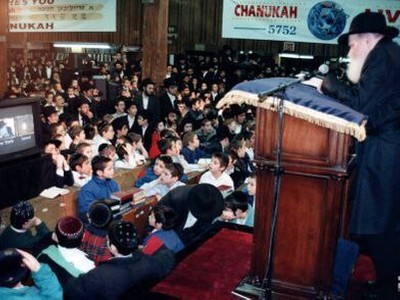
Technology is modern improvements that help a person to perform complex tasks more easily. The Hasidic teaching explains: technology is given to man so that he can better serve the Almighty.📘 Technology in the TorahThe emergence of new technologies raises new questions in Galah.For example: can a person, while on the moon, say the Kiddush of Levan - the blessing of the moon?The Rebbe teaches that technology opens up new aspects of the Torah that were previously impossible to comprehend.This is how the verse is performed:"הליכות עולם לו" — "the ways of the world are to Him",about which the sages said:"אל תקרי הליכות אלא הלכות" — "do not read the"ways", but read the"laws"."That is, the development of the world leads to new disclosures of Halakhah.🌅 The End of Exile — Revealing WisdomRabbi Shimon bar-Yohai writes in the Zohar:“…in the six hundredth year of the sixth millennium, gates of higher wisdom and sources of lower wisdom will open…”It is the year 5600 from the creation of the world (1840).During this periodthere appears Baal Shem Tov (1734),alter Rebe was born (1745),the industrial revolution begins.The Rebbe explains:"sky holes"— the wisdom of the Torah,"depths OF the earth"— the wisdom of the peoples of the world.And both are data to prepare the world for the era of the Messiah.Rebbe✨ 's attitude towards technologyThe Rebbe did not reject technology, but taught to use it for holiness — like gold, from which one can make and"golden calf", andTabernacleN o t a r yIn the late 1980s, 770 held children's Hanukkah meetings, which were broadcast via satellite.[SATELLITE]N o t a r yIn 1992, the Rebbe said:“For whatever the Almighty has created in His world is created only for His glory…”Thus, the purpose of all scientific achievements is to increase the glory of the Creator, if they are used for holiness.Rebbe also stressed: with the help of technology, it is possible to spreadnissa pirsumei— disclosure of miracles — all over the world.At the same time, Rebbe has repeatedly said that there are technologies (for example, television) that have almost no good, and they need to be completely eliminated from the home.🛠 Different technologiesRadioOne of the first means that the Hasidim began to use.The program "Lessons from Tanya" was recorded in advance, the text was submitted to the Rebbe, and he made corrections.SatelliteThe Rebbe explained: the actions of the Jew affect the whole world.Technologies help to understand this coherence even over long distances.internetStrengthens both good and evil.It should only be used for holiness.Artificial intelligenceServes to disseminate Hasidic materials.For example, the project“Jem—”— interactive access to the Rebbe's archives.📸Client Name:The Rebbe watches the broadcast from around the world onChanuka Live1992Source:Lubavitcher calendar:https://t.me/+8KbDy9dQVqAxZWE8