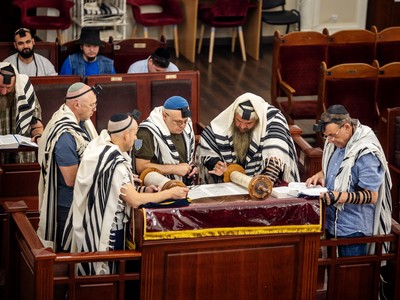
Topic of the day: Avodat ATFILA (Work of Prayer) — Chabad approach to prayer
Community
In the Hasidic tradition in general, and especially in Chabad, prayer is considered as the central work of man before the Almighty. It is not just a reading of the text, but a deep process of inner purification, correction of character, and connecting with G-d.📖 Chabad teaches that the key to love and awe before the Almighty isebonenut, meditation. Before praying, a person studies the Hasidic teachings, ponders them, and prepares his heart to stand before G-d. Therefore, the morning begins with mikvah, the presentation of tzedakah and the study of hasidut — it is also advisable to study one "perek" (excerpt) from the "Tania", as the Rebbe commanded.🧠 Learning should not remain a theory: it should penetrate the heart and lead to real inner work. The goal is to feel the taste of doing the will of the Almighty and awaken sincere emotions of service.🎶 During the prayer itself, the Hasidim focus on the meaning of each word, saying everything calmly, with warmth and inner life. A nigun is often sung to deepen concentration and open the heart. The Rebbe emphasized that in our generation we need to pray with a melody.😢 Tears during prayer are not a sign of weakness, but a sign of sincerity. But the Hasidut teaches that in order for tears to be real, it is useful to read several chapters with Tehilim before praying.The peculiarity of Chabad is a long prayer. The Hasidim are eager to pray as long as it takes for the prayer to be genuine. On weekdays, this is more difficult because of the busy schedule, but on Shabbat, many spend hours in prayer.👑 It is said about the Rebbe that until 5748 (1988) he prayed not together with the minyan, but later in his room, with a special depth and unusual duration, about 3 hours 30 minutes.Source:https://t.me/+8KbDy9dQVqAxZWE8
Ayom-yom: 29 Cheshvan
Community
It is impossible to express in words the great merit of those who participate in the holy ministry of reading the Psalms in minyan, and the great pleasure that they bring to the Heights by this ministry, as explained in the holy texts and, in part, in the "Kuntres Takaanat Amirat Tehilim ba-Rabim" ("Kovets Mihtavim", 1).Happy are you, Israel, and blessed be you with good health and abundance in wealth-you, your wives, your sons, and your daughters (may G-d grant them eternal life¹).And may the whole community of the people of Israel in your communities be worthy of help in all their needs, both material and spiritual.source: chabad.org
Preparing for Hanukkah
Community
The holiday of Hanukkah is traditionally associated with light — the light of wisdom, faith and spiritual stability. But it is in the Hanukkah context that the sages unexpectedly refer to the Greek state as “darkness.” Why is a culture that worships harmony and beauty the opposite of light?To understand this paradox, it is important to distinguish between two kinds of beauty. In the Jewish tradition, beauty is not an external decoration, but an expression of inner perfection. The Talmud recounts the extraordinary radiance that emanated from Rabbi Yochanan: the light of his face was not a physical feature, but the result of spiritual grandeur. Wisdom and purity of soul change a person so much that it is reflected even in his appearance. Such a world is a testimony to the harmony of spirit and body.However, bodily beauty itself can be misleading. As King Shlomo points out, “allure is deceptive and beauty vanity,” if it is unrelated to moral depth. This is where Greek culture diverged from the Jewish view: by extolling body and form, it separated beauty from spirituality. Aesthetics, devoid of inner meaning, turns into darkness — it dazzles, but does not illuminate the path.Hanukkah reminds of this difference. In the history of the holiday, two understandings of the beautiful collided: external harmony and internal integrity. The Maccabees fought not against art and not against beauty, but against a worldview in which the material was declared the main thing. Their victory is the victory of the light of wisdom over the brilliance of form.Hanukkah candles symbolize true light — light born from oil traditionally associated with wisdom. It is quiet, not dazzling, but stubbornly breaking through the darkness. This is a light that does not prove its power with loud statements, but reveals itself in constancy and depth.Celebrating Hanukkah, we learn to re-understand beauty: to strive not for the one that passes, but for the one that transforms; to build harmony not only in the body, but also in the spirit. And then the light of Hanukkah becomes not just a memoryof a miracle, but a direction in which the spiritual path of a person continues.Source:toldot.com
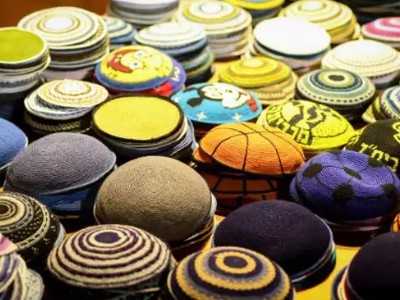
Topic of the day: Choosing a kipp
Community
For many who take their first steps in religious life, the choice of a kippah suddenly turns into a difficult question. In stores you can find a variety of options — fabric and knitted, large and small, black, white and colored. It seems as if there is a separate rule behind each species. But does form or style really matter and is there a “right” kippah?From the point of view of Jewish law, the main thing is that the head is covered. Material, color or design do not determine the degree of religiosity and do not change the content of the commandment. First of all, the pile serves as a reminder of the presence of the Almighty and a sign of respect before Heaven. A person who decides to wear it regularly is already taking an important step.However, in practice, the kippah often reflects the cultural characteristics of different trends in Judaism. This is what happened historically: some groups preferred black fabric bales, others — knitted, still others — brighter or larger models. Therefore, in certain communities, one or another style began to be perceived as part of the "form". This is not a rule of law, but an expression of the tradition of a particular community.If a person lives where there are almost no religious Jews, the question of choice is simplified: any pile that is convenient and pleasant will do. But if there is a community nearby that they plan to visit, sometimes it is worth considering local customs — this helps to join the team more easily and feel more natural.At the same time, it is important to remember that the differences between groups in Judaism do not abolish the common basis — faith in the One God and adherence to the Torah. Kipa does not divide people, but, on the contrary, unites those who seek to live a spiritual life.A simple black kippah is often considered a universal option — it is worn by both those who wear a kippah every day and those who do it only on occasions. But the final choice always remains with the person. The main thing is that the headdress helps to feel a connection with the spiritual root and reminds of the desire to follow the path of the Torah.Source:https://toldot.com
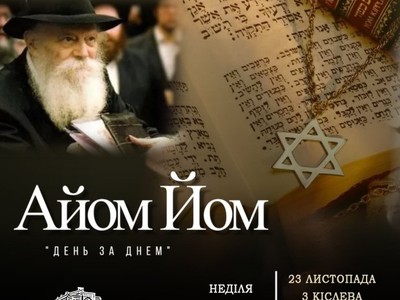
Ayom-yom: 3 kislevs
Community
One difference between the path of Baal Shem Tov and the path of the Mezheritsky Magid is that Baal Shem Tov traveled a lot, while Magid stayed at home.Moreover, when Magid was the head of Hasidism, the teachings of Hasidism, thanks to the travels of the members of the Holy Brotherhood¹ (חבורת הקדש), became known already in the most remote places, and many ordinary Jews devoted themselves to this teaching and came to Magid in Mezherich themselves.SOURCE: chabad.org

Mazal Tov! Britt-mila in our community
Community
"Circumcise your foreskin, and it will be a sign of the covenant between Me and you.On the eighth day after birth, let every male infant among you be circumcised, from generation to generation...And My covenant shall be upon your flesh—an everlasting covenant” (Bereshith 17:11–13).Today in the Central Synagogue of Kyiv, a brit mila ceremony was held for:•Klyma Sazonov— a Jewish nameKalman(sandak — Reb Mendel Azman)•Igor Verevka— a Jewish nameYitzhak(sandak — Reb Mendel Azman)This responsible and holy action was performed at the highest level by the Chief Moel of Ukraine Yaakov Haysinovych.We wish Kalman and Yitzhak good health, joy and that their path will always be the path of the Torah and the Commandments!Mazal Tov!

Mazal tov!
Community
This week we congratulated our dear believer, Alvina Borisovna Skuratovskaya, on her 85th birthday.A representative of the Community gave her flowers and a gift — a sign of our respect and gratitude for her many years of presence in the community.Alvina Borysivna has been with our community for many years, and we really appreciate her presence. Despite her venerable age, she remains an active participant in all events — always nearby, attentive, sincere, interested.We wish her good health, peace and joy every day.May the Almighty protect her and send her good, blessed years.Mazal tov!
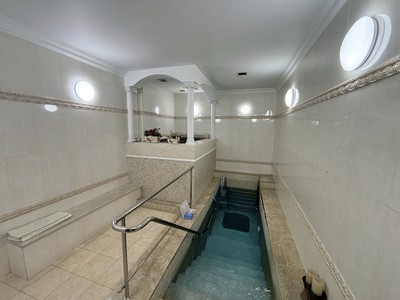
Topic of the day: Chabad Mikvah
Community
Chabad mikvah "mikvah over mikvah" — what it is and why it is importantChabad has adopted a special standard for the construction of mikvah, known as the "mikvah over mikvah" (bor al gabei bor).This method was introduced by Rebbe RASHAB, and it has become one of the most recognizable Chabadian approaches to mikvah creation worldwide.💧How is such a mikvah arranged?At the base are two water reservoirs located one above the other:the bottom one is filled with rainwater — this is natural, "living" water that retains its status and does not deteriorate;the top one is a mikvah that is directly immersed and can be heated for convenience.Special openings in the floor of the upper mikvah connect both tanks so that by status they are considered as one integral mikvah. It is this connection that makes the system reliable, stable and easy to maintain.🏛How did this method come about?During the First World War, Rebbe RASHAB lived in Rostov. The conditions were not easy: it was not possible to use water from a well or a natural source. In response, the Rebbe developed a new design — "mikvah over mikvah", which immediately solved several problems:allowed the use of rainwater;ensure constant kosherness;made the upper mikveh warm and comfortable.Subsequently, this construction became a model, and the Hasidim began to build such mikvahs in different countries — from Europe to the United States and Israel.🔥Why is this system so valuable?The mikvah over mikvah method combines:● high level of cleanliness,● user-friendliness,● ease of maintenance,● protection against kosher doubts (even in case of breakdowns or technical problems).This structure allows the mikvah to remain stable for many years.🛠TodayToday, "mikvah over mikvah" is one of the most reliable and common Chabad standards. Many communities around the world choose it because it combines spiritual precision and practical thoughtfulness.Such a mikvah is not only a technical solution, but also an example of a Chabadian approach: to do everything beautifully, carefully and with the greatest care.derelo:Lubavitcher calendar:https://t.me/+8KbDy9dQVqAxZWE8In the Central Synagogue of Kyiv, there are two mikvahs — male and female.To visit, please contactthe administration.Contacts and address of Brodsky Synagogue:Address: 13 Shota Rustaveli Str., KyivPhone: +380 44 235 90 82Email address:info@ukrainejc.org

Topic of the day: 💰Mitsva Tsadaka
Community
The Mitsva of Tzedakah is one of the ten campaigns proclaimed by the Rebbe in 5734.The Rebbe called for reinforcing the importance of giving tzedakah at every opportunity and installing a tzedakah piggy bank wherever possible.📢Campaign announcementThe campaign was announced in the summer of 5734 along with Mitsva Thor, Mitsva Mezuzah, Bait Male Spharim and Neurot Shabbat Kodesh.The purpose of the campaign is to spread the commandment of tzedakah. Through the tzedakah, the Jew receives the blessing of the Almighty, who gives them “with a full, open, holy, and broad hand.”🏠A piggy bank in every home and storeThe Rebbe asked for a tzadakah in every house, store, and place-even if the hosts were already giving large sums to synagogues and Jewish centers.The very fact of having a piggy bank brings great merit.The Rebbe suggested that those involved in the mivtsev (campaigns of the Lubavitcher Rebbe) should print images of other campaigns on the treasuries — so that when they saw the treasury, a person would mention other mitzvot.The Rebbe also spoke of himself:“I'm used to associating every thing with a tzedakah.”✍️Instructions of the Rebbe regarding the inscriptions on the piggy bankAt the Shabbat Brangen of the Korah chapter of 5734, the Rebbe said an amazing thing:— Do not write on the piggy bank for whom the tzedakah is collected,so that no one thinks about selfishness.— Also, do not write who gave the piggy bank.This is to implement the principle:“And ye shall be clean before the Most High, and before Israel.”🔨Attaching the piggy bank to the wallThe Rebbe repeatedly stressed the importance of attaching the piggy bank to the wall so that it becomes part of the home.He gave three reasons:Tzedakah House— the piggy bank becomes part of the house, and the house turns into "the house of Chabad — the house of Tzedakah".“And you will see, and you will remember.”— the piggy bank constantly reminds of the mitzvah. And the tzedakah is equal to all the commandments and brings Geula closer, so its appearance reminds of the entire Torah.Convenience — the mitzvah of the tzedakah should be performed daily. But not every day there is a needy person who can be helped, and the piggy bank allows you to fulfill the commandment every day.In Gedalya's Lent of 5749, the Rebbe instructed even for temporary guests:glue the piggy bank so that it cannot be removed on Shabbat and Yom Tov, but that there are no traces left on the wall after removal.When you return home, remove the piggy bank and attach it to your home.🤝Tzadakah at the meeting of two JewsThe Rebbe relied on the words of the Rebbe of Paradise:when two Jews meet — their meeting should bring good to the third Jew.Therefore, wherever Jews gather, one should start from the tzadakah.The Rebbe explained:💸 tsadka unitesthe one who gives and the one who receives;💸 benefits the giver — he performs a mitzvah and creates a "kli" (vessel) for blessings;💸 brings good to the recipient — he receives assistance;💸 and this was an explanation for the Rebbe's practice of handing out dollars. 📖 Lubavitcher calendar https://t.me/+8KbDy9dQVqAxZWE8
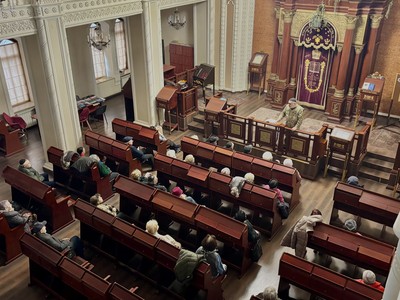
Lessons on the weekly Torah section for believers of the "golden age"
Community
Today, another weekly lesson for the faithful of the "golden age" was held in our community, conducted by Chaplain David Milman.Topic — Weekly Torah sectionToldotthat speaks of generation, continuity, and the power of spiritual transmission.In a calm atmosphere, among attentive and wise faces, there were words about the importance of prayer, about the choice that shapes a person's path, and about the inner light that everyone carries through the years.Our inspired listeners of the "golden age" asked questions and shared their experience. After all, the wisdom of the Torah is a living river that flows through generations, and everyone who touches its waters discovers something new in it.Such weekly meetings strengthen the community, add strength and warmth.We teach the Torah together — and each lesson becomes a step towards greater light.
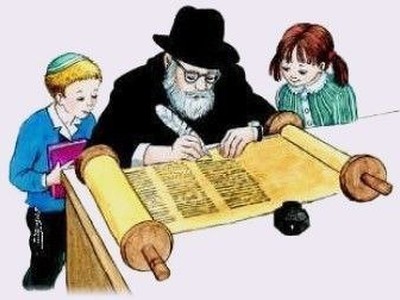
Topic of the day: ✨ The Torah Scroll Writing Campaign for the Children of the Jewish People — a project that unites millions
Community
The Torah Scroll Campaign for Children of Israel was initiated by the Rebbe with one goal in mind —tounite all Jewish children in the world. Every bar mitzvah boy and every bat mitzvah girl can purchase one letter from the Torah Scroll for a symbolic sum. In response, the child receives a personal certificate indicating the weekly chapter of the Torah, which contains "her" letter.As of 29 Mar-Kheshvan 5786 is already completedeight scrollsuniting more than2,500,000 childrenerror!✨How it all started🗓11 Nisan 5741 (1981)The Rebbe asked to unite all Jewish children in writing a single Torah Scroll. The idea was for every child to “acquire” the letter — thus strengthening their connection with the Torah and with every Jew in the world, wherever he lived.In 5742 (1982), the project was placed under the direction of the “Committee for the Writing of the Torah Scroll of the Children of Israel,” headed by Rabbi Shmuel Greisman.Since then, the custom has spread to various communities around the world, but it isthe children's Torah Scroll, initiated by the Rebbe, remains uniquebecause it brings together hundreds of thousands of children in one scroll.The Rebbe explained thatthe common Torah Scroll unites the souls of all the children of IsraelN o t a r yHe also emphasized: the fulfillment of the last of the 613 commandments — writing the Torah Scroll —brings Liberation closerN o t a r y✨Personal certificate for each childThe Rebbe personally approved the design and text of the certificate, refining and improving it several times.Modern certificate format —15.5 × 23 cmN o t a r yIt shall indicate:Name of child: ___________________• the weekly chapter of the Torah, where its letter is located.The word or verse is not indicated — in order to avoid possible negative associations.The Rebbe wanted the certificate to bebeautiful, honorable and of high qualityso that the child can proudly show it to friends.✨Solemn Completion of the ScrollsWhen the next scroll is completed, a great celebration takes place at the Zemach Zedek Synagogue in Jerusalem.From there, the children go on a solemn march to the Western Wall, where the "hakafot" takes place, after which the scroll returns to the "Tsemakh Tzedek".Usually these ceremonies are held20 ava— Yorzeit Rabbi Levi-Itzhak Schneerson, Rebbe's father.Since the beginning of the campaign, the Rebbe has asked every week how many children joined during the past week.By 5782, the project had already taken partover two million childrenerror!✨Rebbe's Instructions📌13 Nisan 5741The Rebbe ruled that the child himself must write his name or part of the application.Even infants are recommended to be recorded in their presence — this affects the soul of the child.📌20 Iyara 5741The Rebbe said that the money for the letter should be donated to the child by the parents, and then transferred on her behalf — so that it would beit is her mitzvahN o t a r y✨Finishing campaigns (Mivtsa Siyum)As the scroll nears completion, activists, Hasidim, and organizations conduct large-scale campaigns to complete all letters by 20 av.Such projects include:Advertising• social media campaigns,• programs in schools and headers,• registration tables,• giveaways and prizes.In 5783, thousands of Hasidim banded together to complete the eighth scroll on an earlier date — and finished recording25 days earliererror!✨How to buy a letterYou can register a child through the website:https://kidstorah.org source: 📖 Lubavitcher calendar:https://t.me/+8KbDy9dQVqAxZWE8