
Iom-yom: 23 teveta
Community
Today — 23 Tevet 5786.Iom-Yom:In the book "Torah Or", in a speech beginning with the words "Who gave the mouth...", in a paragraph beginning with the words "and the meaning will be clear...", the phrase "because there is a level of sublimity" should be read as: "and there is also a level of sublimity".Sighs alone won't save you. Sighing is only the key to open the heart and open the eyes, not to sit idly by, but to organize work and action. Everyone — to the best of their ability — must act and do something to spread the Torah, teach the Torah, and keep the commandments: with their words, with their speeches, with their means.Source:Lubavitcher calendar

Page of history: Shulchan Aruch Alter Rebbe
Community
Shulchan Aruch Alter Rebbe(also known asShulchan Aruch HaRav) is one of the most important halakhic works, concluded by Rabbi Schneur-Zalman with Liad, the founder of Hasidism of the HaBaD. This is not just a code of laws, but a deep and holistic halacha with clear logic and internal foundations.✍️How was it written?On behalf of the Magid from Mezhyrich, Alter Rebbe, who was only 25 years old, took up the grandiose task of laying out a halacha "with explanations of the reasons", clearly and without contradictions, relying on all early and late authorities.He worked on the book for many years. The first was the section "Laws of Torah Study", which caused a great resonance in the Jewish world.🔥Loss of manuscriptsAlter Rebe managed to write a work on all four sections of the classicShulchan Aruchaand began the preparation of the second, extended version.However, in 1810, a fire in Lyady destroyed almost all the manuscripts. Only about a third of the book has survived to this day — according to previously made copies.🧱Structure📖5 volumes:4 volumes —Orach Chaim(prayer, Shabbat, holidays);Volume 5 — Separate Laws onYore DeaandKhoshen MishpatN o t a r y📎Kuntres AharonTo a number of laws, Alter Rebe added Kuntres Aharon, an analytical appendix that examines different opinions and substantiates the final decision.The language here is more concise and scientific, in contrast to the clear main text.📚Impact ofThe book was widely used by authorsMishna Brura,Kitsur Shulhan Arukhand other For a long time, she was the main halakhic authority for all the Hasidim. Today, more and more communities are returning to the performances of the Alter Rebbe.🕯️Evaluation of other rabbisWe talked about him. "Alter Rebbe — not "last", but "first"";“His Shulchan Arukh has the true depth of halakha.”Many testified that the most difficult questions were clarified in one short section.🖨️ISSUEThe old edition of Romm is considered classic, despite the errors.The Rebbe opposed the "rewritten" editions.In 5783 (2023), a high-quality phototypic edition was published with the addition of "clown (questions and answers) Alter Rebbe".🕊️The SummationShulchan Aruch Alter Rebbeis a halacha written clearly, deeply, and with an inner truth.One of the greatest gifts of the Alter Rebbe to the Jewish people.Source:📖 Lubavitcher calendar

23 Teveta
Community
In the Torah Or book, in an essay that begins with the words “Who gave mouth…”, in the paragraph that begins with the words “And it is clear what the example was given…”, instead of the words “…because there is an aspect at the top”, it should be written: “…and there is also dignity”.Sighs alone are not enough to bring us salvation. Sighing is just the key to open your heart and open your eyes so you don't have to sit idly by. It is necessary to organize your actions and work hard — each according to his capabilities — in order to support and disseminate the study of the Torah and observe its commandments: one through scripture, another through public speeches, and the third through your financial resources.Notes:.In the note above, the Rebbe makes corrections to the Tora Or text, which have since been incorporated into all its editions.The Hasidim like to say, “The time spent in tears because of one sin can be used to fulfill two commandments.”Instead of mourning the darkness, we should be generating light. As Rebbe Rayatz writes in the letter from which the above teaching is taken: “We are accustomed… with deep sighs coming from the heart, to lament the [low] level of our current ethical standards… However, at this time we forget the proverb: 'One action is better than a thousand sighs.'”At the same time, this teaching tells us that sometimes sighing can motivate constructive activity.

Tory Lesson: Collective Wine
Community
Mr. Ishaya GisserTen karas is a dramatic and turning point in the history of our people. They, in their totality, are one of the sources of our faith, one of its foundations. After all, it is not for nothing that, introducing himself to the children of Israel during the Sinai Revelation, the Almighty defines Himself not as the Creator of the universe, but as "the One who brought you out of the land of Egypt." And this characteristic forces us to be extremely attentive to all aspects of this process.Obviously, the form in which the punishments were embodied, and their number, and consistency — all this had a significance in the system of lessons that were gradually revealed to Egypt, and through it to the rest of the world, the fullness of the Creator's power over the created by Him and the absence of any other force that acts next to Him.At the same time, in our material world (namely, the word "world" in Hebrew —olam, related to the wordeyelem— "concealment") the constant influence of the Almighty is maximally hidden, implicit. This is the world of concealment, but the time comes — and the Creator reveals Himself in Egypt, and does it through ten punishments. They reveal Him through the destruction of the former model of people's perception of the universe — so to speak, Revelation through the destruction that precedes and paves the way for creative Revelation in Sinai — the Ten Expressions. The creation of a new reality is preceded by the breakdown of the old one — this is quite understandable.However, there is no doubt that the Jews learned these lessons through punishment on a par with the Egyptians. And, unfortunately, there was an urgent need for this: they were very much imbued with Egyptian influence — centuries of such an environment do not pass without a trace. The Zohar claims that in their assimilation they have fallen to the forty-ninth level of impurity out offifty possible. So all that was useful for the spiritual enlightenment of their cruel masters was no less necessary and disenfranchised slaves.However, the first addressee of this miraculous revelation, from which the Divine management of the world was to become apparent, was not the Jews at all, but the Egyptians! And this is not a bizarre interpretation of Scripture, but a direct statement of the Torah itself. She says in plain text:“Then the Egyptians will know that I am the Lord when My hand is over Egypt and I bring out the children of Israel from among them.”You, of course, paid attention to the final chord of this prophecy: "And then the Egyptians will know...". The same Lord of whom the ruler of Egypt said, "Who is this Lord, that I should hear His voice and let Israel go? I don't know the Lord, and I won't let Israel go.”However, if you, armed with previous knowledge, rightly point out that the Name Elokim means the measure of Court and order, and the Name Awayyeh means the measure of Mercy and Kindness of the Creator, and reasonably ask: how could punishments come from the level of Awayeh, if this was accompanied by disasters for the civilian population of Egypt? — I will try to answer: the trial and severity against thieves is an undoubted boon for their victims.And there is no contradiction here! Moreover, according to our tradition²: “He who is merciful to the cruel is thus cruel to the merciful.” And the people of Egypt were not only an accomplice to the enslavement, but also a complete like-minded person of their ruler, and not just humbly obeyed the inhuman orders of the pharaoh, but did it with all the Egyptian heart, sincerely believing that they had the right to mock the defenseless.Do not think that in the past something was different in these matters. In Egypt, the people fully supported the national policy of their ruler, which is why the concept of collective guilt was quite applicable to them. The fact that we sometimes refuse to learn from the past and do not see the consequences of once made decisions and actions in the current processes deprives us of the opportunity to change our own lives for the better.Understanding the past is a necessary part of repentance, and repentance is the main prerequisite for beneficial changes in fate. This is equally true for the individual and for the people. When we talk about retribution, each had two aspects — retribution and mercy: retribution to Egypt and mercy to Israel.NotesShmot 7:2–5.Coelette of Rab 7:16.

Kyiv. Cold. Temporary darkness. And the help that is nearby.
Community
OurMitzvotank — point of invincibilityruns through the streets of Kyiv.Where there is no light and heating due to the shelling of russia.Where people need something simple and vital — warmth and support.We bring hot drinks, the opportunityrecharge gadgets,to warm up, rest and feel: there are those who care.These times are not easy. But right now it becomes clear the main thing:only together we can overcome them.Holding on to each other, with faith and humanity,we will definitely reachPeremohyN o t a r y
Page of history: Rabbi Schneur-Zalman from Lyad (Alter Rebbe)
Community
Rabbi Schneur-Zalman of Lyad, better known asAlter Rebe— "Old Rebbe", is one of the greatest figures in the Jewish history of modern times. He was the founder of HasidismHaBaD, the first rebbe of the dynastyHaBaD-Lubavitch, author of the bookTanyaand StackerShulchan Aruch HaRav, which had a tremendous impact on both the Hasidic world and the halakhic tradition as a whole.🌟 Births and early yearsAlter Rebbe was born on 18 Elul 5505 (1745) in a town near Liozno. His birth was blessed by himselfBaal Shem Tov, which predicted his birth and showed parents a special way to raise a child. Already in early childhood, his extraordinary memory, clarity of thinking and spiritual depth were manifested.At the age of three, he was brought to Baal Shem Tov, who blessed the boy and left him paces — a moment that was the symbolic beginning of his spiritual mission.📚 Childhood, learning and spiritual developmentFrom a young age, Rabbi Schneur-Zalman impressed the environment with his genius. By the time he was a teenager, he knew the Tanakh, the Talmud, and the writings of early and late commentators perfectly well. At the same time, he studied bondage and mussar, combining intellectual depth with inner discipline and precision in the service of the Almighty.Already in his youth, he actively participated in public life, helping Jews to find a livelihood, in particular through the organization of agricultural settlements.💍 Marriage and the first years of leadershipAt the age of fourteen, Alter Rebbe married Rebbetzin Sterna, the daughter of a wealthy and respected man from Vitebsk. The dowry he received was almost entirely in support of Jewish families who sought to farm, thus laying the foundations of entire Jewish settlements.By that time, he was already recognized as one of the greatest Talmudic scholars of his generation.🔥 Student of Magid from MezherichSeeking to deepen the understanding of the service of the Almighty, Rabbi Schneur-Zalman went to Mezherich to Magid —Dov Ber from Mezherich, the successor of Baal Shem Tov, it was there that his understanding of Hasidism as a path based onHochmi, Bini & Daati— mind, comprehension and conscious experience of the Divine.According to Admor ha-Zaken himself, in Mezherich he learned to understand who the Almighty is, who the Jews are and what the power of a niguna is.🧠 Foundation of Hasidism of the HaBaDReturning from Mezherich, he founded a new direction in Hasidism —HaBaD, in which emotional service to the Almighty is based on deep intellectual knowledge. The teachings quickly spread across Belarus, Lithuania, and Russia, attracting thousands of followers.Over time, Admor ha-Zaken was recognized as the head of the Hasidim of Russia, although he himself for a long time avoided the official title of rabbi, accepting this yoke only on the direct instructions of his teacher.📖 Book "Tania"The main spiritual legacy of the Alter Rebbe was the bookTanya, which is rightly called the "Written Torah of Hasidism". It analyzes in detail the internal structure of the human soul, the struggle between the Divine and animal principles, and also provides practical tools for conscious service to the Almighty.The work on the book lasted about twenty years, and since its publication it has become the foundation of the spiritual life of the HaBaDa.⛓️ Arrests & ReleaseIn 1798, Admor ha-Zaken was arrested for false denunciation and imprisoned in the Peter and Paul Fortress in St. Petersburg. His release of 19 Kislev was not only a personal victory, but also a spiritual triumph of the entire HaBaD movement. This day is still celebrated asHag HaGeula— a holiday of liberation.The second arrest, which occurred a few years later, also ended with a full acquittal.⚔️ War with NapoleonDuring the Napoleonic Wars, Admor HaSacken openly supported the Russian Empire, believing that Napoleon's victory would bring the Jews material freedom at the cost of spiritual destruction. He called on Jews to help the Russian army and even sent Hasidim on reconnaissance missions.Source:https://t.me/+8KbDy9dQVqAxZWE8

Safed: a city of observation and inspiration
Community
Safed— the highest city in Israel: it lies at an altitude of about 900 meters above sea level. Thanks to this, since ancient times it has been used as an observation point — from here you can clearly see the territory of Galilee and Lake Kinneret. In the period of the Second Temple, signal fires were lit in Safed to announce the beginning of the new month, and later the Crusaders built a fortress here, the ruins of which have survived to this day.The city is easily recognizable by blue-and-blue (thelet — heavenly) houses, doors and windows. This color symbolizes the connection between the sea and the sky — as a reminder of the spiritual dimension of life. Even on gloomy days, Safed looks bright and calm, and the narrow streets and open views of the mountains and water make it feel like the city is specially built to slow down and look around.Safed has one of the narrowest streets in Israel, Mashiach Street, which is only about 60 centimeters wide and can only be walked alone. And in summer, the city is filled with music: here is the famous klezmer festival, during which the ancient stone streets turn into a living stage.
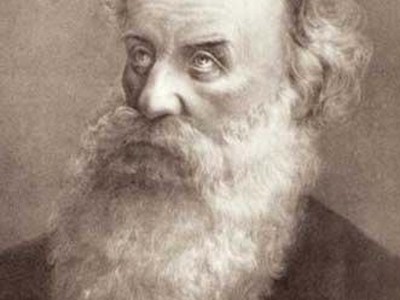
A page of history: Portrait of Alter Rebbe: history, search and testimony of authenticity
Community
🕯 Origin of the portraitThe portrait of Alter Rebbe was created during his first imprisonment in 5559 (1798–1799). It is still unclear whether the original was made in color, or a simple graphite pencil — as it is known to us by copies.🔍 Searches for the originalIn the summer of 5622 (1862), Rebbe Maarash visited Tsarskoye Selo near St. Petersburg to search for the grandson of the investigator who had the portrait. The grandson agreed to give the portrait to Rebbe Maarash, and he sent it to the Lubavitchers, where a copy was made of it.The original was received on bail of state assignments in the amount of about ten thousand rubles and delivered in strict secrecy. The preservation of the portrait was the responsibility of Israel Haykin, who was obliged to return it to the owner after the copying was completed.🗣 Testimonies of contemporariesOne of the Hasidim said that he heard Rebbe Zemach Zedek say to his son, Rebbe Maarash:"This portrait is real — this is how I remember it in my youth. I want to thank you for that.”Two or three years later (5624-5625), it was already widely known among the Hasidim that one of the high-ranking dignitaries of St. Petersburg painted a portrait of Alter Rebbe during his imprisonment.Rebbetzin Rivka also received permission to see the portrait — subject to strict secrecy. Upon completion of the work, the original was returned to the owner.🖨 Oldest saved instanceThe oldest known evidence of the original is a large print impression made by Mr. Shmarieja Schneerson. Today it is kept in the Lubavitcher Library in New York and is exhibited from time to time for visitors.📜 Testimony from the diaries of Rebbe RajacIn the eighth notebook of HaTamim magazine, a famous photograph of the portrait of Alter Rebbe was printed. After its publication in the early issues of the magazine, the editorial board received many letters questioning the authenticity of the image — such disputes continued since the first publication of the portrait in 5648-5649.In response, the editors appealed to Rebbe Rajac, who provided fragments of his records dating back to 5656. These testimonies clearly confirm the authenticity of the portrait.Rebbe of Rajac 🧾 Records: Key EvidenceHis notes give five key testimonies:️1 Two elderly Hasidim from Bobruisk, who personally knew Alter Rebbe, confidently recognized the portrait as his image.Rebbe ️Maarash saw this portrait back in 5615 in St. Petersburg.️3 Rebetzin Ryvka in 5622 saw the original in Lyubavichy and later testified that the published image is an exact copy of that portrait.️4. Testimony of a Hasidic who heard the words of Rebbe Tsemakh Tzedek about the complete authenticity of the portrait, as well as the story of its creation during the period of imprisonment.5️. The statement of Rebbe Tsemakh Tzedek about the external similarity of his uncle R. Chaim Abraham with Alter Rebbe, which confirmed the stories of the old Hasidim about the accuracy of the image.Rebbe 👑 AttitudeWhen asked by Mr. Jacob Katz about the authenticity of the portraits of our Rebbe, the Rebbe simply replied:“From Alter Rebbe and from Admor Tsemakh Tzedek - these are known, real images.”In one of his letters, the Rebbe also spoke out against the idea of issuing a postage stamp with a portrait of the Alter Rebbe, pointing out the inappropriateness of such use of the image.Source:📖 Lubavitcher calendar
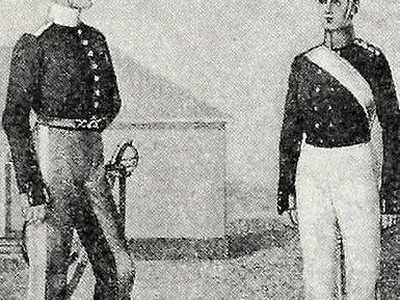
Page OF history: Cantonists: the TRAGEDY OF JEWISH CHILDREN IN TSARIST RUSSIA
Community
What is the decree on the CantonistsThe Decree on Cantonists (1827–1856, תקפ״ז – Menachem-avכ״ה תרט״ז) is a system of forced recruitment of Jewish children and adolescents into the army of the Russian Empire. The purpose of this policy was to “re-educate” the Jewish population, primarily through forced baptism and separation of children from the Jewish environment. Jewish soldiers recruited in this way were called "Nikolaev soldiers".Historical backgroundUntil 1827, military service extended to young men from the age of 18, regardless of religion. It was possible to be discharged from service for medical reasons or for a significant ransom.Even before the decree, there were military educational institutions for minors — "cantons", where sometimes children were voluntarily sent for the sake of their future careers.With the accession OF Nicholas and the Jews, they were recognized as a "problem" group. It was decided to remove children from the traditional environment, give them Christian military education and subsequently return them to the Jewish communities as an instrument of assimilation.Attempts to repeal the decreeJewish communities launched a large-scale campaign: international appeals, pressure on officials, big bribes. At the direction of the rabbis, many families kept expenses to a minimum in order to donate funds to a common cause.About 200,000 rubles were collected, but, despite this, Nicholas I bypassed the legislative procedures and personally ordered to start a violent conscription.The essence of the decreeSince 1827, it was allowed to pick up children from the age of 12 and send them to service for a period of up to 31 years (up to 43 years of age).At first, freedom of religion was promised, but since 1843, systematic violence began: torture, punishment and humiliation for those who refused to be baptized; benefits and incentives for those who agreed.Yehezkel Kotik's memoirs describe how in Saratov six Cantonists were forcefully christened in a bath under unbearable heat; three died."Hapers" — child abductorsThe responsibility for the implementation of the norm was assigned to the Jewish communities. Since parents hid their sons, they hired special people — "happers" who kidnapped children.They often took people under the age of 12, forging their age. They tried not to touch the children of the wealthy and influential; they often handed over orphans and "unwanted" teenagers.The rabbis sharply condemned this. Rabbi Eliyahu Chic equated kidnappers with murderers. In some places, informers were executed by rabbinical decisions, which led to brutal repression by the authorities.Who was exempt from conscription● merchants who paid a special tax● "state rabbis"● students of state institutionsIn practice, these benefits almost did not apply to children 12–18 years old.Post Service RightsAfter serving, the cantonists received significant privileges: permission to live outside the boundaries of settlement, to engage in trade and to use public services inaccessible to other Jews.Position of the Lubavitcher RebbeMitler RebeThe decree appeared during his life, but was actually implemented after his departure. He prayed at the grave of the Alter Rebbe in Gadichi for the cancellation of the decree.In the last Hasidic maamarah, he explained that it is the fulfillment of the commandments with selflessness in times of persecution that has special value in Heaven.Tzemach TzedekHe created an underground organization, Hevrat Thiyat HaMettym, to rescue children:● ransom of conscripts,● bribery of security,● fictitious registration as deceased,● moral support for children,● punishment of informers.For this activity, he was arrested 22 times, interrogated and summoned to the "rabbinical conference" in St. Petersburg.Rescued cantonists subsequently donated sumptuous crowns to the Torah scrolls in Lyubavichy.He also personally spoke to the Cantonists, strengthening their faith, which led the authorities to remove him from the capital.Rebbe MaarashAfter the cancellation of the decree, many Cantonists remained in the army. The Rebbe was engaged in the spiritual revival of already liberated soldiers, sending teachers and shoikheti to them, especially in remote regions beyond the pale of settlement.Halachic issuesThe decree caused difficult discussions:who is considered a whistleblower, whether it is possible to extradite one child to save another, or whether a ransom is permissible.In the responses of the Tsemahs of Tzedek, these issues are considered in disguise — because of censorship.Cancellation of the decreeThe policy of “re-education” collapsed: instead of assimilation, it caused resistance and destruction of communities.As a result of 25 menachem-avah in 1856, Alexander II revoked the decree, and the activities of Hevrat Thiyat ha-Mettym were completed.The history of the Cantonists is one of the most tragic and at the same time heroic pages of Jewish resilience, faith and self-sacrifice.Source:Lubavitcher calendar

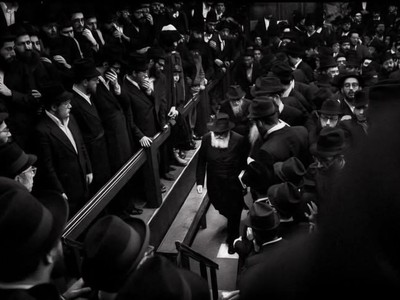
Siha Rebe for the head of Weyer
Community
🕯Why does Moshe ask the question “why?”📖Forefathersthey passed through difficult trials, but did not ask questions to the Almighty.Moshe cries out: "Why have you done evil to this people?" — and the answer comes:"In the nameof the Lord (the four-letter Name of G-d) I did not reveal myself to them."🧠The difference is in the way of service.The forefathers served G-d through the qualities of the soul: love, fear, mercy.These forces are able to accept and believe even without explanation.Moshe is hochma, holy wisdom, so it is he who asks and seeks understanding.🌟But before revealing the Name of the Lord, even the mind must learn self-removal and acceptance of the will of the Almighty, just as medot does — the qualities of the soul.When the highest Divine revelation comes, and the mind must bow in acceptance.📌A lesson for every Jew.It is necessary to combine reason and feeling, high and simple: to learn, to fulfill the commandments with trepidation and simplicity — and together to build the unity of the people of Israel.🤝This power is given to us through Moshe Rabein— and she brings Geula closer, these days.Shabbat Shalom📖 Lubavitcher calendar

Story Page: Tania Book 📘 Campaign
Community
The Tania book campaign is a worldwide initiative launched at the request of the Lubavitcher Rebbe to print Tania in every possible place on earth.The purpose of the campaign is to fill every corner of the world with the light of the teachings of Hasidism and thereby prepare the world for the coming of the Messiah.As of 5785 (2026), the book "Tania" was published in almost 9,000 editions in different countries of the world, translated into eleven languages and is considered the second Jewish book in the world by the number of editions — after the Tanakh.🕰Campaign HistoryOn 23 Ava 5738, during the Shabbat Mevarhim period, the Rebbe instructed that the book Tania should be printed by 18 Elul in all countries where it had not yet been published.A year later, on 2 Tevet 5739, the Rebbe reported that in most countries of the world where there are Jews — and even where only one Jew lives — the book Tania had already been printed.1 tevet 5744, at the "Zivot Ashem" congress, the Rebbe again called for the printing of "Tania" in every place where it had not yet been issued, and set several deadlines for the completion of the campaign in the same year: the end of Hanukkah, 24 tevet (yorzait Alter Rebbe), Purim Katan and Purim.In Shvat 3, 5744, the Rebbe emphasized the need for "increased efforts to publish the book "Tania" in every city and town where Jews live." After that, groups of printers were created around the world, and the book began to be published in hundreds and thousands of copies.By 5744, there were only 201 editions of Tania.By 11 Nisan of the same year, the thousandth edition was published, and by the eve of Rosh Hashanah in 5745, the two thousandth edition had already been published.Nowadays, the number of publications has exceeded eight thousand.Seals include third world countries, Arab states, Antarctica, and even Mount Everest.🌍Organization of publicationsThe centralization of printing permits was carried out by Rabbi Shalom Jacobson of Crown Heights. It was he who received permission and the number of a particular publication. After his departure, his son, Rabbi Shmuel Jacobson, is engaged in this.In Eretz Yisrael, Eliezer ben Ephraim (Rehovot) coordinates the printing.One of the leading figures of the campaign was Rabbi Label Zayentz from Brazil, who dedicated his efforts and funds to this cause. Thousands of publications were published at his initiative and with his support, for which he received numerous encouragements from the Rebbe.📜Rebbe's Printing InstructionsThe Rebbe gave a number of clear instructions for the publication of Tania:● Printing must be carried out exclusively with the permission of the publisher "Keot" — the copyright owner.● It is necessary to coordinate the schedule of each edition.● The minimum circulation is 100 copies.● Almost all copies must remain in the place of printing; only a few are sent to the Rebbe's library and to private collections.● Immediately after printing, one should study the book from “fresh sheets”; if this was not done, the Rebbe demanded to return to the place of printing and conduct a study.In some cases, the Rebbe gave the Lechaim for re-paintbranding at the place of publication.It is forbidden to print "Tania" for commercial purposes or to finance institutions.✨Spiritual Purpose of the CampaignThe idea of printing "Tania" in every place is based on the well-known response of the Messiah Baal-Shem-Tov: liberation will come through the spread of the sources of Hasidism.The book "Tania" is "the written Torah of Hasidism". Its printing in every place brings Geula closer, especially given that the Alter Rebbe revealed Hasidism in an intellectual form — as a preparation of the world for future liberation.The Rebbe singled out three special merits of printing "Tania":— it is not "water from the source", but the source itself;— participation in printing awakens interest in the book and its study;— in addition to thought and language (learning), action is also needed — the printing of the book itself.📘"Tania" at IDF basesAt the direction of the Rebbe, the book "Tania" was printed on dozens of IDF bases. During the Yom Kippur War, the Rebbe ordered the printing of Tania and prayer books in the Faida area across the Suez Canal and their distribution to soldiers.During the First Lebanon War, the Rebbe called for Tania to be printed in Tyre, Beirut, and elsewhere in Lebanon, and even gave a special speech as the book lay on the table as evidence of the advance of the IDF.In letters and conversations, the Rebbe emphasized the special importance of the book for soldiers, recommended that the "Tania" be donated to marked servicemen and placed in clubs and libraries of bases.🕯Our daysDuring the Iron Swords war, Rabbi Ezer ben Ephraim, together with a group of Jews, printed the book Tania in the places of tragedies — Beeri, Zikim, at the Shura base and at other points related to the massacres committed by HAMAS (ימ״ש).📖 Lubavitcher calendar