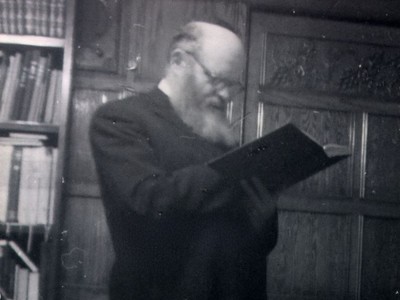
✨ Sirtuk in the HaBaDu tradition: history, meaning and custom
Community
🟡What is a sirtukSirtuk (also called “tailcoat”) is the outerwear worn among the Hasidim of HaBaDu on Shabbat and holidays. Its length is usually up to the knees — unlike the longer hood common in other Hasidic circles. This form arose during the time of Tsar Nicholas I, when Jewish clothing was supposed to correspond to the Russian civil style.🟡The historical path of the sirtukInitially, Chabadniks dressed in the same way as other Hasidim — in long hoods on weekdays and holidays. After the clothing reform of 1844, they had to replace the long "hoods" with a sirtuk — a business and respectable urban costume of that time. So this type of clothing became part of the HaBaDu tradition.Over time, the fabric and style of the sirtuk changed. The Rebbe emphasized the special value of silk sirtuk (seidene zupitses) for Shabbat and holidays — in the spirit of the teachings of Rebbe Maarash about the spiritual sublimity of silk. Since then, silk sertuk has become a common norm among the Hasidim.🟡How the Rebbe dressedIn the early generations of the Rebbe, white silk clothing was adopted on Shabbat, dating back to the tradition of Baal Shem Tov and, according to some legends, Arizal. White symbolized the light and joy of Shabbat — as opposed to black, which is a reminder of the sorrow of exile.Under Rebbe Maarash, there was a transition to sirtuk and a more "urban" type of clothing — including for practical reasons. Since then, the sirtuk has been fixed as clothing for both the Rebbe and the Hasidim: woolen on weekdays, and silk on Shabbat and holidays.In 1990, the Rebbe began to wear a silk sirtuk on weekdays, emphasizing the “highness of time” in which we are. On a number of occasions, he encouraged the Hasidim to follow suit.🟡When wearing a sirtuk● on Shabbat and holidays● in Hasidic dates (for example, 19 Kislev, 11 Nisan, etc.)● for many — on their birthday● at the wedding — the groom and relatives of both partiesIn practice, it is customary to start wearing a sirt from the wedding day, since it symbolizes the spiritualor maqif— ambient light associated with a new life stage.🟡The shape and symbolism of the sirtukIn HaBaDi, the right side of the clothing is superimposed on the left side — as a sign of the superiority of thehesed(mercy) overgvura(severity). Therefore, the buttons are sewn on the left.Sirtuka color — black:— as an expression of modesty and invisibility;— as a reminder of the expulsion and destruction of the Temple.The sirtuks raise the question of a quadrangular shape "like a talit", therefore, according to a number of rabbis, the back corner is rounded so that there is no question of tsitsit.🟡In the Hasidic senseChabad clothing is not an external style, but a carrier of an internal message: order, restraint, dignity before the Almighty, and a special exaltation of the Sabbath.Silk, according to explanations in the Hasidic Maamarim, symbolizes subtlety, purity and "light without coarseness of matter", so the silk sertuk emphasizes the spiritual height of holy time.Source:📖 Lubavitcher calendar
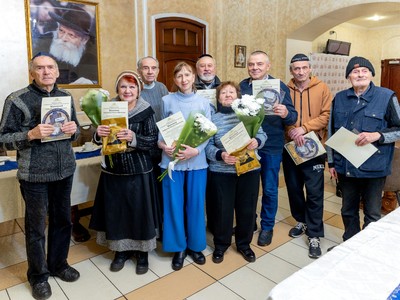
Birthday in the community
Community
We lovingly continue our good tradition —greet hromada birthday people on a monthly basisN o t a r yThis time — those whose birthday fell on December.For us, this is not a formality, but a real holiday of care.Every birthday person receives a gift,our women we welcomewith gift and flowers,and also — besure to cookbig birthday cake,to make the holiday feel real — sincerely and at home.This month we greeted our faithful with special warmthGolden AgeN o t a r yAnd also conveyed the greetings from the Community to those who can not be near now,but remains part of our extended family:💛Schenker Faina Yosypivna — 97 years old💛Soroka Klavdiia Hryhorivna — 80 years oldBecause years are not just numbers.These are stories, lived lives, and the light you give us.And we're happy to be able to share the warmth with you — over and over again.Mazal tov! UP TO 120!

Calendar "Day by Day" ("a-Yom yom")
Community
The book "a-Yom yom", compiled by the Rebbe at the direction of the previous Rebbe, contains a Hasidic expression for each day.📌Today 12 TevetaIn 5648 (1887), my venerable father, Rebbe [RASHAB], was elected community elder and, according to custom, entered the synagogue on Simhat Torah accompanied by a rabbi. He then recited a Hasidic treatise that began:“The Holy One, blessed be He, does no harm by His creation.”In conclusion, Rebbe RASHAB said the following:Also, people with high intelligence — those who live today — should put aside their minds and not follow logic, because, relying only on their minds, they can reach such a depth of delusion that, God forbid, “their end will be bitter…”.And today, in the days preceding the coming of Moshiach, this is a common approach: not to follow reason, not to follow logic, but to follow the Torah and the commandments in purity and simple faith in G-d of Israel.Notes:.The core of the Jewish soul — the level of our being fully connected to G-d — will be revealed by Moshiach. However, this inner beginning is manifested only when the innate simple devotion is awakened. As Rebbe Rayatz wrote:“Every time there is a call to duty in the Torah community, a simple and sincere believer is ready to act… If it is necessary to open a new Torah school, he is the first to make a donation. The dedication that comes to self-sacrifice is given to him effortlessly. The intellectual thinks it over and over again — and in the end his mind does not accept the supra-rational and self-sacrificing demands of self-sacrifice.”The reason is that the essence of the soul transcends the mind. And this essence is expressed in direct simplicity, not in intellectual sophistication.Recall the often cited parallel: when you need to take a very hot or very cold bath, it is relatively easy to lower your leg into it first, while immersion of the most sensitive parts of the body is much more difficult.Source:chabad.org
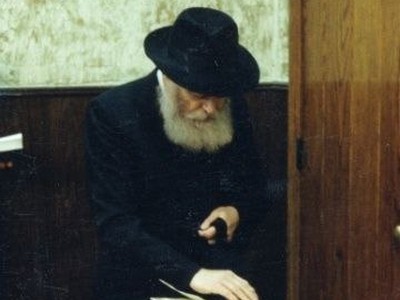
✨ Hartel in the Hasidic Habad tradition — meaning, history and practice
Community
🟡What is a harpell and why is it worn?Hartel is the belt with which the Hasidim are tied during prayer. Its meaning is to symbolically separate the upper, spiritual part of a person from the lower, related to the material beginning.The roots of this custom go back to the temple ministry of the Kohens: just as they prepared for the service, a person prepares himself for prayer — standing “before the King.”The books also emphasize the inner dimension of this action: a person "gathers himself", breaks away from everyday worries and adjusts to a conversation with the Almighty.🟡Explanation in Gala and Tradition🔹Khatsitsa— separation between the upper and lower parts of the body during prayer, so that the heart does not "see" the hidden parts of the body (this was true in ancient times, when they wore long clothes).🔹Gartel— a sign of respect and preparation for prayer, as before the king./bondagethe belt symbolizes the boundary between the material and spiritual levels of a person.🟡HaBaDa HabitsAt HaBaDi, the harness is worn at a level just below the elbows and under the heart — where, according to internal teachings, it combinesmohin andmidot(reason and feeling). According to legend, so was Cohen Gadol.A few practical features:● tefillin straps are not tucked into the harpel, despite mentions in cabalistic books;● the harp is not folded or twisted;● when putting on, make sure that it does not touch the floor;the ● right side is made slightly higher than the left.There is evidence that at the wedding of the Rebbe, his father-in-law, Rebbe Rajac, clipped the Rebbe with a handmade silk harp, and the Rebbe wore such a belt for many years. At the same time, this did not become a mandatory guideline.🟡When it is worn🔹To Prayer— the main case.🔹Morning Blessings— the books note that the Lubavitcher Rebbe did not usually wear a garret; however, the Rebbe's father ordered him to say them in the garret.🔹Birkat ga-mason— many Hasidim have a habit of wearing a garret.🟡Hartel in UnmarriedThe peculiarity of HaBaDa is that young men usually do not wear a harness before the wedding. This is related to the notion of spiritualmakkifimwith whom a person connects after a hoopa.Instead, they put on an elastic band (or thin harpel) under their clothes — so that the tzitsit remains taut, as Alter Rebbe's opinion requires.Exception:at the Rebbe's entrance to the audience, to the OEL, or when writingpidyon nephesh(Rebbe's letter) even an unmarried man wears a garret — but under his jacket so that he cannot be seen.📸Client Name:The Rebbe wears a garret in front of the Minha prayer in small hall 770.Source:📖Lubavitcher calendar


Our dates:
Community
*17 teveta5515 (December 31, 1754) — Yorzeit (anniversary of the departure from this world of Rabbi Aaron-Zeilig ben Joel Feyvush.Rabbi Aaron is also known as Reb Arele or Toldot Aaron (in Ashkenazi pronunciation — Toldes-Aren), after the title of his book. His followers (“zebras”) wear a robe made of a special white or silver fabric with black or dark blue stripes (for this striped clothing, the Hasidim of Reb Arele received their nickname). This fabric is produced only in Syria and smuggled to East Jerusalem. A white Arabic knitted yarmulke with a tassel inthe center of the dome completes the Weiss Yarmulke outfit.*17 teveta5601 (January 10, 1841) — Yorzeit (anniversary of the departure from this world) Rabbi Jacob ben Wolf Kranz (Dubno Magid)Rabbi Yaakov was born in 1740 in the town of Zdzenciol (now Dyatlovo) near Vilna (Vilnius). Already as a child, he showed great abilities and at the age of 20 became a preacher-darshan in his hometown. Later, Rabbi Jacob began to travel around the towns of Poland and finally settled in Dubno. Rabbi Yaakov, a preacher from Dubno (Dubno Magid), was respected by the greatest rabbis of the time, including Rabbi Eliyahu from Vilna (Vilna Gaon).*17 teveta5687 (December 22, 1926) — Yorzeit (anniversary of the departure from this world) Rabbi Shmariya-Noah from Bobruisk.Rabbi Shmariya-Noach was born in Lubavitches and was the youngest son of Rabbi Yehuda-Leib (Rabbi Maaril), son of the third Lubavitcher Rabbi Tsemakh Zedek. After his grandfather's departure from this world, he and his father moved to the town of Kopys, where Rabbi Maharil became the head of the Kopys Hasidim.Rabbi Shmariya led the community in Bobruisk for many years and organized a Hasidic yeshiva there. He was the last leader of the Kopi branch of Chabad, and after his departure from this world, the Kopi Hasidim joined the Lubavitcher branch.source:chabad.odessa

Our dates: 18 Tevet
Community
📌18 Teveta4229 (469) — Yorzeit (anniversary of the departure from this world) Rabbi Huna bar Mar Zutra.The father of the Persian ruler Peroz Yezdigerd II, a supporter of Zoroastrianism, persecuted Jews in every possible way, forbidding, for example, the celebration of the Sabbath. Peroz went further — the Jewish courts were abolished, the famous academies in Sur and Pumbedita were closed, and children were forcibly given to the priests for upbringing.In addition, by order of Peroz, Rabbi Huna bar Mar Zutra (known in history as Huna V), the exilarch ("Reish Galut" — "head of exile") of the Babylonian Jews, was killed in Pumbedita. After the death of Rabbi Huna, the post of exilarch remained vacant for some time.📌18 Teveta5601 (January 11, 1841) — Yorzeit (anniversary of the departure from this world) Rabbi Zvi Elimelech Shapiro of Dinow.When Zvi Elimelech was still a child, his uncle — one of the most famous Hasidic tzaddiks — Rabbi Elimelech from Lizhensk, predicted that his nephew would become a great sage of the Torah.His prediction came true — his nephew became a famous Jewish scientist, who became famous not only for his knowledge, but also for his extraordinary diligence and perseverance. His teachers were such famous Hasidic tzaddiks as Rabbi Jose mi-Lublin (“The Blind Seer from Lublin”), the Kozhinets Magid and Rabbi Menachem-Mendel from Rymanov. He lived and worked in Stryzhiv, Munkachi (Mukachevo) and Dyniv, and his reputation as a miracle worker attracted thousands of followers.Peru, Rabbi Zvi Elimelech owns many books, the main of which is "Bnei Issachar" (the name became the author's middle name). By the way, Jose mi-Lublin said that Rabbi Zvi Elimelech is the reincarnation of the most prominent sages of the Torah from the tribe of Issachar.His descendants became the founders of Dinovsky, Blazhevsky and Munkak Hasidism (now all the heads of these movements live in New York).source: chabad.odessa

Our dates: 19 Tevet
Community
📌19 tevet 5660 (December 21, 1899) — Yorzeit (anniversary of the departure from this world) Rabbi Hanoch-Hendel Klug — the first mentor of the Tomhei Timim yeshiva.Rabbi Hanokh-Gendel Klug first appeared in Lubavitches in 1852, during the reign of the third Lubavitcher Rabbi Tsemakh Tzedek. Rabbi Hanoch-Jendl was distinguished by an unusual avat Yisrael (love for Jews) and therefore it was he who in 1897 was invited to become a mentor of the Tomhei Timimim yeshiva, which had just been opened in Lubavitches.source: chabad.odessa

Our dates: 20 Tevet
Community
20 Tevet 4965 (December 13, 1204) — Yorzeit (anniversary of the departure from this world) Rabbi Moshe ben Maimon (Rambam).Rabbi Moshe ben Maimon, also known by the acronym Rambam (in the West he is more often called "Maimonides" — "son of Maimon") was born in 1135 in Spanish Cordoba. He came from a noble and famous family, descendants of King David and the compiler of the Talmud, Rabbi Yehuda ha-Nasi.His first teacher was his father, Rabbi Maimon, head of the Rabbinical Court of Cordoba and one of the most prominent legislators of his time. When Moshe was 13 years old, his family had to flee Córdoba - the city was taken over by the Almohad Islamic fanatics and all non-Muslims were threatened with death. For seven years, the family traveled through Spain and finally settled in the city of Fez (Morocco). During this time, Rabbi Moshe managed to write several works - commentaries on the Talmud, a treatise on the Jewish calendar, etc., but in 1165 they left Fez, which also belonged to the Almohads, and went to Eretz Israel. The day of departure from Fez, as well as the day when the ship on which they sailed escaped the storm, were celebrated by Maimon's descendants with a family fast, and the day of the family's arrival at the port of Acre became a holiday. Maimonides' family made a trip to Eretz Israel, and then went to Egypt, where they settled in Fostat (Old Cairo).The younger brother - David ben Maimon - was engaged in the trade of precious stones and thanks to this slave Moshe could fulfill the duties of the head of the community and engage in literary activities. However, during one of the trips, his ship suffered an accident and David drowned (Jews living in India assure that he did not drown, but saved himself and led the community in Cochin), leaving behind his wife and two children. The family was broke, and Rambam had to find a living for two families at once. He became a physician and was eventually appointed one of the personal physicians of Sultan Saladin (Salah al-Din) himself. It was during these years, despite his busy schedule, that he wrote the books "Mishne Torah" ("Repetition of the Law") and "More Nevuhim" ("The Teacher of Those Who Hesitate"). Also, many other books belong to his pen, in particular "Sefer gya-mitzvot" ("Book of commandments"), where he systematized all 613 commandments - 248 commands and 365 prohibitions.Until the end of his life, Rabbi Moshe continued to work as a court physician and head of the Jewish community, conducting extensive correspondence with communities in different countries. Rambam died mourned in all parts of the Jewish world, and his remains were transported to Eretz Yisrael, to Tiberias, and to this day his tomb remains an object of pilgrimage.On the 750th anniversary of the Rambam, Kibbutz Yad Maimonides was founded in Israel.20 of the year 5244 (December 19, 1483) — The publication of the first printed edition of the Talmud.On this day, in the Italian city of Soncino, in the printing house "Bnei Soncino", the efforts of the printers Israel-Natan Soncino and his son Joshua-Shmuel, saw the light of the first of the printed volumes of the Talmud — the treatise "Brachot".20 tevet 5641 (December 22, 1880) — Yorzeit (anniversary of the departure from this world) Rabbi Jacob ben Masoud Abu-Hazira.Rabbi Yaakov was born in 1808 in the Moroccan city of Tabbasamt. His appearance in the world is shrouded in legends (according to one of them, at the moment of the birth of the child, the whole house shone with bright light). From childhood, he became famous for his rare abilities (Rabbi Yaakov himself said that the prophet Elijah appeared to him), devoting all his time to the study of the Torah and Kabbalah, and neglecting sleep and food. Already in his youth, he became the head of the Jewish communities of Tafillalt province and devoted a lot of time to charity. Numerous miracles made him famous among all the Jews of North Africa, and piety, moral qualities and deep modesty created a halo of sanctity around him - he was called "the Divine Kabbalist" and "a skillful miracle worker."Five times Rabbi Yaakov intended to go to Eretz Yisrael, but each time the community resisted his departure and only for the sixth time did he succeed. However, falling ill on the way, he died before reaching Eretz Yisrael. Like the birth, the death of Rabbi Jacob was accompanied by miraculous signs, and his grave in Damanhur, Egypt, near Alexandria, became a place of pilgrimage.One of the grandchildren of Rabbi Ya 'akov was Rabbi Yisrael, known as Baba Sali (Arabic: “Father Yisrael”), who had lived since 1951 in Eretz Yisrael, and also had the fame of a miracle worker. His grave in the city of Netivot serves as a place of pilgrimage, the size of which is only slightly inferior to the traditional pilgrimage to the graves of the great cabalists and sages of the Talmud, Rabbi Shimon bar-Yohai on Mount Meron in Galilee and Rabbi Meir Baal HaNes (the Wonderworker) in Tiberias.source: chabad.odessa

Our dates: 21 tevet
Community
📌21 Tevet 2194 (1567 BC) — Birthday of Shimon ben Jacob.Shimon was the second son of our forefather Jacob and our forefather Leah, and the second in the general order of birth of Jacob's children. He was born 21 tevet (according to other opinions 28 tevet) 9 years after Yaakov's arrival in Haran.The descendants of Shimon formed one of the tribes of Israel — the tribe of Shimon and, when dividing Eretz Yisrael, received an allotment in the south-west of the country (the Negev desert) next to the tribe of Judah. They were of an inflammatory nature, and so that they did not come together in large numbers, the Almighty took “preventive measures”: the descendants of Shimon became poor or melamed (teachers) and were forced to disperse throughout the country in search of subsistence.
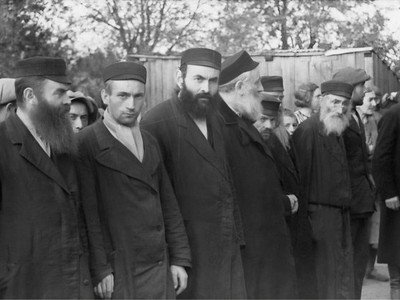
Topic of the day: ✨ Decree on the change of Jewish clothing under Emperor Nicholas I and its impact on the traditions of HaBaDa
Community
🟡 Historical context and assimilation policyThe reign of Nicholas I (1825–1855) was a turning point in the attitude of the Russian authorities towards the Jewish population. State policy was based on the idea of "re-education" of Jews and their gradual assimilation into Russian society.This line included several stages:— decree on the recruitment of boy cantonists for long-term military service,— restriction of the places of residence of Jews (settlement zone),— reforms of the education system and attempts to spread learning in "public schools".The next step was a decree to change Jewish clothing, which was seen as a means of destroying external signs of community and religious identity.🟡 Motives of power and the role of the maskil movementThe adoption of the decree was significantly influenced by representatives of the movement of masks (educators). They convinced the yard that:— traditional Jewish clothing "separates" Jews from society,— the appearance prevents their integration and service to the state.The idea was that changing clothes would lead to cultural rapprochement, and later to a weakening of religious life and traditions.🟡 Basic requirements of the decreePractical implementation included:— haircut of beards and paces,— prohibition of long wide captans,— introduction of short European and Russian clothes.The police applied these measures harshly:jews with paces or in a long trap could be detained, cut in place, cut beards and edges of clothes in front of passers-by. This caused humiliation and deep social trauma.🟡 Religious Discussions and Leadership PositionsThe reaction of the rabbis was mixed.— Tsemakh-Tzedek and Rebbe from Ruzhyn allowed to temporarily obey the law “out of fear of the authorities” in order to avoid persecution and new blows to the community (not including beard and paces).— Rabbi Yitzhak-Meir Alter (Hidushey Arim) saw the decree as a spiritual boundary and sharply opposed it, seeing it as a threat to tradition and identity — for which he was arrested.His arrest triggered a powerful wave of solidarity and public protest.🟡 Protests and partial cancellation of the decreeMass demonstrations took place in many cities of Russia and Poland. The protests had the character of civil pressure — religious circles, simple artisans, and merchants took part in them.— In Russia, the decree was soon weakened and canceled.— In Poland, it continued to operate for several more years.The Polish authorities proposed a compromise:or short clothes and haircut,or long clothes — but with short pants tucked into stockings.Most communities chose the second option — and this appearance became a stable tradition of Polish Hasidism.🟡 Long-term consequences for Polish HasidimFrom that era come:— the custom of hiding paces under a hat,— characteristic cut of clothes,— wearing a uniform — a high fur hat, adopted by agreement with the authorities.What began as a forced measure eventually became part of Hasidic culture and a symbol of resilience.🟡 The impact of the decree on the HaBaDa traditionBy 5604 (1844), the Chabadnis wore a long bonnet, like most Hasidic groups. After the introduction of the decree, many switched to a shorter Russian frock coat — the business tailcoat of city merchants and officials.This decision had two motives:— reduce the risk of a collision with the police,— look socially “solid” while maintaining an internal Jewish identity.The Rebbe continued to wear the hood until Rebbe Maarash, who often traveled for treatment, began to wear a frock coat and a knitted hat so as not to attract undue attention. Thus, this style became part of the Chabad tradition.A cap-casket, a sign of modesty and inner devotion to tradition in difficult conditions, has also become common.🟡 The Paradox of HistoryThe decree, which sought to destroy Jewish identity, had the opposite effect:many elements of clothing, which arose as a compromise and protection from the pressure of power, turned into stable symbols of spiritual stability and memory of experienced trials. source: 📖 Lubavitsky Calendar https://t.me/+8KbDy9dQVqAxZWE8
A page of history: ✨ Hat "kneich" (Fedor's hat) in the tradition of Chabad: history, path and symbolic content
Community
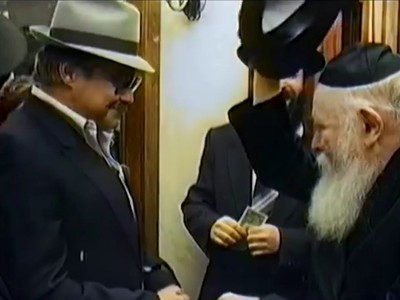
✨Hat "Kneich" (Fedor's hat) in the tradition of Chabad: history, path and symbolic meaning🟡Historical backgroundIn the early generations, the Chabad Hasidim wore a round hat without fields on weekdays — "Kazyrok" or cassettes, and on special days — a fine. The situation changed after the "decree on the form of clothing" issued by Tsar Nicholas I in 1844, when Jews were obliged to wear shortened clothes and a headdress with a visor. Then the strahmel was replaced with a cassette.According to a Hasidic legend, Rebbe Zemach-Tzedek explained that the very essence of the decree is aimed at "closing his eyes to the sky" and distracting the Jew from the words:"Seu marom eyneichem — lift up your eyes to heaven". Therefore, many Hasidim put the helmets with a visor back so that nothing would cover the sky.It is known that Hasid Reb Ilel Paricher even in the summer wore a winter headdress with a fabric insert at the back — so that only the field did not cover the top.🟡From Cassette to KneichIn the first decades after the decree, most of the Hasidim continued to walk in a helmet — this became a “sign of loyalty to the old Hasidic style.” The "Kneich" hat appeared in the circle of Chabadniks gradually: according to some sources — during the period of Rebbe Maarash, according to others — for Rebbe Rashab.For a long time, the knight was perceived as an "urban modern fashion of merchants", so many old Hasidim were wary of him. It is said that Mashpiya slave Nisan Nemenov at first did not want to accept students in the Bible to the yeshiva — until he heard that the Rebbe himself wears such a hat.Over time, kneich spread among Hasidic merchants of the Russian Empire and Latvia. Already during the Rebbe Rayatz period, a significant part of the Chabadniks wore a kneich, and after the adoption of the leadership of the Rebbe (in 1951), the kneich gradually turns into a "basic Hasidic headdress".🟡At our Rebbe'sBefore the era of Rebbe Maarash, Rebbe used to go to shtraimli even on weekdays — this was an expression of the tradition of the Hasidic circle.After the "decree on the form of clothing", Hasidic clothing also changed: the hood replaced the previous hats, and the long hood replaced the frock coat.Rebbe Maarash, due to his health condition, often being on trips, dressed modestly and externally "like a merchant" in order not to attract attention. At that time, he sometimes wore a knitch.Rebbe RASHAB mainly wore a "hamburg" hat, and in Lyubavichy he went to shtraiml.Rebbe Rajac in his youth wore a knich with raised fields and a triangular crease on the thulia (as was customary among merchants), and later switched to his father's straiml.The Rebbe has been wearing a knitwear since the wedding (and possibly before). A characteristic feature of his hat was the lowered edge, which is called "Kneich" in Yiddish.🟡Style, form and contentIn Chabad, it is customary to pray in a jacket and a hat — as in front of the King. The hat serves as the second cover of the head.A characteristic Chabad silhouette has formed in the kneich:● on the thulium — the central longitudinal hall,● in front — two small "eyes",● the margins are first raised up,● in the Hasidim, the front edge goes down.Traditionally, they talk about three folds on the back from the top as a symbolhochma — bina — daatreflecting the teachings of the Chabad.The Hasidic stories emphasize the idea that the lowered edge of the Kneich expresses modesty and a downward orientation to the world, where it is necessary to create a home for the Almighty.There is a tradition that one day, seeing the Hasidim with raised fields, the Rebbe gestured to lower them — as a sign of inner humility.🟡Kneich todayToday, the kneich is considered the "official" hat of the Hasidic Chabad. For yeshiva students, there are charitable foundations that issue coupons for hats through partner stores before Passover and other holidays. This emphasizes that the Kneich tradition is not only an element of clothing, but also a symbol of the continuation of the Hasidic line from the Rebbe to the disciples.📷Client Name:The Rebbe greets the owner of the store where they purchased hats for the Rebbe.