
Our dates: 10 Tevet
Community
*10 tevet3336 (425 BC) — Babylonian armies besieged Jerusalem.On this day, the troops of the Babylonian emperor Nebuchadnezzar (Nebuchadnezzar) surrounded the city. 17 Tammuz fortress walls were destroyed and 9 av our Holy Temple was destroyed. The Babylonian exile began and lasted 70 years. In memory of this event, the day of fasting was established by the prophets.10 tevet about 3410-3460 (350-300 BC) — Yorzeit (the anniversary of the departure from this world) of the prophet Malachi.His real name was Mordecai, and he received the name Malachi because he was an assistant to the king ("king" in Hebrew "melech"), and in addition, he resembled an angel in appearance ("angel" in Hebrew "mal'ah"). However, in one of the treatises of the Talmud, the prophet Malachi is identified with Ezra.After the death of the last prophets — Haggai, Zechariah and Malachi, the prophetic inspiration finally left the Jews.*10 tevet3448 (313 BC) — Yorzeit (the anniversary of the departure from this world) of the prophet Zechariah.Zechariah was a cohen and a prophet, the grandson of a prophet named Ido. The great Kabbalist Rabbi Yitzhak Luria Ashkenazi (Arizal) said that Zechariah was the lord of the soul of the high priest Aaron (brother of Moshe-Rabein), as well as his sons Nadab and Avi 'u. The book of the prophet Nehemiah says that thename of Zechariah is Meshulam (from the word "helmet" — "full, constant") for his concentration and perseverance in actions.After the death of the last prophets — Haggai, Zechariah and Malachi, the prophetic inspiration finally left the Jews.

Our dates:11 Teweta
Community
*11 teveta5428 (December 26, 1668) — Expulsion of Jews from Austria.Emperor Leopold I, who ascended the throne in 1657, was very pious and in his youth was preparing for the adoption of the clergy. In the first years of his reign, he tried to protect the Jews, but soon an imperial decree was signed to expel the Jews from Vienna, Lower and Upper Austria. The Vienna synagogue was converted into a church called Leopold's Church.But the expulsion of the Jews had a negative impact on the Austrian economy, as the Vienna municipality was unable to pay the taxes that the Jews had previously paid to the treasury. The emperor was forced to allow the exiled Jews to settle in Bohemia, and then allowed them to come to fairs in Lower Austria. Formally, the decree on the expulsion of Jews from Austria remained in force until 1848, but soon after its publication, individual Jews were able to settle in Vienna. After a short time, an unofficial Jewish community formed in the city.

Topic of the day: How the tradition of personal contact arose and was established
Community
📜Letter to the Rebbe: how the tradition of personal appeal arose and was establishedIn the history of Hasidism, the practice of writing the Rebbe was formed not as an external custom, but as a natural form of spiritual connection. Already in the early generations, the Hasidim sought not only to listen to the teachings of the Rebbe, but also to share their lives, deeds, difficulties and successes with him. Gradually, a special culture of written communication emerged — attentive, responsible and deeply personal.Over time, the letters have become part of the internal route of Hasidic life: a person not only asks questions or asks for a blessing, but formulates his own state, thoughtfully reads his thoughts and thereby builds a clearer attitude towards himself and his mission.✨A letter as a mirror of life's pathA letter to the Rebbe usually contains not only a request or a description of the situation, but also a story about what the person has already done, what steps he has taken, where he sees progress, and where he feels difficulties. In this sense, the letter becomes a mirror — a way to see your own actions and intentions in a holistic picture.For many Hasidim, this process turns into an internal stop:it is necessary not just to "write", but to comprehend what is really important, what needs to be corrected, and what should be strengthened and continued.Therefore, tradition emphasizes that writing is not a substitute for effort, but a form of responsibility for one's own path in life.📬“What on?”Personal life, social activities and spiritual mattersThe subject of the letters covers a wide range of topics:— family circumstances and upbringing of children— choice of life path, study, work, relocation— the state of spiritual practice and study of the Torah— public and educational projects— internal doubts, decisions and tipping pointsIn this way, the letter becomes a link between a person's personal destiny and the common task in which he or she is involved. This is not only a dialogue with the spiritual leadership, but also an appeal to their own responsibility for the place where a person lives and acts.🕊️"Pidyon Nefesh" — letter of special depthA separate dimension of the practice is "Pidyon Nephesh", an appeal that is written in moments of special spiritual seriousness. Its content is not limited to requests or descriptions of circumstances; it conveys the inner state of the soul, its desire to correct and strengthen the connection with the source of spiritual life.Such a letter is approached with great delicacy and restraint — as an action that requires silence, attention and honesty with oneself. It is not frequent or formal, but appears when a person really feels the need to speak from the depths.🌟Contemporary Form of TraditionAnd today this practice retains its significance. Letters are written during periods of change and important decisions, in joyful and difficult moments.For some, it is a way to gather strength and bring order to their thoughts, for others it is a way to strengthen the connection with the spiritual line of the Rebbe and with the vocation to which they belong. But the key element remains common: the letter becomes an internal action that changes a person's attitude to his own life and to the world around him.📬The Rebbe answered hundreds of letters every dayEvery day the Rebbe paid attention to each letter, reading and responding to hundreds of people. Usually twice a month, the Rebbe went to the grave of his father-in-law, where he read hundreds of letters sent to him by people from different countries. This order testified to how personally the Rebbe was involved in the life of each Hasidic and how much he valued this connection.📸Client Name:Lubavitsky Rebbe reads a letter from one of the Hasidim on the grave of his father-in-law Rebbe Rajac.Source:📖Lubavitcher calendar
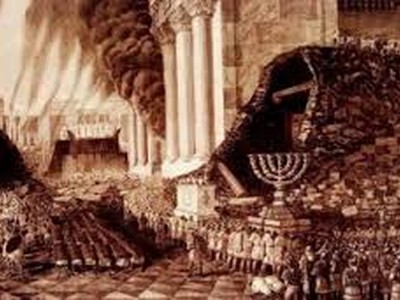
Topic of the day: Asara be-Tevet (10 Tevet) — the beginning of the siege of Jerusalem.
Community
On the tenth day of the month of Tevet in the year 3336 from the creation of the world (425 BC), the troops of the Babylonian king Nebuchadnezzar besieged Jerusalem. Thirty months later — the ninthof Tammuz (and according to one view — the seventeenth) in 3338 — the walls of the city were broken, and later, on the ninth of Av, the Sacred Temple was destroyed, and the Jewish people were expelled to Babylon for 70 years.The tenth of Tevet (Asara be-Tevet) (in the year 5786 - 2025-2026 - falls on December 30) is celebrated as a day of mourning, fasting and repentance. Eating and drinking are prohibited from dawn to dusk. As with other daytime-only fasts (Gedaliah Fast, 17 Tammuz, and Esther Fast), washing, anointing, and wearing leather shoes are permitted—all prohibited only on the 9th of Ava and on Yom Kippur. Sick (even without life-threatening), pregnant and lactating women who find it difficult to fast, as well as children are exempted from the obligation to fast. However, they should not eat in public, and on this day should limit themselves to simple food.Excerpts are added to the daily prayers relating to Asar B'Thevet and the day of fasting. The penitential prayers of Slikhot are also recited.In more recent times, the Tenth of Tevet has been chosen as the “Day of General Kaddish” to commemorate those who perished in the Holocaust, whose date of death is often unknown.

✨ Streiml in the history of Chabad
Community
🟡Origin and meaning of the customStreiml is a fur hat common among Jews in Eastern Europe, which has become one of the most recognizable attributes of Hasidic culture. Various sources give several explanations of its origin:some associate it with the European court fashion of the 18th-19th centuries, others — with the periods of "clothing reforms", when Jewish communities were forced to change their appearance.There is also a Hasidic explanation — as a hint of "sparking" even from material of animal origin.Over time, the fraimle has become a festive symbol: it is worn on Shabbat and Yom Tov as a special sign of respect — like a kind of "crown" associated with the spiritual sublimity of the holy day.🟡Shtraiml in the Hasidim of Chabad in the early generationsIn the first generations of Chabad, the strahmil was common among both the Hasidim and the Rebbe.✨ It is known that Alter Rebe attached special importance to the penalty:in his minyan, everyone who was summoned to the Torah had to wear a straitjacket - and if a person did not have his own, he was specially given a common straitjacket.During the time of Tsemakh-Tzedek and Rebbe Maarash, the custom persisted, although gradually more and more Hasidim switched to other forms of clothing. Subsequently, the straimel became a sign of rabbis, community leaders and individual ancient families.In Eretz Israel — especially in the Hebron and Jerusalem Chabad communities — the tradition lasted much longer.And today there you can meet summer chabadniks who continue the family custom.To individual Hasidim who came to Chabad from Polish courts or from the old Jerusalem environment, the Rebbe explicitly said not to change clothes — as a sign of respect for the traditions of their clans.🟡Rebbe and Stramble: Personal Customs✔️ Alter Rebbe had two penalties: on weekdays and on Shabbat and Yom Tov.✔️ Rebbe Maarash wore a strahmel - and it is remembered that the moment of putting on the Saturday outfit was accompanied by a special nigun.✔️ Rebbe Rashab wore a fine only in Lyubavichy - at the direction of his father.✔️ Rebbe Rajac wore a strahmel on Shabbat and holidays only in Lubavitches; after the family moved to Rostov, he stopped wearing a strahmel. However, on the Saturday before the wedding of our Rebbe, he resumed the tradition of wearing a straiml on Shabbat.After 10 Shvat 5711, the Rebbe did not switch to the straiml. One of the reasons is that the Rebbe considered himself a Hasidic of his father-in-law, the Rebbe of R🟡When the straitjacket was still worn in 770Although there is no general custom in Chabad to wear a straiml, at the order of the Rebbe there were two special situations when the Gabbays in 770 wore it:🟢 on Shabbat Bereshit — during the sale of mitzvot;🟢 on Shabbat parachute Mishpatim — during the announcement of melave-malka for the gmahu fund.Rebbe explained that here the penalty acts as a sign of respect and responsibility — a person acts "on behalf of the community."Today, there is no general custom among the Hasidim of Chabad to wear a straiml, however:— in the old Jerusalem and Hebron families, it is preserved;— individual Hasidim continue the tradition of their ancestors;— in the Hasidic memory, it remains aconnection with the generations of the Rebbe.Shtraiml is perceived not as a museum attribute, but as a living symbol of the dignity of Shabbat, community service and internal connection with the Chabad tradition.📸Client Name:rebbe Rajac's straitjacket, which he inherited from his father.Source:📖Lubavitcher calendar
Question to the Rabbi: What are the rules of fasting 10 Tevet?
Community
The 10th day of the month of Tevet (known as Asara be Tevet) is celebrated as a day of fasting, mourning, and repentance. We refrain from eating and drinking from dawn to dusk, and we add Slichot (penitential prayers) and other special inserts to our prayers.
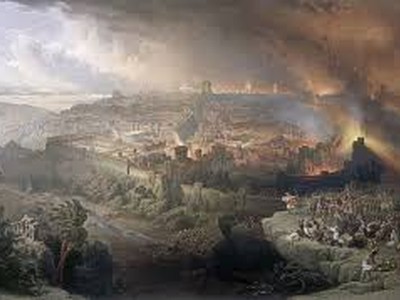
Tevet: the beginning of the siege and the beginning of awareness
Community
10 Tevet is the day that Nebuchadnezzar laid siege to Jerusalem.Some of our teachers of law (in particular — Rambam) singled out this particular fast. From the words of Rambam, it is concluded that if 10 Tevet falls on Shabbat, then they fast on this day. This is surprising, because even 9 Av, if it falls on Shabbat, is postponed to the next day.This is explained by the fact that 10 Tevet is the beginning of the execution of the verdict on the destruction of Jerusalem.That is, 10 Tevet is the day of judgment for the holy city every year.Our sages say a thing that at first glance seems strange: the haters of the Jewish people could not destroy Jerusalem. It was destroyed by our sins, and the haters, according to the figurative expression of Gemara, only "ground the already ground flour".Just as the sins of our people were decisive for the destruction of Jerusalem, in order to rebuild the city, the Most High needs our teshuvah — our correction and restoration of the holiness of this place. Jerusalem, to our great pain, is today besieged by the forces of evil: "pride parades", the desecration of the Wailing Wall by reformists, the mass violation of the Sabbath, etc.We must understand that it is not embassies and ministries that adorn Jerusalem. It will be decorated with the places of the Torah, it will be decorated with the Temple, which will be rebuilt. The special holiness and greatness of Jerusalem is that it is Ir Elokim — the city of G-d, the place of the Torah, the place of the Temple.Therefore, the true restoration of Jerusalem depends on the correction of each of us, on the presence of the Shekhinah in our homes.We cannot rebuild the Temple now, and climbing the Temple Mount will not bring Shekhinah back to the holy city. But if we cleanse Jerusalem of abomination, it will become a place for our people and for all the peoples of the world to study and fulfill the Torah of the Most High. The light that shines from Jerusalem for us and for all the peoples of the world will lead to recognition of the faithfulness of the people of Israel to the Creator, to an understanding of the reason for the love of the Almighty for our people.This will be the true recognition of Jerusalem — as the source of light and the highest holiness — by all the nations of the world.G-d grant that we may soon, in our day, be honored with the coming of the Messiah, the rebuilding of the Temple, and complete deliverance! And then all the mourning posts will turn into great holidays!Source:beerot

The Three Days of Tevet: From the Translation of the Torah to the Siege of Jerusalem
Community
This is what Rabbi Eliyahu Ki-Towa says about the fasts of the month of Tevet in The Book of Our Inheritance.Three fasts follow each other in the month of Tevet — in memory of the three disasters that befell the people of Israel on the days of the 8th, 9th and 10th of Tevet.The fasts of the eighth and ninth Tevet are called the “fasts of the righteous”, when only the chosen ones fast. Everyone posts the Tenth Tevet...The eighth Tevet was completed by the Greek translation of the Torah on the orders of the Hellenistic Egyptian king Ptolemy. This day is compared by the sages with the day of making the "golden calf", because it is impossible to translate the Torah into another language without distorting its meaning.The prophets Ezra and Nehemiah died on the ninth of Tevet.On the tenth of Tevet, the day of the general fast, the troops of the Babylonian king Nebuchadnezzar began a three-year siege of Jerusalem, which ended with the destruction of the city and the Temple.The reasons for all three posts need additional explanation, especially the reasons for the first one (it will be discussed at the end). After all, in our history there were many great and tragic events for which there were no posts for the next generations. So, we are talking about truly crucial events that had a huge impact on the subsequent history of our people.About Ezra and Nehemiah, The Book of Our Inheritance says the following:It was they who led the Jews who decided to return from Babylon to Eretz Yisrael, taught them the Torah and took care of their needs. With their death, Israel was orphaned, losing the spiritual and material goods they had given him. No one was able to become a worthy substitute for them.The death of Moshe Rabbeinu was also a great and tragic event. But he completed his mission, blessed the people, and handed the case over to a worthy successor. Instead, the period of the return of the Jews from Babylon under the leadership of Ezra and Nehemiah was full of turmoil and conflicts — both with the surrounding peoples and within the Jewish people itself — and “no one was able to become a worthy substitute for them.”The tenth of Tevet is the day the siege of Jerusalem begins. It seems that this event was not yet a full disclosure of the tragedy: there was no hunger, no destruction, no casualties. Isn't it enough for us to have the harshest post of the Ninth of Av, set in memory of events that are obviously tragic?But the Torah worldview requires that we seek and see spiritual roots before tangible and visible fruits. We saw them today — and we were alert, because this is what it means to learn from the tragedies of our past. When the material foundations of everyday life are not yet broken... when shops are full of goods, and coffee shops and entertainment facilities are full of cheerful audiences, so that people understand that all their well-being today may already be "ground" on the "heavenly millstone", that it is like propertyir nidahat(cities of idolaters) — is subject to destruction; and according to the law of the Torah, “that which is subject to destruction is as if already destroyed,” and has no measure or value… (G-d grant that this not happen; on the contrary, that all the people of Israel return completely and with all their heart to the Torah, and that all this property become a cover in the construction of the world of the Torah).And here is the question: why is the translation of the Torah into Greek, which became the reason for the fast on the 8th of Tevet, such a great tragedy? After all, this translation is not the first (the first, in seventy languages, was made by our teacher Moshe at the entrance to the Land of Israel [see Rashi to Deuteronomy 27:8]). And not least, it was followed by Onkelos's highly respected Aramaic translation based on the Oral Torah tradition, to which Rashi often refers. And the Greek translation was made not by idolaters, but by the greatest sages of the Torah; in addition, the Most High performed a great miracle: seventy-two independent translations turned out to be absolutely identical, even in deliberate deviations from the direct meaning. This in itself became a great sanctification of the Name of the Most High. And now the Torah has been translated into almost all languages of the world. Why, then, do the sages compare this day with the day of the "golden calf" and say (in the tractate Ta'anit) that "when the Torah was translated into Greek, darkness descended upon the world and did not recede for three days"?Here is the explanation from The Book of Our Heritage:One of the Ptolemies who then ruled Judea sought to question the origin of the Torah and the nature of its laws. He gathered the Jewish sages and ordered them to translate the Torah into Greek. If he was really interested in the Torah, he would have allowed collaborative work. But, intending to ridicule the wise men, he isolated them from each other.The very idea of the translation was based on an openly hostile attitude towards the Torah and its sages. Each of the seventy-two wise men was entrusted with a task beyond human capacity. Each word of the Torah has thousands of meanings, and Hebrew - the Holy language - "cuts" them like a rock hammer. There is no language like the Holy Language created to inscribe the Torah; translation in all its richness is impossible.A word-for-word translation deprives the Torah of its inner content, leaving only "walls of words". For the sages in love with the Torah, this was unbearable. Just as idols, no matter what they are made of, lack holiness, so any translation of the Torah is not equal to its original.The Jews for whom the translation of Onkelos (translation-commentary, part of the Oral Torah) is intended understand this and do not perceive it as "the Torah itself". So the Greek translation did not harm the Jews. Instead, other peoples, not knowing the Oral Torah, could think that they learned the Torah through translation.Before the translation, the nations were perhaps aware of the greatness of the Torah and its connection with the Jewish people - that was the "world". With the appearance of the Greek translation by order of the evil king, the illusion arose that the Torah belonged to the peoples of the world. The sages compared it to a lion in a cage: before everyone trembled before him, but now they approach and ask: "Where is his strength?"So is the Torah: locked in a cage of translation, it has lost reverence in the eyes of the world. Anyone who knew Greek could read, comment, and criticize it without touching its wisdom. That is why the eighth of Tevet was equated with the day of the "golden calf": just as they saw divinity in a soulless idol, so the people "see" the Torah in a translation devoid of holiness.The consequences of this were far-reaching: among the nations that proclaimed themselves the "new Israel", our people experienced long suffering in exile. Emphasizing that the darkness of the eighth Tevet lasted for three days, the sages hint that the completion of the translation of the Torah sums up the series of tragic events of the 9th and 10th of Tevet.Quotes from The Book of Our Heritage by Elijah Ki-Tovsource:beerot


The Jewish community wishes you a happy New Economic Year! 🌿📊
Community
The new economic year is the timebeat upresults 🧾, thank you for what you have achieved 🙏 and look forward with hope ✨. This is an opportunity to review plans, strengthen the foundation of our life and build the future with new strength - responsibly, wisely and with faith 🤍.We wish that this year will bring stability and confidence in the future 🏡, prudent decisions 🧠, honest work 🤝 and good fruits of joint efforts 🌾. Let there be prosperity and peace in your homes, clarity and development in your affairs 📈, and gratitude for every day in your hearts 💛.And above all, we pray and wish for justice as soon as possiblepeace in Ukraine🕊️ - peace that will preserve life, restore security to our cities and villages, and enable people to live and work without fear.May the Almighty bless your intentions, the work of your hands and the path you are on ✡️✨. We wish you health 🩺, inner balance ⚖️, unity 🤍 and strength to protect the most valuable thing - family, community and human dignity.May the New Economic Year become a year of material, spiritual and human growth

Psychologist's page: How to live on?
Community
Every day, Ukrainians face new trials and losses that require great courage, strength and endurance. And we try to cope with these challenges: we work hard, volunteer, donate.But sometimes it becomes unspeakably difficult: hands go down, and only one question is in the head: "How to live on?". And that's normal, because we get an extremely traumatic experience. Each of us has the right to any emotions and states.We have prepared for you some tips that will help you or your loved ones survive difficult events:If you keep your emotions inside and accumulate them every day, your mental state will only worsen. Therefore, it is worth finding a way in which it will be easiest for you to express them. Remember, any reaction is normal.Even if life has changed radically, it is important to implement the usual routine: cook breakfast, go shopping, meet with friends. It helps our psyche to feel in control of the situation, which is sometimes sorely lacking.Do not hesitate to consult a psychologist - if you or your relatives feel that internal support is not enough, then it can be found externally with the help of a qualified specialist.Take care and share your ways of support in the comments below this post

✨ Fast in Memory of the Siege of Jerusalem — Tenth of Tevet
Community
🟡Meaning of the dayThe Tenth of Tevet is one of the posts related to the destruction of the Temple. It was on this day that the Babylonians began the siege of Jerusalem — the event that began the tragic chain that ended with the destruction of the First Temple.In the Hasidic tradition, this day is perceived not only as a time of grief, but also as a moment of inner awakening and correction — a step towards the liberation and future restoration of the Temple.Short Laws of Fasting🥛Food and drink until dawn🟡 If a person did not go to bed, he can eat and drink until dawn.🟡 If he goes to bed and plans to wake up early to eat, you need to intend to eat before bedtime.🟡 Those who usually drink water or tea after waking up do not need to make a special condition.Children who already understand the meaning of fasting do not fast completely — they are given simple and modest food, without sweets and sweets.🙏Morning Prayer and SlichotIn Shakharit, the chazan utters the insertion of the fast of Aneinu in the repetition of the amida as a separate blessing — if there are at least a few who fast in the synagogue."Slichot" is read standing up, especially:🟡 "Ashamnu",🟡 13 qualities of mercy,🟡 "Shma Kolina",🟡 “Avin Malkane.”📖Reading the TorahIn Shaharit and Minhu, they read the section "Waihal".Even if only three people are fasting, they still read the Torah.Those who do not observe fasting, if possible, are not summoned to read the Torah.💧Minha and Aneinu PrayerDuring Minha:🟡 read the Torah and the haftarah "Dirshu HaShema Behimatso",🟡 then the amide.Anyone who posts, adds "Aneina" to the "Shema Kolina".If you forget, you can say it at the end of the prayer before "Yei Ratson".In places where the Kohen blessing is recited daily, it is also recited in Minsey if the prayer takes place after the “plag a-minha.”After Minha, it is customary to say short words of spiritual awakening — "kibushin girls".🤲Tzadakah and the inner meaning of the dayOn the day of fasting, it is customary to give tzedakah — as a sign that the essence of fasting is not to deprive the body, but to correct the heart and deeds.Hasidic teaching emphasizes:this day is not only the memoryof destruction, but also the beginning of the spiritual process of restoration,preparation for the future Temple and for Liberation.Easy fastingSource:📖 Lubavitcher calendar