
Our dates: 2 Teveta
Community
*2 teveta5317 (December 29, 1856) — Yorzeit (anniversary of the departure from this world) Rabbi Yaakov-Kuli Slonim.Rabbi Yaakov's father, Rabbi Zalman Reizlis, was one of Alter Rebbe's most prominent students, but his mother-in-law, Rebbetzin Reizl of Shklov, a respected and venerable woman, was a bitter opponent of Alter Rebbe. When she learned that her two son-in-law (including Rabbi Zalman) had become Hasidim, she began to pursue them with all her might.However, when her daughter (Rabbi Zalman's wife) was due to give birth and her life was in danger, Rebbetzin Razel turned to Alter Rebbe for a blessing (bracha). The Rebbe agreed to bail if the woman stopped harassing her son-in-law. She promised, and her daughter had a son named Jacob-Cooley.Rabbi Jacob's wife was Rabbi Menucha-Rochl, daughter of the Miteler Rebbe (grandson of the Alter Rebbe). In 1844, they moved to the Holy Land, to the city of Hebron, where Rabbi Jacob headed the community of the city.Jacob is buried on the Mount of Olives in Jerusalem.*2 teveta5700 (December 14, 1939) — The Sixth Lubavitcher Rabbi, Rabbi Yosef-Yitzchak (Rabbi Rajac) escaped from occupied Poland.In September 1939, the Second World War began and Rabbi Rajac, leaving Otwock, arrived in Warsaw. From there he intended to move to Riga, but the martial law forced him to stay for three months.At that time, the United States had not yet participated in the war, and Germany sought to maintain peaceful relations with them, so efforts to liberate the Rebbe were directed through the German representation in the United States. German officers visited the house where the rabbi was hiding several times, but the residents of the house replied that they did not live here. Why they were looking for Rebbe Rajaca became known only a few days later.The way to Latvia lay through Berlin and, in order to avoid an attack by the Germans on people with beards and beards, one Jew who had served in the German army during the First World War wore a German uniform, donned all the medals and decorations received by him, and went as an escort.In Berlin, the Rebbe and his family held a Sabbath, and the next day, representatives of Latvia took them to Riga.source: chabad.odessa

Our dates: 4 Teveta
Community
4 Teveta5640 (December 19, 1879) — Yorzeit (anniversary of the departure from this world) Rabbi Chaim-Shneur-Zalman from Lyad.Rabbi Haim-Shneur-Zalman (also known by the acronym Rahshaz) was the third son of the third Lbbawicz Rebbe, Tsemakh-Tzedek. He was born in Lubavitches a year after the departure from this world of his great-grandfather — Alter Rebbe and was named in his honor (he received the additional name Chaim as a child, during an illness).After the death of his father, Rabbi Tsemakh-Tzedek, he remained in Lyubavichy for three more years, after which he moved to Lyad, where he became the head of the Lyad branch of Chabad Hasidism and remained for 11 years.source: chabad.odessa

Our dates: 5 tevet
Community
*5 Teveta5293 (December 3, 1532) — Yorzeit (anniversary of the departure from this world) Rabbi Shlomo Molho.Rabbi Shlomo was born in 1500 in Lisbon, in a family of Portuguese Marans (baptized Jews who secretly kept their faith in Judaism) and was named Diogu Pirish. He received a secular education and at the age of 21 was appointed secretary of the royal council of Portugal. As a result of a meeting with David Reuveni in 1525, against the advice of the latter, Diogu Pirish was circumcised and took a Jewish name, due to which both were forced to flee the country. In Thessaloniki, Greece, Molho studied Kabbalah and met Rabbi Yosef Karo, the creator of the Shulchan Aruch.In 1529, due to a denunciation stating that he had returned to Judaism as a Marrano, Molcho was forced to flee to Rome, where he came into trust with Pope Clement VII, who issued him a letter of protection from the Inquisition.In 1532, Rabbi Molho, together with David Reuven, appeared in Regensburg before Emperor Charles V. On his orders, Molho was arrested and, for refusing to renounce his beliefs and convert to Christianity, was burned at the stake, thereby making the kiddush HaShem.*5 Teveta5676 (December 9, 1915) — Yorzeit (anniversary of the departure from this world) Rabbi Mordechai-Dovber Slonim.Rabbi Mordechai-Dovber was the son of Rabbi Jacob Slonim and Rabbi Menuchi-Rochl (respectively, the grandson of Miteler Rebbe). He was born in Lubavitches and at the age of five moved with his parents to Eretz Israel, in the city of Hebron. As an adult, Rabbi Mordechai-Dovber headed the Chabad association in Eretz Yisrael and came to Lubavitcher many times, especially closely communicating with the fifth Lubavitcher Rabbi Sholom-Dov-Ber (Rabbi Rashab).Addressing Rabbi Mordechai, Rebbe Rashab called him "son-in-law." The fact is that when Rabbi Mordechai came to Lubavitch, Rabbi Rashab, son of the then Rebbe, Rabbi Shmuel (Rebbe Magyarash), spent long hours with him, listening to stories about the previous Rebbe (Rabbi Mordechai heard them from his mother. One day Rebbe Magyarash also listened to these stories and liked them so much that he told his son: "invite him to your table as a son-in-law" (In those days, rich Jews wanted to marry their daughters, even if they were poor, but educated young men, and undertook to support their son-in-law for a certain time, giving him the opportunity to continue his studies. Accordingly, the phrase "inviting a son-in-law to the table" meant recognizing the wisdom of Rabbi Mordechai, who was able to decorate any family.) Thus, Rabbi Mordechai became a "son-in-law" for Rebbe Rashab.He is buried by Rabbi Mordechai in Hebron, next to his mother's grave.source: chabad.odessa

Our dates: 7 Teveta
Community
*7 Teveta5540 (December 16, 1779) — Yorzeit (anniversary of the departure from this world) Rabbi Zvi ben Yisrael Baal Shem-Tov.The children of Rabbi Baal Shem-Tov — son of Zvi and daughter Adel (Adel) were born when Rabbi Yisrael Baal Shem-Tov and his wife (sister of Rabbi Avraham-Gershon Kutover) lived in Brody. It was the father and uncle who became the teachers of young Zviki.Rabbi Zvi never emphasized his origin, but like his father, he fervently loved Jews (Avavat Yisrael) and helped them in every possible way to avoid troubles and dangers. Like his father, he spent almost all his money on charity, while not publicly advertising his activities. His sons are known to us as Rabbi Aaron of Titus and Rabbi Dov of Olnova.After his father's departure from this world, Rabbi Zvi led the Hasidic movement for a year, but in the first Yorzeit Baal Shem-Tova handed over the helm to Rabbi Dov-Ber from Mezherich (Mezherich Magid).Rabbi Zvi is buried in Medzhybizh, next to his father.
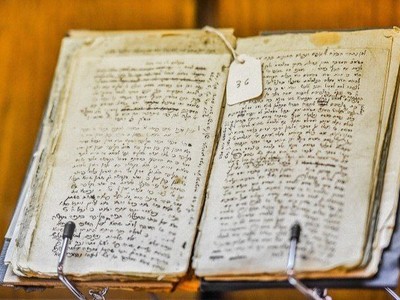
Topic of the day: Lubavitcher Rebbe Library
Community
Part One: From the Alter Rebbe to the Rashab Generation✨ From the very beginning of Hasidism, the book was not just a "textbook". It became a source of light, life, and spiritual continuity.Each generation of Lubavitcher Rebbe gathered around them not only Hasidim, but also a library — a collection of books and manuscripts that reflected their inner world, the way of service and historical mission.🔹 Alter RebeRabbi Schneur-Zalman from Lyad📚 It is known thatAlter Rebehad a library of several hundred books — an extraordinary rarity for Russia at the end of the 18th century.In 1798, during his arrest, about a hundred volumes were seized from the house: the authorities checked whether they contained “ideas dangerous to the state”. Hasidic books were seen as a potential threat to the Russian Empire.🔥 In the last years of his life, Alter Rebe endured two hard blows.In 1810, a fire destroyed part of the library, including the handwritten manuscripts of the Shulchan Aruch.And in 1812, fleeing the Napoleonic invasion, he was forced to leave books and manuscripts that could not be returned.🔹 Mitteler RebeRabbi Dov-Ber📖 Having moved to Lubavitches,Mitteler Rebehe built a house, a synagogue, and a new library.After the search in 1826, official documents recorded that he owned 611 volumes. By the standards of the time, it was a collection comparable to a “national library” in miniature.🔹 Tzemach Tzedek📚 It was in timesTzemach Tzedekthe library began to grow rapidly. He collected not only Hasidic works and manuscripts, but also books from all branches of Jewish wisdom — Halakhah, Kabbalah, philosophy and the Talmud. From this period, the library was already a real treasury of knowledge.🔥 However, she did not escape the ordeal. Several fires in Lubavitches destroyed part of the books, and after the death of Tsemakh Tzedek, part of the congregation was distributed among the heirs.🔹 Next Generations📜 Each of the following Rebbe contributed: Maarash,Rashab— everyone had their own collections of books and manuscripts, which were carefully passed down from generation to generation.The story was unmerciful: wars, fires and revolutions again and again threatened the fate of the holy library. But thanks to the dedication of the Rebbe and the Hasidim, the meeting did not disappear.📚 So the tradition was formed: each Lubavitcher Rebbe had his own library, and each subsequent one became larger and richer than the previous one. It was not just a collection of books, but a living link in the transmission of Torah and Hasidic thought, which united the Chabad generation and prepared the ground for the grand library that we know today in770N o t a r ySource:Lubavitcher calendar
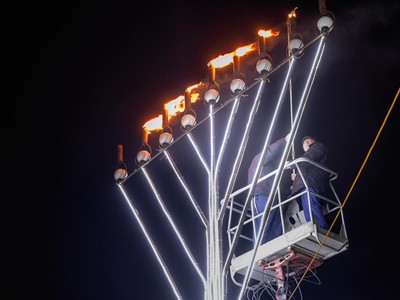
Seventh candle in Babi Yar
Community
At the end of Shabbat,after its completion,December 21/ 1 tevet, we ignitedthe Seventh Hanukkah Candle/Babi YarN o t a r yIn a place where silence has memory and the earth knows names.The light of Hanukkah is not loud here — it is steady.Not a challenge, but a testimony.Not a gesture, but a responsibility to remember and live.After the end of the Sabbath, the holiness of time turned to weekdays —and it is here that this light sounds especially:memory does not fade, life goes on,and light finds its way even through darkness.We sincerely thank the co-organizers —represented by the directorBabyn Yar National Historical and Memorial Reserve,Ms. Roza Tapanova,as well as all those who joined this evening to share memory, silence and light.We remember. We bring light. We live.

Psychologist's Tips: A Friend for All Seasons
Community
Psychologist's advice:Imagine you have a friend. A friend at all times. A friend who will endure. Your broken heart will endure. Your creative crisis. Your nightly anguish. Your doubts. Your career failure. And even your success. And your happiness. A friend who gives you strength. And resistance. Which keeps secrets. Knows all your fears, but will never use them against you.The mother of such a friend is happiness. And a great honor.I was five. My grandfather, Venadiy Mykolayovych Chekalov, taught Russian language and literature at school. First of September. Ruler. The girl leads the solemn part. And in the final, I had to go out with flowers and read a monologue from future first-graders who are still kindergartners. Such an irony from a girl who went to kindergarten only on documents, but she read the poems perfectly. Corruption, corruption everywhere.And now comes the time of my departure. I fall into a stupor. I feel like I'm going to stop breathing. The manager drags me to the stage. The air leaves my lungs and I start to scream. Howl. Grandma looks away. Grandpa was confused. All eyes are on me. Everyone knows who I am. And everyone is wondering how this action will end. Smiles Someone is pointing a finger. And only one person took my hand. A ten-year-old girl, a complete stranger to me: "Do you want to go together?" And we left. First, drink water from the fountain. And then to the stage. She was next to me and held my hand. Although I didn't even know her name.Time passed very quickly. I grew up. I studied. I fell in love. I learned to live. I went on stage hundreds of times. She was defeated hundreds of times. And she won hundreds of times. I lost the people I loved. And I found love in myself. I don't know a lot of things. There's a lot I don't know. I am poorly versed in most scientific issues. But I did the most important thing. I was able to grow a friend inside me who would always take my hand and say, “Let's go together!”The world is full of people who will tell me that I will never be able to. The world is full of people who will say I'm doing stupid things. People who don't like the way I cook. How I write. How I look. How I live. Who consider my dreams worthless. But I always take my hand and say, "Let's do it together!".The secret to a happy life is simple. Do for yourself what you would do for a best friend. Holding hands when it's scary. Pamper with gifts. Feed with delicious food. Let them get enough sleep. Share your impressions. Trust. Support. Hug. Be proud of success. And comfort in grief. Understand what makes you happy. To distinguish between love and pornography.To love yourself is to learn to rely on yourself. Listen to yourself. And only by becoming such a friend for yourself, you will be able to be friends with others. And to love others.source: InstitutPsihoterapiiResurs
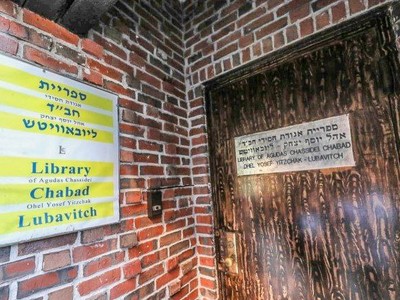
Topic of the day: Lubavitcher Rebbe 📖 Library
Community
Part 2The Library for Rajac and Our Rebbe✨ If in the first generations of the Lubavitcher Rebbe, the library was primarily the "soul of the house", then for the Rebbe of Rajac (Rabbi Yosef-Yitzchak), and later for our Rebbe, it became the heart and center of the entire HaBaD movement.🔹 Start of a new library📚 In the 1920s, after the communist authorities in Moscow confiscated Rashab's library, Rebbe Rajac began to create a new collection.In 1925, he purchased about 5,000 extremely rare volumes from the famous bibliographer R. Shmuel Wiener. They became the "heart" of the future library.✈️ Books they don't part withWhen Rabbi Rajac was deported from Soviet Russia, he firmly stated: he would not leave without books.And a real miracle happened — he was allowed to take the library out.The path of the books was long: Riga → Warsaw → America.💼 Suitcases with manuscriptsA touching story has been preserved: in each journey, Rebbe Rajac invariably took with him three suitcases filled with manuscripts and holy books.Even going to Eretz Yisrael, he did not part with them.These were real “treasures in exile.”🔥 Rescue during the warWorld War II was the most difficult test.When the Nazis occupied Warsaw, much of the library remained there.📦 Some of the books were miraculously transported to New York in 1941.The other part was considered lost and was found only a decade later — in 1977.🏢 New home in New YorkWith the arrival of Rebbe Rajac in 1940, the library received a permanent home — 770 Eastern Parkway.Soon, a special room was allocated in the basement, and the books took their places on the shelves, like in a real Torah vault.📖 The Rebbe continues and expandsAfter Yud-Shvat 5710 (1950), when Rebbe Rajac passed away from this world, the library passed to our Rebbe.He turned it into the world center of Torah and Hasidic thought.🌍 The Rebbe inspired Hasidim from all over the world to send books — both ancient manuscripts and new editions.📘 Sometimes there was an exchange: the books sent were donated to the publishing house קה״ת (KEAT).🏠 In 1968, a neighboring building next to the 770 was purchased — specifically to house the rapidly growing collection.✨ Thus, the library became not just a historical archive, but a living symbol of the Rebbe's connection with the entire Jewish world.It was no longer a personal collection of books, but a common treasure of all the Lubavitcher Hasidim.Source:📖 Lubavitcher calendar
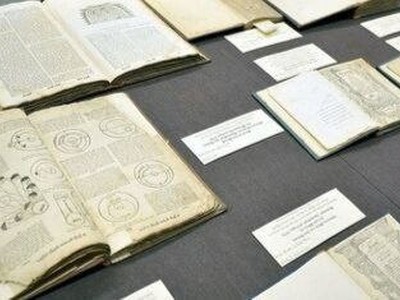
Topic of the day: Lubavitcher Rebbe Library
Community
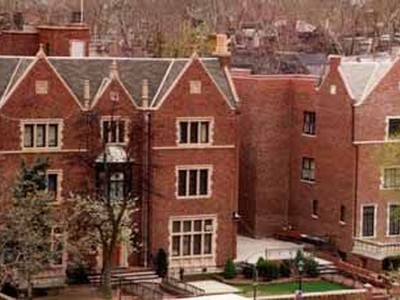
📚 Part 3Schneerson Library in Russia✨ There is a special chapter in the history of the Chabad library — full of pain and hope. We are talking about the so-called "Schneerson Library", which still remains in russia. 🔹 How books ended up in Moscow📖 Back during the First World War, Rebbe Rashab (Rabbi Sholom-Dovber) was forced to leave Lyubavichy and move to the city. To save the priceless books, he sent the library to Moscow for safekeeping. There they had to wait for his return.⚠️ But history ordered otherwise: soon a revolution broke out, the Bolsheviks came to power, and all private vaults were nationalized. Thus, the holy library fell into the hands of the Soviet authorities and entered the funds of the Lenin State Library. 🔹 Rajac Rebbe's Struggle📚 Rebbe Rajac, the son of Rashab, again and again appealed to the Soviet authorities with requests and petitions to return the library. But the Communists were steadfast: the books were declared "the property of the people"Since then, the Hasidim have called it "Pidyon Shvuyim" — the liberation of prisoners. After all, in their eyes, the holy books were in a real exile (exile). 🔹 After the fall of the avg🌍 In the 1990s, after the collapse of the Soviet Union, Chabad and the US government began to actively demand the return of the library. The Rebbe spoke with particular pain:> “These are not just books. These are the sparks of holiness that languish in the captivity of strangers.”the Russian authorities promised to look for a solution, but in practice almost nothing has changed... What’s today? 🏛️ Today, part of the collection is stored in the Russian State Library. The other part is in the Jewish Museum and Tolerance Center in Moscow.📌 But for Chabad, this does not solve the problem. After all, books should not be museum exhibits torn away from their real home — 770 in Brooklyn.To date, the United States and Chabad have demanded the return of the library, but russia continues to refuse. Unfinished Liberation 🔹 Symbol✨ This story has been going on for over a hundred years. For the Hasidim, it is a symbol: as long as the books remain in exile, the very mission of the Chabad is not completed.Hasidim around the world believe that the time will come, and the holy books will return home — to the library **"Ohel Yosef Yitzchak – Lubavitch"** in New York. ⚡️ Thus, the "Schneerson Library" in russia remains not only a historical fact, but also a living pain and hope of the entire Chabad. ⚖️ In the early 2010s, the case reached the American courts. A court in Washington ruled:**Russia must return the Schneerson Library to the United States.**But Russia refused. Then the court made an unprecedented decision:🇺🇸 for each day until the books are returned, Russia must pay a fine — ** $50,000 per day (!)**💰 Since then, this amount has been growing and has long exceeded hundreds of millions of dollars. source**Lubavitcher Calendar**
Topic of the day: Lubavitcher Rebbe Library
Community
part 4, final⚖️The Court for Books✨ There were many dramatic pages in the history of Chabad, but one of the loudest unfolded in New York in 1985–1987. This was not just a legal battle, but a real spiritual battle: who owns the Rebbe of Rajac's library — private heirs or the entire movement?🟨How the dispute began📚 After Rebbe Rayatz (Rabbi Yosef-Yitzhak) passed away in 1950, the library remained in 770 under the tutelage of Agudas Hasidei Chabad.For the Hasidim, this was natural: Rajac himself wrote in letters that the library was not personal property, but the property of the Hasidim.However, in early 1985, his grandson Berry Gur-Arieh declared that the books were his private inheritance, and even began selling the volumes at auctions. The first books of the Hasidim were forced to ransom for huge money in order to prevent their disappearance from the library.For Chabadniks, this was a blow to the heart: it was not about things, but about holy books and manuscripts, in which the Rebbe breathed.🟨PROCEEDINGS⚖️ In 1985, the case reached an American court. The process was unusual: not only legal arguments sounded in the hall, but also letters from Rebbe Rajac, where he clearly wrote that the library was the property of the Chabad movement.Before the start of the hearings, the Rebbetzin of Khai-Mushki was asked:“Whose library is this?”she replied.“The library belongs to the Rebbe,and the Rebbe belongs to the Hasidim. "These words became decisive.🙏 Throughout the meetings, the Hasidim in New York and around the world prayed, read Tehilim, and many kept fasting. It was a real "judgment day" — both in the courtroom and in Heaven.🟨Court decision — "Didan Notsakh"On 🎉 5 Tevet 5747 (1987), the court rendered the final verdict:“The library belongs to Agudas Hasidei Chabad.”The joy was immense: the Hasidim danced outside the courthouse and called friends around the world.✨ The Rebbe then said:“These books are not my ownand is not privately owned.They belong to all the Hasidim —is the treasure of all movement. ”🟨Consequences of the victory📚 Immediately after the trial, the Rebbe began a new stage — the strengthening and expansion of the library. He appealed to Hasidim around the world with a request to send old editions, rare volumes and manuscripts.🏛️ In 1989, reconstruction began: the neighboring building was merged with the library, a transition was made from 770, and modern storage and cataloging facilities were created.In 1992, the library opened to researchers, and in 1994 an exhibition hall was created for the general public.✨ "Court for books" has become a symbol of:it was not about property, but about holiness and fidelity to the Rebbe's work.Since then, the library has not lived like a museum,and how the heart of the Chabad lives is open to the entire Jewish people.Source:Lubavitcher calendar
Light of Hanukkah in Small Communities of Ukraine
Community
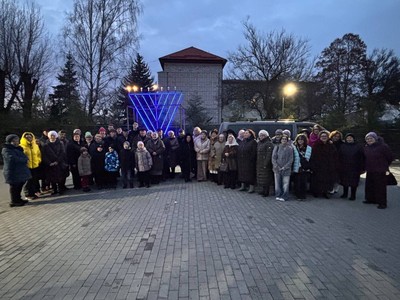
This year, the light of Hanukkah hit the road again.Representatives of our community visited small Jewish communities of Ukraine to personally congratulate on the holiday, light candles and share the joy of Hanukkah nearby — not from afar, but with their hearts.Agenda of"Hanukkah Unites Hearts", founded many years ago by Moshe Reuven Asman, continues to live and unite — communities, people, generations.✨ A special feature of this year was the participation of adolescents from the JYK teens project.They didn't just leave — they carried the light.Hanukkah is about warmth, presence, and continuation.For small communities.So that everyone knows: they remember him.
"Didan Notsakh"
Community
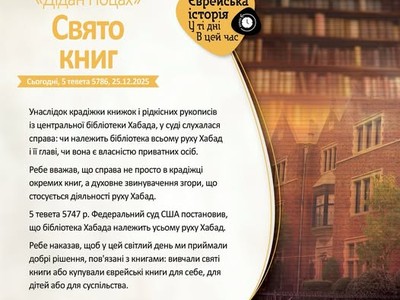
"Didan Notsakh" literally means "ours has won". This is a special day in Hasidic history, which is celebrated by 5 tevet.What has happened?In 1987, the trial of the Lubavitcher Rebbe Library in the United States concluded, and the Court found:📚 books and manuscripts do not belong to an individual, but to the entire HaBaD movement.The decision was a spiritual victory: knowledge is not the property of the unit, but the heritage of the people.❓Why it's a holiday of booksA book in Judaism is not an object, but a bearer of light.The Torah, the Hasidic texts, the Rebbe's letters are a chain of generations.The victory was not legal, but valuable: the truth wins when it is revealed to everyone.❓As notedenhanced study of the Torah and Hasidic texts; book exhibitions, paint brands;emphasizing the idea: "the book should live among people".❗Meaning of the dayIf something belongs to the truth, it cannot be closed.Books must breathe, and knowledge must go into the world."Didan Notsakh" is a day when memory, the word and the light of the mind triumph.