
Our dates: 29 Adars
Community
📌29 Adar 5626 (March 16, 1866) — Yorzeit (anniversary of the departure from this world) Rabbi Shlomo ha-Kohena from Radom.His teachers were Rabbi Aaron from Kutno and Rabbi Abraham from Petrikub, and he himself was a Hasidic Rabbi Meir from Apta, Rabbi Fishele from Strikov and Rabbi Joshua from Pshedbuzh. In 1843, Rabbi Shlomo became a rabbi in the town of Radom, which became one of the leading centers of Hasidism with thousands of followers.The last Radom rabbi died with his son-in-law in the Warsaw Ghetto.📌29 Adar 5627 (March 11, 1861) — Yorzeit Rabbi Yekutiel Zalman Voles, son-in-law of the second Rebbe — Rabbi Dov-Ber (Mitler Rebbe).Rabbi Yekutiel, grandson of the famous Rabbi Levi-Itzhak from Berdychiv, was married to Rebbetzin Baila, daughter of the Mitler Rebbe. Their wedding took place in the town of Zhlobin, located halfway between the hometowns of the bride and groom — Berdychiv and Lyady. In the Hasidic Mais, this event entered as the "Great Wedding in Zhlobin".source: chabad.odessa

Our dates:1 Nisan
Community
📌1 Nisan (3761 BC) — Creation of man.The Talmud gives two opinions on the time of the creation of man by the Almighty. According to Rabbi Eliezer, the world was created in the month of Tishrei, and Adam and Hawa (Eve) were created 1 Tishrei. According to Rabbi Joshua, the world was created in the month of Nisan, which the Torah calls the first of the months. The Hasidic sages explain this contradiction as follows: the physical body of man was created in Tishrei (see 1 Tishrei), but the idea of creating man appeared in Nisan.📌1 Nisan 1948 (1813 BC) — Birthday of our forefather Abraham.📌1 Nisan 2048 (1713 BC) — Birthday of our forefather Isaac.📌1 Nisan 2108 (1653 BC) — Birthday of our forefather Jacob.📌1 Nisan 2123 (1638 BC) — Yorzeit (the anniversary of the departure from this world) of our forefather Abraham.📌1 Nisan 2228 (1533 BC) — Yorzeit (the anniversary of the departure from this world) of our forefather Isaac.📌1 Nisan 2255 (1506 BC) — Yorzeit (the anniversary of the departure from this world) of our forefather Jacob.The Talmud says that all three of our forefathers were born and departed from this world in the month of Nisan. All of them were buried in the "city of the Patriarchs" of Hebron, in the Machpelah Cave, which Abraham bought from local residents for 400 large trade shekels (at modern prices — more than $100 million).📌1 Nisan 2448 (1313 BC) — The First Commandment.On Nisan 📌1, two weeks before the Exodus from Egypt, Moses and Aaron received from the Almighty information about the structure of the Jewish calendar and the first commandment, which ordered to start counting the months from Nisan, and to determine the beginning of each month by the birth of a new month.📌1 Nisan 2449 (1312 BC) — The construction of the Portable Temple (Mishkan) was completed and its consecration began.Over the next 12 days, the heads of the 12 knees sacrificed to the Almighty (the first to sacrifice was the head of the tribe of Judah, Nahshon ben Aminadab). Aaron and his sons began their service in the Temple as ko 'enas.📌1 Nisan 2449 (1312 BC) — Death of the sons of Aaron Nadav and Avi 'u.On the same day, during the sacrifice in the Portable Temple (Mishkan), the sons of Aaron Nadav and Avihu were killed. “And the sons of Aaron, Nadab and Abihu, each one his censer, and they put fire on them, and put incense on him; and they brought before the Lord a strange fire, which he commanded them not” (Shmini 10:1–2).The death of two prominent people of that generation — Nadava and Avia — opened another feature of the Mishkan to the people: being in a place where the Divine Presence is revealed with special force requires the highest degree of responsibility from a person.The eminent Kabbalist Rabbi Yitzhak Luria Ashkenazi (Arizal) said that Nadav and Avigu had souls of a very high level, and after their death these souls were given to the son of Elazar (and grandson of Agaron) Pinchas, who later saved the people. Later, the souls of Nadav and Avigu belonged to such prominent people as the prophet Elijah (Elijah the prophet), the prophet Shmuel (Samuel), the prophet Elisha, the king of Judah Hezekiah, Rabbi Matityagu ben Yochanan (the father of the Maccabi brothers and the first leader of the rebellion), Rabbi Akaviya ben Mahalalel, Rabbi Yochanan ben Zakkai, Rabbi Akiva, Rabbi Abaye (one of compilers of the Talmud) and others.source: chabad.odessa

Our dates: 2 Nisan
Community
📌2 Nisan 5680 (March 21, 1920) — Yorzeit (the anniversary of the departure from this world) of the fifth Lubavitcher Rebbe — Rabbi Sholom Dov-Ber (Rabbi Rashab).After his father, the fourth Lubavitcher Rabbi, Rabbi Shmuel, left this world in 1882, Rabbi Rashab led the Chabad movement. During the 38 years of his leadership, he wrote and delivered more than 2,000 mimorim (Hasidic sermons) and founded the unique yeshiva system "Tomhei tmimim", combining the study of the "body" of the Torah (Tanakh, Talmud and legislation) with the "soul" (bondage).The First World War forced the rabbis and their entire family to evacuate from the Belarusian Lubavitchers, and the revolution and civil war forced them to move further and further to the southeast. The great sage and scientist left this world at the end of Saturday, the weekly chapter of Vayikra, on the first day of the week (Sunday) at half past four in the morning.It happened in Rostov-on-Don, and all the Jews of the city took part in his funeral. The Rebbe was buried in the old Rostov cemetery. In 1940, the authorities wanted to demolish the old cemetery, and the rabbi's grave had to be moved to a new cemetery.source: chabad.odessa

Our dates: 3 Nisan
Community
*3 Nisan5655 (March 28, 1895) — Yorzeit (anniversary of the departure from this world) Rabbi Levi-Itzhak Slonim, son of Rebbetzin Menuhi-Rachel, daughter of Mitler Rebbe.Rabbi Levi-Itzhak, the grandson of the second Lubavitcher Rabbi, was born in Lubavitcher in 1883 and at the age of 12 went with his family to Eretz Yisrael.For many years, Rabbi Levi-Itzhak was the head of the Hebron Jewish community, as well as the head of the Chabad Hasidim in the Holy Land. Several times he went to Russia to see the fourth and fifth Rebbe — Rabbi Shmuel (Rabbi Ma 'arash) and Rabbi Sholom Dov-Ber (Rabbi Rashab).He is buried at the grave of his mother, Rabbi Levi-Itzhak, in Hebron, next to Rebbetzin Menuhi-Rachel.

HEBREW INSTRUCTIONS : THE FIRST 13 DAYS OF NISAN
Community
On each of the first thirteen days of Nisan, it is customary to read a passage from the Torah, which tells about the sacrifice that the head of one of the tribes of Israel made on that particular day. The fact is that on the 1st of Nisan, almost a year after the exodus from Egypt, the consecration of the portable Temple - the Mishkan, built according to the instructions of Moshe Rabein and the instructions he received directly from the Most High - began. The consecration lasted for 12 days, during which daily sacrifices were made in the Mishkan, brought by the head of one of the tribes of Israel.In memory of this, it is customary during these 12 days to read excerpts from the Torah, which list the sacrifices of the heads of the twelve tribes of Israel.Thus, the 1st Nisan is read from the words "And it was on the day when Moses finished erecting the Tent of Revelation..." to the end of the list of sacrifices of Nahshon ben Aminadab from the tribe of Judah ("Naso", 7:1–17);The 2nd Nisan is read with a passage beginning “On the second day…” (Naso, 7:18–23) about the offering of Nathaniel bin Tzuar from the tribe of Issachar;On the 3rd of Nisan — “the third day…” (“Naso”, 7:24–29), etc.Each day after reading the relevant passage, the following text is added:"May it please You, God, my God and the God of my fathers, to sanctify today, by Your great mercy, the holy souls that are renewed like birds, and coo, glorify and pray for the holy people of Israel. Lord of the world, bring these holy birds into the holy place, as it is said: "the eye has not seen G-d but You"... May it please You, G-d, my G-d and the G-d of my fathers, that if I, Your servant, from the knee (they call the knee whose head brought the offering on this day; on the first day they say "from the knee of Yehuda"), I read in the Torah the chapter of today's leader (knees), then may all the holy sparks and all the holy light contained in this knee sanctify me, so that I may understand and comprehend Your Torah and with fear of You do Your will all the days of my life - I, and my descendants, and the descendants of my descendants forever and ever, omen."This passage is read by everyone, including Levites and koiwens (although the head of the tribe of Levi did not participate in the consecration of the altar), because, according to the Cabal, this text applies to all Jewish souls.On the 13th of Nisan, the final part of the chapter "Naso" is read, starting with the words "Here is the consecration of the altar", which summarizes all the sacrifices made, and then the first four verses of the next chapter "Behaaloth", which refers to the temple of the Menorah — in honor of the tribe of Levi, who did not participate in the sacrifices during the consecration of the Mishkan. But the passage "Let it be pleasing to You..." is not read on this day.THIS MONTH IS YOUR FIRST“This month is the beginning of months for you,” the Torah says. This means that all other months must be counted from Nisan, so the month of Tishrei, in which the countdown of the new annual cycle begins, is the seventh month, and the first is Nisan.Why so? Before the Jewish people came out of Egyptian slavery, time was counted from the creation of the world, from the moment of its renewal after the Flood in the days of Noah (so, for example, in the Torah it is said: "Shem was a hundred years old when he gave birth to Arpaschhad, two years after the Flood"), from the birth of Abraham, from the day when the Most High made a covenant with him - brit bein ga-betarim (for example: "after the end of four hundred and thirty years, in this the very day..."). But after the Jews came out of Egypt as a free people, they began to count the time from the day of deliverance, because the day of deliverance is more important than a birthday or any other event. This is what the words of the Torah say: "This month is the beginning of months for you."The sages, explaining this change in the frame of reference, tell the parable of the king. When his son was born, he declared his birthday an annual holiday. But then this son was captured by the enemies and spent many years with them, after which the day when he finally freed himself, the king declared a new great holiday.So with us — before the Jews came to Egypt, they counted the time from the beginning of their exile and enslavement (from the day of the conclusion of the brit bayn Ha-betarim, when it was determined that slavery would last four hundred years). After they came to Egypt, were enslaved, witnessed the miracles performed for them by the Almighty, and were released, the point of reference became different, as it is said in the Torah: “This month is the beginning of months for you.”BIRCAT HA-ILANOTMy friends and I... sorry, our people have a custom of thanking the Almighty for everything. Among the "everything" are flowering trees, so there is a special blessing that is said only once a year and only when a tree in bloom is first seen. The Rambam writes: "Anyone who in the month of Nisan sees flowering trees with swollen buds should say the following blessing: "Boruch Ato A-doi-noi E-lo-gjei-nu, Melech gjo-oilom, she-loi hisar be-olomei klyum u-voro vei briyeis teiveis ve-iloneis teiveis, le-eioneis bojem bnei odom" ("Blessed are You, God, our God, King of the universe, who created the perfect world (literally: "the world without anything" - note) and created in it beautiful creatures and beautiful trees for the enjoyment of the sons of men")".This blessing can be pronounced later, not in Nisan, but in the light version, without mentioning the name and title of the Almighty.What you need to remember is that this blessing is not pronounced on Saturday and holidays, and on weekdays it is pronounced only on fruit trees (at the same time, in the field of view of the speaker, there should be at least two flowering trees), and it does not apply to trees that do not give edible fruits. At the same time, these trees should not be eagles, that is, older than three years.
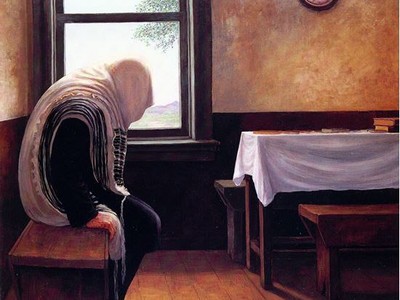
Theme of the day: 🔥 The Voice of the Soul: How Fire Melodies Were Born in Hasidic Prayer
Community
In the world of Chabad, prayer was never just a “duty.” It was Labor — a difficult but inspiring work of purification of the heart. And the main instrument in this work has always been the nigun — the sacred chant, capable of expressing what words lack strength for.We have collected for you unique testimonies about how great teachers and simple Hasidim prayed, turning an ordinary room into a resonator of the Divine presence.The Burning 🕯 Face: Reb Chaim AbrahamReb Chaim Abraham, son of Alter Rebbe (the founder of Chabad), was known for his phenomenal focus. One of the Hasidim described his first meeting with him in Lyubavichy (summer 1843):“I stood stunned as he sat with his eyes tightly closed and his face literally burning. He said every word of prayer as if he were weighing precious stones. And from time to time a sang burst from his chest — “Nigun paulah cliot va-lev” (a melody that opens the gut and heart). It was so powerful that I trembled at what I saw.”🚒 Prayer that was not stopped by the fireRabbi Aaron from Kremenchug (grandson of Alter Rebbe) had a subtle, musical voice. There were legends about his deep immersion in prayer.One day, a fire broke out in his house. People screamed around, took out furniture, neighbors tried to extinguish the flames. At this time, Rabbi Aaron was locked in his room. When theflames were already approaching, people broke down the door and literally carried him out through the window.The most amazing thing is that he did not interrupt the prayer for a moment. Only after finishing "Amida", he opened his eyes, looked around and sincerely asked in surprise:“Where am I and what's going on here?”So deep was he in another world.🎼 Anatomy of a Niguna: Three Steps of SpiritTheFifth Lubavitcher Rebbe (Rashab) often prayed to the ancient chant, which consisted of three parts — "bavot". Each part is a separate stage of the ascent of the soul.Bottom step:Deep intellectual concentration. Music conveys the process of immersion in mystery.Middle step:Emotional explosion is the joy and thrill of realizing the closeness of the Creator.Highest step:"Kesuf" is an unquenchable thirst and longing for endless light, a desire to completely dissolve in G-d.Witnesses said that when the Rebbe sang this tune during the morning prayer, his extended voice penetrated into the innermost corners of the hearts of all those present — and people cried and changed for the better.💧 Nigun as a way to returnReb Gershon Ber from Pohar, one of the old Hasidim, recalled with tears:“The first Hasidim of the Alter Rebbe came to true faith precisely through music. The chants affected them more than the deepest lectures. The nigger opened their hardened hearts.”Reb Gershon himself complained that he could not sing, considering it his "punishment", because the melody is the shortest path from the earthly to the heavenly.Guidance for usPraying with a nigun is not an aesthetic. This is a way to break through the wall of everyday life. Even if you don't have Rabbi Aaron's voice, a quiet and sincere chant can change the whole inner mood of your day.Source:📖 Lubavitcher calendar
📜 27 Adar I: The Epoch Changing Event
Community
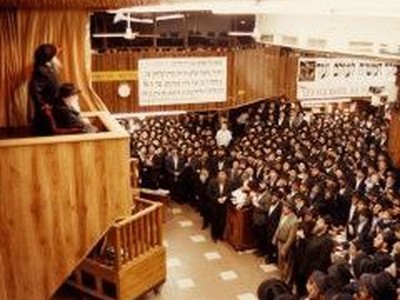
Chronicle of events, foreshadowing and faith of the Hasidim in 5752 (1992).Incidents27 Adar I 5752became one of the most dramatic moments in the history of Chabad. On this day, while inOeli(place of rest of the previous Rebbe),Lubavitsky Rebbesuffered a stroke, a life-changing event770and the format of the Rebbe's communication with the world for the next two years.🔍Signs and preparation: what preceded the event?A few months before 27 Adar, the Hasidim noticed the unusual behavior of the Rebbe, which was later interpreted as preparation:🔹Bitul BESHISHIMSince the beginning of the month, Adar Rebe has spoken almost every evening (sihot), calling for boundless joy. He emphasized that in a leap year (60 days of Adar) everything negative is canceled according to the principleBitul BESHISHIM— dissolution at sixty.🔹Mysterious wordsOn the last Saturday (chapterVayakgel) The Rebbe spoke of a temporary decline:“For a moment I have left you,” which is only needed to be followed by a colossal and eternal ascent.🔹Order in the officeThe Rebbe began to actively organize his office: he returned books to the library, burned notes that had accumulated over the years, and accelerated the publication of previously unpublished works.🔹About 770The Rebbe asked his secretary to secretly “sell” the house and everything in it. But then he added:“Let it remain so until the coming of Moshiach. And when the day of expansion and restructuring comes, let them not spare money and do everything properly."📅Same day: 27 AdaraThe day before, on Sunday26 Adara, while handing out dollars, the Rebbe suddenly asked:“How long is the queue?”In the evening of the same day, the Rebbe called Dr. Feldman. The doctor detected an illness and asked the Rebbe not to go to Oel the next day. The Rebbe's answer was short:"And what will the Hasidim say?"On Monday, there was an attack in Oel. When the news reached Brooklyn, thousands of people headed to770. In the evening, when the news of the improvement came, the hall erupted in nigun dances"Der Rebbe of Gesunt"("The Rebbe is healthy").🏗The "Balcony" era and communication through silence (5752–5754)WITH1992 to 1994the communication format has changed. The Rebbe no longer gave public talks, but his presence was felt even more strongly.🏛Architectural changesIn the main hall770built a special prayer room and famousBalcony, so that the Rebbe could see the congregation and participate in the prayers.🕊Miracles and answersThe Rebbe continued to answer the Hasidic's questions by shaking his head. There are known cases when he predicted safety during the radiation accident near St. Petersburg and the hurricane in Miami - simply by nodding to the sign of the absence of danger.🎶"Yehi Adonainu"During this period, the Rebbe actively encouraged the chanting of the proclamation:"Yehi Adoneinu Moreinu ve-Rabbeinu Melech a-Moshiach le-olam va-ed".The Hasidic believed that physical weakness was only part of the process of revealing Moshiach.🕰The last momentsThe last time the general public saw the Rebbe was on the balcony14 of Heshvan 5754(October 1993). After that, the Rebbe stopped going out to the community.(article about 14 Heshvan on our channel here)One of the secretaries recalled that the Rebbe once seemed very agitated. The doctor asked him:"Does the Rebbe worry about what will happen to Chassidim and Chabad institutions in the future?"The Rebbe nodded his head.🕯A legacy of faithDespite the pain and difficulties of those years, the faith of the Hasids in the prophecy of the Rebbe about the imminent Liberation (Geulu) did not weaken. The Rebbe promised:"There will be healing in joy and singing."And today, thousands of Hasids all over the world live in anticipation of the fulfillment of this promise."יחי אדוננו מורנו ורבינו מלך משיקים לועמון ועד!"📸 In the photo:27 Adar 5752, a few hours before the heart attack.📖 Lubavitch calendar
We are preparing for Pesach
Community
Jewish holidays are not only a reminder of the events of the past. They create a living connection between generations, a kind of thread that connects today with the events of a thousand years ago. This is especially clear during Pesach. When Jews gather around the festive table and readHaggadah, they don't just remember the exodus from Egypt — they seem to relive its meaning and try to understand what freedom means for a person today.We used to call Pesachthe holiday of Freedom. But what is freedom? Once upon a time, the Marxist definition was popular: "freedom is a conscious necessity." However, life has shown that this is not enough. In totalitarian societies, people often live by strict rules, submit to circumstances, and are afraid to speak and act freely. They can understand the necessity of such behavior, but it is impossible to call such a life freedom.Jewish tradition offers a different understanding.Freedom is the ability to make informed choices.But such a choice is possible only when a person understands what he lives for and what he strives for. If a person does not have clear guidelines, his decisions become random, and he easily falls into dependence on other people's opinions, habits or stereotypes.That is why Pesach reminds:getting out of slavery is only the beginning of the journey. Physical liberation does not mean inner freedom. True freedom comes when a person begins to ask questions about the meaning of life and search for answers. For more than three thousand years, the Jewish tradition has offered such answers, reflecting on the spiritual and moral development of man.This search is especially important for people who find themselves in a new reality. Repatriation to Israel, acquaintance with another culture and society force many to reconsider their views. Some try to evaluate everything according to old, familiar standards, others seek to understand the new reality — to figure out what really needs to be changed in it, and what only seems unusual.It can help in thisJewish tradition. For thousands of years, the Torah formed a system of moral guidelines that help people distinguish between good and evil, important and secondary. These principles have not become obsolete over time. On the contrary, they help a person to free himself from internal limitations, habitual patterns of thinking and find his own way.Pesach reminds:true liberation begins within man. Sometimes it begins with a simple admission: "I don't know something" - and with a desire to search for the truth. Therefore, the night of Eastersederis not only a festive meal, but also a time for reflection on the fate of the people and on one's own life. At this moment, everyone can feel that the story of the exodus from Egypt continues today - in the personal desire of man for true freedom.source:Toldot

Question to the rabbi: Why are the words matzah and chametz so similar?
Community
The word matzah is spelled with the letters: mem, tzadi, and hey. And the word chametz is het, mem and tsadi. That is, two letters are the same, but one is different: in one word there is the letter gay, and in the other - het. At the same time, even the form of these letters in the Hebrew alphabet is very similar: they differ only in a small detail.Sages paid attention to this symbolic nuance. The letter gay has a small "clearance" in the upper part, as if leaving a hole. In the traditional interpretation, this is a hint about the possibility of a way out — a way to make amends and return to the right path. Even if a person has made a mistake, he always has the opportunity to change his life and get closer to the Almighty.The letter hat looks almost the same, but its upper part is completely closed. It forms a closed space without an "exit". The sages saw this as a symbol of the spiritual state when a person gets so used to wrong actions that he stops noticing the possibility of correction.The similarity of these words also highlights the fine line between the two states. Sometimes a small detail—one decision or action—can change the direction of a life. In a spiritual sense, matzah symbolizes simplicity, modesty and willingness to follow the will of the Most High, while chametz is often associated with pride and excessive "inflating" one's self.The similarity of these words reminds us that there is sometimes a very thin line between right and wrong. A small difference - just one letter - turns forbidden into permitted and vice versa. That is why during Pesach, Jews are so careful not to leave chametz in the house, and they treat matzah with special respect.This linguistic nuance shows how deeply language, symbolism and spiritual meaning are intertwined in the Jewish tradition. Sometimes even one letter can open a whole world of ideas.source:toldot.com

Preparing for Passover: Part 1.
Community
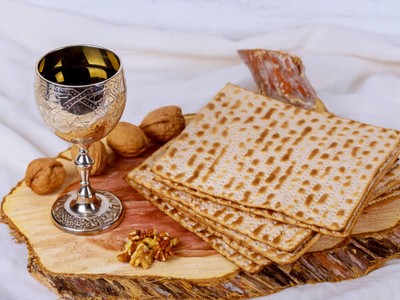
Preparation for the holidayPassover is the holiday of the Exodus from Egypt. In 2026, it will be celebrated from April 1 to 9 (outside Israel).In the days of Pesach, we celebrate freedom from slavery - both physical and spiritual. The holiday itself lasts a week, but preparations for it usually begin long before its arrival.Anything that undergoes fermentation, such as sourdough, is called chametz. It is forbidden not only to use it, but also to keep it in one's possession during all days of Pesach.Chametz includes:*bread,*cookies,*pasta products,* kvass,*perfumes (if they are infused with grain alcohol) and other products.The only bread permitted on Passover is matzah, which is made in strict compliance with Jewish law.Eating matzah on the first two nights of Passover is a commandment.The ban on eating chametz comes in the morning, on the eve of the holiday. By law, chametz is prohibited in even the smallest amount, so no food, mixture, or drink containing even a trace of chametz can be consumed.In addition, one cannot even use items containing chametz, for example, a paste based on flour.To avoid accidental violations, the best way is to buy products marked "Kosher for Pesach" and the rabbi's seal.The holiday basket can include:wine,meat and dairy products,spices and seasonings,soft drinks - provided they have the rabbi's seal and the "Kosher on Pesach" mark.next will be........

12 facts about the month of Nisan that every Jew should know
Community
Nisan is the spring monthNisan is one of the few months mentioned in the Torah by name. God calls it "Chodesh ha-Aviv" - "The month of spring." The need to ensure that Nisan always falls in the spring is the basis of the rather convoluted Jewish calendar, including the unusual system of leap years.It is the first month of the Jewish calendar"This month shall be your first among months," says God to Moshe. Interestingly, the first of Nisan is only one of the four "heads of the year" listed in the Talmud; they also include, for example, the first Tishrei, known throughout the world as Rosh Hashanah, the Jewish New Year.G-d brought us out of EgyptAfter 210 years of suffering in Egyptian slavery, the Almighty freed His people. This happened in the month of Nisan. According to the Midrash, Moshe told the people: "Look at the kindness and care with which the Most High surrounds you, bringing you out of Egypt in a month of comfortable weather, when there is no heat, no cold, and no rain."Passover begins on the full moon of NisanThe Passover holiday, which is celebrated every year in memory of the exodus from Egypt, begins on the 15th of Nisan. Perhaps, this is the most famous Jewish holiday. At the very beginning, a special traditional evening is held - the Seder - during which matzo and maror (bitter herbs) are eaten, four glasses of wine are drunk and the exciting story of the miraculous Exodus is told.It is also a nameInterestingly, Nisan is one of only two Jewish months whose names can be used as names. In addition to the fact that the name Nisan has long been quite common among men, the names Aviv and Aviva have become popular in modern Hebrew. Another month that children are named after is Sivan, a name often given to girls in Israel. Fun fact: Passover is the only Jewish holiday whose name is also used as a (male) name.Month of miraclesThe word "nes" means "miracle", so Nisan is often called the month of miracles because of the similarity in spelling of these words. Some rabbis said that seeing "Nisan" in a dream portends "miracles of miracles" to a person in the future.full text on our website:https://jewishukraine.info/
Question of the day: Why exactly on Pesach is a glass poured for the prophet Elijah?
Community
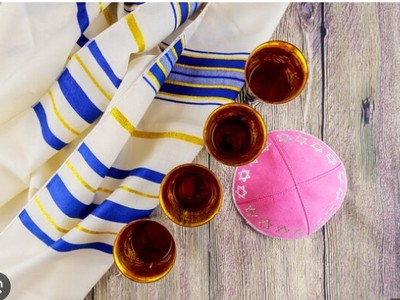
It is on Pesach, the holiday of Liberation, that we are obliged to drink four glasses of wine - in accordance with the four promises that the Most High made to the children of Israel in Egypt regarding the Exodus: "I will bring out, I will save, I will deliver and I will take" (Shemot 6:6-7).Are we required to drink the fifth cup? The opinions of the sages were divided. We don't drink it on the same evening, but we pour it "in honor of Elijah." I have heard it explained that it is precisely because of the doubt as to the status of this cup that it is called the "cup of Elijah." After all, it is this prophet who must solve all the doubts in the Law that remained unresolved by the sages. Among those who study the Talmud, it is customary to decipher the word TeIKU, which means that the question remains unresolved, as Tishbi Yetaretz Kushiyot Uveaiyot - "The Tishbian (Elijah) will solve difficulties and problems."However, a common interpretation is from the Mishnah Brur's commentary: by pouring the fifth cup, we express our hope that just as God led His people out of Egypt, so in the near future He will send us the final Deliverance, heralded by the prophet Elijah.And here we come to your second question. Elijah's uniqueness, even among the few who left this world alive, is that he always cared for the Jewish people. And in our time, probably, it is only known about him that he not only resides in spiritual worlds, but also continues to visit our material world. That is why he is called the "angel of Brit" (the union of circumcision), because he is present at every Brit Mile. And it is logical that he will bring us good news from the spiritual worlds.https://toldot.com/