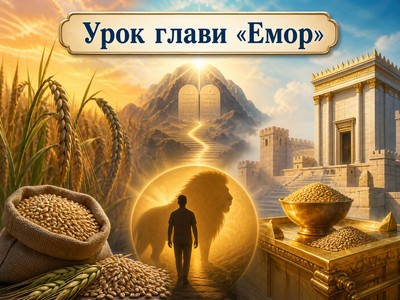
Emor Chapter 🌾 Lesson: Riding the “Animal” Inside Yourself
Community
📖IntroductionOur chapter gives the commandment to bring the Omer and count down the days leading up to it. The Torah says, “Count for yourselves… and bring a new grain offering to the Lord.”Rashi explains that this offering (mincha) was prepared exclusively from barley.❓IssueWhy was Omer brought from barley, while almost all other cereal gifts in the Temple were made from wheat? Moreover, barley is considered “animal feed”. It is strange to bring a gift to the Almighty from such a "low" product.💡ResponseThe countdown period of the Omer is the time of preparation for the Gift of the Torah. To approach this event ready, it is not enough to rely only on your lofty aspirations. The real task of a person is to attract his "animal" instincts and material inclinations to good deeds.The Torah teaches us this through barley: this cereal symbolizes the “animal soul” of man — his instincts and gross energy. By bringing barley into the Temple, we show that even these mundane forces can be tamed and dedicated to holiness.📢LessonThe way to correct the qualities of our "animal soul" begins with the principle of "avoid evil", and then goes on to "do good" — directing all the energy inherent in the natural principle to fulfill the commandments.(Based on the materials of Likutey Sikhot, v. 1, p. 253)

Our dates: Iyar 17
Community
Iyar 📌17, 5553 (April 29, 1793) — Yorzeit (anniversary of the departure from this world) Rabbi Yehezkel ben Yehuda Landau (Noda biehuda).Rabi Jehezkel was born in the town of Opatów in an honorable and respected family — his father was one of the leaders of the Vaad of the Four Länder (the governing body of Polish Jewry). He studied in Brody, and then headed the communities of Brody, Yampol and Prague (here, in addition to the community, he also headed one of the largest yeshivas of that time).Rabbi Ehezkel Landau is also known as Rabbi Noda Biehuda ("Known in Judea") — by the name of one of his works, but no less important is his other work "Jeheret Shalom" ("Message of Peace"). In it, he tried to reconcile two of the most prominent European rabbis of the time — Rabbi Jacob Emden of Altona and Rabbi Jonathan Eibeschitz of Prague, the conflict between whom threatened to split the Jewish people.📌17 Iyar 5560 (May 12, 1800) — Yorzeit (the anniversary of the departure from this world) Rabbi Moshe-Haim-Ephraim ben Yechiel of Sudilkov.Rabbi Moshe was born in Medjibozh in the family of Rabbi Yechiel Ashkenazi and Rebbetzin Adeli (Godle) — the daughter of the founder of Hasidism Rabbi Yisrael Baal Shem-Tov.Baal Shem-Tov loved his grandson dearly and highly appreciated his learning abilities. After the departure of his grandfather from this world, Rabbi Moshe studied with his students — Mezheritsky Magister Rabbi Dov-Ber and Rabbi Yaakov-Yosef from the Captive — the oldest student of Baal Shem-Tov.After graduation, Rabbi Moshe settled in the town of Sudylkiv, where he was the head of the community. He returned to Medzhybizh (where his younger brother, Rabbi Borukh, remained) shortly before his death.His grave is located near the grave of Rabbi Baal Shem-Tov.source: chabad.odessa

Our dates: 18 Iyar
Community
📌18 Iyar circa 3880 (120 AD) — the epidemic raging among the disciples of Rabbi Akiva ended.In the more than four weeks since Passover, the epidemic has claimed the lives of 24,000 of Rabbi Akiva's disciples. All of them were great sages and scholars of the Torah, and death befell them because, according to the Talmud, “they did not respect each other.”On the 33rd day of the counting, the epidemic stopped, and the threat of breaking the continuous chain of transmission of the Torah from Moshe-Rabein passed away (Rabbi Akiva was the head of the generation, and those who were to lead the Jewish people in the future were trained from him). This was one of the reasons that the 33rd day of the counting of the Omer (“Lag ba-Omer” in Hebrew) was declared a holiday.📌18 Iyar about 3900–3950 (II century AD) — Yorzeit (anniversary of the departure from this world) Rabbi Shimon bar Yochai (Rashbi).Rabbi Shimon bar Yochai, also known by the acronym Rashbi, along with Rabbi Meir belonged to the fourth generation of Tannai (sages, compilers of the Talmud) and was one of the most prominent Jewish teachers of law, the author of "Sifrey" — one of the books that complement the Talmud.Rabbi Shimon studied with Rabbi Gamliel II and Rabbi Joshua ben Hananiah, and then with Rabbi Akiva. Even when Rabbi Akiva was imprisoned for violating the prohibition against teaching Jewish law, Rabbi Shimon visited him and continued to take lessons from him. Rabbi Akiva greatly appreciated him and raised Rabbi Shimon and Rabbi Meir to the rank of rabbi (later they received a second laugh from Rabbi Yehuda ben Bava). In addition, the Kabbalistic books report that Rabbi Shimon was one of the incarnations of Moshe-Rabain.For harsh feedback about the Romans, which the authorities became aware of as a result of the denunciation, Rabbi Shimon was sentenced to death and hid with his son Elazar in a cave for 13 years.Rabbi Shimon was one of the greatest cabalists in history and the author of the first book on the Cabal, Zohar (before that, all cabalistic information was transmitted only orally, and all attempts to record it ended in failure. However, the manuscript of "Zohar" was found only in the XII century, and according to legend it was found in Eretz Yisrael by Rabbi Moshe ben Nachman (Ramban), who transported it to Spain, where it was published by Rabbi Moshe de Leon.Rabbi Shimon left this world on the 33rd day of counting the Omer. On the day of his departure, he gathered his students and conducted a lesson with them, where he revealed to them the deepest secrets of the Torah. At the end of the lesson, he asked them not to be sad about his departure, because it was today that he climbed to the top, to which he had been walking all his life. His second request was — on this day, in memory of him, to light a fire.Rabbi Shimon and his son Elazar are buried on Mount Meron near Safed, and several hundred thousand Jews come to Lag ba Omer there. In the same place, the largest lag-ba-omer fire, 20–30 meters high, is lit on Meron.📌18 Iyar 5332 (May 1, 1572) — Yorzeit (anniversary of the departure from this world) Rabbi Moshe ben Israel Iserles (Rama).Rabbi Moshe was born in a wealthy and respected family of one of the leaders of the Jewish community of Krakow and from childhood was distinguished by outstanding abilities (the family nickname Iserlis was formed from the word “Isroiles”, that is, the son of Rabbi Israel). He studied in the Lublin yeshiva of Rabbi Shalom Shahna and later became a member of the court (base din) in Krakow. Rabbi Rama led the yeshiva he founded in Krakow, whose students he supported at his own expense.Rabbi Moshe's greatest fame came from his book of additions to Rabbi Yosef Karo's Shulchan Aruch. The point is that, being a Sephardic Jew, Rabbi Karo compiled the book based on Sephardic traditions and customs, many of which differed from those of Ashkenazi (European) Jews. Rabbi Moshe's book contained precisely the instructions for Ashkenazic traditions. Since the Shulchan Aruch translates as "The Set Table", Rabbi Rama called his book "Map" - "Tablecloth", and from the middle of the 16th century, the "tablecloth" became an integral part of the "Set Table".Rabbi Moshe Iserles enjoyed great respect, and after his departure from this world, an inscription was made on his grave: “From Moshe to Moshe there was none like Moshe” (the same inscription is on the grave of Rambam — Rabbi Moshe ben Maimon — and there they mean Moshe-Rabain and the Rambam itself; here the inscription means “From Moshe (Rambam) to Moshe (Iserles)…”).Before World War II, thousands of Jews from all over Poland made the pilgrimage to Ram's tomb in Krakow on Lag ba Omer.Iyar 📌18, 5792 (May 24, 1932) — the engagement of Rebbetzin Sheina, daughter of the sixth Lubavitcher Rabbi Yosef-Itzhak (Rabbi Rajac), and Menachem-Mendel Gorenstein, grandson of the fourth Lubavitcher Rabbi Shmuel (Rabbi Magarash).On this day, Rebbe Rayatz uttered the Hasidic maimorah (a treatise explaining some of the tenets of Hasidism) "Shir ha-malot le-Dovid gine matov u-ma-naim".Iyar 📌18, 5764 (May 9, 2004) — the solemn introduction of new Torah scrolls written at the expense of members of the community to the Odessa synagogue "Chabad Shomray Shabos".For the first time in at least half a century, Odesa has its own "Odesa" scrolls. The festive procession, in which Jews of all ages participated, passed through the streets of the city from the yeshiva building (where the last letters in the scrolls were added) to the synagogue, where the festive hakofot took place — rounds with scrolls around the bimah (the promotion from which the Torah is read), just as it is done on the day of Simchat Torah.Iyar 📌18, 5767 (May 6, 2007) — the solemn introduction of new Torah scrolls written at the expense of members of the community to the Odessa synagogue "Chabad Shomray Shabos".On this day in Odessa, 4 (!) new Torah scrolls were completed and solemnly introduced into the synagogue — an event significant by the standards of any community. The festive procession, which was attended by several thousand people — Jews of all ages, passed through the streets of the city from the kosher restaurant "Rosemary" (where the last letters in the scrolls were added) to the synagogue, where the festive Hakofot took place — rounds with scrolls around the bim, just as it is done on the day of Simchat Torah.source: chabad.odessa

Our dates: Iyar 19
Community
19 Iyar 5053 (27 April 1293) — Yorzeit (anniversary of the departure from this world) to Rabbi Meir ben Baruch (Maharam) from Rothenburg.Rabbi Meir ben Baruch, known as Maharam, was an unsurpassed authority for European Jews, and his comments served as an important source for the compilation in the 16th century of a set of Jewish standards of life — the Shulchan Aruch.After the accession of Rudolf I Habsburg to the German throne in 1286, an additional tax was imposed on the Jews of the country, which simultaneously changed the status of German Jewry and turned them and all their property into the personal property of the emperor. The answer to this was the mass exodus of Jews from Germany. The leader of this exodus was Rabbi Meir, who was later arrested and imprisoned. Since the authorities demanded a huge sum as a ransom - one million marks, Rabbi Meir forbade the community to ransom him, so as not to set a precedent and prevent extortion by the authorities (the Talmud says that if a captive is asked for an amount that far exceeds reasonable limits, he cannot be ransomed, so as not to tempt the kidnappers with easy money). Rabbi Meir died in prison in 1293, but his remains were not released for burial until 1307, when the Jews bought them for a large sum (merchant Rabbi Alexander-Ziskind Wimpfen spent his entire fortune on this). Rabbi Meir is buried in Worms.Iyar 19, 5575 (May 29, 1815) — Yorzeit (anniversary of the departure from this world) Rabbi Menachem-Mendel of Riemann.On the maternal side, Rabbi Menachem-Mendle descended from the famous sages Rabbi David ha-Levi (Taz) and Nathan-Net Shapiro.Rabbi Menachem Mendel first became acquainted with Hasidism at the age of 11, when he was introduced to the Mezheritsky Magid Rabbi Dov-Ber, the successor of the founder of Hasidism Rabbi Israel Baal Shem-Tov. In his youth, he, along with two friends — Rabbi Yaakov-Itzhak ha-Levi Horowitz ("The Seer from Lublin") and Rabbi Israel Ofstein (Kozhnitsky Magid) — studied with the famous Hasidic tzadik Rabbi Schmelke from Nicolsburg.He then studied in Lizhensk with Rabbi Elimelech, and after the teacher's departure from this world, many of his students followed Rabbi Menachem-Mendel, who already had a reputation as a saint and miracle worker. Among his students were such prominent Hasidic leaders of the next generation as Rabbi Naftali of Ropszitz and Rabbi Zvi-Elimelech of Dinov. Every day, Rabbi Mendl tried to learn 18 pages of the Talmud, and if for some reason he did not succeed, he tried to make up for it the next day. On his desk was always a code of laws compiled by Rabbi Yitzchak ben Yaakov Alfasi (Rif), which he constantly studied and knew by heart - people in the know said that Rabbi Mendl was one of the incarnations of Rif's soul.Being an extremely compassionate person, Rabbi Menachem-Mendle spent all his money on charity, so his family had to be satisfied with bread and water.In 1812, when Napoleon invaded Russia, Rabbi Menachem-Mendel, along with his friends — the Seer of Lublin and the Kozhnytsia Magid — prayed that this war would lead to the liberation of the Jews and their return to Eretz Israel, but their request was rejected by the Heavenly Court, because they decided that this generation was unworthy of Liberation.Rabbi Menachem-Mendle passed away that same year. And in the same year, his friends — the Seer from Lublin and the Kozhnytskyi Magid — also passed away.source: chabad.odessa

Our dates: 20 Iyar
Community
📌20 Iyar 2449 (1312 BC) — after the completion of the first census of the Jews, the whole nation was divided into established tribes, clans and families and divided into four degels (literally: "flags") of three tribes each. These four degels surrounded the Portable Temple (Mishkan) on four sides, and the camp of the Levites (who were not part of any degel) was in the middle. From now on, it was in this order that the Jewish people set up camp and in the same order moved in their wanderings through the desert.It was on the 20th of Iyar that the Jewish people for the first time — by the command of the Almighty — made the transition in the order of degels and knees, also fulfilling all the other commandments established by the Almighty for the period of travel.📌20 Iyar 5597 (May 25, 1837) — Yorzeit (anniversary of the departure from this world) Rabbi Mordechai ben Menachem-Nachum of Tverskoy from Chernobyl.Rabbi Mordechai's father, Rabbi Menachem-Nahum of Tver (according to tradition, the surname was taken in memory of his ancestors from Tiberias), was a student of the founder of Hasidism, Rabbi Yisrael Baal Shem-Tov, and his successor, Rabbi Dov-Ber, the Magid of Mezheritsa. Rabbi Menachem settled in the town of Chornobyl and founded the famous Chassidic Chornobyl dynasty here. His son, Rabbi Mordechai, was married first to the daughter of Rabbi Agaron "the Great" of Karlin, and then to the daughter of Rabbi David Leikes, one of Baal Shem Tov's closest disciples. From these two marriages, he had 1 daughter and 8 sons, who led Hasidic movements in various towns of Ukraine and Russia.Shortly before his departure from this world, Rabbi Mordechai expressed his desire to be buried in the town of Anatovka, because “there is no place for idolatry and the ringing of bells will not overshadow my peace.”Many Chernobyl Hasidim died in the fire of the Catastrophe, but the cause of Chernobyl Hasidism was continued by the Skvyrsky Rabbi David Tversky, who founded a city called New Skvyr in the state of New York.source: chabad.odessa

Our dates: 21 Iyar
Community
21 Iyar5712 (May 20, 1949) — the city of Kfar Chabad (translated from Hebrew as "Chabad settlement") was founded in Israel.Its first inhabitants were Jews who escaped from the USSR, survived in the fire of the Holocaust and the crucible of Stalin's repressions. In connection with the holiday, the then Lubavitcher Rabbi Yosef-Yitzhak (Rabbi Rayats) presented the Torah scroll to the future inhabitants of Kfar Chabad.source: chabad.odessa

JEWISH INSTRUCTIONS: Lag ba-Oimer
Community
"Lag" is the two Hebrew letters "lamed" and "gimel", the gematria of which is 33, that is, Lag ba-Oimer is just the 33rd day of counting the Omer. The holiday is celebrated in memory of the end of the epidemic on this day, which claimed the lives of 24,000 students of Rabbi Akiva.But why is the end of this epidemic so important for us that it is celebrated as a holiday? Judges for themselves:a) Rabbi Akiva was the most prominent legislator, the head of the generation, and therefore his students were the intellectual elite of the people;b) in those years, knowledge was passed from teacher to student orally, moreover, it was forbidden to write down the Oral Torah;c) in addition to the epidemic, the Romans raged in Eretz Israel, who destroyed everyone who did not want to retreat from the faith of their parents and taught it to others;d) five surviving students of Rabbi Akiva wrote the first books on the Cabal and started recording the Talmud (this is the same Oral Torah that they eventually decided to record, since there was a real threat of its destruction and oblivion);Given all this, our sorrow for the dead and joy at the end of the epidemic become clear.The second reason for joy is the departure on this day from our world of the great cabalist Rabbi Shimon bar Yochai (by the way, one of the five surviving students of Rabbi Akiva). Rabbi Shimon wrote the book "Zohar" — the first and main work from the Cabal — and generally enjoyed (and still enjoys) great authority among our people.From the outside, joy on the day of the death of such a great righteous man may look somewhat inappropriate, but such was his wish. On the day of his departure from this world, Rabbi Shimon gathered his disciples and announced that he was leaving this world today. But since it was on this day that he reached the highest level in his learning and knowledge of the world (and he lived for 120 years and comprehended an extraordinary amount), he, Rabbi Shimon, ordered the students to hold a celebration and light a bonfire every year on this day. So, rejoicing on this day, we are only fulfilling the request of a very kind person and we are happy for his success in work and studies.In Israel, it is customary to go to Mount Meron (near Safed), where Rabbi Shimon bar Yochai is buried, and light huge bonfires there, as well as sing, dance and make merry to the best of your ability. Those who do not go to Mount Meron light bonfires in other places (if only the firemen do not object) and also rejoice. There is also a tradition of holding festive children's parades on these days (on the initiative of the Rebbe, children from the organization "Tsivos Gja-Shem" participated in them) and holding archery competitions among children - in memory of the wars with the Romans that raged in those years.source: chabad.odessa
History of Chabad:World Tegilim Society (Hevrat Tegilim HaOlamit)
Community
The Society was established in 1942 by the Sixth Lubavitcher Rebbe Yosef-Yitzhak Schneerson as a separate unit of the Mahane Israel organization. His goal was to strengthen prayers for the Jewish people in the midst of World War II — for spiritual protection and salvation from the sufferings of the "prenatal period of the Messiah."📍 Connection with King DavidThe organization's center is located in Jerusalem. The main sacred dutyof the society is the daily reading of the entire book of Tegilim by a group of minyan on Mount Zion, right next to the tomb of King David.📝 Articles of Association and Group StructureRebbe Rajac ordered the establishment of branches of the society in every synagogue in the world. There are three types of groups: Vaticin (reading before dawn), daily reading according to the lunar cycle and a special reading of the entire book on Shabbat Mevarhim. Particular importance is attached to the reading in Oshan Rab and the festive meal in Shavuot — the day of remembrance of King David.DISCONTINUATION OF ACTIVITIES.In 1947, due to Arab pogroms and deadly danger on the roads of Jerusalem, access to Mount Zion was closed, and the activities of the society ceased. Despite the liberation of Jerusalem in 1967, for many years the Rebbe did not give direct instructions to resume the work of the society.⚡️ Sudden revivalOnly on the eve of the holiday of Shavuot in 1990, the Rebbe unexpectedly ordered the leadership of Kolel Chabad to resume reading on Mount Zion. The instruction was conveyed to Israel just minutes before the holiday began, and the minyan was assembled immediately.🕍 Society these daysSince then, every day at 11:00 a.m., a group of Jews have been completing the entire book of Tegilim at the holy place.🛡️ Special Attention RebbeThe seventh Lubavitcher Rebbe Menachem Mendel Schneerson attached great importance to this group. At critical moments, such as during the Gulf War, he asked for lists of participants' names and the exact time of their prayer, expecting to receive this data before traveling to Oel.source: 📖 Lubavitcher calendar
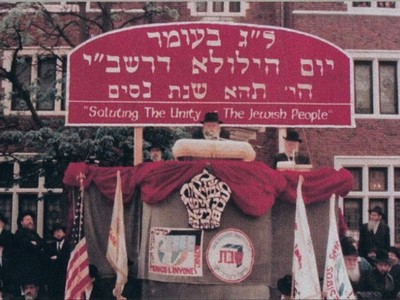
Chabad history: GRANDIOSE LAG BA-OMER PARADE: A STORY that CHANGES THE WORLD
Community
Lag ba Omer in the Lubavitcher movement is not just a bonfire. First of all, this “Parade” is a powerful demonstration of Jewish pride, unity and faith in the imminent coming of Moshiach. The history of these moves began even before the Rebbe officially led the movement, and with each decade their scale only grew, turning from a local gathering into a global event covering millions of souls around the world.🚜 FROM THE COURT 770 TO THE MAIN AVENUES OF THE WORLDIn the early years, these processions were modest and took place simply in the courtyard of the headquarters of 770 for the participants of the Mesibot Shabbat program. In 1956, however, the format changed forever when the Rebbe directed that parades be held on Eastern Parkway in those years when Lag ba Omer fell on a Sunday. This allowed thousands of Jewish children from public schools, who had the official day off, to join in the celebration. The Rebbe personally participated in these events, standing for hours on a specially erected platform and addressing the children with inspiring words about the limitless power of their Torah and their prayer.🌍 1980: A TURNING POINT IN HISTORYThe real revolution in the scale of the celebration took place in 1980, when the Rebbe issued an unprecedented order: parades should not be limited to Brooklyn. He demanded to organize processions in every city and in every country where Jews live. The Rebbe valued this cause so much that he personally delivered through Professor Branover 60 $1 bills to the organizers of the first sixty parades in the Holy Land. His demand was clear and uncompromising - not to leave any Jewish child out of this holiday. He saw this as a way to return the hearts of parents through their children and to awaken in every spark of pride for their belonging to the eternal nation of Israel.✨ MIRACLES IN THE PODIUM AND PROPHETIC WORDSThe history of parades is full of extraordinary events that have forever remained in the memory of eyewitnesses. Everyone remembers the year 1967, when the Rebbe addressed thousands of children in an atmosphere of anxiety and uncertainty, just days before the Six-Day War began. His words that the Most High will unceasingly protect His people and that the military confrontation will end with a great victory, became a true prophecy, which was fulfilled within a week. And in 1976, thousands of people witnessed the downpour literally stop over the Crown Heights neighborhood for the very three hours the Rebbe was on the podium with the children, while nearby neighborhoods were drenched in rain.TODAY 'S 🎺 PARADE: GREETINGS FROM MOSHIACHToday, parades have acquired an even deeper and more relevant meaning. In accordance with the Rebbe's instruction that the main task of our generation is to meet Moshiach directly, each parade becomes a loud declaration of readiness for Geula. Children carry bright banners with the inscriptions "Geulah" and "Moshiach", and large platforms with decorations move through the streets, introducing passers-by to the commandments. And even today, at every major parade, a place of honor is set up for the Rebbe in front of the 770 headquarters. This is not just a tradition - it is an expression of faith that the Rebbe is present with us and leads us towards full and true Liberation.Today, when only in Israel a quarter of a million children take to the streets with the words "Shema Yisrael", it becomes clear: the parade is not just a walk. This is a real army of Light, which, with its unity, songs and joy, cuts through the centuries-old darkness of exile. We continue to go forward, following the instructions of the Rebbe — to the most important, final Parade, which will be led by the Moshiach in rebuilt Jerusalem.Source:📖 Lubavitcher calendar

Congratulations on the great Victory Day!
Community
May 8 is the Day of Remembrance and Victory over Nazism in World War II.On this day, we bow our heads before those who went through the war, who fought in the ranks of the anti-Hitler coalition, and before millions of innocent victims, whose voices have forever remained in the silence of history.For our Community, this is not just a date - it is a living memory. The memory of destroyed families, of burned destinies, of pain that cannot be measured in words. And at the same time - a memory of courage, faith and strength of spirit that helped to persevere even in the darkest times.The symbol of this day is a red poppy. Like a drop of pain on the field of memory. As a reminder that life always sprouts even after the worst storm.We remember. We are grateful. We pray that the world will never again know such evil.Let the memory of the dead be a blessing. And let there always be a place for light, dignity and peace in the hearts of the living.
17 Iyar The thirty-second day of the Omer
Community
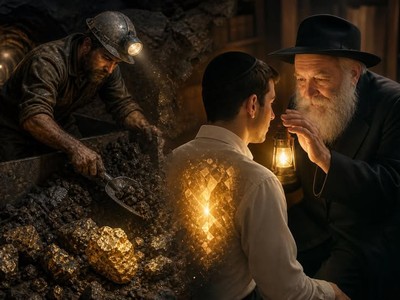
During the Lag ba-Omer in about 5604, Tsemach-Tzedek transmitted the teachings of the Baal-Shem-Tov:It is written: "And you will be a desirable land," said the Most High of Hosts. Just as the most outstanding scientists will never fully comprehend the boundless treasures of nature, laid by the Most High in the earth - "everything arose from dust", - so no one is able to fully comprehend those great treasures hidden in the Jews, who are the "desired land" for the Most High. And the Baal-Shem-Tov concluded: "I want to make it so that the Jews give a harvest worthy of this desired land."Notes:Rebbe Yosef-Yitzhak Schneerson presents this teaching by saying that one day the students of the Baal Shem Tov were sitting in the study hall pondering the depth of what they had heard from their teacher. They concluded that his path was intended only for the intellectual and spiritual elite. And it was at this moment that the Baal-Shem-Tov entered and sat down among them. Before giving the above teaching, he said, “I love the common Jews. A simple Jew is the greatest treasury."The Rebbe is like a miner who digs deep into the earth, sifts it, discards stones, until he finds rich ore. The ore still needs to be refined, but eventually this lengthy process results in the precious metal. In the same way, the Rebbe examines the human soul, illuminates its hidden qualities and helps to reveal them.This analogy can be continued. Searching beneath the surface of the human personality is not a new idea. Psychologists have been talking about this for over a century, and in recent decades, motivation and personal development specialists have become part of even the corporate world.The uniqueness of the Rebbe's approach is not only in the "digging" itself, but in what is revealed in this process. The Rebbe looks at the world through the lens of hidden Divinity. He sees the Divinity in every person and in every creature and uses every possible means to bring out this hidden G-dness.source: urokitorijew
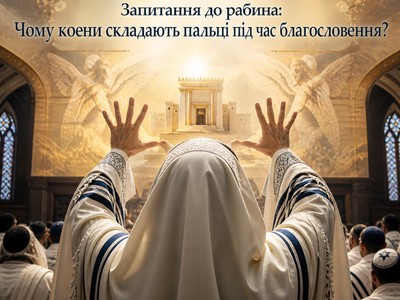
Question to the rabbi: Why do kohens fold their fingers during the blessing?
Community
Respond:The tradition of the kohen blessing, known as Birkat Koenim or Nesiat Kapaim (the raising of the palms), is one of the highest parts of the prayer. Despite the fact that after the destruction of the Temple, many temple rituals were stopped, this commandment is still carried out by the descendants of Aaron, reminding of the direct connection between the Creator and His people. The special position of the kohen's fingers is not just an aesthetic gesture, but a complex spiritual mechanism that combines the norms of Halacha, hints of Midrash and the deepest secrets of Kabbalah.A central explanation of the specific arrangement of the fingers is found in the commentaries on the Song of Songs (Shir a-Shirim). The phrase "looks through the bars" is interpreted by the sages as a description of how the Most High looks at the community of Israel through the fingers of the kohen at the moment of blessing. To reproduce these "lattices", koen spread their fingers so that two "windows" are formed on each hand (between the little finger and the ring finger, as well as between the middle finger and the index finger), and the fifth is formed by joining the thumbs of both hands. The number five here is no accident: it corresponds to the letter "gay", which is often a symbol of the Divine Presence.The Kabbalistic tradition, set forth in the book of the Zohar, teaches that at the moment of the blessing, the Shechinah—the manifested presence of G-d—is on the fingertips of the kohen. The hands of the servants become a kind of "antennae" or holy vessels. Rabbeinu Yona notes that the splayed fingers resemble the wings of the six-winged angels (seraphim) seen by the prophet Yeshayahu. Thus, koen on earth are likened to angels in heaven, fulfilling the will of the Creator. Other commentators, including Maari Abuav, point out that the curves and spaces between the fingers form the outline of the Name of the Most High "Shadai", which seems to "engrave" the seal of holiness above the heads of those who pray.The use of the tallit, which the Koen use to cover the head and hands, has two purposes. First, this is a reminder of the temple service: in the Temple, kohens pronounced the Name of the Creator in its true sound (Shem a-Meforash), and the concentration of holiness was so great that looking at the hands of kohens was dangerous for the eyes and soul. Second, it helps to avoid "distraction of thought" (eseh a-daat). If a person begins to look at the kohen's hands or follow his movements, he will lose the inner concentration necessary to receive the blessing.It is important to understand that according to the Halacha, the kohen are not the "authors" of the blessing - they are only the mediators. In the Midrash "Bemidbar Rabba" it is said that when the Jews asked why they needed the blessing of people and not of G-d Himself, He answered: "I stand behind them." That is why the kohens turn their faces to the people, but cover themselves with a tallit - as if they are hiding themselves to leave us alone with the Creator.This rite is a living testimony that even in the twilight of exile, the Divine light continues to penetrate into our world through the narrow "lattices" of human service, giving peace, protection and mercy to everyone who opens his heart.source: https://toldot.com/