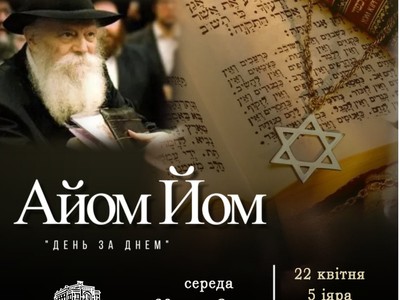
Ayom Yom: 5 Iyar
Community
Today is 5 Iyar 5786. The 20th day of Omer"Alter Rebbe received from the righteous Rabbi Mordechai, who heard from Baal Shem Tov: the soul descends into this world and lives seventy to eighty years only in order to once do good to another Jew — in the material, and especially in the spiritual sense."📖 Lubavitcher calendar
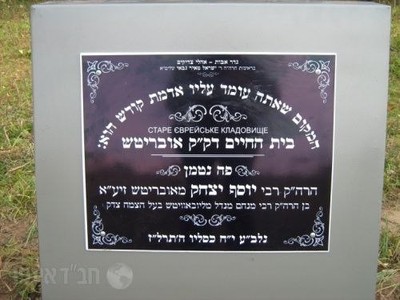
Chabad history: Ovruch branch: Hasidic bridge between Lubavitches and Chernobyl
Community
In the rich palette of the Hasidic courts of Ukraine, the Ovruch branch occupies a unique place. Being an organic part of the Schneerson family, this courtyard became a space where the Chabad depth was dressed in the clothes of the Chernobyl tradition. The story of Ovruch is a story of self-sacrifice, spiritual synthesis and deep family ties with the leaders of Chabad.🏘️ Establishment of the court in Ovruch: Rabbi Yosef Yitzchak Schneerson (first) (1822–1876)The founder of the Ovruch branch was Rabbi Yosef Yitzhak Schneerson, the fifth son of the third Lubavitch Rebbe, Tsemach Tzedek. His path to leadership in Ovruch was unusual. Being the son-in-law of Rabbi Yaakov Israel of Cherkasy, he was strongly influenced by his father-in-law. In 1859, a group of Chernobyl Hasids from Ovruch asked him to lead their community. Despite the initial displeasure of his father, Tzemach Tzedek, Rabbi Yosef Yitzchak accepted the offer — so as not to go against the will of his father-in-law and strengthen the Jewish presence in the region.📜 Unique leadership style and “double life”Having become a Rebbe in Ovruch, Rabbi Yosef Yitzhak introduced the traditions characteristic of the Chernobyl school. Unlike the brothers, who pronounced deep and long Chabad treatises, in Ovruch he spoke short "maamaras". His court was famous for hospitality and external grandeur, and the Rebbe himself was revered in Volyn as a miracle worker, who was sought for advice in both material and spiritual matters.However, it was only the outer side. Researchers note that for a narrow circle of selected Hasidim, he continued to discover the deepest concepts of Chabad, and during visits to the Lubavitchers he returned to the classical style of his father. It was said about him: "Yosef is the ruler", emphasizing his authority among the Hasidim of different directions.🕯️ Rabbi Nahum Dov-Ber: The Last Rebbe of OvruchAfter the founder's death in 1876, his younger son, Rabbi Nahum Dov-Ber Schneerson, took over the leadership. He was born in Lubavitches and was named after his two great grandfathers — Rabbi Nahum from Chernobyl and Miteler Rebbe. His reign in Ovruch continued his father's line: Chornobyl-style Hasidic ministry while maintaining an internal connectionto Chabad.Rabbi Nahum Dov-Ber was known for his deep modesty and asceticism. His authority was so high that the fifth Lubavitcher Rebbe, Rashab (who was married to Nachum's sister Dov-Ber, Sterna Sarah), called him a “true servant of the Almighty.”🛡️ Liaison with the Lubavitcher Rebbe and the end of the dynastyThe Ovruch branch has always remained "part of the family". Rabbi Nahuma Dov-Bera's sister, Sterna Sarah, became the motherof the sixth Lubavitcher Rebbe (Rajac), which made the Ovruch Rebbe the closest relatives of the Chabad leaders.After the death of Rabbi Nahum Dov-Ber in 1895 in Kiev, the dynasty in Ovruch ceased to exist as an independent court. His Hasidim found themselves at a crossroads: a significant part returned to Chabad-Lubavitch, attracted by family and spiritual closeness, while others joined the Chernobyl branches (in particular, to Hornostaipol).🤝 Cherkasy root of the Ovruch branchIt is impossible to separate Ovruch from the influence of Rabbi Yaakov Israel from Cherkasy. It was he who insisted that his son-in-law Yosef Yitzchak settle in Ovruch. The goal was not only spiritual guidance, but also protection of the community from the influence of enlightenment (Askala) and administrative pressure of the time. Cherkasy Rebbe saw Ovruch as an outpost of traditional Hasidism, where the power of Chernobyl was combined with the intellectual foundation of the Schneersons' house.✡️ Historical heritage todayAlthough the Ovruch dynasty no longer exists as a separate court, its influence is felt in the history of Chabad and Hornostaipol. Thememoryof the Ovruch Rebbe is preserved in the writings of the Lubavitcher leaders, and their graves (in Ovruch and Kyiv) remain places of prayer. Modern descendants of this branch, through the Hornostaipil tradition, continue to combine the heritage of these two worlds, symbolizing the continuity of the Hasidic chain.📖 Lubavitcher calendar
Spiritual Shield: Rebbe and IDF Soldiers
Community
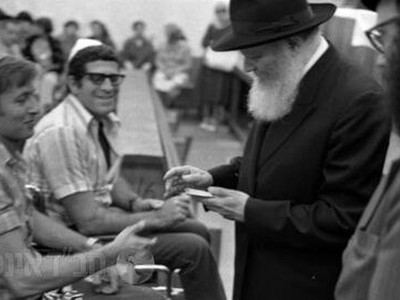
There is a deep philosophy hidden in the relationship between the Lubavitcher Rebbe and the Israel Defense Forces (IDF). For the Rebbe, the Israeli soldier was not just a soldier — he was a "defender of the Holy Land", whose purpose has a sacred meaning.🗺️ Strategy on the map and in the heavensThe Rebbe's office in Brooklyn has been a place of pilgrimage for the Israeli military elite for decades. The heads of the Mossad, the generals of the General Staff and the legendary commanders (Ariel Sharon, Yossi Ben-Hanan and others) were deeply impressed by him.The Rebbe knew the topography of Israel to the smallest detail. Often, he indicated to the generals on the map specific heights and intersections, explaining their strategic importance for the security of citizens. His position was firm: the strength of the army is the key to peace. The Rebbe stressed that only a strong and determined IDF, not shackled by political doubts, could prevent war and save lives.🎖️ "You are not disabled — you are chosen"In 1976, the Rebbe received a group of seriously wounded soldiers. In Israel, they were officially called "IDF invalids." The Rebbe addressed them with words that changed their perception of themselves:"I am categorically against the word "disabled". It means something broken, faulty. If the Almighty has taken away one ability from you, then He has endowed you with other powers. You are not disabled — you are "Metsuyanim " (outstanding). You gave part of your body to save the people of Israel, and that makes you chosen.”📖 Holiness at the forefrontThe Rebbe believed that spiritual strength is a "bulletproof vest" for the soul of a soldier. At his direction, unique initiatives were carried out during the most difficult moments of the wars:Tefillin Campaign: Before the Six-Day War, the Rebbe called on the soldiers to impose tefillin, quoting the Torah: "And all the nations of the earth shall see that the Nameof the Lord is called upon thee, and shall be afraid of thee."Tania printing is on fire: during the Lebanese War and on the Suez Canal, Chabad deployed mobile printing houses. The book "Tania" was printed just in Beirut and on the front line, so that the soldiers could feel that the Almighty was with them even in hell.🕍 Where are the righteous buried?There is a touching story that reveals the Rebbe's true attitude towards the fallen warriors. One day a Jew came to him and complained that modern Israel lacks the graves of the righteous (tzaddiks), near which one can pray.The Rebbe looked at him and replied:“If you are looking for the graves of the righteous, go to military cemeteries. The true righteous are buried there. Each of them gave his life, sanctifying the Nameof the Almighty for the salvation of the Jewish people.”🕯️ Honoring fallen heroesFor the Rebbe, every soldier who gave his life for the people acquires the status of "Kadosh" (Saint). According to Jewish tradition, the soul of someone who died to save other Jews rises to a spiritual height that even the most eminent sage cannot reach.Caring for families: The Rebbe insisted that Chabad take care of the widows and orphans of IDF soldiers. He saw them as “hero families” and considered it his personal duty to support them.Eternal connection: The Rebbe taught that death on the battlefield is not the end, but the transition of the soul into the state of the eternal defender of the people. He called for perpetuating the names of the fallen in good deeds and prayers, believing that their sacrifice was not in vain.SummaryToday, thousands of Chabad volunteers on military bases are a continuation of the love that the Rebbe laid in the foundation of relations with the army. For Chabad, IDF soldiers are not just an army, they are the "Army of the Almighty", which protects the physical and spiritual peace of every Jew.May the memoryof the fallen heroes be blessed, and the living defenders return home unharmed!📸 In the photo: Rebbe with "selected" soldierssource: 📖 Lubavitsky Calendar (https://t.me/+8KbDy9dQVqAxZWE8)
Ayom Yom: 6 Iyar
Community
Today is 6 Iyar 5786 - the 21st day of Omer📌 5751 (1991) — The Rebbe announced on paintbrand that the “direct path” to the onset of true and complete Liberation (Geula) is the study of topics devoted to Geula and the Messiah.📌 5751 (1991) — The Rebbe first supported the proclamation of “Yehi Adoneinu…”Our sages, blessed with memory, said:“Let no man say goodbye to his fellow man except after discussing the word Halakhah (law).”The holy Rebbe (our parents and teachers) explained it this way: you need to say such a word of the Torah that makes the listener “those who go” (little ones).The essence of this "movement" (walking) is to climb from step to step, higher and higher. This is the advantage of human souls over angels (about whom the Scripture says: “those who stand”).And this ascent (ascent) is carried out to the greatest extent through practical good deeds: assistance to another Jew in material — in general, and in spiritual — especially.📖 Lubavitcher calendarhttps://t.me/+8KbDy9dQVqAxZWE8
Chabad History: The Great Schism at Chabad. How was it?
Community
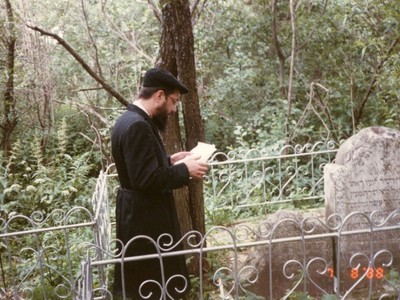
📜PART 1: The Great Schism at HaBaD. How was it?In Nisan 5626 (1866), the Jewish world was orphaned. Rebbe Tsemakh Tzedek, the third Lubavitcher Rebbe, passed away. His departure caused not only sorrow, but also an unprecedented crisis. A single movement uniting tens of thousands of Jews across the empire split into several branches.Why were the sons of the great Rebbe unable to maintain unity and who eventually became the true successor of the dynasty?🕯Seven Sons — Seven WorldsThere were seven sons in the Tsemahs of Tzedek. Everyone is a great spirit and a connoisseur of the Torah. During the life of their father, the brothers led their own communities in Lyubavichy.Rabbi Yehuda Leib (Maaril):the eldest son, whom his father called "mein guter id" ("my good Jew"). He had tremendous authority, and many saw him as a natural successor.Rabbi Shmuel (Maarash):the youngest son. It was his father who in the last years of his life discovered the secret knowledge and prepared him for the role of leader.The Secret Testament:Shortly before his death, Tsemakh Tzedek handed Maarash a spiritual succession — the same baton of leadership that originates from Baal Shem Tov. He wrote to his son:“I entrust you with the highest spiritual consecration. Fear no one… This right was vested in Alter Rebbe for all generations, thanks to which my father-in-law, the Middle Rebbe, was anointed, and thanks to this I transfer authority to you.”⚔️Storm in the days of mourningThe conflict broke out just during Shiva (mourning week). The Hasidim of the elder brother, Maaril, insisted that it was their teacher who would lead the HaBaD. There were even fake letters, allegedly forbidding the younger brother to take over the leadership.To resolve the dispute, Beit Dean (religious court) of the three most prominent sages of the time was convened. The judges asked the brothers to recite maamar (Hasidic teaching). The depth and accuracy of Maarash's words struck them — in him they heard the voice of Tsemakh Tzedek himself.When one of the brothers asked Maarash:“How do you, so young, know so much?”Amthor said:“You're old for years, and I'm old for our father's years.”The verdict of the court was unequivocal: Rabbi Shmuel (Maarash) becomes the successor in Lyubavichy.🛤The roads divergeHowever, the authority of the elder brothers was too great, and the Habad was divided into several independent centers:HaBaD-Kapust:maaril came here and was followed by most of the Hasidim. Cabbage became a powerful center that for many years competed with the Lubavitches.HaBaD-Liadi:the community was headed by Rabbi Chaim Shneur Zalman.HaBaD-Nijin:rabbi Yisrael Noah was in charge.HaBaD-Lubavitchi:center where Maarash remained, retaining the main line of succession.🕊Brother's bitter wordsDespite the administrative split, there was no personal enmity between the brothers themselves. Circumstances and surroundings created the tragedy.Before Maaril left for Cabbage, there was a touching and painful moment. Seeing the Hasidim literally taking their older brother away, he bitterly said to Maarash with Yiddish:“Woe to that brother for whom his own brother became Rebbe.”These words contain all the pain of the situation: the recognition of the spiritual greatness of the younger brother and the inability to stay together due to the pressure of thousands of followers.🔚End of SectionMaaril headed the community in Cabbage for only two months and died the same year. Many of his Hasidim subsequently returned to the Lubavitchers to Maarash. However, the Cabbage dynasty did not disappear — it was continued by the children and grandchildren of Maaril, and this split lasted for more than half a century.📸 In the photo: the grave of Rebbe Tsemakh Tzedek and Rebbe Maarash in Lubavitches (photo 1990) source: 📖 Lubavitcher Calendar
📜 Introduction to the Laws of Shabbat — thirty-nine main types of work
Community
1. "Meaningful work"The Torah states:“Six days you shall labor and do all your work, and the seventh day shall be the Sabbath [dedicated] to the Lord your God — you shall not do any work (לֹא תַעֲשֶׂה כָל מְלָאכָה— lo taase kol melaha)…” (Exodus 20:8–10). This is one of the Ten Commandments promulgated during the Sinai Revelation.But what exactly is called “work” that is forbidden to do?This definition is given in the Torah itself — in the poem about the construction of the Mishkan (Tent of Revelation):מְלֶאכֶת מַחֲשָׁבֶת (mlekhet makhshevet) — "meaningful work" (ibid., 35:33; see Beytsa, 13b).There are several signs by which such work is determined.1) Intent (kavaná)The work must be carried out consciously and with the intention of doing exactly this action with this object. If the action occurred by accident — the person is released from punishment. This condition is calledmitasek— unintentional, mechanical action.This is different fromshogeg— when a person violated the ban without knowing about it or forgetting that it is Shabbat.Example: if a person walks on the grass and accidentally ripped out a blade of grass — this is allowed. But if the action inevitably leads to a violation (reish pesik), responsibility comes.2) Normal way (ke-darka)Work should be carried out in the usual way. If it is performed unusually (be-shinui) — the prohibition of the Torah is not violated, but this is forbidden by the sages.For example: writing with the right hand for a right-handed person is forbidden by the Torah, and with the left — by the decree of the wise.3) Work for one's own purpose (melaha criha le-gufa)The work shall be carried out for the same purpose as in Mishkan. If the goal is different, it is a dispute between wise men.For example: a person digs a hole not for the hole itself, but to use the land — according to Rabbi Shimon, the prohibition of the Torah is not violated.Most authorities adhere to this opinion: in this case, only the prohibition of the wise is violated.4) Creative Purpose (Lesham Tikun)Work should be aimed at creating or improving. If the action is destructive, the prohibition of the Torah is not violated, but prohibited by the wise.However, destruction for the sake of further correction (for example, tearing to sew) is already a violation of the Torah.5) Sustained performanceThe work should give a lasting result. For example, writing in ink is forbidden by the Torah, and writing with a finger in the sand is forbidden by the sages.These five signs form the basis of understanding what “melaha” is — work prohibited on Shabbat.Source:https://www.beerot.ruAuthor: Rabbi Oleksandr Katz
Ayom Yom: 7 Iyar
Community
Today is the 7th of Iyar 5786 — the 22nd day of OmerWhen dressing in Talit Gadol, there is no need to cover the head up to the mouth, as stated in the tzitzit laws in Sidur. However, it is customary to cover the eyes with the upper part of the talit as well.In the days of Sfirat ha-Omer (Omer's countdown), it is customary to study the Sota treatise — in addition to regular lessons — one sheet each day.📖 Lubavitcher calendar
Chabad story: 🏛️ Part 2: The era of the "Great Schism": what really went wrong? (Любавичи-Копуст)
Community
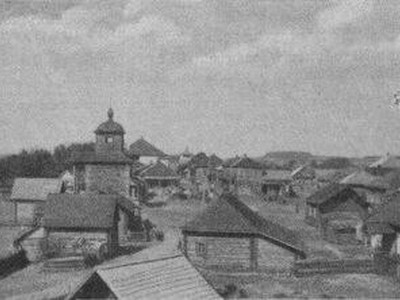
Many people know that after the death of Tsemakh Tzedek, several branches of HaBaDu arose (Kapust, Liada, Nizhyn, etc.). But behind the beautiful names of the cities was a serious crisis that changed the lives of thousands of families for decades. This was a period when unity gave way to internal competition — often against the will of the leaders themselves.🕍Split in communities and "street wars"The problem ripened not in the Rebbe's offices, but on the "Hasidic street". In one city, two Chabad synagogues of different branches could operate for years, and people who had been brothers for decades began to argue whose Rebbe understood Hasidism more deeply or whose niggers were “cleaner.” It got to the point that the Hasidim of different groups did not visit each other for years, creating painful tension within the communities, although they all continued to call themselves "Hasidim of the HaBaD".📚Intrigues around sacred booksBooks were the main instrument of influence, and for their sake, supporters of various courts resorted to tricks. Tsemakh Tzedek's notebooks were divided almost like property during a divorce, because of which many works were printed in excerpts. It happened that the Hasidim of one branch tried to redeem or delay the circulation of books of another so that their ideas would not spread. This not only hindered the development of the doctrine, but also led to sad cases when manuscripts were deliberately substituted in printing houses, trying to present "competitors" in a bad light.🪙Money issues and family dramasThe division of the charitable foundation (Kolel HaBaD) became the most acute point. Funds for the poor in Eretz Israel turned into an instrument of policy: each group wanted their Rebbe to put the stamp on the documents. Because of these bureaucratic wars, aid sometimes did not reach those who needed it in Jerusalem for months. The split also affected personal ties — there are known cases when matchmaking was canceled only because one family was "Lubavitcher" and the other was "Kopust".💍The Rebbe Against Schism: A Personal ExampleSurprisingly, while the Hasidim were at war in the fields, the Rebbe himself - the brothers and nephews of the Schneerson dynasty - remained an example of love. They understood that a split could destroy the entire heritage, and tried in every possible way to "put out fires." The main instrument of peace became permanent marriages between the children and grandchildren of the Rebbe of different branches - this was a loud signal that they remained a single family. Leaders corresponded, consulted with each other on Torah matters, and publicly put an end to their followers' attempts to insult "opponents." When one of the brothers was sick, the others immediately sent for doctors, proving that kinship and devotion to the path are higher than any politics.💡Why is this important today?This period showed that even the highest teaching is harmed by the lack of unity. Lubavitch survived and became a global movement precisely because it managed to overcome this chaos. When the persecutions began in the USSR, it became obvious: only those who are ready to put aside disputes about "prestige" for the sake of a common cause will survive. By the middle of the 20th century, these artificial walls fell. The heritage of Lyad, Nizhyn and Kapusta returned to Lubavitch, and we received an extremely rich common tradition, having passed a difficult path, full of mistakes that should be remembered.📸 In the photo: the town of Kopust📖 Lubavitcher calendar

Siha Rebbe for the weekly chapter: “Ahrey Mot — Kdoshim”
Community
Topic: How to combine "holiness" with everyday life?This week's two chapters — “Ahrei Mot” and “Kdoshim” — at first glance seem to be opposite in meaning. But it is in their combination that the secret of our spiritual work is hidden. What is the differenceAhrey Mot:Describes the ministry of the High Priest in the Holy of Holies — the moment of the highest spiritual exaltation, separation from the world, going beyond the material.Kodoshim:Gives practical commandments — honesty in business, helping the poor, respect for parents. This is holiness in "everyday life". 🗝The main idea of the Rebbe:Often we think that “real” spirituality is when we pray, study, or are in a synagogue (Ahrei Mot state). And when we go to work or to the store, it's just "life".The Torah says the opposite: the true purpose of spiritual upliftment is not to remain in the clouds, but to descend and sanctify the material.“Be holy, for I am holy” — the Most High calls us to be holy, not because we are angels, but because we can bring the Divine into the mundane. 🧱Practical lessonThe Rebbe emphasizes that the chapter of Kdoshim begins with the words, “Speak to the whole congregation of the children of Israel.” This is one of the few chapters given in the presence of all Jews at once. Why?Holiness is available to everyone. It is not the privilege of the chosen sages. Each of us — in the office, at home or on the road — can be a “saint”.Love of Neighbor: At the center of the Kdoshim chapter is the rule, “Love thy neighbor as thyself.” This is the foundation. It is impossible to achieve personal holiness if you are separated from the people. 💎Summary for each of usDon't look for holiness only in special moments. Your honest agreement, a good word to a colleague or patience in the family — this is the fulfillment of the command "Kdoshim".We climb high (Ahrei Mot) to bring that light into the real world (Kdoshim). (From Sihi Rebbe, Shabbat Ahrey Mot-Kdoshim 5750 (1990)) ✨ Shabbat Shalom! source: 📖 Lubavitcher Calendar (https://t.me/+8KbDy9dQVqAxZWE8)

Our dates: 11 Iyar
Community
Iyar 📌11, 5604 (April 30, 1844) — Yorzeit (the anniversary of the departure from this world) Rabbi Yehuda-Zvi from Stretin.Rabbi Yehuda-Zvi was the best student of the famous Hasidic tzadik Rabbi Uri from Strelisk. He came from a noble family that traced its roots to King David, and spoke of his four sons as being the reincarnation of King David's warriors.One of the descendants of Rabbi Stretin was Rabbi Yehuda-Zvi Brandwein (Rabbi Maalot HaSulam), a disciple of the famous Kabbalist Rabbi Yehuda Ashlag (Rabbi HaSulam).Iyar 📌11, 5587 (May 8, 1827) — Yorzeit (anniversary of the departure from this world) to Rabbi Naftali Zvi from Ropshytsia.Rabbi Naftali Zvi was born on the day of the departure from this world of the founder of Hasidism, Rabbi Israel Baal Shem-Tov, and became one of his most devoted followers.Rabbi Naftali was born into a well-known and respected family: his father, Rabbi Menachem Mendl, was the rabbi of the town of Linsk, and his mother, Rebbetzin Beila, was the daughter of the eminent sage Rabbi Yitzhak Horowitz from Hamburg. The family belonged to the misnagdim (opponents of Hasidism), but the son chose a different path for himself. His first mentor in Hasidism was Rabbi Elimelech from Lizhensk. Then Rabbi Naftali studied with the "Seer from Lublin" (Rabbi Yaakov-Yitzchak ha-Levi Horowitz), Rabbi Yisrael of Koznytskyi Magid, and Rabbi Menachem-Mendel of Rymanov.After the death of the teachers, he settled in the town of Ropshyts, which became the center of attraction for thousands of his followers. Many Hasidic leaders descendants of the Ropszyc dynasty died in Poland during the Holocaust. Survivors moved to the United States, where thriving Hasidic communities were founded (in New York and Brooklyn).source: chabad.odessa

Our dates: Iyar 13
Community
13 Iyar 5712 (8 May 1952) — Yorzeit Rabbi Israel-Arieu-Leib Schneerson, brother of the current Rebbe.Rabbi Israel-Arieh-Leib, who was born in 5669 (1909) in the city of Mykolaiv, was the owner of numerous talents, a wise and witty person. Already during the years of Soviet power, he moved to Leningrad, where he entered the inner circle of the Sixth Lubavitcher Rebbe, Rabbi Raiats (Rabbi Yosef-Itzhak). He also enjoyed the loveof the Hasidim, the disputes with whom literally “filled” him with halakha (Jewish Law) and Hasidism, as well as knowledge in the Open Torah and the Cabal.In 1930, Rabbi Israel-Arieh-Leib left the USSR and settled in Berlin, but in 1932 he made aliyah, moved to the Holy Land and settled in Tel Aviv. In 1941, Rabbi Israel-Arieh-Leib moved to Liverpool, where he lived until the day he left this world. His ashes were transported to Eretz Yisrael and buried in the Chabad section of the cemetery in the city of Safed.source: chabad.odessa