The history of Chabad: the Paris Castle, which became the citadel of Hasidism
Community
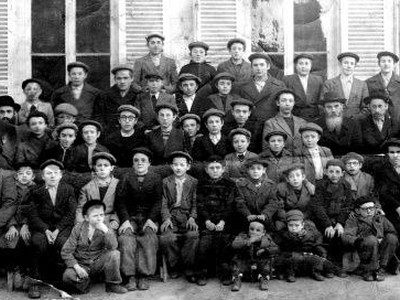
🏰The Paris Castle That Became the Citadel of Hasidism: The Story of the Brunois YeshivaIf you ask any Hasidic Chabad about the most famous educational institution in Europe, you will almost certainly hear the name “Brunoy”. For almost 80 years, this legendary yeshiva near Paris has remained a unique center of godly fear and a real forge of rabbis for Jewish communities around the world. How did the ancient French castle become one of the most important centers of Torah?📜From the refugee camps — to ParisThe history of the yeshiva began in 5707 (1947). Hundreds of Hasidic families miraculously escaped from the Soviet Union during the famous escape through Lviv. Once in camps for displaced people in Europe, they sought above all to provide their children with a Jewish education.The Sixth Lubavitcher Rebbe, Rebbe Rajac, made great efforts to transport the first group of students to France. Initially, the boys studied in Paris, in the Rothschild synagogue in the Bois de Boulogne, but the bustling life of the capital did not contribute to deep learning and spiritual growth.🏡Moving to the "Small Castle"Soon, with the assistance of the Joint organization, they found the perfect place for a yeshiva — a quiet town of Brunois. Students and teachers settled in a real royal castle "Petit Chateau" ("Small Castle").On the ground floor, there were training halls, a dining room and a kitchen. On the second, in thirteen rooms, students and families of teachers lived. The castle was surrounded by a large park with swimming pools, one of which was used as a mikvah in the summer months.The real "lions" of Hasidism arrived to manage the yeshiva: Rabbi Yosef Goldberg, Rabbi Shlomo-Chaim Keselman and the legendary Mashpiya Rabbi Nisan Nemenov, who for decades defined the special spiritual spirit of Brunoi.⚡️“Brunois is an island of fear of God”The yeshiva grew rapidly, accepting students not only from Europe but also from Morocco and Tunisia. The Seventh Lubavitcher Rebbe paid special attention to Brunoi and regularly sent greetings and blessings for the holidays.It was the Rebbe who called Brunois “an island of God-fearingness.” And in 1991, he noted that the yeshivas of France work "in the style of Lyubavicha herself." Since then, the expression "Real Lubavitcher" has become the unofficial motto of Brunois.🏢Brunoit todayThe castle has long ceased to be the only building of the yeshiva. In 1997, a new large building with a spacious classroom and a dormitory was opened. The Rebbe especially emphasized that it should have room for at least 121 students.In 2013, the historic "Maly Zamok" was reconstructed into a three-story building of the Younger Yeshiva. Here they also carefully preserve the ancient mikvah, in which the famous saint Baba Sali used to immerse himself.Today, Brunois has about 400-500 students from all over the world — from the USA and Israel to Australia. The yeshiva is headed by Rabbi Yechiel Menachem Mendel Clemenson. Collections of in-depth Torah studies under the name "Zarfat - Partsata" ("France - let's break through") are also regularly published here.✨ Brunois is a living monument to the faithfulness of tradition that transformed a suburb of Paris into one of the most important centers of Torah study in the world.📸 In the photo: the first students of Yeshiva Brunois.📖 Lubavitch calendar
Chabad Figures: The History and Legacy of Rabbi Meir Arlig
Community
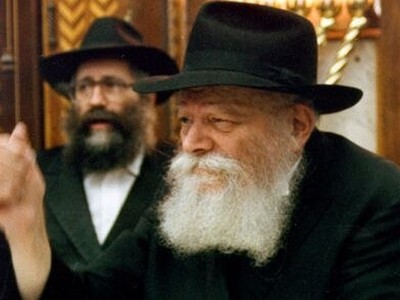
🔑The Rebbe's Trustee: The Story and Legacy of Rabbi Meir ArligIn the history of Chabad, there are names that have become a symbol of absolute devotion to the Head of the generation. One such figure was Rabbi Meir Yehuda Yisrael Arlig (1936–2023). For decades, he was one of the closest assistants of the Lubavitch Rebbe and served in the house of 770. He was entrusted with the most responsible assignments, and his life became a living example of what it means to be a "mashbak" (Mesharet Ba-Kodesh- a servant of Holiness), a devoted helper of the righteous.📌The connection of generations and the first steps in 770His path began in Zurich, in a respected rabbinical family. Meir's father, Rabbi Mordechai Arlig, who later headed the rabbinical court in Crown Heights, was the nephew of the famous Rabbi Meir Shapiro of Lublin, the founder of the Daf Yomi project.The family's connection with the Rebbe began in Vienna, where Rabbi Mordechai organized a minyan for the previous Lubavitch Rebbe, Rebbe Rayatz. It was there that he first met the future Seventh Rebbe.After moving to Brooklyn, young Meir entered the Tomhei Tmimim yeshiva and almost immediately began to carry out the Rebbe's personal assignments. He received the first of these on Yom Kippur 1952, when the Rebbe entrusted him with guarding notes asking for blessings.💼The sacred routine of the Lubavitch courtOver time, Rabbi Meir became an integral part of the daily life of the Rebbe's residence in Brooklyn. His duties combined high trust and daily service.Every year for Sukkot, the Rebbe would give him his personal Four Types of Plants (Arbaat ha-Minim) for Rabbi Meir to organize a blessing for thousands of Hasidim.Until 1978, he brought a thermos of tea every day from the Rebbe's house, which was prepared by Rebbetzin Haya-Mushka. During the many-hour farbrengens, he was responsible for the wine and refreshments, and when the Rebbe performed netilat yadayim, he was the one who served the challah or matzoh.📜Chronicler of the era and keeper of traditionsRabbi Meir had a phenomenal memory and exceptional accuracy. He kept extremely detailed diaries, recording the Rebbe's schedule, customs, and events.His records were so accurate that one day the Rebbe himself asked Rabbi Meir to clarify exactly how certain events occurred during a trip to Oel in previous years.It was on the basis of his personal notes and the records of other close people that the famous two-volume book "Ha-Melech be-Mesivo" ("The King at the Meal") was created, which opens a unique perspective on the life of the Lubavitch court. In recent years, the "Rebbe Drive" project began to publish these priceless diaries.🔥Devotion in big and small thingsHis love and devotion to the Rebbe was evident in everything. It was Rabbi Meir who stood at the origin of the massive Rosh Chodesh Kislev celebrations in 770, the day the Rebbe returned to the Hasids after a serious illness. He organized these celebrations from 1978 to 2016.Rabbi Arlig wanted the Hasidim to imitate their Rebbe not only in words, but also in deeds. He was one of the first among his peers to start wearing a frock coat immediately after his wedding, adopted the manner of dressing and even cut his hair on the same days the Rebbe did.During the Sunday dollar distributions, he always stood by the Rebbe's side, listening intently to every word to help those who, because of the excitement, did not hear the answer.📚Heritage, heirlooms and a unique collectionIn addition to his many years of service, Rabbi Arlig was a renowned Hasidic shadhan who helped establish many Jewish families.He also owned one of the world's rarest collections of Tania books, which included editions printed in the most diverse corners of the planet.Rabbi Meir raised a wonderful family. All of his children have become emissaries of the Rebbe and are working in various states of the USA, including Nevada, California and Florida.On Sivan 29, 5783, after a long illness, Rabbi Meir Arlig left this world, leaving behind a vast spiritual legacy, priceless archives, and a shining example of how personal service can become part of the great Jewish story.May his memory be blessed! source: 📖 Lubavitch calendar

Psychologist's page: We often look at ourselves too harshly.
Community
It seems to us that we are not good enough, not strong enough, not talented enough. We compare ourselves with others, notice only our own shortcomings and forget that every thing, every person and every stage of life has its time and its purpose.Sometimes what seems like a weakness turns out to be our strength. What seems unnecessary turns out to be indispensable. And what seems like a dead end today can be the beginning of something much bigger.These illustrations remind us of a simple but important truth: don't rush to put a full stop on yourself. You may not be seeing your growth, your worth, or your place right now, but that doesn't mean they aren't there.Be patient with yourself. The best chapters of your story are yet to come. ❤️
Question to the rabbi: Is marriage without love considered a sin?
Community
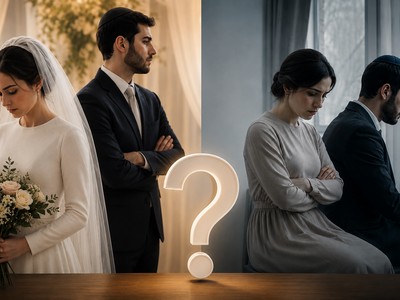
Responds to:Rabbi Shaul-Isaac AndrushchakQuestion:Is marriage obligatory for a woman? And is marriage without love considered a sin, or, on the contrary, is it a manifestation of humility and obedience?Respond:Getting married is not an obligation for a woman. However, it is highly desirable for a number of reasons. Of course, in no case not at the cost of personal happiness, peace of mind, etc.As for marriage for love, it is a difficult question. It is important to understand that marriage for love is the ideal of a very specific culture, the norms and ideas of which are observed to one degree or another by only tens of millions of people out of more than seven billion of our contemporaries. And these millions are mostly people who are far from taking faith in God seriously.Although, thank God, the number of believers for whom romance in relationships is important is growing. But in general, Judaism is at least more about nurturing feelings in marriage than about a marriage based on feelings.In short, marriage without love is definitely not considered a sin. But it is also not some special spiritual feat or a particularly desirable option.Judaism forbids (!) marriage under duress from either party. The bride must agree to marry. A male candidate should be pleasant to her and not cause negative feelings or dislike, otherwise in the future it may lead to violation of the commandment: "Love your neighbor."Actually, the marriage ceremony is a public expression of the woman's consent to marry the man who makes this proposal to her. If she is driven, among other things, by love for this man — what could be better?But if a woman is looking for something else in marriage — stability, motherhood, fulfillment of religious duty, etc. — then that is not bad at all. And love can be born already in marriage itself, especially if you work on it.And, of course, a lot depends on the specific circumstances of each situation.
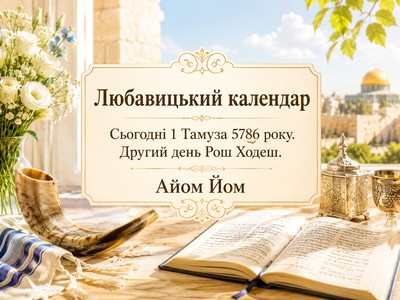
Lubavitcher calendar: 1 Tamuz 5786
Community
Today is 1 Tammuz 5786. The first day of Rosh Chodesh.Ayom Yom“The self-sacrifice (mesirut nephesh,מסירות נפש) that befits those who devote themselves to the study of the Torah is similar to how our sages, blessed be their memory, interpreted the verse: 'This is the law of the man who will die in the tent…' — namely, to kill in himself the attraction to all worldly pleasures. After all, even the slightest earthly pleasures prevent a person from being completely devoted and immersed in the Torah tent."📖 Lubavitcher calendar.

☀️ Turning Darkness into Light: The Profound Meaning of the Month of Tammuz
Community
In the month of Tammuz, a fundamentally new approach to understanding the essence of exile (galut), which was revealed in recent generations before the arrival of the Mashiach, is especially vividly manifested.🎭The essence of the month of Tammuz: from concealment to disclosureHistorically, the month of Tammuz symbolizes the concealment of divine light and spiritual darkness. It was in this month that the destruction of Jerusalem began, so there are no holidays in it, but there is the fast of 17 Tammuz, from which the three weeks of mourning for the destroyed Temple begin. This negative meaning is reflected even in the very name of the month “Tammuz”, which comes from the name of a pagan deity.However, in our time this month revealed a completely different aspect — a day of great joy, Divine revelation, liberation and victory over those who opposed the Torah and the commandments. This is the Feast of Deliverance (Hag HaGeula) — 12–13 Tammuz.🔄Exile that becomes liberationThe reason why the path to True and Total Liberation is revealed in Tamuz — the month symbolizing destruction — lies in a deep understanding of the relationship between Exile (Galut) and Liberation (Geula).The coming of Liberation is not only that the reason for the exile is revealed to us — they say, "it was for the sake of the future good." Its essence lies in the fact that it is the exile that turns into good and a holiday. It turns out that in the very depths of darkness, the greatest light is hidden.This principle — when the darkness itself turns into light — was vividly manifested in the story of the liberation of the Sixth Lubavitcher Rebbe (Rebbe of Paradise).His opponents and pursuers were not defeated by force. They themselves, using all their power and authority, gave the order to release the Rebbe.The same principle can be traced in the name of the month. Although the word “Tammuz” was originally associated with idolatry, the teachings of Hasidism reveal its true inner meaning: Tammuz points to a huge Divine light (Or Ein Sof), which at the height of summer penetrates into our material world as much as possible.🌟The special significance of Tamuz Day 3 (Gimel Tamuz)This new idea — that good is born in the very depths of darkness and turns it into light — is expressed with particular force in the days of 3 Tammuz.Externally, from a historical point of view, this day was the beginning of the exile of Rebbe Rajac to Kostroma — an event that, in its severity, was equated with a mortal threat. Moreover, then it seemed that the replacement of imprisonmentwith exile was only a trick of the authorities to secretly strengthen the sentence without causing indignation of the world community. From this perspective, 3 Tammuz was one of the darkest and most tragic days of exile.However, the subsequent release of 12 Tammuz retrospectively proved that 3 Tammuz was not the beginning of exile, but the actual beginning of the Liberation.Thus, it is the 3 Tammuz that more strongly than any other day of the month expresses the revolutionary essence of Geula. This is a day that, on the one hand, looks like an absolute immersion in the abyss of galut, and on the other hand, is the real beginning of Liberation.📅Calendar Spiritual ConnectionThis explains the amazing calendar phenomenon: the day 3 of Tammuz always falls on the same day of the week as the 9th of Av (Tisha be Av), the 17th of Tammuz and the feast of Passover.The fact that the days of mourning (9 Av and 17 Tammuz) coincide with the day of the week with the feast of Passover — the feast of Freedom — indicates their inner essence: spiritually they are the beginning of the future Liberation, despite external sadness and fasting.Day 3 Tammuz acts as a link. Having the power to combine the inner (spiritual) with the outer (material), he connects the liberating potential of the feast of Passover with the fast of 17 Tammuz, discovering that in its true depth, this fast is also the day of future Liberation.📖Lubavitcher calendar
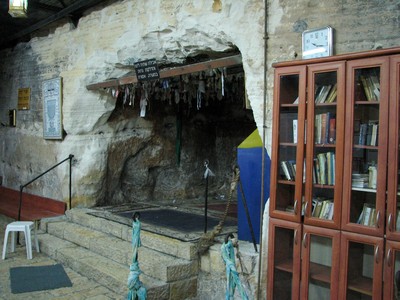
Page of Istria: Cave of the Prophet Eliyahu
Community
📍The cave of the prophet Eliyahu on Mount Carmel is the place where the prophet Eliyahu hid from King Ahab.The Prophet Eliyahu is one of the most prominent figures in the history of Judaism. His name means “My G-d is the Lord” (Hebrew Eliyahu).📌The Prophet Who Fought IdolatryEliyahu lived in the 9th century BC during the time of King Ahab and his wife Jezebel. This was the period when Baal worship became widespread in Israel.Eliyahu fearlessly urged the people to return to the service of the One God, despite the persecution and mortal danger.📌Mount CarmelThe most famous event of his life took place on Mount Carmel.There Elijah proposed a trial: the priests of Baal and he himself were to offer a sacrifice, but not to kindle it. The God who answers with fire from heaven is the True God.The priests of Baal prayed all day in vain. When Elijah prayed, fire came down from heaven and swallowed the sacrifice, and the people cried out,“The Lord is G-d! The Lord is G-d!”Carmel 📌CaveAccording to Jewish tradition, there is a cave on Carmel associated with Eliyahu. He is believed to have been there during the period of persecution. Over the centuries, this place has become one of the most revered places of prayer, where Jews from all over the world come.AscensionUnlike most prophets, Elijah did not die an ordinary death.According to the Tanakh, he was taken to Heaven in a chariot of fire drawn by fire horses.That is why the Jewish tradition considers him spiritually alive.📌A special place in JudaismEliyahu occupies an exceptional place in Jewish tradition.On each circumcision (brit mili) is placed the “chair of the prophet Elijah”, as he is considered a witness of this covenant between God and the Jewish people.During the celebration of Passover, they leave the glass of the prophet Elijah on the table and open the door of the house, symbolically waiting for his arrival.After the end of Shabbat, many communities sing the song "Eliyahu ha-Navi", expressing hope for his speedy return.Messiah's forerunnerAccording to the prophet Malachi, before the coming of the Mashiach, the Most High will send Eliyahu:“Behold, I send you the prophet Elijah before the coming of the great and terrible day of the Lord.”Therefore, in Judaism, Eliyahu is considered to be the one who will announce the beginning of the era of final deliverance and reconcile the hearts of people.That is why the nameof the prophet Elijah in the Jewish tradition is associated with faith, hope and the future liberation of the people of Israel.

Page of history: The oldest city in the world - Jericho
Community
Archaeologists believe that settlements on the site of Jericho existed about 10–11 thousand years ago. Thanks to the fertile valley and numerous springs, the city flourished in ancient times.📌The entry of the Jewish people into the Land of IsraelThe most famous event related to Jericho is described in the Book of Joshua.After forty years of wandering the wilderness, the people of Israel, led by Joshua ben Nun, entered the Land of Israel. The first major city on their way was Jericho.By the order of the Almighty, the Israelites circled the city once a day for six days, and seven times on the seventh day. After the trumpeting of the shofars and the shouting of the people, the city walls fell and the city was taken.In the Jewish tradition, this event is a symbol of the fact that victory comes not only by force of arms, but also by faith and the fulfillment of the will of the Almighty.Prophet Elisha's 📌sourceAfter the times of the Prophet Elisha, Jericho is mentioned again in the Tanakh.The locals complained to the prophet that the water in the city was unfit for drinking. Elisha took a new vessel of salt, threw it into the spring, and proclaimed that the Almighty had healed these waters. Since then, according to the biblical account, the water has become good. This spring is still known today as Elisha's Spring.📌City of PalmsIn the Tanakh, Jericho is often referred to as the “city of palms” due to the abundance of date palms and the fertility of the area.Its oasis in the Jordan Valley has long been an important place for life, agriculture and trade.📌During the time of the Second TempleDuring the Second Temple period, Jericho was a wealthy city. Here was the winter residence of Herod the Great, who built palaces, gardens and aqueducts.Also nearby, archaeologists have found the remains of ancient synagogues with mosaics, which indicates an active Jewish life in the region.📌Significance for JudaismFor the Jewish tradition, Jericho is a symbol:📎the first step of the people of Israel into the Promised Land;📎the power of faith and trust in the Almighty;📎G-d's help, which is able to overcome even the strongest obstacles;📎renewal and healing, which the story of the source of the prophet Elisha recalls.Jericho remains one of the most prominent biblical cities today, where the archaeology, history and events of the Tanakh are closely intertwined.
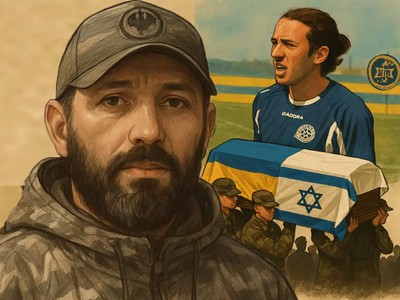
Heroes don't die: the story of Dmytro Violet, who died defending Ukraine
Community
Heroes don't die: the story of Dmytro Fialka, Maccabi Beer-Sheva's children's coach, who died defending UkraineHe was born in Lviv, became an Israeli citizen, served in the IDF, brought up young football players in Maccabi Beersheba, and when Ukraine was under threat, returned to stand up for it.Voluntarily joined the Ukrainian Volunteer Corps "Right Sector", helped train recruits, and later signed a contract with the Armed Forces of Ukraine and became a platoon commander of the International Legion of Territorial Defense.He died near Bakhmut, remaining faithful to the two countries that became his native land. His story is not only about courage, but also about responsibility, choice and honor.📍 Lviv: The Beginning of the JourneyDmytro Bohdanovych Fialka was born on June 21, 1983 in Lviv.It was here that his childhood, first football training, friends appeared and character was formed. He grew up in a family where work, responsibility and decency were valued. Friends recalled that from an early age, Dmytro was calm, collected and never fussed — at first he thought, and then acted.When he was about fifteen, thefamily repatriated to Israel. A new country, a new language and a new life became a difficult test, which only tempered it.📍 Israel: The Service That Shaped CharacterIn Israel, Dmytro graduated from school, received citizenship and served for three years in the Israel Defense Forces (IDF).He served in the Nahal Brigade and fought against Hezbollah during the Second Lebanon War.It was there that he learned discipline, restraint, responsibility, and trust in his fellow men.Later, he told his friends:“The army made me a man. I don't regret a single day.”After completing the service, Dmytro returned to the business he loved most — football.📍 Coach at Maccabi BeershebaFrom 2008 to 2013, Dmytro worked as a coach of the youth teams of the Maccabi Beer-Sheva club.In the official database of the Israeli Football Association, he was listed as דימה פיאלקה (Dima Fialka).He taught children not only football skills, but also respect, discipline and responsibility.One of his pupils was Or Dadia, who later played for Hapoel Beersheba. He recalled:“Dima was my first coach. He could explain without shouting. After he went to Ukraine, we still corresponded. He wondered how I was playing. I'll never forget it.”For Dmytro, football was much more than a profession. It was a way to educate people by example.📍 Return to UkraineIn 2015, Dmytro returned to Lviv to care for his sick grandmother.He continued to work as a children's coach — first at the Dynamo Lviv club, and then at CYSS FC Lviv.Colleagues mentioned that he always came to work first and was the last.In training, he often repeated:“If you want to be listened to, be an example.”He lived modestly, loved his family, children and football.Israeli journalists later wrote about him:“He lived between two flags, but he didn't betray either one.”📍 War - Volunteer and CommanderOn February 24, 2022, Dmytro did not wait for the summons.He voluntarily joined the Volunteer Ukrainian Corps "Right Sector", where he trained recruits.Subsequently, he signed a contract with the Armed Forces of Ukraine and headed a platoon of the International Legion of Territorial Defense, a unit in which Ukrainians and volunteers from around the world served.His call sign was "Thorn".It was in Lviv that he met his future wife Eve. They created a family, they had a daughter and a son.Dmytro spoke little about the war.One day he wrote to his friends:“There are no strangers here. Everyone is their own, if they are nearby.”The brothers mentioned that he always remained calm, did not lose his composure and never left his people.💔 Death near BakhmutOn September 1, 2022, Dmytro Fialko died near Bakhmut while performing a combat mission.According to official reports of Ukrainian and Israeli media, he received a fatal gunshot wound to his head.His body remained in the territory occupied by Russian troops.For six weeks, relatives and volunteers fought for his return.On October 11, 2022, Dmytro's remains were returned to Ukraine as part of the exchange of bodies of the dead.This was reported by leading Ukrainian and Israeli publications.📍 Two countries — one painIn Beersheba, where Dmytro's mother and younger brother lived, relatives began to raise funds to transport his body to Israel.However, Eve's wife made a different decision.She said that Dmytro should rest in Ukraine — on the land he defended until his last breath.There was no controversy in this story.There was only pain, which was divided between the two countries.💔 Last RoadOn October 21, 2022, Dmytro Fialka was buried in the Jewish section of the Yaniv Cemetery in Lviv.Relatives, brothers, representatives of the Jewish community, Israeli diplomats, volunteers and his former pupils came to say goodbye to him.Two flags — Ukrainian and Israeli — fluttered nearby.Not as a symbol of division, but as evidence that one person can sincerely love two homelands and remain faithful to both.He did not seek fame or heroic rank.He just did what he thought was his duty.MemoryAfter the death, the nameof Dmytro Fialka was included in the memorial lists of the International Legion of the Armed Forces of Ukraine.Dozens of publications have written about him in Ukraine and Israel — from sports portals to the largest information media.The Israel Football Federation confirmed that he was the coach of Maccabi Beersheba.Former pupils, football players and coaches published his photos with simple words:"Dima Fialka — forever coach".In Lviv, he is remembered not only as a warrior.First of all — as a Teacher who knew how to educate not with fear, but with respect. As a person who has proven with his own life: true leadership begins with a personal example.
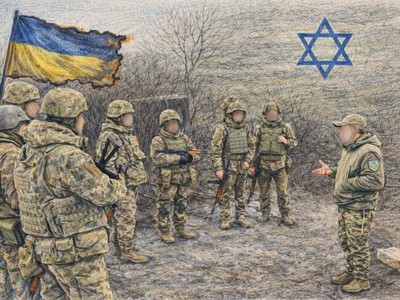
✡️ Jewish military in the Armed Forces of Ukraine: why the war in Ukraine did not "disappear from the front pages" for them
Community
📰January 15, 2026The Jerusalem Post published a report by journalist Michael Starr about Jewish servicemen who continue to fight in the ranks of the Armed Forces of Ukraine, while the attention of the world media is increasingly shifting to other conflicts.The main idea of the material is simple: the war did not disappear only because it ceased to be the main topic of news. For the Ukrainian military, it lasts every day. Among those who have been defending Ukraine for the fourth year, there are many Jews.🎖️Reconnaissance drone commander: "Fight for your country"One of the heroes of the report is Moshe Bizsemov, the commander of a group of reconnaissance drones from Mykolaiv. He has been serving in the Ukrainian army since 2018. His contract was due to end in April 2022, but after the start of the full-scale invasion, he decided to stay.During the fighting, many of his brothers were captured in Mariupol, and some of them still have not returned home.When asked why he continued his service, Bizsemov answers briefly:"Fighting for my country."Despite the injury and the right to honorable discharge, he returned to the reconnaissance drone unit.🚑Stopped Infantry Fighting Vehicle DriverThe second hero is Andre Chernetsky, an infantry fighting vehicle driver who fought twice near Bakhmut.Returning from the combat mission, he saw a Ukrainian military man trapped under the wreckage of the building. According to the rules, the armored vehicle had no right to stop, but Chernetsky ordered to stop.He pulled the wounded man out of the rubble, risking the lives of the entire crew.Speaking about his Jewish identity, Chernetsky says:“If you represent your people, you have to keep the bar even higher.”He was wounded three times, but continues to fight so that no one could say that the Jews did not defend Ukraine.⚖️Not everyone went to the frontThe author does not idealize the situation. The report directly states: among the Jewish citizens of Ukraine, as well as among others, there were those who avoided mobilization.At the same time, representatives of Jewish communities emphasize that there are much more Jews in the Armed Forces than it may seem, many simply do not take an active part in public life.🕯️The cost of warThe material mentions the stories of the dead Jewish soldiers.IncludingTsvi Hirsh (Grisha) Zvergazda,who dreamed of opening a kosher restaurant in Odessa, a Chabad school teacherAndrii Korovskyithat he returned to the front after being wounded and died of a heart attack, as well as a Ukrainian actor and TV presenterMaksym Nelipawho died in battle.Jewish community representatives estimate that between 100 and 200 Jewish defenders of Ukraine have been killed in the war since 2022.🤝Community supportJewish communities help organize burials in accordance with Jewish tradition, support the families of the victims, and recite Qadish.Separately, the report tells about military chaplains who communicate with the military, support them spiritually and psychologically, help those who are experiencing the most difficult moments of the war.📖Why this report is importantFor many outside Ukraine, the war is gradually ceasing to be the main topic of news.For those who hold the line today, it lasts every day.The history of the Jewish military of the Armed Forces of Ukraine is a story about responsibility, memory and choice. About the people whose lives were connected by Ukraine and Israel.Such reports are important not only as journalistic materials. They preserve the names, facts and voices of the people who today write the history of Ukraine.The 🔗 original report of The Jerusalem Post dated January 15, 2026 is available at the link below.https://www.jpost.com/international/internationalrussia-ukraine-war/article-883460
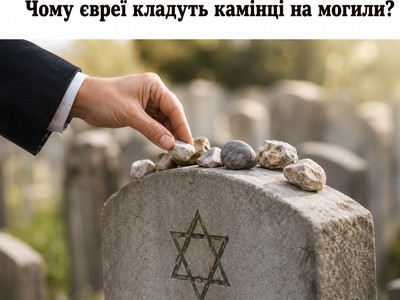
Why do Jews put stones on graves?
Community
Many, when visiting a Jewish cemetery, pay attention to small stones left on gravestones. For those unfamiliar with Jewish tradition, this may seem unusual. In fact, this ancient custom has a deep meaning.Memory 🕯️ signThe most common explanation is simple and at the same time very touching: a stone means:“I was here. I remember you.”This is a quiet sign that the memoryof a person continues to live on.⛰️ Symbol of EternityUnlike flowers, which fade quickly, the stone remains for many years. That is why it has become a symbol of unquenchable memory and spiritual connection between generations.📜 An ancient customIn ancient times, Jewish burials were often marked by stone mounds. Everyone who came to the grave added another stone, helping to preserve the burial place. Subsequently, this practical action turned into a symbolic gesture ofmemory and respect.🌸 Why not flowers?In Jewish tradition, fresh flowers are not a common way of honoring the dead. They are beautiful, but short-lived. The stone reminds us that a person's memory and good deeds remain forever.That is why on Jewish graves you can see not bouquets, but small stones. Each of them seems to say without words:“You are remembered.” 🕊️