
🏛 Why didn't the Second Temple match the Heavenly Temple? part 3.
Community
Perhaps the reason the Second Temple was not built according to the new plan was that Yehezkel's prophecy was not well understood even by his contemporaries. It required further explanation or a new divine revelation.Moreover, this description remained incomprehensible to subsequent generations.In this regard, in Rashi's commentary on Yechezkel's book, after saying that he could not understand some details of the structure of the Temple, there is an interesting note:“I had neither a teacher nor an assistant who could help me understand the structure of the Temple. I only explain what was shown to me from Heaven.”Ramhal writes about the changes that took place in the Heavenly Temple after the destruction of the First Earthly Temple:“Now I will reveal to you a great secret…Know that the prophet Yechezkel saw the future Temple immediately after the destruction of the First Temple.Although the Temple was destroyed at the bottom, it did not cease to exist at the top.The Earth Temple was built when the light that descended from above was so intensified that it could reach our world, descending from level to level.When this power became insufficient, the Temple on earth ceased to exist.But the Heavenly Temple was not destroyed. He only seemed to hide and did not shine as before...If, after the construction of the First Temple by King Shlomo, the Jewish people did not retreat from the Torah, but remained faithful to the Almighty, they would gradually rise to a higher spiritual level and achieve the perfection that was possible at that time.Then the world itself would undergo transformation, and what was previously hidden would be revealed.However, due to the intensification of evil and numerous sins, the First Temple, built according to the first plan, was destroyed.At this point, the corresponding Celestial Temple also ceased to exist in its previous form and was instantly restored in a new form.It is this new image that is the plan of the Temple to be built in the future.Thus, one Heavenly Temple replaced another — and there was not even a moment of break between them.The New Temple has not yet opened in our material world, but it has existed continuously in the higher worlds ever since.It was he who was seen by the prophet Yechezkel, because at that time this Temple was already fully built in spiritual reality.Source:Meir Shlepakov. "Earthly and Heavenly Temple" (based on materials ).

🏛 The Temple Awaiting Incarnation Part 4, Completion
Community
✨ Ramhal explains that if the Jewish people were worthy, the return from the Babylonian exile in Ezra's time would be like the Exodus from Egypt.🌿 Entering the Land of Israel would then be like conquering it in the time of Joshua.🏛 In this case, it would be possible to build the Temple according to the plan that was revealed to the prophet Yehezkel.☁️ Then the Heavenly and earthly Temples would be completely directed towards each other and would correspond to each other.✨ However, this did not happen.👁 That is why the Heavenly Temple, which the prophet Yechezkel saw, is still waiting for itsincarnation on the groundc74(97A29.4'🙏 We believe and look forward to the day when the Third Beit HaMikdash will be built with the coming of the Messiah. Then the Heavenly and earthly Temples will fully correspond to each other, and the Divine Presence will open in the world in all its fullness.Notes️1ლShmot3:17 pm️2ლMidrash Shmuel15️3ლDirei ha-Yamim I28/11/20194️ლJerusalem Talmud, Megila 1:1.5️ლRambam,Mishneh TorahLaws of the Temple, 1:4.6️ლYehezkel42:3 (Rashi's comment).7️ლRamhal,Mishkney ElyonSECTION 1.📚Source:Meir Shlepakov,"Earthly and Celestial Temple"(based on Chabad.org materials).

Today, 25 Tammuz. Saturday Eve. Shabbat Mevarhim
Community
Today, 25 Tammuz 5786📅 Saturday Eve. Shabbat Mevarhim. Weekly chapters of the Torah"Matot-Masey"c74(97A29.4'Ayom-yom.There are two very characteristic expressions in Hasidism:️1. The Jew recognizes G-dhood, feels the supernatural, and needs no proof of it.️2. The Jew does not want and cannot be separated from Godhood.The truth is that these two expressions are essentially the same thing: the Jew recognizes the Divinity and feels what is above the laws of nature, and therefore cannot be separated from the Divinity.Saturday, 26 Tammuz 5786📌5519 (1759)— Baal Shem Tov defeated the Francoists in Lviv.The letters of the Kherson Geniza mention several messages that tell about the holiday proclaimed by Baal Shem Tov and his students in honor of the victory over the Franco sect. At the same time, no official records of this holiday have been preserved. The Lubavitcher Rebbe explained that, most likely, due to the departure of Baal Shem Tov from this world in 5520 (1760) — already the next year after these events — the tradition of celebration was lost.📌5701 (1941)— during the Second World War, the Lubavitchers were occupied by Nazi troops (let their name be erased), and the Jewish residents of the town were shot.📖 "Ayom-yom"In the study of Torah, a person's devotion is aimed at what he seeks to understand and really understands. In prayer, this devotion is addressed to something that is above human reason and understanding.When studying the Torah, a person feels like a student in front of his teacher, and when praying — a son in front of his father.📖Source:Lubavitcher calendar.
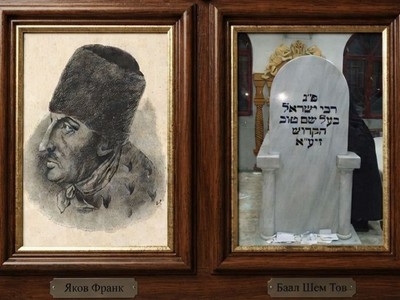
🛑 War of Baal Shem Tov against the Francoists
Community
❓ Who are the Francoists?In the 18th century, a dangerous sect led by Jacob Frank appeared in the Jewish world. He proclaimed himself to be the Messiah and argued that the Torah's precepts were no longer binding and that the most severe prohibitions had supposedly become “commandments.” The followers of the sect behaved without any moral or religious restrictions.In 1756, in Lyantskorun, they held a secret meeting with gross violations of the laws. The Jewish community exposed them, the leaders were arrested, and the Francoists themselves were excommunicated because of the strictest cherem.In response, the sectarians resorted to treason. They appealed to the church authorities, saying that the Talmud was allegedly full of lies, and also supported the bloody slander about the use of blood by Jews to bake matzah. This led to the mass burning of thousands of copies of the Talmud. The main struggle against this sect was led by the founder of Hasidism — Baal Shem Tov (Besht) together with his students.🔥 How Baal Shem Tov foughtWhile prominent rabbis conducted difficult public debates, Baal Shem Tov confronted the threat in both spiritual and practical terms.🔹Disclosure of the secret cipher.The Francoists used a secret code to communicate. Besht's disciple, Rabbi Yisrael Kharif, was able to decipher it, exposing the sect's plans.🔹Saving the holy books.When Bishop Dembowski ordered the burning of the Talmud in Kamianets, Besht declared a spiritual struggle against this decision. Within a month, the bishop died, and the order expired. A similar story happened in Lviv with Archbishop Mikulski: after a warning given by Besht's envoys, he suffered an accident and lifted his bans.🔹Victory DayAfter the final victory over the Francoists during the dispute in Lviv in 1759, Baal Shem Tov, together with his students, proclaimed26 Tammuzaa day of celebration.💔 "The Cry of the Shekhinah": the pain of those who departedDespite the victory, about two thousand followers of Franko, along with their leader, converted to Christianity.In the book,"Shivhey Besht"the bitter words of Baal Shem Tov are quoted:“Shekhinah cries: as long as the organ is connected to the body, there is hope to cure it. But when it is cut off, it is no longer possible to return it. Likewise, every Jew is a part of the Divine Presence.”For Baal Shem Tov, the departure of these people was a great personal tragedy. What did the Lubavitcher Rebbe say about this?Chabad rabbis have repeatedly explained the spiritual and historical significance of these events.🔹Sixth Lubavitcher Rebbe (Rajac)explained that the strong resistance of Hasidism on the part of some rabbis was due to the fear of the emergence of new pseudo-Messianic sects. After the tragedy, they treated any mystical currents with great caution.🔹Mashiach's meal.Rebbe Rajac said that a special meal on the last day of Passover is associated with the spiritual victory of Baal Shem Tov over the Francoists, because it was on this day that he proclaimed that the sect would be defeated.🔹Our Rebbeexplained why today26 Tammuzais not celebrated as a holiday. The very next year after these events, Baal Shem Tov withdrew from this world, and the custom did not have time to gain a foothold. In addition, the Rebbe emphasized that this victory occurred during a period of mourning behind the Temple, hinting at the power of Hasidism to turn mourning into joy.SummaryThe struggle against the Francoists showed that Hasidism became one of the most important spiritual shields of the Jewish people. He helped protect the Talmud, preserve Jewish communities, and resist destruction from within.📖Source:Lubavitcher calendar.

🌿 Shabbat Mevarhim — the Sabbath that blesses the whole month
Community
Every month has a special Saturday —Shabbat Mevarhimwhen the Jewish people bless the coming of the new month.This blessing is not just a tradition. It is on this day that, through our prayers, Tehilim readings and good decisions, we attract the blessings and power of the Almighty to all the days of the coming month.💫The exception is the Sabbath before Rosh Hashanah.On this Sabbath, the Most High himself blesses the month of Tishrei, and it is in this blessing that the power is contained which enables us to bless all the other months of the year.📖Lubavitsky Rebbe Rajacestablished a special procedure for this day:🔹 They gather in the synagogue in the morning.🔹 They read all of Tegilim.Hasidism is 🔹 studied for an hour.🔹 Then they pray.🔹 After the prayer,fARBRENGEN— a Hasidic meeting where good decisions are made and strengthened in the service of the Almighty.The Rebbe emphasized that the reading of Tehilim on this day concerns not only the person himself, but also his children and grandchildren.The Rebbe often said that when the Messiah came, he would ask everyone:“How many Jews have you influenced to read Tehilim on Shabbat Mevarhim?”✨Why Shabbat Mevarhim?Because Shabbat is the day when the highest blessing is revealed, and reading Tehilim before prayer becomes the vessel through which spiritual power descends for the whole coming month.Even if Rosh Chodeshfalls on Shabbat, the blessing of the new month is said the previous Saturday, because the strength for the new month comes from the previous Shabbat.🌿Shabbat Mevarhimis a day of joy, unity and inner renewal.This is an opportunity not only to ask for a blessing, but also to become a source of light and goodness for the whole coming month.📖Source:Lubavitcher calendar.

On July 🎨 16, at 18:00, the "Fiddler on the Roof" gallery invites you to the opening of the exhibition "Three Dimensions of One Spirit".
Community
This exhibition is about art, which is born not aside from events, but in their very midst.🖼️ Three Ukrainian artists whose fates are inextricably linked with the war. Two of them are now in military service, and the third, after serious injuries, has returned to creativity as a way of recovery.Everyone has their own creative handwriting, their own artistic language and personal life experience. But all of them are united by the most important thing — responsibility for their country and a deep conviction that culture and freedom are inextricably linked.✨ This is not an exhibition about the war in the usual sense. This exhibition is about the power of a person who, even in the darkest times, does not stop creating.🎭 For one artist, art has become the language of modern plasticity and expression. For another, by recovering from severe injuries and returning to life. For the third, it is a way of comprehending the spiritual world of a person and finding an inner support. Together, these three stories make up a single story about Ukraine, which not only fights, but also continues to create, inspire and give birth to culture."Three Dimensions of One Spirit"are three different artistic worlds and one common moral choice.💙💛 Here, art ceases to be only aesthetics. It becomes a memory, a psychological support, an internal defense, and a cultural force that resists destruction.Art is medicine. Defense. Weapons.📅Opening:July 16, 2026🕕Start:18.00📍Fiddler on the Roof Gallery13 Shota Rustaveli Str., Kyiv🤝 We invite you to become a part of this important meeting with art, born of the experience, courage and indestructibility of the human spirit.

📖 Sikh Rebbe to the weekly chapters of the Torah "Matot-Masey"
Community
No vows?!📖IntroductionAt the very beginning of the weekly chapters"Matot-Masey"The Torah speaks of a person who makes a vow (neder) to refuse certain material pleasures permitted by law (for example, wine). Its purpose is to draw closer to G-d through a temporary distance from earthly goods. To some extent, sages view such a step as a positive manifestation of spiritual service.🤔QuestionAt first glance, Torah's attention to vows is surprising. Is it not enough what the Torah has already defined as permissible and forbidden? Where does a person have the right to impose new restrictions on themselves?Moreover, because we are sent into this world precisely to purify and sanctify materiality. Isn't retreating from the world an escape from the primary responsibility placed on every Jew?💡ResponseThe truth is that such a path is right and appropriate only for a certain type of people.A person who is at a high spiritual level is not afraid of interaction with the material world. On the contrary, her direct duty is to cleanse and elevate everything earthly, revealing the Divinity in it.However, one who has not yet attained such spiritual stability runs the risk of stumbling. Contact with the temptations of the material world can negatively affect it. It is such a person who should sometimes temporarily give up certain material goods in order to become stronger spiritually, return to the right path and continue his growth.📌A lesson for usSimilarly, today we need to respect the boundaries and protective fences with great respect. (sayyagim) established by our sages, they help us rise above the mundane, protect the soul from spiritual fall, and guide us to the true service of G-d.📜Adapted from:Licutay Sihot, vol. 4, p. 57.📚Source:Lubavitcher calendar.

Birth of AB month
Community
🌑Young Man of the Month Menachem Av🌙 The birth of the new moon will take placeon Tuesday at 19:30 and 17 halakim (parts of an hour).📅Rosh Chodesh Menachem Aveaccounted for bywednesdayc74(97A29.4'📖 There is a good custom on this Sabbath before the morning prayerShaharitread the whole bookTegilim (Psalms).🕣Joint reading of Tegilimin the Central Synagogue of Kyiv will begin at8:3011-Jul✨ Wish you allShabbat shalom!May the Almighty bless everyone with a healthy, calm and joyful monthMenachem Avand this month will bring good news, peace and real Geulah.

July 💔 10 is the Day of Remembrance of Fallen Medics.
Community
Today wepay homage todoctors, paramedics, nurses, brothers and all health care workers who gave their lives saving others. Their courage, self-sacrifice and dedication will forever remain in our memory.Bright memoryto each and every one who did not return from their duty, evacuation or combat exit.Eternal memory. 🕯️

Lubavitcher calendar: 28 Tammuz
Community
📅 28 Tammuz 5786📖 Iom-yomEach of the Rebbe's had special, permanent maamarim destined to do just that —cleanse the spiritual atmosphere of the world. Once every two or three years, they publicly repeated these maamarim.🔹 One of the Maamarim Alter Rebbe —Khaltzu, printed in"Likutey Tora"no notes.🔹 One of the Maamarim Miteler Rebbe —"Yafe Shaa Ahat". Its content covers the first ten chapters of the topic“Behold, everyone says, 'G-d, my soul…'”From bookDerekh Chaimc74(97A29.4'🔹 One of the maamarim Tsemakh Tzedek —"Ma Tovu" gr"Likutey Tora"c74(97A29.4'🔹 One of the Maamarim Rebbe Maarasha —Mi kamoha ba elimc74(97A29.4'🔹 One of the maamarim Rebbe Rashaba —"Ve-yadata a-yom", delivered in Moscow in 5657 (1897).📖Source:"Lubavitcher Calendar".

📌 Halakhic laws and customs from 1 to 9 Av.
Community
Period of Mourning for the Destroyed Beit HaMikdashFrom the moment of sunset 30 tammuz (on the eve of Rosh Chodesh Ava) begins the "Nine days of mourning", which ends at noon 10 av. Below are the main prohibitions and rules in force on these days:Laundry & ClothingDont:Wash clothes (including dry cleaning, even if the clothes are not planned to be worn immediately)Iron clothesWear fresh laundry, use clean bed linen, tableclothsDo:Wear clothes that were worn to Rosh Walk, at least for a short timeWash clothes for small children (up to 5–6 years) — only if necessaryWear fresh clothes on ShabbatBuy a non-leather pair of shoes for 9 Av, if it was not in advanceBuy underwear in case of urgent needHygiene & BathingIt is forbidden to wash for pleasure, even with cold waterDo:Wash hands, feet and faceTake a non-hot shower — if necessary for cleanliness (especially in the heat)Use soap and even hot water — if there is excessive sweating or an unpleasant odorWomen are allowed to prepare for the mitzvah mikva as usualSick, Maternity & Pregnant — Allowed to WashWash the body in parts if the whole body cannot be washedSwimming in the sea or pool — prohibited, even for coolingMeat &wineFrom 1 av to 10 av (including fasting day) do not eat meat and do not drink wineDo:Sick, pregnant, breastfeeding women — if necessaryChildren under 6 yearsAt the lunches on the occasion of the fulfillment of the commandments (brit, podium gaben, bar mitzvah on the birthday)Give wine to a child for birkat amazon if he can pronounce a blessingWine vinegar, beer and other alcoholic beverages (except wine) — allowedShopping & BusinessDont:Buying new things for funBuy furniture, household appliances, nice clothes/shoesBuy clothes and wear them right awayDo:Purchase essentialsShopping for young children (under 6)If the purchase is at a discount — pay to Rosh Chodesh, and wear after 9 avGive gifts (except for 9 Av), but not too expensiveMusic & EntertainmentMusic is forbidden — even in the backgroundDo:Listening to music while playing sports — if it is necessary for healthIt is advisable to listen to the a cappellaWatch/listen to materials for training and moussar (ethics) — allowedHaircuts and self-careIt is forbidden to cut hair, shave, trim beardDo:Trim nailsCaring for the wig (combing, styling), but not washingHaircut/shave for medical reasonsSewing and repairing clothesDont:Sew or repair clothes professionallyDo:Easy home repairs (for example, sew a button)Sewing wedding clothes for a chuppah to a guy who does not have children from his first marriageOtherKiddush Levana is postponed until after the 9th of Av, because it needs joyIt is better to avoid lawsuits these days — because our mazal (luck) is weakenedMay the sorrow of these days lead to true consolation and the construction of the Third Temple —במהרה בימינו!

Chabad History: 📜 The Mystery of the Kherson Archive: Real Letters of Baal Shem Tov or Not?
Community
Imagine a real historical detective who has been worried about the Jewish world for more than a hundred years. In the midst of revolutionary chaos, the archives of the tsarist police fell into the hands of the Hasidim. And these were not ordinary official reports, but ancient manuscripts signed by the founder of Hasidism — Baal Shem Tov — and his famous students.Fierce controversy immediately erupted around this find. Some kissed the manuscripts with tears of joy and considered them an invaluable shrine, while others insisted that it was only a masterful fake. The discussion continues to this day.🕵️♂️ How did you find the archive?Everything happened in 1918, during the civil war on the territory of the former Russian Empire. The laws actually did not work, and the old government was rapidly collapsing.In Kherson, the crowd destroyed the building of the local Cheka, which inherited the archives of the former tsarist secret police. Secret documents were simply thrown out on the street. Local merchants, sorting through the papers, unexpectedly came across old Jewish letters with the signatures of prominent Hasidic righteous people.The documents were transported to Odessa and began to be sold simply in the markets. At first, many considered them to be fake, but the papers had official state stamps. Subsequently, it turned out that the police seized this archive many years ago during a search of the famous Ruzhinsky Rebbe — Rabbi Israel from Ruzhin.When the Hasidim realized what a jewel was in front of them, the wealthy Hasid Shmuel Gurariy bought the archive and presented it to the Fifth Lubavitcher Rebbe — Rabbi Rashab.Along with the documents, personal belongings of Baal Shem Tov were preserved: a silver snuff box in the shape of a fish, a silver turret and his personal seal.📝 Originals or copies?TheFifth Lubavitcher Rebbe, and later the Sixth and Seventh Rebbe, studied these documents extremely carefully — line by line.They said frankly:“These are not originals, these letters are not written by the hand of Baal Shem Tov himself.”In the 18th century, there were neither printing presses nor modern methods of fast copying. Having received a letter from their teacher, the Hasidim sought to share it with friends in other cities, so they manually rewrote it. Errors such as missing words, incorrect letters, or inaccurate dates may have occurred during such rewriting.At the same time, the leaders of Chabad stressed: despite the mistakes of the scribes, the spiritual content and the main idea of these letters remain reliable.⚡ Why was there a dispute?Not everyone accepted this conclusion. Many prominent rabbis and historians have stated that the entire archive is a forgery.The main arguments of the critics were as follows:all about 300 letters were allegedly written by about 30 different people, but the style of presentation is very similar, as if they were created by one author;the texts revealed historical inaccuracies regarding the dates and names of cities;authors often signed their mothers' names (e.g., “Israel, son of Sarah”). This method is traditionally used in requests for blessing or healing, but it looks unusual for ordinary correspondence.🛡️ How did the Lubavitcher Rebbe protect the archive?The Seventh Lubavitcher Rebbe strongly defended the archive and responded to these remarks.He explained that mistakes can be one of the strongest proofs of authenticity. If one were to deliberately create a fake for profit, one would scrutinize every historical detail. Such inaccuracies naturally arise when people quickly rewrite the text for their own use.In addition, the Rebbe noted that at that time there was hardly a person in the south of Ukraine capable of independently creating about three hundred complex cabalistic texts.The similarity of style also has a natural explanation: the students of Baal Shem Tov imitated the manner of presentation of their teacher. In addition, the letters contain information and details that were known only in the circle of Hasidic Rebbe families.🏛️ Where is the archive today?In the 1930s, some of the letters were published in a Hasidic magazine"A-Tomim"c74(97A29.4'During World War II, the Sixth Lubavitcher Rebbe managed to remove this archive from the Soviet Union.Today, the archive and personal belongings of Baal Shem Tov are stored in New York, in Brooklyn, in the library of the Lubavitcher Rebbe.📸Client Name:baal-Shem-Tov's letter from the Kherson archive.📖Source:"Lubavitcher Calendar".