
Bein HaMetsarim 🗓 Days (Three Weeks) — An Inside Look
Community
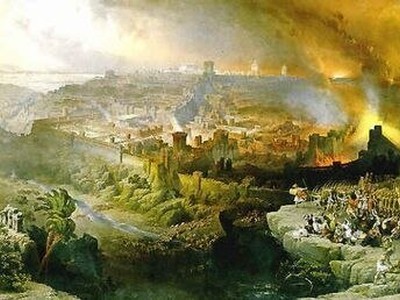
Bein HaMetsarimis the 21-day period of grief between fasting17 Tammuza(the day when the walls of Jerusalem were broken) and9 Ava(the day of the destruction of the First and Second Temples). Historically, this time is considered a period of mourning and severe Heavenly judgment. However, the Lubavitcher Rebbe reveals a completely different, deeper look at these days.🕯Inner Content: The Path to the Third TempleThe Rebbe explains that the very name of this period isThree weeks, not just "21 days", contains a hint of the futureThird Temple (Beit HaMikdash HaShlishi). The spiritual goal of each descent and destruction is to lead to even greater exaltation.In our generation, this inner light is revealed even before the beginning of mourning: the month of Tammuz opens with the holiday of Liberation12–13 TammuzaIt reminds every Jew that the ultimate goal of all difficult events isGeula (Liberation). Therefore, strictly observing the laws of mourning, we are at the same time looking for ways allowed by the Torah to add holy joy to these days.🚫Laws and customs (from 17 Tammuz to Rosh Chodesh Av)In the first part of this period, we refrain from manifestations of excessive joy:Music.They do not listen to music or attend concerts.TravellingIt is not customary to go on entertaining trips or on vacation, as this time is considered unfavorable.Wedding.Wedding celebrations are not held during this period.Haircut.Men don't cut or shave, and women don't cut their hair either.New things.Don't say a blessing"Shegeheyan"for new fruits or important purchases (even on Shabbat).🌒"Nine days" (from 1 to 9 ABA)With the onset of the month of Av, the level of grief increases. In Chabad, they adhere to the Ashkenazi custom, according to which all stricter restrictions begin to operate fromRosh Chodesh Avc74(97A29.4'Meat and wine.They are not used (except for Shabbat or a meal on the occasion of the completion of the study of the Torah treatise —Siyum Masekhet) is properly prepared and signed by appropriate authority.Laundry and clothing.Do not wash or put on clothes that have just been washed or ironed.💡Practical tip:It is customary to wear clean clothes (shirts, pants, etc.) for a short time before the onset of Rosh Chodesh Av, so that they lose the status of "completely new" clothes.Rebbe's custom.On the eve of Rosh Chodesh, the Lubavitcher Rebbe took turns wearing the prepared shirts for a few moments and removed them so that the sleeve turned inside out. It was a sign that the thing was already considered worn.📜Special Instructions to the Rebbe: How to Turn Darkness into LightTo spiritually confront the forces of destruction and hasten the coming of the Messiah, the Rebbe gave some important instructions:Study the laws of the Temple.The Rebbe called for active study of the structure of the Holy Temple (according to Rambam, the treatise "Midot" or the book of the prophet Ehezkel). The Almighty said:“If you study the structure of My House, I count it to you as if you were building it.”Multiply the study of Torah and tzedakah.It is worth devoting more time to learning and increasing charity, rememberingthe words:“Zion will be redeemed by justice (Torah), and those who return to her will be redeemed by tzedakah.”Daily Siyum Masekhet.Continuing"Nine Days"(and before15 Avainclusive) The Rebbe recommended to spend or visit dailySiyum Masekhet— celebrating the completion of the study of the Talmud. On weekdays, such completions must necessarily be accompanied by the distribution of tzedaka.📖Lubavitcher calendar

🕊 Abolition of Fasting in the Age of Mashiach: How Days of Tribulation Turn into Holidays
Community
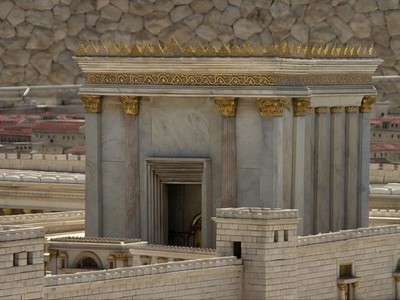
One of the main promises of True and Total Deliverance (Geula) is the prophecy of the prophet Zechariah: fasts associated with the destruction of the Temple will be canceled and forever turned into the bottom of joy.📜 Prophecy and HalakhahThe prophet Zechariah says that the fasts of the fourth, fifth, seventh, and tenth months will be “joy, gladness, and good feasts” for the house of Judah. According to Rambam, Tour, and Shulchan Aruch, this prophecy refers to the Future Liberation when the Third Temple is built.Then, without exception, all the fasts will become holidays. Even the daysBein HaMetsarim— the period of mourning between 17 Tammuz and 9 Ava — will turn into joyful days, similar to semi-festive daysChol Hamoed. The joy of these new holidays will be so great that it will surpass even the joy of Purim!According to Lubavitsky Rebbe, these days they will offer special festive sacrifices, andFast Esther, though historically unrelated tothe destruction of the Temple, will also be a day of great joy.🔄 Two Stages of TransformationAs the Rebbe explains, the conversion of fasts to holidays will not happen instantly, but in two stages.At the first stage, at the beginning of the era of the Messiah, universal peace prevails in the world. There will be no need to grieve over the destruction of the Temple, fasting will be abolished, and the liberation from the burden of exile will bring great joy to the Jewish people.In the second stage, there will be an even more sublime discovery. When miracles beyond the laws of nature are revealed, we will realize that the very essence of fasting was originally aimed at building the Third Temple. We will rejoice not only because the restrictions have disappeared, but also because of the ordeal of the past. We will realize their true spiritual purpose, and then the sorrow itself will become a source of incredible joy.🍯 "Taste" of the future Liberation todayEven now, in exile, we can feel the echo of this great future. For example, in recent generations, the ancient custom of fasting has disappearedBAAB(Monday, Thursday and Monday after Passover, Shavuot and Sukkot). This is directly related to the approach of Geula: as a kind of "taste" of the future, we no longer take on these additional posts.This principle is especially pronounced when fasting falls on Shabbat. According to the Halakha, the mourning fast is postponed to Sunday. The Talmud relates that Rabbi Yehuda ha-Nasi, who was a potential Mashiach of his generation, once wanted to abolish the fast of 9 Ava on Shabbat altogether.During such a postponed fast, we eat meat and drink wine on Shabbat "like at the banquet of King Shlomo." The inner meaning of this is that the day of fasting is a time of special devotion to the Almighty. On Shabbat, the physical burden of fasting is canceled, and his holiness is revealed through a festive meal.Even the historically sorrowful month of Tammuz has taken on a new meaning in our generation. Thanks to the Feast of Deliverance 12–13 Tammuz — the days of release from imprisonmentof the Previous Rebbe — this whole month is now rightly called"The Month of Liberation"c74(97A29.4'May we be honored to see in the near future the complete transformation of the days of sorrow at the bottom of infinite joy with the arrival of the Righteous Mashiach! 🕍✨Note.This article is written to deepen the knowledge of the Halakhah and to better understand the position of the Rebbe. Unfortunately, we are still required to comply with established posts at this time. But, with God's help, let the Mashiach open today, and then we will be able to bring everything written here to life.Source:"Lubavitcher Calendar"
A moment of silence.
Community
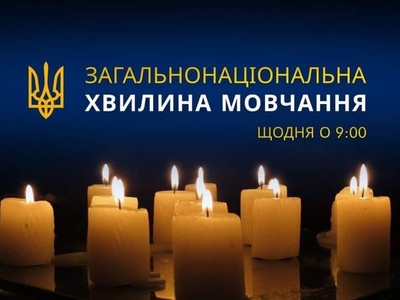
Every day at 9:00Cease movement.Shut your mouth.Remember.Honor thememoryof the dead:soldiers, children, peaceful people.Those who are no longer around.But who is with us forever is in the heart.It's not just a minute of silence.It is our dutyIt's humanity.Alive — thanks to those who were lost...........

Iom-yom: 18 Tammuza
Community
Alter Rebbe spoke of Rabbi Moshe of Wilken:“Moshe has the greatness of intellect, and thanks to ten years of hard work and tireless efforts, his mind has gained real breadth.”Rabbi Moshe of Wilken spent three years preparing for a yehidut (personal audience) at the Alter Rebbe. After that, he stayed in Liozno for another seven years to embody everything received during the Yehidut in his practical service to the Almighty.Source: chabad.org

Siha Rebe for the weekly section of the Torah "Pinchas"
Community
Perfection in detail 📖Amazing lotThe weekly section “Pinchas” talks about the distribution of the Land of Israel between the knees. This happened at the behest of the Almighty with the help of a lot (goral).PunditRashiemphasizes that this process was accompanied by an incredible miracle: the lot did not just fall out — it... spoke! He proclaimed aloud in front of the entire camp: "Such and such an allotment — for such and such a knee!"🤔What's the Question?There is a well-known rule:The Almighty does not perform miracles unnecessarily.It does not change the laws of nature unless it is necessary.Then why make a lot that says? At first glance, there is no practical need for this — after all, the result could simply be read with a scroll. Why turn an inanimate object into a herald?💡Deep ResponseThe order of the Almighty was unambiguous:“Only by lot will the land be divided.”This means that the whole process — from the beginning to the moment when each knee learns about its allotment — had to come from the lot.If the results were announced by a person, then the final stage of the distribution — the proclamation itself - would take place through the human mouth, and not through the lot. Therefore, this miracle was necessary for the will of the Almighty to be realized in absolute perfection.Although the way the results are announced seems to be only a technical detail, the Torah reveals a fundamental principle:there are no minor details in everything related to the will of the Almighty.Each element must be executed in the best possible way.📌For each of us. This principle applies to every commandment, every good deed, and all our daily ministry.•There are no “tools only”.Even if some part of the Torah seems to us only a technical means or an intermediate stage, it should be treated with the utmost respect and trepidation.•Integrity in actions.True fulfillment of the Creator's will is when not only the ultimate goal is beautiful, but also every step leading to it. It is in the attention to detail that spiritual beauty is revealed.📜According to the materials of the conversations of the Lubavitsky Rebbe ("Itvaaduyot", 5751, vol. 4, p. 52).

Tomorrow, July 7, is declared the Day of Mourning in Kyiv
Community
🕯️ Tomorrow, July 7, has been declared the Day of Mourning for those killed as a result of another enemy attack in Kyiv.We express our sincere condolences to the families and loved ones of the victims. We pray for the speedy recovery of all the wounded and for those who are still waiting to be rescued.May the Almighty give strength to those who are experiencing this heavy loss, protect our rescuers and bless Ukraine with peace.

Our dates: 21 tammuz
Community
21 tamuz 5396 (July 24, 1636) — yorzayt (anniversary of the departure from this world) Rabbi Eliyahu Baal Shem-Tov from Worms.The life of Rabbi Eliyahu, who led the alliance of the old (the hidden righteous), was shrouded in mystery. According to some reports, his name was Rabbi Eliyahu ben Moshe Loantz, and he was the grandson of the famous Jewish community leader Rabbi Yoselman of Rosheim; according to others, his father was a Jew from Spain, Rabbi Yosef Yozpa.The Krakow community invited the famous Spanish cabalist and sage Rabbi Yosef to settle in their city when he was already in his 50s. He was unmarried and led a solitary life, devoting all his time to prayer and study. Here he lived for another 30 years, when the prophet Elijah, who taught Rabbi Yosef the secrets of the Torah, gave him the order to marry the young widow of a recently murdered merchant in order to bring into the world a new soul that would help the Jewish people.Six months later, Rabbi Yosef appeared before the base-din (Jewish court) and announced his intention to marry this woman. When the widow heard this, she cried, for, as it turned out, the late father had already appeared to her several times in a dream, blessing her for marriage to the slave Joseph.A year later, in 1555, a boy was born to the young couple, who was named Eliyahu (in honor of the prophet). From the age of two until the bar mitzvah, Eliyahu studied under his father, but two weeks before the bar mitzvah, Rabbi Yosef left this world. A few weeks later, the boy informed his mother that he wanted to leave his home.The next 40 years of his life are shrouded in mystery — it is not known where he lived and what he studied, but when he appeared in Worms, he was already married, had children and was known as Rabbi Eliyahu Baal Shem-Tov. He organized a group of old men — hidden righteous cabalists who traveled from city to city, helping the Jews. After Rabbi Eliyahu, this group was led by Rabbi Baal Shem from Zamość, then by Rabbi Adam Baal Shem from Ropszyc, and after Rabbi Adam, Rabbi Israel Baal Shem-Tov, the founder of Hasidism, became the leader.Rabbi Eliyahu has lived in Worms for over 30 years. Here he organized a yeshiva from which many brilliant students emerged. After Rabbi Eliyahu moved to Prague in 1624, the yeshiva also moved there. One of his students was the famous Rabbi Yom Tov Lipman Heller.source: chabad.odessa

Our dates: 22 tammuz
Community
22 tamuzah 5552 (July 12, 1792) — yorzayt (anniversary of the departure from this world) Rabbi Shlomo ben Meir ha-Levi Segal of Carlin.Rabbi Shlomo was a friend and initially a companion, and later the closest disciple of the founder of the Karlin Hasidic dynasty, Rabbi Aaron ben Jacob Perlov (Aaron the Great). After the departure of Rabbi Aaron from this world, the Karlin Hasidim were left without a rabbi. Rabbi Shlomo stubbornly refused to take up this post, and they say that it took the intervention of a teacher — Rabbi Aaron, who appeared to Rabbi Shlomo in a dream and advised him to agree.Rabbi Shlomo moved to the town of Ludomir (now Volodymyr-Volynskyi) and in 1792 was killed during a pogrom organized by Polish rebels who fought against the Russian Empire. His successor as Karlinsky rabbi was the son of Rabbi Aaron — Rabbi Asher, who moved to the town of Stolin. And the Hasidim have since begun to be called Carlin-Stolin.source: chabad.odessa

Our dates: 23 Tammuz
Community
23 tamuzah 5330 (July 26, 1570) — yorzait (anniversary of the departure from this world) of one of the most prominent medieval cabalists, Rabbi Moshe ben Jacob Cordovero (Ramak).The place of his birth is unknown, and the family, judging by the surname, came from Spain. Moshe's teachers were Rabbi Yosef Karo, the author of the book "Shulchan Aruch", a code of Jewish life standards, and Rabbi Shlomo Alkabetz, a famous cabalist, the author of the Saturday hymn "Lecha Dody".Rabbi Moshe was one of the four wise men who in 1538 received a laughter (a certificate of consecration as a rabbi) from the famous slave Jacob Beirav. The other three are the author of Shulchan Aruha, Rabbi Yosef Karo, Rabbi Moshe of Trani, and Rabbi Yosef Sagis.Rabbi Moshe was a dayan (community judge) and head of the yeshiva in Safed, and among his disciples was the great cabalist Rabbi Yitzhak Luria Ashkenazi (Arizal). During his short life, Rabbi Moshe created several monumental works, and his first and most famous work “Pardes Rimonim” (“Pomegranate Garden”) was written by him at the age of 27.Other famous works of Rabbi Moshe — "Elima Rabati" ("Great Elim"), "Or Yakar" ("Precious Light") — have not yet been published a large commentary on "Zohar" (the main book of the Cabal), as well as the introduction to the Cabal "Or Neorav" ("Evening Light") and a commentary on the Pentateuch "Sefer Gerushin" ("Book of Exile").source: chabad.odessa

Our dates: 26 tammuz
Community
26 Tammuz 5519 (July 23, 1759) — the victory of Baal Shem-Tov over the Francoists during the dispute in Lviv.A letter was found in the Kherson Geniza, which told about the establishment by Rabbi Israel Baal Shem-Tov of the custom of celebrating the day of victory over the Francoists.The Francoists were followers of Yakov Franko, one of the disciples of the false messiah Shabtai Zvi. After Shabtai Zvi converted to Islam, Frank began to preach similar ideas and during his life managed to convert from Judaism first to Islam, then to Catholicism, and later he was going to convert to Orthodoxy. Among other things, Frank preached immersion in the abyss of sin, so that the cup of patience would be filled as soon as possible and Moshiach would come.On July 17, 1759, at the initiative of the Francoists and the Catholic Archbishop, a dispute took place between them and traditional Jews in Lviv. Forty rabbis participated on the Jewish side, among them Rabbi Baal Shem Tov. Most rabbis did not want to participate, fearing the consequences, but Baal Shem-Tov insisted that as long as a person was still associated with the people, there was hope for his return.After the end of the dispute, the priests demanded that the Francoists accept baptism, which was done. The new "Poles" changed not only their faith, but also their names, and often their surnames. Subsequently, these surnames became known — Brzezinski, Krysinsky, Yasinsky, Mayevsky, Piotrovsky, Zelinsky. In particular, the mother of the great Polish poet Adam Mickiewicz came from the Mayevsky family, and he himself never forgot this.source: chabad.odessa