
Today — 13 Elul 5786
Community
🛑 Три додаткові псалми на місяць Елул: 37–39📌 5657 (1897) року Ребе Раяц одружився з Нехамою-Діною Шнеєрсон.«Айом-Йом»Хасид реб Гендель розповідав:«Усім хасидам було відомо, що вже під час першої особистої зустрічі з Ребе — єхідута — відбувалося “обрізання серця”. Хоч би якою була людина, душевної черствості вона позбувалася одразу».Коротке пояснення: уже під час першої особистої зустрічі з Ребе реб Гендель та інші хасиди переживали миттєве звільнення від душевної черствості й егоїзму. Серце відкривалося — раз і назавжди.📖 Любавицький календар

Історія ХАБАД: Сенсація з архівів ФБР: як сина Четвертого Любавицького Ребе допитували, вважаючи «секретарем Леніна»
Community
Упродовж десятиліть постать реб Менахема-Мендла Шнеєрсона залишалася оповитою таємницею. Він народився 1867 року — того самого року, коли пішов із життя його великий дід, Третій Любавицький Ребе Цемах-Цедек, на честь якого хлопчика й назвали. Син Ребе Маараша та рідний брат Ребе Рашаба жив у Франції, успішно займався підприємницькою діяльністю, водночас залишаючись глибоко віруючою людиною, відданою єврейським традиціям.Однак розсекречені архіви ФБР відкривають неймовірну й драматичну сторінку з часів більшовицької революції.🛑 Підозрюваний: «червоний шпигун» у порту Нью-ЙоркаПодії розгортаються 1918 року, у розпал Першої світової війни та революційного хаосу. Рабин Менахем-Мендл прибув до США з діловим візитом. Проте американські спецслужби здійняли тривогу: французький агент передав термінове повідомлення про те, що за гучним прізвищем Шнеєрсон нібито приховується не хто інший, як… особистий секретар радянського вождя Володимира Леніна!В умовах панічного страху західних спецслужб перед комуністичним шпигунством рідкісне й відоме прізвище стало приводом для негайного затримання.🔍 Обшук і «релігійні книги їдишем»Його затримали та піддали суворому перехресному допиту. Агенти ФБР ретельно обшукали багаж, сподіваючись знайти таємні шифри, інструкції Комінтерну, зброю або інші докази діяльності «червоного комісара».Та яким же було їхнє розчарування, коли замість планів державного перевороту вони виявили звичні речі релігійного єврея: тфілін, таліт, сидур, книги з хасидизму, а також тексти їдишем та івритом.Під час допиту реб Менахем-Мендл різко засудив більшовиків, назвавши їх «німецькими агентами», і висловив надію на їхнє швидке падіння.📜 Вердикт ФБР: «добрі євреї» з ЛюбавичівКульмінацією розслідування став підсумковий звіт американської спецслужби. У сухих протоколах агентів з’явився дивовижний опис династії Хабад:«Цілковито благочестива людина з родини рабинів та вчених. Його предком був раббі Менахем-Мендл — Цемах-Цедек, відомий мудрець усієї Росії. Його брат — видатний рабин, добре знаний серед євреїв Росії».Намагаючись визначити, до якого середовища належить затриманий, американські слідчі зафіксували історичне формулювання: «Шнеєрсон належить до групи “добрих євреїв” — “ґуте їдн”, тобто хасидів, відомих глибоким вивченням Тори та винятковим благочестям».🏁 Розв’язка: помилка в імені та спочинок у ЦфатіЗрештою ФБР визнало безглузду помилку: затриманий не мав жодного стосунку до більшовицького режиму.Раббі Менахем-Мендл прожив довге життя і пішов із нього вже під час Другої світової війни — 1941 року на французькому острові Корсика. Через багато років його останки перевезли до Землі Ізраїлю та перепоховали на старовинному кладовищі у Цфаті, поруч із великими праведниками.Сьогодні ці пожовклі архівні документи відкривають дивовижну історію стійкості, гідності й відданості традиціям перед обличчям найнесподіваніших випробувань.Написано за матеріалами сайту חב״ד לייב.📖 Любавицький календар

Dispelled fears about the beginning of 5787 on Shabbat
Community
Rabbi Shays Taub dispelled fears about the beginning of 5787 on ShabbatThe famous lecturer Rabbi Shays Taub addressed religious Jews concerned that the first day of Rosh Hashanah in 5787 falls on Shabbat.The reason for his explanation was a viral video, the authors of which claim that the coincidence of the Jewish New Year with the Sabbath, when the Halakhah does not trumpet the shofar, allegedly can foreshadow difficult trials. Rabbi Taub stressed that such fears are based on misinterpretation of religious sources and arbitrary interpretation of historical events. The very fact that Rosh Hashanah falls on Shabbat happens quite often. (NEWSru.co.il)The authors of the video refer to a statement from the Talmud that the year, at the beginning of which the shofar did not sound, may have an unfavorable ending. However, Tosafot is explained: this caveat applies to cases where the shofar commandment could not be fulfilled due to unforeseen circumstances. It does not apply to Rosh Hashanah, which falls on Shabbat, when on the first day of the holiday, the shofar is not trumpeted in accordance with the decree of the sages. Talmud, Rosh Hashanah 16b,full explanation of Rabbi Shays TaubRabbi Taub also drew attention to a factual error in the video. The COVID-19 pandemic and the first large-scale quarantine restrictions occurred not in 5781, the first day of which was Shabbat, but in 5780, which began on Monday.In addition, major historical tragedies occurred in the years that began on other days of the week. World War I began in 5674, with Rosh Hashanah on Thursday, and World War II in late 5699, which began on Monday. Thus, historical facts do not confirm the existence of a special connection between the beginning of the year on Shabbat and subsequent disasters.Rabbi Jacob Ettlinger noted back in the 19th century that the years when Rosh Hashanah fell on Shabbat brought both joy and trials. According to his explanation, on ordinary days, the sound of a shofar becomes the deputy of the Jewish people before the Heavenly Court, and when the holiday falls on the Sabbath, this mission is taken over by the Sabbath itself.The seventh Lubavitcher Rebbe Menachem-Mendel Schneerson also spoke about the special spiritual meaning of such a year. The beginning of the year on Shabbat does not abolish human labor, but elevates it: it helps to devote more energy to studying the Torah, fulfilling the commandments and filling even everyday affairs with a higher goal.Rabbi Shays Taub called for entering the year 5787 not with fear, but with joy and trust in the Almighty.According to the rules of the Jewish calendar, Rosh Hashanah can only fall on four days of the week: Monday, Tuesday, Thursday or Shabbat. Therefore, the beginning of the new year on Shabbat is not a disturbing sign, but a quite common calendar phenomenon.The first day of Rosh Hashanah 5787 falls on Saturday, September 12, 2026; the holiday will begin on the evening of September 11.

Happy Shabbat!
Community
“Every thing has a purpose. And each goal has an even higher goal. And yes — higher and higher. The ultimate goal of all things is the bliss of Olam ha-Ba, the Coming World, for which everything was created."(Likutei Moaran, 18).It is impossible for a person to fully comprehend this. But on Shabbat, the light of Olam HaBa descends upon us—and we can feel it too. If we want to.


Psychologist page: 🙌Psychological resilience and self-regulation during emergencies
Community
Psychological resilience is a person's ability to maintain mental health and function effectively under stress, danger, and emergencies (ES). Self-regulation, in turn, is a process of controlling one's emotions, thoughts and behavior under stress, which allows a person to adapt to difficult circumstances.The importance of psychological stability and self-regulation:In emergency situations (for example, in natural disasters, man-made accidents or military conflicts), a person often faces a strong emotional load, which can lead to panic, anxiety, depression or other mental disorders.Psychological stability and the ability to self-regulate help a personKeep calm in chaos.Make informed decisions and take necessary actions.Manage post-traumatic stress disorders (PTSD).Restore psychological balance after stressful events.The main factors of psychological resilienceSelf-awareness: The ability to assess one's emotions and reactions to stress.Social support: Having support from family, friends, and co-workers helps reduce anxiety.Self-regulation skills: the ability to control one's emotions and respond to stressful situations constructively.Flexibility and adaptability: The ability to change problem-solving approaches as circumstances change.Methods of self-regulation in emergency situationsDeep Breathing: Helps reduce stress and restore peace of mind.Relaxation: The use of relaxation techniques such as meditation or progressive muscle relaxation.Shifting focus: Focusing on current tasks and distracting from anxious thoughts.Positive thinking: a positive mindset and an optimistic approach to solving problems.SummaryPsychological resilience and self-regulation are key to effectively coping with emergencies. People who develop these qualities are better able to adapt to stressful situations, maintaining physical and mental health, as well as helping to maintain stability in society.Please take care of yourselves and your loved ones!
Why do the Hasidim go to the Rebbe for the holidays of Tishrei?
Community
The month of Tishrei in 770 is the spiritual center of the entire Hasidic world. Thousands of Hasidim leave their homes, work and usual comfort to meet the main holidays of the year next to the Rebbe. This is not just a journey, but a spiritual need: an opportunity to renew the soul, gain strength and receive blessings for the whole new year.Below are simple answers to the most important questions about this tradition.🧳Questions and answers about the trip to the Rebbe❓Why do Hasidim go to the Rebbe?💡 The main goal is to get closer to the Rebbe and strengthen the spiritual connection with him. Coming to his teacher, a person removes himself from the everyday bustle, streamlines his thoughts and receives a powerful charge of spiritual strength, which helps to overcome difficulties throughout the next year.❓Why is the month of Tishrei so important?💡 Tishrei is the beginning of a new year, the time when the fate of a person for the next twelve months is determined. Rosh Hashanah is translated as “head of the year”, and the head must be in the holy place. Throughout the month, 770,000 people pray, study the Rebbe's conversations, study together and, of course, say “lechaim.” All this gives a powerful spiritual impetus for the whole year.❓When else, besides Tishrei, do they go to the Rebbe?💡 The Hasidim also try to come on other special days: to the International Congress of Envoys of the Rebbe — Kinus ha-Shlukhim, which takes place at the end of autumn, to Yud Shvat, the holiday of Shavuot, when rabbis can leave their communities, as well as on 19 Kislev or on the occasion of important family events, such as bar mitzvahs.❓What do the Hasidim do during the trip?💡 The days are extremely busy. The main thing is to pray in synagogue 770, study, listen to the Rebbe's speeches and write personal letters asking for blessings and help.An important part of the stay is the Hasidic gatherings — the farbrangenes, during which niguns sing, say “lechaim” and take good decisions to change for the better.❓Do I need to prepare for my trip in advance?💡 Yes. The Rebbe taught that you cannot go on such a trip without preparation. They prepare for it spiritually: they study books on Hasidism, give it to the Tzedakah, and before leaving they gather together with their family or community in order to properly tune in.❓Are there any rules and restrictions?💡 Yes, there are several important conditions:No unsustainable debts.You cannot take out large loans without being able to repay them.Peace in the family.A married husband must obtain his wife's consent. Before leaving, it is customary to give her a beautiful gift — preferably gold jewelry — as a sign of gratitude for taking care of the house.Responsibility.The trip should not harm the family or create serious problems at work.❓What if I don't have money for a trip?💡 In communities, special funds are created and ticket draws are held to help those who cannot pay for the trip on their own. You can also use the funds of the charity tithe — maaseru, if they have been postponed in advance.The Rebbe noted that someone who helps another person raise money for a road trip, to some extent, also becomes a participant in this trip.❓What do I need to do as soon as I return?💡 It is necessary to "unpack the suitcases" not only at home, but also in your own soul. You can not leave everything experienced and felt on the plane. When you return, you should bring warmth, inspiration and good decisions into your daily life: become more attentive to loved ones, do more good and fill every day with content.📖A life story: why do you need this trip?One Hasidic mashpiyah explained the meaning of the trip with the help of a story about a poor Hasidic fisherman.The sea was constantly stormy, but the Hasidic fisherman every year, despite the lack of money, sailed to his Rebbe. Neighbors mocked:—Why spend money on the road if you have debts at home?Hasid replied:—All year round, I am afraid of drowning in the waves of life's problems. My sail breaks and my compass goes off course. A trip to the Rebbe is no fun. This is an opportunity to go to a quiet harbor where I can fix the boat, replace the sails and get fresh water for the whole next year. Without this, I simply will not survive. jerlot: 📖Lubavitcher calendar

🗓 Jewish holidays are not just dates on a calendar.
Community
Each of them carries its own special meaning: renewal and repentance, freedom and memory, light, joy and gratitude. They connect generations, preserve our history and remind us of the spiritual values of the Jewish people.Keep this short memo about the main Jewish holidays.

Lubavitcher calendar for 15 - 16 elul
Community
Today — 15 Elul 5786🛑Three additional psalms for the month of Elul: 43–45📌5657 (1897)— Rebbe Rashab announced the founding of a Lubavitcher yeshiva called Tomhei Tmimim. This happened during the festive meal "Sheva Brahot" by Rebbe Rajaca.📌5706 (1946)— a special committee was established to manage the Chabad Hasidic community in the Pokeng transit camp and the Chabad yeshiva was established.Iom-yomYeshiva "Tomhei Timim" was founded on Sunday, 15 Elul 5657 (1897).Training in the sections "Negle" (open part of the Torah) and "Daah" (abbreviation from "Direi Elokim Chaim" — works on Hasidism) began on Wednesday, 18 Elul 5657 (1897).On the night of the feast of Simhat Torah 5659 (1898), after the rounds — "akafot", my master, father, teacher and Rebbe announced: the yeshiva is called "Tomhei Tmimim", and its students who live and behave in accordance with its spirit are called "tmimim" — immaculate, integral.Saturday — 16 Elul 5786🛑Three additional psalms for the month of Elul: 46–48Iom-yomAlter Rebbe explained the saying: “He who saved one soul from Israel, as if he saved the whole world.”Every Jew should be viewed as he “exists” in the eternal thought of the Almighty — at the highest level of G-dhood, which is the source of the souls of Israel. There, every soul is “present” along with all generations of their descendants — until the coming of Moshiach, the righteous Deliverer. Therefore, when one does good to one Jew, this benevolence extends to all these souls — to the end of all generations.📖 Lubavitcher calendar
Today is 17 Elul 5786.
Community
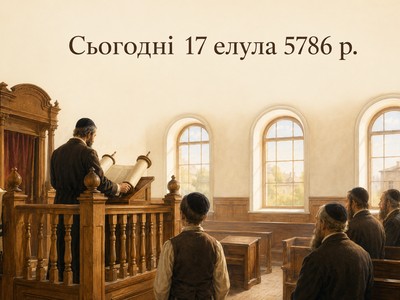
The 🗓page of the book "Ayom-yom" on 17 Elul tells how Alter Rebbe (Rabbi Schneur-Zalman) always read the Torah with a scroll himself. It also describes a case that occurred in Liozno on the Sabbath of the weekly section "Tavo", when his minor son — the future Miteler Rebbe — had to listen to the reading of the Torah by another person. [1]📌Table of Contents and History of the DayReading the Torah:The Alter Rebbe personally read the Torah from a scroll in the congregation.Warnings:this daily passage emphasizes the continuity of generations and reveals the details of the Hasidic way of life.The Eve of Hai Elul: 17 Elul immediately precedes the great date of 18 Elul, or “Hai Elul,” the birthday of Baal Shem Tov and Alter Rebbe. [1, 2]

Siha Rebbe for the weekly section "Ki Tavo" | Total Joy
Community
📖Introductio nBefore the entrance of the sons of Israel into the Land of Israel, the Most High commands them to bring to the Temple “bikurim” — the first fruits of seven species that grew on their land. This is done in order to express joy and gratitude to God for the fruits that this land is famous for.It follows from the text of the Torah that the offering of bikurim begins only when the entire Jewish people settles in their allotments. Until this time, he who already lives on his land and cultivates it cannot bring anything but until the settlement of the entire people is completed.🤔QuestionIt would seem that if the whole point of bikurim is the gratitude of the Jewish people to B-gov for the gift, why can't a person who already sees the fruits bring them only because the division of the land has not yet been completed?What is the connection between personal gratitude to G-d and the provision of other Jews?💡ResponseBikurim are offered as an expression of joy for the fullness of the good that the Almighty has bestowed upon the Jew.As long as another Jew has not yet found rest in his allotment, the joy of one who is already bearing fruit is not complete. Therefore, he cannot yet express it because of the bikurim.📌LessonAt its core, the whole of Israel is one.Thanks to unselfish love — “aavat hinam” — and unity, together we will be worthy of complete Liberation.Based on Likutey Sikhot, vol. 9, p. 161.📖Lubavitcher calendar
The Living Heart of Chabad Hasidism: The Amazing Story of the Tomhei Timim Yeshiva
Community
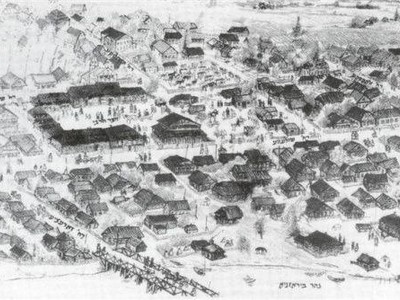
"The center of yeshivas " TomheyTimimim " Lubavitch", or simply "Tomhey Timimim", is a worldwide network of yeshivas of Chabad, named after the yeshiva in Lubavitch. This name was given to her by the founder — the fifth Lubavitcher Rebbe, Rebbe Rashab.The uniqueness of the yeshiva lies in the fact that it was created by our mentors — Rebbe Rashab and Rebbe Rayats. Here, the teachings of Chabad Hasidism are studied daily, and students are instructed from an early age in the path of Hasidic life.🏛How the yeshiva was founded in LyubavichyOn Sunday, 15 Elul 5657, during a meal of Sheva Brahot on the occasion of his son's marriage, Rebbe Rashab announced the decision to establish a yeshiva for Torah scholars who would study Hasidism with trepidation before Heaven.17 Elula Rebbe chose the first 18 disciples and instructed Rabbi Shmuel-Gronem Esterman to teach them Hasidism according to a certain system.The official opening took place on the bright day of 18 Elul. Rebbe Rashab said he founds a yeshiva at the behest and blessing of the holy ancestors — a yeshiva that educates students who are ready to sacrifice themselves for the Torah and serve on the paths of Chabad Hasidism in order to fulfill the promise: “And your springs will spread outward” — and bring the coming of Moshiach closer.🎯Purpose and Spirit of YeshivaTo counter the momentum and movement of the Enlightenment that was spreading in russia, Rebbe Rashab opened a yeshiva.Its name reflects the main idea: the purification of character traits, the strengthening of inner spiritual service and the formation of a holistic and pure personality — "tamim".In 5661, the Rebbe made an eternal covenant with his disciples of selfless work for the sake of Torah, awe before Heaven, and uncompromising service from the heart.The uniqueness of the yeshiva lies in the combination of in-depth study of the "nigle" — the open part of the Torah — in accordance with the instructions of the Rebbe Rashab, set out in the "Kuntres Etz Chaim", with immersion in the teachings of Hasidism. This gives students a solid spiritual foundation.🛡Test: underground in russia and wolves of "Evsection"During the First World War and after the Bolsheviks came to power, the yeshivas went into deep underground.Through the persecution and denunciations of the Yevsektsia, which sought to destroy Jewish education, pupils and rabbis studied in secret cellars and safe houses. They were ready for anything — prison, exile and even death, but not surrender.In 5687 (1927), Soviet Chekists arrested Rebbe Rajac for false denunciation. However, after his release and expulsion from russia, the Tomhei Timim network did not cease its activities, but continued to work with even greater force.🇺🇸Renaissance in the United StatesOn the day of his arrival in the United States, Rebbe Raiats founded the central yeshiva "Tomhei Tmimim" in New York, which was later located in the building 770.Initially, students studied at a synagogue in Brooklyn, and in Heshvan in 5701, the yeshiva moved to the famous building 770 on Eastern Parkway, where it remains to this day.In the following years, new departments were opened in Morristown and elsewhere for students of all ages. Yeshiva disciples were honored with the special intimacy and personal guidance of our Rebbe.🌍"Tomhei Timim" these daysFrom the beginning of his leadership, our Rebbe called for the opening of yeshivas everywhere.Today, there are hundreds of Tomhei Timim branches around the world, where thousands of students study Torah, Hasidism, as well as the issues of Geula and Moshiach.In Israel, the famous "year of schlichut" also joined this, during which graduates go to strengthen communities and spread the sources of Hasidism in different cities.📷In the photo:lyubavichi town; the Tomhei Tmimim yeshiva is a large building in the center.📖Lubavitcher calendar