
18 Elul — Hai Elul: A day that brings life
Community
18 Elul, or Hai Elul, is a special date in the Hasidic calendar. On this day, two prominent figures were born: the founder of Hasidism Baal Shem-Tov and the founder of Hasidism Chabad Alter Rebe.The Hebrew word “let” has a numerical meaning of 18 and is translated as “life.” This day marks the beginning of a special, final stage of spiritual preparation for Rosh Hashanah. [,https://wikipedia.org/]Meaning of this dateBaal Shem Tovwas born on 18 Elul in 1698. He founded the Hasidic movement and opened the way for joyful service to G-d.Alter Rebbe — Rabbi Shneur-Zalman from Lyad— 18 Elul was born in 1745. He founded Chabad Hasidism and wrote the book Tania.Twelve special days:there are twelve days from 18 Elul to Rosh Hashanah. Each of them corresponds to one month of the outgoing year and is a time for spiritual summing up and correction.

"Two great luminaries."
Community
The Lubavitcher Rebbe, Rabbi Yosef-Itzhak Schneerson (Rajac), called 18 Elul — the birthday of Rabbi Yisrael Baal-Shem-Tov, as well as Rabbi Schneur-Zalman (Alter Rebbe) — "the birthday of two great luminaries." The Lubavitcher Rebbe Menachem-Mendel Schneerson devoted one of his talks to explaining why each of them — Rabbi Israel Baal-Shem-Tov and Alter Rebbe — is called a “great luminary” and what connection exists between them if they are combined together as “two great luminary”.The Torah says that the “two great luminaries” were created together, and at the same time each is called upon to carry out its own mission — at its own clearly defined time. The "two great luminaries" — Baal Shem Tova and Alter Rebbe — should be considered in the same way.Both are leaders of the Hasidic movement. However, Baal Shem Tov is the founder of Hasidism in general, and Alter Rebbe is the founder of Chabad Hasidism. However, just as the heavenly “two great luminaries” were created by the same sentence of the Creator, 18 Elulah combines the two earthly “great luminaries” of Hasidism.Each of them lived and acted in his own time; between them there was a whole generation, during which Rabbi Dov-Ber, the Mezhyritsky Magid, was the head of the Hasidim.Baal Shem Tov was born in 1698, when the Jewry of Eastern Europe had not yet recovered from the terrible blows inflicted on it by the atrocities of the Ukrainian Cossacks in 1648–1649. According to Rabbi Pinchas Koritser, one of the most prominent disciples of Baal Shem Tov, the Jewish people “were unconscious.”Many children did not receive even a basic Jewish education and upbringing, and therefore, of course, could not pass anything on to their children. At the same time, rabbis, scholars of the Torah, scribes of sacred texts and other educated people deliberately separated from the people, treating them as a "crowd of ignoramuses." Unity — the main condition for the existence of the people of Israel — was broken.Due to extreme poverty, the inability to earn their daily bread and continuous persecution, ordinary Jews had almost no access to their spiritual values, and they increasingly lost their importance for them. And the "head" of the people — its intellectual elite — lived as if completely separate from the "body". Therefore, the study of the Torah lost its vitality, turning into abstract intellectual exercises, understandable only to the elect. Having no connection with the "body" of the people, its "brain" seemed to dry up and die.It was then that the Almighty sent a soul into this world with the task of "bringing the Jewish people to life" and dispelling the darkness that enveloped it.When a person faints, one way to wake them up is to call out their name. In the same way, Baal Shem Tov, who was called to bring the Jews out of their state of unconsciousness, had thename Israel. He brought the people out of the state of oblivion and raised them to a high spiritual step, thereby returning to them the right to be called by their most exalted name — Israel.Рабі Шнеур-Залман, Алтер Ребе (1745–1813), жив уже за зовсім інших обставин. Вивчення Тори та любов до неї, виконання заповідей і молитва перебували на рівні, незрівнянному з часами Баал-Шем-Това. Проте й тоді в єдності народу Ізраїлю існувала глибока тріщина, яка загрожувала перетворитися на прірву, не менш небезпечну, ніж раніше. Вона розділяла хасидів і мітнаґдім — противників учення Баал-Шем-Това, які боролися з ним. Хасиди та їхні опоненти дивилися одне на одного як на руйнівників єврейського народу, і народ Ізраїлю знову занурювався в морок…But, as Rebbe Rajac has repeatedly said, "the darkness is not dispersed with a stick." It is enough to bring at least a little light — and the darkness itself will recede. That is why both Baal Shem Tov and Alter Rebbe are called "luminaries", besides "great luminaries": both of them illuminated the people of Israel, and through it — the whole world with a new, great light.And before them, the people of Israel had many personalities worthy of being called "lights" — from the time of the Mishnah and the Talmud to the New Age. They all shone — and how! All of them were, so to speak, "conductors" of the light of the open part of the Torah: the Talmud, Halakhah, Jewish philosophy, musar — ethical doctrine based on the Torah. Each in his own way updated this light, amplified it or, when circumstances required, dimmed, changed or discovered new components in it.But at the time of Baal Shem Tov, this light was already lacking. To dispel the darkness, we needed a light that had never been seen before and was available to the masses, even to the least educated Jews, the darkest part of the people. It was the light of the Cabal, the most intimate part of the Torah, the doctrine of its spiritual content.Both the medicine, which is itself unfit for consumption, but under special circumstances and at the right moment saves the life of the patient, and the Cabal, which for millennia was the property of only a select few and remained inaccessible to the vast majority of the Jewish people, served by a skilled and experienced "healer", saved the people of Israel.It was Baal Shem Tov's mission to become such a "healer". For ten years — from the revelation of his mysterious teacher in 1724 to his own revelation as the righteous and Rebbe of the whole people in 1734 (by the way, both events occurred on the same day — 18 Elul) — Baal Shem Tov was preparing for this work.It took a lot of art to meticulously dose these "medicines": give everyone exactly as much as necessary to bring only good and, God forbid, not to harm. Therefore, the methods that Baal Shem Tov used in his activities were extremely diverse.In order for ordinary Jews, who treated Torah scholars with great distrust, to perceive him as their own, Baal Shem Tov appeared before them in the form of a craftsman, a poor merchant, a farmer or even a beggar-traveler and diligently concealed his knowledge of the Torah. He spoke in the simplest language, told parables, from which it followed that a Jew should perceive his Jewry not as a heavy burden, but as a precious gift.To Baal Shem Tov, reading the words: "Where shall I go from Thy spirit, and where shall I flee from Thy presence? If I ascend to heaven, you are there, and if I lie in my grave, here you are!", the Jew sighed heavily, and sometimes cried: "Oh, where can I go from G-d, from His heavy hand?.."However, after hearing the words of Baal Shem Tov, he, reading the same passage, felt sincere joy: “He is everywhere with me, He will never leave me anywhere!”In other words, the ministry of Baal Shem Tov influenced primarily the emotional perception. He no longer needed to hide in front of his students, and to them he revealed his knowledge in full. However, by training students as continuers of their work, Baal Shem Tov tirelessly taught them to love all Jews without exception — even the simplest and least educated. After all, it is among them that one can often find such deep faith and piety, which are sometimes lacking in learned rabbis.Before Baal Shem Tov, no one taught this way, so the path opened by him was in the full sense of the word new. He literally saved many Jews and therefore deserved to be called the "great luminary".Rabbi Schneur-Zalman, Alter Rebbe, continuing the whole business of Baal Shem Tov, turned not only to the heart, but also to the mind. The basis of the teachings of Hasidism Chabad was the position: "The brain reigns over the heart."As Alter Rebbe himself explained, he called his direction "Chabad" — an abbreviation of the words "hochma", "bina", "daat", that is, the three intellectual forces of the soul — because the influence on the human heart is impossible without appealing to its mind. Only through hard mental work can a person improve his personality. The fulfillment of the commandments, prayer, and even everyday life must be meaningful and guided by the mind in everything.In the teachings of Alter Rebbe, the "medicine" of Baal Shem Tov, with which he healed the Jewish people, took on a completely new form, which made it possible to incomparably expand the scope of their application.Without yielding anything to the inner meaning, Rabbi Schneur-Zalman embodied the deepest secrets of the Cabal in such simple forms that they became perceptible even to very ordinary Jews. For them, these provisions of Chabad's teachings were interesting by themselves, but most importantly, they always contained a relevant practical conclusion.At the same time, a Torah scholar, especially one already familiar with the Kabbalah, found deep knowledge in them, which often revealed to him in a completely new way the content of the Torah, the meaning of the commandments, and the essence of the works of Jewish thinkers already known to him.Before the Alter Rebbe, it was believed that it was enough for a Torah scholar to devote his whole life to studying the Talmud. Rabbi Schneur-Zalman proclaimed: just as the unity of the Jewish people is the main and indispensable condition for its existence, the Torah can also be only one. Everything in it is equally important. Moreover, not knowing one part of it, it is impossible to correctly perceive the other. The study of the Talmud is impossible without ethics, and even the Pentateuch cannot be properly understood without knowledge of the Cabal.An extremely important component of the teachings of the Alter Rebbe is a powerful desire for the Truth: not to deceive anyone, neither others, nor himself, exaggerating his own shortcomings or virtues.He required his followers to regularly carry out ruthless self-analysis, being aware not only of their actions and words, but even of their thoughts, checking their orientation and compliance with the Torah. джерело: chabad.org


Our dates: 18 elul
Community
Our dates:18 elul 5369 (September 17, 1609) — Yorzeit (anniversary of the departure from this world) Rabbi Yehuda-Liwa ben Bezalel (Maharal) from Prague.Цього дня відзначається йорцайт видатного мислителя і мудреця Тори, кабаліста і багаторічного лідера празької єврейської громади рабі Єгуди-Ліви, також відомого як Маѓараль. Рабі Єгуда був нащадком царя Давида, а серед його нащадків — засновник Хабаду Алтер ребе. Маѓараль перебував у добрих стосунках із германським імператором Рудольфом, який цінував його знання і мудрість, і рабі Єгуда неодноразово використовував цю дружбу для захисту громади від утисків. Крім того, рабі відомий тим, що створив голема (фігуру з глини, яку він оживив, використовуючи знання кабали), призначеного для захисту празьких євреїв від нерідких у ті часи погромів.Note: in the famous novel by the Strugatsky brothers, there is a section where the sofa with the famous White Thesis is active, which belonged, as written in the book, to the court alchemist of Emperor Rudolf Leo Ben Bezalel. So the "court alchemist Leo" is our Rabbi Yehuda-Liwa ben Bezalel. And what else could it be called in a Soviet book in the 40th year of Soviet power?18 elul 5458 (August 25, 1698) — Birthday of Rabbi Israel Baal Shem-Tov (Beshta).On 18 Elul 5458, a son was born to the wise and righteous Rabbi Eliezer and Rebbetzin Sarah from the town of Okup.At the time of his son's birth, his father was a hundred years old and his mother was ninety. The boy was born unusual: at the age of three months, he was already walking and talking. When he was one and a half years old, his father died, before leaving, ordering his son not to fear anyone but the Almighty. On the anniversary of his father's death, his mother also died, and the townspeople took the orphan under their care.18 elul 5489 (September 12, 1729) — the prophet Ahiya from Shiloh opens Baal Shem-Tov and becomes his teacher.Rabbi Israel himself said: “…On the day when I turned 26, on 18 Elul 5489, in the city of Okup, at midnight, my teacher and mentor Ahijah from Shiloh opened to me. The first lesson was devoted to the weekly chapter ofBreishit. The prophet Ahijah studied with Besht for 10 years, revealing the secrets of the Torah to him.18 elul 5494 (16 September 1734) — The Disclosure of Besht.10 years after the beginning of his studies under the guidance of the prophet Ahijah and at the insistence of the teacher, Rabbi Israel revealed himself to the world as Baal Shem-Tov (in Hebrew it means "Lord of the Good Name", that is, a connoisseur of bondage). Prior to this, Rabbi Israel refused to disclose himself for six years, for which he was subsequently deprived of 6 years of his life.18 elul 5505 (September 15, 1745) — Birthday of Alter Rebbe.Although 10 months had passed since the wedding of Rabbi Baruch and the Rebbetzin of Rivka, they did not have children, and they decided to go to Baal Shem-Tov (Beshta). Every year, on his birthday, 18 Elul, Besht arranged a meal and uttered the words of the Torah. During the meal, Rabbi Baal Shem-Tov said to Rabbi Baruch, “Just until this time in a year, you will be hugging your son.” On Wednesday, 18 Elul 5505, a son was born to Rabbi Baruch and the Rebbetzin of Rivka, who was named Schneur-Zalman, in honor of his paternal grandfather.18 elul 5508 (September 11, 1748) — Opchernish (first haircut) of Schneur-Zalman (the future Alter Rebbe) Baal Shem-Tov.When Rabbi Baruch, the father of Alter Rebbe, arrived in Besht at the bottom of Rosh Hashanah in 5508, he told the teacher about his intention to bring his son to him when the third birthday of the baby will need to be first cut. Rabbi Besht gave his consent.On 18 Elul 5508, Rebbetzin Rivka and her sister-in-law, Rebbetzin Dvo-Leya, together with the child came to Medzhybizh. Besht cut the child's hair and told the women to immediately go back home, without talking to each other about the place where they had been. All the way the baby asked what kind of Jew cut his hair, to which his mother answered him: "It's Grandpa."18 elul 5573 (September 13, 1813) — Miteler the Rebbe settles in Lyubavichy.After his departure from this world, Alter Rebbe, his son — Miteler Rebbe — spent several months in Kremenchug. The Ukrainian Hasidim asked the Rebbe to settle in Ukraine, but the Hasidim of Belarus also sent delegations to him with requests to settle among them. In the end, the "Belarusians" took the mountain, and Miteler Rebbe went to Belarus after the holiday of Shavuot. For 102 years, the Lubavitchers were the residence of four generations of Chabad leaders and the center of Hasidism for hundreds of thousands of Hasidim of Russia and other countries of the world.18 elul 5657 (September 15, 1897) — the beginning of classes in the yeshiva "Tomhei-Tmimim" in Lyubavichy.As mentioned above, the Tomhei Tmimim yeshiva was founded on 15 elul, but the real start of classes fell on 18 elul. Here is what the sixth Lubavitcher Rebbe, Rabbi Yosef-Yitzhak wrote about this: "On the day of the Tov of the month of Elul (Tov — "blessing" (Hebrew), the gematria of this word corresponds to the number 17, that is, Tov Elul — 17 Elul), my father, the fifth Lubavitcher Rebbe, chose the first 18 students and handed them over to the famous Hasid Rabbi Shmuel-Grunem Esterman from the city of Zembin to teach Hasidism.And 18 elulah, during my meal "Sheva brahot" (wedding meal), my father said: "Today is 18 elulah, a significant day on which Alter Rebbe and our teacher, Baal Shem-Tov, were born. And on this holy day, I found a yeshiva <...> a yeshiva that will give students who have self-sacrifice in the nameof the Torah and Service in the way of Hasidism...".source: chabad.odessa

Our dates: 20 Elul
Community
20 elul 5766 (September 13, 2006) — The writing of a new Torah scroll began in Odesa.On this day, in the synagogue on 21 Osipova Street, in the presence of hundreds of people, the writing of a new Torah scroll began. The honor of writing the first letter was given to the entrepreneur and the second community Mr. Manoah Golan, who allocated funds for writing this scroll.source: chabad.odessa

Our dates: 21 elul
Community
21 elul 5524 (September 18, 1764) — Yorzeit (anniversary of the departure from this world) Rabbi Jonathan Eibeschitz from Prague.Rabbi Jonathan ben Nathan Nata Eibeschitz (sometimes spelling his surname as Eibenschütz, Eibenschütz and Eibenschütz) was born in 1690 in Krakow, in the family of descendants of the famous rabbi Nathan Neta Shapiro (among his descendants Rabbi Pinchas of Korets) and studied in the yeshivas of Poland, Vienna and Moravia. After that, Rabbi Jonathan led the yeshiva in Prague, was the chairman of the Prague court and the rabbi of the French city of Metz, as well as the rabbi of the "Three Communities" — the cities of Altona, Hamburg and Wandsbeck.Rabbi Jonathan gained fame as a cabalist and a brilliant orator-preacher, as well as one of the most prominent Talmudic scholars of his time, who did a lot for the development of pilpool, one of the methods of analyzing Talmudic texts.Rabbi Jonathan passed away in 1764. He is buried in the famous cemetery of the Jewish quarter of Prague.21 elul 5699 (September 5, 1939) — Rabbi Yosef-Yitzhak moves from Otwock to Warsaw.On September 1, 1939, the Second World War began with the invasion of Poland by German troops. After its beginning, the sixth Lubavitcher Rabbi Yosef-Yitzhak (Rabbi Rajac) decides to leave Poland and return to Riga.21 elul (September 5) at 3 pm Rabbi Rajac left Otwock and went to Warsaw. Leaving the city where he had arrived four years earlier, Rabbi Yosef-Yitzhak cried.On the way to Warsaw, the Germans covered them with their fire. All the passengers left the cars, hiding on the side of the road, but the Rebbe told his family that there was nothing to be afraid of, “since the Father is working for us now.”When they arrived in Warsaw, it turned out that because of the war it was impossible to leave for Latvia. The Rebbe was in Warsaw until December 2 (December 14), when he miraculously managed to escape to Riga.21 Elul 5700 (September 24, 1940) — The inauguration of Rabbi Yosef-Yitzhak center of the Chabad movement in the United States.On such an occasion, as befits the Hasidim, a paint brand was arranged. The headquarters of the movement was the Seven Seventy building — building number 770 on Brooklyn's Eastern Parkway.source: chabad.odessa

Our dates: 22-23 Elul
Community
22 elul 5177 (September 3, 1417) — Yorzeit (the anniversary of the departure from this world) Rabbi Jacob Molina (abbreviated Maaril), nicknamed the "father of Ashkenazi customs."Rabbi Yaakov, born in 1365, was the best disciple of Rabbi Meir of Vienna and is considered the greatest legislative (Halakhic) authority of all European (Ashkenazi) Jewry of that era.By this time, two "scientific schools" had appeared in the rabbis — Ashkenazi and Sephardic (German and Spanish) — which used different methods for making legislative decisions. Both methods were based on the traditions received by the chain of generations, and Rabbi Maaril became famous as a zealous defender and guardian of Ashkenazi traditions, including even the least significant customs, such as the melodies of holiday prayers.23 elul 1656 (2105 BC) — A pigeon brings an olive branch in its beak.On the 301st day of the Flood, Noah sends a pigeon to scout for a second time. This time the pigeon flew all day and only returned in the evening with an olive twig in its beak. From this Noah realized that the water had receded, some vegetation was already rising above the water, so it would soon be possible to complete the voyage.23 elul 5697 (August 30, 1937) — Yorzeit (anniversary of the departure from this world) to Rabbi Meir-Shlomo Janowski.Rabbi Meir-Shlomo Yanovsky is the father of Rebbetzin Khana and the grandfather of our Rebbe, a famous sage, a connoisseur of Torah and Hasidism. His grandfather, the sage and righteous Rabbi Avraham-David Lavut, the author of the book "Shaar HaKolel", was the rabbi of the city of Mykolaiv, and after his departure from this world, Rabbi Meir-Shlomo received an offer to take this position.source: chabad.odessa
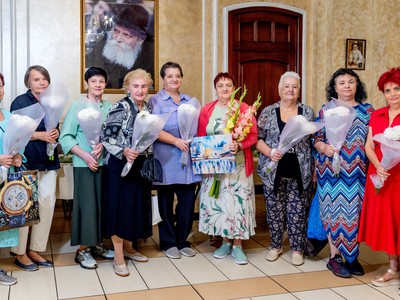
Despite the anxiety — together: the Hromada congratulated the birthday people of July and August
Community
For our Community, the birthday of each of our believers is an important and joyful event. We prepare for such meetings with special care, because we want every birthday person to feel: they remember him, they are waiting for him and he is sincerely welcome.This time we were worried whether everyone would be able to come, because sirens and explosions were heard again in Kyiv. But, despite the disturbing circumstances, the birthday people of July and August gathered together. The meeting turned out to be warm, sincere and truly family.Chief Rabbi of Ukraine Moshe Reuven Azman personally congratulated the birthday people, wishing them good health, peace, long years of life and the blessing of the Almighty.This day was especially warmly greeted by the jubilee — Polina Izrailevna Men, who turned 80 years old. Up to 120 — in good health, love of relatives and joy!Even in the most anxious times, we stay together, support each other and protect the warmth of our Community. Mazl tov all birthday people!
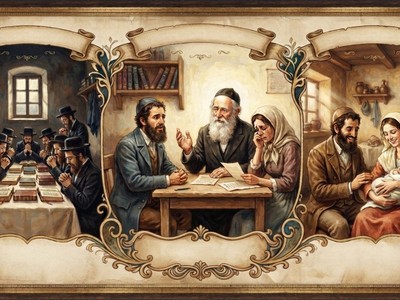
The Love of Friends Moving the Heavens: The Amazing Story of Besht and the Power of Unselfish Prayer
Community
On a cold and dark winter night in 1744 in the small town of Denburg, in the corner of the synagogue, sat Moshe Chaim. His heart broke with deep pain and despair: years passed, and he and his wife Miryam were still childless. A few years ago, the couple already experienced a terrible tragedy — three of their long-awaited babies were born, but one by one they died suddenly at an early age. Wind curls outside the window and piercing frost only increased the bitterness that tangled up to the throat.It was then that an unprecedented wave of spiritual exaltation swept over the quiet town. The initiator of the changes was a simple local seamstress, Rabbi Gedalia Borukh. Returning from a trip to Mezhybizh, to the founder of Hasidism — the great slave Israel Baal-Shem-Tov (Beshta) — he brought the news of a completely new approach to the service ofGod. At the center of this teaching was the service of the Almighty with joy, purity of character traits and unconditional love for every Jew — Ahavat Israel.Inspired by the stories of Besht's miracles, Moshe Chaim and his sensitive wife Mirjam decided to take the most desperate step in their lives — to go on a long and dangerous journey to beg the tzaddik for a blessing on the birth of a long-awaited child.Arriving in Mezhybizh, the unfortunate couple was finally honored to enter the modest room of the great teacher. With tears in their eyes, they poured out all the accumulated pain in front of him, told him about an empty house and lost children. But something happened that they did not expect: Besht silently looked at them with his pure, insightful eyes and... did not say a word.They came again and again, but each time the great righteous kept a deep silence. After the third silent meeting, Mirjam fainted and fell just to the floor, and waking up, wept so much that the heavens seemed to shudder. However, Besht remained steadfast. The ways of Heaven were hidden.Then Rabbi Gedaliah Boruch and ten devoted students of Besht realized: the situation is critical, and the heavenly gate for this spouse is tightly closed. Without saying a single word to anyone, prompted by the purest love for their neighbor, they decided to fast for three days in a row from dawn to sunset and continuously, day and night, begging the Creator to have mercy on the unhappy family.At the end of the third day of fasting, something incredible happened. As soon as the disciples completed the prayer, the Rebbe's servant ran to them and reported that Besht was urgently calling everyone to a festive meal — the ceudat mitzvah. No one, except the tzadik himself, knew the real reason for this banquet.Sitting at the head of the table, Besht shone with a light. He gave a profound exhortation about the greatness of the words: “Love thy neighbor as thyself” — and about how friends, united in prayer for a fellow sufferer, can build a bridge over the abyss, canceling even the severest heavenly sentence, turning grief into joy and curse into a blessing. The disciples knew right away that their secret feat of self-sacrifice was accepted in Heaven.Exactly one year after that memorable trip, on May 2, 1745 — 33 years after the wedding — a healthy and strong son was born in Mirjam and Moshe Chaim, who was named Shlomo. Thirteen years later, the boy and his father came to Mezhybizh, where he received a personal blessing from the already aged Beshta. Shlomo grew up, married the daughter of Gedaliah Boruch and became one of the most revered and oldest Hasidim of his generation, known as “Shlomo Bashes”.This amazing story is recorded in the book "Sefer ha-Toldot" by Rebbe Rajac from the words of Shlomo himself.Source:📖 Lubavitcher calendar

ROSH HASHANAH PRAYER SCHEDULE 5787
Community
FridaySEPTEMBER 11 (29 ELULA)8:00 — ShaharitAtarat Nedarim after Shaharit19:03 — Lighting of festive and sabbatical candles19:15 — MinhaAfter Prayer Lesson with Rabin19:55 — Maariv and Saturday meeting20:20 — MealSHABBATSEPTEMBER 12 (1 TISHREI)9:15 — Lesson with Rabin10:00 — ShaharitAfter the meal, a lesson for women from Rabbanit13:00 — Meal18:45 — Minha20:06 — Maariv and the Exodus of the Sabbath20:30 — MealSUNDAYSEPTEMBER 13 (2 TISHREI)09:15 — Lesson with Rabin(before Shaharit)10:00 — Shaharit13:00 — Meal18:45 — Minha19:00 — Tashlikh20:06 — Maariv (output of yom goods)Shana tovo umetuka!Have a nice and sweet year!
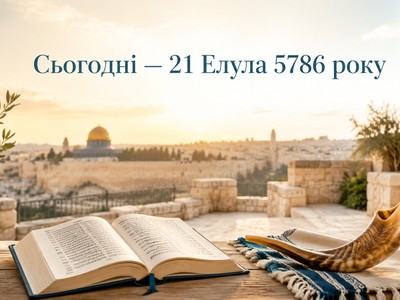
Today is 21 Elul 5786
Community
🛑 Three additional psalms for the month of Elul: 61–63📌 5699 (1939) — due to the outbreak of World War II, Rebbe Rajac went to Riga, where he remained until 24 Adar 5700 (1940).📌 5700 (1940) — the grand opening (hanukat ha-bait) of the building "770" took place after 19 Elulah 5700 (1940) Rebbe Rajac settled in it.Iom-yomOur forefather Abraham, through his selfless service to the cause of spreading the knowledge of the Almighty — the One God — among all the inhabitants of the earth, was honored to pass on to his descendants for all generations pure faith in G-d and His Torah. Therefore, every Jew and every Jewess has the strength and steadfastness to give her soul for the holy Torah.📖 Lubavitcher calendar
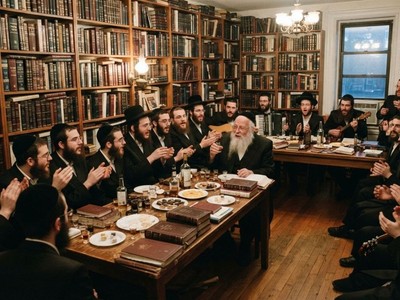
Chabad history: until 21 Elul - the day of housewarming in the legendary world center of Chabad "770"!
Community
🏠What is the Chabad housewarming and what is its deep meaning?In the Jewish tradition, and especially in the teachings of Chabad Hasidism, acquiring and furnishing a new home is not just a change of scenery or a material achievement. This is the creation of another source of light in the material world, the transformation of ordinary walls into a real center of spirituality.When a person builds or buys a home, they are embodying one of the deepest human needs. According to the wisdom of Hasidism, the house serves not only as a protection from external troubles, but also as a spiritual shield that protects a person from harmful influences and spiritual cold. That is why so much attention is paid to housewarming, and the celebration itself turns into a deep and meaningful rite in which every step has a sacred meaning.📜How it all starts: first steps in a new homeChabad customs determine the course of action even before wardrobes, sofas, or boxes of clothing are brought into the rooms. The first things that cross the threshold of a new home set the tone for the rest of your life.First of all, holy books are brought to the house: the Pentateuch of the Torah, siddur, the book "Tania" and works on Hasidism. The Hasidic dwellings also make sure that there are always three fundamental books of early Hasidism in a prominent place: Keter Shem Tov, Or Torah and Tania.Many Hasidim adhere to the rule not to settle in the apartment until there is a portrait of the Rebbe on the wall, which fills the space with an atmosphere of devotion and blessing.👶Children's voices and Torah lessons among empty wallsOne of the most touching and special customs of the Chabad housewarming is associated with children. At the very beginning of the celebration, babies who have not yet reached the age of bar mitzvah are invited to the new home.Children enter the still empty rooms and begin to learn the letters of the Hebrew alphabet there, as well as read verses from the Torah. The Rebbe explained this tradition by a beautiful analogy. Just as a young child is given gifts in the first days of school and encouraged to have the strength and desire to continue to study independently, so a new home needs a powerful spiritual impulse at the very beginning.Pure children's voices, studying the Torah in new rooms, attract heavenly blessings and fill the house with special vitality, harmony and light for many years to come.💰Box for tsedaka and the right dateEvery detail in the Chabad house has its own sacred meaning. On the special instruction of the Rebbe, it is imperative that the tzada box be wall-mounted to make it an integral part of the home. Thanks to this, the walls themselves become a home for good deeds, consecrating the space every second.There are also clear guidelines for choosing a day to relocate. The best day of the week to check in is Tuesday. In the story of the creation of the world, it is twice said about this day: "Good", so it is considered especially auspicious. At the same time, moving on Monday and Wednesday is avoided.If the housewarming falls on the sorrowful month of Av, they try to postpone it until the beginning of the blessed month of Elul. Elul is a time of great mercy and spiritual awakening, the perfect time to start a new phase of life.🎉How the festive meal takes placeCelebrating a housewarming party with friends and loved ones never turns into an ordinary feast. The main component of the evening is the Hasidic farbrangen.Guests share inspiring stories, utter the words of the Torah, sing heartfelt Hasidic tunes, and sincerely bless the hosts with a glass of lechaim. It is believed that the atmosphere of the first hours in the new house determines the whole further atmosphere of life in it. That is why joy should be sincere, deep and filled with meaning.📖Lubavitcher calendar