Today, 12 Elul 5786
Community
🛑 Three additional psalms for the month of Elul: 34–36📌5689 (1929)— The Sixth Lubavitcher Rebbe Rajac for the first time arrived on a visit to the United States of America.Iom-yomThe Great Maamar, known as "Be-Shaa She-Hikdimu" (5672 / 1912), our Rebbe Rashab began on the Sunday of Shavuot 5672 in Lubavitches, and completed on Saturday the weekly section of the Torah "Vaera" 5676 (1915) in Rostov-on-Don — Maamar, which begins with the words: "And the Lord said:" Shall I hide from Abraham... "This cycle has 144 maamaras.Also in the manuscripts there was the second part, which Rebbe Rashab did not pronounce orally and which was not divided into individual maamaras.📖Lubavitcher calendar
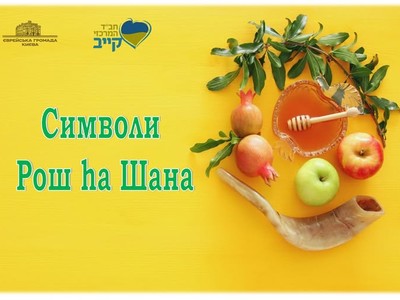
Getting Ready: 🍎Rosh Hashanah (New Year)
Community
Getting ready for the feast: 🍎Rosh Hashanah (New Year) is an important holiday . That is why it is filled with all sorts of symbols, signs, curls and much more.📌Shofar (lamb horn)The sound of the shofar, similar to the cry of a child, symbolizes the cry of the Jewish soul addressed to the Almighty📌Apple with honeyIt symbolizes the wishes of a sweet new year.GarnetThe pomegranate contains 613 seeds - the number of commandments in Judaism.Fish 📌HeadFish is a symbol of abundance and growth, fertility.CarrotWe ask the Almighty to increase our merits and destroy the negative decrees directed at us.LeekWe ask the Almighty to destroy all our enemies.BeetWe ask the Almighty to remove our enemies.DatesWe ask the Almighty to destroy all our haters.📌Round halalThe circle symbolizes the integrity that we wish for ourselves and all the people of Israel.on the material of the site:toldot.com
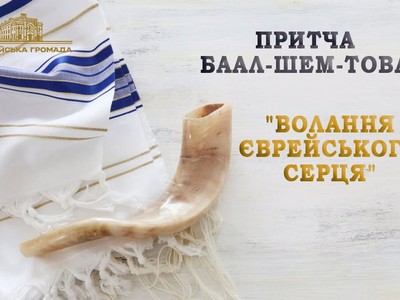
Parable of Baal Shem Tov "The Cry of the Jewish Heart"
Community
Baal Shem Tov once told such a parable about the sound of a shofar, which is trumpeted on the day of Rosh Hashanah.The Tsar's son spent many years in exile, far from his native home. When he finally returned — overgrown, dirty and torn — no one recognized him as the long-lost prince. But when he saw his father, a cry burst from his heart: “Father! Father, save!” The king recognized his son's voice and, deeply moved, hurried to meet him.Similarly, the soul of a Jew is in exile, far from his father's house. Descending from the Throne of Glory, she is absorbed into a material body, rude and dirty with sins. But on the day of Rosh Hashanah, the Jewish soul is inflamed with a passionate desire to return to the Almighty and then says from the depths of his heart: “Father! To our Heavenly Father, save us!”This is the meaning of the sound of the shofar — the cry of the Jewish soul coming from the depths of the heart.📌Essence of cryingAs the teachings of Hasidism explain, the main aspect of the cry is not its content, but its very essence, the very fact of conversion. When a person cries, there are two sides: the cries themselves and the meaning they want to convey through them. In our case, the main thing is not the meaning that the Jew puts into his cry, but the cry itself.In terms of meaning and content, there may be differences between people: everyone has their own words, thoughts, desires. But from the point of view of the essence of the cry — all are equal. Everyone turns to G-d and seeks to return to Him. Someone yells loudly, someone so that no one hears it, but everyone turns to the Creator.📌Blessing is not in vainThis cry, which is expressed in the sound of a shofar, is raised infinitely high and accepted by the Almighty. The proof is the blessing we say on the day of Rosh Hashanah: “Blessed are You… that with mercy You hear the sound of the shofar of Your people Israel.”After all, there is a law of blessing: bracha is spoken only when there is absolute confidence in the need to say it; when there is doubt, the blessing is not pronounced. Therefore, if the Halakhah attributes to uttering the blessing that the Almighty hears the sound of the shofar of the people of Israel, this indicates that this voice is really heard and accepted by the Creator.Rabbi Levi-Itzhak from Berdychiv gave such an example. The child asked the father for an apple, and he did not give it to him. Then the child quickly uttered the blessing to be said before eating the fruit: “Blessed is… that which creates the fruit of the tree.” And his father had to give him an apple so that the blessing would not be said in vain. In the same way, the Jewish people bless the Almighty, saying that He hears the sound of the shofar of the people of Israel with mercy — and the Almighty “must” do so so that the blessing is not in vain.And if this is the behavior of an earthly father, a man of flesh and blood, who did not want to give the child an apple, then all the more so does the Almighty, who wants to bestow a generous hand on the Jewish people. All you have to do is ask Him. Therefore, we can be sure: when we smoke in a shofar on the day of Rosh Hashanah, his voice reaches the Creator and is received by Him with mercy, and He gives each of us a “good and sweet year”!From the works of Lubavitsky Rebbe; short adapted summarysource: chabad.org
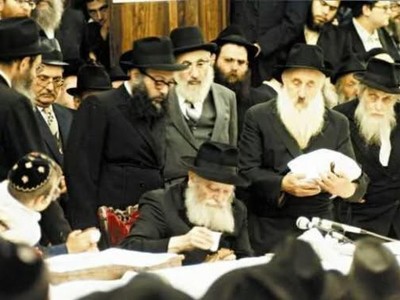
🔟 Facts about Rosh Hashanah at the Lubavitcher Rebbe
Community
At the Lubavitcher Rebbe before the evening prayer in Rosh Hashanah, it was customary to go to his wife's room to wish her a good and sweet year and ask for forgiveness. They advised all Hasidim to do the same.Rosh Hashanah tried to complete all of Tegilim at least once. In the Rebbe, the reading began about 20 minutes before the evening prayer.There was always a lamb's head on the Rebbe's table at Rosh Hashanah. Only if it was not there — they put the head of the fish.The meals at the Rebbe were held in a special concentration: they did not sing and almost did not speak (except for the second day meal). Also, the Rebbe first immersed the halah in salt three times, as during the year, and only then immersed in honey three times.The prayer in "770" at the 7th Rebbe began at 10:00, like the whole year. In Lyubavichy, they used to pray much earlier.Before Rosh Hashanah, the Rebbe received letters from Hasidim and Jews from all over the world. They were put in the same bags and brought to the tubes in the shofar.The Lubavitsky Rebbe himself trumpeted the shofar, except for the First Rebbe, who said: "Shofar has been trained since childhood, but I did not have a childhood."Tashlikh was carried out immediately after Minkhi. First, the Rebbe went with the Hasidim to the botanical garden, and from the 70s they began to do tashlich near the fountain next to "770".After sunset on the second day, a short special farbrangen was arranged, which continued a little after the holiday in order to "extend the sanctity of Rosh Hashanah for the whole year."The Rebbe asked that each Hasid help as many Jews as possible to fulfill the commandment of listening to the shofar.כתיבה וחתימה טובה לשנה טובה ומתוקהHave a good entry in the Book of Life and Sweet Year
📌Getting Ready for Rosh Hashanah: Breaking the Vows
Community
On the eve of Rosh Hashanah, it is customary to break the vows during the year to appear before the judgment of the Almighty cleansed of grave sin: unfulfilled vows (including those simply forgotten and those that remained unfulfilled). This ceremony takes place after the completion of the morning prayer.Since our vows can only be broken by a Torah scholar, it is necessary to go to him and tell him what vows we have taken, and explain that if we knew that we would not be able to fulfill them (or there is another reason for which we repent) in accepting them, we would not take them upon ourselves. Then the Torah scholar tells us three times, “You let go.” The essence of this assumption is that these promises are recognized as data erroneously.A request to break a vow must be made in front of three (or more) people. For although a rabbi who is a scholar of the Torah, in principle, has the right to break the vows alone, three ordinary Jews also have this right. And nowadays, we believe that no one person has the right to break promises alone.In practice, on the eve of Rosh Hashanah, each person chooses three others for himself and tells them that he repents of all the promises he made during the year. They say to him, “You're free to go.”There is a formula for this ceremony, which is given in the prayer books. This formula sets out in detail all the problems associated with vows and how to break them.Source:https://toldot.com/

Rosh Hashanah 📖 Quick Guide
Community
History and meaning of the holidayOn Rosh Hashanah, the Jewish New Year (1–2 Tishrei, September 11-12 in 2026), the reign of G-d over the whole world is proclaimed.On this day, the forefather of mankind, Adam, was created. And that same day, he broke the ban and was kicked out of Eden. This was the first trial of a person. Since then, every year the Almighty judges the world and determines the fate of people and nations for the coming year.Candles & BlessingsOn the eve of the holidays, they light festive candles before sunset and say a blessing:...ledlik neur shel yoim azikoroyn...sheikheyan, vekiyman, veigiyanu lizman azeGreetingAfter the evening prayer, the Maars greet each other with the words:"Lesana tova tiktatev ve tehatem" (a woman is told: "Lesana tova tiktatvi ve tehatmi") –“May you be recorded for a good year, and may this record be sealed!”Festive MealSymbolic customs are followed during the dinner:Hala is soaked in honey.An apple with honey and the words: "Thy will be done, that the year may be good and sweet!"A lamb's or fish's head is to be the head, not the tail.Pomegranate – so that there are many merits, like seeds in a pomegranateCarrots, beets and other vegetables with good associations.Fish – to multiply like fish in the sea.Avoid sour, bitter, spicy and nuts (gematria of the word "nut" = "sin").Judgment and the seriousness of theIn Rosh Hashanah, the Almighty determines the fate of everyone, so this is the dayhope and prayer, not entertainment.Do not sleep during the day.Taking time to pray, Tori and Tehilim.It is customary to refrain from marital intimacy.No smoking.Shofar CommandmentThe most important commandment is to listen to the sound of the shofar.Before the trumpet, they say a blessing: "...commanded us to listen to the sound of the shofar" and Sheeheian.Everyone answers: AMEN!Musafi trumpetedTimesIf the first day falls on Shabbat, the shofar is heard only on the second day.Rite of TashlikhOn the first day after noon (if it is Shabbat – on the second day), the Tashlikh rite takes place:They recite prayers addressed to the "Thirteen Measures of Mercy".Symbolically, sins are "shaken out" near the pond.Water symbolizes mercy, and fish– Fertility and vitality.Second day of Rosh HashanahThe second day has the same status as the first.Candles are lit again in the eveningafter the appearance of stars.It is customary to have a new thing (clothing or fruit) to say to Sheheheian.Symbolism of the nameRosh Hashanah literally means “head of the year.”Just as all the functions of the body depend on the head, the whole next year depends on the behavior of a person in Rosh Hashanah.Source:chabad.org
📌18 facts about Rosh HaShanah. (1)
Community
The traditional greeting at Rosh Hashanah is "Shana Towah!" (שנה טובה), which means "Have a nice year!» Often, "y-mattuka" (ומתוקה) - "and sweet" are added to this.Rosh Hashanah is celebrated for 2 days.While most Jewish holidays add an extra day only outside the Land of Israel, in the Diaspora, it is the only holiday where it is celebrated for 2 whole days around the world, including Israel. The first day of Rosh Hashanah can only fall on 4 days of the week: Monday, Tuesday, Thursday or Saturday, and never on Sunday, Wednesday or Friday.1. Translated from Hebrewthe name of the holiday means not the New Year, but the Chapter of the Year. Rosh Hashanah does not just mark the beginning of a new calendar cycle, and the fact that it is at the head of the rest of the holidays of the year contains a deep meaning, because it determines so much in our lives. Just as a person's head (or rather, brain) tells the whole body what it should do, our behavior in Rosh Hashanah, and most importantly, throughout the previous year, has far-reaching consequences.2. Rosh Hashanah High Court Hour не схожий на свята інших народів, якими починається рік. Для нас це не час подарунків та веселих сюрпризів та не радість від збирання врожаю, а час Вищого Суду. Відповідно до єврейської традиції, саме у Рош а-Шана визначається вирок кожній живій істоті на весь наступний рік. На шальки терезів не багато немало наші життя і смерть і все, що з цим пов'язано. У книзі Зоар говориться, що Рош а-Шана – час, коли наш найлютіший ворог Сатан отримує у Всемогутнього повноваження обвинувача — прокурора. Проте Мішна називає Рош а-Шана Йом Тов (свято).3. Why are we being judgedЧому початок місяця Тішрей був пов'язаний з Вищим Судом? Причина криється в гріху Адама і Хави, які порушили заборону Б-га, не є плодами Древа Пізнання. Варто було Адаму з'їсти шматочок цього плода – і в його серці виник поганий потяг (Раші, Берешит, 2:25), якого не було і не могло бути до цього моменту. З того часу з власної волі він міг приносити зло чи добро, як собі, так і іншим (Рамбан, Берешит 2:9), керуючись любов'ю чи ненавистю. А спочатку він діяв відповідно до своєї природи і призначення, виконуючи волю Всевишнього на кшталт того, як це роблять, наприклад, небесні світила. Усвідомивши зміни у своєму духовному стані, Адам та Хава навіть спробували сховатися від Всевишнього серед дерев Райського Саду (Берешит, 3:8). І того ж дня, коли їх створив, Бог судив людей за порушення завіту (Санедрін, 38б). Так Рош а-Шана став часом Божественного Суду на всі покоління.4. Why?Каббала вчить, що Б-г створив цей світ, щоб розкрити в ньому своє добро, проте те, що людині важко, боляче, неприємно, зазвичай вважає поганим. Але хіба гіркі ліки, хвороблива медична процедура чи операція погані, якщо допомагають вилікуватись від смертельної хвороби? Крім того, непрості життєві ситуації збагачують наш життєвий досвід, допомагаючи виробити нові важливі для життя якості, розкрити та задіяти той дорогоцінний потенціал, який іншим шляхом не отримати. Як пояснюють наші мудреці, сенс Вищого Суду в Рош-а-Шана саме в тому, щоб здійснився задум Творця дати нам максимальне добро. Звичайно, максимальне не в нашому розумінні (як, наприклад, знайти скарб та купити «Бентлі» або щоб на старості років виросли нові зуби), а в розумінні Всевишнього – насамперед добро щодо нашої душі та її досконалості. Пише Рамхаль (Даат Твунот): щоб удостоїтися такого добра, необхідно, щоб людина отримала його не даремно, як «хліб сорому», а заслугу виконаних заповідей і добрих справ. Інакше кажучи, щоб одержуване нами добро було повним і істинним, воно має прийти до нас за Законом, тобто за Судом, а не просто так.5. Holiday and Judgment, Joy and FearЗ одного боку, ми знаємо, що про нас дбає сам Цар царів, а з іншого — нам страшно, бо саме з любові до нас Батько може бути нещадним до наших недоліків. Так Рош а-Шана є поєднанням свята і Суду одночасно, і цілісність цього добра в тому, що воно приходить до нас не як подачка, а як те, що нами заслужено і, можливо, навіть вистраждане. Зоар повідомляє, що суд першого і другого дня не однаковий: першого дня Рош а-Шана відбувається «важкий суд», а другого — «м'який суд». Досить поширений звичай першої ночі не спати, присвятивши цей час навчанню, щоб максимально пом'якшити суд другого дня. Навіть якщо свято випало на Шабат, коли післяполудневий сон вважається відмінним проведенням часу, ми все одно намагаємося не дрімати, щоб жодного дорогоцінного моменту не витратити на щось приземлене. Талмуд стверджує, що якщо хтось спить на початку року — у свято Рош а-Шана, його щастя також «засинає».according to the website: /imrey.org/
18 facts about Rosh Hashanah that every Jew should know Part 2.
Community
6. Tkia, shvarim, troyaЯк заклик до покаяння в день Суду і на знак утвердження Божественної влади над усіма творіннями в новому році в синагогах звучить пронизливий голос шофара. Трублення у шофар - знакова подія Рош а-Шана. Головна заповідь свята наказує «слухати голос водія». Шофар - це особливим чином оброблений баранячий ріг. У Рош а-Шана ми витягуємо з нього три типи звуків: тка - звук довгий і протяжний, швар - серія з трьох нетривалих звуків, і труа - серія уривчастих звуків (стаккато), що складається не менше, ніж з 9.Throughout the liturgy in Rosh Hashanah, the shofar sounds many times and with different periodicity. If you try to count all these sounds, you will get at least 100 "votes".7. Shabbat without shofarОднак у день свята, що збігається з Шабатом, у шофар не трублять – ця постанова мудреців була прийнята як запобіжний захід. В принципі, трублення в шофар не порушує законів Шабата, проте сам шофар, як і інші предмети, не можна переміщати в межах громадської території більш ніж на 4 лікті (близько 2 метрів), і переносити з одного приватного володіння до іншого. Щоб випадково не порушити ці заборони, було ухвалено закон, який забороняє трубити в шофар. Порушення може статися, наприклад, якщо хтось, який не вміє трубити, забувши про Шабату, вирушить з шофаром до досвідченішої в цій справі людини, щоб той протрубив для нього або навчив правильно трубити. А може, задумавшись, піде з шофаром у руці і пронесе його більше 2 метрів, поки зрозуміє, що ненароком порушив заборону. Може статися і таке, що в синагогу перед Шабатом забудуть принести шофар, тоді спокуса сходитиме за ним додому, а це напевно понад 2 метри. Усе це було серйозним порушенням Шабата. Крім того, у забороні трубити в Шабат міститься урок. Коронація Царя всіх царів у Шабаті особлива і вона повинна відбуватися інакше, ніж в інші дні. Ті сили, які зазвичай надає нам пронизливий звук шофара, тепер уже без його допомоги ми повинні витягти в ім'я Всевишнього з глибини своєї істоти.according to the website: /imrey.org/
18 facts about Rosh Hashanah that every Jew should know Part 3.
Community
8. What we ask the AlmightyПро що ми молимося у Рош а-Шана? Про остаточне визволення, про завершення виправлення гріха першої людини. Про те, щоб знову прийняти на себе тягар Царства Творця, тобто на новому рівні усвідомити для себе дуже просту річ: тільки воля Творця править цим світом – усім світом і мною в тому числі. Це і є основою Рош а-Шана. Наставники Мусара (етичне вчення) нарікали, що у своїх молитвах людина може охопити весь світ (він молиться у тому, щоб увесь світ прийняв він волю Творця), ось тільки про себе чомусь частенько забуває.9. Light of the FeastПам'ятайте: - У другий вечір свята свічки не запалюють до темряви - тільки починаючи з моменту виходу перших зірок; - Використовувати потрібно вже існуючий вогонь - як правило, це шамаш, запалений перед святом; — обидва дні Рош а-Шана, як і в інші свята, запалюючи свічки, заборонено гасити сірник. Тому треба подбати, щоб було безпечне місце, куди можна покласти використаний запалений сірник. На відміну від Шабата, у свята ми можемо запалювати свічки та готувати їжу, проте використовувати можна лише перенесений (від шамашу) вогонь, а створювати новий або гасити вогонь заборонено. Тому подбайте заздалегідь про те, щоб у вас було надійне запалене джерело, від якого можна буде перенести вогонь для запалення свічок та приготування їжі. Зазвичай для цього використовують свічки на 36 і більше годин, а деякі – якщо приміщення добре провітрюється, залишають запаленої одну з конфорок газової плити. Як у Шабат, так і в інші єврейські свята буде дуже добре, якщо вечірні трапези Рош а-Шана проходитимуть у тому самому приміщенні, де у встановлений календарем час жінки та дівчатка запалили святкові свічки.according to the website: /imrey.org
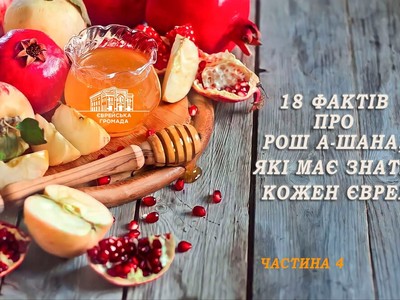
18 facts about Rosh Hashanah that every Jew should know Part 4.
Community
10. Round breadТрадиційне частування Рош а-Шана – прекрасна здобна хала круглої форми. Вважається, що круглий хліб у це свято символізує повний річний цикл — цілий рік. Протягом усього свята після Кідуша, яким розпочинаються святкові застілля, ми традиційно кажемо благословення на 2 круглі хали. Часто їх роблять із додаванням родзинок, що передбачає побажання солодкого нового року. А щоб додати солодощі, перш ніж відкусити хліб, ми вмочуємо шматочок хали в мед, а не в сіль, як це робиться в інші свята та в Шабаті (у Суккот продовжують макати хліб у мед, за винятком останнього дня свята).11. Simanim:👉apple with honey – once… In the first, evening, meals of each of the 2 days of the holiday after the blessing on bread, before moving on to the main appetizers and dishes, the celebrants eat the so-called simanim – a little certain fruit and vegetables that symbolize our requests to G-d for the well-being of the new year. The most common with simanium are an apple with honey, a fish head, and pomegranate grains. After soaking an apple in honey (sometimes in thick sugar syrup), before eating it, a request is made for a good and sweet year.12. 👉Two - "at the head, not at the tail"Чому в Рош а-Шана прийнято з'їдати шматочок голови риби? Ця незвичайна святкова страва говорить про наше бажання бути серед передових людей, а не аутсайдерами. Перед тим, як з'їсти шматочок голови риби, ми просимо Б-га допомогти нам бути «головою, а не хвостом». Деякі громади вважають за краще подавати голову барана, що теж доречно, оскільки нагадує історію Акедат Іцхак (жертви Іцхака). У трактаті Рош а-Шана написано: чому шофар зроблений із рога барана? Щоб нагадати про заслуги Іцхака, якого вели на заклання, але замість нього на жертву було принесено овен. У Талмуді сказано: «Коли ви трубите в водій з рога барана, це означає, що ви самі пов'язали себе переді Мною, як Іцхак». Йдеться про лагідність і смирення, які необхідні, щоб приймати волю Царя царів. У чому полягала велич Іцхака? Він прийняв волю Творця, яку відкрив йому батько (з Іцхаком Він тоді ще не говорив) з максимальною смиренністю. У цьому полягало велике випробування Іцхака.13.👉 Three – pomegranate seedsAs mentioned above, one of the simanim is pomegranate grains. They personify the desire to have a lot of merit – as much as grains in a pomegranate. It is widely believed that there are 613 grains in each garnet, which corresponds to the total number of commandments of the Torah. However, until now, no one has confirmed this empirically (empirically).according to the website: /imrey.org/

18 facts about Rosh Hashanah that every Jew should know Part 5.
Community
14. Longer prayerThe morning prayer in Rosh Hashanah is much longer than the usual festive one, which is mainly caused by the additional liturgy when the Amida is repeated by the cantor. Most of it is set to music, the prayer is poetic, and, in addition, many passages are acronyms, where each new line begins with the next letter of the Hebrew alphabet. By the way, for those who want to learn Amida by heart, this is a good help.15. Reading the TorahIn Rosh Hashanah, both on the first day and on the second, we read passages from the Torah about the life of the forefather Yitzhak: — on the first day — that the Almighty fulfilled the wishes of Sarah's foremother and after many years of childlessness finally sent her son Yitzhak; — on the second day — about Akedat Yitzhak (see paragraph 10).16. Salvation from sinsУ перший день Рош а-Шана - якщо він випав не на Шабат, - євреї, що дотримуються після денної трапези, йдуть до річки або іншої водойми (яка поповнюється джерелами) і читають особливу молитву, в якій згадуються слова пророка Міхи: « І Ти вкинеш у глибини моря всі їхні гріхи». При цьому прийнято символічно витрушувати кишені, що говорить про наше гаряче бажання звільнитися від усіх гріхів, включаючи гріх першої людини Адама. Така процедура називається ташлих, і одне з пояснень, у зв'язку з чим вона з'явилася, пов'язане з коронацією Царя всього світу в Рош а-Шана. Це з давньою традицією, коли церемонія зведення царя на престол проводилася біля водойми, річки чи джерела, що символізувало добрі побажання, зокрема довгого правління. Проголошуючи Всевишнього царем у день Рош а-Шана, стоячи біля водоймища, ми визнаємо Його царську владу та залежність від Його царського милосердя. Як сказано в книзі пророка Йешаяу: «Бо Господь – Суддя наш, Господь – наш законодавець, Господь – Цар наш, Він спасе нас» (33:22).17. A special moodОтже, ми тепер знаємо, що Рош а-Шана є часом Суду над світом, і кожна жива істота проходить перед Богом, а Він визначає його долю, якою їй бути надалі. І все-таки, незважаючи на всю серйозність того, що відбувається, це час спокійної впевненості та оптимізму. Адже якщо Всевишній створив нас і продовжує підтримувати наше існування, Він знає, любить нас і бажає лише найкращого. У це особливе свято ми демонструємо Йому свою любов у відповідь, віру, довіру, сподіваючись на Нього. Найвищий рівень служіння Творцеві в радості. Це те, що свято Рош а-Шана має на увазі насамперед. Постанова Шулхан Арух говорить: «Їдять і п'ють, і радіють, і не постять у Рош а-Шана ... і нехай перебуде страх перед Господом на їхніх обличчях» (597:1). У книзі пророка Нехем'ї Езра а-Софер наказує євреям не плакати і не засмучуватися в Рош а-Шана: «І день цей святий перед Господом нашим; і не засмучуйтесь, бо радість Господня – ваша опора» (8:10).18. A total of 4 new yearsУ трактаті Рош а-Шана йдеться про те, що насправді ми маємо чотири «нові роки» — «чотири періоди, коли судиться світ»: Песах – це час суду для злаків, Ацерет (Шавуот) – день суду для плодів дерев, і ще прийнято вважати, що день суду щодо наших успіхів у Торі. У Рош а-Шана перед Всевишнім проходять усі мешканці землі. А Суккот – час суду щодо води (звідси радісне свято виливу води). Ми не дуже відчуваємо, що Песах і Шаву від часу суду, але в Суккот є день Ошана Раба, особливі молитви якого допомагають нам відчути атмосферу суду. У всіх цих святах у тій чи іншій мірі є поєднання радості та тривоги.according to the website: /imrey.org/
Page of history: Seven circles under the hoodie: one tradition — different customs
Community
Under the same wedding hoopa, one Jewish bride goes around the groom seven times, and the other stays put while he goes around her. And both adhere to the same tradition.The custom of making circles under the chuppah has common roots in the Jewish tradition, but in Ashkenazi, Sephardic and Mizrahi communities it has taken various forms. At many Ashkenazi weddings, the bride goes around the groom seven times before the ceremony. In Sephardic and Mizrahi communities, depending on the local Mingag, the bridegroom is often bypassed by the bridegroom or the newlyweds carry out circles together.It is a small but eloquent example of Jewish culture branching out while maintaining common roots.Such details rarely make it into the general narrative of Jewish weddings. However, they reveal the richness of Sephardic, Ashkenazi and Mizrahi traditions, which should be considered carefully, and not perceived as a single, common custom for all.It would seem that only a small detail. But it says a lot about how far one tradition can spread by changing its shape but remaining recognizable.source: HiddenTribeStories