
Our dates: 5 Elul
Community
5 elul 5537 (September 7, 1777) — The First Hasidic Aliyah. The arrival of the Hasidim in Eretz Israel.In the month of Adar this year, a group of Hasidim led by the disciples of the Mezheritsky Magid — Rabbi Menachem-Mendel from Vitebsk, Rabbi Avraham from Kalisk and Rabbi Israel from Polotsk — left Russia for Eretz Israel. At the beginning of the journey, they were joined by Alter Rebbe. His disciples asked him not to leave them, but he answered them with the words of the sages: “Your life is the first thing.”The Alter Rebbe, together with his family and brothers, set out on the road and reached Mogilev, which stands on the bank of the Dniester, next to the then Turkish border. Here, Rabbi Menachem-Mendl from Vitebsk persuaded the Alter Rebbe for three weeks not to leave the Jews in Belarus and Lithuania and finally obtained his consent. The rest boarded several ships and set off. During the voyage, a storm sank one of the ships. Out of 80 Hasidim, only 30 managed to escape. But in the end, after a long journey, 5 Elul the travelers descended on the Holy Land.Initially, they settled in Safed, but the difficulties of life in this city forced them to move to the city of Tiberias on the shores of Lake Kinneret.source: chabad.odessa

Our dates: 9 Elul
Community
9 Elul 2321 (1439 BC) — Yorzeit (the anniversary of the departure from this world) Dan, the son of our forefather Jacob.Dan was the fifth son of our forefather Jacob and the first son of his wife Bilga (another servant of Jacob's wife Rachel).The territory of Dan extended south of the Yarkon River and bordered the territories of Ephraim, Benjamin and Yehudah, but the tribe of Dan, pressed by the Plishtim (Philistines), was forced to seek new territories, and five "mighty men" were sent from the cities of Zorah and Eshtaol "to examine the land and find out about it." Representatives of the tribe of Dan captured and burned the non-Jewish city of Laish in the far north of the country, near the source of the Jordan, and founded a new city in its place - Dan. Part of the tribe of Dan moved to a new territory, and the other remained in its former allotment in the south and waged a constant struggle with the plishtim. One of Israel's judges, Shimshon (Samson), came from the tribe of Dan.Now on the site of Dan's possessions is the business center of Israel — Tel Aviv, and the surrounding area is called: Gush Dan (Land of Dan).Dan left this world at the age of 127 and was buried in the city of Eshtaol, on the territory of his allotment.9 Elul 5027 (September 1, 1267) — Thanks to the efforts of the Ramban, the Jewish community in Jerusalem was restored again.The great sage and commentator of the Torah, Rabbi Moshe bin Nachman (Ramban or Nachmanid, as it is commonly called in Western literature), was forced to flee his native Spain after the famous Barcelona “Nachmanid dispute”. He arrived in Jerusalem and found only two Jews here: a father and a son who were engaged in dyeing fabrics.Thanks to the efforts of Rabbi Moshe, Jewish life in the city was restored, and soon a minyan appeared in Jerusalem (the number of people needed for prayer was 10 adult Jews), and a synagogue was opened, which is still functioning today. In 1948, the “Ramban Synagogue”, like other synagogues in the Jewish quarter of the Old City, was destroyed by the Arabs and rebuilt after the liberation of Jerusalem in 1967.source: chabad.odessa
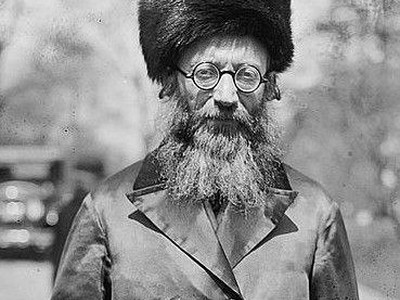
The Chabad Story:💡 A Bridge Between the Worlds: The Amazing Connectionof Rabbi Cook and the Chabad Movement
Community
📜Who is Rabbi Cook?Rabbi Abraham Yitzhak ha-Kohen Kook (1865-1935) was one of the brightest and most influential spiritual leaders of the Jewish people in recent history, as well as the first chief Ashkenazi rabbi of the Land of Israel. He went down in history as a great thinker, Torah scholar and cabalist. However, few people know that his whole life, worldview and spiritual quest were closely connected with the teachings and traditions of Chabad Hasidism.🌱Childhood and love for HasidismThe spiritual roots of Rabbi Cook went directly to the Chabad environment. His mother, Pearl Zlata, came from a family of loyal Hasidim of the Third Lubavitcher Rebbe — Tsemakh Tzedek. Her grandfather was a prominent Torah scholar. He founded a Chabad synagogue in their native Latvian town of Graiba and invited there a famous Hasidic teacher and Hoser — Rabbi Ehezkel Janover.Little Abraham Yitzhak listened to his lessons and conversations from an early age, absorbing the light of Hasidic teachings. As a child, he had a special and very expensive thing for him — a favorite kippah, sewn from a piece of clothing of Tsemakh Tzedek himself. The boy could not fall asleep without her, and if she fell off her head at night, she immediately woke up.📚Devotion to Hasidic booksOver the years, Rabbi Cook's love for the teachings of Chabad only grew stronger. Throughout his life, every Saturday he invariably studied the book of Alter Rebbe "Elk Thor".When Rabbi Cook was serving as a rabbi in the Latvian city of Boisk, he regularly came to pray at the local Chabad synagogue on holidays. Before the evening prayer, he conducted deep lessons for those present, based on the Hasidic books Torah Or and Elk Thor.Later, during the First World War, Rabbi Cook found himself in London. Rabbi Shimon Glitsenstein became his personal secretary and devoted assistant to Chabad.There is an amazing memory: one day on the holiday of Passover, Rabbi Shimon went to the office of Rabbi Cook and saw him excitedly walking from corner to corner. On the table lay the unfolded book "Elk Thor". The rabbi pointed to one of the lines and said enthusiastically to his secretary:“This is where the real Ruach ha-Kodesh is revealed!”🤝Participation in the rescue of the Sixth Lubavitcher RebbeA special page in the history of Rabbi Cook's connections with Chabad is associated with the Sixth Lubavitcher Rebbe — Rabbi Yosef-Itzhak Schneerson, Rajac.When in 1927 the Soviet authorities arrested the Rebbe in Leningrad and his life was under mortal threat, Rabbi Cook did not stand aside. He immediately involved all his international connections and sent an urgent telegram to the American representative office of the Joint demanding to do everything possible to release the leader of Chabad.The following year, on the occasion of the emancipation of 12 Tammuz, Rabbi Cook, along with other prominent rabbis, signed a public appeal to the Jewish people to take an active part in the festive gatherings in honor of the miraculous salvation of the Rebbe.✨Historic meeting in Jerusalem and mutual respectIn August 1929, the Sixth Lubavitcher Rebbe made a historic visit to the Land of Israel. It was then that their long-awaited personal meeting took place in Jerusalem.Receiving the guest in his office, Rabbi Cook, with tears in his eyes, admitted that he felt extraordinary joy at meeting the person with whom he had been connected for many years by warm correspondence.They talked for a long time, discussing a wide variety of topics: from the rescue of persecuted Jews in the Soviet Union to the thinnest issues of Jewish law, bondage and the spiritual continuity of generations.Their connection was maintained in the future. When Rabbi Cook fell seriously ill in 1935, the Lubavitcher Rebbe sent him a touching letter wishing him complete healing. He also said that students of the Chabad yeshiva "Tomhei Tmimim" in Poland tirelessly pray for his health.After Rabbi Cook passed away, the Rebbe sent an official letter of condolence to his family, expressing the deep pain of the entire Jewish people at the loss of such an outstanding spiritual luminary.Source:(https://t.me/+8KbDy9dQVqAxZWE8)
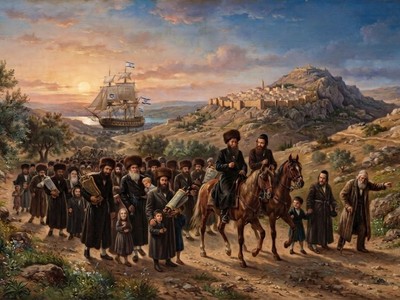
Chabad history: 🚢 The first mass aliyah of the Hasidim: a fascinating story of a trip to the Land of Israel in 1777
Community
The beginning of the Hasidic movement in the Holy Land is shrouded in a halo of deep mysticism and heroism. In the second half of the 18th century, the call of the Holy Land lit the hearts of hundreds of Jews. Even earlier, only a few dared to make a dangerous journey: for example, Rabbi Gershon from Kitov reached the Land of Israel in 1747, and Rabbi Nachman from Horodenka made aliyah twice. However, it was 1777 that became a truly historic milestone — the year of the first mass and organized aliyah.🗺️The big caravan and the difficult decision of the Alter RebbeIn March 1777, a caravan of about 300–400 people set off from Belarus and Ukraine on a long journey. It was headed by Rabbi Menachem Mendel from Vitebsk and Rabbi Abraham from Kalisk — students of Magid from Mezhyrich.At the beginning of the journey, they were joined by the future Alter Rebbe. However, when the caravan reached the grave on the Dnieper, community representatives and teachers began to beg him not to continue along the way. After prolonged hesitation, Alter Rebe conceded: he remained in the grave for a year and a half for a solitary study of the Torah, and later returned to his communities in Belarus.Black Sea 🌊 Storm & Amazing RescueOne group of travelers decided to get ahead of the caravan and went by sea in a dangerous season for swimming. Near the Crimean coast, the ship, which had about 80 passengers on board, was caught in a severe storm and sank.Most of the people died, but about 30 passengers miraculously washed ashore near Gezlev. They were left without any things and means of livelihood. Local residents came to help the rescued, and the Karaite community of Kafa showed special mercy. Some of the victims returned in desperation, but others continued their journey through Istanbul and eventually met with their comrades in the Holy Land.🏛️ Safed, Tiberias and the birth of new cellsOn 5 Elul in 1777, the caravan reached Safed. The first years were a difficult ordeal for the IDPs: they suffered from poverty, epidemics and persecution.In 1781, Rabbi Menachem Mendel moved to Tiberias, and in 1785 he was joined by Rabbi Abraham of Kalisk. The local Sephardic community greeted the Hasidim with great respect. Here they expanded the Jewish quarter and built a complex with a synagogue and a mikvah, which still serves the Karlin Hasidim.After the departure of Rabbi Menachem Mendel from Vitebsk in 1788, the leadership of the community passed to Rabbi Abraham, who headed it until 1810.📜 Financial support and resettlement of Hasidim to HebronTo save the community from starvation, a centralized "Land of Israel Donation Fund" was established in Belarus, which was personally managed by Alter Rebbe.Soon, other prominent spiritual figures left on the way of the first settlers. In 1794, a group of Rabbi Jacob Shimon from Shepetivka arrived, in 1798 — Rabbi Zeev Wolf from the Black Island. The Holy Land was also visited by the grandson of Baal Shem Tov — Rabbi Nachman from Bratslav.Subsequently, due to ideological differences, a separate Chabad cash desk was created. This contributed to the resettlement of part of the Hasidim from Tiberias to the south — to ancient Hebron.It was there that they laid the foundations of a strong Chabad Hasidic community, which heroically held on until the tragic pogroms of 1929, forever inscribing their names in the history of our people.source: 📖 Lubavitcher Calendar
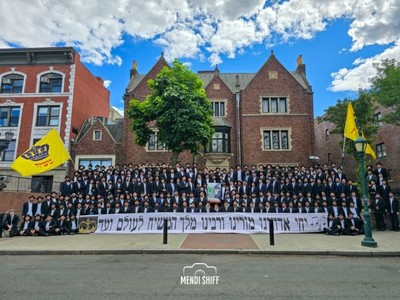
Chabad history: 🔥 **A week and a half before the start! What is the legendary “Quutza” and why did the Rebbe fight for it?**
Community
Very soon, a new group of students from Israel will go to the main center of Chabad — the legendary 770. For every Chabad boy, this year is the culmination of study, an important milestone of youth and a powerful spiritual springboard for the rest of his life.But what is hidden behind the seemingly simple word "Kvutsa" and why has this tradition become the cornerstone of Chabad upbringing?📜 **A Year Next to the Rebbe: How Did It All Start and Why Do We Need It?**This tradition dates back to 5722 (1962). Then a group of young men from the yeshiva in Kfar Chabad were eager to spend the whole year next to the Rebbe. Initially, the leadership of the yeshiva reacted to this idea with restraint and even resisted, fearing a violation of the internal order of the educational institution. However, the Rebbe personally supported the initiative and offered a wise solution: to attract students from the United States who would temporarily take the places of those who would go to 770 in order to maintain the necessary balance.The main purpose of this trip was formulated by the Rebbe extremely clearly: young people should see with their own eyes how the Rebbe behaves on weekdays and holidays, in moments of joy and during trials, in order to take over this unique living example and carry it through all adult life.⚡️ ** Rebbe's uncompromising stance and financial issue**The Rebbe paid great, truly paternal attention so that every bakhur could easily get to 770 and spend a dream year there.He reacted very painfully and sharply to any bureaucratic obstacles, attempts of officials to obstruct the trip or delay the process. Moreover, the Rebbe categorically insisted that "Kvutsa" never turn into a commercial project or an unbearable financial burden for families.He demanded that the management do everything possible to minimize the costs of parents and at the same time provide decent conditions for each student, because it was about the spiritual future of an entire generation.** Program development and busy weekdays in 770**The format of the program has evolved and changed according to the circumstances. In the early years, Quutz lasted from Passover to Passover. However, starting from 5739, the schedule has changed: since then, the annual cycle lasts from the month of Tishrei to the month of Tishrei the following year.The program also provides for a special transition month, during which the two groups meet and learn side by side.Today, Kvutsa is a powerful and well-established system of deep immersion in the study of Hasidism and Gmara directly within the walls of 770, under the attentive and demanding guidance of experienced Mashpyim.🚀 **Where does this road lead?**A year in Kvuta forever changes the fate and outlook of each participant. After completing the program, the paths of graduates diverge around the world, opening up opportunities for them to work hard and fruitfully.Some return to the yeshivas of Israel as teachers and mentors, others remain in 770 for in-depth study and improvement of knowledge, and many go to the most remote corners of the world as shlikhim envoys to bring the light of the Torah and Hasidism to where it is most needed.We wish our young men an extraordinary, spiritually rich and successful year in 770! source: 📖 **[Lubavitcher calendar](https://t.me/+8KbDy9dQVqAxZWE8)**


Happy National Flag Day of Ukraine!💙💛
Community
In recent years, the blue-yellow flag has become something much more than a state symbol for us. He meets Ukrainians at stations in faraway countries, flies over hospitals and volunteer headquarters, is carried by our defenders, and after the liberation of the cities, is returned to his native streets.He says without saying:this is our land, our home and our freedomc74(97A29.4'The Jewish Community congratulates everyone on the National Flag Day. Let him hover over every Ukrainian city and village as soon as possible — without war, without fear, under peaceful skies.May the Almighty protect Ukraine and all who defend it.🙌

Happy Independence Day of Ukraine!
Community
Independenceis the right of the people to be themselves, to preserve their language, memory, traditions and to choose their own future. We Jews are well aware of the cost of this right.For the Jewish CommunityUkraine is not just a place of residence. This is our home. This is where our ancestors lived, where we raise children, pray, work, help each other, and go through the toughest challenges together.Today our wish is simple:may Ukraine no longer have to prove its right to life to the world. Let its defenders return home, families wait for the dearest, and the peaceful sky reigns over all Ukrainian cities.May the Almighty protect Ukraine and its people.Happy Independence Day, our common home!
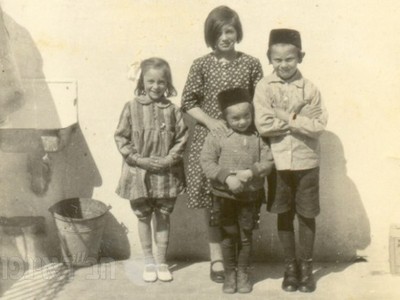
The history of Chabad:The tragic story of a little prodigy.
Community
The tragic story of a little prodigy: the last victim of those turbulent yearsImagine an eight-year-old boy who impressed adults with a deep mind, wrote inspiring speeches himself, and secretly rehearsed traditional Jewish dances at home in order to delight his relatives at weddings. His name was Schneur Zalman Dovber Nae, and at home he was affectionately called Zalmanka. He was born in Jerusalem in August 1931 to a famous and respected family and was extremely gifted.📚 Intelligent dynasty of JerusalemZalmanke's father, the eminent Rabbi Abraham Chaim Nae, was one of the pillars of the Jerusalem community. He gained recognition as an authoritative rewriter of sacred texts, secretary of the Rabbinical Court and author of fundamental works on Jewish law.When the boy was born, all the chief rabbis and judges of Jerusalem came to the circumcision ceremony to show their respect for the author of famous books. Thename Schneur Zalman was given in honor of the great founder of the Chabad movement, and the second name — Dovber — the boy received in honor of his great-grandfather, Rabbi Dovber Ashkenazi.🕺 Secret training in the father's officeFrom the age of three, Zalmanke studied at a traditional header. His phenomenal abilities were manifested in everything: he not only studied brilliantly, but also had a remarkable oratorical skill — he made small speeches and spoke them to his relatives.However, few people knew about his other passion — dancing. The boy skillfully performed the elaborate Jerusalem wedding dance of Kadacheke. He was extremely agile and always started dancing himself at family weddings, after which he was joined by older brothers and his father. Zalmanke arranged his secret rehearsals right in his father's office when he was not at home.🚌 A fatal wedding and a terrible premonitionIt was 1939, the Land of Israel was coming to an end in a period of bloody clashes that went down in history as the Arab Revolt, and the roads remained extremely dangerous. Despite this, Zalmanke's older brother, Rabbi Baruch Nahe, married in Tiberias, and the family decided to go to the celebration.After the wedding, the family stopped by their grandfather's house in Tel Aviv on their way home. On Thursday evening, when everyone was about to get on the bus to Jerusalem, little Zalmanka suddenly grew cloudy, clung tightly to his parents and quietly said that he did not want to go at all and it would be better to stay. The father gently explained to his son that other relatives were waiting for them in Jerusalem, and the child obediently agreed.💥 Tragedy near Sha 'ar HaGaiThe bus was half empty, Zalmanke flatly refused to sit in the middle of the cabin next to his sisters and took a long, separate seat at the very end.When the bus drove intothe dangerous winding gorge of Shaar HaGai, the silence was broken by automatic bursts. A heavy dum-dum bullet pierced the back wall of the bus and fatally injured Zalmanka. His sisters were also injured, but survived. Little Zalmanke managed to whisper just a few words before his life faded away.🕯 Bitter echo and funeralThis terrible tragedy occurred on Monday, 6 Elul 5699. Little Zalmanke became the last Jewish victim of the long Arab uprising, because the Second World War began a week later.When the grief-stricken father returned to his Jerusalem home, a tragic surprise awaited him on the table near the window — a book about the laws of mourning and consolation, which friends had sent in advance.All of Jerusalem gathered for the boy's funeral. His peers were ahead of the plaintive procession, loudly reading the psalms. Thenameof the light boy will forever remain in history as a symbol of pure child sacrifice.📷 In the photo: Zalmanka in the center — together with her mother, brother and sister.Source:(https://t.me/+8KbDy9dQVqAxZWE8)

📖The price of the find
Community
The Torah section “Ki Tetse” mentions many laws. Among them is the law on the return of lost property. If the appearance of a thing and the circumstances of its loss — for example, the presence of special signs — give the owner the opportunity to confirm his right to it, the one who found the lost thing is obliged to take care that the thing returns to its owner.Respect for property rights in Jewish law is not new. However, the commandment of the return of the lost has one mystical component that distinguishes it from others. According to the Cabal, a person who appropriates a finding that is legally subject to return condemns his soul to additional reincarnation. This is the punishment: one more life — from beginning to end. It turns out that this is an extremely painful ordeal for the soul.This feature of a seemingly uncomplicated mitzvah is thought-provoking. The person who appropriated what was found is different from an ordinary thief. The fact that she was given to find the lost thing from Above is not just a test. She was trusted: to return what was originally supposed to be part of another person's life. But, unfortunately, it did not justify this trust.And in order to eliminate the consequences of her mistake, to cleanse her soul and restore her connection with the Creator, she is given a very risky chance to live a new life with all its trials.The lesson from this is simple, but equally important: trust is an extremely valuable and at the same time vulnerable treasure. It is very easy to lose it in an instant — it is enough just for a minute to succumb to temptation. And you have to restore trust painfully and for a long time. Sometimes a lifetime.📖 Source: Chabad.org
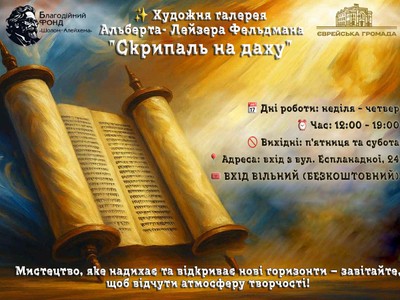
✨ Art Gallery "Fiddler on the Roof"
Community
Albert Leiser Feldman Art Gallery"Fiddler on the Roof"Working days: from Sunday to ThursdayOpening hours: 12:00 - 19:00Address: str. Esplanadna, 24Entrance is free (free of charge)Art that inspires and opens new horizons - come and feel the atmosphere of creativity!

📖 Ayom Yom: 8 Elul
Community
The instruction from the book "Iyom-yom" on 8 Elul tells about the devotion of Tsemakh Tzedek - the third Lubavitcher Rebbe — to the spiritual heritage of Alter Rebbe, the founder of Chabad.Instruction of the dayTsemakh Tzedek named three merits, thanks to which he achieved success at the congress of rabbis in St. Petersburg in 5603 (1843).One of them was the thirty-two thousand hours he devoted to working on the works of the Alter Rebbe for thirty years — from 5564 to 5594.In 5564 (1804), he established a special schedule for studying the works of Alter Rebbe, and in 5594 (1834) he began their publication.Main Idea32,000 hours of dedicated workTsemakh Tzedek devoted a huge part of his life to studying, organizing and preserving the teachings of the Alter Rebbe. This long-term work became his spiritual strength and support in a difficult and responsible time.A great result is born in silenceSuccess in extremely complex public affairs does not arise suddenly. Behind him are often years of persistent, inconspicuous spiritual work, study, and inner discipline.Lesson of the Month ElulElul is a time of spiritual recap and honest conversation with yourself. This guideline prompts us to think: how much time do we devote to studying the Torah, good deeds and our own spiritual growth?Even a small but constant step can eventually become the basis of great achievements. After all, the spiritual treasure is also composed of crumbs — hour after hour, day after day.Source:Chabad.org— "Ayom-yom: 8 Elul"