

Pschologist's page: 🌱 One percent of faith is already a fulcrum
Community
Psychologically, faith is neither a guarantee of success nor a magic button that automatically creates a 99% chance. However, even a tiny hope can change our attitude towards the situation.When a person admits that the way out still exists, he ceases to see only hopelessness and begins to look for opportunities: he makes another attempt, asks for help, notices new options and finds the strength to move on.This one percent faith becomes an internal question: “What can I do right now?”Opportunities don't always appearon their own. Often, faith helps us see them, and perseverance helps us turn them into real changes.Sometimes one percent is not enough for an instant victory, but only to not give up today. But it is with this small step that the big road often begins.
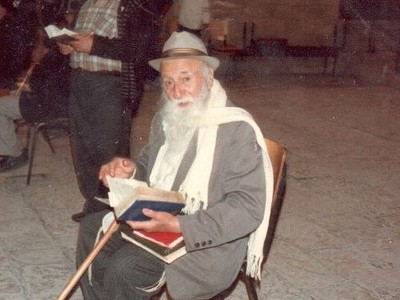
Chabad History: The Incredible Story of Raphael Tsemakh Khudaydatov's Reb
Community
The incredible story of Rafael Tsemakh Khudaydatov's reb: a Jewish collective farm, the rescue of 3,000 people and loyalty to traditionThe life story of Rafael Tsemakh Khudaydatov (1899–1987) is read as a true historical novel. A righteous man, a public leader, a philanthropist and a Chabadian, he managed not only to preserve the Jewish way of life in the most difficult years of the Soviet regime, but also to save thousands of lives.Roots and childhood between Kokand and JerusalemRaphael Tsemakh was born on 1 Marcheshvan 5660 (1899) in the city of Kokand, near the border of Uzbekistan with Afghanistan. He came from a glorious family: his great-great-grandfather was a famous messenger from Safed, Rabbi Yosef Maman, who revived the spiritual life of Bukhara. His maternal grandfather was Rabbi Shimon Hakham, one of the spiritual leaders of Bukhara Jewry and the founder of the Bukhara quarter in Jerusalem.At the age of ten, Raphael and his family went to Jerusalem, where he studied in the Talmud Torah and mastered Hebrew. Returning to Kokand to complete the business before the final move, the family was trapped in the First World War. In 1918, more than a hundred Jews were killed during the revolutionary battles in Kokand. Houses and the family shop burned down and the family was forced to flee.Moving to Samarkand and creating a Jewish collective farmThe family moved to Samarkand. In 1919, Raphael married Rachel, the daughter of his cousin, and successfully started farming.In 1925, when the Soviet authorities launched a fierce struggle against religion, Reb Raphael, together with Nathan Katanov, founded the first Jewish agricultural collective farm 20 kilometers from Samarkand. The most amazing thing was that its residents officially observed Shabbat!By 1934, about 400 families lived in the collective farm. There was a synagogue, a hospital and a mikvah, rabbis and shokhets worked there. In 1938, under pressure from the NKVD, Rafael was forced to leave the collective farm to protect its inhabitants from repression and return to Samarkand.Wine production and rescue of 3,000 refugeesIn Samarkand, Reb Rafael headed a large winery. He employed hundreds of Jews, providing them with life-saving food cards. Despite reports that the company stopped working during the Jewish holidays, he managed to avoid arrest every time.During the Second World War, his estate became a center for the rescue of Jewish refugees from Europe. At the same time, he had up to a hundred people living there, and in total he saved about 3,000 people!Raphael was arrested for secretly helping refugees, but he was fully acquitted in court.Repatriation to Israel and spiritual heritageIn December 1971, Reb Raphael made aliyah. In Israel, he was greeted by hundreds of people he saved. In Bnei Brak, a touching meeting was held in his honor, in which many survivors of the Shoah took part.He settled in Kiryat Malakhi, where he built a synagogue for the Bukhara community, contributed to the restoration of the Mount of Olives and published sacred books in Bukhara-Jewish.A special page of his life was the meeting with the Lubavitsky Rebbe, before which he personally performed the famous nigger "Atem shalom".Rabbi Rafael Tsemakh Hudaydatov passed away on 1 Elul 5747 (1987). He was buried on the Mount of Olives in Jerusalem next to his wife Rachel.Lubavitcher calendar
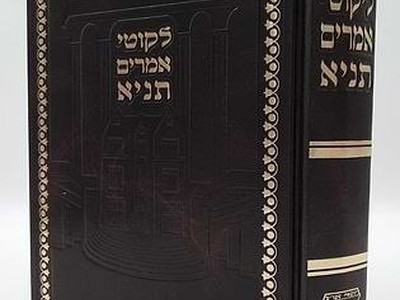
How reading one book tore a man from the clutches of death
Community
In dark times, when terrible typhus epidemics ravaged entire cities, there was a cruel rule: seriously ill patients were sent to die in isolation. The infected were taken to a special barracks outside the city, where no one was allowed to enter, except for a doctor who visited there once a day.Rabbi of the city of Mykolaiv, Rabbi Meir-Shlomo Yanovsky, did not escape this fate. The doctors delivered a disappointing verdict: there is no hope.The window that became the boundary between life and deathWhen his close friend, Shochet Rabbi Asher Grossman, found out, he couldn't just sit back. He hurried to the quarantine barracks, but the guards blocked his way — of course, they did not let him inside.But Rabbi Usher did not give up. He walked around the gloomy building, found a window that just went out to his friend's room, and decided to act in the only way available to him — by the power of his word.Every day — day after day, week after week — he came under this window and in the silence of the uninhabited neighborhood read aloud the philosophical and deeply mystical lines from the book "Tania", namely the message "Leaskilha bina" — "To give you understanding".What were those lifelines talking about?The text that sounded for hours outside the window carried an extremely important thought to the desperate person:There is no evil that comes from above: everything that happens in the world is absolute, albeit sometimes hidden, good.True faith is the realization that the world is created every moment with nothing by a higher force of good.Despair, fear and anguish destroy a person from the inside, while joy and awareness of a higher meaning give mental and physical stability.Rav Asher did not know if his friend could hear him through thick walls or if his voice poured into the patient. But he continued to breathe life into the one who was dying — the very sound of his voice.Amazing Healing & Incredible ContinuationA real medical miracle happened: contrary to all the doctors' predictions, the rabbi began to recover and eventually completely overcame the disease.When he solemnly returned home, he was greeted by a joyful crowd. Noticing Usher ahead of his friend, the rabbi approached him, hugged him tightly and said the most important thing: it was the words that sounded outside the window that drove away mortal fear, freed him from despair and gave the body the strength to survive.Fate decreed that years later, in the family of the saved rabbi, a grandson was born, who was destined to become an outstanding spiritual leader of our time — the Lubavitcher Rebbe.We often encounter obstacles that seem insurmountable. But this story reminds us: the strength of the human spirit, faith in a good result and refusal to succumb to despair can work real miracles where medicine and logic are already powerless.📖t.me/LubavitcherRebe770
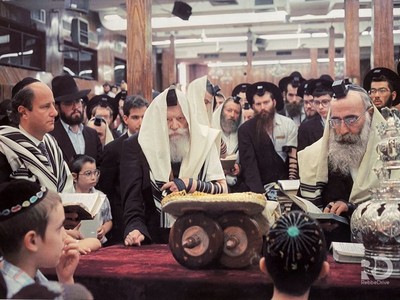
Siha Rebe for the weekly Torah section "Ki Tetse"
Community
📖Introductio nIn our weekly section, the Torah instructs farmers: if wheat sheaves fall from the cart or hands during harvest, they are forbidden to be picked up — you need to leave them to the poor, orphans and widows.For this deed, the Almighty promises His people a special blessing. As the verse says, “…let this be for the orphan and the widow, that the Lord your G-d may bless you.”🤔QuestionAt first glance, this seems strange: why does the owner of the field receive a special blessing if the sheaves fell from his hands by accident? After all, he did not even know about it and did not intend to do good to the poor at all!💡ResponseThe answer lies in a deep principle: every Jew, in his very essence, sincerely strives to fulfill the will of the Almighty. If it happens that he violates His commandments or loses the opportunity to fulfill them, this happens only because of a temporary "spirit of recklessness" —ruah stuttwhich overshadows his mind.Since in the soul of every Jew there is a constant and unchanging desire to fulfill the word of G-d, even when a person did not have a conscious intention to fulfill the commandment, it is its spontaneous fulfillment that comes from this inner desire — even without the participation of the mind.That is why a person is blessed even without a conscious intention.📌A lesson for usEven when a Jew fulfills a certain commandment and it seems to us that he does it for his own benefit or for personal reasons, this is only the outer shell. The real, deep motive for his deed is the inner desire of the soul and its eternal connection with the Almighty.Based on the materials of "Itvaaduyot", 5751, v. 1, p. 189.📖https://t.me/LubavitcherRebe770

Our dates: 12 Elul
Community
📌12 elul 5537 (September 13, 1194) — the birthday of Rabbi Moshe bin Nachman (Ramban, Nachmanid).Рабі Моше бен Нахман, відомий також як Рамбан (рабейну Моше бен Нахман), рабі Моше Геронді та Бонаструг да Порта — видатний коментатор Тори, каббаліст, філософ, учений та єврейський лідер — народився в іспанському місті Герона (Жерона) і прожив тут більшу частину життя. Він походив зі знатного єврейського роду Іцхака бен Реувена Альбарджелоні (з Барселони), був двоюрідним братом головного рабі Каталонії рабі Йони бен Авраѓама Геронді і після його смерті аж до від'їзду до Ерец-Ісраель (1267) був головним рабином Каталонії. На життя рабі Моше заробляв, як і багато великих рабинів, лікарською практикою.У 1263 році арагонський король Хайме I нав'язав у Барселоні публічну суперечку рабі Моше з викрестом Пабло Кристиані. Рамбан погодився взяти участь у диспуті за умови, що йому буде дозволено висловлюватися цілком вільно, не побоюючись покарання за це. Король прийняв його умову, а після диспуту, який тривав чотири дні, похвально відгукнувшись про аргументацію Нахманіда: «Я ніколи не чув такого чудового захисту такої несправедливої справи», подарував йому 300 динарів. Втім, через деякий час рабі Моше був змушений тікати з Іспанії до Ерец-Ісраель.Arriving in Jerusalem, he found only two (!) Jews there — a skin dyer and his son, but thanks to the efforts of Rabbi Moshe, soon there was a minyan (ten adult men needed for public prayer) and a full-fledged community in the city.It is assumed that it was Ramban who sent to Spain a copy of the fundamental work on the bondage — the book "Zohar". The book was published by Rabbi Moshe de Leon and made a huge impression on scholars and sages, becoming one of the most researched and discussed works on Judaism.📌12 Elul 5587 (August 5, 1827) — Yorzeit (anniversary of the departure from this world) Rabbi Simkha-Bunema from Pshishkha.У юності рабі Сіхма навчався в єшивах Маттерсдорфа та Нікольсбурга у рабі Мордехая Бенета. Потім він повернувся до Польщі й під впливом тестя став послідовником Кожницького магіда рабі Ісраеля. При цьому працював у лісоторговельній фірмі, їздив до Лейпцига та Данцига, знав польську й німецьку мови, носив європейський одяг та відвідував театр. Вивчивши в Данцигу фармакологію, він відкрив у Пшисхі аптеку і розбагатів. Потім рабі Сімха став близьким учнем рабі Яакова-Іцхака га-Леві Горовиця (га-Хозе мі-Люблін, Сліпий провидець із Любліна). Тут він став другом та учнем рабі Яакова-Іцхака бен Ашера з Пшисхи («Святий Єврей із Пшисхи»), а після його відходу з цього світу став його наступником.In his old age, Simha Bunem lost his sight, but did not stop studying and teaching Torah. His students included Menachem-Mendel ben Leibush Morgenstern of Kotzk (Kotzker Rebbe), Rabbi Mordechai-Josef Leiner of Izbica, Rabbi Hanoch-Genoch ha-Kogen of Aleksandrov, Rabbi Yitzhak-Kalish of Vorka (Worker Rebbe), and Yitzhak-Meir Rotenberg Alter (known as Rabbi Hidusha ha-Rim).📌12 Elul 5689 (September 16, 1929) — Rabbi Yosef-Yitzhak (Rabbi Rayatz) arrived in the United States.У 1927 році шостий Любавицький ребе рабі Йосеф-Іцхак Шнеерсон (ребе Раяц) був заарештований чк-гпу і засуджений до смертної кари, яку під тиском світової громадськості було замінено засланням, а потім і висилкою з срср. Через два роки, восени 1929 року, він прибув до США. Тут ребе Раяц пробув 10 місяців, відвідавши за цей час єврейські громади Нью-Йорка, Філадельфії, Балтимора, Чикаго, Детройта, Мілвокі, Сент-Луїса, Бостона та безлічі інших міст, а також побувавши в Білому домі на прийомі у президента США Гувера.The Rebbe, visiting the United States, pursued two goals: first, to draw the attention of American Jewry to the situation of Soviet Jews and organize financial assistance for them, and secondly, to strengthen Yiddishkeit (Jewish life) in the United States itself and support the American Chabad community.The Rebbe also wanted to find out whether there was an opportunity to settle in the United States and create the headquarters of Chabad here. And although the famous Seven Sevens house (building number 770 on East Parkway in Brooklyn — the center of the Chabad movement) appeared only in 1940, the foundation for its appearance was laid by the results of a trip to the country in 1929.source: chabad.odessa

Our dates: 13 Elul
Community
📌13 Elul 5636 (September 2, 1876) — Yorzeit (anniversary of the departure from this world) son-in-law of Miteler Rebbe, Rabbi of Yaakov-Israel from Cherkasy, who left this world two months after the departure of his wife Rebbetzin Dvoira-Leya.📌13 elul 5657 (September 10, 1897) — the wedding of Rabbi Yosef-Itzhak with Rebbetzin Nechama-Dina, the daughter of Rabbi Avraham Schneerson from Chisinau.Коли майбутній шостий Любавицький ребе, рабі Йосеф-Іцхак, досяг шлюбного віку, йому почали пропонувати найрізноманітніші варіанти, включно з пропозиціями з великим посагом. Батьки схилялися до сватання з дочкою рава Авраѓама Шнеерсона, але бабусі подобалися інші варіанти. І тоді вирішили запитати самого нареченого. Йому розповіли про ситуацію, що виникла, і додали, що відповідно до сказаного в Торі про сватання Іцхака та Ривки: «Запитаємо уст її…», вони звертаються до нього із запитанням про його думку. Наречений відповів: «Але ж там сказано: «І візьмеш дружину синові моєму з родини моєї та з дому батька мого…» (у нареченого та нареченої був спільний прадід — третій Любавицький ребе Цемах-Цедек). Вибір було зроблено.📌13 elul 5669 (August 30, 1909) — Yorzeit (anniversary of the departure from this world) Rabbi Yosef-Haim ben Eliyahu-Haim from Baghdad ("Ben Ish Hai").Rabbi Eliyahu Chaim of Baghdad, who was noted for his wisdom and piety, was childless for many years, but one day he received a letter from one of the leaders of the Jewish community of Morocco, Rabbi Yaakov Abu-Hazera. In the letter, Rabbi Yaakov gave a blessing for the imminent birth of a son in Rabbi Elijah, which will become an ornament of the real Jewish people. Indeed, Rabbi Yosef-Haim ben Eliyahual-Haham (also known by the acronym Riach) was soon born.Rabbi Yosef-Haim was recognized as one of the most prominent rabbis of the Baghdad community (and hence of all the Jewish communities in Iraq), as well as one of the greatest Sephardic authorities in the field of Jewish law in recent centuries. In addition, he was a famous cabalist and entered Jewish history as “Ben Ish Hai” after the title of one of his books.source: chabad.odessa

Our dates: 14 Elul
Community
📌14 Elul 5612 (August 29, 1852) — Yorzeit (the anniversary of the departure from this world) the sage and righteous Rabbi Baruch-Mordechai Ettinger from Bobruisk.Rabbi Baruch-Mordechai was one of the best students of the Alter Rebbe, and later became one of the greatest Hasidim of the Miteler Rebbe and one of the oldest Hasidim of the third Lubavitcher Rebbe, Rabbi Tsemakh-Tzedek.For 50 years, Rabbi Baruch-Mordechai was the city rabbi of Bobruisk, and his authority was recognized by all residents of the city — both Hasidim and Mitnagdim (opponents of Hasidism), surrounding the rabbi with appropriate reverence and respect.In 1851, Rabbi Ettinger made Aliyah to Eretz Yisrael and settled in Jerusalem. A year later, he left this world and was buried on the Mount of Olives next to the famous rabbi, the author of the book Orach Chaim.📌14 Elul 5693 (September 5, 1933) — Rabbi Yosef-Yitzhak moved to Warsaw.After his expulsion from the Soviet Union, Rabbi Yosef-Itzhak (the sixth Lubavitcher Rebbe, Rabbi Rajac) settled in the capital of Latvia, Riga, where he lived until 1933, when he decided to move to Poland.📌14 elul 5702 (August 27, 1942) — Yorzeit (anniversary of the departure from this world) Rebbetzin Hai-Mushka Örenstein.The youngest daughter of the fourth Lubavitcher Rebbe (see 10 elulah for her marriage) was taken to the Nazi concentration camp Treblinka during World War II. According to eyewitnesses, on this day, Rebbetzin Khaya-Mushka, along with other Jews doomed to extermination, was burned in the ovens of Treblinka.source: chabad.odessa

Our dates: 15 Elul
Community
📌15 Elul 5657 (September 12, 1897) — Rabbi Sholom-Dov-Ber founded the Tomhei Tmimim yeshiva in Lyubavichy.During a luncheon hosted on the occasion of the wedding of his son Rabbi Yosef-Yitzhak, Rabbi Sholom-Dov-Ber (the fifth Lubavitcher Rabbi, Rabbi Rashab) announced the founding of a yeshiva that would combine Torah studies and Hasidism.Two years later, in 5659, on the night of the holy Simhat Torah, Rabbi Rashab said: “The yeshiva, founded by the mercy of God the Almighty, has not yet been named. And now I give her the name “TomheiTmimim ” (“One who supports the clean”), and students who study in it and behave in accordance with her spirit are called tmimim.”📌15 elul 5760 (September 15, 2000) — the opening of the Tomhei Tmimim yeshiva in Odessa.In the 100 years that have passed since the creation of the first Tomhei Timim, similar educational institutions have appeared in many countries of the world, and traditionally the academic year in these yeshivas begins on 15 Elul. After the collapse of the USSR, Tomheitmimovskaya finally reached the countries of the former Soviet Union.source: chabad.odessa

🌿 Soon we will have one of the most joyful holidays - Sukhoth! 🍋🌿
Community
And in order to fully feel the atmosphere of the holiday and fulfill the commandment, it is important that everyone has their own Lulav and Etrog.We have already opened a pre-order for Arba Minim - several sets are available for different budgets and quality levels.We advise you not to postpone the order!The number of sets is limited, so it is better to arrange it as soon as possible so that on the eve of the holiday you will not be left without your Arba Minim.👉 You can place an order using the link below or by phone:https://forms.gle/jzEzF54mUSrcThSx9📞 097 121 11 33 AdamHag Sukkot Samaah! 🌿🍋

Women's meeting in "Shaare Nashim"
Community
🌸 Жіноча зустріч «Шаарей Нашим»: єдність, традиції та тепло спілкування 20 серпня, 7 Елула, у Центральній синагозі Києва відбулася зустріч жіночої спільноти «Шаарей Нашим». Цей вечір об’єднав жінок різного віку навколо єврейських традицій, щирого спілкування та спільних духовних цінностей. Під час уроку з ребецин Ханою Азман говорили про значення місяця Елул — особливого часу, коли ми зупиняємося серед щоденних турбот, замислюємося над своїми вчинками та готуємося до прийдешніх свят. Особливим і хвилюючим моментом стало звучання шофара. Його голос ніби закликав кожну прислухатися до себе, відкрити серце для добрих змін і з надією дивитися вперед. Учасниці також долучилися до важливої жіночої заповіді — відділення хали. Разом замішували тісто, випікали духмяні хали, ділилися досвідом і просто насолоджувалися теплою атмосферою за спільним столом. Адже хала, створена власними руками й з добрими думками, має особливий смак. 🍞 Такі зустрічі нагадують, наскільки важливо бути разом, підтримувати одна одну, навчатися та передавати наші традиції наступним поколінням. Дякуємо ребецин Хані Азман за змістовний урок, мудрі слова та душевну атмосферу. Дякуємо кожній учасниці, яка цього вечора стала частиною нашого теплого жіночого кола. До нових зустрічей у спільноті «Шаарей Нашим»! Нехай у наших домівках завжди панують мир, взаєморозуміння, світло Тори та аромат свіжої хали. 💙
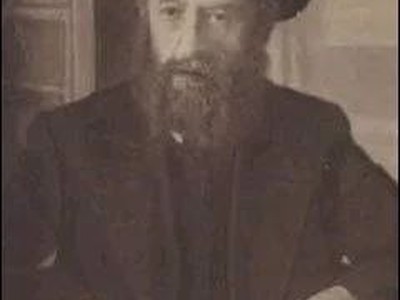
“At Rosh Hashanah, you can't go through with a hare!”
Community
"In Rosh Hashanah, you can not slip a hare!": what Rebbe Rashab argued about and why intelligence without a heart is an empty philosophyMany of us live with the usual illusion: if we spend hours immersed in complex philosophical concepts, parsing deep books and accumulating knowledge, we grow spiritually. However, the fifth Lubavitcher Rebbe — Rebbe Rashab - in his ardent and uncompromising conversation, included in the book "Torat Shalom", destroys this myth to the ground.This conversation is not an abstract theory, but a strict practical requirement for anyone who seeks to live consciously, not by inertia. We offer a detailed analysis of the key topics of this conversation.1. You can not "shalturit" and slip through Rosh HashanahMany people live according to a convenient and naive scheme: they go with the flow all year round, especially without straining, and when Rosh Hashanah and Yom Kippur come, they suddenly hope to gather, cause tears in themselves, rise in prayer and all"catch up in one go"c74(97A29.4'Rebbe Rashab says bluntly: it doesn't happen like that! Real deep experiences, awe, and tears cannot be faked or triggered with the click of a finger. The holidays and days of Heaven's judgment are only the culmination, the tip of the iceberg. A solid foundation is laid by daily, painstaking, and sometimes hard work on yourself throughout the year. Anyone who hasn't worked on their inner world all year will be left empty-handed at Rosh Hashanah.2. The danger of "dry" intelligence: are you a worker or a philosopher?It is a huge mistake to simply learn books, operate with intelligent spiritual concepts and call it development. The Rebbe draws a clear line: a person who is engaged only in intellectual analysis, without working on the heart, turns into an ordinary "researcher" or "philosopher".If knowledge does not touch the heart, does not awaken real feelings — love for good and inner awe — and does not change the natural inclinations of a person, this is not spirituality.Moreover, the Rebbe warns: such a "pure theory" can be dangerous. Unrealized internal energy will sooner or later find a destructive way out in everyday life — in empty or even negative things.3. Personal example and transformation of one's own natureRecalling his youth, Rebbe Rashab explains: real inner work changes the very nature of man. When deep meditation sincerely penetrates the heart, even the desires of the “animal” side of our personality change.After such work, a person becomes simply uninterested in reaching for the primitive hustle and bustle. Its natural aspirations are creation, goodness, and learning. And this happens not because of a cold sense of duty — "it is necessary, because it should be so" — but at the ardent command of a changed heart.4. What to do with extraneous opinions and obstacles?Anyone who has tried to pray seriously or think deeply knows that extraneous thoughts immediately appear in the head, and external circumstances are trying to destroy everything.The wise man's advice is extremely practical: do not panic and do not leave the beginning. Don't let internal and external obstacles defeat you. Yes, there are recessions and difficult periods, but the main rule of spiritual work is to continue to move forward, despite any difficulties and obstacles.5. The usual routine and illusion: "I follow the rules"Living by the principle of “I just follow the basic rules on autopilot, follow the law and occasionally read smart books” is very convenient. This creates the illusion of impeccable righteousness.But the Rebbe emphasizes: one thing is to mechanically adhere to the letter of the law, and quite another is to carry out the real inner "work of the spirit". Full spiritual light and real changes come only when a person makes personal efforts, sincerely works on his feelings, and does not just go with the flow of the usual routine.💡What’s the bottom line?spirituality is not measured by a diploma of a philosopher, not by a scientific degree and not by complex concepts in your head. This is a daily honesty with yourself, a fine-tuning of your own feelings and a sincere desire for good that is born in the deepest corner of the soul.📖Lubavitcher calendar