
Saturday, 25 Menachem Ava 5786
Community
📌5615 (1854–1855)— the cantonal duty was abolished, and the society "Thia ha-Metim" ("Resurrection of the Dead"), founded by Rebbe Tsemakh Tzedek, ceased its activities.Iom-yomMy father, a teacher, and the Rebbe (Rebbe Rashab) write in one of his letters:“I heard on behalf of our holy forefathers, blessed memory, that we should also say about our daughter: 'To the Torah, to the chuppah, and to good deeds.'”This corresponds to the words of our sages (treatise "Brachot", 17a): "Thanks to what women are awarded? By bringing their children to the synagogue to study the Scriptures, sending their husbands and sons to study the Torah and waiting for their return..."Women also have a stake in Torah study by helping their husbands to do so.Source:Lubavitcher calendar

The Birth of the Moon Elul
Community
The birth of the moon will be on Thursday, August 13/ 30 Menachem Ava, at 08:15 Rosh Hosh will last two days on Thursday and Friday. It is customary on this Shabbat before the morning Shaharit prayer to read the entire book of Tehilim. Tegilim Reading Minyan in the Central Synagogue of Kyiv — at 8:30. Shabbat shalom! We wish everyone a healthy, calm and joyful month of Elul!
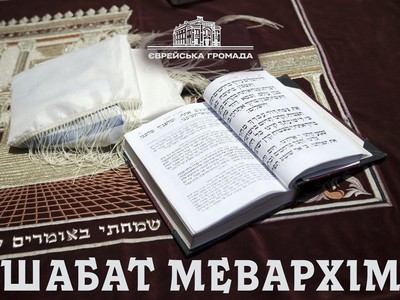

Siha Rebe for the weekly section of the Torah "Ree"
Community
Destroying — Building •📖IntroductionIn the weekly chapter, the Torah commands us to destroy and crush the idols and their altars, and at the same time strictly forbids us to do the same — to destroy and smash — about the Temple. As the verse says:“Destroy their altars… Do not do this to the Lord your God.”The Sages extended this prohibition to the destruction of synagogues and houses of learning.🤔QuestionIt is known that everything that the Most High commands the Jewish people, He performs Himself. If so, how did the Almighty allow the destruction of the First and Second Temples? Isn't that a violation of the commandment“Don't do that.”?!💡ResponseThe prohibition to destroy the Temple, synagogues and yeshivas applies only to those who do sofor the sake of destruction itself. However, if demolition occursfor the sake of future construction, it is permissible and even desirable.Therefore, the destruction of the Temple was not a violation of the prohibition“Don't do that.”because it was for the sake of the future construction of the Third Temple, which will be larger and more beautiful than the previous ones.As stated in the source:“The Lion [the Almighty] came under the sign of the Lion [in the month of Hab] and destroyed Ariel [the Temple], so that the Lion [the Almighty] would come under the sign of the Lion and rebuild Ariel.”📌A lesson for usGalut itself — exile — is only the beginning of Liberation. Thereforea Jew should not be discouraged by the difficulty of expulsionOn the contrary, it is necessary to strive for its completion and act for the sake of the earliest possible onset of Full Liberation.(Based on the materials of Likutey Sikhot, v. 27, p. 12)Source:https://t.me/+8KbDy9dQVqAxZWE8

Lubavitcher calendar: Today is 26 Menachem-Ava 5786
Community
In 📌 5603 (1843), the congress of rabbis ended, during which Rabbi Tsemakh-Tzedek was arrested 22 times because of his unwavering devotion to the foundations of the faith. In the end, he defeated the Enlighteners (maskilim).Iom-yomFrom the conversations of my father and teacher [Rebbe Rashab]:In the "Exodus from Egypt" of Hasidism, there is a commandment to orally tell about the exit: to retell stories about the Hasidim and "absorb" them into the innermost depths of their inner world.You should know that every story is a guideline for life. Each story should contribute to the formation of a noble character, the inner vitality in fulfilling the commandments with special diligence and the assimilation of the ways of benevolence and gentleness taught by Hasidism. source: 📖 Lubavitcher Calendar
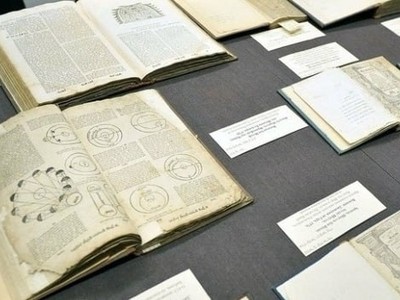
📜 The historical struggle for the Schneerson library: how the books ended up in Russia and led to huge fines
Community
The history of the Schneerson Library is one of the most interesting and complex episodes in which world history, cultural heritage, international courts and big politics are intertwined. This is a tale of priceless books that went through ordeals and changes of eras and caused a serious diplomatic conflict between the United States and Russia.📚 The Road to Russia: Evacuation and Preservation of the GatheringThe history of this collection dates back to the founding of the Chabad movement. For generations, the Rebbe movement has carefully collected and replenished a unique collection of rare books that have become an important part of the historical and spiritual heritage.In 1914, with the beginning of the First World War, the town of Lubavitchi — at that time the spiritual center of the movement — found itself in a zone of extremely dangerous hostilities. The Fifth Lubavitch Rebbe was faced with a difficult dilemma: it was impossible to transport thousands of books on dangerous roads, but it was also too risky to leave them in the front line. Therefore, about 12,000 printed volumes were packed and sent to a securely guarded warehouse in Moscow to protect them from the horrors of war. The Rebbe took the rarest manuscripts with him in the evacuation.🛑 soviet nationalization: confiscation of the libraryHowever, the political situation in the country has changed radically. After the revolution, the Soviet regime came to power, which began a massive nationalization of private and public property.The warehouse in Moscow was opened, and the entire Schneerson library was confiscated and transferred for storage to state funds — to the Lenin Library, now the Russian State Library. The next Rebbe tried for decades to negotiate with the authorities to return the collection. However, the Soviet leadership declared the meeting state property, categorically refused to return it to its rightful owners and closed access to it.U.S. ⚖️ Litigation and Million Dollar FinesWhen diplomacy finally came to a standstill, representatives of the Chabad movement appealed to the United States federal court, filing a lawsuit against the Russian government demanding the return of the illegally held collection.The American court ruled in favor of the plaintiffs and ordered russia to return the books. The Russian side ignored this verdict, stating that the American judicial system has no jurisdiction over the state property of the Russian Federation, and demonstratively refused to participate in the meetings.In response to the failure to comply with the court decision, the American court imposed a severe sanction — a fine of $50,000 for each day of delay. Over the years of prolonged litigation, this amount has grown to astronomical proportions — many millions of dollars.This caused serious diplomatic tensions between the two countries. The situation was so difficult that Russian agencies and institutions were forced to temporarily restrict the sending of cultural exhibits and research materials to the United States due to the real risk of seizure of property on the Chabad movement's claim.🌐Compromise in Moscow and the current stateIn 2013, there was a certain turn in this issue. The russian leadership decided to transfer the identified part of the book collection from the closed state archives to the Jewish Museum and Tolerance Center in Moscow, without taking the books out of the country.The move has sparked wide public debate: whether it is a full-fledged solutionto the problem, or just an attempt to ease international judicial tensions. However, today a significant part of the historical collection is open and accessible to visitors and researchers in the Moscow museum, while discussions about its legal status and the full return of the entire library continue.source: 📖 Lubavitcher Calendar

Our dates: 1 - 2 elul
Community
1 elul 2448 (1313 BC) — Moshe's third ascent of Mount Sinai.Early in the morning, Moses climbed Mount Sinai, carrying stone tablets with him so that the Almighty could re-write the Ten Commandments on them.At the top of the mountain, the Most High allowed Moshe to see His back, but not His face (which the great sage and commentator Rabbi Moshe ben Maimon (Rambam) interpreted as an indication of the possibility of perceiving the materiality of the Most High, but not His essence) and, thereby putting an obstacle to the human possibilities of knowing God. And there, at the top of Sinai, the Most High revealed to Moses thirteen attributes of God's mercy.This was Moses' third 40-day sojourn on Mount Sinai during the giving of the Torah. Moshe remained on the mountain for 40 days, until 10 Tishrei (Yom Kippur), all the while trying to obtain the full forgiveness of the Almighty for the Jewish people, who, worshiping the golden calf, violated the terms of the covenant made at Mount Sinai.Forgiveness was received, and since then the month of Elul has been called the month of “Divine Mercy and Forgiveness.”2 elul 5315 (August 19, 1555) — The writing of the book "Shulchan Aruch" was completed.The "Shulchan Aruch" (the name translates as "Table Set") was written by the great sage Rabbi Yosef Karo (1488-1575) in 1555 in Safed (Eretz Israel). The book was first printed in Venice in 1565.source: chabad.odessa

Our dates: 3 elul
Community
📌3 elul 5695 (September 1, 1935) — Yorzeit (anniversary of the departure from this world) Rabbi Avraham-Itzhak ha-Kogen Kuk.Rav Avraham-Yitzhak Kook was born in Latvia, in the city of Daugavpils (then Hryva) and studied at the famous Volozhyn Yeshiva, after which he was the rabbi of the cities of Zeymialis (Lithuania) and Bauska (Latvia). Arriving in Eretz Israel, he headed the Jaffa community, and during the First World War, which found him in England, Rabbi Kook became the rabbi of one of the London communities. After returning to Eretz Israel during the British mandate of the country, he became the head of the religious Zionists of the Holy Land, and in 1920 he became the first Ashkenazi chief rabbi of Eretz Israel.The pen of the eminent philosopher and mystic Rabbi Cook belongs to many books and articles, and he himself is considered the founding father of the movement of religious Zionism.source: chabad.odessa

Our dates: 5 Elul
Community
📌5 elul 5537 (September 7, 1777) — The First Hasidic Aliyah. Arrival of Hasidim in Eretz YisraelIn the month of Adar this year, a group of Hasidim led by the disciples of the Mezheritsky Magid — Rabbi Menachem-Mendl from Vitebsk (see 1 Iyar), Rabbi Avraham from Kalisk and Rabbi Yisrael from Polotsk went from Russia to Eretz Yisrael. At the beginning of the journey, they were joined by Alter Rebbe. His disciples begged him not to abandon them, but he answered them with the words of the sages: “Your life is above all else.”The Alter Rebbe, together with his family and brothers, set out on the road and reached Mogilev, which stands on the bank of the Dniester, next to the then Turkish border. Here Rabbi Menachem-Mendl from Vitebsk persuaded the Alter Rebbe not to leave the Jews in Belarus and Lithuania for three weeks and finally got his consent. The rest boarded several ships and set off. During the voyage, a storm sank one of the ships. Out of 80 Hasidim, only 30 managed to escape. But, finally, after a long journey of 5 Eluls, the travelers descended on the Holy Land.Initially, they settled in Safed, but the difficulties of life in this city forced them to move to the city of Tiberias on the shores of Lake Kinneret.source: chabad.odessa

Our dates: 7 Elul
Community
📌7 elul 2367 (1394 BC) — The remarriage of Amram and Jochebed, Moshe's parents.They divorced after the Egyptian pharaoh issued a decree to kill all newborn Jewish boys. After that, the head of the Levi Amram tribe, as one of the leaders of the Jewish people, urged all men to move away from their wives in order not to contribute to the implementation of the criminal plan.The Jews heeded his call, but a few days later Miriam, the six-year-old daughter of Amram and Yochebed, rebuked her father, saying that if the pharaoh's decrees were directed against the birth of Jewish boys, then his call was directed against the birth of both boys and girls.After listening to his daughter's advice, Moshe's parents conceived a child, and six months later, 7 adar, Moshe-Rabein (Moses) was bornsource: chabad.odessa

Lubavitcher calendar: Today 27 Menachem Ava
Community
Today is 27 Menachem Ava 5786Iom-yomThe month of Elul is a month of recapitulation. Just as in the material world the owner of an enterprise, in order for his business to develop properly and bring great profit, must from time to time conduct an audit and correct all shortcomings, the same thing happens in spiritual work — in the service of the Almighty.Throughout the year, Jews are busy studying the Torah, fulfilling the commandments, and doing good deeds. And in the month of Elul — the month of reckoning — every Jew, according to his level, both the one who is in the tent of learning and the one who is engaged in worldly affairs, should honestly summarize everything that happened to him over the past year.It is necessary to realize your achievements in the ministry in order to be strengthened in them, as well as to identify your own shortcomings and shortcomings in your spiritual work in order to correct them. After all, thanks to such good preparation, they are awarded a good and sweet year — both in material and spiritual terms.source: 📖 Lubavitsky Calendar (https://t.me/+8KbDy9dQVqAxZWE8)

Today is 28 Menachem Ava.
Community
Iom-yomThere are two main ways to treat bodily disease:a) treat a damaged, diseased or weakened organ of the body;b) strengthen healthy organs so that they can overcome the disease and heal the affected organ.In case of illness of the soul, two types of spiritual service correspond to these two paths:teshuvagood deedsSource: chabad.org