
Ayom-yom: Today 19 Menachem-Ava
Community
The order to be followed by the one who imposes four pairs of tefillin during prayer is as follows:Tefillin Rashi is put on his hand and head before reading "Eiseu" ("Where sacrifices were made...") and pray to the words "Ah tzadikim" ("Only the righteous...") inclusive.They remove the main tefillin of Rashi and, without saying a blessing, impose the main tefillin of Shimush Rab. Read "Shema" by the wordemitsinclusive, and then a daytime passage with Tehilim, according to the division by day of the month. The most diligent study these psalms with commentaries by Rashi and Metsudot.Then, without a blessing, they put a tefillin to Rabeinu Tam, read "Shema" to the wordemitsinclusive, after which they read the excerpt "Kadeish" ("Dedications...") and "Six things...". Then they study the Mishnah section — each according to their level of understanding.They shoot the main tefillin of Rabeinu There and without a blessing they impose the main tefillin of Raavada. Read "Shema" by the wordemitsincluding a daily excerpt from the weekly Pentateuch section with Rashi's comments.¹NOTES!¹ One of the customs of the Hasidim of Chabad is to read daily an excerpt from the Pentateuch with Rashi's commentaries according to the division of the weekly chapter into seven parts for reading on Shabbat, several chapters of Teilim, and an excerpt from the book of Tania. This tradition was established by Rabbi Yosef-Itzhak Schneerson, the previous Lubavitcher Rebbe, who repeatedly emphasized its importance. See 25 Shevat.source: chabad.org
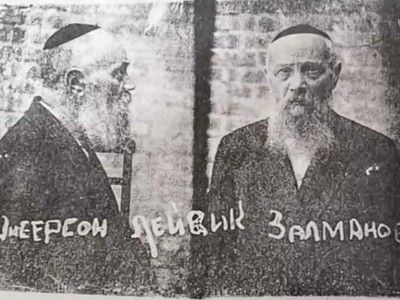
Chabad history: Rabbi Levi-Itzhak Schneerson
Community
📖Rabbi Levi-Itzhak Schneerson: Between the Deepest Cabal and an Open Challenge to the Soviet SystemThe story of Rabbi Levik is unique in that it combines a brilliant cabalist with a man of fearless citizenship. As the chief rabbi of a major industrial center and father of the future Lubavitcher Rebbe, he refused to go underground or seek compromises with the atheist regime. His life became a rare example of how a deep knowledge of the Torah and an uncompromising struggle for Jewish identity in the USSR combined in one fate.📜Origin, Early Years and Receipt of Rabbinical LaughterRabbi Levi-Itzhak was born on 18 Nisan 5638 (1878) in the town of Poddobryanka. He was named after his great-grandfather, the grandson of the great Tsemakh-Tzedek. Studying with his uncle, Rabbi Joel Haikin, the young Levi-Itzhak showed such brilliant knowledge that in his youth he received rabbinic laughter from the most prominent authorities of that generation, in particular from the famous Rabbi Chaim from Brest and Rabbi Eliyahu-Haim Maisel from Lodz.In 1900, at the personal suggestion of the Fifth Lubavitcher Rebbe — Rashab, Rabbi Levi-Itzhak married Rabbi Hanna Yanovska, the daughter of Rabbi Mykolaiv.🏛️Rabbi in Ekaterinoslav (1909–1939)In 1909, when Rabbi Levi-Itzhak was only 31 years old, he accepted the offer to become the chief rabbi of Ekaterinoslav. In this position, he served for three decades. It was a time of incredible trials: World War I, revolution, civil war and, ultimately, the establishment of aggressive atheistic power.It is said that already in the first days of his work, the rabbi learned that the city mikvah is in a state of emergency, and the community does not have the funds to repair it. Rabbi Levi-Itzhak helped Jewish soldiers on the fronts of the Russo-Japanese War, collected extremely important materials for the defense of Menachem Beilis at the famous trial, and tirelessly strengthened Jewish institutions.⚖️Arrest by the NKVD and investigationAfter the Communists came to power in the USSR, a fierce struggle began with everything Jewish. Synagogues were closed, the teaching of the Torah and the observance of the commandments were forbidden. However, Rabbi Levi-Itzhak continued to perform his duties openly despite threats.On the night of 9 Nisan 5699 (1939), four NKVD officers broke into his apartment. For hundreds of days, the rabbi was brutally interrogated, transferred from one prison to another, and held in solitary confinement for 32 consecutive days. He was required to confess to "anti-Soviet counter-revolutionary activities" and to name other rabbis. But Rabbi Levi-Itzhak did not mention a single name or sign a single forged document.🏜️References and writings from the CabalThe Soviet court sentenced the rabbi to four years of exile in Kazakhstan. Rabbi Levi-Itzhak mentioned traveling on a train for prisoners as one of the most difficult ordeals. However, even there, he showed incredible devotion to the commandments. When water was given toprisoners literally drop by drop, he refused to drink, keeping these precious drops for performing netilat yadayim — morning hand washing.Since 1940, he lived in the harsh conditions of the Kazakh village of Chiili. His wife, Rebbetzin Khan, came to help him. Even while in exile, in complete isolation, Rabbi Levi-Itzhak continued to write extremely profound cabalistic commentaries on the Torah and the Book of Zohar.Since there was no paper or ink, Rebbetzin Hana collected local herbs and made juice from them, which served as ink. The rabbi wrote on the margins of the few books he could get his hands on. Subsequently, these manuscripts were miraculously removed from the USSR and published by the Lubavitcher Rebbe under the name "Likutey Levi-Itzhak".🕯Departure from life and perpetuation of memoryYears of prison torture and the harsh climate of Kazakhstan undermined the healthof the great righteous. After the expiration of his exile, he moved to Almaty, where 20 menachem-awa 5704 (1944) raised his soul to the heights. Only a few Jews came to the funeral, because people were mortally afraid of persecution by the authorities.Today, Ogel Rabbi Levi-Itzhak in Alma-Ata is a recognized monumentof his spiritual heritage.📖 Любавицький календар

📖 Lubavitcher calendar: Today is 20 Menachem-Ava 5786
Community
📌 5704 (1944) — Rabbi Levi-Itzhak Schneerson, the father of His Holiness the Lubavitcher Rebbe, left this world and found his eternal rest in the city of Alma-Ata.📌 5740 (1980) — The Rebbe instructed the founding of Tiferet Zkenim Levi-Itzhak.📌 5741 (1981) — the first ceremonial completion of the writing of the Children's Scroll of the Torah took place. Since then, all subsequent celebrations have also been held on this day. In this regard, today, 20 ABA 5786, the introduction of the Ninth Children's Scroll of the Torah will take place.Iom-yomJust as, for example, a permanent place is established for the commandment of tefillin — on the head and on the hand — and a person feels the weight of the main tefillin and the pressure of the tefillin on the hand, the same should be true of the commandments of love for G‑ d and awe before Him. As the Rambam writes (Laws of the Foundations of the Torah, Chapter 2, Laws 1–2): “This revered and formidable G‑ d is commanded to love and tremble before Him, as it is said: 'And love G‑ d, your G‑ d,' and it is said: 'G‑ d, your G‑ d, be afraid.'”It follows that the measure of the fulfillment of these commandments is that they are felt bodily — directly in the very flesh of the heart, just as a person feels when he meets his faithful friend. Not only does she feel good and forget everything that depressed her, she also awakens an inner life force full of good hope, because her heart rejoices.The same applies to awe: a person is overwhelmed with great fear and awe, because at this moment he remembers all his bad deeds — in thought, speech and actions. Her heart suffers from palpable pain due to fear of punishment and trembling before Heaven, and sometimes due to trembling of shame or trembling before the Majesty of G‑ dsource: 📖 Lubavitcher Calendar

Our dates: 21 menahem-av
Community
📌21 menachem-avah 5678 (July 30, 1918) — Yorzeit (anniversary of the departure from this world) Rabbi Chaim Soloveichik (Brisker Rabbi).On this day, the famous rabbi and sage of the last generations, one of the leaders of European Jewry, Rabbi Chaim Soloveichik from Brest (in Hebrew — "Brisk"), known as Brisker Rabbi, passed away.Rav Chaim, whom everyone spoke of as a great genius of logic and analysis, was no less a genius of kindness and love for people. They say that "the money was burning in his pocket." All the money that he received in his rabbinic position, and that was brought by wealthy people, he distributed to the needy, without thinking for a moment about his own family. He could always be found at home, sitting with a group of his closest disciples at a round table: Rav Brisker preferred a round table in particular, so as not to sit at the head of the table and create distance between himself and the visitors.source: chabad.odessa

Our dates: 24 menahem-avah
Community
📌24 menachem ava circa 3660 (circa 100 BC) is a holiday founded by the Hashmoneans.The descendants of the Maccabi brothers, kings of the Hashmonean dynasty, re-enacted Jewish law based on the laws of the Torah and replaced with it the Roman secular law in force at that time. At the same time, this day was proclaimed a holiday.source: chabad.odessa

🎨 The story of a Hasidic artist whose paintings sell for hundreds of thousands of dollars: Zalman Kleiman
Community
If you have ever seen warm, lively paintings in which the Hasidim dance, study the Torah or go to the Rebbe, these are the works of Zalman Zusi Kleiman (1933–1995).Today, his paintings adorn thousands of Jewish homes around the world, and publishers use his drawings to decorate books. However, behind this light and joy lies the amazing fate of a person who survived the blockade, orphanhood and underground.💔 The Tragedy of Childhood and the Siege of LeningradZalman was born in Leningrad. His father was from Warsaw and his mother was from Minsk. When Zalman was eight years old, war broke out.To save the children, the parents gave the youngest daughter Rachel to an orphanage in Siberia. Zalman himself remained in besieged Leningrad. Hunger did not spare his parents — they died, and the boy remained an orphan.🚂 Underground Header & The Great EscapeAfter the war, the boy was taken by his aunt and handed over to the family of Rabbi Nahum Shmaria Sasonkin. Zalman studied the first Hebrew letters in an underground cheder.In 1947, during the "Great Escape", he was taken from the USSR on forged Polish passports — through Poland, Austria, Germany and France to Israel.🎖️ From Yeshiva to Army and Rebbe's AdviceIn Israel, Zalman studied at a yeshiva in Lod, and later moved to Kfar Chabad to devote himself to painting. In 1954, he was called up to the IDF. Military Rabbi Shlomo Goren transferred him to work on the decoration of synagogues and illustration of the magazine "Mahanaim".After the service, Zalman wanted to study painting in the United States and asked for a blessing from the Lubavitcher Rebbe. But the Rebbe advised:“If you want to study painting, Paris is the best place to do it.”Zalman went to France, studied at museums and met his future wife Rosa there.🖼️ New York, recognition and global successAfter the wedding, the couple moved to Crown Heights, New York. Zalman began to paint for the newspaper Algemeiner Journal and became an artist of the Hasidic soul: prayers, holidays and dances came to life on his canvases. There is no falsehood in his works — only heat and living energy.Stunning fact:in 2022, his painting "From Khoslychiv to Lyubavichy" was sold for $480,000!🕯️ InheritanceZalman Kleiman passed away in 1995. However, his paintings still adorn homes and give people light, reminding: after any trials, you can keep faith, joy and the ability to see beauty in your soul.source: 📖 Lubavitcher Calendar
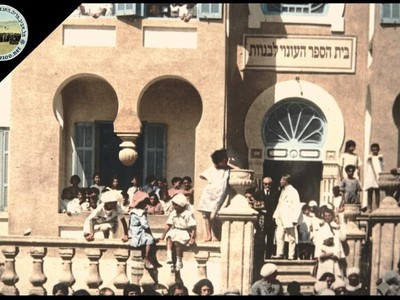
Page of history: "Americans" who built up Tel Aviv.
Community
The ground floor of the Schlossberg house, later known as the house of Nurok and Idelzak, housed a city school for girls.The house at 54 Allenby Street was renovated and completed. This is just one of the buildings erected in Tel Aviv on the initiative of Jacob Schlosberg, a native of Kyiv, who succeeded in business in the state of Nebraska, and later made Aliyah to Eretz Yisrael.Photo from the Central Archive. Thank you, Shula Otrich.Source:https://sites.google.com/.../tlv.../tlv100/mugrabi_sqr/LNB54
Lubavitcher calendar: Today is 21 Menachem-Ava 5786.
Community
📌 5668 (1908) — At the direction of Rebbe Rashab, the Romano yard in Hebron was acquired.Iom-yomThe essence of serving along the paths of Hasidism is that even when a person goes to the market and is immersed in his affairs, he reflects on what he can do for the spread of Hasidism and the welfare of the Hasidim.And having met someone of her acquaintances in trade affairs at the market, she speaks to his heart, encouraging him to come to classes on the study of Hasidism — the Words of the Living G-d — or to a Hasidic meeting, a farbrengen.Such service along the paths of Hasidism is a personal dutyof everyone — regardless of the level of his knowledge in Hasidism.Source:Lubavitcher calendar
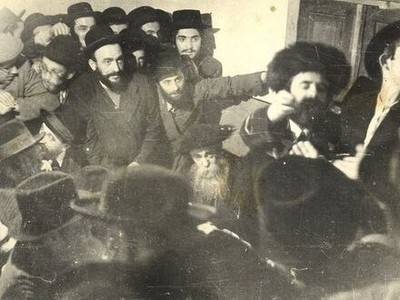
📜 BELZ REBBE AND CHABAD: HISTORY AND RELATIONSHIPS
Community
👑About Rabbi Aaron RokeahRabbi Aaron Rokeach of Belz (1880–1957) was the fourth admiral of the Belz dynasty. During the Holocaust, he lost his entire family, but after the war, he arrived in Eretz Israel and revived the Belz Hasidic movement. The Jews of that generation deeply revered him for his righteousness, modesty, and utter devotion to the service of G-d.🕊Special lifestyle and asceticismRabbi Aaron Rokeah's life was utterly devoid of material enjoyment.For fifty years he had not slept in bed, resting only sitting in a chair. He ate almost no solid food, eating mostly liquids and only one tablespoon of soup a day. Due to poor health, his body gave off almost no heat, so even in the summer he was forced to wear a fur coat.He gave every blessing and made every handshake only through the towel with which he wrapped his hand. When hiring a new assistant, he set the main condition: to wash his hands after every touch of hair, nose or clothes.🤝Meetings with the Seventh Lubavitcher RebbeEven before the Seventh Lubavitcher Rebbe led Chabad, their first meeting took place in Berlin. The future Rebbe came to receive the blessing without giving his name.When the Rebbe approached Rabbi Aaron Rokeach, he suddenly put down the towel, took him by the hand with his bare palm and did not let go for a long time. The Belz Rebbe said in Yiddish: “This young man has a very warm hand… You can't hide from me!» And when he found out that Rebbe Rajaca's son-in-law was in front of him, he added: “Yes, I feel that this is a pure and noble hand.”Subsequently, a similar meeting took place in Vienna, where the Belz Rebbe froze for a long time again, holding the hand of the young Rebbe.⚡️The participation of the Rebbe of Rajac in the rescue of the Belz RebbeDuring World War II, Rabbi Aaron Rokeah was in mortal danger. He hid in the Bochnia ghetto, later in Budapest, and then reached through Romania, Bulgaria, Turkey and Syria.In New York, the Sixth Lubavitcher Rebbe — Paradise — enlisted all his connections to save him. He personally wrote letters to judges, heads of Jewish organizations, and other admirals seeking permission for the Belz Rebbe to enter Eretz Yisrael.When Rabbi Aaron Rokeah arrived safely in Eretz Yisrael in 1944, Rabbi Rayatz sent a delegation of Hasidim to meet him and convey the blessing. As a sign of deep gratitude, the Belz Rebbe told the Rebbe's son-in-law, Rashag, in detail the whole story of his escape from Europe, although he usually avoided talking about this topic.✉️Correspondence and mutual supportThere was a warm correspondence betweenthe two righteous men. Rebbe Rajac consulted with the Belz Rebbe on strengthening Jewish education in Eretz Yisrael and asked which educational institutions needed help.In 1945, when the anniversary of the liberation of Rebbe Rajac from the Soviet Union was celebrated, the Belz Rebbe, due to poor health, could not come personally, but sent his brother — Rabbi Mordechai from Belgoraya. Speaking at the meeting, the brother of the Belz Rebbe said: "In matters of self-sacrifice for the sake of the Torah, we are all students of the Lubavitcher Rebbe!"⚠️Attitude to the authority of the Lubavitsky RebbeIn the early years of the leadership of the Seventh Rebbe, one of the secretaries of the Belz Admiral allowed himself to express his dissatisfaction with the fact that the young Rebbe was giving instructions to the senior rabbis.Hearing this, Rabbi Aaron Rokeah sternly stopped the secretary: “You're playing with fire! Go immediately, wash your hands and say three times,“I repent!””🕯Memory and LegacyIn 1956, the Belz Rebbe received with great respect the twelve envoys of the Lubavitcher Rebbe who arrived in Eretz Yisrael, blessed them and asked them to convey the warmest greetings to the Rebbe.And in 1957, 21 Ava, when Rabbi Aaron Rokeah left this world, the Lubavitcher Rebbe wrote in one of his letters that with the departure of such righteous people, "the darkness of exile has become twice as thick."Source:t.me/LubavitcherRebe770

Question to the Rabbi: Does Gyur change his nationality, which is determined by genes?
Community
❓If Jews are a people with a special spiritual mission, passed down from generation to generation, how can a person born outside this people join them? Isn't nationality a matter of genetics?📌The answer of the Torah is unequivocal:yes, a non-Jew can become a Jew, and after giyur he is considered a full member of the Jewish people. The Talmud (Yevamot, 22a) compares the hero with a newborn child: his past no longer determines his status — he starts life anew. This means that a Jew can marry Guyoret and a Jewish woman can marry a hero, because after the hyury, there is no difference in status between them.But how is that possible? After all, nationality, it would seem, is determined by origin, not by beliefs. Here we come to the key point: Jewry is not only genetics, but also the soul. Ramhal, in his book The Way of the Creator, explains that the Almighty, through His great mercy, allowed those who sincerely seek the truth to “graft” themselves into the people of Israel. This is not just a formality, but a profound spiritual transformation.Moreover, history shows that many of the most prominent figures of the Jewish people were descendants of heroes. King David was a descendant of the Moabitess Ruth; Rabbi Akiba, who saved the Oral Torah from oblivion, was the son of geras; Rabbi Meir, one of the greatest sages of the Mishnah, was a descendant of the Roman Nero, who accepted hyur. The prophet Ovadia, Onkelos — the translator of the Torah, as well as the sages Shmai and Avtalion were also heroes.Why did they reach such spiritual heights? Because among other nations there are also great souls, and by joining the Jewish people, they bring with them a special spiritual strength. Their choice is not just a change of religion, but a return to their true roots.So, the answer to your question is simple: Giyur is not a "change of nationality", but the disclosure of the connection with the Jewish people, from the beginning embedded in the soul. And if a person passes this way sincerely, he becomes not just a "Jew by documents", but part of an eternal chain of generations that bring the Creator's light into this world.sourcetoldot.com

Psychologist's page: When we know how to say no
Community
Psychologist's page: When we know how to say no, honestly talk about our needs, do not take on someone else's responsibility and allow ourselves to be ourselves — the relationship becomes not weaker, but stronger.And which of these boundaries is the most difficult for you to defend? Write a number or share in the comments. 💬source:InstitutPsihoterapiiResurs