
The Torah commands that among the threads of tzitzit there is a thread of thelet — a special blue-blue color:
Community
"And let them weave a string of thelet into the tzitzit at each corner"(Bemidbar, 15:38).Its purpose is to remind the Hebrew of G ‑ d and His commandments: “And you shall see it, and remember all the commandments of G ‑ d.” The sages explain: the color of thelet resembles the sea, the sea resembles the sky, and the sky resembles the Throne of Glory. Thus, a look at the blue thread spiritually elevates a person from the earthly to the Divine. (Talmud, Menahoth)However, thelet is not any blue thread. It was dyed with a special dye derived from a sea creature calledchylazone. Subsequently, accurate knowledge of the chylazon and the method of making the paint was lost. Therefore, for many centuries, most Jews have worn only white tzitzit threads — and the commandment is fully fulfilled. Today, some communities believe that the chilazon has been identified and are wearing the thelet again, but most orthodox communities, including Chabad, have not adopted the practice due to the lack of a continuous and credible tradition.(Chabad.org)Аblue stripes on the canvas of the talitis not a commandment; it is a custom or decorative element that is often symbolically reminiscent of thelet. Talite can be with blue, black or white stripes — the main thing is that the tzitzit itself is made and tied in accordance with Halakha.(Chabad.org)
Morning Prayer
Community
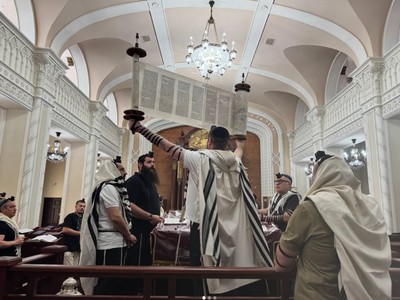
Nowadays, when there is so much danger around - it is especially important to ask for protection from the Creator of this WorldThe morning prayer in the minyan (Jewish congregation) to the Almighty is the moment when we have the ability to do so. When we can ask G-d not only for protection, but also for Blessing for ourselves and our relatives, for success in businessThe Torah says, "And ye shall serve the Lord your God, and he shall bless thee, and heal thee." - ShemothThat is why, in order for our prayers to be heard, we need to systematically do this, and work on concentration and coffee (intention) in prayer. And then, the prayers will be definitely accepted!May the Almighty protect everyone, give peace and bless Ukraine with security and goodness!

Kyiv is recovering from another scary night.
Community
In a matter of moments, dozens of cluster munitions exploded after being hit by a ballistic missile. The moment of this terrible shelling hit the photo. But no photo can convey the fear that Kyivans experienced last night.Today, our hearts are with everyone affected by this tragedy. We sincerely sympathize with those who have lost relatives and friends. We pray for the speedy recovery of the victims.May the Almighty give strength to the burnt families, healing to the wounded and protection to all who are under fire.Kyiv will stand. Ukraine will stand.
Lubavitcher Calendar: Today is 23 Menachem-Ava 5786
Community
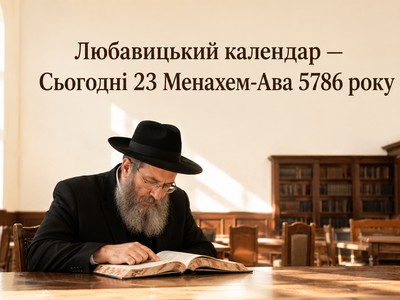
Today is 23 Menachem Ava 5786📌5705 (1944/1945)— the "Ahay Timimim" yeshiva was founded in Providence, the capital of the state of Rhode Island, USA.📌5736 (1976)— the Rebbe's appeal calling for the creation of the Rabbinical Court (Beit Din) of Chabad was approved. On the same day, a group of IDF Excellents* arrived on a special visit to the Rebbe. The Rebbe addressed them with a special conversation — in the Hebrew language.📌5738 (1978)— The Rebbe launched a worldwide campaign to print the book “Tania” all over the world.Iom-yomIn the winter of 5652 (1891/1892), when my father, teacher and mentor (Rebbe Rashab) studied the book “Tania” with me — the words: “The second soul of a Jew is literally a fraction of G-d from above” — he explained that the meaning of the words “from above” (mi-maal) and “literally” (mom) are opposed to each other; the word “above” describes spirituality in its highest manifestation, and the word “literally” describes materiality in its most earthly incarnation.And he explained that this is the greatness of the second soul: being the highest spirituality, it acts and manifests itself in the material reality itself.*"Excellence of the IDF"— this is how the Rebbe called the wounded warriors, emphasizing their heroism, not their physical limitations. In 1976, he called not to call them “disabled”, but to honor their feat.Source:📖Lubavitcher Calendar (https://t.me/+8KbDy9dQVqAxZWE8)
Chabad History: 📜 The Secret Deal and the Grand Vision of Reb Rashab
Community
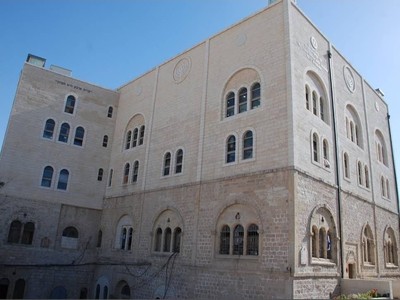
The brightest and most exciting page in the history of the house is associated with thefifth Lubavitcher Rebbe — Rabbi Sholom-Dov-Ber, Rebbe Rashab.In 1911, the Rebbe began to realize a grandiose plan: to strengthen the Jewish presence in the Holy Land and spread the light of Hasidism not only in the north of the country, but also in the city of the Forefathers — Hebron.Enlisting the help of loyal Hasidim and overcoming the huge bureaucratic obstacles of the Ottoman Empire, Rebbe Rashab redeemed the entire courtyard of Romano for a huge sum at that time. This deal was a real event: Chabad bought not just a house, but a whole strategically important territory!🎓The first yeshiva "Torat Emet" and the spiritual elite of ChabadWithin the walls of "Beit Romano", the Rebbe founded the famous yeshiva "Torat Emet". It was not an ordinary yeshiva: the best students were sent here from the Lubavitchers — "tmimim", the blossom of the Hasidic youth.The young Hasidim brought with them a special energy. The building literally came to life: the training lasted around the clock, and the deep Hasidic Paintbrands — fraternal gatherings — and prayers with inner concentration attracted residents of all Hebron to “Beit Romano”.For the Lubavitcher Rebbe, this house became the main center of the movement in Eretz Yisrael.⏳Tragic break and decades of desolationUnfortunately, the golden period of the yeshiva in Hebron came to an end due to rising tensions and the tragic events of the 1920s, followed by the 1948 War of Independence.The building was captured, and Jewish life in it froze for many decades. The authorities used the historical complex as an Arab school, and the ancient walls commemorating the prayers of the Hasidim gradually fell into disrepair.🔑Return to life and the dream of "Shikun Chabad"Only in the early 1980s — in 5741 according to the Jewish calendar — thanks to the dedication of Rabbi Moshe Lewinger and a group of activists, the house was returned.An interesting fact: after the return of the building, large-scale plans for the realization of an ancient dream were discussed — the construction of an entire Chabad neighborhood called "Shikun Chabad" around "Beit Romano" in order to completely revive the Hasidic quarter of Hebron.✨"Beit Romano" todayAlthough the district development plan was only partially implemented, the building itself blossomed again. Today, the famous Shavei Hebron yeshiva is located within the walls of Beit Romano.The building has been restored, but its Chabadian roots and the majestic legacy of Rebbe Rashab will forever remain an important part of the history of this amazing place.Source:https://t.me/+8KbDy9dQVqAxZWE8

🌿 Shabbat Mevarhim — the Sabbath that blesses the whole month
Community
Each month has a special Sabbath — Shabbat Mevarhim, when the Jewish people bless the coming of the new month.This blessing is not just a tradition. It is on this day that, through our prayers, Tehilim readings and good decisions, we attract the blessings and power of the Almighty to all the days of the coming month.The exception is the Sabbath before Rosh Hashanah.On this Sabbath, the Most High himself blesses the month of Tishrei, and it is in this blessing that the power is contained which enables us to bless all the other months of the year.The Lubavitcher Rebbe Rajac established a special order for this day:They gather in the synagogue in the morning.They read all of Tegilim.Hasidism is studied for an hour.Then they pray.After the prayer, a farbrengen is held — a Hasidic meeting where good decisions are made and strengthened in the service of the Almighty.The Rebbe emphasized that the reading of Tehilim on this day concerns not only the person himself, but also his children and grandchildren.The Rebbe often said that when the Messiah came, he would ask everyone:“How many Jews have you influenced to read Tehilim on Shabbat Mevarhim?”Why Shabbat Mevarhim?Because Shabbat is the day when the highest blessing is revealed, and reading Tehilim before prayer becomes the vessel through which spiritual power descends for the whole coming month.Even if Rosh Chodesh falls on Shabbat, the blessing of the new month is said the previous Saturday, because the strength for the new month comes from the previous Shabbat.Shabbat Mevarchim is a day of joy, unity and inner renewal.This is an opportunity not only to ask for a blessing, but also to become a source of light and goodness for the whole coming month.Source: Lubavitcher calendar.

Elul - a month of repentance and introspection
Community
Part 1.According to tradition, elul, the last month of the Jewish calendar, is a time of introspection and debriefing, a time to reflect on one's actions and to appreciate the spiritual growth achieved during the outgoing year. This is the time to prepare for the approaching Days of Awe - Rosh Hashanah and Yom Kippur.Being the “month of God's mercy”, Elul is the most favorable time for teshuvah (repentance, or literally “return”) , prayer and charity, as well as for a special manifestation of agavat-Isroel (love for the Jews). After all, it is in this month of the year that such things are much easier to achieve significant results in working on oneself and in approaching the Creator.The first letters of the words Shir HaShirim - "I belong to my beloved and my beloved belongs to me" (לי ודודי לדודי אני) - in Hebrew form the word "elul" (אלול). After all, it is in this month that the Jewish people are strengthened in repentance for their sins and approach their beloved - the Almighty. And He stretches out His hand to him and brings him closer to Himself.All four (in the original) words of this phrase end with a letter י (yud). The fourth gematria of the letter yud equals forty, which corresponds to the fortieths intended for repentance - the days between Rosh Hodesh Elul and Yom Kippur.It should be noted that the Aramaic word "elul" is the same root as the word that means searching for or carefully studying something. For example, the words of the Torah: "That they may conquer the land of Canaan" (Bemidbar, 13,1) are translated into Aramaic by the phrase, where the word "mastered" corresponds to the word "vialelun". After all, this is the purpose of the month of Elul, that in its days we look with all our being at the deeds committed during the year, remember all our sins - to eradicate them from our hearts and return to the Almighty.source:http://www.tureizahav.lviv.ua/
Reading Tehilim in the month of Elul
Community
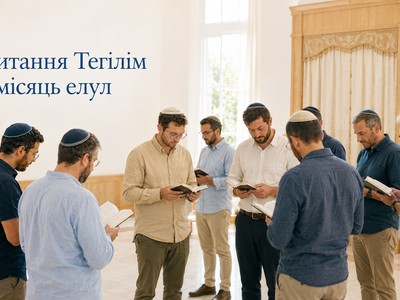
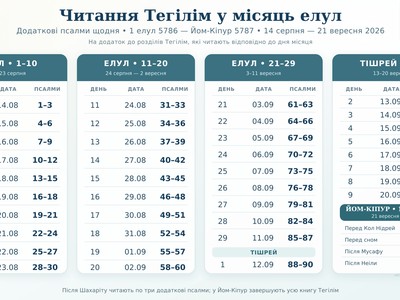
From 1 elulah every day after the Shaharit prayer, three psalms of Tehilim are read — up to Yom Kippur. On the first day of Elul, Psalms 1–3 is read, on the second day, Psalms 4–6 is read, and so on.It is also customary to read the 27th Psalm during Elul. This custom is based on the Midrash, which explains his first words: “Almighty is my light and my salvation.” According to the Midrash, the words “my light” refer to Rosh Hashanah and “my salvation” to Yom Kippur. Further words — “For He will hide me in His bosom” — remind me of the holiday of Sukhoth. According to the custom established by Ari, this psalm is read after the morning and afternoon prayers.In some Jewish communities, it is customary to read ten or more psalms together in the synagogue after the end of the prayer — each community follows its own custom.The meaning of this tradition is to remind oneself and others about the approach of the Day of Judgment, about the need to prepare for it, carry out teshuvah and ask the Almighty for mercy.According to the ancient custom, every day of the month of Elul in the synagogues proclaim:“Come back, backsliding children”(Yirmeyahu, 3:14).

The main traditions and customs of the month of Elul
Community
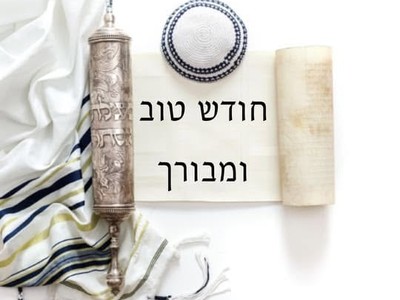
2 Section • Every day of the month of Elul (except Shabbat and the last day of the month) is trumpeted in a shofar (lamb's horn), calling for repentance• When writing a letter or meeting someone, it is customary to end by blessing each other with the wish "Ktiva Vahatima Tova!", which means: "May a good verdict be made and approved for you for the new year!" That is, he must indicate at the beginning or at the end of the letter that he wishes the addressee to find the mercy and blessing of Heaven, that he be justified on the Day of Judgment, safely inscribed in the Book of Life and awarded the final good signature.• Baal Shem Tov established the custom of reading three additional psalms each day, starting from the 1st elul all the way to Yom Kippur. On the first day they read Psalms 1-3, on the second day they read Psalms 4-6, etc., and on Yom Kippur they read the remaining 36 Psalms, thus completing the entire book.• As a month of self-examination, elul is a good time to give tefillin and mezuzahs for examination to an experienced soifer (scribe of sacred scrolls) and make sure they are kosher. Anything that requires correction is immediately corrected.• During the last week of Elul, on the days preceding Rosh Hashanah, the Slichot (“prayers of repentance”) are recited the first time at midnight at the exit of Shabbat, and the other days early in the morning.Source:https://www.tureizahav.lviv.ua/ua/

Rosh Hashanah Getting Ready: Shofar Tubing
Community
From the second day of the new moon elul (that is, from the 1st elul) until the day before Rosh Hashanah, the shofar is blown in the synagogues after the completion of the morning Shaharit prayer. These daily trumpets consist of four sounds: “Tchia”, “Chevarim”, “Troyes” and again “Tchia”.This trumpeting is not prescribed by the Torah, but established by an ancient Jewish custom. When Moshe ascended Mount Sinai on Rosh Chodesh in the month of Elul to receive the new Tablets of the Covenant, the Jews in their condition blew the shofar, so that all the people would know that Moshe had only temporarily ascended to Heaven (and not left the earth forever) and so that in his absence they would not fall into idolatry. In commemoration of this, the Jews blow the shofar from the beginning of Elul — to remember how Moshe ascended to the Most High and to confirm once again that Israel repented of the sin of creating a "golden calf" and was forgiven, because the Most High in His mercy gave new tablets after forty days. This reminder should awaken in every Jew the desire for tshuva — repentance and return to the Most High.They trumpet the shofar after completing the morning prayer, because Moshe at one time went up the mountain in the morning.The trumpeting is carried out throughout the month to warn the people about the approach of the Day of Judgment and to awaken the desire for teshuvah. After all, the nature of the sound of the shofar is such that it causes anxiety in the hearts of people, as it is said in the Scripture: "Can the people not be alarmed when the shofar sounds in the city?” (Amos 3:6) The sound of the shofar declares, “Wake up, you who are asleep, wake up from your sleep, wake up from your slumber, look at your deeds, and repent of your sins.” That's what Rambam wrote.On the eve of Rosh Hashanah, the shofar is not trumpeted to draw a line between the trumpet in elul, which is an ancient Jewish custom established by our sages, and the trumpet in Rosh Hashanah, commanded by the Torah.Starting from the second day of the new month of Elul until Oshan Raba, the last day of Sukkot (inclusive), in Ashkenazi communities, the morning and evening prayers include the 27th Psalm. This custom is based on the Midrash, which explains the first words of the Psalm: "The Lord is my light and my salvation." The Midrash interprets that the words "my light" refer to Rosh Hashanah, "my salvation" to Yom Kippur, and the further words "for He will shelter me in His bush" are reminiscent of the holiday of Sukkot. According to the custom established by Ari, this Psalm is recited after the morning and afternoon prayers.In some Jewish communities, it is customary to read the Psalms — ten or more — according to local custom after completing a prayer with a large number of people.Whoever writes a letter this month should indicate at the beginning or at the end the wishes to the addressee that he will receive the mercy and blessing of Heaven, be justified on the Day of Judgment, be inscribed in the Book of Life and be awarded the final approving signature.The meaning of this custom is to remind oneself and others about the approach of the Day of Judgment, the need to prepare for it, make teshuvah and ask for mercy from the Almighty.People who carefully follow the commandments of the Torah usually check kashrut tefillin and mezuzah in their homes, as well as other items related tothe fulfillment of the commandments. Anything that needs to be corrected is corrected immediately.According to the ancient custom, on each of the days of Elul in the synagogues, it is proclaimed: “Return, you apostate children” (Yirmeyahu 3:14).source: https://toldot.com