
Ayom Yom: 20 Sivan
Community
Today is 20 Sivan 5786. On the eve of Shabbat. Weekly chapter "Shlah".📌5662 (1902)— the Tomhei Timimim yeshiva was closed by order of the authorities as a result of a denunciation by the Maskilim (enlighteners).Ayom yomFrom the statements of my father, and the teacher (Rebbe Maarasha):"The structure of the mind and character traits (middot) of the Hasidic corresponds to the level of his first yehidut — personal audience in the Rebbe. The first Yehidut is related to the very essence of the Hasidic. And in accordance with what his essence is, this is the order of service to the Almighty (seder ha-avoda), which determines the Rebbe for him."📖 Lubavitcher calendar.
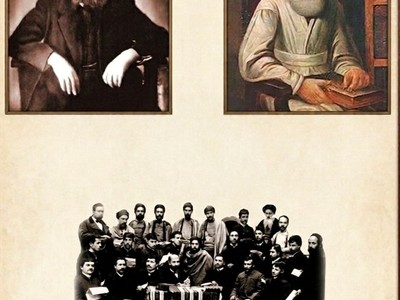
Lubavitcher Calendar: Chabad vs. Haskala
Community
📜 Chabad vs. Haskala (Enlightenment): A Chronicle of the Great ControversyIn the 19th century, the Jewish world of Eastern Europe faced a powerful challenge — the Enlightenment (Haskalah) movement. His supporters (maskilim) put forward the slogan: "Be a Jew at home and a man on the street." In fact, it was an attempt to destroy the traditional way of life, undermine the authority of rabbis, introduce secular education and eventually lead the Jewish people to complete assimilation.In Germany, this movement quickly won, but in the Russian Empire it came across a strong wall erected by the Lubavitcher Rebbe. The enlighteners declared a real war on Chabad, using all possible means — from commissioned articles to denunciations to the authorities.👑 The Tsemakh Tzedek era: under the sights of the secret policeThe main events of the first half of the 19th century unfolded during the time of the third Lubavitcher Rebbe — Tsemakh Tzedek. One of the leaders of the Maskilim, Yitzhak Ber Levinson, had been sending denunciations to the king for years, demanding the enforcement of secular education. Because of his intrigues, the authorities closed Jewish printing houses, which for many years suspended the publication of the fundamental Hasidic work "Likutey Torah".The Enlighteners acted in a more subtle way. Their ideologist M. A. Ginzburg came to the Lubavitchers and for three weeks in personal audiences tried to persuade the Rebbe to compromise. Having received a decisive refusal, the Maskilim published an article in the German press, in which they accused Tsemakh Zedek of opposing government policy. The article was handed over to the special services, and agents of the tsarist secret police arrived in Lyubavichy with searches and interrogations, which seriously undermined the healthof the Rebbe.The culmination of the confrontation was in 1843, when the Ministry of Public Education convened the Rabbinical Commission in St. Petersburg. The authorities sought to force the spiritual leaders of the generation to support education reform. Despite illness and the threat of arrest, Tsemakh Tzedek arrived in the capital. Having shown unbreakable firmness, he blocked all the demands of the enlighteners, stating that the Jewish traditions of upbringing would not be changed by a single iota.🛡️ The Rebbe RASHAB era: the siege of the LubavitchersAt the end of the 19th century, the conflict broke out with renewed vigor due to the activities of the wealthy Society for the Dissemination OF Enlightenment (OSE). Its leaders decided to strike at the very heart of Hasidism and open a secular school directly in Lyubavichy.For the fifth Lubavitcher Rebbe — RASHAB — this was an extremely difficult ordeal. He personally went to St. Petersburg and asked the head of the society, Baron Gunzburg: "Leave me Lyubavichy, do not build a school at least there." But he refused. The school was opened, and later its graduates, who became part of the left-wing radical movements, really staged riots even in the Rebbe'syard.💼 Financial Detective: How Rebbe outmaneuvered millionairesIn 1900, it became known that OPE was about to receive a grant of one million francs from the Eco Foundation of Paris (ICA) to open hundreds of secular schools throughout the Pale of Settlement.Rebbe RASAB launched a secret diplomatic campaign that lasted two years. He involved the most prominent rabbis of Europe in the struggle, including Rabbi Chaim Soloveichik from Brest and Rabbi Chaim Ozer Grodzensky, and also secretly visited Paris for negotiations with patrons.As a result, a million grant for the opera was blocked. Moreover, the Rebbe made sure that these funds were used to really help people — the construction of a large weaving factory in Dubrovno, which gave work to thousands of poor Jewish families.🚀 The main weapon: the birth of "Tomhei Tmimim"Rabbi Rasab understood that prohibitions alone were not enough — a strong alternative was needed. Therefore, in 1897, he founded the legendary yeshiva "Tomhei Timimim".The Rebbe said that the Almighty always sends medicine before the disease. Yeshiva got ahead and stopped the epidemic of unbelief. Her students — tmimim - were brought up as spiritual warriors.It was they who, in the future, already in the years of cruel Soviet repression, saved the Jewish tradition from extermination, creating a huge network of underground education.Thanks to the resilience of the Lubavitcher Rebbe, who did not compromise either with the tsarist authorities or with influential reformers, authentic Jewish life survived and preserved its soul. source: 📖 Lubavitcher Calendar

Siha Rebe for the weekly chapter "Shlakh"
Community
🌍The undivided mission: messengers, not advisers📖BackgroundOur chapter tells about the twelve scouts whom Moshe sent to the Promised Land. Their task was to explore the country and understand what the best ways to conquer it were.However, upon returning, the scouts brought alarming and negative reports. They instilled fear in the people, deprived them of the hope of entering the Land of Israel, and caused panic. As a result, the whole nation was punished by prolonged hardships in the desert, and the scouts themselves were severely punished for spreading the evil glory of the land.🤔QuestionAt first glance, this seems unfair. After all, Moshe himself asked them to inspect the land, and they, in fact, honestly fulfilled his instructions. Why were they punished for conveying truthful information? Are they to blame for the fact that the inhabitants of that land were really powerful giants?💡RESPONSEThe mission that Moshe put on them was not to assess whether it was worth going there at all. If the Almighty ordered to enter this land, there could be no doubt. The task of the scouts was purely tactical: to find out how to make the conquest the easiest and most effective.When they began to express their opinions, questioning the very possibility of G-d fulfilling His promise, they betrayed their calling as messengers and showed a lack of faith. They have turned from executors of the will of the Almighty into advisers who doubt.📌Lesson for lifeThis principle applies to both our daily lives and the fulfillment of the commandments. When we face obstacles and difficulties, it is important to remember: if the Almighty instructs or commands us to do something, it is certainly possible.Our task is not to assess the chances of success of God's plan, but to look for ways to implement it.(Adapted from Likutey Sikhot, vol. 13, p. 39.) source: 📖 Lubavitcher Calendar

Our dates: 23 sivan
Community
📌23 Sivan 2964 (797 BC) - King Jeroboam forbade the residents of the Kingdom of Israel to visit Jerusalem. After the departure of King Shlomo from this world, Jeroboam ben Navat from the tribe of Menashe incited the representatives of the ten tribes of Israel to revolt against the son of Shlomo, the new king Rehoboam. Eretz Yisrael was divided into two parts - the Northern (Kingdom of Israel) with its capital in Shomron and King Jeroboam, and the Southern (Judaic) with its capital in Jerusalem and King Rehoban. The capital of the Jewish kingdom, Jerusalem, remained the spiritual and religious center of the Jewish people, and the Jews of Israel came there three times a year, on Pesach, Shavuot and Sukkot, to make sacrifices. Jeroboam saw this as a threat to the independence of his state, and roadblocks were set up on that day to prevent pilgrims from passing through. And how, instead of the Temple, Jeroboam installed two cast images of calves (made of gold, as in the previous case) in the south and north of the country. The roadblocks existed for 223 years until the last king of Israel, Josiah ben Ela, eliminated them.📌23 Sivan 3404 (357 BC) — Aman's decree was neutralized. Even after Haman was executed, the decree initiated by him on the "final solution of the Jewish question" continued to operate, and all the efforts of Esther and Mordecai to cancel it were unsuccessful, because in ancient Persia the royal decree had no retroactive effect (as King Ahasuerus himself formulated: "everything written in the name of the king and sealed with the royal seal cannot be canceled"). But on this day, a decree was signed that gave the Jews the right to self-defense and ordered them to kill anyone who rose up against them. The decree was sent to all 127 provinces of the empire and effectively neutralized the effect of Aman's decree.source:chabad.odessa

Our dates: 25 sivan
Community
📌25 Sivan 3448 (313 BC) — The victory of the Jews in the dispute staged by Alexander the Great. In the Talmudic treatise "Ta 'anit" it is told that on this day the Jewish sages were recognized as winners in the dispute organized by Alexander the Great. Our opponents were Egyptian priests, ministers of local Canaanite (Canaanite) and Arab pagan (before the advent of Islam there were more than 900 years) cults.📌Sivan 25, 3875 (AD 115) is Yortzeit (anniversary of departure from this world) and kiddush ha-Shem (martyrdom for the preservation of Judaism) of the high priest Ishmael ben Elisha. The Talmud talks about the extraordinary beauty of Rabbi Ishmael and even ranks him among the seven most beautiful men in the world, but most of us know him as the author of the 13 rules of interpretation of the Torah (the rules are given in the siddur (collection of prayers) and are repeated by Jews every morning). The Talmud tells us that the Roman emperor, who had been interested in the Torah for some time, called ten of the greatest Jewish sages of that time to him and asked them: "What is the punishment for someone who kidnaps people?". "The death penalty," answered the sages. "Well, if so, then you will have to bear the punishment for the sin of the ten brothers who sold Joseph into slavery. Since that time there have been no equals to the sons of Jacob, but you are on the same level with them and must bear the punishment for their sin. The sages asked for a postponement of the sentence for three days, and at the request of Rabbi Nehuniya Ben ha-Kana, Rabbi Ishmael, who possessed the secret of the name of G-d (Shem ha-Meforash), ascended to heaven, where an angel informed him that their martyrdom was determined by the Most High. The daughter of the Roman emperor, impressed by the beauty of the slave Ishmael, tried to save his life, but the father refused - they say, the law is strict, but it is the law. And then the daughter asked to peel off the skin from the face of the slave Ishmael during his life, in order to preserve such beauty. The wish of the "good" girl was granted, and Rabbi Ishmael was martyred, becoming one of the "ten martyrs" (asar harugot malkus).📌Sivan 25, 3875 (AD 115) is Yortzeit (anniversary of departure from this world) and kiddush ha-Shem (martyrdom for the preservation of Jewishness) nasi (head of the Jewish people) Shimon ben Gamliel. Rabbi Shimon was a fourth generation descendant of Hillel and presided over the Sanhedrin (the highest Jewish legislative body of the time) during the destruction of the Temple. The Talmud tells us that on the holiday of Sukkot, the day of Simchas Beis ha-Shoev ("The Feast of Pouring Water on the Temple Altar"), when the merriment reached its maximum, Rabbi Shimon juggled eight (!) burning torches. Rabbi Shimon became the first of the ten martyrs, because when he and Rabbi Ishmael were being led to execution, both asked the executioner to execute them first and not let them see the death of their friend, the greatest sage of the Torah. Rabbi Ishmael as kogen godol (high priest) insisted on his right of first death, Rabbi Shimon as nasi (head of the people) demanded the same for himself. The executioner cast lots, and the first to die was the slave Shimon.📌25 Sivan 3875 (115 AD) — Yorzeit (the anniversary of the departure from this world) and kiddush ha-Shem (martyrdom for the preservation of Jewry) of the deputy high priest — Rabbi Hanina ben Dosa. The third of the wise men executed that day was Rabbi Hanin ben Dos' deputy high priest.source: chabad.odessa

Our dates: 26 sivan
Community
📌Sivan 26, 3875 (115 CE) — Yortzite (anniversary of departure from this world) and kiddush ha-Shem (martyrdom for the preservation of Judaism) of Rabbi Hananiah ben Tradion. Rabbi Hananya lived in Sichin, where he headed the yeshiva and the beis-din (Jewish court). His sister was the wise woman Bruria, the wife of Rabbi Meira Baal ha-Ness, the only woman mentioned by name in the Talmud. Rabbi Hananya was the only one executed that day, and since he was accused of teaching Torah, the executioner wrapped his body in a Torah scroll and set him on fire. In order to prolong the torment of Rabbi Hananiah, the thieves covered the area of the heart with pieces of wool soaked in water. When the flames engulfed the sage's body, his disciples cried out: "Rabbi, what do you see?" And the sage answered: "I see a scroll engulfed in fire and letters flying up into the sky."📌 26 Sivan approximately 3800-3850 (1st century AD) — Yortzeit (the anniversary of the departure from this world) of Rabbi Yonatan ben Uziel. Rabbi Yonatan was one of Rabbi Hillel's students. The Talmud says that Hillel had 80 disciples, 30 of whom were worthy to have the Shechinah (G-d's presence) rest upon them like Moshe Rabbeinu, 30 worthy to have the sun stand still for them like Yehoshua ben Nun, and another 20 who were men of average gifts. The greatest of them was Rabbi Yonatan ben Uziel - when he taught the Torah, the birds that flew over him fell, scorched by the flames; the youngest of the students was Rabbi Yochanan ben Zakkai. Rabbi Yonatan translated the Torah and the books of the prophets into Aramaic (the common language of that time). The Talmud says that he intended to translate the third part of the Tanakh, the Scriptures, into Aramaic, but a voice from heaven said, "Enough." Rabbi Yonatan is buried in Eretz Yisrael, in the Galilee, near the village of Mitzpe Amuka. Folk tradition believes that prayers to the Most High to find a mate are especially effective at the grave of Rabbi Yonatan ben Uziel.source: chabad.odessa

Our dates: 28 sivan
Community
📌28 Sivan 5701 (June 23, 1941) - Rabbi Menachem-Mendl Schneerson (the future Rebbe) and his wife Rebbetzin Haya-Mushka arrived in the USA. Before the beginning of the Second World War, the family of the future Rebbe lived in France, but in 1940 the country was occupied by the Nazis and it was impossible to stay there. Rebbe Rayatz (Rabbi Yosef Yitzchak), who lived in the USA, made great efforts to obtain permission for Menachem-Mendl and his wife to leave France and enter the United States. It was received only in the summer of 1941. The path to the USA was not easy and passed through Spain and Portugal. On June 23, 1941, the Schneerson family arrived in the United States. In Europe, the Great Patriotic War continued for the second day.source: chabad.odessa
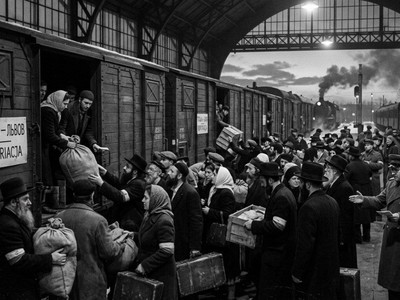
Chabad History: Operation Echelons
Community
🚂 Operation Echelons: How Chabad Outwitted the KGB in 1946In 1946, immediately after the end of World War II, the USSR and Poland signed an agreement on repatriation: Poles who found themselves in the Soviet evacuation received the right to return to their homeland. To do this, the authorities allocated freight trains — "echelons", and the main transshipment point was the border Lviv. The Chabad Hasidim instantly understood: this is the only and unique window of opportunity to escape from behind the Iron Curtain and escape from the inevitable Stalinist repressions.📜 The factory of false documents under the nose of the ChekistsTo implement the plan, a deeply secretive underground committee was created in Lviv. It included the legendary Hasidim: Rabbi Mendel Futerfas, Rabbi Label Mochkin, "wise aunt" Sarah Katsenelenbogen (mume Sore) and others. Just under the nose of the all-seeing MGB (the future KGB), they deployed a real industry of documents."Dead souls". Activists found the data of real Poles who died of starvation in the Soviet rear. Their names were inscribed on the documents, and Hasidic families studied other people's biographies and Polish pronunciation by heart day and night, because inspectors arranged tough interrogations at the border.Sham marriages. By law, a Pole could take his Soviet family with him. The committee found real Poles who, for a lot of money, "married" Hasidic women, taking them and children out under the guise of familyreunification.🏛 The Secret Court and the Rescue EconomyTo conduct the operation, huge funds were needed — for renting apartments, making documents and, most importantly, for astronomical bribes to Soviet officials and drivers.To avoid panic, a rabbinical court (Beit-Din), which included 23 rabbis, secretly gathered in Lviv.At first, they sat for three days and because of the lethal risk, they wanted to prohibit escape. But when the first daredevils successfully crossed the border, the court reversed its decision and issued an unprecedented verdict: everyone who leaves must leave all their property to the committee to save others.Wealthy Hasidim did not hesitate to give away their suitcases with cash. And the accountant of the state institution, Rabbi Israel Noah Blinitsky, took an incredible risk, secretly directing significant amounts from the Soviet budget to the needs of the underground.🌊 Drama on the rails and a miracle in New YorkThe mass exodus took place in dark and cold freight cars intended for the transportation of livestock. One of these trains secretly left Rebbetzin Khan — the mother of the Seventh Lubavitcher Rebbe.Another historical echelon departed on 9 Kislev. It is said that on the same day in New York, the Sixth Lubavitcher Rebbe, Rabbi Yosef Yitzchak Schneerson (Rajaz), locked himself in his room and prayed for many hours with extraordinary spiritual exaltation.Suddenly, he sighed with relief and quietly said:“Thank God they passed, they passed. Enough.”The next day, a telegram arrived: the train crossed the border safely. Passengers of this warehouse bribed the driver, and he dropped them off in Krakow, where it was easier to get to the American zone of occupation in Austria.⛓️ Operation "Liquidation" and "Lviv Affair"In early 1947, the Soviet special services realized the scale of the escape. The borders were tightly closed, and the MGB launched a large-scale investigation, which went down in history as the "Lviv case".Almost the entire underground committee was arrested. Rabbi Mendel Futerfas was captured right at the station while trying to escape himself.The organizers were brutally tortured, but they showed incredible courage: during the investigation, the Hasidim took all the blame and called only those who had already successfully crossed the border and were inaccessible to the Soviet authorities.Most of the heroes received up to 25 years in the camps, many died in Siberia.🌍 From camp barracks to a flourishing futureOnce at large, the Hasidim ended up in camps for displaced people in Europe, mainly in the American zone of occupation in Pocking (Germany). Even among the ruins and camp barracks, they managed to open the yeshivas "Tomhei Tmimim" and the school "Beit Rivka".In 1949, at the direction of Rebbe Raiats, exhausted refugees arrived in the Holy Land and laid the first stone of the settlement of Kfar Chabad, which today is one of the world's major centers of Hasidic education.This great escape forever closed the page of Soviet Russia as the center of the Chabad movement and ushered in a new, free era of Chabad around the world.Lubavitcher calendar

23 Sivana: the day when reality changes
Community
Today is 23 Sivan, a special day on a cosmic scale. It was on this day that an event took place that radically changed the course of the history of the holiday of Purim. Lubavitsky Rebbe explains that every year on this date, we are given tremendous power from above to rewrite the script of our own lives and influence the whole world.📜 History and context: what happened on 23 Sivan?The Scroll of Esther (8:9) explicitly states this date:“And the king's scribes were called at that time, in the third month, that is, the month of Sivan, on his twenty-third day… and all was written as Mordecai commanded.”After the terrible decrees of Haman, it was on 23 Sivan that a decree on salvation was issued. The messengers on swift horses went to all corners of the empire, and Mordecai came out from the king in royal attire. The city of Shushan rejoiced, and the famous came:“The Jews had light, joy, joy, and honor.”🎙 Quote from the conversation of the Rebbe (Shabbat Mevarhim Tamuz, 5743)"Every year on 23 Sivan, the"scribes of the King" — the King of the Universe - convene, and they record everything "exactly as Mordecai ordered. "This applies to every Jew, because each of us belongs to the“people of Mordechai”, whose behavior is uncompromising (“does not bow or fall down”in the face of difficulties). On this day, the Jew becomes a real master who indicates what exactly should be recorded. That is, every Jew becomes the master of the entire world order, and all events in the world begin to take place in accordance with his will and desire!"🔍 Deeper meaning of the Rebbe's wordsThe power of the “coup” (Itgapha)The Rebbe emphasizes that Haman's decree was not simply canceled without a trace. The situation turned "from one end to the other" (min a-katse el a-katse). From a state of mortal danger, the Jews passed to a complete triumph, so great that “many peoples of the country accepted Judaism.”It was from this profound transformation that Purim's unique boundless joy was born — a level of “hell for poison” that transcends the limits of human understanding.Miracle inside natureUnlike other miracles, where the laws of nature changed (for example, during the dissection of the sea), here salvation took place through the usual earthly mechanisms: decrees, messengers, horses.The Rebbe explains: the influence of 23 Sivan penetrates into the most material and everyday areas of our lives. The Almighty changes reality through the natural course of events.The answer to doubts (even on Shabbat!)That year, when this conversation was delivered, 23 Sivan fell on Shabbat. The question arose: how can the "royal scribes" write decrees on Shabbat, if this is prohibited?The Rebbe gives an amazing answer:“Since it is about saving human lives (Pikuah Nefesh), it pushes aside Shabbat!”Moreover, such salvation adds even more holiness to Shabbat itself.This means that for the sake of saving the soul of the Jew and his material well-being, the Almighty is ready to change the usual order of things.🛠 Practical conclusion for each of usThe Rebbe associates this day with the most important task — the spread of Judaism and Hasidic sources (Afazat ha-Maayanot).● When a person is asked to go and spiritually light someone in a “distant and dark place”, they may have doubts:“There is a double darkness of exile around. Will I be able to cope? Do I have the right to rely on a miracle?”● It is 23 Sivana that gives a special answer and strength:You are the master of the situation. Your sincere desire for goodness and light can change the entire system of governing the world.What is worth doing today?“The main thing is action” (Maase gu ha-ikar).Add more time to Torah study, diligently follow the commandments (especially within the Rebbe's ten campaigns: tefillin, mezuzah, tzedaka, sabbatical candles, and others), and share this light with others.As the messengers once carried the message of salvation in the days of Purim, so we must carry the good news of the imminent Liberation.May this turn out to be for each of us a real "light, joy, fun and respect" in the most literal and material sense, and may we go from Purim salvation to the Final Deliverance (Geula) together with the Messiah! 🕊✨📖 Lubavitcher calendar

Ayom yom: 24 Sivan
Community
Today is 24 Sivan 5786They ask [the person]: what is their connection (itkashrut) with me if they do not know me personally (did not see me with their own eyes)?...A true connection is made through the study of the Torah: when a person studies my Hasidic Maamarim, reads the sikhot, unites with our dear friends — the Hasidim (anash) — and the disciples of the yeshiva "Timim" (may G-d continue their days) in teaching and on Hasidic painters, and also fulfills my request to read Tehilim and observe the established time for lessons — this is [our] connection.source: 📖 Lubavitcher calendar.

The Lubavitcher Calendar — Serving the Heart in Lubavitches: Two Paths to One Top
Community
In the Hasidic lexicon, the word "oived" (one who serves) has a special, deep meaning. This is not just a person who fulfills the prescriptions, but one for whom prayer turns into hard, sometimes exhausting inner work, into melting down one's own feelings and thoughts.The unique memories of the famous mashpiyah (spiritual mentor) Nohum Shmaryahu Sasonkin, who found the golden age of the legendary yeshiva "Tomhei Tmimim" in the town of Lyubavichy during the leadership of Rebbe RASHAB (Rabbi Sholom Dov-Ber), have survived to this day.His sketch is a rare inside look at how the best of the best prayed.📜 No titles or masks"Classes were already going on in the great hall," recalled Mr. Sasonkin. — There was a powerful roar of hundreds of voices coming from there — the students plunged headlong into the study of Torah. And here, in a small hall, several people froze. Facing the wall, they prayed from the deepest depths of their hearts. I stood amazed and silent, looking at them, and could not understand: the time of public prayer is long over, so what's the matter? I've never seen anything like it before. ”In Lyubavichy of that era, lush titles and external brilliance were not tolerated. The very Hasidic atmosphere of the town rejected arrogance. People who reached incredible spiritual heights were called simply by the name and city from which they came.Among those who stood for hours at the wall, immersed in the contemplation of the Divine, two young men stood out in particular, who later became great mashpies: Reb Shilem Kuratin (whom everyone called simply Shilem Disner) and Reb David Kibman (known as David Horodoker).Both of them possessed a phenomenal capacity for the deepest concentration (ithbonenut), but the way they reached this state opens up two completely different psychological types and two different paths in serving the Creator.🕊 The Reb David Horodoker Way: A Natural PassionReb David sat on the bench for hours in talit and tefillin, slowly swaying with his eyes closed. For him, there was no boundary between an intellectual immersion in the Torah and a heartfelt impulse during prayer. There was only one difference: while studying the Torah, his eyes were open, and during prayer, they were closed.Immersion in the Divine Mysteries was given to him effortlessly — it was his natural state. Reb David was completely cut off from this world. He did not notice people around him, was never interested in material goods and did not even know what the reverse side of the coins looked like. Even before arriving in Lyubavichy, he knew by heartthe fundamental halakhic works — "Arbaa Turim" and "Shulkhan Arukh".When he discovered the teachings of Hasidism, his mind and soul found their true homeland. Prayer for Reb David was not a struggle, but the highest pleasure, the natural breath of his soul.🔥 The path of Reb Shilem Kuratin (Disnera): holy spark through incredible workCompletely different was Reb Shilem Kuratin. By nature, he was prone to melancholy (“mara levana”), and every moment of concentration was given to him at the cost of a colossal, almost superhuman tension of forces.When Reb Shilem prayed, every witness understood: right now the most difficult battle is taking place in this person. One could see how painful and difficult it was for him to collect together scattered thoughts, how he forced his mind to focus on Divine concepts. In his posture, in the wrinkles at the head, exhausting work was read.But it was because of this sweat, because of a desperate unwillingness to yield to his own nature, that Reb Shilem Disner brought up and completely rebuilt his soul. His concentration was the fruit of absolute self-submission (Itkafya).💭 Thoughts for reflectionThis short passage reveals an important truth: there is no single pattern in the spirit world.● There is the way of Reb David — the way of pure, almost angelic nature, which is given to contemplate the truth without obstacles.● And there is the path of the Reb of Shelem — the path of a person who builds himself, overcoming the resistance of the mind and body.It was this variety of paths that made Lyubavichy a place where real giants of the spirit were born.📖 Lubavitcher calendar.

June 9 — International Day of Friends
Community
June 9 — International Day of FriendsInternational Friends Day is an unofficial holiday celebrated in many countries around the world as a reminder of the value of friendship, support and human relationships.Unlike international days established by the UnitedNations, this holiday has no official international status and is not associated with any particular historical event. Its main purpose is to remind people of the importance of friends in our lives.On this day, it was accepted:calling or texting friendsthank you for your support and loyalty.spend time together;remember good common points;put up with misunderstandings.From the point of view of Jewish tradition, friendship is of particular importance. In the treatise Pirkei Avot it is said:קנה לך חבר"" (Knee Lech Haver)Our sages used to say, “Get yourself a friend.”It is no coincidence that they used this very word. True friendship is a value for which it is worth investing your time, attention, strength and a piece of your heart.It is these friends who stay close to each other in the most important moments of life.Friendships are not just shared memories. These are people who stay close to each other in moments of joy and trials, support, inspire and help to become better. Let everyone have at least one true friend, and we ourselves will be such friends for others.Congratulations to everyone who knows how to be friends!