
Ayom Yom: 16 Sivan
Community
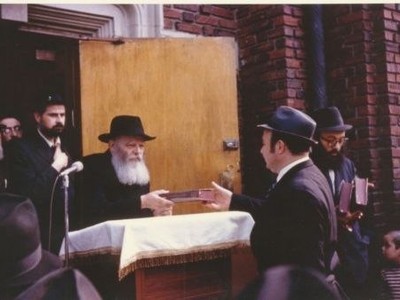
Today is 16 Sivan 5786.📌5735 (1975)— The Rebbe handed out the book "Tania", translated into English, to the guests from England, and spoke at the entrance to the building 770, just outside.The sages of past generations (may their merits protect us), who were like angels, argued that the healing of the soul is like the healing of the body.The first and decisive step is to find outthe cause of the disease: whether it arose as a result of coarsening, hardening and moral decline of the body;or it was caused by the soul's inclination to such undesirable traits as pride, untruth, etc.; or the source of the disease was a habit formed due to improper upbringing or unhealthy environment.It is impossible to start treatment without finding out which place is affected by the disease and what are its causes. You can only give general instructions on how to behave, what to do and what to refrain from. Namely: "doing good" — fulfilling the commandments, setting time for studying the Torah and cultivating good qualities, as well as "avoiding evil."But the most important thing is that the patient awakens in his thoughts:• Awareness that he is sick and a sincere desire to heal;• understanding that he can recover;• hope and full confidence that with the help of the blessed Almighty he will certainly be healed of his ailment. source: 📖 Lubavitcher calendar.
📚 History of the worldwide distribution of the book "Tania"
Community
The fundamental work of the founder of the Chabad Hasidic doctrine, Rabbi Shneur-Zalman from Lyad (Alter Rebbe) — the sacred book "Tania" — was originally written in Hebrew. However, on the direct instructions of Lubavitsky Rebbe, a large-scale campaign was launched to translate it into the main languages of the world with the participation of international colleges of rabbis, scientists and linguists.📌 English (1962)The first ever translation of "Tania" into a foreign language. It was carried out by Rebbe's secretary Rabbi Nisan Mindel with the participation of Rabbi J. Z. Posner. The Rebbe personally edited the manuscript and noted that the release of "Tania" in English is an event of cosmic scale, which surpasses the launch of the first satellite in value.📌 Italian (1968)The translation was prepared by Rabbi Abraham Sofer and Professor Colombo. The Rebbe praised the publication and linkedthe recognition of the holiness of the Torah by Rome (the Western world) with the spiritual sign of the imminent liberation of Jerusalem.📌 French (1968)Issued on the initiative of the European Bureau Lyubavych. In 2007, a fundamental one-volume edition was published, where the original Hebrew text and the French translation are printed in parallel, page by page.📌 Spanish (1969–1970)The translation was made by Rabbi Dovber Baumgarten in Argentina with the assistance of Avraham Palichenko. The work was completed in 1970.📌 Arabic (1976)The project was started by Rabbi Label Ruskin, the envoy to Morocco, and the translation was performed by Rabbi David Buskila. The Rebbe emphasized the importance of translating into the language in which Maimonides' Guide to the Lost was written. Today, Sheva Mitzvot Lebnei Noah publishes Tania in Classical Arabic in Arabic script. New editions of both this translation and the original Moroccan variant have recently been published.📌 Portuguese (1981)A group of specialists worked on the translation (Rabbi M. Pame, Rabbi D. Veitman, Rabbi Y. Mishan and others). In 1990, all parts of the book were combined into one volume for the first time.📌 German (1985)The first chapters were published thanks to Rabbi Zvi Zaler. Later, the full academic translation of the entire book was done by Rabbi Levi Stranglantz, and the project was published by Beit Chabad in Vienna.📌 Hungarian (2001)The first 15 chapters of the Tania with detailed explanations of Hasidic concepts and commentaries were translated into Hungarian by Rabbi Naftali Kraus.📌 Georgian (2011)The project, blessed by the Rebbe back in 1991, was completed after many years of painstaking work by Rabbi Abraham Alashvili and Professor Reuven Enoch.📌 Turkish (2014)The publication of the multi-volume series in Turkish was initiated by Rabbi Mordechai Mizrahi. Each volume contains text in Latin script with detailed translation and commentary.📌Persian (Farsi) (2024)The publication of the fundamental series of books with the translation of "Tania" into Persian was headed by Rabbi Dan Iftah.📌russian Language: A Special HistoryThe first attempt to translate a separate chapter was made at the end of the 19th century by the younger brother of the Fifth Lubavitcher Rebbe. Systematic translation in the Soviet years was performed by Golda Lipsch under the scientific guidance of Professor Jeremiah Branover (a complete one-volume edition was published in 1984). In 2020, Yahad also published a monumental translation of Lessons from the Book of Tania.📌Ukrainian language: work in progressCurrently, active work is underway to create the first full academic translation of the book "Tania" in Ukrainian for millions of Ukrainian-speaking readers around the world.Book "Tania" in Braille (1991)For blind people, Messila published Tania in Braille. The Rebbe personally blessed the move, stressing that in our generation, the light of Hasidism has become available even to those in total physical darkness. Subsequently, the Russian version of the book was published in Braille.📖 Today, Tania is a global spiritual bridge connecting continents, languages, and cultures.📸 In the photo: The Rebbe hands over the first volume of "Tania" in English to the chairman of the committee, Bernard Perrin, near building 770 after a special conversation dedicated to the release of the translation (16 sivan 5735).source: 📖 Lubavitcher calendar.

🎨 We invite you to the opening of the exhibition "Collecting images and senses"
Community
On June 15, at 18:00, the gallery "Fiddler on the Roof" will host the opening of the exhibition of Olga Petrova — an artist, art critic and cultural researcher.The exhibition "Collecting Images and Senses" presents painting as a special space of memory, cultural ties and search for meanings. The author's works organically combine tradition and modernity, personal experience and philosophical understanding of the world.The exhibition invites viewers to talk about culture as a living fabric that combines past and present, individual and universal.June 📅 15, 202618.00Fiddler on the Roof 📍 GalleryEntrance from 24 Esplanadna StreetAdmission is free!

🎨 We invite you to the exhibition "Collecting images and senses"
Community
The exhibition "Collecting images and senses" by Olga Petrova. Painting and the Space of Culture On June 15, at 18:00, an exhibition of Olga Petrova, an artist, art critic and cultural researcher, was opened in the Fiddler on the Roof gallery.The exposition presents painting as a space for collecting images, memories and meanings. The artist's works combine cultural tradition and modern experience, philosophical reflection and spontaneity of artistic vision. The exhibition invites to a dialogue about culture as a living fabric ofconnections that combines the past and the present, personal and universal.At a time of fragmentation and transience, Olga Petrova's art recalls the integrity of culture and the ability of a person to find meaning in its continuous movement.Fiddler on the Roof 📍 GalleryEntrance from 24 Esplanadna StreetAdmission is free!

🎨 We invite you to the opening of the exhibition "Collecting images and senses"
Community
On June 15, at 18:00, the gallery "Fiddler on the Roof" will host the opening of the exhibition of Olga Petrova — an artist, art critic and cultural researcher.The exhibition "Collecting Images and Senses" presents painting as a special space of memory, cultural ties and search for meanings. The author's works organically combine tradition and modernity, personal experience and philosophical understanding of the world.The exhibition invites viewers to talk about culture as a living fabric that combines the past and the present, personal and universal. At a time of fragmentation and transience, Olga Petrova's art recalls the integrity of culture and man's ability to find meaning in his continuous movement.June 📅 15, 202618.00Fiddler on the Roof 📍 GalleryEntrance from 24 Esplanadna StreetAdmission is free!

Happy International Parents' Day!
Community
Today we express our sincere gratitude to all parents for their love, care, wisdom and support. It is the family that becomes the first school of life for each of us, where we learn to trust, love, overcome difficulties and appreciate the most important things.Thank you to every mom and dad for the daily dedication, patience, kindness and warmth with which you fill your homes and children's hearts.May peace, understanding, health, joy and well-being always reign in your families. We cherish family values and give our loved ones our love and care not only on holidays, but every day. ❤️

Lubavitcher calendar: 18 sivan
Community
Today is 18 Sivan 5786Ayom yomIn our time, on the very threshold of the coming of the Messiah (Ikvet de Meshikha), the duty of each of the people of Israel is to take care of the welfare of their neighbor, whether an elderly person or a young man, and awaken him to repentance (teshuvah). This is necessary to ensure that no one, God forbid, is separated from the community of Israel, which, with God's help, will receive complete deliverance (Geula).source: 📖 Lubavitsky Calendar-(https://t.me/+8KbDy9dQVqAxZWE8)
In Chabad: The Benjamin Klein Story
Community
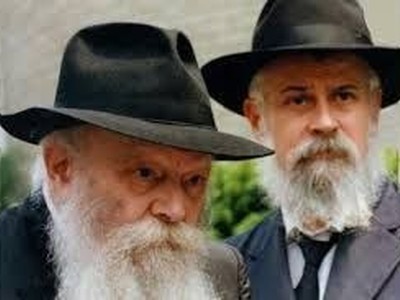
📜"My General": the story of Benjamin Klein — the secret liaisonof the Rebbe with the Israeli special servicesBehind the closed door of the secretariat of the Lubavitsky Rebbe in Brooklyn, issues of state importance were resolved. One of the key figures on this “invisible front” was Rabbi Benjamin Klein (1935-2015) — a man whom the Rebbe reverently referred to as “My General.”👶Name with contentBenjamin was born in Jerusalem. His mother, Rachel, died shortly after giving birth. The baby was named Benjamin — in memory of the biblical Benjamin, at whose birth Rachel's great-grandmother died. After studying in Jerusalem in 1956, he arrived in New York, to the famous yeshiva "770".💼Secret Diplomacy: Brooklyn — MossadIn 1963, Rabbi Klein began working in the Rebbe's secretariat. Thanks to his impeccable command of Hebrew and subtle mind, he became the main link between the Rebbe and the leadership of Israel.Klein regularly conducted confidential negotiations with the top officials of the state, as well as with the leadership of the legendary Mossad intelligence and the security service of the Shin Bet. Most of his lightning missions to Israel are still classified as “top secret”.🎖"This is my general"In 1977, the newly elected Prime Minister of Israel, Menachem Begin, arrived for a meeting with the Rebbe. During the audience, the Rebbe, pointing to Klein, introduced him to Begin with the words, “Meet my general.”This “title” stayed with him for life thanks to his phenomenal performance and ability to solve the most difficult tasks.✉️Letters and archivesEvery day, Rabbi Klein, along with colleagues, disassembled bags of letters coming from all over the world, brought them to the Rebbe's office and returned answers to people.Beginning in 1994, he wrote a popular column in Kfar Chabad magazine, where he published rare archival notes of the Rebbe, accompanying them with historical explanations and context.🕯End of Life & LegacyRabbi Klein passed away in 2015 at the age of 79. He was buried in the Montefiore Cemetery in New York, just after Oel Rebe, to whom he devotedly served throughout his life.Today, his business is continued by children. His son, Rabbi Levi Yitzhak Klein, is the chief shaliakh in the state of Tennessee (USA), and his second son, Rabbi Yaakov Klein, for a long time headed the English-speaking community in Moscow. Other children and in-laws run large Jewish communities in the US and UK.Source:Lubavitcher calendar

Lubavitcher calendar: 19 sivan
Community
Today is 19 Sivan 5786.📌 5690 (1930) — The Lubavitcher Rebbe Rajac begins her Massachusetts tour as part of a massive tour to strengthen Jewish life in the United States.Ayom yomIn the month of Marheshvan 5613 (1852), Tsemakh Tzedek established, among his other activities, a daily lesson with the holy teacher, my grandfather (may His Name be blessed), which lasted two and a half hours. In winter, this lesson began at ten o'clock in the evening, and in summer — at four o'clock in the morning.For two years, their training was devoted to the Cabal with explanations in the spirit of Hasidism. After this and until the month of Elul in 5616 (1856), when these classes ceased, they studied the works on Jewish philosophy — the books of Rabbi Saadia Gaon, "The Sea of Nevukhim" ("Guide of the Lost"), "Sefer ha-Ikarim" ("The Book of Fundamentals"), "Kuzari" and others — through the prism of the teachings of Hasidism.📖 Lubavitcher calendar.

📜 The legacy of Rebbe Rajac in Massachusetts.
Community
📌 Massachusetts: History and ModernityThe state of Massachusetts (USA), with an area of 27,000 square kilometers, today has about 7 million inhabitants, including more than 300,000 Jews. The first settlements appeared here in 5380 (1620), and in 5390 (1630) the state capital, Boston, was founded. Today, there are dozens of Chabad centers in Massachusetts under the leadership of the chief envoy, Rabbi Yehuda Vogelman.📜 Historic visit of Rebbe RajacaIn the summer of 5690 (1930), the Sixth Lubavitcher Rebbe (Rajac) paid a visit to the United States. On Sunday, Sevan 19, he arrived in Boston and stayed with Mr. Lifshitz, one of the community leaders. The Rebbe immediately began to receive numerous visitors to personal audiences (yehidut).Ten days later, on 28 Sivan, an official reception was held with the participation of governors and public figures. On the same day, the Rebbe visited the city of Chelsea, where he blessed the children of the Talmud Torah, and was in the state until the 3rd tamuz. He was accompanied on his trips by his son-in-law — Rashag (river Shmariagu Guraria). The rabbi of the Chabad synagogue "Nusah Ari" at that time was Rabbi Yaakov Israel Zuber.🎓 Establishment of the yeshivah "Ahay Tmim"At the height of the war, Rebbe Rajac laid the foundations of the Jewish education system in the state:● In Worcester (5702 / 1942), with the assistance of Rabbi Zerach Horowitz, Rabbi of the Bnei Yaakov community, the Ahay Tmimim yeshiva was opened under the leadership of Rabbi Abraham Dov Hecht. Two years later, due to lack of space for it, a second building was purchased.● In Boston (5703 / 1943), a branch of the yeshiva was opened, first headed by River Yehuda Zvi Vogelman, and later by River Abraham Dov Hecht, who moved there from Worcester (his younger brother took his place). Soon, the yeshiva purchased its own building, opened a kindergarten, and expanded classrooms. In less than a year, the number of students reached 80. The Rebbe paid special attention to them and several times pronounced special conversations (sikhot) before them.🕯 Fruits of inheritance todayThis story continues today thanks to the activities of the Rebbe's envoys:○ In Worcester — Zvi Yehuda Vogelman.○ In Boston — Mr. Shlomo Noginsky.○ In Natik — Levi Yitzhak Naka (son of Yosef Yaakov Naka).○ In Framingham, Yaakov Noah Lazarus served for many years, who died on Iyar 1, 5786 (2026).The results of this many years of work are still visible today. Local American media regularly cover Chabad's Hanukkah events. Thus, one of the leading newspapers published a photo on the front page, in which the students of the Lubavitch Yeshiva Academy (operating under the direction of Rabbi Vogelman) dance with the residents of the city immediately after igniting the central menorah. The legacy of Rebbe Rajac continues to live and bear fruit.📖 Lubavitcher calendar

On June 💔 4, Ukraine honors the memoryof children whose lives were cut short by the war.
Community
On June 💔 4, Ukraine honors the memoryof children whose lives were cut short by the war.According to official data, hundreds of Ukrainian children have been killed and thousands injured since the beginning of the full-scale invasion. Thousands of young Ukrainians remain missing, and tens of thousands have been forcibly deported or removed from their homes.Particularly painful are the losses in the Donetsk region, where the war took the lives of many children. And these figures, unfortunately, do not reflect the whole tragedy, because the fate of many victims is still impossible to establish.According to each statistics — unfulfilled dreams, unwritten letters, under-sung lullabies and children's laughter, which was forever silenced.We bow our heads in sorrow and bright memoryof every child whose life was taken by the war.We remember. 🕯️

Psychologist page: When you feel broken
Community
When you feel broken, the most difficult thing is not the condition itself, but how quickly the requirement to “correct yourself” appears.As if you need to immediately understand the reason, get together, become productive, regain control. But emotional breakdown is rarely resolved through pressure. Rather, it needs space.Sometimes it is more useful not to ask “what is wrong with me?”, but to ask:“what is happening to me now?”This seems like a small difference, but it changes the position from self-criticism to observation.Brokenness often comes after a long period of tension, accumulated fatigue, or when you have been “strong” for too long. And then the psyche seems to turn off the excess so that you stop.At such times, it is important not to force clarity. Give yourself a little neutral space: no solutions, no self-explaining, no grades.And instead of struggling, try to be with yourself gently.Try to answer yourself honestly:“What do I need the most attention for right now?”— What part of myself have I been ignoring lately?“If my condition could speak, what would it ask for?”Sometimes the first step to recovery is not action, but mindfulness. source: InstitutPsihoterapiiResurs